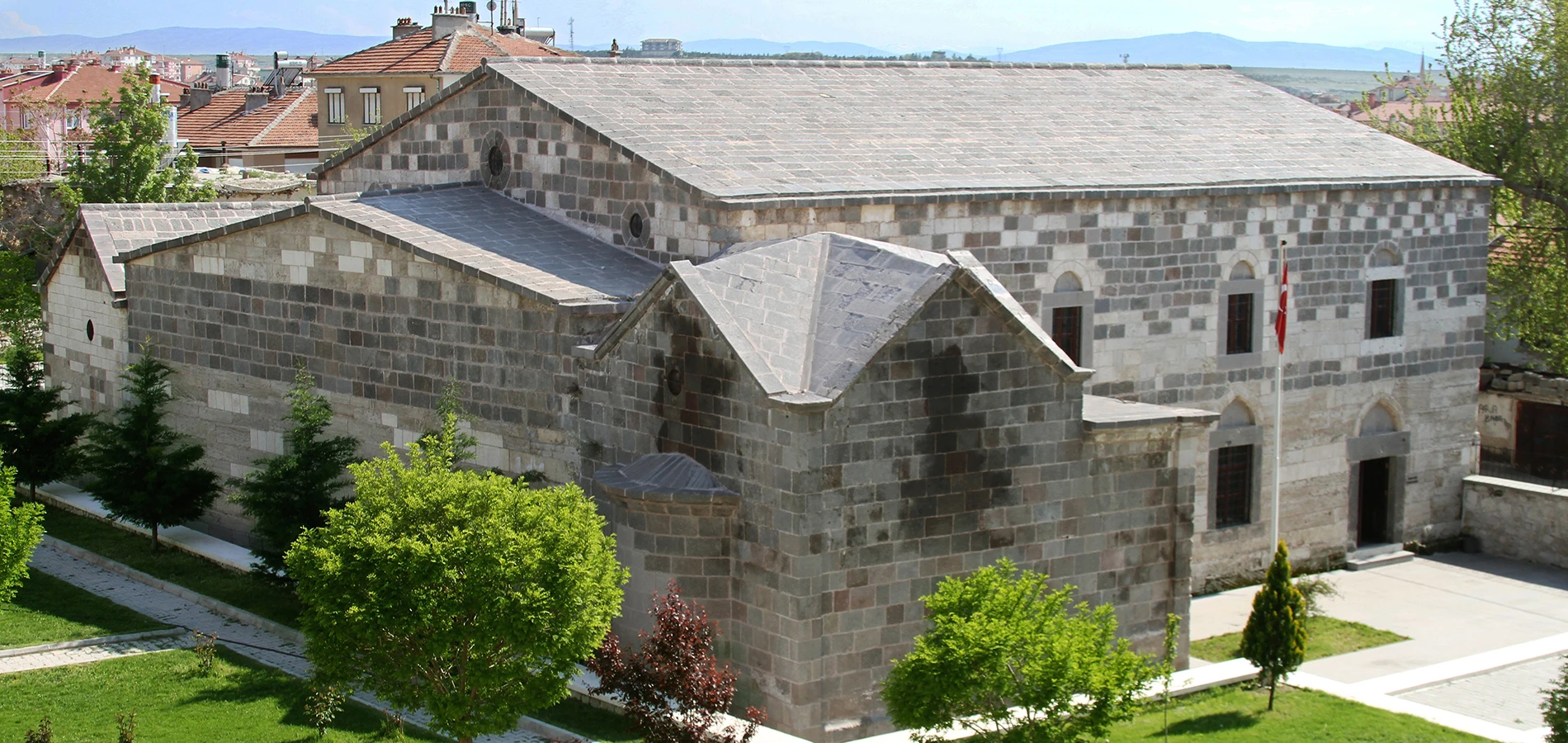
Heritage and backgroundHistory, Faith & Architecture: Aktekke Mosque – Mader-i Mevlana
A carefully contextualised introduction, distinguishing the evidence from later interpretation.
Aktekke, also known as Mader-i Mevlana, is closely linked in local tradition with Mümine Hatun, the mother of Jalal al-Din Rumi, and other family members buried in Karaman.
The site matters to the biography of Rumi before his later association with Konya, but individual attributions should be distinguished from demonstrable building phases. Its spiritual meaning extends beyond architectural dates.
Karaman and Konya are linked by the family’s movements and the intellectual world of thirteenth-century Anatolia. A visitor to Aktekke can understand why Karaman is part of the wider Mevlevi story.
The histories of religious buildings are often layered. A foundation may be associated with a named patron while later repairs, restorations and changing patterns of worship alter what a visitor sees today.
Treat local sacred memory as significant historical evidence of devotion, while distinguishing it from inscriptions or archaeological conclusions where the sources differ.