Ancient Medicine, Sacred Healing & the World of Galen

Asklepion of Pergamon – Complete Visitor Guide

Walk through one of the ancient Mediterranean's most celebrated healing sanctuaries,
where sacred water, medicine, dreams and architecture came together nearly 2,000 years ago.

Explore the Pergamon Asklepion

Asklepion of Pergamon – Inside One of the Ancient World's Great Healing Centres

Southwest of ancient Pergamon, close to modern Bergama in İzmir Province, lies one of the most fascinating archaeological sites in Türkiye: the Asklepion of Pergamon.

Dedicated to Asklepios, the ancient god of healing, the sanctuary developed into a renowned centre where religion, medicine, water, diet, exercise, rest and ritual were brought together within an extraordinary architectural complex.

The sanctuary began developing prominently from the 4th century BC, although the surviving monumental remains visible today largely reflect major rebuilding and expansion during the Roman Imperial period, particularly the 2nd century AD.

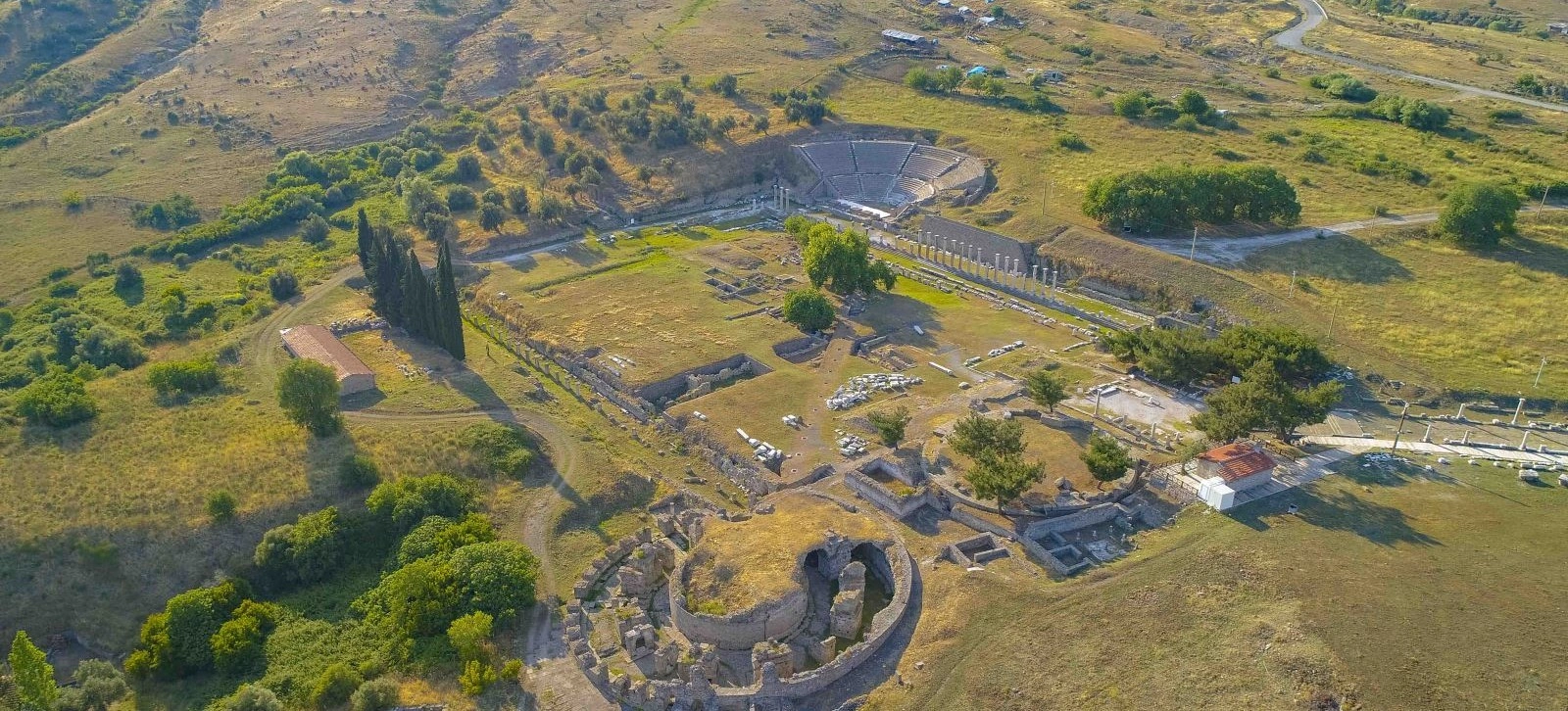
Visitors can still walk along part of the Via Tecta, the Sacred Way, enter through the monumental gateway, see the remains of the library, theatre, sacred spring, treatment areas, sleeping chambers, underground passage and the remarkable circular treatment building.

Pergamon is also inseparable from the history of Galen, one of antiquity's most influential physicians. Born in Pergamon, his career emerged from a city whose intellectual, medical and religious traditions made healing one of its defining cultural achievements.

Ancient Healing Sanctuary

Discover a major sanctuary of Asklepios where medicine and religious healing traditions developed side by side.

Sacred Way

Walk through the surviving approach to a processional road that originally extended for approximately one kilometre.

World of Galen

Explore the medical landscape of Pergamon, birthplace of one of the most influential physicians in ancient history.

UNESCO Heritage

The Asklepion forms part of Pergamon and its Multi-Layered Cultural Landscape, inscribed on the UNESCO World Heritage List.

Know Before You Go

Asklepion of Pergamon – Quick Facts

Essential information for visiting the ancient healing sanctuary of Pergamon in Bergama.

📍

Location

Southwest of central Bergama in İzmir Province, western Türkiye.

Open on Google Maps
🏛️

Site Type

Ancient sanctuary of Asklepios and major Greco-Roman healing centre.

📜

Main Period

Developed from the 4th century BC and monumentally expanded during the Roman Imperial period.

⚕️

Famous Connection

Pergamon was the birthplace of Galen, one of the most influential physicians of antiquity.

🌍

UNESCO

Part of the UNESCO-listed Pergamon and its Multi-Layered Cultural Landscape.

⏱️

Suggested Visit

Allow approximately 1½–2 hours for a comfortable exploration of the sanctuary.


Where Healing Became Sacred

Why Visit the Asklepion of Pergamon?

Few archaeological sites reveal the ancient relationship between medicine, religion, psychology, architecture and the natural environment as vividly as Pergamon's Asklepion.

The Pergamon Acropolis tells the story of kings, temples, politics and monumental architecture. The Asklepion reveals a very different side of the ancient city: how people understood illness, recovery and the relationship between body and mind.

Patients and pilgrims once approached the sanctuary along the Sacred Way. Inside, they encountered fountains, colonnades, treatment spaces, sleeping chambers, baths, religious monuments and places for entertainment and intellectual activity.

Healing here was not based on a single technique. Ancient accounts and archaeological evidence indicate a combination of rest, diet, exercise, water treatments, music, dream interpretation, religious ritual and other therapeutic practices.

The result is an archaeological landscape that feels remarkably different from a conventional temple complex. Rather than serving only one ritual purpose, the Asklepion functioned as an environment deliberately organised around healing and wellbeing.

The History of the Asklepion of Pergamon

The sanctuary was dedicated to Asklepios, the Greek god associated with healing and medicine. The cult of Asklepios became widespread throughout the ancient Mediterranean, with important sanctuaries established at places such as Epidaurus, Kos and Pergamon.

At Pergamon, the healing sanctuary began to develop prominently from approximately the 4th century BC. Its importance increased together with the political and cultural rise of Pergamon during the Hellenistic period.

The complex visible today, however, owes much of its monumental character to the Roman Imperial period. The official archaeological-site description identifies many of the surviving structures with major construction activity during the 2nd century AD.

During this period, Pergamon had become one of the important cities of Roman Asia, and its Asklepion developed into one of the Mediterranean world's best-known healing sanctuaries.

Dedication Asklepios, god of healing
Major Development From the 4th century BC
Monumental Remains Largely Roman Imperial, especially 2nd century AD
Function Healing sanctuary, religious centre and therapeutic complex
Historic City Pergamon
Modern Location Bergama, İzmir Province

Who Was Asklepios?

Asklepios, known as Asclepius in Latinised form, was the ancient Greek deity most closely associated with healing. His sanctuaries were known as Asklepieia and developed in many parts of the Greek and Roman world.

People travelled to these sanctuaries seeking relief from illness and guidance regarding their health. Treatment did not correspond directly to a modern hospital. Instead, religious ritual, physical treatments and observations about the body existed together.

The staff serving such sanctuaries might include priests, attendants and individuals experienced in healing practices. Patients could participate in purification, bathing, special diets, exercise and ritual sleep.

The symbol of Asklepios was a staff with a serpent, an image that remains internationally associated with medicine today.

Look for the symbolism: Serpent imagery associated with Asklepios became one of antiquity's most enduring medical symbols. The single-serpent Rod of Asclepius should not be confused with the two-serpent caduceus associated with Hermes.

The Via Tecta – Pergamon's Sacred Way

Visitors approaching the Asklepion in antiquity followed a monumental processional route known as the Via Tecta, or Sacred Way.

The ancient approach extended for approximately one kilometre and connected the sanctuary with the surrounding urban landscape of Pergamon.

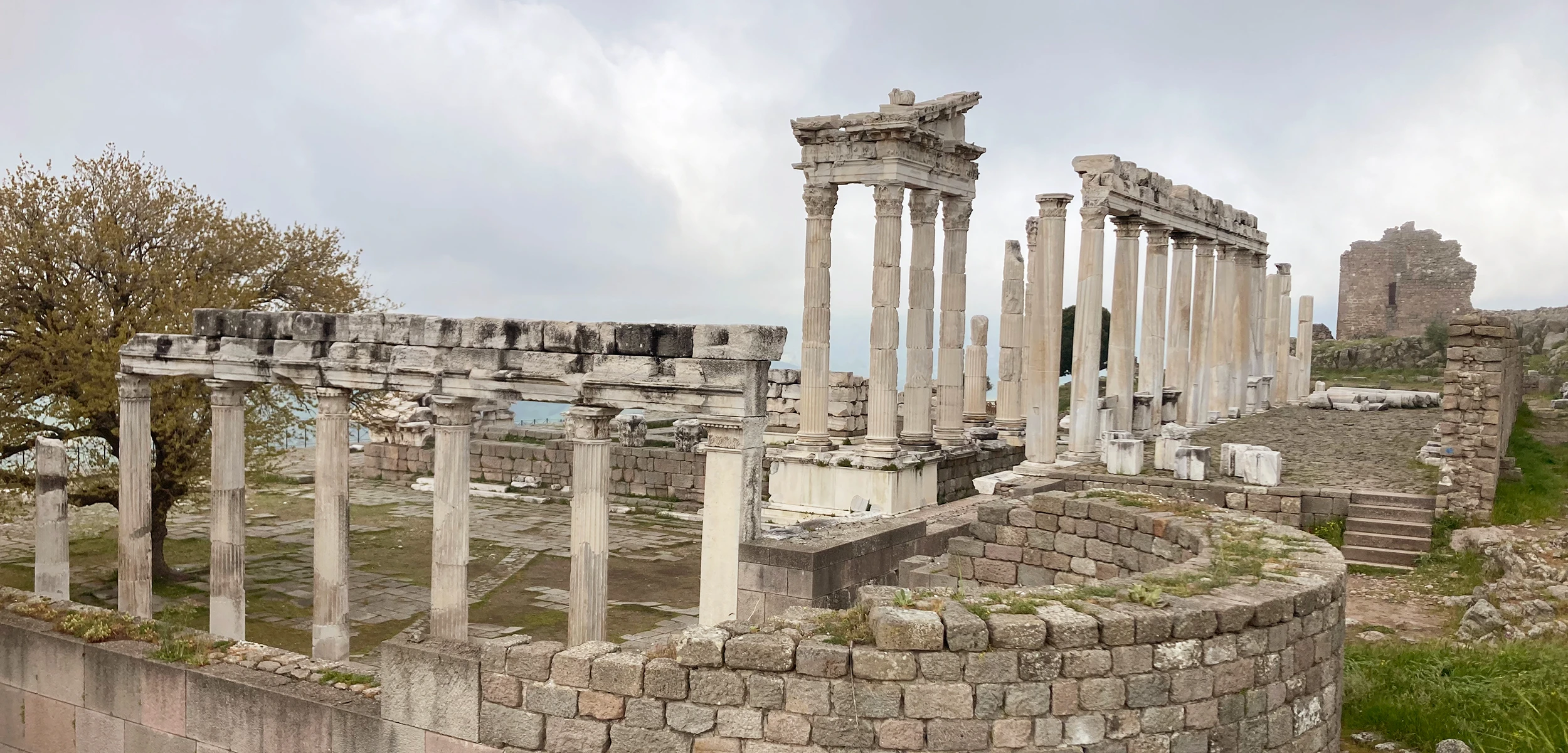
Its final section created a dramatic ceremonial entrance, with paving, architectural elements and columns guiding visitors toward the monumental gateway.

Walking along the surviving portion today helps reconstruct something essential about the ancient experience: healing began not simply inside one building, but through a carefully staged journey into a sacred environment.

Processional Route

The Sacred Way formed the principal ceremonial approach to the healing sanctuary.

Approximately 1 km

The original approach extended for roughly one kilometre toward the Asklepion.

Columned Entrance

The final approach was monumentalised with architectural elements and colonnades.

Arrival Experience

The route gradually separated visitors from the ordinary urban environment and introduced the sacred healing complex.

The Monumental Propylon

At the end of the Sacred Way, visitors reached the propylon, the monumental entrance into the central sanctuary.

This gateway functioned as both architecture and symbolism. Passing through it marked the transition from the processional approach into the organised sacred precinct of Asklepios.

The monumental entrance was positioned between important buildings. The library stood on one side, while a major temple dedicated to Zeus Asklepios stood on the other.

Beyond the entrance opened the sanctuary's enormous central courtyard, surrounded on several sides by colonnaded galleries.

The Great Courtyard and Colonnades

The monumental centre of the Roman Asklepion was organised around a large open courtyard.

Colonnaded galleries bordered much of the precinct, creating sheltered routes between the sanctuary's principal buildings and helping organise movement through the complex.

The courtyard connected the theatre, library, temples, treatment areas, sacred springs and other structures into a unified architectural landscape.

This organisation is one of the reasons the Pergamon Asklepion is so impressive. Rather than encountering isolated monuments, visitors can still understand how individual structures worked together as parts of a carefully planned sanctuary.

Colonnaded Galleries

Long porticoes offered shade and created formal routes around the sanctuary.

Open Central Space

The large courtyard created a visual and functional centre for the complex.

Connected Buildings

Temples, healing facilities, the theatre and library were organised around the same monumental precinct.

Roman Planning

The surviving layout demonstrates the architectural sophistication reached during the sanctuary's Roman phase.

The Sacred Spring of the Asklepion

Water played an essential role in ancient Asklepian healing, and Pergamon possessed a sacred spring within the sanctuary.

Ancient visitors drank, washed and participated in therapeutic practices involving water. The sound, temperature and ritual significance of flowing water all formed part of the environment experienced by patients.

The importance of the spring was not purely practical. Within the religious world of the sanctuary, water could also represent purification and divine healing.

Remarkably, the sacred spring associated with the Pergamon Asklepion continues to flow, providing one of the site's strongest physical links with its ancient healing tradition.

Ancient water and modern visitors: The historical importance of the spring does not mean that its water should automatically be considered safe or medically beneficial today. Always follow current site instructions concerning drinking water.

The Cryptoporticus – Underground Passage

Among the most memorable surviving features of the Asklepion is the underground vaulted passage, often described as the cryptoporticus.

The passage connected parts of the healing complex and provided a sheltered route between treatment areas. Its enclosed architecture creates an atmosphere dramatically different from the open courtyards above.

The presence of water channels and the acoustics of the underground environment have contributed to many interpretations concerning the sensory experience of patients moving through the sanctuary.

It is important, however, to distinguish archaeological evidence from modern reconstruction. What can be said confidently is that the passage was an integral part of the Roman-period treatment complex and connected major areas within the sanctuary.

Vaulted Architecture

The passage survives as one of the most distinctive enclosed spaces within the Asklepion.

Sheltered Route

Its construction allowed movement through part of the treatment complex away from direct sunlight.

Water & Acoustics

The presence and sound of water contribute strongly to the atmosphere associated with this part of the sanctuary.

Archaeological Caution

Some popular stories about therapeutic messages and psychological techniques go beyond what the surviving architecture alone can prove.

The Circular Treatment Building

At the southeastern side of the main precinct stands the remarkable remains of a large circular treatment building.

Its unusual form immediately distinguishes it from the rectangular temples and colonnades elsewhere in the sanctuary.

The structure included multiple internal spaces and was connected with the wider therapeutic environment through passages, water installations and nearby treatment areas.

Although the precise purpose of every room cannot always be reconstructed with certainty, the building clearly formed one of the principal components of the Roman-period healing complex.

Take time here: The circular building is much easier to understand when viewed together with the underground passage, sacred spring and surrounding courtyard rather than as an isolated ruin.

Dreams, Incubation and Ancient Healing

One of the best-known practices associated with sanctuaries of Asklepios was incubation: ritual sleep undertaken in the hope of receiving healing or divine guidance through dreams.

At Pergamon, remains interpreted as sleeping areas form part of the archaeological complex, and written testimony provides valuable insight into how patients experienced the sanctuary.

The most important ancient witness is Aelius Aristides, a 2nd-century AD orator who spent considerable time at the Pergamon Asklepion.

In his writings known as the Sacred Tales or Hieroi Logoi, Aristides recorded dreams, illnesses, religious experiences and treatments associated with Asklepios in unusual detail.

His account demonstrates how closely physical healing, religious belief and personal interpretation could overlap within the ancient sanctuary.

Healing Methods at the Pergamon Asklepion

Treatment at Pergamon should not be understood as either purely religious or purely medical. Ancient practices could combine ritual, observation, physical treatment and changes in daily behaviour.

The official archaeological-site description and historical accounts indicate that different treatments could include ritual sleep, healing water, mud treatments, music, dietary practices, fasting, bathing and other therapeutic techniques.

Sacred Water

Water from the sanctuary's spring played an important role in the healing environment.

Bathing

Water treatments formed part of the wider physical and ritual approach to health.

Diet

Changes in food intake and fasting could be prescribed as part of treatment regimes.

Exercise

Physical activity and movement formed part of ancient ideas about maintaining the body's balance.

Music & Sound

Music and the sensory environment could accompany the broader healing experience.

Dream Interpretation

Dreams were understood within the religious framework of Asklepios and could influence prescribed actions.

Mud Treatments

Ancient accounts and local tradition record the use of mud among therapeutic practices.

Medical Intervention

The archaeological and historical context suggests that practical medical treatments existed alongside ritual healing.

Important historical distinction: Ancient Asklepian therapies should be understood within the medical and religious knowledge of their own period. They are historically fascinating but should not be treated as substitutes for evidence-based modern healthcare.

Galen and the Medical Legacy of Pergamon

Few figures connect Pergamon to the history of medicine more powerfully than Galen, or Galenos.

Born in Pergamon in the 2nd century AD, Galen became one of the most influential physicians and medical writers of the ancient world. His works shaped medical thought throughout the Roman Empire and remained influential in Europe and the Islamic world for many centuries.

Galen studied medicine extensively and later worked as a physician to gladiators in Pergamon, an experience that exposed him directly to trauma, wounds and human anatomy.

He eventually continued his career in Rome, where he treated members of the imperial elite and produced an enormous body of medical writing.

The Asklepion should not be imagined simply as "Galen's hospital," but it formed part of the sophisticated medical, intellectual and religious culture of the city in which he was born and educated.

Born in Pergamon

Galen was born in the city during the 2nd century AD.

Physician to Gladiators

His work with gladiators provided important practical experience treating wounds and injuries.

Medical Writer

Galen produced an enormous body of work covering anatomy, physiology, pharmacology and medical theory.

Long Influence

His writings remained central to medical education for well over a millennium.

The Asklepion Theatre

One of the most impressive structures within the sanctuary is its ancient theatre, built into the northwestern side of the complex.

The official site description gives its capacity as approximately 3,500 spectators.

Its presence demonstrates that the Asklepion was far more than a collection of treatment rooms. Performance, music, public gathering and cultural activity formed part of the wider environment experienced by visitors and residents.

The theatre also creates one of the most beautiful viewpoints within the archaeological site. From its seating, visitors can look across the colonnades and central sanctuary toward the surrounding landscape.

3,500 Seats

The theatre could accommodate approximately 3,500 spectators.

Roman Monument

Its surviving appearance belongs principally to the monumental Roman phase of the sanctuary.

Performance & Music

The theatre reflects the cultural dimension of life within the healing sanctuary.

Excellent Viewpoint

The upper seating provides one of the clearest perspectives over the archaeological complex.

The Library of the Asklepion

Near the monumental entrance stood the sanctuary's library, illustrating the intellectual dimension of the Asklepion.

Pergamon was already famous throughout antiquity as a centre of scholarship and possessed one of the ancient Mediterranean's most celebrated libraries on the Acropolis.

The presence of another library within the healing sanctuary suggests that study, reading and intellectual activity remained important components of the environment surrounding medicine and religion.

The building stood near the propylon, close to the point where visitors entered the monumental heart of the sanctuary.

The Temple of Zeus Asklepios

Opposite the library near the monumental entrance stood a major temple dedicated to Zeus Asklepios.

The temple formed part of the extensive Roman-period rebuilding of the sanctuary and reinforced the sacred character of the entrance zone.

Its architecture reflected the wealth, prestige and monumental ambition of Pergamon during the Roman Imperial period.

Although only part of the structure survives, its position remains essential for understanding the balanced architectural composition around the propylon and central courtyard.

Aelius Aristides and the Sacred Tales

Archaeological remains reveal what the Asklepion looked like, but the writings of Aelius Aristides provide something even rarer: a patient's account of what living within the healing world of Asklepios could feel like.

Aristides was a celebrated Greek orator of the 2nd century AD who suffered recurring health problems and developed a profound devotion to Asklepios.

His Hieroi Logoi, usually translated as the Sacred Tales, describe dreams, ritual instructions, treatments and his relationship with the healing god.

For historians, these writings are enormously valuable because they reveal the sanctuary not merely as architecture, but as a place filled with expectation, fear, religious devotion and personal attempts to understand illness.

The Asklepion and UNESCO World Heritage

The Asklepion belongs to the wider Pergamon and its Multi-Layered Cultural Landscape, which was inscribed on the UNESCO World Heritage List in 2014.

The UNESCO property represents far more than a single ancient monument. It brings together the dramatic Acropolis, Roman-period structures, sanctuaries, burial mounds and later Byzantine and Ottoman layers around modern Bergama.

Within this landscape, the Asklepion represents one of Pergamon's defining achievements during the Roman period: its international reputation as a centre associated with healing, medicine and sacred practice.

World Heritage Property Pergamon and its Multi-Layered Cultural Landscape
Inscribed 2014
Location Bergama, İzmir Province, Türkiye
Asklepion's Role Major Roman-period healing sanctuary within the Pergamon cultural landscape

Exploring the Asklepion Today

The Asklepion offers a more intimate archaeological experience than the dramatic mountaintop Acropolis.

Instead of steep terraces and monumental views, the sanctuary spreads across a gentler landscape where buildings, water sources, colonnades and treatment areas remain visually connected.

The visit becomes particularly rewarding when you move slowly. Follow the Sacred Way, pause at the monumental entrance, trace the colonnades, look down into the treatment building and enter the underground passage where access is permitted.

The theatre provides an excellent place to stop and examine the layout from above. From here, the design of the sanctuary begins to make much more sense.

Sacred Way

Begin by imagining the processional arrival made by ancient patients and pilgrims.

Central Courtyard

Use the open sanctuary space to understand how the major monuments relate to one another.

Underground Passage

One of the most atmospheric surviving parts of the treatment complex.

Theatre View

Climb into the seating to gain one of the clearest perspectives across the sanctuary.

Photography at the Asklepion

Pergamon's Asklepion is exceptionally photogenic because its monuments remain spread across an open, easily readable archaeological landscape.

Sacred Way

Use the surviving columns to frame the long perspective toward the sanctuary.

Theatre

The curved seating creates strong compositions and panoramic views of the archaeological complex.

Colonnades

Rows of surviving columns work especially well with low-angle morning or afternoon light.

Underground Passage

Where photography is permitted, the vaulted interior offers a dramatic contrast with the open landscape.

Circular Building

Elevated viewpoints help reveal the unusual geometry of the principal treatment structure.

Landscape

Include the surrounding Bergama countryside to show how the sanctuary sits outside the ancient Acropolis.

Photography etiquette: Do not climb on archaeological remains, cross barriers or enter restricted areas for photographs. Drone rules at archaeological sites are regulated separately and should never be assumed to permit recreational flying.

Best Time to Visit the Asklepion

The Asklepion is largely outdoors, so temperature and sunlight can have a major effect on the experience.

April & May

Comfortable temperatures and greener surroundings make spring one of the most attractive periods.

June

Long daylight hours are excellent for combining the Asklepion with other Pergamon monuments.

July & August

Arrive early or later in the afternoon to avoid the strongest Aegean summer heat.

September

A particularly good period for archaeological sightseeing as temperatures begin to ease.

October

Often comfortable for combining the sanctuary with Bergama's Acropolis and historic centre.

Winter

The archaeological site can be much quieter, although rain and colder conditions may affect the visit.

Summer strategy: If you are exploring Pergamon for a full day, visit the Acropolis early and arrange the Asklepion according to heat, opening hours and available shade.

How Much Time Do You Need at the Asklepion?

45 Minutes

Enough only for a quick overview of the Sacred Way, courtyard and principal structures.

1 Hour

A practical minimum for visitors combining several Bergama attractions in one day.

1½–2 Hours

The best choice for most travellers who want to understand the site without rushing.

2+ Hours

Recommended for visitors especially interested in archaeology, medicine, Galen or photography.

With a Guide

A knowledgeable guide can make the architectural relationship between ritual and ancient medicine much easier to understand.

Full Pergamon Day

Combine approximately 1½ hours here with the Acropolis, Red Basilica, Bergama Museum and historic centre.

Accessibility at the Pergamon Asklepion

Compared with the extremely steep Pergamon Acropolis, the Asklepion occupies relatively gentler terrain. However, it remains an archaeological site rather than a completely level modern visitor attraction.

Visitors encounter ancient paving, uneven stone, steps, gravel and exposed archaeological surfaces.

Some structures, including portions of the theatre and underground areas, may be more difficult to access for travellers with limited mobility.

Anyone with specific wheelchair or mobility requirements should confirm current access arrangements with the site before travelling.

Open Archaeological Site

Much of the visit takes place outdoors across ancient surfaces.

Uneven Ground

Stone paving, gravel and level changes are present throughout parts of the sanctuary.

Theatre Steps

Reaching higher seating levels requires climbing ancient-style stepped areas.

Check in Advance

Contact the archaeological site directly when step-free access to particular areas is essential.

Asklepion of Pergamon Visitor Information

The archaeological site is located in Bergama, İzmir Province, southwest of the historical centre.

According to the current official Turkish Ministry of Culture and Tourism museum listing, the Asklepion is open every day. The current listing shows opening at 08:30, site closing at 20:00 and ticket-office closing at 19:15.

Opening schedules can change seasonally or because of operational circumstances, so visitors should always verify the official listing shortly before travelling.

Official Site Bergama Asklepion Archaeological Site
Location Bergama, İzmir Province, Türkiye
Official Address Zafer Mahallesi, Prof. Dr. Frieldhelm Korte Caddesi No:1, Bergama
Current Opening 08:30
Current Closing 20:00
Ticket Office Currently closes at 19:15
Closed Days Currently listed as open every day
Museum Card Müzekart is listed as valid for eligible Turkish citizens
Audio Guide Available according to the official listing
Suggested Visit Approximately 1½–2 hours
Important: Opening hours, admission policies and access to particular archaeological areas can change. Always check official information immediately before your visit.
Official visitor information: For the latest opening hours and visitor details, see the Republic of Türkiye Ministry of Culture and Tourism – Bergama Asklepion Archaeological Site .

How to Get to the Asklepion of Pergamon

The Asklepion lies southwest of central Bergama and outside the main Acropolis hill.

Because Pergamon's principal monuments are spread across different parts of the modern town, transport planning is important when visiting several sites on the same day.

From Bergama Centre

The Asklepion is a short road journey from the historic town centre.

Taxi

A taxi is one of the easiest options for visitors without a private vehicle.

Private Vehicle

A car provides excellent flexibility when combining the Asklepion, Acropolis and surrounding heritage sites.

Private Tour

A private vehicle and licensed guide are particularly useful for understanding Pergamon's widely dispersed monuments.

From İzmir

Bergama is suitable for a full-day historical excursion from İzmir when transport is organised efficiently.

From the Acropolis

The two sites occupy different parts of Bergama, so allow travel time rather than treating them as one continuous archaeological zone.

Planning tip: Do not think of Pergamon as a single archaeological entrance. The Acropolis, Asklepion, Red Basilica, museum and historic centre occupy separate locations around modern Bergama.

Asklepion or Pergamon Acropolis?

If time allows, you should not choose between them. The Acropolis and Asklepion explain entirely different dimensions of ancient Pergamon.

The Acropolis represents royal power, religion, military strategy, public monuments, the famous theatre and the intellectual prestige of the Hellenistic kingdom.

The Asklepion focuses instead on healing, religion, medicine, water, ritual and the human experience of illness.

Visiting both transforms Pergamon from a collection of ruins into a much more complete ancient city. You begin to understand not only how its rulers displayed power, but also how ordinary people sought treatment, worshipped and lived.

Pergamon Acropolis

Kings, temples, theatre, palaces, library, monumental terraces and dramatic views.

Asklepion

Medicine, healing rituals, sacred water, treatment buildings, theatre and Galen's wider medical world.

Places to Visit Near the Asklepion

The Asklepion forms only one part of Bergama's extraordinary multi-layered heritage. A full day reveals Hellenistic, Roman, Byzantine and Ottoman history within the same landscape.

Pergamon Acropolis

Explore the mountaintop royal city with its theatre, Trajan Temple, palaces, sanctuaries and panoramic views.

Red Basilica

Discover the enormous Roman sanctuary later transformed into an important Early Christian church.

Bergama Museum

See archaeological discoveries from Pergamon and the surrounding region, including sculpture and objects connected with daily life.

Bergama Historic Centre

Walk through traditional streets, markets and neighbourhoods shaped by centuries of Ottoman and modern history.

Arasta Bazaar

Experience Bergama's traditional commercial quarter and its surviving historic urban atmosphere.

Selinos Stream

Explore the lower city's bridges and archaeological layers around the historic watercourse.

Suggested Pergamon & Asklepion Route

Begin early at the Pergamon Acropolis, when temperatures are cooler and visibility across the Bakırçay Plain is often at its best.

Allow approximately 2–3 hours for the Acropolis, particularly if you want to explore the theatre, Trajan Temple, royal areas and lower terraces without rushing.

Continue into central Bergama for lunch, then visit the Red Basilica and, if time permits, Bergama Museum.

Spend the later part of the day at the Asklepion, allowing around 1½–2 hours to explore the Sacred Way, theatre, sacred spring, treatment complex and underground passage.

Morning Pergamon Acropolis
Late Morning Continue Acropolis exploration
Lunch Central Bergama
Early Afternoon Red Basilica & Bergama Museum
Mid / Late Afternoon Asklepion of Pergamon
Optional Historic Bergama streets and bazaar
Total Time Approximately one full day
Why this route works: The day progresses from Pergamon's political and royal centre to its Roman urban monuments and finally to the quieter landscape of its celebrated healing sanctuary.

Practical Tips for Visiting the Pergamon Asklepion

Wear Comfortable Shoes

Ancient paving, gravel and uneven archaeological surfaces make good footwear worthwhile.

Bring Sun Protection

The open sanctuary can be hot and exposed during summer.

Carry Water

Stay hydrated, especially when combining the Asklepion with the much steeper Pergamon Acropolis.

Read the Site as a Whole

Understanding the relationship between water, sleeping areas, theatre and treatment buildings makes the visit far more rewarding.

Check Current Hours

Operating hours and admission arrangements can change, so verify them before travelling.

Allow Enough Time

A rushed visit misses much of what makes the sanctuary important to the history of medicine.

Use a Guide

A licensed guide can help distinguish surviving archaeological evidence from later legends about ancient healing.

Visit the Acropolis Too

The Asklepion becomes much more meaningful when understood within the wider urban landscape of Pergamon.

Frequently Asked Questions About the Asklepion of Pergamon

What is the Asklepion of Pergamon?

The Asklepion was an ancient healing sanctuary dedicated to Asklepios, the Greek god of medicine and healing. It developed into one of the most celebrated therapeutic centres associated with ancient Pergamon.

Where is the Asklepion?

The archaeological site lies southwest of central Bergama in İzmir Province, Türkiye, outside the ancient Acropolis.

How old is the Pergamon Asklepion?

The sanctuary developed prominently from approximately the 4th century BC, although many of the monumental remains visible today belong to major Roman-period construction, particularly during the 2nd century AD.

Who was Asklepios?

Asklepios was the ancient Greek god associated with healing and medicine. Sanctuaries dedicated to him existed throughout the Greek and Roman world.

What happened at an Asklepion?

Patients and pilgrims sought healing through combinations of religious ritual, rest, water, diet, exercise, dream incubation and other therapeutic practices.

Is Pergamon's Asklepion connected with Galen?

Yes. Galen was born in Pergamon and became one of antiquity's most influential physicians. The Asklepion formed part of the sophisticated medical culture of his home city.

Did Galen work at the Pergamon Asklepion?

Galen's life and education were closely connected with Pergamon's medical environment, and he famously served as a physician to gladiators in the city. It is safer to understand the Asklepion as part of the wider medical world that shaped him rather than simply describing it as "Galen's hospital."

What is the Sacred Way?

The Via Tecta was the monumental processional approach leading to the Asklepion. The original route extended for approximately one kilometre.

What can you see at the Asklepion?

Major remains include the Sacred Way, monumental propylon, library, Temple of Zeus Asklepios, central courtyard, colonnades, theatre, sacred spring, sleeping areas, underground passage and circular treatment building.

How large was the Asklepion theatre?

The official archaeological-site information describes the theatre as accommodating approximately 3,500 spectators.

What treatments were used at Pergamon?

Historical evidence records practices including ritual sleep, water treatments, mud treatments, music, dietary regimes, fasting and other forms of ancient therapy. These belonged to ancient medical and religious traditions and should not be confused with modern medical treatment.

What was dream incubation?

Incubation involved sleeping within a sacred context in the hope of receiving dreams connected with Asklepios that might provide guidance concerning healing.

Who was Aelius Aristides?

Aelius Aristides was a 2nd-century AD Greek orator who spent extensive time at the Pergamon Asklepion and recorded his illnesses, dreams and religious experiences in writings known as the Sacred Tales.

Does the sacred spring still flow?

Yes. UNESCO's description of Pergamon notes that the Asklepion's sacred spring still flows. Visitors should nevertheless follow modern site instructions concerning water use.

Is the Asklepion part of a UNESCO World Heritage Site?

Yes. It forms part of Pergamon and its Multi-Layered Cultural Landscape, inscribed on the UNESCO World Heritage List in 2014.

What are the opening hours of Pergamon Asklepion?

The current official listing shows the archaeological site opening at 08:30 and closing at 20:00, with the ticket office closing at 19:15. Hours can change, so verify them before visiting.

Is the Asklepion open every day?

The current official Ministry of Culture and Tourism listing describes the site as open every day. Always check shortly before travelling in case of operational changes.

Is Müzekart valid at the Asklepion?

The official site listing currently states that Müzekart is valid for eligible Turkish citizens. Current conditions should be checked before your visit.

How long should I spend at the Asklepion?

Allow approximately 1½–2 hours for a comfortable visit. Travellers particularly interested in ancient medicine, Galen or archaeology may want longer.

Can I visit the Asklepion and Pergamon Acropolis on the same day?

Yes. In fact, visiting both is strongly worthwhile because they reveal completely different aspects of ancient Pergamon. Allow a full day if you also want to visit the Red Basilica, Bergama Museum and historical centre.

Which is better, the Asklepion or the Pergamon Acropolis?

They are very different experiences. The Acropolis focuses on Pergamon's royal, religious and monumental centre, while the Asklepion reveals the city's extraordinary connection with medicine, healing and Asklepios. Together they provide a much fuller understanding of Pergamon.

Is the Asklepion suitable for children?

Yes, particularly for older children interested in ancient history, medicine or mythology. Parents should supervise younger visitors around ancient steps, uneven ground and archaeological structures.

Is the Asklepion worth visiting?

For travellers interested in ancient medicine, archaeology, mythology or the history of Pergamon, the Asklepion offers one of the most distinctive archaeological experiences in western Türkiye.

What else should I visit in Bergama?

The principal attractions include Pergamon Acropolis, the Red Basilica, Bergama Museum, the historic town centre, traditional bazaar and the wider UNESCO cultural landscape surrounding ancient Pergamon.

Private Pergamon & Asklepion Experiences

Discover Pergamon's extraordinary combination of royal history, ancient medicine, archaeology and UNESCO World Heritage through a private itinerary designed around your interests, your preferred pace and without compulsory shopping stops.

Ancient Pergamon & the History of Medicine

Explore the Pergamon Acropolis with a private licensed guide, then continue to the Asklepion to discover the ancient world of Asklepios, Galen and Roman healing traditions.

Discover More of İzmir Province

Continue exploring western Türkiye through ancient cities, Aegean landscapes and some of Anatolia's most important archaeological heritage.