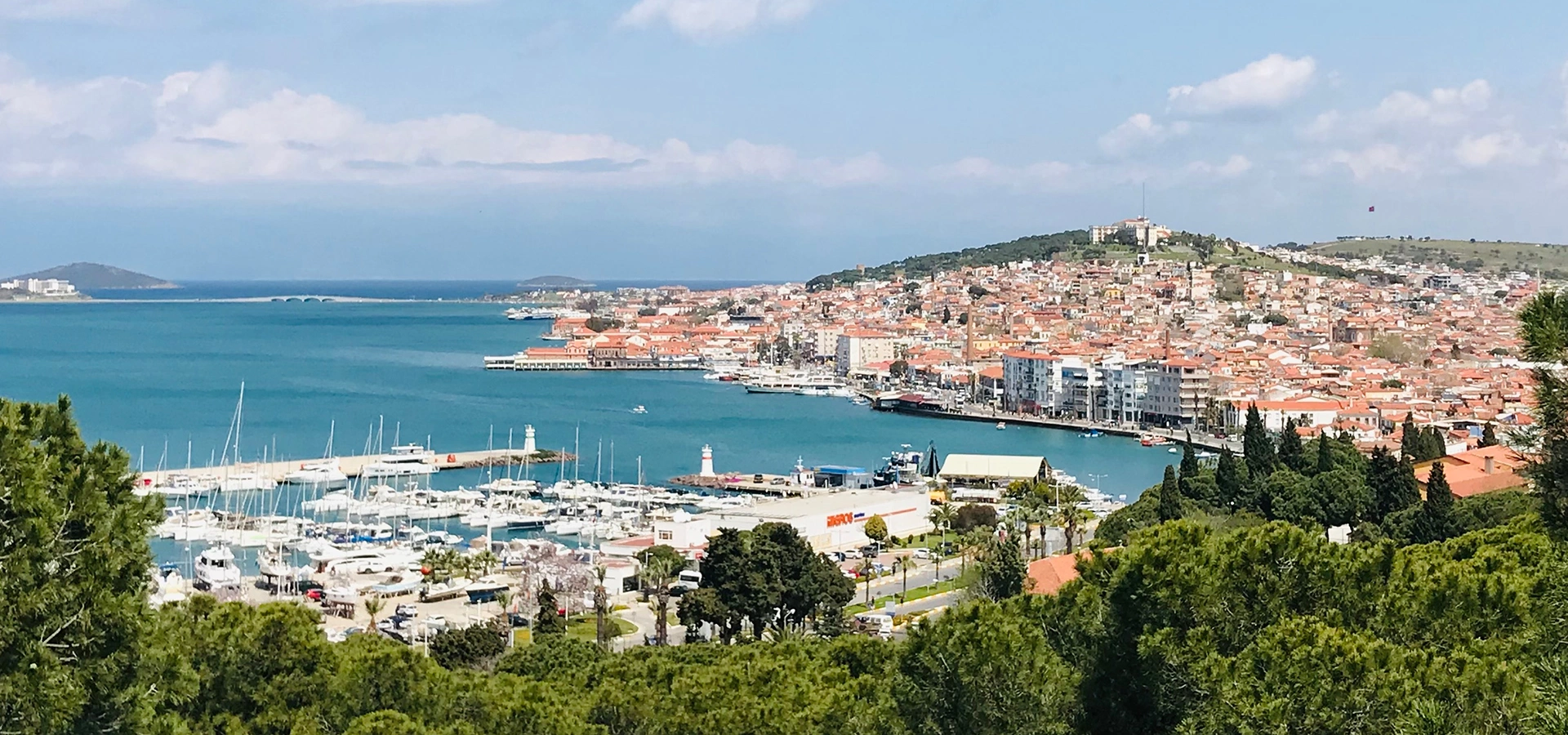
Private Ayvalık & Cunda Experience
Ask us about a tailor-made route combining Ayvalık Old Town, Taksiyarhis, Cunda, Küçükköy, olive culture, local food and the best viewpoints for your interests.
Request a Custom Tour





On the North Aegean coast of Balıkesir Province, Ayvalık is one of Türkiye's most distinctive seaside towns: a place where a historic urban landscape, olive-covered hills, former churches, mosques, stone houses, old olive-oil factories, fishing harbours, beaches and an archipelago of small islands all belong to the same story.
The town's identity was shaped especially strongly during the 18th and 19th centuries, when olive cultivation, olive-oil production, soap making and maritime trade created both prosperity and a remarkable architectural landscape. That relationship between agriculture, industry, urban life and the sea is so important that the Ayvalık Industrial Landscape has been on UNESCO's Tentative List since 2017.
For many travellers, Ayvalık begins with Cunda — officially Alibey Island. Its waterfront, historic lanes, Taksiyarhis Church, old Greek houses, fish restaurants and views across the inner sea are among the region's defining experiences. But Cunda is only one part of a much broader destination.
The historic centre of Ayvalık, Küçükköy, Sarımsaklı, Badavut, Şeytan Sofrası, Çamlık, the olive groves and the protected Ayvalık Islands Nature Park create enough variety for several days of sightseeing, swimming, walking, photography and eating extremely well.
Walk through a dense old town of stone houses, former churches, mosques, workshops and streets shaped by centuries of Aegean life.
Explore one of the North Aegean's most atmospheric island settlements, connected to the mainland by road yet still defined by the sea.
Discover the agricultural and industrial landscape behind Ayvalık's historic wealth, from olive groves to old factories and soap workshops.
Combine beaches and boat trips with papalina, seafood, meze, olive-oil dishes, lor dessert and the famous Ayvalık toast.
Essential information for planning a cultural, coastal and food-focused visit to one of the North Aegean's most rewarding destinations.
Ayvalık District, Balıkesir Province, on Türkiye's North Aegean coast opposite Lesbos.
The Ayvalık Industrial Landscape has been included on Türkiye's UNESCO World Heritage Tentative List since 2017.
Cunda, officially Alibey Island, is the largest and most visited island of the Ayvalık archipelago.
Ayvalık Islands Nature Park covers 19,624 hectares and includes 21 islands as well as extensive marine habitat.
Olive groves, olive-oil production, soap making, old factories and warehouses are central to Ayvalık's cultural landscape.
Ayvalık Old Town, Cunda, Küçükköy, Sarımsaklı, Badavut, Çamlık and Altınova each offer a different experience.
Şeytan Sofrası is known for broad views across the islands and some of the area's most popular sunsets.
Papalina, seafood, meze, wild greens, olive-oil dishes, Ayvalık toast, lor dessert and mastic flavours are local favourites.
Balıkesir Koca Seyit Airport is the closest airport to the Ayvalık area.
Allow at least 2 full days; 3–4 days gives time for beaches, Cunda, the old town and a boat or nature day.
Ayvalık brings together architecture, migration history, olive culture, island scenery, beaches and gastronomy in a remarkably compact destination.
Ayvalık is unusual because its most important attractions are not separate from everyday life. The old churches and mosques rise directly from residential streets; historic olive-oil factories sit close to the waterfront; fishing boats, cafés and produce shops remain part of the town's rhythm; and the hills behind the settlement are still defined by olive groves that have shaped the local economy for generations.
Travellers interested in cultural history can spend hours in the historic centre, where 19th-century stone houses, religious buildings, former schools, industrial structures and narrow streets preserve the physical memory of a cosmopolitan Aegean town.
Nature and sea are equally important. The coast opens onto an intricate landscape of islands, channels, bays, pine-covered slopes and clear northern Aegean water. Daily boat trips, swimming, diving, coastal walking and sunset viewpoints make it easy to combine sightseeing with slower holiday time.
Then there is the food. Ayvalık's culinary identity is inseparable from olive oil, Aegean herbs, fish, seafood, Cretan and island traditions and the foodways of communities that arrived after the population exchange. This means a good Ayvalık itinerary should leave time not only for monuments, but also for markets, meze, long lunches and local specialities.
Ayvalık lies in the western part of Balıkesir Province, on the North Aegean coast. It faces the Greek island of Lesbos across the sea and sits between the coastal landscapes of Edremit Gulf to the north and the Dikili/Bergama direction to the south and south-east.
The district's geography is one of the keys to its character. A chain of islands and peninsulas creates a protected inner sea around Ayvalık and Cunda, while inland hills are covered with olive groves. This combination gave the town natural shelter for maritime trade and provided the agricultural foundation for its historic olive-oil industry.
The wider Ayvalık region has a settlement history reaching back to antiquity, and the islands around the modern town were associated in ancient sources with the Hekatonnesoi — the “Hundred Islands” or islands of Apollo. The modern urban identity of Ayvalık, however, developed much later.
From the 18th century into the 19th century, Ayvalık grew rapidly as an important predominantly Greek Orthodox commercial settlement within the Ottoman Empire. Olive cultivation, olive-oil processing, soap making, shipping and regional trade created prosperity and financed a dense urban landscape of houses, churches, schools, workshops, warehouses and factories.
The early 20th century brought war, displacement and a complete transformation of the town's population. Following the 1923 compulsory population exchange between Türkiye and Greece, Orthodox residents of Ayvalık left for Greece, while Muslim communities arriving from places including Lesbos, Crete and Macedonia settled in Ayvalık and Cunda.
That demographic change is still visible in the town's cultural layers. Former churches became mosques, houses changed families, Cretan and island food traditions entered local cuisine, and the same olive groves and industrial buildings continued to support new generations.
A major earthquake in 1944 damaged many structures. Later, changing industrial technology moved much olive-oil production away from the historic centre. Yet a large part of the traditional urban and industrial landscape survived, eventually becoming the focus of conservation, restoration and heritage tourism.
Ayvalık's heritage is not limited to a few isolated monuments. Its real significance lies in the relationship between the olive-growing countryside, the harbour, the historic town and the buildings once used to process and trade olive oil and soap.
That relationship is the basis of the Ayvalık Industrial Landscape, submitted to UNESCO's World Heritage Tentative List by Türkiye in 2017. The nomination highlights the area's olive groves, historic commercial and industrial core, factories, workshops, warehouses, religious buildings and residential fabric.
UNESCO's Tentative List documentation notes that olive groves cover a very substantial part of the district and describes olive cultivation as the natural foundation of the historic industrial landscape. In the 19th and 20th centuries, oil mills, soap works, depots and their brick chimneys became defining elements of Ayvalık's skyline and economy.
For visitors, this is a useful way to understand the town: do not look only for a single “UNESCO monument.” Instead, look at the whole landscape — the groves outside town, the industrial buildings near the coast, the harbour, the old commercial streets and the residential quarters climbing the slopes behind them.
The agricultural landscape is the foundation of Ayvalık's historic economy and visual character.
Historic factories and workshops preserve the material history of production, processing and trade.
Storage and maritime infrastructure connected the olive economy with regional and international markets.
Houses, churches, schools and streets reveal the urban society created around the olive economy.
The historic centre is the best place to understand Ayvalık on foot. Behind the waterfront, streets climb gradually into neighbourhoods filled with stone houses, courtyards, ornamental façades, old workshops, churches converted into mosques and traces of the industrial city.
This is not an open-air museum separated from modern life. People still live, shop, repair houses, run cafés and use places of worship inside the historic fabric. That makes the old town more interesting, but it also means visitors should explore quietly and respectfully.
Look for details rather than only major monuments: carved stone door surrounds, iron balconies, timber shutters, paved lanes, corner fountains, old shopfronts and views that suddenly open toward the sea. The distinctive local building stone often called sarımsak taşı appears in many historic structures.
A slow walk of two or three hours, combined with Taksiyarhis Monument Museum, Saatli Mosque, Çınarlı Mosque, Ayazma Church and the waterfront, makes an excellent introduction to the town.
Ayvalık's religious architecture tells the story of demographic change more clearly than almost any other part of the town. Several important buildings were constructed as Greek Orthodox churches and later adapted for Muslim worship after the population exchange, while others now function as museums or cultural sites.
Ayvalık's historic Taksiyarhis Church, richly decorated with icons, reliefs, gilded details and painted religious scenes.
Originally Agios Ioannis Church, later converted into a mosque and still one of the old town's defining landmarks.
A monumental 19th-century former church whose architecture remains one of the most striking in central Ayvalık.
Built as Kato Panagia Church in 1850 and later converted into a mosque after 1928.
A neoclassical sacred building associated with a holy spring and an important part of Ayvalık's Christian heritage.
An Ottoman-period mosque that adds another architectural layer to Ayvalık's overwhelmingly stone-built historic fabric.
In the historic centre, the Taksiyarhis Church is one of Ayvalık's most important monuments. The site has several building phases; the present form reflects major rebuilding during the 18th and 19th centuries.
Today it functions as the Taksiyarhis Monument Museum. The interior is especially memorable for its icons, painted religious scenes, gilded ornament, relief decoration, marble work and the strong visual contrast between the relatively restrained exterior and the richly decorated interior.
The museum is a useful first stop because it helps visitors imagine the scale and wealth of the former Greek Orthodox community before exploring other religious buildings that were later converted to mosques.
Cunda, officially known as Alibey Island, is the largest and most famous island in the Ayvalık archipelago. It is connected to the mainland by road, so visiting feels easy, yet its harbour, old streets, stone architecture and island views create a very different atmosphere from central Ayvalık.
The waterfront is lined with restaurants, cafés, small hotels and fishing boats. A few streets inland, the mood changes quickly: historic stone houses, old schools, church architecture and steep lanes reveal the island's 19th-century urban heritage.
The main cultural landmark is the former Taksiyarhis Church, now the Cunda Rahmi M. Koç Museum. The island is also an excellent base for exploring Pateriça, quiet coves, olive landscapes and the more remote northern and western parts of the island.
Cunda is busiest on summer evenings. For a quieter experience, arrive in the morning, walk the backstreets before lunch, stay for the museum and waterfront, then remain through sunset and dinner.
Walk beyond the waterfront to see stone houses, old schools, lanes and neighbourhood architecture.
Visit the restored Taksiyarhis Church, now home to a collection of industrial, mechanical and historical objects.
Seafood, meze, papalina and long Aegean dinners are an essential part of the Cunda experience.
Go beyond the centre for olive groves, quieter coastlines, Pateriça and a more rural side of Cunda.
Cunda's landmark Taksiyarhis Church was built on earlier foundations and took its major 19th-century form in the late Ottoman period. Its basilical plan, neoclassical character and local stone construction make it one of the island's most important architectural monuments.
After decades of changing use and deterioration, the building was restored by the Rahmi M. Koç Museum and Culture Foundation and opened as a museum in 2014.
The collection differs from a conventional church museum. Alongside the restored architecture, visitors see objects related to transport, engineering, mechanical history, toys, timekeeping and everyday technology, creating an unusual dialogue between industrial heritage and sacred architecture.
Even if you are not especially interested in mechanical collections, the restoration, interior volume, stonework and setting make this one of the essential cultural stops on Cunda.
A short distance from Ayvalık and Sarımsaklı, Küçükköy offers a different heritage experience. The settlement, historically known as Yeniçarohori, preserves stone architecture, cobbled streets and a layered cultural history.
The village has become known for art galleries, small studios, creative spaces and restored historic buildings. At the same time, Bosniak culture remains an important part of local identity, adding another migration story to the Ayvalık district.
GoTürkiye describes Küçükköy as an urban conservation area and highlights its traditional Greek-style stone houses, art galleries and cultural heritage. The local city museum adds useful historical context.
Küçükköy works especially well in the late afternoon before continuing to Sarımsaklı or Şeytan Sofrası for sunset.
About 8 kilometres south of central Ayvalık, Şeytan Sofrası is a rocky hill formed from old volcanic material. Its name, meaning “Devil's Table,” comes from the plateau-like shape and local legends surrounding a footprint-like formation in the rock.
The main reason to visit is the panorama. From the viewpoint, you can look across the Ayvalık islands, channels, peninsulas and the Aegean toward Lesbos. The landscape becomes especially dramatic in the hour before sunset.
Sunset is also the busiest time. If you want easier parking, less crowding and clearer opportunities for photography, arrive well before the sun approaches the horizon.
Panoramic views, sunset, photography and understanding the geography of the Ayvalık archipelago.
Approximately 8 km south of Ayvalık centre.
Late afternoon, ideally before peak sunset crowds arrive.
Sarımsaklı, Badavut, Küçükköy or Çamlık for an easy half-day route.
Ayvalık's coastal appeal ranges from long organised beaches to quieter coves and island swimming stops. Water can feel cooler than the southern Aegean and Mediterranean, especially when northern winds are active, but summer conditions are often excellent for swimming.
The area's best-known long sandy beach, with extensive visitor facilities and easy access from Ayvalık.
A more natural-feeling coastal area near Sarımsaklı, popular for clear water and a broader landscape setting.
Small bays around Cunda offer a quieter alternative to the main resort beaches, especially outside peak weekends.
Daily cruises reach island coves and offshore swimming points that are difficult or impossible to access by road.
The southern part of the district offers long stretches of coastline and a less concentrated visitor atmosphere.
A small protected coastal nature park combines pine vegetation, recreation and access to the sea.
The Ayvalık Islands Nature Park is one of the most important protected landscapes in the district. It received nature-park status in 1995 and today covers approximately 19,624 hectares, most of which is marine area.
Official nature-conservation information lists 21 islands within the park, including Alibey/Cunda, Çıplak, Güneş, Yumurta, Balık, Kara, Güvercin and several smaller islands.
The park is valuable not only for scenery, but for the relationship between marine ecosystems, Mediterranean vegetation, olive groves, traditional settlement patterns and wildlife. Activities can include walking, birdwatching, landscape photography and diving, while boat trips provide the most practical way for many visitors to experience the marine side of the protected area.
Not every part of the nature park is a serviced visitor attraction. Some sections are remote, some are marine-only, and access conditions vary. Plan specific routes rather than assuming there is a single central park entrance with full facilities.
A day on the water is one of the best ways to understand Ayvalık's geography. From land, the islands often overlap visually; from a boat, the channels, bays, rocky shores and protected inner sea become much clearer.
Typical summer boat trips include several swimming stops and spend much of the day cruising through the archipelago. Exact routes depend on weather, wind, sea conditions and the operator.
Best for travellers who want several swimming stops and a relaxed sea-focused day.
A better option for couples, families or small groups wanting flexible timing and quieter coves.
North Aegean winds can affect routes, swimming comfort and sea conditions, so plans may change.
Sun protection, swimwear, a light layer for wind, water shoes if useful and a waterproof bag for electronics.
Ayvalık has a long-established reputation for scuba diving. The protected marine environment, islands, rocky formations and varied underwater terrain create dive opportunities for different experience levels.
Official nature-park information specifically identifies diving among the activities possible in the Ayvalık Islands Nature Park and notes the presence of underwater coral areas.
Always dive through a properly licensed local operator, follow current conservation rules and allow the centre to select sites according to your certification, experience and the day's sea conditions.
You cannot fully understand Ayvalık without understanding the olive. Olive groves cover much of the surrounding landscape, and for generations they supported olive-oil mills, soap factories, storage buildings, shipping and family businesses.
UNESCO's Tentative List documentation treats the olive groves as the natural background and economic foundation of the industrial landscape. The town's old factory buildings and brick chimneys are therefore not random industrial remains; they are physical evidence of the system that created Ayvalık's prosperity.
For visitors, olive culture can be experienced through local producers, olive-oil tastings, speciality shops, markets and seasonal harvest-related events. The harvest period generally falls in autumn and early winter, when the relationship between the town and its agricultural hinterland becomes especially visible.
Taste oils carefully and compare aroma, bitterness and peppery finish rather than buying only by packaging.
Local shops sell several preparations and styles; ask to taste before choosing.
Soap making is historically linked to the same industrial system as oil production.
Autumn is particularly interesting for travellers focused on olive culture, local food and seasonal events.
Ayvalık's cuisine reflects the sea, olive oil, Aegean herbs and the migration history of the district. Fish and seafood matter, but the local table is equally defined by vegetables, wild greens, meze, cheese, pastries and recipes carried by families from the Aegean islands, Crete and the Balkans.
The town's most famous street-food name: a substantial toasted sandwich that exists in many local variations.
A small fish strongly associated with Cunda and Ayvalık, especially popular fried when in season.
A local sweet made with fresh lor cheese, usually served with syrup and valued for its soft texture.
Vegetables, beans and wild greens prepared generously with local olive oil are essential to the regional table.
Expect herb dishes, seafood preparations, yoghurt-based plates and seasonal vegetables at taverns and fish restaurants.
Choose according to season and daily availability rather than expecting every fish to be local and fresh year-round.
Mastic appears in ice cream, cookies and sweets, reflecting wider island and Aegean culinary connections.
Simple fried sweets and bakery items remain part of the everyday food landscape beyond restaurant dining.
Cunda's waterfront is famous for fish restaurants and meyhane-style dining. The best experience is not simply ordering one large fish; it is building a meal gradually with cold meze, seasonal greens, seafood, small hot plates and whatever is genuinely fresh that day.
Papalina is one of the island's signature names, but availability is seasonal. Ask what was actually landed or sourced that day, and do not be afraid to choose simpler local fish over a more expensive option with a better-known name.
In peak summer, the waterfront can become extremely busy. Reserve ahead for a specific restaurant, or eat slightly earlier or later than the main dinner rush if you prefer a calmer evening.
Excellent for walking, old-town exploration, wildflowers, quieter streets and comfortable sightseeing temperatures.
A strong balance of beach weather and manageable crowds before the busiest part of summer.
Best for classic beach holidays and nightlife, but expect heat, traffic, crowded Cunda evenings and busy weekends.
One of the best all-round months: warm sea, softer light, good food and generally easier sightseeing.
Ideal for olive culture, food, photography and heritage travel; swimming becomes more weather-dependent.
Quiet and atmospheric, with a more local rhythm, but some seasonal tourism businesses may close or reduce hours.
The closest airport is north of Ayvalık near Edremit. Private transfer, taxi or road transport can connect the airport with Ayvalık.
Ayvalık is reached by road north from İzmir. Driving time varies with route, traffic and the season.
Long-distance buses and private road travel are common. Allow substantial time, especially on summer and holiday weekends.
The coastal road south through the North Aegean makes Ayvalık a natural stop on a wider Çanakkale–Assos–Kazdağları route.
Cunda is connected by road and can be reached by local transport, taxi, private vehicle and seasonal boat services.
Central heritage areas are best explored on foot; use local transport or a vehicle for Cunda, Sarımsaklı, Badavut and Şeytan Sofrası.
Best for architecture, cafés, museums, local street life and travellers who want to explore the historic centre on foot.
Best for atmosphere, waterfront dinners, boutique accommodation and evenings centred around the island.
Best for travellers whose priority is easy daily beach access and a classic summer-holiday setting.
A quieter coastal option positioned between central Ayvalık and the beaches to the south.
Good for art, village atmosphere and travellers who prefer to stay slightly outside the busiest waterfront areas.
Staying outside the historic core can make parking and day trips easier, particularly in July and August.
Focus on Ayvalık Old Town, Taksiyarhis Monument Museum, Cunda and sunset at Şeytan Sofrası.
Add Küçükköy, Sarımsaklı or Badavut and allow more time for Cunda's backstreets and food.
Ideal for a first visit: heritage, Cunda, beaches, olive culture and either a boat trip or slower nature day.
Best for summer travellers who want sightseeing without sacrificing relaxed beach time, long meals and island exploration.
This is a full day and works best with efficient transport. If you prefer slow photography, museum detail or a long Cunda lunch, move Şeytan Sofrası or part of the old town to a second day.
Ayvalık Old Town, Taksiyarhis Monument Museum, Saatli Mosque, Çınarlı Mosque and the historic commercial streets.
Cunda Island, the Rahmi M. Koç Museum, old island streets and a waterfront dinner.
Küçükköy, art spaces and village streets, followed by Sarımsaklı or Badavut for swimming.
Şeytan Sofrası for sunset, then return to Ayvalık or Cunda for dinner.
If your priority is history rather than swimming, replace part of Day 3 with a deeper walk through Ayvalık's industrial landscape, Ayazma Church, Çamlık, Tımarhane Island or additional heritage buildings.
Use softer morning light for stone façades, doorways, climbing streets and architectural detail.
Late-day light works beautifully on the harbour, red-tiled roofs and stone houses.
Use a wide view for the archipelago, but arrive early enough to find a clean viewpoint before crowds build.
Side-light in autumn and winter reveals the trunks, silver leaves and texture of the agricultural landscape.
Old chimneys, factory façades, warehouses and harbour edges tell a more original Ayvalık story than postcard views alone.
Many photogenic houses are private homes. Avoid doorways, windows and close portraits without permission.
Ayvalık's historic charm comes with practical limitations. Old-town and Cunda streets can include slopes, uneven paving, narrow pavements and steps. Some historic buildings also have access constraints that are difficult to eliminate completely.
The flatter waterfront areas are generally easier, and vehicle drop-off can reduce walking for travellers with limited mobility. For museums, churches, beaches and boat trips, confirm current access arrangements directly if step-free access is essential.
Summer heat can also make short distances feel much longer. Travellers with mobility or heat sensitivity may find spring, early summer or autumn more comfortable than July and August.
The island is more rewarding when you leave the waterfront and walk through the historic backstreets.
Roads and parking around central Ayvalık, Cunda and Sarımsaklı can become difficult during peak weekends.
Historic lanes can be steep, polished, uneven or cobbled.
Even in summer, boat trips and exposed viewpoints can feel cool when the North Aegean wind strengthens.
Popular Cunda and Ayvalık restaurants can fill quickly in July, August and holiday periods.
Papalina, seafood and local produce are best approached according to season rather than treated as year-round guarantees.
Taste where possible and ask about producer, harvest, storage and olive variety instead of choosing only by label design.
Respect nature-park rules, avoid littering and do not remove marine life, plants or archaeological material.
Historic streets, stone houses, religious architecture, workshops and the urban heart of the industrial landscape.
Harbour life, old houses, churches, museums, seafood and some of the most atmospheric streets in the district.
A richly decorated historic church and one of the most important cultural monuments in Ayvalık centre.
A beautifully restored former Taksiyarhis Church containing industrial and mechanical collections.
Ayvalık's classic panoramic viewpoint for islands, Aegean horizons and sunset.
Historic Yeniçarohori, stone architecture, Bosniak heritage, art galleries and a creative village atmosphere.
A long sandy beach and the district's best-known summer swimming area.
A scenic coastal area with clear water and a more natural landscape than the busiest resort zones.
Protected marine and island landscapes covering more than 19,000 hectares.
A neoclassical sacred building associated with Ayvalık's former Greek Orthodox community and holy-spring tradition.
A former church converted to a mosque, notable for its tower and central old-town location.
One of Ayvalık's grandest former church buildings, now an active mosque.
The former Kato Panagia Church, built in 1850 and later adapted for Muslim worship.
A pine-framed coastal area south of central Ayvalık with scenic road views and access toward Tımarhane Island.
A dramatic rocky setting near Çamlık with surviving remains associated with the former Aya Paraskevi / Taşlı Monastery.
A municipal viewpoint looking over Ayvalık, its bay and islands from above.
Combine Ayvalık with one of western Anatolia's greatest ancient cities, including the Acropolis and Asklepion.
Head north for the Temple of Athena, ancient city, stone village atmosphere and views across the Aegean.
Explore mountain villages, forests, waterfalls and landscapes associated with ancient Mount Ida.
Combine coastal towns, olive culture and local museums across the northern side of the gulf.
A relaxed coastal extension south of Ayvalık, useful as part of a wider northern İzmir route.
International ferry connections may operate seasonally or according to current schedules; check passport, visa and sailing requirements before planning.
Ayvalık is in Balıkesir Province on Türkiye's North Aegean coast, opposite the Greek island of Lesbos.
Yes. Cunda is the widely used historic and popular name; the island's official Turkish name is Alibey Adası.
Not on the inscribed World Heritage List. The Ayvalık Industrial Landscape has been on Türkiye's UNESCO Tentative List since 2017.
It is especially known for Cunda, historic stone architecture, olive oil, old factories, Sarımsaklı Beach, Şeytan Sofrası, seafood and Ayvalık toast.
Two to three full days is a strong first visit. Add more time if beaches, boat trips or a relaxed summer holiday are important.
Yes, but keep the route focused: Ayvalık Old Town, Taksiyarhis Monument Museum, Cunda and Şeytan Sofrası make a good long day.
May, June, September and October are especially attractive for combining comfortable sightseeing with good weather. July and August are best for beach-focused trips but are much busier.
No. Spring and autumn are excellent for architecture, food, walking, olive culture and photography, while winter offers a quieter local atmosphere.
Try papalina, Ayvalık toast, lor dessert, olive-oil dishes, Aegean greens, meze, seasonal seafood and local olives and olive oil.
Yes. Cunda is one of the essential parts of an Ayvalık trip because it combines historic architecture, a major museum, island scenery, restaurants and an atmospheric waterfront.
Ayvalık centre has the larger historic urban fabric, more industrial heritage and several major religious monuments. Cunda feels more island-like and is especially known for its harbour, stone houses, museum and dining.
Şeytan Sofrası is the classic sunset viewpoint, while Cunda and several coastal locations also provide excellent evening light.
Sarımsaklı Beach is the best-known long sandy beach in the Ayvalık district.
It is a protected landscape of islands, marine habitat, olive groves and natural vegetation covering approximately 19,624 hectares.
Current official nature-conservation information lists 21 islands within the park.
Yes. Day cruises around the islands are a classic summer activity, usually combining scenic cruising with several swimming stops.
Yes. Ayvalık is an established diving destination, and official nature-park information includes diving among the activities available in the protected area.
Olive growing has shaped the district's economy, landscape and architecture for centuries. Historic oil mills, soap works and warehouses are central to Ayvalık's industrial heritage.
Yes, especially if you enjoy stone villages, art spaces, local cultural history and quieter streets away from the busiest waterfront areas.
It is a volcanic hill and panoramic viewpoint about 8 km south of Ayvalık centre, best known for views across the islands and sunset.
Balıkesir Koca Seyit Airport near Edremit is the closest airport to the Ayvalık area.
Not for the historic centre, but a car, taxi or local transport is useful for Cunda, Küçükköy, Sarımsaklı, Badavut and Şeytan Sofrası.
Yes. Beaches, boat trips, easy food options and short travel distances work well for families, although steep old-town streets and summer heat require some planning.
Very much so. Its strongest themes include Ottoman-era Greek Orthodox heritage, population exchange, industrial history, olive culture and preserved 19th-century urban architecture.
International ferry services may operate according to current schedules. Always check the latest sailing timetable and entry requirements before building the crossing into your itinerary.
Costs vary greatly by season and location. Cunda waterfront accommodation and restaurants can be expensive in peak summer, while local cafés, small restaurants and stays outside the busiest areas can be more moderate.
Central Ayvalık and central Cunda are best explored on foot, but the historic streets can be steep, narrow and uneven. Transport is useful between the district's separate visitor areas.
Good local choices include olive oil, table olives, olive-oil soap and locally made food products. Choose reputable producers and check packaging if you are flying.
A private Ayvalık itinerary can focus on historic architecture, Cunda, olive-oil culture, food, photography, beaches or a wider North Aegean route combining several themes.
Tell us whether your priority is history, Cunda, olive heritage, food, beaches, photography, a boat experience or a combination, and we can shape the day around your available time and travel style.
Ask us about a tailor-made route combining Ayvalık Old Town, Taksiyarhis, Cunda, Küçükköy, olive culture, local food and the best viewpoints for your interests.
Request a Custom Tour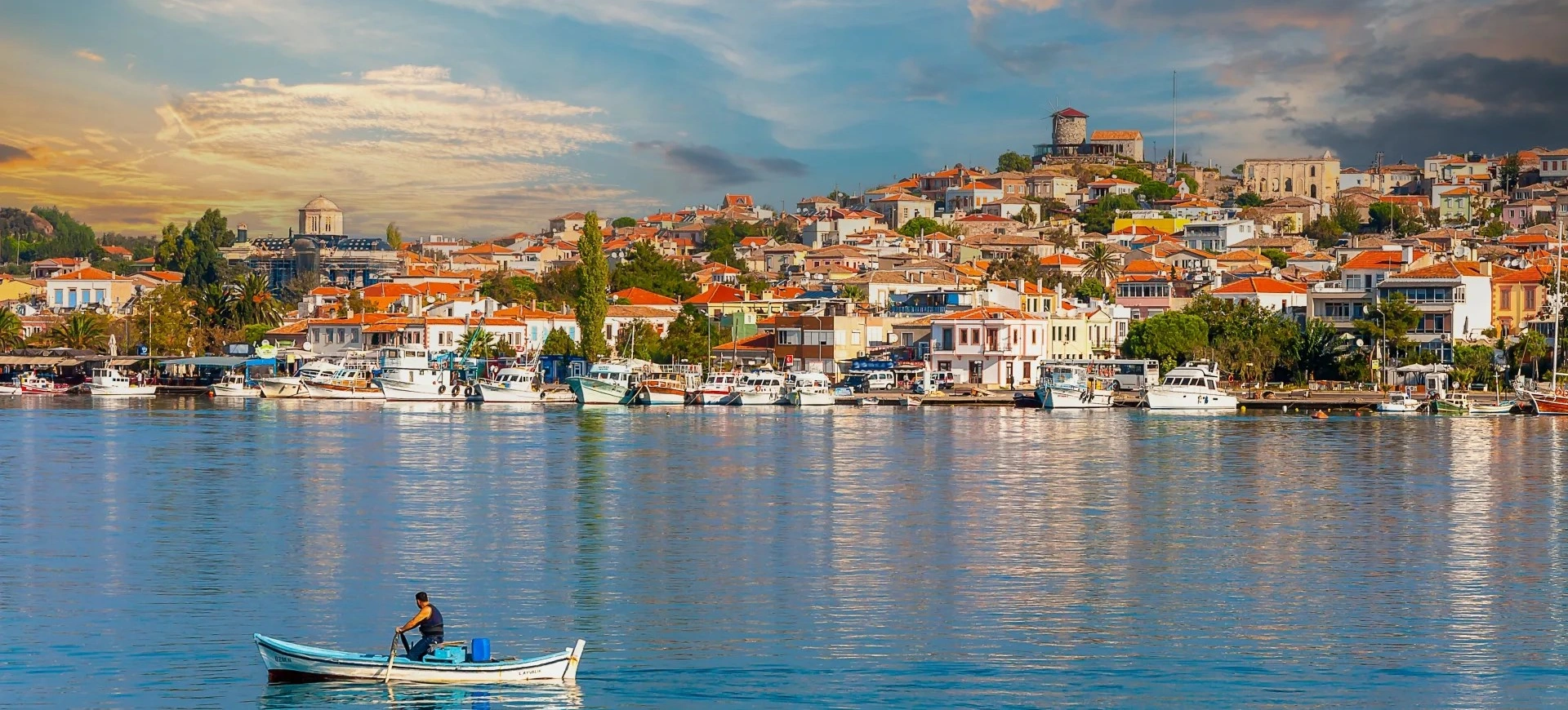
Continue through the province with Kazdağları, Edremit Gulf, Burhaniye, Gömeç, historic towns, beaches, thermal areas and the wider North Aegean landscape.
View Balıkesir Guide