Local Heritage & Researched Context
Bahçeli Roman Pool – History & Significance
Explore the evidence, historical landscape and distinctive features of Bahçeli Roman Pool.
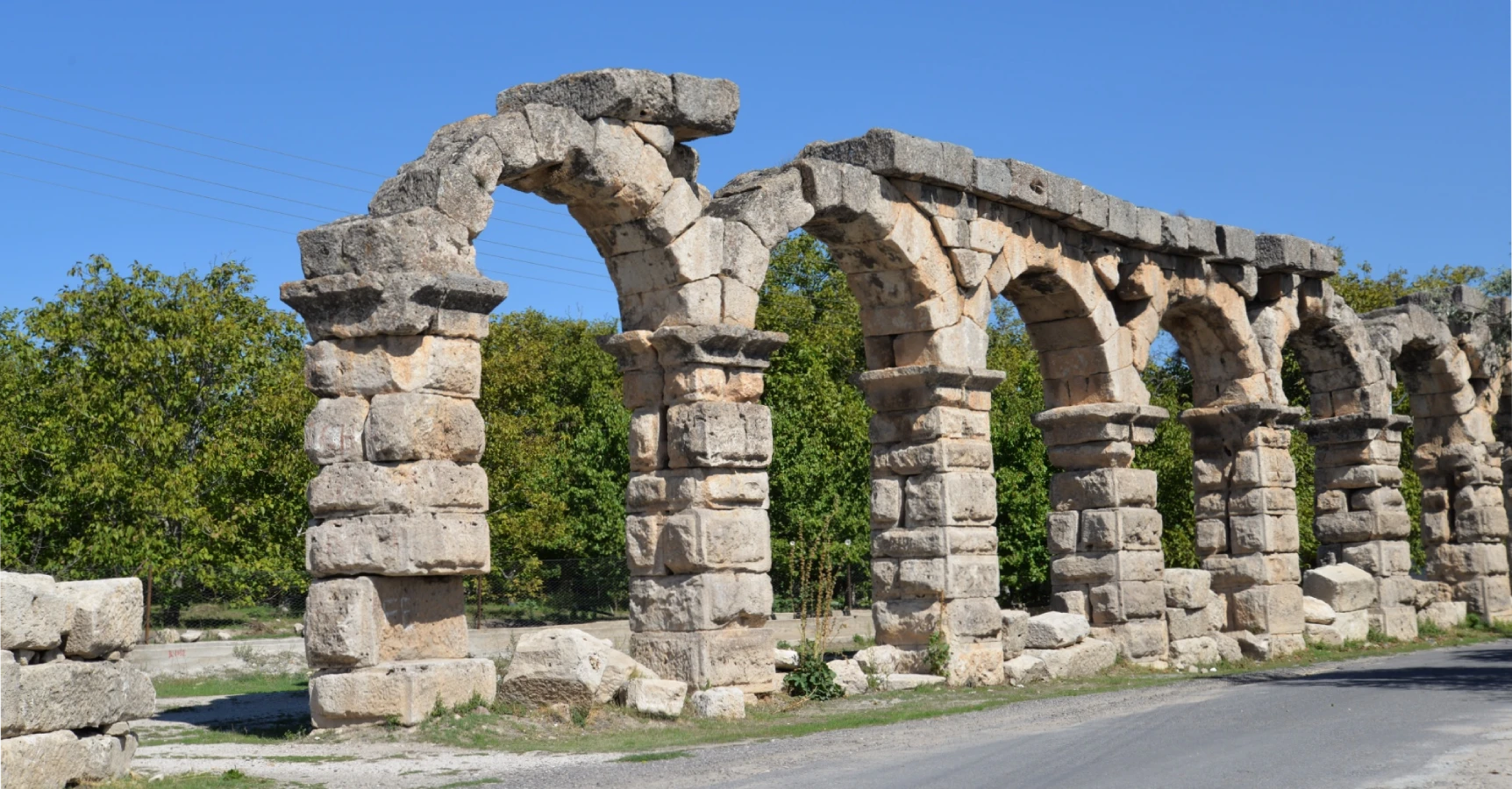
The Roman Pool at Bahçeli is linked to the spring-water landscape serving ancient Tyana. Its historical significance lies not only in the basin but also in the relationship between water capture and the aqueduct system near Kemerhisar.
Water management supported urban life, agriculture and the prestige of Roman-period settlements. The precise chronology of individual alterations should be treated cautiously without an excavation report.
The Roman Pool in Bahçeli is associated with the same spring-water landscape that supplied ancient Tyana at Kemerhisar. The historical relationship between a collection basin and the monumental aqueduct is more useful than treating either as a detached photo stop.
Provincial descriptions connect the basin and waterworks to the early Roman imperial period. Exact construction phases and later repairs are matters for archaeological investigation, especially where water facilities remained functional over long spans of time.
Near the pool, Köşk Höyük introduces an entirely different and much earlier chapter: Neolithic and Chalcolithic communities, buried house floors and farming in the Bor plain. A combined itinerary can therefore move from prehistoric settlement to Roman hydraulic engineering within a relatively compact landscape.
The cultural portal places the Roman Pool roughly three kilometres north of Bahçeli and links its spring-fed water to the aqueducts supplying Tyana. It is part of a hydraulic landscape, not an unrelated swimming attraction.
The relationship between the source basin and Kemerhisar illustrates how Roman engineers organised urban water on the Bor plain. Present water conditions and heritage protection should determine what activities are allowed at the pool.