Bursa Through the Ages
Follow the development of the region from prehistoric communities through Bithynian, Roman, Byzantine and Ottoman Bursa.
- Theme: Chronological history
- Periods: Ancient to modern
- Best for: First-time visitors






Few museums provide a better introduction to Bursa than Bursa City Museum – Bursa Kent Müzesi.
Located directly in the historic city centre, the museum brings together archaeology, Ottoman history, Republican-era transformation, traditional crafts, silk production, local customs, food, thermal culture, industry and everyday city life under one roof.
The museum opened on 14 February 2004 with the purpose of preserving and presenting Bursa's cultural, historical, social and economic memory.
Its setting is itself part of the story.
Bursa City Museum occupies the city's former Courthouse building, constructed in 1926 during the early Republican period in the architectural language of the First National Architectural Movement.
For more than seventy years, the building served as Bursa's courthouse before being transferred to Bursa Metropolitan Municipality, restored and transformed into a museum.
Today its three floors take visitors through a remarkable journey.
The galleries introduce prehistoric Bursa, Bithynia, Roman and Byzantine history, the rise of Ottoman Bursa, the Turkish War of Independence, the Republican period, migration, urbanisation and the growth of the modern city.
Other galleries explore the subjects that make Bursa different from almost any other city in Türkiye: silk, historic bazaars, traditional craftsmen, thermal baths, Karagöz and Hacivat, local cuisine, Uludağ and industrial development.
One of the museum's most atmospheric areas is the Traditional Crafts Bazaar, where recreated historic workshops introduce trades that once filled Bursa's commercial streets.
Visitors encounter representations of towel makers, saddlers, blacksmiths, shoemakers, knife makers, coppersmiths, carpenters, felt makers, basket makers, tile makers, sweet makers and other traditional craftsmen.
Another major theme is Silk City Bursa.
For centuries, Bursa stood at the heart of an international silk economy connecting Anatolia, Iran, Central Asia, the Mediterranean and Europe.
The museum helps visitors understand how silk, textiles, markets and manufacturing shaped the city's wealth and identity.
Bursa City Museum is therefore much more than a collection of historical objects.
It is designed as a portrait of an entire city — its landscape, people, memories, work, traditions, changes and cultural identity.
For first-time visitors, it is one of the best places to understand Bursa before exploring the mosques, tombs, bazaars, külliyes and neighbourhoods outside.
Follow Bursa from prehistoric settlement through Bithynian, Roman, Byzantine, Ottoman and Republican history.
Walk through atmospheric recreated workshops representing professions that once filled Bursa's historic commercial streets.
Discover how sericulture, weaving and international trade made Bursa one of the great silk centres of the Ottoman world.
Explore thermal traditions, cuisine, entertainment, clothing, Karagöz and Hacivat and everyday Bursa life.
Visit a beautifully restored 1926 civic building belonging to Türkiye's First National Architectural Movement.
See how photographs, documents, objects and personal memories preserve Bursa's constantly changing urban identity.
Essential information for visiting one of the best introductions to Bursa's history and cultural identity.
Hocaalizade, Atatürk Caddesi, Kültür Sokak No:8, Osmangazi, central Bursa.
Open on Google MapsBursa City Museum opened to visitors on 14 February 2004.
Tuesday–Sunday, 09:00–17:30. Closed Monday.
General museum admission is currently free.
Former Bursa Courthouse, constructed in 1926.
Allow approximately 1.5–2 hours for a relaxed visit.
The museum connects Bursa's monuments with the people, industries, traditions and historical changes that created the city around them.
Bursa contains an extraordinary concentration of Ottoman mosques, tombs, bazaars, bridges and historic neighbourhoods.
Yet simply looking at monuments does not always explain why Bursa became such an important city.
Bursa City Museum helps provide that context.
It explains how geography, trade, silk, migration, religion, craftsmanship, thermal water, agriculture, industry and political history combined to shape Bursa.
For visitors planning to explore places such as Ulu Cami, Koza Han, Tophane, Muradiye, Yeşil, Emir Sultan and the historic bazaar district, the museum makes those later visits much easier to understand.
Instead of concentrating on a single period, Bursa City Museum presents the city as a continuous story.
Ancient Prusa, Ottoman Bursa, industrial Bursa and the modern metropolis are treated as different chapters of the same evolving urban landscape.
This makes the museum particularly valuable for first-time visitors, families, history enthusiasts and travellers who want more than photographs of monuments.
The museum's galleries combine chronological history with themed presentations about Bursa's distinctive culture and economy.
Follow the development of the region from prehistoric communities through Bithynian, Roman, Byzantine and Ottoman Bursa.
Understand how Bursa developed into an early Ottoman political, commercial, religious and artistic centre.
Walk beside reconstructed shops representing occupations once central to Bursa's commercial life.
Discover the production and commerce behind the silk that made Bursa famous across the Ottoman Empire and Europe.
Explore traditional clothing, customs, cuisine, entertainment, thermal culture and domestic life.
Learn about the famous shadow-theatre tradition closely associated with Bursa and Ottoman popular culture.
See how migration, industrialisation, architecture and rapid urban growth transformed the city.
Study an important example of early Republican civic architecture while exploring the collections.
Bursa City Museum was established to create a permanent memory of Bursa.
Rather than presenting only archaeological treasures or works of fine art, the museum was conceived as an institution capable of documenting the entire experience of living in the city.
Its collections therefore include many different types of material:
Everyday objects help explain the changing lives, occupations and traditions of Bursa residents.
Written records preserve important moments in the administrative, commercial and social history of the city.
Historic images show neighbourhoods, buildings, streets, people and landscapes that have changed or disappeared.
Publications concerning Bursa contribute to the museum's role as a centre of urban memory.
Recorded memories and moving images document aspects of Bursa that conventional museum objects cannot preserve.
Objects donated by Bursa residents help transform individual family memories into part of the city's shared history.
The museum's approach helped make it an influential example of contemporary city museology in Türkiye.
Its work also received international recognition through the European Museum Forum in 2006.
The building containing Bursa City Museum is itself an important historical monument.
It was constructed in 1926 as Bursa's courthouse and is associated with architect Ekrem Hakkı Ayverdi.
Architecturally, the building belongs to the First National Architectural Movement, an important phase in late Ottoman and early Republican Turkish architecture.
The courthouse was completed during the formative years of the Turkish Republic.
The balanced façade reflects the formal character expected of an important civic institution.
The roofline contributes strongly to the building's First National Architectural Movement character.
Arched and rectangular windows combine modern civic design with references to earlier Turkish architecture.
The building served Bursa's judicial administration for more than seventy years.
Restoration transformed the old courthouse into a cultural institution without erasing its architectural identity.
After Bursa's courts moved to a new complex, the historic building was transferred to Bursa Metropolitan Municipality in 2001.
Following restoration, it reopened as Bursa City Museum in 2004.
The conversion is an excellent example of adaptive reuse: a building that once represented state administration now preserves the collective memory of the city it served.
The museum's historical galleries introduce Bursa in broadly chronological order.
The story begins long before the Ottoman conquest.
Visitors encounter the wider archaeological landscape of Bursa, then move through Bithynian, Roman, Byzantine, Ottoman and modern periods.
Bursa's identity did not begin with the Ottomans.
Human settlement in the wider region stretches back thousands of years, while ancient Prusa developed within the kingdom of Bithynia.
Its position beneath Mount Olympus – modern Uludağ and close to fertile plains, fresh water and thermal springs made the area naturally attractive for settlement.
The ancient city formed part of the political landscape of northwestern Anatolia before Roman rule.
Roman administration, roads and bathing culture contributed to the development of the city.
Bursa's hot-water resources became one of the defining features of the city long before the Ottoman period.
Bursa continued as a fortified urban centre within the Eastern Roman world.
Understanding these earlier periods makes it easier to recognise Bursa not simply as an Ottoman city, but as a settlement created through many layers of Anatolian history.
The most transformative chapter in Bursa's history began when the city was captured by the Ottomans in 1326.
Bursa became the first major urban capital of the developing Ottoman state.
Successive rulers filled the city with mosques, madrasas, imarets, hamams, tombs, markets, caravanserais and charitable foundations.
The founder of the Ottoman dynasty was buried in Bursa after the city's conquest.
Under Orhan, Bursa became an important administrative and commercial centre of the expanding Ottoman state.
The Hüdavendigar period added major religious and charitable foundations west of the historic centre.
The Yıldırım Complex became another important nucleus in Bursa's expanding urban landscape.
The Green Mosque and Green Tomb became masterpieces of early Ottoman architecture and decoration.
The Muradiye Complex created one of the most important Ottoman dynastic burial landscapes in Türkiye.
Even after the Ottoman political centre shifted toward Edirne and later Constantinople, Bursa retained exceptional religious, commercial and dynastic importance.
No understanding of historic Bursa is complete without silk.
For centuries, Bursa was one of the most important silk-trading and textile-producing cities between Asia and Europe.
Raw silk, silk thread and finished fabrics passed through its markets, connecting Bursa with commercial networks extending toward Iran, Central Asia, the Mediterranean and Europe.
Sericulture depended upon raising silkworms and maintaining access to large quantities of mulberry leaves.
The fertile Bursa region provided conditions suitable for the cultivation that supported silk production.
Processing cocoons into fine thread required knowledge, labour and specialised equipment.
Silk fabrics produced and traded in Bursa became associated with prestige and high-value consumption.
The famous caravanserai remains one of the strongest architectural reminders of Bursa's historic silk economy.
Merchants brought Bursa into commercial networks far larger than the city itself.
After visiting the museum, walk to Koza Han and the surrounding bazaar district.
The exhibits inside the museum provide the historical explanation; the hans and markets outside show the physical landscape created by that trade.
One of the most memorable sections of Bursa City Museum is its recreated traditional crafts street.
The lower-floor gallery evokes the commercial world of old Bursa through workshops representing professions that were once common throughout the city's bazaars.
Bursa developed a strong tradition of blade and knife production that continues to form part of the city's craft identity.
Copper vessels were essential pieces of traditional Ottoman kitchens and households.
Metalworkers supplied tools, fittings and equipment to a city dependent on skilled manual trades.
Saddles and leather equipment were indispensable before motorised transport transformed urban movement.
Woodworking supported houses, shops, furniture and countless everyday objects.
Felt production belonged to a much wider world of traditional textile crafts.
Handmade baskets once formed essential equipment for markets, farms and households.
Ceramic traditions connect Bursa with the wider decorative arts of Ottoman Anatolia.
Food production and specialised shops formed an important part of the traditional bazaar economy.
Textiles connected Bursa's craft economy with its famous baths, markets and household traditions.
Traditional footwear production illustrates the enormous variety of specialised trades once found in Ottoman cities.
Transport before the motor age required specialist craftsmen maintaining carts, harnesses and related equipment.
Look beyond the individual objects.
The deeper lesson is how specialised and interconnected traditional urban economies once were.
A single street could contain dozens of occupations, each depending upon generations of accumulated knowledge.
Political history explains who ruled Bursa, but social history explains what living in Bursa actually felt like.
The museum's cultural galleries turn toward family life, clothing, entertainment, food, customs and traditions.
Costume and textiles reveal differences in occupation, social setting, fashion and changing lifestyles.
Household objects provide an intimate view of daily routines rarely visible in monumental architecture.
Traditional gatherings and social customs reveal the communal rhythms of historic Bursa.
Bursa's cultural life developed far beyond the formal world of mosques and imperial foundations.
Cuisine expresses Bursa's agricultural landscape, migration history and long urban traditions.
The city's hot springs created bathing traditions extending from antiquity into the Ottoman and modern periods.
Among the cultural traditions most closely associated with Bursa is the famous Karagöz shadow theatre.
Its principal comic characters, Karagöz and Hacivat, became icons of Ottoman popular entertainment.
Traditional performances use translucent, jointed figures manipulated behind a brightly illuminated screen.
Direct, impulsive and frequently comic, Karagöz represents the earthy voice at the centre of the traditional dialogue.
More educated and ceremonious in speech, Hacivat acts as Karagöz's frequent opposite.
Traditional figures are illuminated from behind so their coloured forms appear upon the performance screen.
Performances traditionally brought together characters representing many occupations, regions and communities.
Travellers especially interested in this tradition can also visit Bursa's dedicated Karagöz Museum in Çekirge.
Bursa's thermal springs are one of the oldest elements of its identity.
Hot mineral water attracted attention in antiquity and remained important through Byzantine, Ottoman and modern periods.
The relationship between Bursa and thermal bathing began long before Ottoman rule.
Bathing became connected with architecture, charitable foundations, social life and neighbourhood culture.
The western Çekirge district became one of Bursa's most important thermal areas.
Historic baths were places of hygiene, relaxation, ceremony and communal interaction.
This thermal heritage is one reason Bursa developed a distinctive identity as both an imperial city and a place of healing and leisure.
Food is another major part of Bursa's urban identity.
The city's cuisine reflects its fertile agricultural surroundings, Ottoman court connections, migration and centuries of commercial exchange.
Thinly sliced döner served with pide, tomato sauce, butter and yoghurt is Bursa's internationally famous speciality.
Kestane şekeri remains one of the foods most immediately associated with Bursa.
This Bursa-style baked speciality belongs to the city's popular everyday food culture.
Tahinli pide offers another characteristic taste commonly found in Bursa bakeries.
Bursa's fertile plain became famous for fruit production, particularly peaches.
Communities arriving from the Balkans and elsewhere added new dishes to Bursa's already diverse culinary landscape.
A museum visit followed by lunch in the historic centre is therefore an excellent way to connect Bursa's cultural history with its living food traditions.
The twentieth century transformed Bursa dramatically.
The museum explores how the city changed through war, population movements, modern transport, new architecture, industrialisation and rapid urban expansion.
The final Ottoman decades and Turkish War of Independence brought major political and social change.
Migration repeatedly reshaped Bursa's communities, neighbourhoods, cuisine and cultural traditions.
New roads, public buildings and residential districts changed the physical form of the city.
Manufacturing transformed Bursa into one of modern Türkiye's most important industrial centres.
Employment opportunities attracted new residents and dramatically expanded the urban area.
Today's metropolis combines historic neighbourhoods with major textile, automotive and manufacturing industries.
One of Bursa's strongest historical continuities is production.
The techniques have changed, but Bursa has remained a city of makers for centuries.
Ottoman workshops produced silk, metal goods, leather, carriages, food and countless everyday objects.
Modern Bursa developed major industries including textiles, automotive manufacturing, machinery and food production.
Few cities in Türkiye are as visually and historically connected to a mountain as Bursa is to Uludağ.
Known in antiquity as Mount Olympus of Mysia, the mountain rises dramatically south of the city.
Streams and springs flowing from the mountain have supported Bursa for centuries.
Mountain forests contributed timber, natural resources and a green backdrop to the historic city.
Uludağ was associated with monastic and religious traditions long before modern tourism.
The mountain later developed into one of Türkiye's best-known skiing and winter recreation centres.
The museum helps place Uludağ within the broader story of Bursa rather than treating it simply as a nearby ski resort.
Bursa's culture cannot be understood without migration.
Across different centuries, the city received people arriving from other parts of Anatolia, the Balkans, the Caucasus and beyond.
New communities brought languages, food traditions, music, crafts, family customs and different ways of using urban space.
Industrial growth during the twentieth century created another powerful wave of internal migration, turning Bursa into one of Türkiye's major metropolitan centres.
Population movements from former Ottoman territories strongly influenced modern Bursa society.
Growing communities expanded the city far beyond the boundaries of historic Bursa.
Migrant traditions became part of Bursa's shared cultural identity over generations.
Factories attracted workers from throughout Türkiye during Bursa's rapid modern expansion.
A city museum does not simply preserve beautiful objects.
Its larger responsibility is preserving information that future generations may otherwise lose.
Bursa City Museum collects material connected with the city including documents, books, photographs, objects, films, recordings and other historical sources.
Historic photographs allow visitors and researchers to compare vanished streets and neighbourhoods with modern Bursa.
Everyday possessions can reveal social history more effectively than monumental works of art.
Administrative, commercial and private records preserve information about how the city functioned.
Recorded voices and personal recollections preserve experiences that may never appear in conventional written histories.
This constantly growing memory is one reason Bursa City Museum should be understood as a living institution rather than a completed collection.
Education has been an important part of Bursa City Museum since its foundation.
Programmes are designed for audiences ranging from young children to adults.
The museum works with educational groups seeking to learn Bursa's history directly through objects and exhibitions.
Guided museum visits can be organised by prior reservation.
Experiential activities help younger visitors connect with history through participation rather than passive observation.
Changing exhibitions allow the museum to explore individual personalities, anniversaries and specialised themes in greater depth.
Cultural programmes help connect historical research with the contemporary community.
Activities reinforce the idea that local heritage belongs to Bursa residents rather than existing only behind glass.
Groups requesting guided tours, workshops or special educational programmes should arrange them with the museum in advance.
Bursa City Museum has been adapted to provide access for visitors with limited mobility.
Accessible routes assist wheelchair users entering and moving through the museum.
An elevator provides access between the museum's different floors and gallery levels.
Facilities suitable for visitors with disabilities are available within the museum.
Wheelchairs are available for visitors who require additional mobility assistance.
Travellers with specific accessibility requirements should contact the museum before visiting if additional assistance is needed.
Yes.
Bursa City Museum can work particularly well for families because much of its interpretation goes beyond conventional display cases.
Traditional workshops give children an immediate visual understanding of how people once worked.
Visual presentations make long historical periods easier to understand than text alone.
The colourful shadow-theatre tradition provides an accessible introduction to Ottoman popular culture.
The museum can be explored comfortably without requiring an entire day.
Educational activities are periodically organised for different age groups.
Families can combine the museum easily with Bursa's bazaars, parks and major monuments.
Bursa Metropolitan Municipality museums are also normally closed on 1 January and the first day of religious holidays.
Opening hours, temporary closures, special events and holiday arrangements can change, so visitors travelling specifically for the museum should check the official Bursa Müze information shortly before arrival.
Bursa City Museum occupies an exceptionally convenient location in central Osmangazi.
It stands close to Heykel Square and the Atatürk Monument, within walking distance of many of Bursa's major historic attractions.
The museum is easily reached from Ulu Cami, Koza Han and the historic bazaar district.
Central Bursa has numerous public-transport connections serving the Heykel and historic-centre area.
Ask for “Bursa Kent Müzesi” or “Heykel” for a straightforward journey from most central hotels.
Driving is possible, although central-city traffic and limited parking make walking or public transport more convenient.
The museum's central position means it works best as part of a walking day through historic Bursa rather than as an isolated destination.
Suitable for a quick overview focusing on the principal history displays and traditional crafts.
The best choice for most visitors who want to explore each floor without rushing.
Recommended for visitors interested in reading detailed interpretation, studying photographs and exploring temporary exhibitions.
Combine the museum with Heykel, Ulu Cami, Koza Han and the historic bazaar district.
For most travellers, approximately 90 minutes provides a good balance between seeing the collection properly and leaving enough time for Bursa's surrounding monuments.
Following the galleries in this order makes it easier to understand how political history, commerce and ordinary life interacted to create modern Bursa.
This route works particularly well because the museum provides the historical explanation first, while the remainder of the day reveals that history in the actual streets and monuments of Bursa.
The historic civic centre immediately beside the museum is one of the principal orientation points in central Bursa.
Visit Bursa's monumental Grand Mosque, one of the great masterpieces of early Ottoman architecture.
Walk through Bursa's famous silk caravanserai after learning about the city's silk economy inside the museum.
Explore hans, covered markets, small shops and commercial streets that continue Bursa's centuries-old trading tradition.
Climb toward the historic citadel area for panoramic city views and major Ottoman monuments.
Visit the burial places traditionally associated with the founder of the Ottoman dynasty and his son.
Discover Bursa's extraordinary Ottoman royal cemetery and the elegant complex commissioned by Murad II.
Explore celebrated early Ottoman architecture and some of Bursa's finest historic tile decoration.
Visit one of Bursa's most important religious and pilgrimage landmarks east of the historic centre.
Continue with our Bursa destination guide for the city's monuments, museums, villages, food and surrounding landscapes.
Morning usually provides a quieter museum experience and leaves the rest of the day free for historic Bursa.
If this is your first day in Bursa, visit the museum before exploring the major Ottoman monuments.
The traditional crafts displays contain many small details that are easy to miss during a fast visit.
After seeing the silk displays, walk directly to Koza Han and the historic commercial district.
The museum regularly presents changing exhibitions connected with Bursa's personalities, history and culture.
Groups and visitors requesting organised guiding should contact the museum in advance.
Bursa City Museum is a municipal museum dedicated to preserving and explaining Bursa's historical, cultural, social and economic development.
Its Turkish name is Bursa Kent Müzesi.
The museum is located at Hocaalizade Mahallesi, Atatürk Caddesi, Kültür Sokak No:8, Osmangazi, Bursa, close to Heykel Square in the historic city centre.
The museum officially opened on 14 February 2004.
The museum occupies Bursa's historic former Courthouse building, constructed in 1926.
The building is associated with Ekrem Hakkı Ayverdi and belongs to the First National Architectural Movement of the early Republican period.
The museum occupies three principal levels, including its lower-floor exhibition areas.
The historic museum building contains approximately 2,010 square metres of total space.
Displays cover prehistoric Bursa, Bithynia, Rome, Byzantium, the Ottoman period, Republican Bursa, migration, urban development, traditional crafts, silk, thermal culture, food, Karagöz and Hacivat and the city's industrial development.
Yes. The Ottoman development of Bursa is one of the central themes of the museum.
Yes. Its historical galleries introduce Bursa's earlier prehistoric, Bithynian, Roman and Byzantine periods as well.
It is an atmospheric museum section containing reconstructed workshops representing historic Bursa trades including blacksmiths, saddlers, knife makers, coppersmiths, carpenters and other craftsmen.
Yes. Silk is one of the museum's major themes because Bursa was historically one of the most important silk-production and trading centres of the Ottoman world.
Silk production and international trade generated enormous commercial activity in Bursa and helped support its markets, caravanserais and textile industries.
Yes. The museum introduces the famous shadow-theatre tradition that has long been associated with Bursa and Ottoman popular culture.
Yes. Bursa's thermal culture is included among the traditions presented in the museum's social-history galleries.
Yes. Its exhibitions examine the Republican period, migration, urbanisation, architecture, industrialisation and Bursa's transformation into a modern metropolis.
The regular official schedule is Tuesday through Sunday from 09:00 to 17:30.
No. The museum is normally closed on Mondays.
Yes. General admission to Bursa City Museum is currently free.
Individual visitors can normally explore independently, but guided tours and organised group programmes require advance reservation.
Most visitors should allow approximately 1.5–2 hours. A quicker visit can be completed in around one hour.
Yes. The museum provides ramps, an elevator, accessible toilets and wheelchair assistance for visitors who require it.
Yes. Reconstructed shops, visual displays, cultural exhibits and educational programmes make it one of Bursa's more accessible museums for younger visitors.
Yes. The museum runs educational programmes and works with school groups, although organised activities and guided visits should be reserved in advance.
Yes. Bursa City Museum regularly hosts exhibitions and cultural events connected with Bursa's history, people and traditions.
Yes. The Grand Mosque is within the historic centre and combines very easily with a museum visit.
Yes. Koza Han is within walking distance and is one of the best places to visit immediately after seeing the museum's silk displays.
Yes. Tophane can be reached on foot, although the final section involves an uphill walk.
The museum itself is not one of the principal components of Bursa's UNESCO inscription, but it stands within the historic urban landscape and provides excellent context for understanding the city's early Ottoman heritage.
For first-time visitors, before is usually better. The museum provides the historical framework that makes places such as Ulu Cami, Koza Han, Tophane and the Ottoman külliyes much easier to understand.
Absolutely. Its combination of ancient history, Ottoman heritage, traditional crafts, silk, local culture, urban history and a historic architectural setting makes it one of the best starting points for discovering Bursa.
Compare old images with the modern city outside and notice how dramatically streets and neighbourhoods have changed.
Look closely at the tools inside each reconstructed shop rather than concentrating only on the figures.
Follow the process from silkworm and cocoon to thread, textile and international trade.
Urban plans and visual material reveal how Bursa expanded from a compact historic city into a modern metropolis.
Simple household items often reveal more about daily life than grand political monuments.
Remember to look at the windows, stairways, proportions and architectural details of the former courthouse.
Notice how population movements repeatedly enriched and transformed Bursa's culture.
Compare traditional manual production with the industrial city Bursa eventually became.
Bursa City Museum can be incorporated into private itineraries combining the city's Ottoman monuments, historic bazaars, silk heritage, traditional neighbourhoods, cuisine and surrounding cultural landscapes.
Flexible private journeys with transportation and professionally licensed guiding.
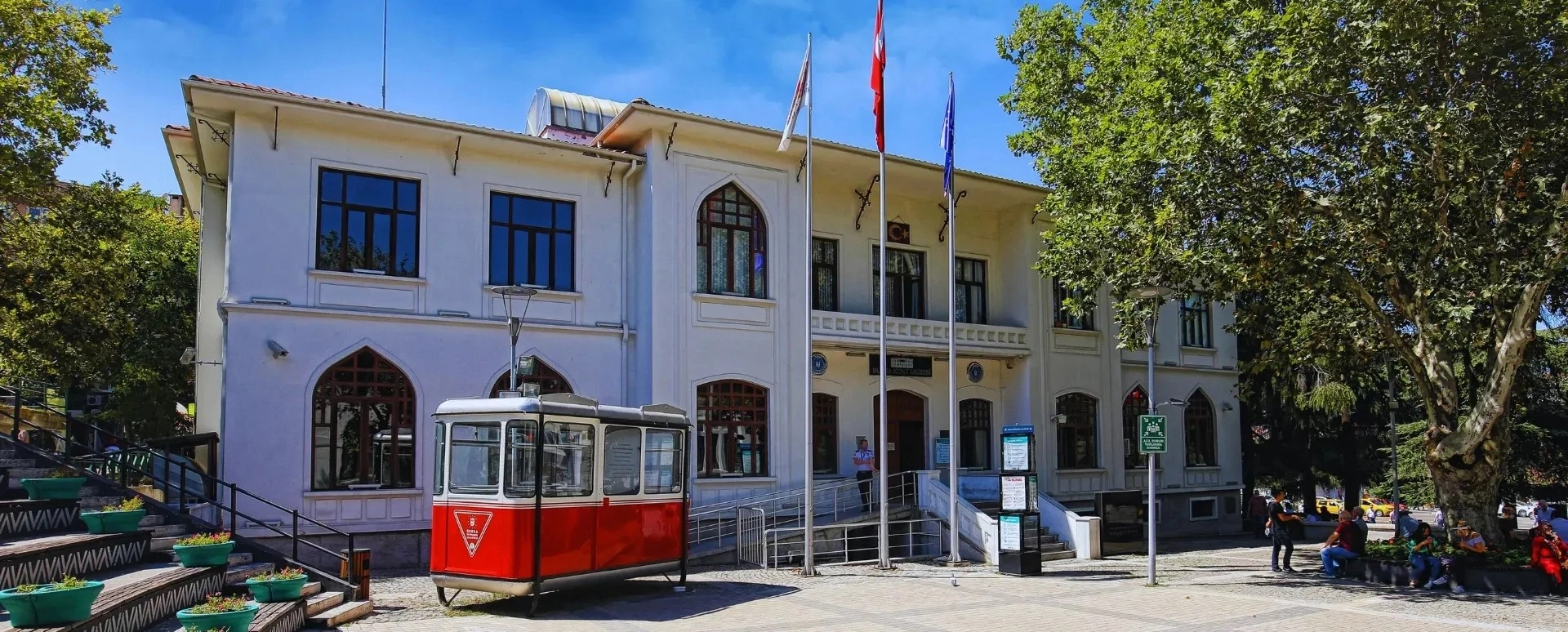
Begin with Bursa City Museum to understand the city's ancient, Byzantine, Ottoman and modern history, then continue into the real historic landscape with Ulu Cami, Koza Han, the bazaar district, Tophane and the tombs of Osman Gazi and Orhan Gazi.
Request This Tour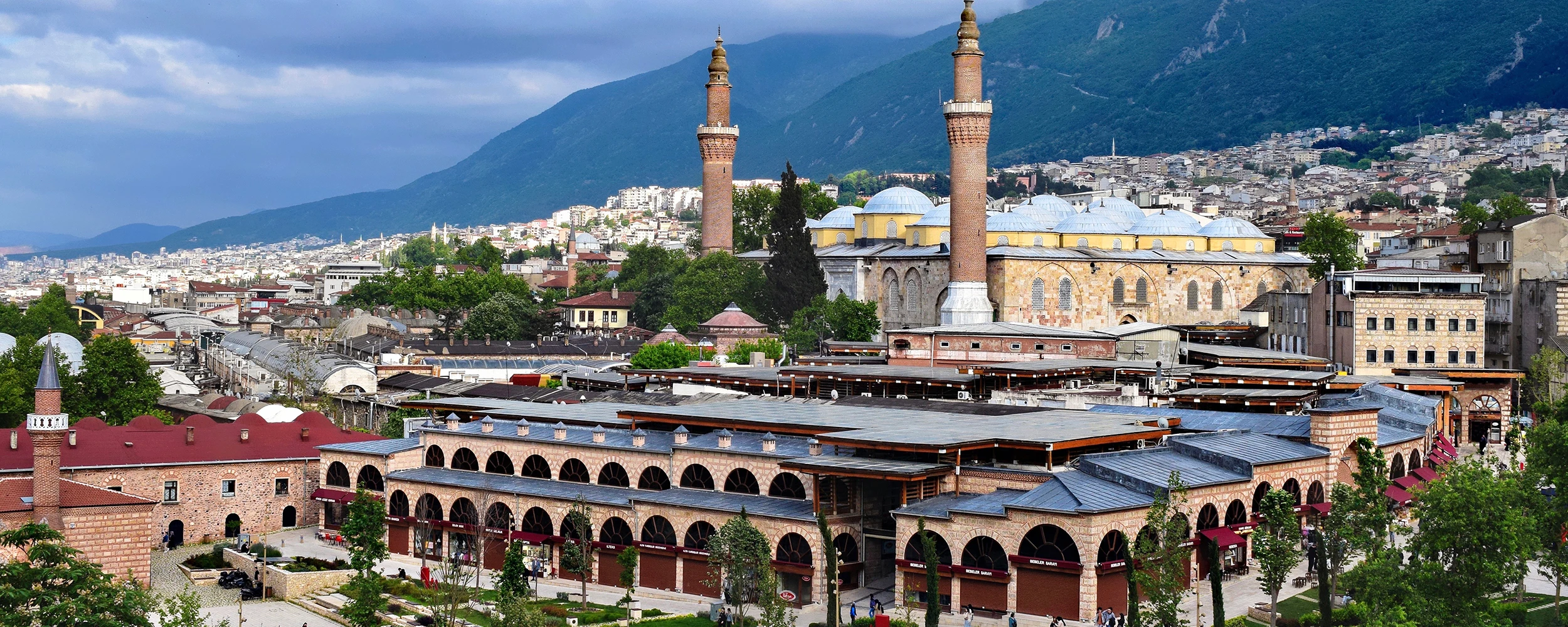
Explore Bursa's extraordinary layers through a privately designed day combining Ottoman imperial monuments, historic hans, silk heritage, traditional neighbourhoods, museums, local cuisine and panoramic viewpoints.
Design Your JourneyConnect Bursa with the great archaeological, cultural and historic destinations of Türkiye.
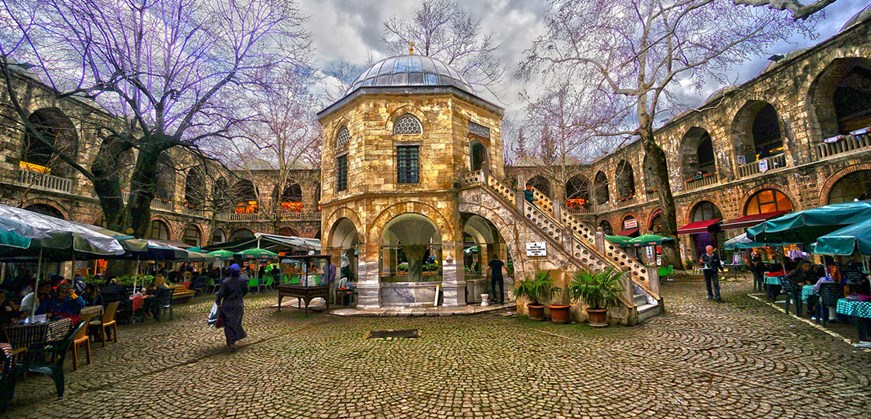
Travel through Istanbul, Bursa, Safranbolu, Hattusha, Cappadocia, Mount Nemrut, Şanlıurfa, Ephesus, Pamukkale, Pergamon, Troy and Gallipoli.
View Tour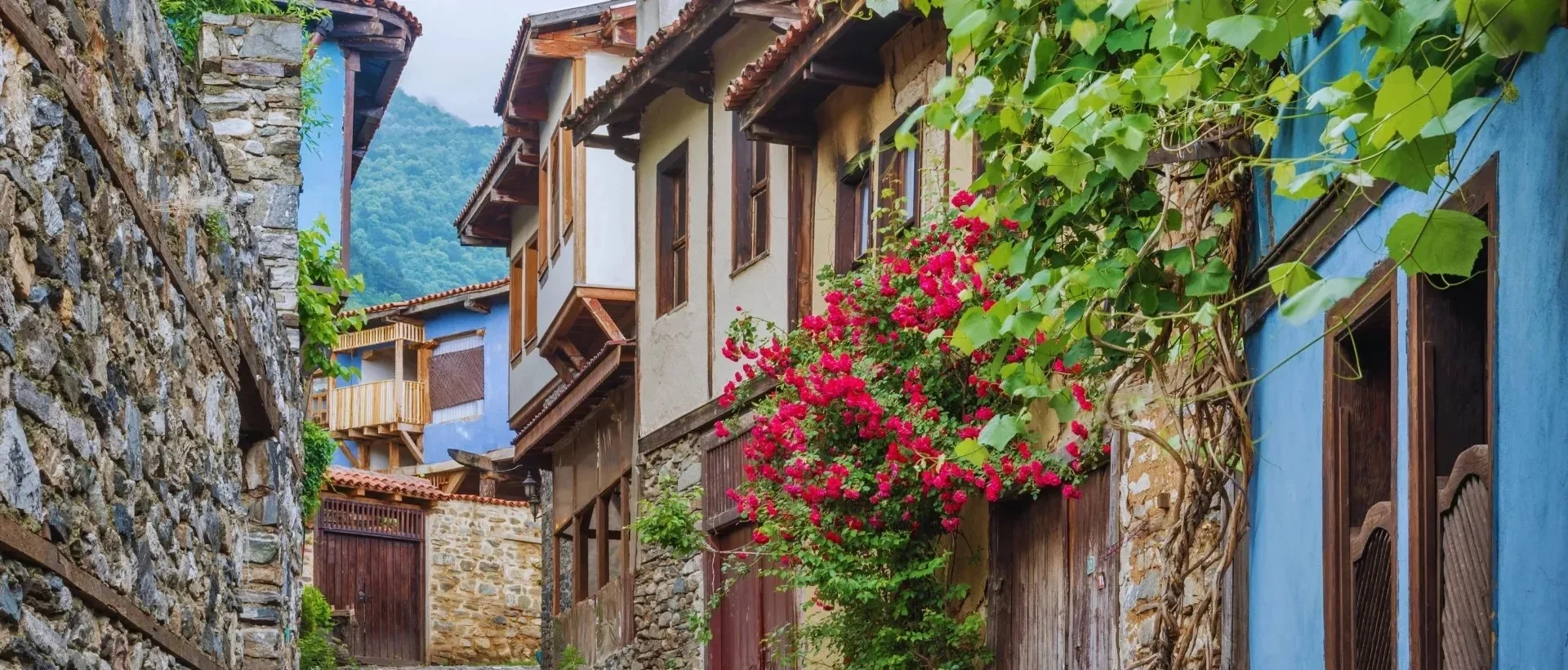
Create a private itinerary combining Bursa City Museum, Bursa's imperial külliyes, historic bazaars, Cumalıkızık, traditional neighbourhoods, local cuisine, Uludağ and the wider cultural landscapes surrounding the city.
Design Your Journey