Private Çeşme & Alaçatı Experience
Ask us about a tailor-made day combining Alaçatı Old Town, Ilıca, Çeşme Castle, the marina, local food and selected beaches.
Request a Custom Tour





Few destinations combine the different faces of the Aegean as naturally as Çeşme and Alaçatı. One is a historic port town built around a powerful castle, marina and waterfront; the other is a beautifully preserved inland settlement of stone houses, narrow streets, windmills, cafés, markets and small hotels. Together they form one of the most rewarding coastal bases in western Türkiye.
Çeşme occupies the western end of the İzmir Peninsula, directly facing the Aegean and the island of Chios. Its identity has always been connected with the sea: ancient trade, Ottoman naval history, sheltered bays, thermal springs, fishing communities and modern sailing all belong to the same landscape.
Alaçatı lies only a short drive inland from the coast. Its old centre is known for stone-built houses, cobbled lanes, windmills, bougainvillea-covered courtyards, local markets and restaurants. South of the village, a broad shallow bay and dependable winds turned Alaçatı into one of Türkiye's best-known windsurfing centres.
The wider peninsula adds even more variety. Ilıca is famous for its long sandy beach and thermal waters; Dalyan and Şifne offer quieter coastal settings; Ildırı preserves the ruins of ancient Erythrai; and small coves, beach roads, olive-growing villages and fishing settlements make the region worth far more than a quick summer stop.
Explore the castle, archaeology museum, Ottoman caravanserai, harbour streets and centuries of Aegean maritime history.
Walk through narrow cobbled lanes lined with traditional stone houses, courtyards, cafés, boutiques and old windmills.
Choose between Ilıca's broad sandy shoreline, sheltered bays, windsurf beaches and thermal-water coast around Şifne.
Enjoy seafood, wild greens, mezes, local produce, Saturday market culture and long evenings shaped by the sea.
Essential information for planning beaches, history, food, windsurfing and village time on the western İzmir Peninsula.
Western İzmir Province on the Çeşme Peninsula, facing the Aegean Sea and the island of Chios.
Çeşme Castle, expanded into its present Ottoman form in the early sixteenth century and now home to the archaeology museum.
A protected old-town environment of stone houses, narrow streets, courtyards, windmills, cafés and small-scale hospitality.
Alaçatı Bay is internationally known for steady winds and shallow water that suit both experienced riders and beginners.
Ilıca is famous for a long sandy shoreline, shallow sea and warm thermal water entering the coastal zone.
Ilıca and Şifne have long been associated with mineral-rich thermal springs and seaside thermal bathing.
Erythrai at modern Ildırı preserves the remains of one of the ancient Ionian cities of the peninsula.
Alaçatı's large weekly market is traditionally held on Saturday; check locally around public holidays and special events.
Seafood, Aegean herbs, olive-oil dishes, mezes, local cheeses, seasonal vegetables, pastries and regional produce dominate menus.
April–June and September–October combine pleasant weather with easier walking and generally lighter crowds than peak summer.
A car is useful for beaches and villages, while Alaçatı Old Town and Çeşme centre are best explored on foot.
Two nights gives a good introduction; three or four nights allows beaches, history, windsurfing and nearby villages without rushing.
The attraction of Çeşme and Alaçatı is not one single monument or beach. It is the contrast between historic port town, village streets, wind, thermal water and an unusually varied coastline.
The first reason to visit is variety. In one day you can walk through an Ottoman castle, drink coffee beside a marina, swim from a sandy beach, wander through a stone-built village and finish with dinner in a quiet courtyard. Few destinations on the Turkish coast change character so quickly over such short distances.
The second reason is architecture and atmosphere. Alaçatı's stone houses and narrow streets create one of the most distinctive historic townscapes on the Aegean coast, while Çeşme's castle, caravanserai and harbour tell a much older story of maritime trade, defence and travel between Anatolia and the islands.
The third reason is the sea. The peninsula is surrounded by coves with very different conditions. Ilıca is broad and shallow, Alaçatı Bay is shaped by windsurfing, northern bays feel more sheltered, and rocky stretches around Ildırı and Şifne offer a more natural coastal landscape.
Finally, the area rewards travellers who care about food and everyday Aegean culture. Markets overflow with herbs, vegetables and local produce; fish restaurants depend on the day's catch; olive oil shapes both cooking and agriculture; and seasonal festivals celebrate artichokes, local sheep breeds, bread, herbs and village traditions.
Çeşme is a district and coastal town west of İzmir, occupying the far end of a peninsula that projects into the Aegean. The town centre faces a natural harbour, while beaches and smaller settlements spread along both the northern and southern coasts.
Alaçatı is part of the Çeşme district. Its historic centre lies inland from the southern shore, while the windsurfing zone and marina sit several kilometres to the south. Ilıca lies between Alaçatı and Çeşme town, making it easy to move between village, beach and harbour in the same day.
This geography explains why the area works so well as a base. You are never far from the sea, yet many of the most memorable streets, markets and food experiences are slightly inland. The result is a destination that feels much more layered than a simple resort strip.
Travellers often speak about Çeşme and Alaçatı as if they were interchangeable, but the experience is quite different. Çeşme town is centred on the castle, marina, harbour streets and a larger working town. It feels maritime and urban, with ferries, boats, seafood restaurants, public squares and a stronger sense of local everyday life beyond tourism.
Alaçatı is smaller and more intimate. Its identity is built around the preserved old town, stone architecture, design-conscious hotels, restaurants, cafés, boutiques and its long relationship with the wind. During summer evenings, the centre becomes one of the liveliest social areas on the peninsula.
For first-time visitors, the strongest trip combines both. Stay in whichever atmosphere suits you best, but spend meaningful time in the other rather than treating it as a quick photo stop.
The Çeşme Peninsula has been connected with maritime trade for thousands of years. Ancient Erythrai, at modern Ildırı, became one of the Ionian cities and developed commercial relationships across the Aegean and eastern Mediterranean. Its sheltered position helped connect western Anatolia with islands and overseas routes.
The modern name Çeşme means “fountain” in Turkish. Local historical accounts traditionally connect the name with the many water sources and fountains used by sailors calling at the harbour. The town's position opposite Chios made it strategically important for trade as well as naval movement.
During the medieval and early Ottoman periods, Genoese commercial influence, Turkish principalities and the Ottoman state all shaped the region. Earlier fortifications at Çeşme were strengthened and transformed under Sultan Bayezid II in the early sixteenth century, creating the castle that still dominates the harbour today.
The eighteenth century brought one of the area's most important military episodes: the Battle of Çeşme in 1770, fought between Ottoman and Russian fleets during the Russo-Turkish War. The event is interpreted inside the castle museum and remains an important part of the town's maritime history.
In the modern era, Çeşme evolved into one of Türkiye's best-known Aegean holiday districts. Tourism expanded around beaches, thermal springs, sailing and summer homes, while Alaçatı's historic architecture was increasingly restored and adapted into small hotels, restaurants and cultural spaces.
The strongest landmark in Çeşme town is Çeşme Castle. Earlier Genoese defences were expanded and reorganized during the reign of Sultan Bayezid II, with major work completed in 1508. The fortress originally stood directly beside the water; later shoreline changes and reclamation left it slightly inland from the modern harbour edge.
Inside the castle is the Çeşme Archaeology Museum. Displays bring together finds from Erythrai, the Çeşme area and prehistoric sites such as Bağlararası, as well as amphorae, coins, stone objects and material connected with the region's long history of maritime trade.
A section of the museum also addresses the 1770 naval battle. Even if archaeology is not your main interest, the castle is worth entering for its towers, defensive plan and changing views over the harbour, marina and old town.
Close to the castle stands the historic Çeşme Caravanserai, commissioned during the reign of Sultan Süleyman the Magnificent in the sixteenth century. It was built to serve merchants and travellers using the port and reflects the town's importance as a commercial link between Anatolia and the Aegean islands.
The structure follows the practical logic of an Ottoman commercial inn, with rooms organized around a courtyard and spaces historically connected with storage, trade and accommodation. Its survival beside the castle allows visitors to read military and commercial history together rather than as separate stories.
The building has been adapted for modern use over time, so the experience is different from visiting an archaeological monument. The value lies in seeing how a sixteenth-century trading structure remains embedded in the contemporary centre of Çeşme.
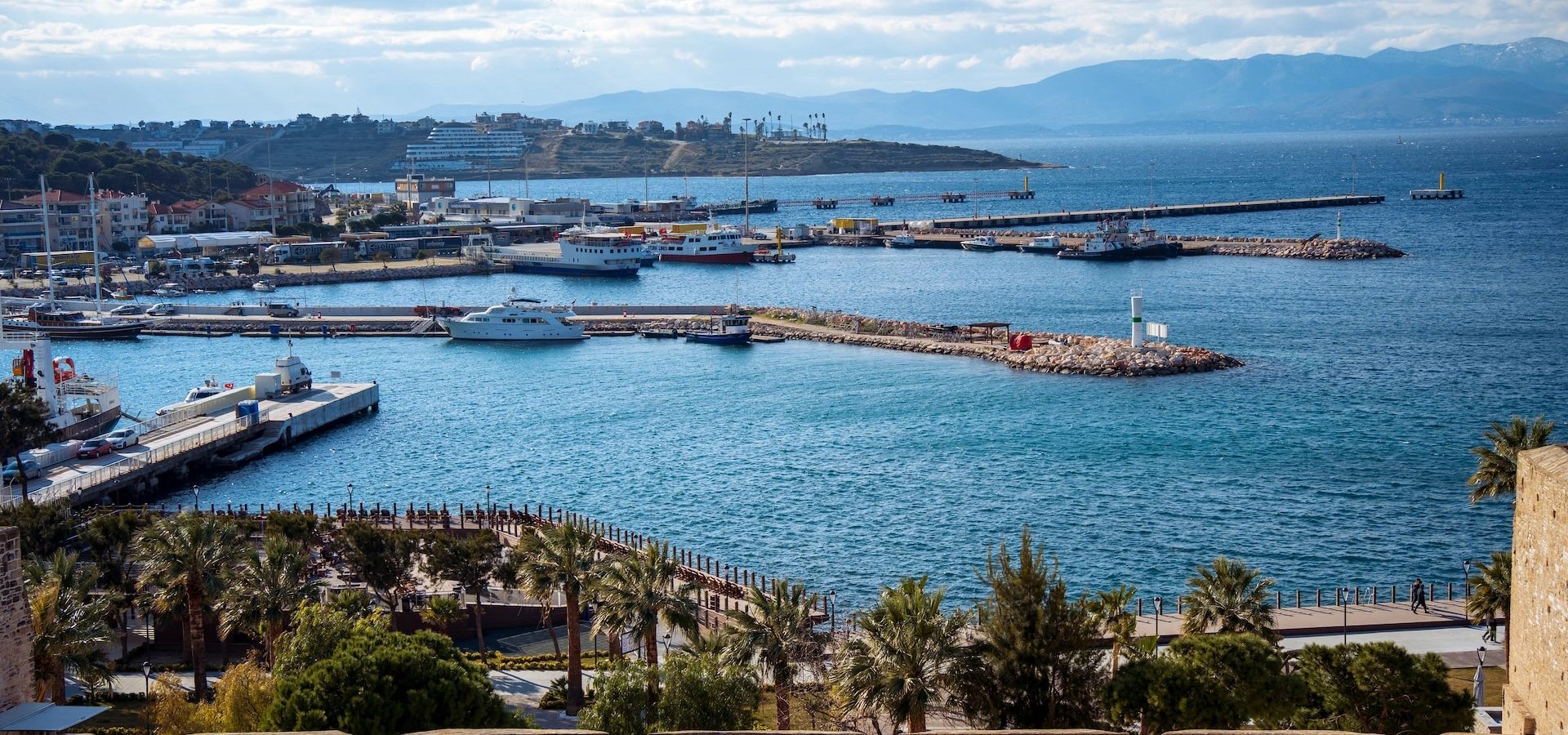
The modern Çeşme waterfront is where the town's historic relationship with the sea continues most visibly. Fishing boats, excursion vessels, yachts, cafés and restaurants fill the harbour zone, while the castle rises immediately behind it.
The marina area is polished and contemporary, with restaurants, shops and promenades, but it works best when combined with the older streets around the castle and town centre. Walk both areas to understand the contrast between historic port and modern sailing destination.
Late afternoon is especially pleasant. The light softens over the castle walls, boats return to harbour and the waterfront becomes a natural place for a slow meal or evening walk before the nightlife begins elsewhere on the peninsula.
The historic centre of Alaçatı is the visual heart of the destination. Narrow lanes wind between stone houses with timber details, colourful shutters, small balconies and courtyards that spill into the street. Bougainvillea, jasmine and climbing vines soften the pale stone during the warmer months.
The old town is best explored without a strict route. Main streets such as Kemalpaşa Caddesi are lined with restaurants, cafés and boutiques, while quieter lanes reveal a more residential character. The busiest streets can feel very polished in summer, but turning two or three corners is often enough to find a slower rhythm.
Alaçatı's historic core is recognized as an urban conservation area, and preservation of its characteristic stone architecture remains central to the town's identity. Restored houses now serve as boutique hotels, galleries and restaurants, but the scale and street pattern still preserve the feeling of an older Aegean settlement.
Visit once in the morning and again in the evening if you have time. Morning reveals architecture and everyday details; after sunset, dining terraces, lanterns and pedestrian streets create a completely different atmosphere.
The stone windmills above Alaçatı are among the town's most recognizable landmarks. Their position on an exposed ridge reflects exactly why the settlement later became famous for windsurfing: wind is not simply part of the weather here, but part of the local identity.
The mills once formed part of the agricultural economy, using wind power to process grain. Restored examples now stand as monuments and viewpoints rather than working industrial structures.
The hill is especially attractive around sunset, when the stone takes on warmer colours and the view opens across the roofs of Alaçatı toward the surrounding peninsula. Arrive before the busiest evening period if you want clearer photographs.
The Hacı Memiş area offers a slightly calmer counterpoint to Alaçatı's busiest central streets. Its narrow lanes, restored houses, antique shops, cafés, workshops and courtyard restaurants have made it one of the most atmospheric parts of town.
The neighbourhood works particularly well in the late morning, when tables begin to fill but evening crowds have not yet arrived. It is also a good area for slow shopping, design stores, ceramics, textiles and locally made decorative objects.
Do not treat Hacı Memiş as a checklist sight. Its appeal comes from the relationship between architecture, planted courtyards and everyday movement through the streets rather than from a single monument.
Alaçatı's weekly market is traditionally held on Saturday and is one of the best places to see the food culture of the peninsula at close range. Stalls fill with vegetables, fruit, herbs, olives, cheeses, spices, household goods, textiles and clothing.
Spring is especially rewarding because the Aegean is famous for edible wild greens and seasonal herbs. In summer, tomatoes, melons, stone fruit and other produce bring strong colour and scent to the market.
Go early if you prefer easier walking and photography. By midday in high season, the market and surrounding streets can become very crowded. Market schedules can occasionally change around holidays or local events, so confirm locally if it is a major part of your plan.
Alaçatı is internationally known for windsurfing. The bay combines regular wind with relatively shallow water and a protected shape that can keep the surface manageable, creating conditions that work for both training and advanced riding.
The main surf zone lies south of Alaçatı Old Town near the coast and marina. Numerous schools and equipment centres operate in the area, offering lessons, rentals and courses during the main season.
The busiest windsurf period generally falls between late spring and early autumn. Conditions vary from day to day, so beginners should book with a reputable school rather than choosing equipment only by price. Lessons are especially useful for understanding wind direction, right-of-way and safe launching areas.
Shallow sections of the bay and established schools make Alaçatı one of the easier places in Türkiye to try windsurfing for the first time.
Regular wind and large training areas allow longer sessions, higher-speed riding and technical practice when conditions are suitable.
Late spring through early autumn is the main watersports season, with summer offering the most established daily operation.
Ask about wind strength, equipment level, insurance, instruction language, rescue procedures and cancellation conditions before booking.
Ilıca is one of the best-known beach areas on the Çeşme Peninsula. Its long pale-sand shoreline and shallow water make it especially popular with families and swimmers who prefer an easy entry into the sea.
The feature that makes Ilıca unusual is its thermal water. Warm mineral-rich springs emerge in and around the coastal zone, giving parts of the sea a noticeably different temperature and linking the beach with the peninsula's long thermal-bathing tradition.
Summer weekends can be extremely busy. Early morning is the most peaceful time for swimming, while late afternoon is often more comfortable once the strongest heat begins to ease.
The peninsula's classic sandy beach: broad, shallow, family-friendly and associated with warm thermal water entering the sea.
A convenient beach area between Çeşme and Ilıca, useful for travellers who want easy access without driving to the outer peninsula.
Known for clear water and a more exposed coastal setting; sea temperature can feel cooler than in sheltered Ilıca.
A southern-coast beach exposed to stronger wind, popular with visitors who like open horizons and more active sea conditions.
Part of the Alaçatı surf coast, where shallow water and wind create a strong watersports atmosphere.
A sheltered bay close to Çeşme town, known for calm water and a concentration of seasonal beach venues.
A more traditional coastal area with fishing-harbour character, small beaches and seafood restaurants north of Çeşme centre.
A quieter northeastern coast associated with thermal springs, small beaches and a slower local atmosphere.
A scenic historic coastline where ancient Erythrai, small islands, fishing and natural swimming spots share the same landscape.
Wind direction can completely change the experience. Ask locally which coast is most sheltered on the day rather than choosing only by reputation.
Northeast of Ilıca, Şifne is known for thermal springs and a quieter coastal atmosphere. The shoreline mixes small bays, local accommodation and thermal facilities rather than one large resort centre.
Şifne works best for travellers interested in the peninsula's traditional relationship with mineral water rather than simply looking for the most fashionable beach. It can also be combined with a drive toward Ildırı and Erythrai.
Thermal facilities, access conditions and operating schedules vary, so check current arrangements directly before planning a dedicated spa visit.
For travellers who want more than beaches, Erythrai at modern Ildırı is one of the peninsula's most important historic sites. The settlement was one of the Ionian cities of the ancient Aegean world and occupied a strategic position overlooking natural harbours and offshore islands.
Archaeological remains include parts of the ancient theatre, fortifications, domestic areas and the acropolis, where the sanctuary of Athena once stood. Finds from the site are also represented in the Çeşme Archaeology Museum.
The setting is as important as the ruins. Ildırı remains a small coastal settlement, and the view across the bay makes it easy to understand why the location mattered to sailors and merchants. Sunset can be exceptional here, especially when the islands appear in silhouette.
Allow time for both archaeology and the village rather than treating Erythrai as a roadside stop. A slow lunch or coffee by the coast turns the excursion into one of the most satisfying half-day trips from Çeşme.
Food is one of the main reasons to spend more than a day on the peninsula. Menus reflect the agricultural and maritime character of the Aegean: fresh fish, shellfish, seasonal vegetables, wild herbs, olive oil, local cheeses and simple dishes designed around good produce.
Dalyan, Çeşme harbour and coastal villages are natural choices for grilled fish and daily seafood selections.
Look for yoghurt-based dishes, fava, olive-oil vegetables, seafood mezes and salads built around seasonal ingredients.
Spring brings edible herbs and greens that are boiled, sautéed, dressed with olive oil or folded into pastries and mezes.
The wider Çeşme Peninsula is known for local artichoke varieties, celebrated seasonally in regional food culture and festivals.
Local melon is part of the peninsula's agricultural identity and is especially associated with summer produce.
Nearby Germiyan is known for traditional village bread and makes a worthwhile food-focused detour when exploring inland routes.
Western İzmir's olive culture appears throughout the peninsula in vegetable dishes, salads, mezes and local products.
Alaçatı is especially popular for long breakfasts with cheeses, olives, eggs, herbs, pastries, preserves and fresh bread.
Summer evenings bring a wide choice of ice-cream shops, traditional sweets and modern dessert cafés around the main pedestrian streets.
Courtyard cafés in Alaçatı and harbour-side stops in Çeşme provide two very different settings for the same classic ritual.
Choose clearly labelled regional producers and check bottle size if you are travelling with cabin baggage only.
Markets sell dried thyme, local herbs, spices and seasonal products connected with Aegean cooking.
Olives, cheeses, preserves and packaged regional products make practical food souvenirs if storage conditions are suitable.
Alaçatı's design shops and workshops often carry contemporary ceramics inspired by Aegean colours and table culture.
Look for towels, light cotton clothing, scarves, woven products and summer textiles in both the weekly market and boutiques.
Hacı Memiş and side streets can reward patient browsing for small decorative objects, prints and older household pieces.
Independent designers and local shops offer jewellery ranging from simple silver pieces to more contemporary work.
Fresh fruit, herbs, vegetables and local breads are often the most authentic purchases if you are staying in a villa or apartment.
Çeşme and Alaçatı change dramatically after sunset. In Alaçatı, dining tables fill the old streets and courtyards, while bars and music venues create a lively late-night scene during summer. The centre can become extremely crowded on weekends in July and August.
Çeşme Marina offers a different atmosphere, with waterfront restaurants, cafés and evening walks around the harbour. Beach areas such as Aya Yorgi also become nightlife destinations during the main season.
Travellers who prefer quiet evenings should choose accommodation away from the busiest pedestrian streets and major nightlife areas. In high season, the difference between a peaceful stone-house stay and a noisy one can be only a few hundred metres.
Cool to mild weather, green landscapes and spring herbs make this an excellent period for food, walking and architecture.
One of the best overall periods: warm days, active beaches, long daylight and fewer crowds than the height of summer.
Peak beach season with the liveliest nightlife, strongest demand, busiest roads and highest accommodation pressure.
Sea temperatures remain attractive while the atmosphere begins to ease after the main domestic holiday rush.
Excellent for relaxed town walks, food and late-season coastal days, although some seasonal beach businesses begin reducing hours.
Quiet, local and often windy or rainy. Ideal for travellers interested in atmosphere rather than swimming or nightlife.
For most first-time visitors, late May to June and September to early October offer the strongest balance between beach weather, open businesses, easier reservations and comfortable sightseeing.
Early morning is the best time for Alaçatı's architecture. Streets are quieter, deliveries have not yet taken over the lanes and the stone façades receive softer light. It is also the easiest time to visit the Saturday market before crowds build.
Late morning and afternoon work well for beaches, windsurfing and the Çeşme Castle area. In midsummer, avoid scheduling long unshaded walks during the hottest part of the day.
Late afternoon is ideal for Ilıca swimming, the windmills, Çeşme harbour or Ildırı. Sunset changes the colour of the stone and creates the most atmospheric transition into dinner.
Evening is when Alaçatı becomes most animated. If you want a quiet dinner, reserve early or choose Hacı Memiş and less central streets rather than the busiest main strip.
Çeşme is connected with İzmir by a fast road corridor, making the peninsula practical for both day trips and longer stays.
Private transfer, rental car and onward public-transport combinations are the most common options from Adnan Menderes Airport.
The easiest choice if you plan to combine beaches, Ildırı, Şifne, Germiyan, Urla or other villages on the peninsula.
Seasonal and regular bus services connect İzmir and Çeşme; schedules should be checked close to travel date.
A convenient option for travellers arriving with luggage, families or groups who do not want to manage local connections.
International ferry connections can operate between Chios and Çeşme; routes, passport requirements and schedules vary by season.
Walk. Narrow lanes and pedestrian activity make driving inconvenient and unnecessary once you reach the centre.
The castle, marina and central streets are close enough to explore comfortably on foot.
Local minibuses, taxis and private vehicles connect the main centres; frequency changes by season and time of day.
A car provides the most flexibility because the most attractive beaches are spread across different sides of the peninsula.
Do not plan to drive into the heart of Alaçatı. Use designated parking outside the pedestrian core, especially on summer weekends.
Allow extra time around sunset, weekends and holiday periods, when roads into Alaçatı and popular beach areas can become congested.
Enough for Alaçatı Old Town, Ilıca and a short visit to Çeşme Castle, but the day will feel rushed.
A strong first visit: one day for Alaçatı and Ilıca, one for Çeşme, a beach and the waterfront.
Add Ildırı/Erythrai, windsurfing, a boat trip or a slower beach day without sacrificing evening time.
Ideal for travellers who want beaches, food, nearby villages, Urla and relaxed mornings rather than constant sightseeing.
Works well as a coastal holiday base with swimming, sailing, windsurfing, thermal visits and day trips around İzmir Province.
Plan at least two nights, preferably three, if you want the region to feel like a destination rather than a series of photo stops.
This route is possible in one day, but it is intentionally selective. Do not add distant beaches, Erythrai and windsurfing to the same schedule unless you are comfortable spending more time in the car than in the places themselves.
Early light and empty streets are the best combination for photographing stone façades without heavy pedestrian traffic.
Use the round stone forms against open sky, then turn back toward the red-tiled roofs of the old town.
Side lanes in late spring and summer provide strong colour against pale stone and painted shutters.
Photograph the walls from the marina, then reverse the perspective from the towers toward the harbour.
Morning works well for soft light on the shallow water, while late afternoon gives warmer beach tones.
A longer lens helps isolate colourful sails and riders while keeping a safe distance from launching and training areas.
Photograph produce, textures and wide scenes respectfully; ask before taking close portraits of vendors.
The islands and fishing coast create layered silhouettes as the sun drops over the Aegean.
The region works well for families because activities can be mixed easily. A castle visit can be followed by a beach, a short village walk, ice cream or a boat trip without requiring long overland travel.
Ilıca is especially popular with families because of its broad sand and shallow entry, although crowd levels in peak summer can be intense. Early morning provides the easiest experience with small children.
Accessibility varies. Çeşme Marina and newer waterfront areas are relatively easy to navigate, while Alaçatı's historic lanes include uneven cobbles, narrow pavements and occasional steps. The castle also involves slopes, stairs and historic surfaces.
For strollers or wheelchairs, plan shorter routes through the most level parts of Alaçatı and confirm accessibility directly with museums, beach facilities and restaurants that are essential to your visit.
Many of Alaçatı's photogenic houses are private homes or small hotels; avoid blocking doorways and photographing interiors without permission.
The Aegean coast experiences strong summer demand and seasonal water pressure, so avoid unnecessary consumption.
Take all litter with you, avoid leaving cigarette ends in sand and use designated waste points around coves.
Markets, bakeries, small food shops and village producers help keep the peninsula's agricultural traditions economically relevant.
Do not climb fragile walls or remove stones, pottery fragments or shells from protected historic areas.
Swimmers should follow local separation rules around windsurfing and sailing areas and avoid crossing active launch lanes.
Starting earlier reduces road congestion, crowd pressure and the need to compete for limited parking in historic centres.
Spreading visits beyond the best-known beach streets helps support a wider range of local businesses and communities.
July and August weekends can sell quickly, especially for small Alaçatı hotels with only a few rooms.
Popular restaurants can fill well in advance, particularly on Friday and Saturday nights.
Park outside the historic core and walk; narrow streets, crowds and traffic controls make central driving stressful.
The peninsula can be surprisingly windy after sunset even when daytime temperatures are high.
Strong Aegean sun and long beach days make shade, hats and high-SPF protection essential.
A beach that is perfect one day can feel exposed the next. Ask your hotel or a local before setting out.
Cards are widely used, but small market stalls, parking areas or village businesses may be easier with Turkish lira.
Museums, beach businesses, ferries and smaller restaurants can change schedules outside peak season.
The Alaçatı market and old town become much busier later in the day, especially during summer.
The area feels far more rewarding when you can experience both early morning quiet and the evening atmosphere.
Combine archaeology with a quiet coastal village, fishing atmosphere and excellent Aegean sunset views.
An inland village known for traditional bread, local food culture and access to walking routes through the peninsula.
A growing food and wine destination east of Çeşme, with vineyards, olive groves, art spaces and a lively old-town atmosphere.
A quieter peninsula of rocky bays, fishing villages and dramatic coastal roads north of the main İzmir–Çeşme corridor.
A walled coastal settlement near Seferihisar with marina life, market streets and an easy-going Aegean character.
Combine Çeşme with Kemeraltı Bazaar, Konak, the Agora of Smyrna, Alsancak and the long waterfront of Türkiye's great Aegean city.
One of the Mediterranean's major archaeological sites and a strong full-day excursion for travellers based on the peninsula.
The Greek island faces Çeşme across the strait and can be reached when international ferry schedules and entry requirements allow.
Spend a day among vineyards, olive groves, chef-led restaurants and small producers across the Urla countryside.
Visit Ildırı, archaeological remains, Şifne and quieter northern bays in one relaxed peninsula loop.
Explore Konak Square, Kemeraltı, Kızlarağası Hanı, the Agora and the waterfront for a full day of urban history and food.
Travel south for a major archaeology day focused on the ancient city, Terrace Houses and surrounding Selçuk heritage.
Choose a scenic coastal drive, seafood lunch and smaller swimming bays away from Çeşme's busiest summer areas.
Combine the walled town of Sığacık with the ancient city of Teos and the slower coast around Seferihisar.
No. Alaçatı is a neighbourhood within the Çeşme district, while Çeşme also refers to the main coastal town and the wider district.
Choose Alaçatı for stone-house atmosphere, restaurants and evening street life; choose Çeşme for harbour access, marina views and a larger working town. Both are close enough to visit each other easily.
Two nights gives a useful introduction; three or four nights is better if you also want beaches, windsurfing, Erythrai or nearby villages.
Its castle, marina, beaches, thermal springs, sailing, seafood and long maritime history.
Stone houses, narrow streets, windmills, restaurants, boutique accommodation, a large weekly market and internationally known windsurfing conditions.
Yes. The old town, architecture, food, shopping, cafés and nearby beaches make it worthwhile even if you never enter the surf zone.
The large weekly market is traditionally held on Saturday. Confirm locally around public holidays or unusual event periods.
Ilıca is one of the most popular choices because of its broad sand and shallow water, although it can be very crowded in peak summer.
Thermal springs enter the coastal zone and contribute warm mineral water to parts of the beach area.
Yes. It is the town's major historic monument and also contains the archaeology museum, with displays linked to Erythrai, local archaeology and maritime history.
Earlier Genoese defences were expanded into the present fortress during the Ottoman period, with major work completed in 1508 under Sultan Bayezid II.
An ancient Ionian city at modern Ildırı, northeast of Çeşme, with archaeological remains overlooking a scenic bay.
Yes, but keep the plan selective. Alaçatı, Ilıca and Çeşme Castle make a realistic first-day route; adding distant beaches and Ildırı usually makes the day too rushed.
Not for the old centres, but a car is very useful if you want to explore multiple beaches, Ildırı, Şifne, Germiyan or Urla.
Very. The historic centre is best explored on foot and central driving is inconvenient during busy periods.
The castle, marina and central waterfront are walkable, but beaches and outlying neighbourhoods require local transport or a vehicle.
May, June and September are excellent for most travellers because they combine warm weather with fewer crowds than July and August.
Yes. The old towns remain interesting, but many beach businesses reduce operations and the weather can be windy or rainy.
It can be extremely crowded on summer evenings and weekends. Visit early in the morning or outside July–August for a calmer experience.
The Alaçatı windmills, Çeşme waterfront and Ildırı coast are all strong choices depending on your route and the day's weather.
Çeşme harbour, Dalyan and coastal villages are natural choices. Ask what is genuinely fresh that day rather than ordering only by menu familiarity.
Try Aegean wild greens, olive-oil vegetables, local cheeses, artichoke dishes, pastries, mezes and seasonal market produce.
Yes, especially early morning when stone streets are quiet. The windmills, Hacı Memiş and side lanes are among the strongest locations.
Yes. Established schools, shallow water and regular wind make it one of Türkiye's most popular places to learn with professional instruction.
There are public beach areas as well as private facilities and beach clubs. Access, services and pricing differ by beach.
Yes. Urla is a natural extension for travellers interested in vineyards, olive oil, gastronomy and a quieter inland-coastal landscape.
International ferry services can operate between Çeşme and Chios. Check current schedules, passport rules and visa requirements before planning.
Yes. Beaches, boats, open-air walks and short sightseeing stops make it easy to vary the day for younger travellers.
Accessibility is mixed because the historic centre has uneven cobbles, narrow pavements and steps. Plan the route carefully and confirm essential venues in advance.
Trying to fit too many beaches and villages into one day. The peninsula is best experienced slowly, with time for swimming, food and evening atmosphere.
A private Çeşme and Alaçatı day can combine history, architecture, local food, beaches and the wider peninsula at a pace that matches your interests rather than following a fixed large-group route.
Tell us whether your priority is historic architecture, swimming, windsurfing, archaeology, local markets, food, photography, villages or a broader İzmir itinerary, and we can shape the route around your available time.
Ask us about a tailor-made day combining Alaçatı Old Town, Ilıca, Çeşme Castle, the marina, local food and selected beaches.
Request a Custom Tour
Continue with our complete İzmir guide for archaeology, historic neighbourhoods, museums, waterfront, food and excursions across the province.
View İzmir Guide
Travel south for a privately guided day at Ephesus, with the route planned around your Çeşme or Alaçatı accommodation.
Request a Private Ephesus Tour
Combine the peninsula with Urla's vineyards, olive culture, small producers and carefully selected Aegean dining experiences.
Request a Private Urla Experience