Private Demirköy Heritage Experience
Ask us about a tailor-made journey combining Fatih Foundry, Demirköy, forest landscapes and the cultural heritage of northern Kırklareli.
Request a Custom Tour





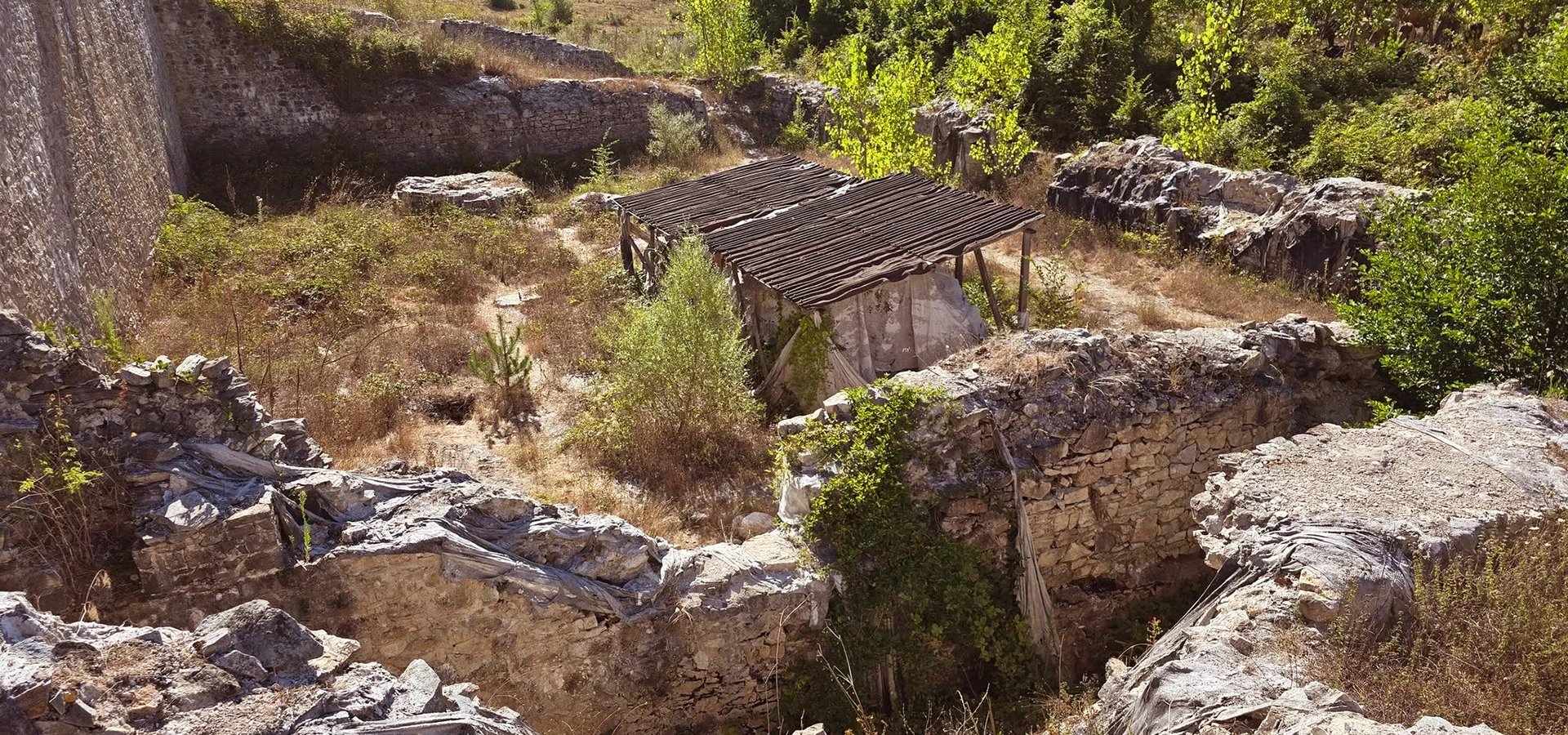
Hidden among the wooded hills southeast of Demirköy, Fatih Foundry – Fatih Dökümhanesi preserves the remains of one of the most important Ottoman iron-production centers in Turkish Thrace.
The complex is traditionally associated with the reign of Sultan Mehmed II – Fatih Sultan Mehmet and with the military preparations surrounding the conquest of Constantinople in 1453. Local and official accounts connect Demirköy with the production of iron objects and cannonballs used by the Ottoman army.
What survives today, however, tells an even broader story. Archaeology has revealed a large fortified industrial settlement with workshops, furnaces, storage areas, service buildings, a mosque and an ingenious system of water channels, water wheels, bellows and hammers used to power metal production.
Surrounded by the forests of the Istranca – Strandzha Mountains, the ruins offer an unusual opportunity to explore Ottoman history not through palaces or mosques, but through the technology, labor and raw materials that helped sustain an empire.
One of the most extensive surviving archaeological landscapes connected with Ottoman iron production in Türkiye.
The site is traditionally associated with Fatih Sultan Mehmet and the production of military material for the conquest era.
Channels and water-wheel systems powered bellows and heavy hammers used in the industrial process.
A fortified industrial complex hidden within the wooded landscapes of northern Kırklareli.
Essential information about one of Turkish Thrace's most remarkable Ottoman industrial heritage sites.
Approximately 4 km southeast of Demirköy town center in Kırklareli Province.
Open on Google MapsOttoman iron foundry, industrial workshop complex and archaeological site.
The wider Demirköy area appears in Ottoman archival sources as Samakocuk.
Approximately 9,400–10,000 square meters within the principal fortified complex.
Water channels and water wheels helped operate bellows and heavy hammers.
Deep within the forested Istranca Mountains of northeastern Turkish Thrace.
The story of Demirköy combines iron ore, forest resources, water power, Ottoman military production and centuries of industrial activity.
The forests and mountains around modern Demirköy have long been associated with metalworking. The region possesses iron-bearing geological resources, abundant woodland capable of supplying charcoal, and streams that could be harnessed as a source of mechanical energy. Together, these conditions made the area ideal for large-scale pre-modern iron production.
During the Ottoman period, the district became an important metallurgical center. The foundry is widely known today as Fatih Dökümhanesi – the Fatih Foundry, reflecting its traditional association with Sultan Mehmed II. Official local accounts state that ironworking here was active by the conquest period and that cannonballs produced in the district were used during the 1453 siege of Constantinople.
The exact foundation date of the surviving archaeological complex is not securely established. The monument inventory dates major surviving phases to the 17th–19th centuries, while historical tradition and archaeological research suggest that ironworking in the area may reach back earlier. This makes Demirköy especially interesting: rather than representing a single construction campaign, it preserves the accumulated remains of a long-lived industrial landscape.
Production continued through later Ottoman centuries. The foundry supplied military and industrial material, and archival evidence shows that both iron and copper were processed in the wider Demirköy-Samakocuk complex. During the reign of Sultan Mahmud II, the facility appears to have undergone major renewal and reorganization.
By the late Ottoman period the complex had lost its earlier importance, and after the final decades of imperial rule much of the site fell into ruin. Archaeological investigations beginning in the early 2000s transformed the abandoned remains into one of Türkiye's most important case studies in Ottoman industrial archaeology.
A pre-industrial foundry needed far more than iron ore. It required enormous quantities of fuel, reliable water, space for workshops and storage, and transport connections capable of moving heavy material. Demirköy offered all of these resources in one landscape.
The surrounding Istranca Mountains contained iron-bearing deposits, while dense forests supplied timber that could be converted into charcoal. Nearby streams could be directed through channels to power machinery, and the location remained connected to the broader road networks of Ottoman Thrace.
The Demirköy region had a long association with mining and ironworking, giving the Ottoman state access to local raw material.
Woodland supplied the charcoal required to achieve the high temperatures needed for smelting and metalworking.
Streams were diverted into channels that powered water wheels linked to bellows and forge hammers.
The foundry stood in a defensible inland landscape where valuable military production could be organized and controlled.
The complex included not only furnaces but also working spaces, service rooms, storage areas and accommodation-related buildings.
Demirköy formed part of a wider Ottoman system moving ore, fuel, metal and finished military material across Thrace.
The main foundry complex occupies a sloping site arranged on two principal levels. This division was practical: living and service spaces occupied the upper terrace, while the heavier industrial installations were concentrated lower on the slope.
The upper area was enclosed by substantial stone walls and functioned almost like a fortified compound. The entrance opened into a courtyard surrounded by rooms that may have been used for accommodation, storage, administration and smaller-scale production. The foundry's mosque also stood on this upper level.
Around ten meters lower, the industrial zone contained furnaces, working areas, retaining walls, channels and other installations associated with metal production. A second, smaller foundry or workshop complex was identified roughly 230–250 meters west of the principal site.
A protected courtyard with service, living and administrative spaces enclosed by substantial masonry walls.
The heavy industrial installations were placed on the lower level where furnaces and water-powered equipment operated.
The principal complex was surrounded by thick stone walls, emphasizing the value and strategic nature of production.
A second workshop about a quarter of a kilometer away contained furnaces and additional metallurgical installations.
Production required spaces for fuel, raw materials, tools, finished metal and the people who operated the complex.
The foundry should be understood together with its streams, channels, forest resources and surrounding mining landscape.
One of the most extraordinary aspects of Fatih Foundry is its use of water as industrial power. Long before electric motors, moving water could be transformed into mechanical force capable of driving machinery essential to iron production.
Archaeological research identified dams, channels and water-management systems serving both the principal foundry and the smaller western workshop. Water wheels could provide the continuous movement needed to operate bellows, which forced air into furnaces, and trip hammers, which repeatedly struck heated iron during forging.
This system demonstrates that Demirköy was not simply a place where metal was melted. It was an engineered industrial complex designed around the controlled movement of water, heat, air and mechanical force.
Streams were redirected toward the industrial terraces through carefully planned channels and conduits.
Flowing water was converted into rotational energy that could drive production machinery.
Mechanically powered bellows increased airflow into furnaces and helped maintain the temperatures required for ironworking.
Heavy water-powered hammers repeatedly worked heated iron more efficiently than manual hammering alone.
Archaeological remains include a stone-vaulted water conduit running beneath part of the settlement.
The same water-management network served more than one industrial installation within the Demirköy complex.
Excavations at Demirköy have revealed furnaces and workshop areas that help archaeologists reconstruct how Ottoman metalworkers transformed ore and raw metal into usable material.
At the smaller western workshop, archaeologists uncovered a rectangular building measuring roughly 20 × 50 meters. Investigations identified an iron-production furnace representing advanced 17th-century technology, as well as a furnace used for copper smelting.
The presence of copper is significant because Ottoman archival records indicate that Demirköy-Samakocuk was not exclusively an iron center. Copper also formed part of the production system and could be used in alloys and equipment associated with artillery manufacture.
Furnaces transformed iron-bearing material into workable metal through controlled heat and airflow.
Heated iron could then be shaped under heavy hammers into bars, components and other usable forms.
Archaeological evidence shows that copper processing also took place within the wider production complex.
Industrial waste such as slag helps archaeometallurgists understand furnace temperatures, ore quality and production methods.
Foundations, furnace bases and working surfaces preserve evidence of how production was organized spatially.
The size and infrastructure of the complex show that Demirköy served organized state-level production rather than a small village forge.
The answer requires a little care. The foundry's modern name and strong local tradition connect Demirköy with Sultan Mehmed II – Fatih Sultan Mehmet and the preparations for the 1453 conquest of Constantinople. Official local sources state that cannonballs produced in the Demirköy area were used during the siege.
However, the famous giant siege cannons associated with 1453 should not automatically be described as having been cast at Demirköy. The surviving archaeological complex contains major later Ottoman phases, and the precise date at which the principal foundry began operating remains uncertain.
The safest historical interpretation is that Demirköy belonged to a long-lived Ottoman metallurgical landscape whose resources and production were connected with military needs, while later centuries expanded and reorganized the industrial facilities visible today.
The upper terrace of Fatih Foundry included a mosque serving the community that lived and worked within the complex. Its presence is a reminder that a major Ottoman industrial establishment was also a social environment with workers, administrators, craftsmen and daily routines extending far beyond the furnaces.
The surviving mosque is associated with Kaptan-ı Derya Mehmet Tahir Paşa and is dated to 1833. The building was arranged on a rectangular plan and incorporated masonry, brick and timber construction.
Archaeological and conservation work has treated the mosque as an important part of the interpretation of the site, helping visitors imagine Fatih Foundry not simply as industrial ruins but as a functioning Ottoman community.
The surviving mosque is associated with Kaptan-ı Derya Mehmet Tahir Paşa and the reign of Sultan Mahmud II.
The mosque occupied the protected upper area among service and living spaces.
Its presence reflects the daily religious life of the workers and officials connected with the foundry.
Conservation planning has considered the building as part of the interpretation of traditional iron-production techniques.
For much of the 20th century the foundry survived as a heavily ruined complex within the forest. Its archaeological importance became increasingly clear as researchers began documenting the site and the surrounding industrial landscape.
The remains were registered as an archaeological conservation area in 1991. Research and excavation projects intensified in the early 2000s, combining archaeology, architectural documentation, archival research, geophysical and topographic survey, metallurgy and the study of industrial technology.
Excavation campaigns revealed workshop buildings, furnaces, walls, water systems, slag and other material evidence of metal production. The project also demonstrated that the main complex was connected with a second smaller foundry through the same broader water-management landscape.
These investigations are particularly important because industrial sites were once less likely than palaces, mosques or ancient cities to receive archaeological attention. At Demirköy, the machinery and waste of production became historical evidence in their own right.
The remains were formally recognized and registered as an archaeological conservation area.
Systematic research investigated both the main foundry and the smaller western workshop.
The project examined technology, production organization, water power and the social history of metalworking.
Ore, slag and metal remains were studied scientifically to reconstruct how the furnaces operated.
Ottoman financial and administrative documents helped identify the materials and activities connected with Samakocuk.
Long-term conservation plans have aimed to interpret the complex as an industrial heritage site for visitors.
Many travelers encounter Ottoman history through monumental mosques, palaces, bazaars and caravanserais. Fatih Foundry reveals another side of the empire: the infrastructure required to produce metal, weapons, tools and military equipment on an organized scale.
The site is especially valuable because it preserves the relationship between natural resources and technology. Iron ore came from the surrounding region, charcoal from the forest, water from nearby streams and mechanical energy from water wheels. The archaeological remains bring all of those systems together in one landscape.
Demirköy therefore helps explain how an early modern empire transformed local resources into strategic material. It is as much a story of engineering and labor as it is of warfare.
A rare large-scale archaeological complex preserving the physical infrastructure of Ottoman metal production.
The foundry belonged to the wider production network that supplied material for Ottoman artillery and military needs.
Its water-powered machinery demonstrates sophisticated pre-modern methods of converting natural energy into industrial force.
The site shows how mining, woodland, charcoal production and water management shaped Ottoman industry.
Furnaces, channels, slag and workshop foundations provide evidence that written documents alone cannot preserve.
Fatih Foundry is one of the most distinctive cultural stops for travelers exploring lesser-known European Türkiye.
Fatih Foundry lies outside Demirköy in a forested setting and is best approached as an archaeological ruin rather than a conventional indoor museum. Because restoration, conservation and local visitor arrangements may change, check current conditions before making a special journey solely for the site.
The foundry can be rewarding in every season, but its forest setting means weather and daylight have a stronger influence here than at an urban monument.
Lush vegetation and mild temperatures make spring one of the most atmospheric times to explore the Istranca landscape.
Long daylight hours are ideal for combining the foundry with Dupnisa Cave, Demirköy or the Black Sea coast.
Forest colors create beautiful photographic conditions and cooler temperatures for walking around the ruins.
The landscape can be dramatic, but rain, mud, snow or icy roads may make access less comfortable.
Soft light and quieter conditions are excellent for studying the ruins before a longer day exploring Kırklareli.
Because the site is outside town and includes uneven archaeological terrain, daylight visits are strongly preferable.
Fatih Foundry offers unusual photographic possibilities because architecture and nature are tightly intertwined. Stone walls, furnace remains and channels emerge from a dense forest setting, creating images very different from the better-known monumental architecture of Ottoman cities.
Use wider compositions to show how the industrial complex was enclosed and organized within the landscape.
Closer photographs can emphasize brick, stone, slag and traces of the heat-intensive production process.
Look for surviving conduits and level changes that help explain how water energy moved through the complex.
Include surrounding trees to communicate the site's relationship with charcoal, water and the natural resources of the Istranca Mountains.
Seasonal foliage can create especially strong contrast with the weathered masonry of the ruins.
Photograph construction joints, channels and industrial surfaces rather than focusing only on picturesque views.
Enough for a quick overview of the principal ruins if access is straightforward and you are continuing elsewhere.
Better for understanding the upper and lower terraces, water system, production areas and mosque without rushing.
Ideal for visitors with a strong interest in industrial archaeology, photography or Ottoman military technology.
Combine Fatih Foundry with Demirköy, Dupnisa Cave and the forest landscapes of northern Kırklareli.
The archaeological ground can be uneven, stony or muddy, especially after rain.
The site is outside town and contains level changes, ruins and forested terrain that are easier to navigate in good light.
Do not assume that full visitor facilities will always be available at the archaeological area.
Look beyond individual walls and imagine the connection between streams, channels, furnaces, fuel and transport.
Ruined walls and industrial structures may be fragile and unsafe.
Conservation, restoration or archaeological work may affect which parts of the site can be entered.
Demirköy is surrounded by some of the most beautiful forest landscapes in European Türkiye.
Distances may look short on the map, but regional roads through forest and mountain terrain can make journeys slower.
The foundry is located approximately 4 km southeast of Demirköy in northern Kırklareli Province. It is much easier to visit with a private vehicle, driver or organized tour than by relying on public transport directly to the archaeological site.
Demirköy itself lies inland from the Black Sea and can be reached by road from Kırklareli, Vize, Pınarhisar and İğneada. Once in the district, local roads lead toward the foundry through the surrounding forest landscape.
The foundry is only a few kilometers from town and can be reached quickly by road with private transport.
Drive east and north through the interior of the province toward Demirköy; a private vehicle gives the greatest flexibility.
Demirköy lies inland from İğneada, making the foundry an excellent cultural addition to a Black Sea and longoz-forest itinerary.
The site can be included in a long day trip, but an overnight stay in Kırklareli, Demirköy or the İğneada area creates a much more relaxed journey.
Demirköy is one of the best bases for combining Ottoman industrial heritage with caves, forest ecosystems, traditional towns and the Black Sea coast.
Explore the small district center whose identity and very name are closely connected with the region's long ironworking tradition.
Discover one of Turkish Thrace's most impressive cave systems deep within the Istranca Mountains.
Continue toward the Black Sea to experience rare floodplain forests, lakes, wetlands and coastal ecosystems.
A Black Sea town that works especially well as an overnight base for exploring the forests and coast of northern Kırklareli.
Combine forest landscapes with Byzantine heritage, river valleys and dramatic Black Sea scenery.
Explore the provincial capital's Ottoman monuments, museums, historic neighborhoods and broader Thracian heritage.
Discover Roman, Byzantine and Ottoman history in one of the most layered historic towns of eastern Thrace.
The foundry is located approximately 4 km southeast of Demirköy in Kırklareli Province, within the forested Istranca Mountains of Turkish Thrace.
The modern name reflects the site's traditional association with Sultan Mehmed II – Fatih Sultan Mehmet and Ottoman military production connected with the conquest period.
It is safer not to make that claim. Demirköy is traditionally connected with iron and cannonball production for the conquest era, but the famous giant siege cannons are associated with other Ottoman production centers. The surviving Demirköy complex also contains major later Ottoman phases.
The site's historical tradition reaches back to the Fatih period, but the official cultural heritage inventory dates major surviving architectural phases to the 17th–19th centuries.
The complex was associated with iron production and military material. Archaeological and archival evidence also indicates copper processing within the wider Demirköy-Samakocuk industrial system.
Water was directed through channels to operate water wheels. These systems could power bellows for furnaces and heavy hammers used in forging iron.
Yes. Archaeologists investigated the principal fortified complex and a second smaller workshop roughly 230–250 meters to the west.
Yes. The upper part of the complex included a mosque associated with Kaptan-ı Derya Mehmet Tahir Paşa and dated to 1833.
It is best understood as an archaeological industrial heritage site. Long-term conservation planning has aimed to interpret the complex as an open-air industrial museum, but visitor facilities and access conditions may change.
Entrance arrangements can change and reliable official fee information is not always published online. Check locally before your visit rather than relying on older travel listings.
Current official opening hours are not consistently published. Plan a daylight visit and verify local access conditions in advance, especially if restoration or conservation work is taking place.
Around 60–90 minutes is ideal for most visitors. Industrial archaeology enthusiasts may want considerably longer.
Older children interested in history and engineering may enjoy it, but adults should supervise closely because archaeological ground, drops and ruined walls can present hazards.
Excellent combinations include Dupnisa Cave, Demirköy, İğneada Longoz Forests and the Black Sea coast.
Yes, especially for travelers interested in Ottoman military history, industrial archaeology, engineering, metallurgy or lesser-known heritage sites in European Türkiye.
Industrial ruins can appear robust, but archaeological walls, furnace remains and channels are often fragile. Visitors can help preserve Demirköy by treating the entire site as an archaeological record rather than an abandoned structure.
Do not climb on masonry, furnaces or retaining walls, even when they appear stable.
Slag, ceramics, metal fragments and worked stone are archaeological evidence and should never be removed.
Restricted areas may protect unstable structures or active conservation zones.
Avoid litter, fire risk and damage to vegetation in the surrounding Istranca landscape.
Keeping to accessible routes reduces erosion and accidental damage to archaeological features.
Local cafés, shops and small businesses help connect heritage tourism with the surrounding community.
Discover Fatih Foundry as part of a tailor-made journey through Ottoman heritage, forest landscapes, caves and the Black Sea coast of northern Kırklareli.
Explore Fatih Foundry, Demirköy and the Istranca Mountains with a private itinerary adapted to your interests and available time.
Ask us about a tailor-made journey combining Fatih Foundry, Demirköy, forest landscapes and the cultural heritage of northern Kırklareli.
Request a Custom Tour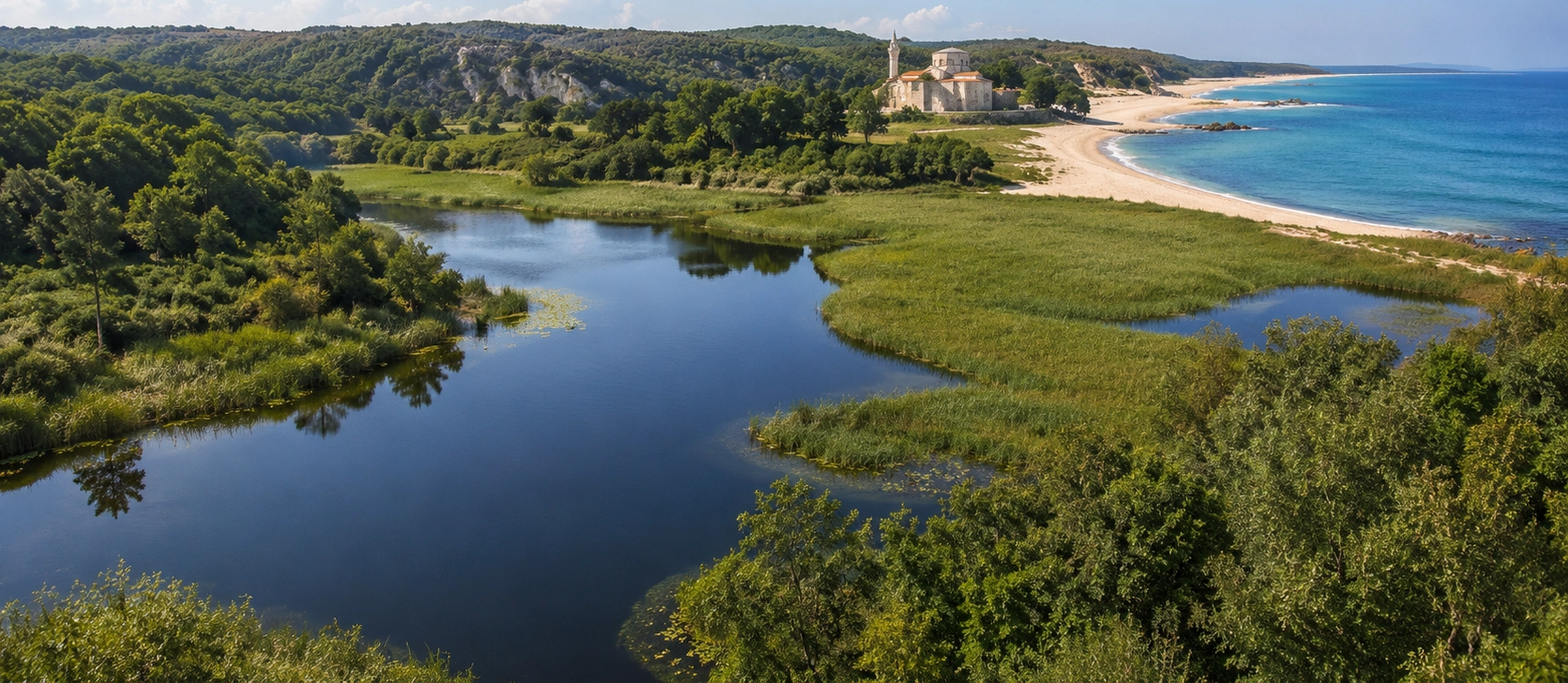
Discover more of Kırklareli, from Ottoman monuments and archaeological sites to caves, historic towns, local food and the landscapes of Turkish Thrace.
View Kırklareli GuideCombine Ottoman industrial history with underground caves, ancient towns, forest ecosystems and the Black Sea coast.
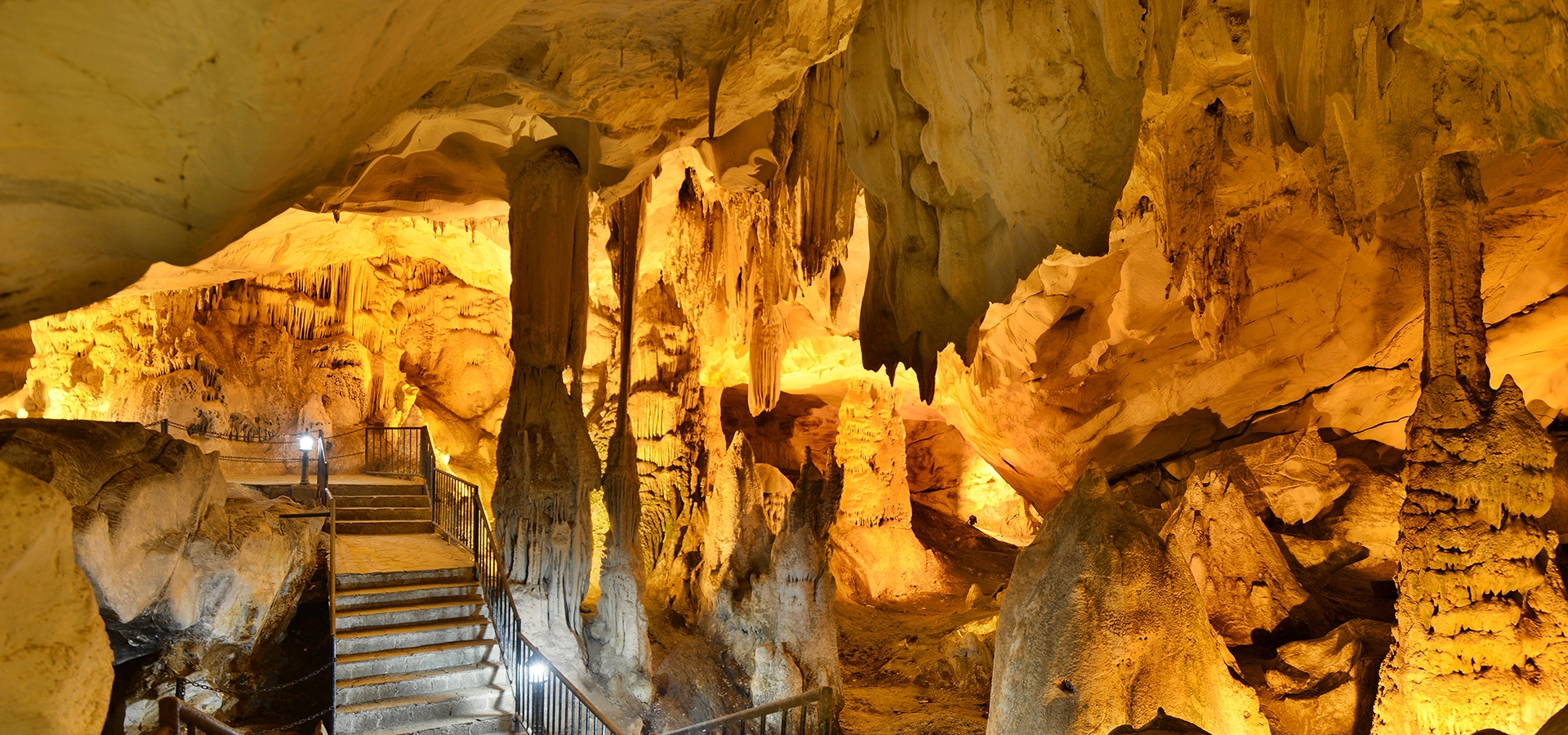
Travel deeper into the Istranca Mountains to explore one of Thrace's most remarkable cave systems.
Discover Dupnisa Cave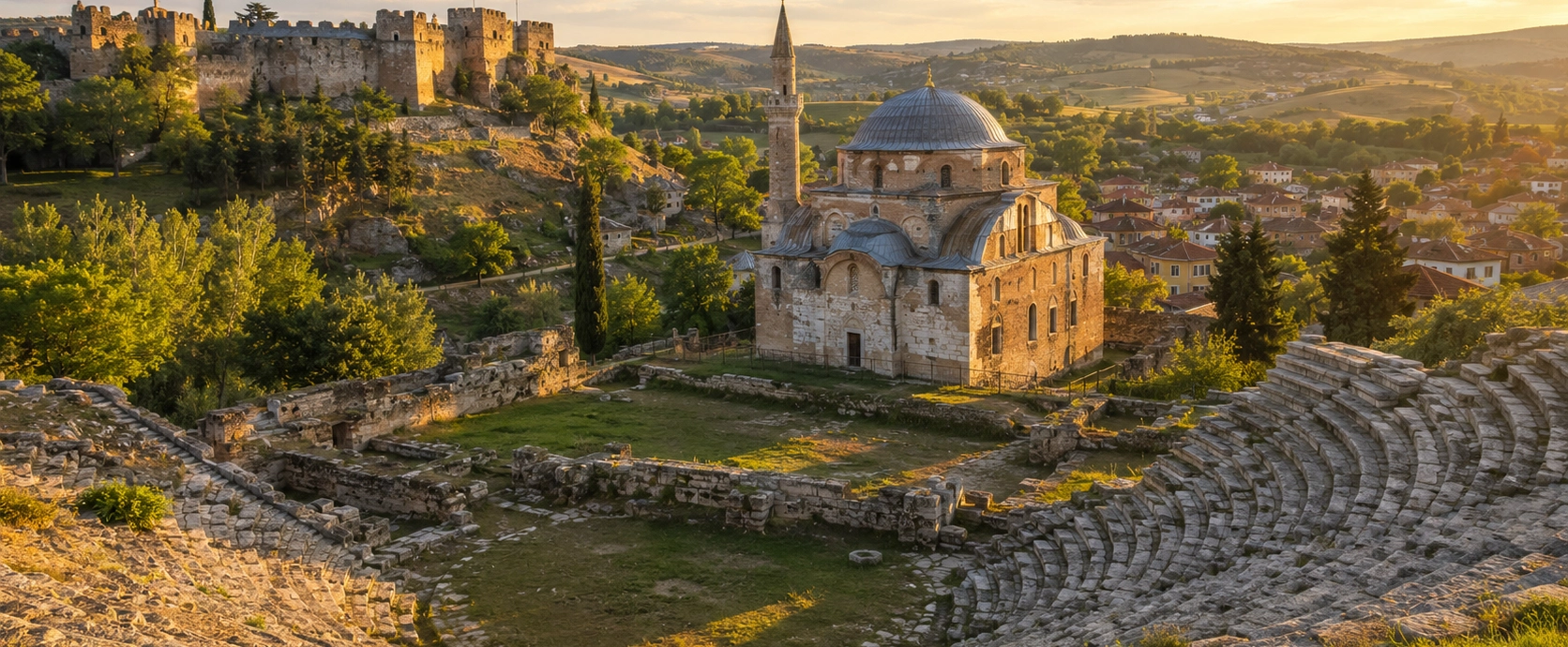
Continue through eastern Thrace for Roman archaeology, Byzantine monuments and a rich historic townscape.
Explore Vize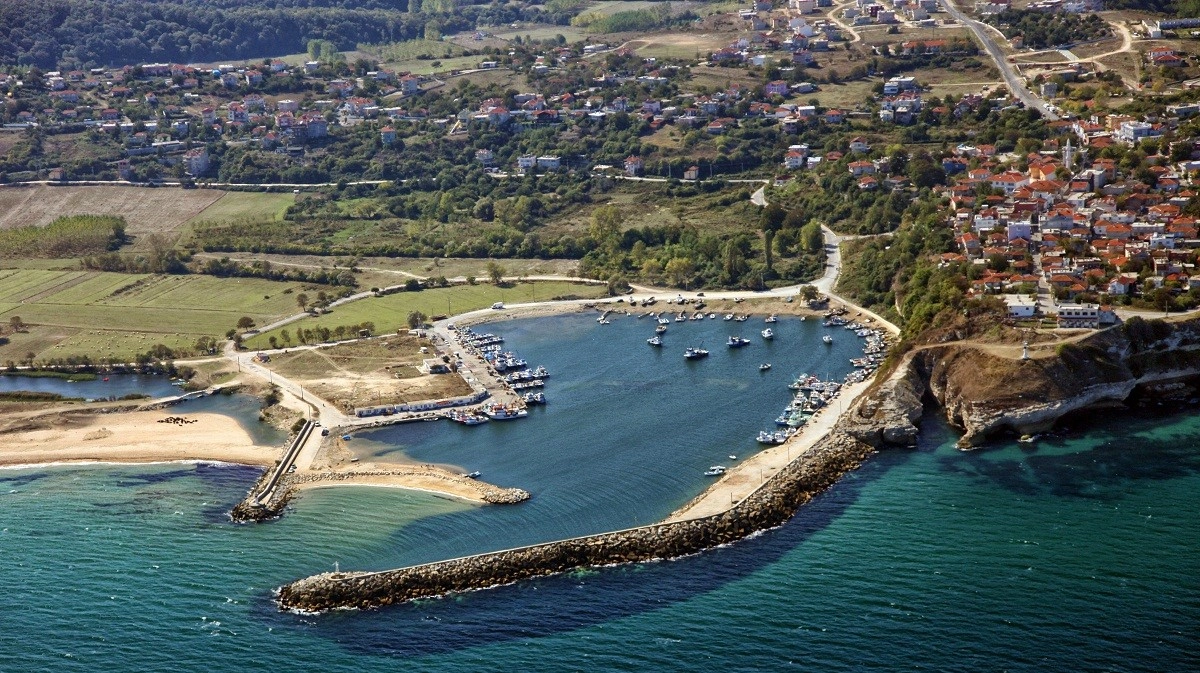
Continue through eastern Kırklareli for Byzantine heritage, river valleys, forests and the Black Sea coast.
Explore Kıyıköy