Alatlama
The local technique of seasoning meat and onions with ground spice before cooking.






Divriği Pilavı, also called Alatlı Pilavı, is a layered rice dish associated with celebrations in Divriği. Cooked meat, chickpeas, dried grapes and carefully measured warm spices transform pilaf into an occasion dish.
The local technique of seasoning meat and onions with ground spice before cooking
Black pepper and allspice appear in the registered recipe; provincial household variants may also use clove
Dried grapes give sweetness among meat and chickpeas
The documented recipe uses generous quantities for gatherings
Its place in Sivas cuisine and the defining preparation details.
Sivas province, Türkiye
Regional food
Cook the chicken or bone-in meat in water with roughly cut onions until tender.
Registered: Divriği Pilavı / Alatlı Pilavı (no. 564)
Divriği’s culinary memory links Alatlı Pilavı with major community gatherings and the town’s medieval Mengücek heritage. The Sivas Culture and Tourism Directorate describes it as a feast preparation distributed at weddings, holidays and large public occasions. The historical association should not be mistaken for proof that one unchanged recipe is documented continuously for eight centuries.
The word alatlama refers in local kitchen language to coating cooked, shredded meat and finely chopped onion with ground spices and allowing them to rest. This is more specific than simply boiling rice with lamb. The method involves pre-cooking the meat, preparing the legumes and fruit, and only then finishing the pilaf together.
The dish is protected under the registered name Divriği Pilavı / Alatlı Pilavı, geographical-indication number 564, registered on 9 October 2020. The registration formalises a dish closely identified with Divriği rather than establishing an exact date of its first creation.
The local technique of seasoning meat and onions with ground spice before cooking.
Black pepper and allspice appear in the registered recipe; provincial household variants may also use clove.
Dried grapes give sweetness among meat and chickpeas.
The documented recipe uses generous quantities for gatherings.
The pilaf uses meat broth and cooked meat; the rice is not merely stirred with raw mince.
The official TÜRKPATENT registration uses the product name Divriği Pilavı / Alatlı Pilavı. This status belongs to the defined local product and production specification, not to every vaguely similar dish.
Divriği Pilavı / Alatlı Pilavı
564
Mahreç işareti
09 October 2020
Read the official TÜRKPATENT record for the detailed specification and current register.
These are ingredients documented in the local culinary sources or used in the explained traditional method. Amounts are included only where the available source specifies them; household quantities vary.
1 chicken or about 1.5 kg bone-in sheep meat in the published regional recipe
About 1 kg rice for the full feast-style preparation
Chickpeas, previously soaked and cooked
Dried Besni grapes or suitable seedless raisins
Onions
Crushed black pepper and allspice; cloves appear in some provincial household recipes
Butter
Broth saved from cooking the meat
The geographical-indication method places seasoned cooked meat at the base of the pan, then chickpeas and protected Besni grapes, with rice above them. After cooking and resting, the pot is inverted onto a tray. This creates a recognisable layered serving rather than loose mixed rice.
The official register specifies black pepper and allspice. The provincial kitchen description records clove in some local versions. Both are useful to mention, but adding clove should not be represented as mandatory in every certified recipe.
The provincial recipe allows a whole chicken in place of sheep meat.
Bone-in meat gives a different broth and a stronger savoury profile.
For home cooking the ingredient amounts should be scaled together rather than applying feast proportions to a small pot.
The registered service method rests the completed pilaf and then turns the pot upside down onto a serving tray so its layered contents appear together. It can be accompanied by grape compote. The savoury spices are balanced by raisins without making the pilaf a sweet dessert.
The registered description covers the pot and allows a long resting period before turning it over. That patience prevents freshly cooked rice from collapsing and lets the aromatic meat, raisins and grains settle into a serving that can be shared at celebrations.
This pilaf is a mixed meat, grain and fruit dish; the dried grapes are a defining component rather than a garnish.
Use the cooked meat broth rather than plain water where the traditional method calls for it.
Ask local restaurants, bakers or specialist food shops for Divriği Pilaf / Alatlı Pilav. Availability depends on the dish and preparation schedule; slow-cooked, preserved and festival foods are not necessarily offered every day. For historical context and other Sivas places, browse our Sivas food and craft guide.
The name is linked to the local practice of alatlama, seasoning meat and onions with a spice mixture.
No. The overall dish is savoury, with sweetness contributed by a relatively small amount of dried grapes.
Yes, it has geographical-indication registration number 564.
The documented recipe offers chicken or bone-in sheep meat.
The Sivas Provincial Directorate of Culture and Tourism publishes a documented introduction to Divriği Pilaf / Alatlı Pilav or the relevant Sivas culinary tradition, linked in the sources below.
This guide draws on the provincial Culture and Tourism Directorate’s culinary documentation and, where the product is registered, TÜRKPATENT’s official geographical-indication register. Historical traditions are identified as local culinary accounts, not dated archaeological proofs.
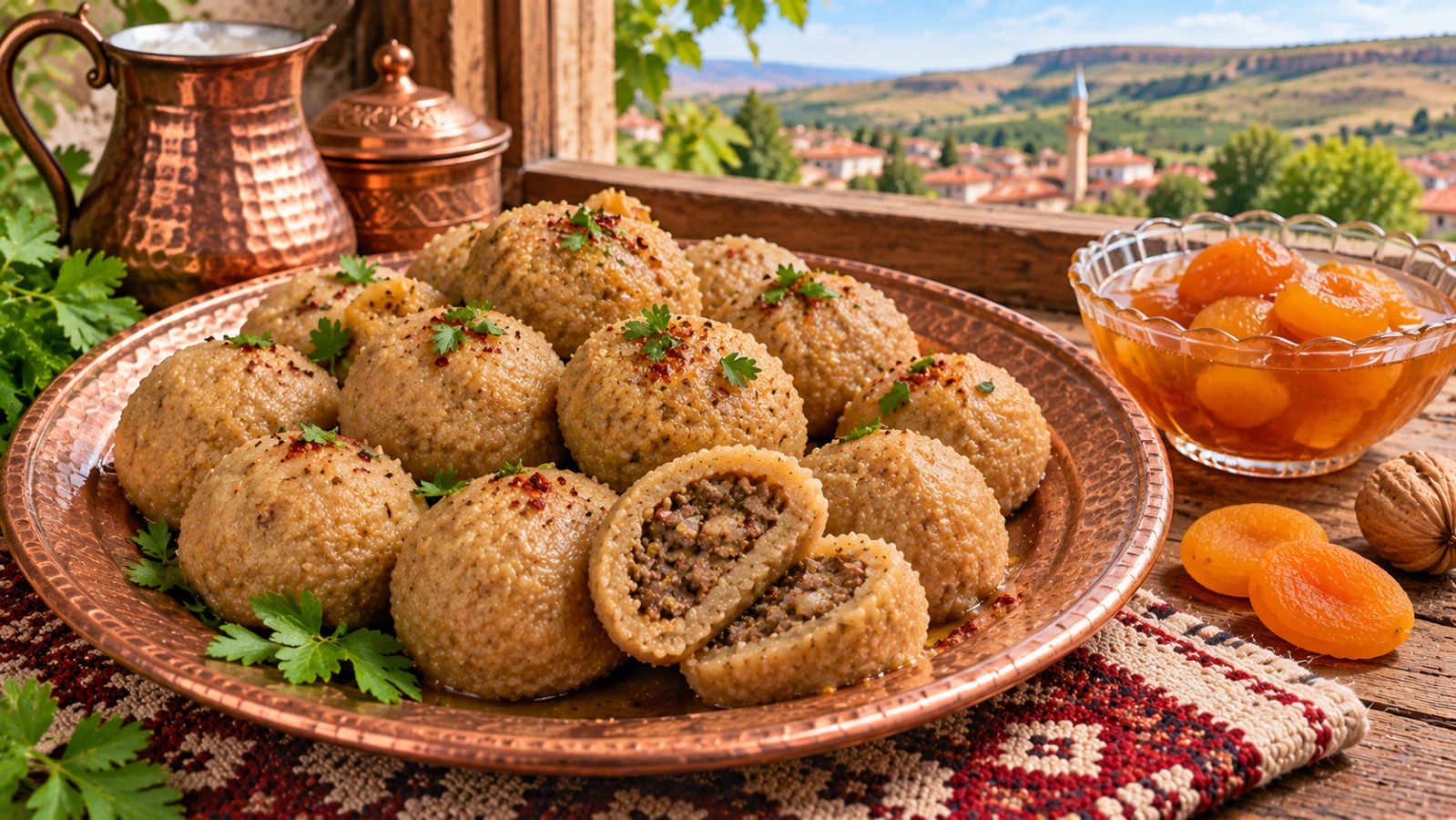
Tonus Köftesi is an Altınyayla speciality built around a bulgur dough and a separately prepared savoury filling. It is distinct from Sivas’s flat grilled beef köfte.
Read Food Guide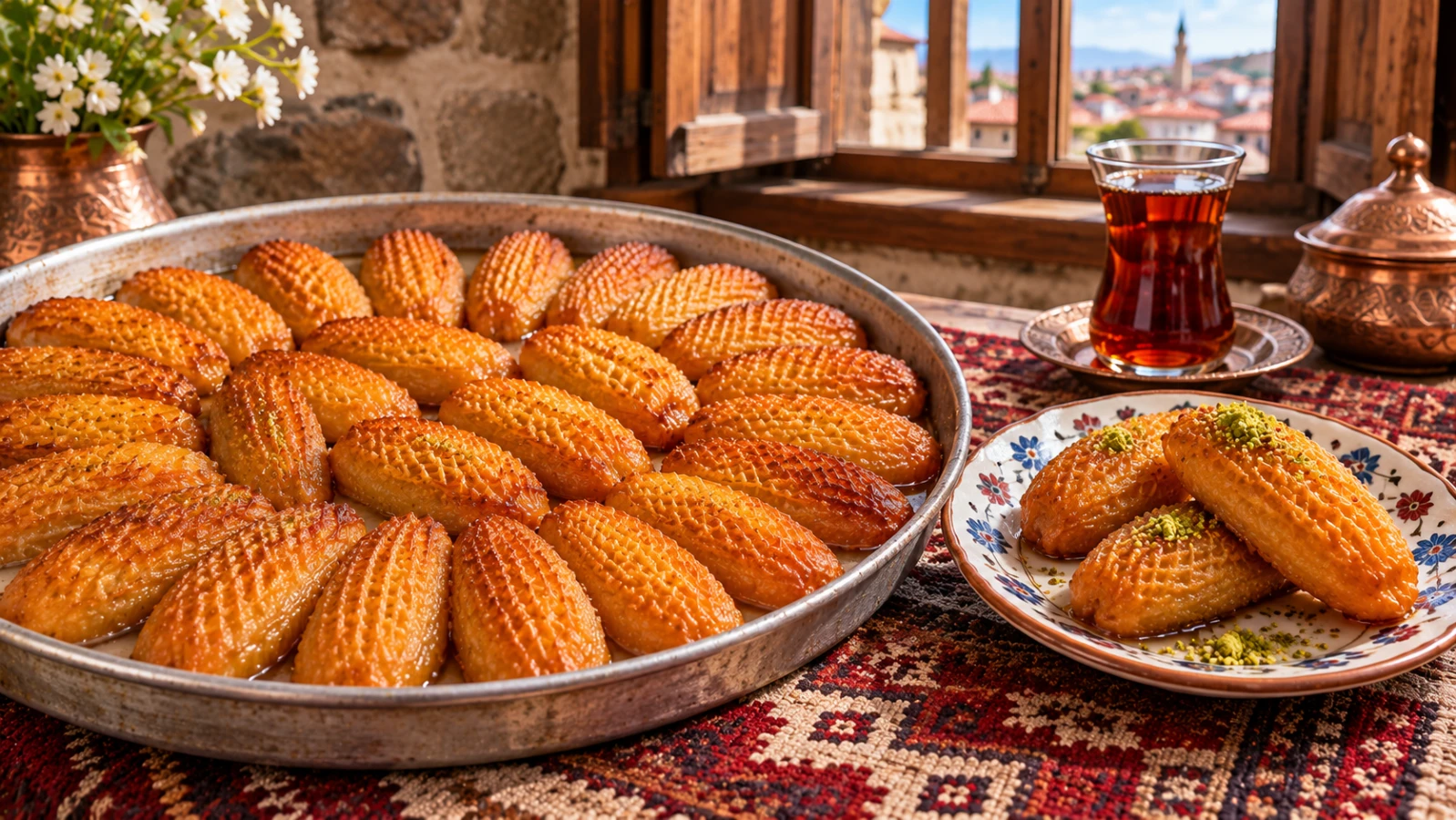
Sivas hurma, also called sini hurması, is a traditional oven-baked pastry shaped against a sieve or ridged mould and soaked in sugar syrup. The name does not mean that dates are a required ingredient.
Read Food Guide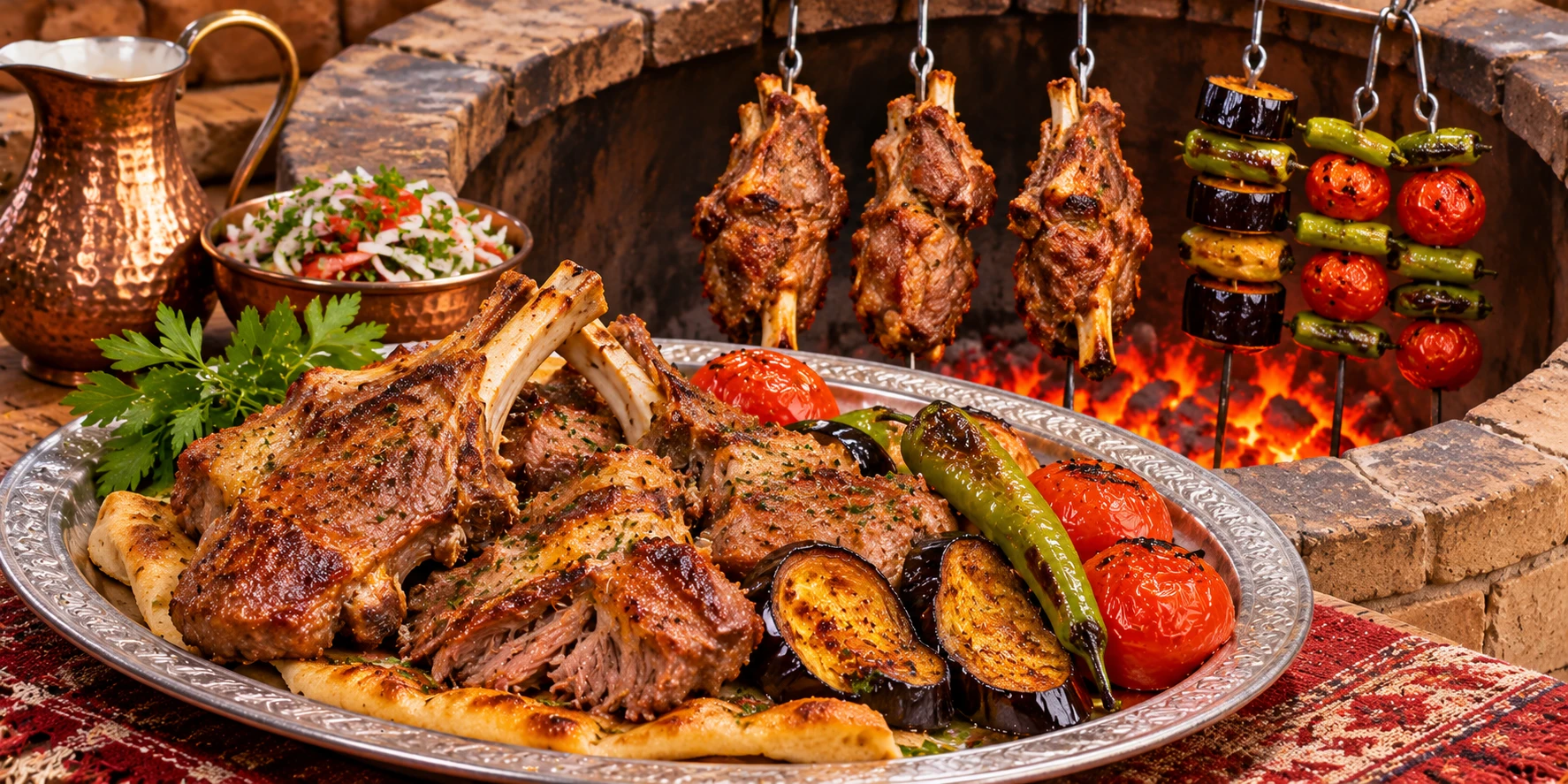
Sebzeli Sivas Kebabı combines bone-in lamb, aubergine, tomatoes and long peppers cooked on separate vertical skewers above an open wood-fired hearth. It is an especially seasonal Sivas shop dish.
Read Food Guide