Private İzmir Wildlife Park Experience
Enjoy comfortable private transportation to Sasalı and spend a relaxed day discovering elephants, giraffes, big cats, primates, birds and the park's beautifully landscaped habitats.
Plan Your Wildlife Day





Most travelers arrive in İzmir thinking about the Aegean Sea, ancient cities, waterfront promenades and Mediterranean food.
But on the northern edge of the city, near the wetlands of Sasalı, lies an entirely different world.
This is İzmir Wildlife Park — İzmir Doğal Yaşam Parkı.
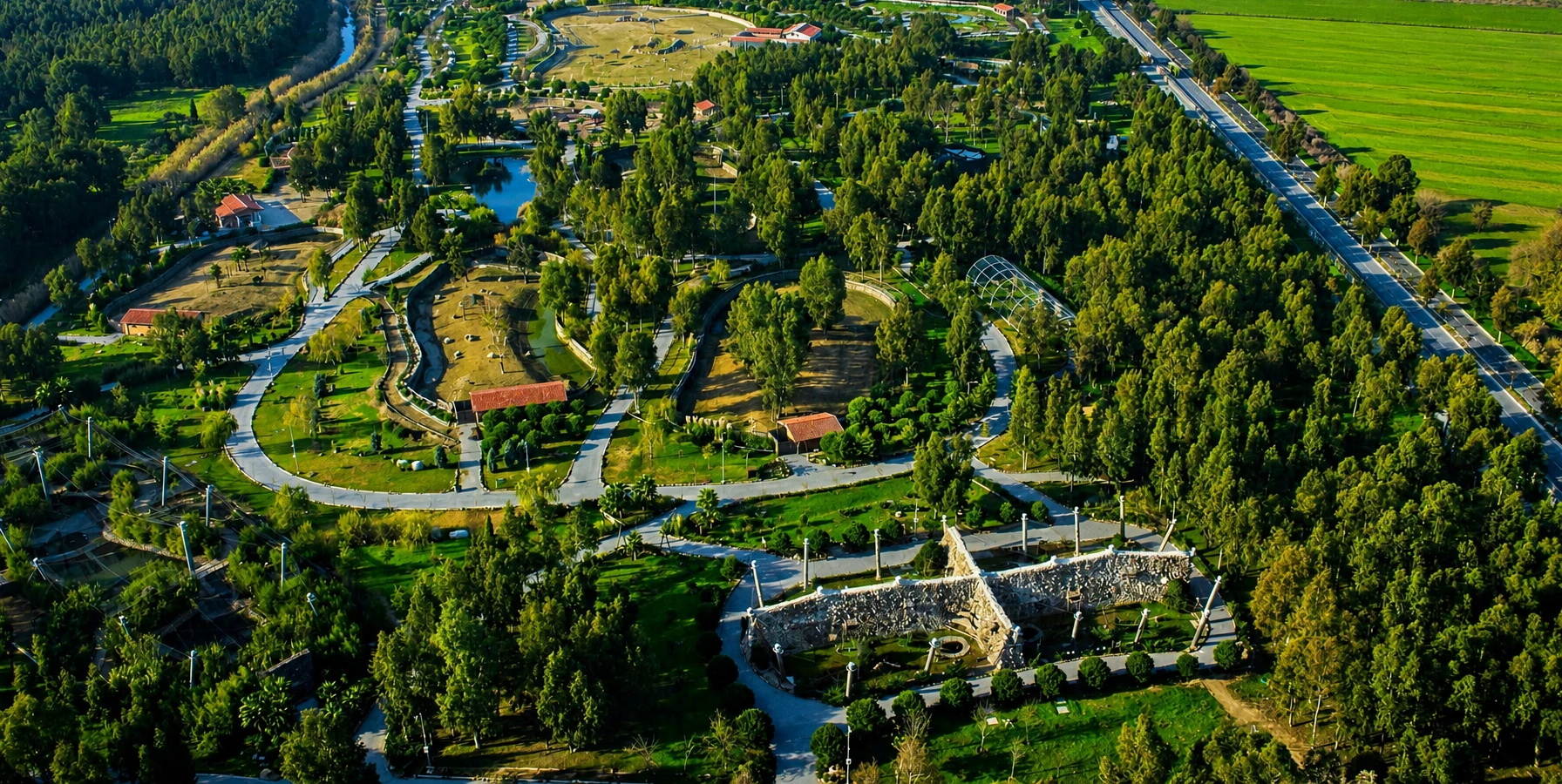
Spread across approximately 425,000 square meters, the park was designed around spacious habitats that resemble the natural environments of the animals as closely as possible.
Instead of following the older model of a compact urban zoo, visitors walk through a broad landscaped environment of trees, ponds, open enclosures and naturalistic animal areas.
The park is home to well over 1,500 animals representing more than 130 species, although exact numbers naturally change as animals are born, transferred or introduced.
Among its best-known residents are Asian elephants, giraffes, zebras, lions, tigers, hippos, primates, bears, hyenas, antelope, reptiles and an extraordinary variety of birds.
Yet İzmir Wildlife Park is about more than seeing animals.
Animal care, veterinary work, environmental education, breeding programs and wildlife rehabilitation all form part of its modern identity.
A vast landscaped wildlife environment in Sasalı on the northern side of İzmir.
Discover mammals, birds and reptiles representing ecosystems from Türkiye and around the world.
The park's Asian elephants have become some of its most recognizable and beloved residents.
Wide walking areas, educational encounters and varied habitats make the park particularly rewarding with children.
Essential information for planning a day among the animals, gardens and open-air habitats of Sasalı.
Sasalı, Çiğli District, northern İzmir, Türkiye.
Open on Google MapsApproximately 425,000 square meters of landscaped habitats, vegetation, ponds and walking areas.
More than 130 species and well over 1,500 animals, with numbers changing naturally through time.
The modern İzmir Wildlife Park opened in Sasalı in 2008.
Families, animal lovers, photographers, school groups and travelers interested in nature and conservation.
Allow approximately 3–4 hours, or longer for a relaxed family visit.
The park offers a completely different experience from İzmir's archaeological sites, beaches and urban attractions.
İzmir Wildlife Park gives visitors the opportunity to encounter wildlife within a large green environment only a relatively short journey from the metropolitan center.
The size of the park immediately changes the experience.
Habitats are separated by broad landscaped areas rather than being compressed into a small urban zoo.
Visitors move between different animal environments while walking beneath trees, beside ponds and through gardens.
Some of the most memorable areas recreate the atmosphere of broad geographical habitats.
Giraffes, zebras and other African animals can be observed within the park's savanna landscape.
Elsewhere, Asian elephants occupy one of the park's best-known areas.
Lions, tigers, bears, primates, reptiles and colorful birds create entirely different experiences as the route continues.
For families spending several days in İzmir, the park is also an excellent counterpoint to historical excursions.
One day can be devoted to Ephesus or Pergamon.
Another can become a slower day centered around animals, nature and the wetlands of northern İzmir.
The story of İzmir Wildlife Park begins much earlier than the modern Sasalı complex.
İzmir's zoological tradition dates to 1937, when a zoo was established inside Kültürpark.
For decades, generations of İzmir residents associated the city's animals with this central urban park.
Ideas about animal welfare and zoological management changed dramatically during the twentieth century.
Modern institutions increasingly emphasized larger habitats, environmental enrichment, conservation, education and spaces designed around animal behavior.
İzmir eventually decided to replace its older urban zoo with a much larger wildlife park.
Construction of the new project began in the Sasalı area.
In 2008, animals were transferred to the new approximately 425,000-square-meter complex in Çiğli.
The transformation represented a fundamental change in philosophy.
The emphasis was no longer simply on displaying animals.
The new park aimed to provide larger environments inspired by natural habitats while combining recreation with education, breeding and conservation.
The Turkish name Doğal Yaşam Parkı can be translated as “Natural Life Park” or “Wildlife Park.”
The name reflects the basic philosophy of the site.
Animals are housed in environments designed to provide greater space and to reproduce important characteristics of their natural habitats.
Landscape design therefore plays a major role in the visitor experience.
Trees, grasses, rocks, water features and sheltered zones become part of the animal environments.
The result feels significantly more open than the traditional image of a city zoo.
Visitors also need to adjust their expectations.
Animals are not always positioned directly beside viewing areas.
They may move into shade, vegetation, shelters or quieter corners of their habitats.
That can mean waiting, observing carefully and accepting that wildlife does not perform according to a visitor timetable.
The location of İzmir Wildlife Park is an important part of its character.
Sasalı lies north of central İzmir in the district of Çiğli.
The area opens toward the remarkable wetland landscapes surrounding the Gediz Delta.
Instead of dense central-city development, visitors encounter a flatter landscape shaped by wetlands, agricultural areas, open skies and coastal ecology.
This provides an appropriate setting for a large wildlife park.
Thousands of trees and extensive planted areas help create shade, habitat structure and a greener micro-landscape.
Ponds and water features add another dimension.
The transition from urban İzmir to Sasalı can itself feel like leaving the city behind.
Extensive vegetation creates shade and helps separate the park's different habitat areas.
Water landscapes attract both park birds and free-ranging local birdlife.
Broad enclosures allow animals to move through more complex environments.
Sasalı stands close to one of the Aegean region's most important bird and wetland landscapes.
The scale of the animal collection is one of the main reasons to allow several hours for a visit.
The wildlife population changes naturally as births occur and animals move between institutions.
Visitors can nevertheless expect an extraordinary variety of mammals, birds and reptiles.
The park's elephant family is among its most famous residents and one of the highlights for many visitors.
These unmistakable African animals are among the stars of the broad savanna-style habitat.
Large predators provide a dramatic contrast with the open herbivore landscapes.
Lemurs, monkeys and gibbons demonstrate the remarkable diversity of primate behavior.
Water birds, parrots, cranes and numerous other species add color and movement throughout the park.
Snakes, turtles, lizards and other reptiles can be discovered within specialized environments including the Tropical Center.
Few animals are associated with İzmir Wildlife Park as strongly as its Asian elephants.
The elephant family has become one of the symbols of the park.
Their large habitat allows visitors to observe behavior that cannot be appreciated from photographs alone.
Watch how elephants communicate through body movement.
Notice the extraordinary control of the trunk as it collects food, explores objects and interacts with the environment.
Observe the relationship between individual family members.
Young elephants learn constantly by watching and interacting with older animals.
Water, shade, vegetation, enrichment objects and feeding activities can all become part of their daily routine.
The African savanna is one of the most visually impressive sections of İzmir Wildlife Park.
Large open spaces allow several characteristic African animals to be viewed within a broad landscape rather than as isolated exhibits.
Visitors may see giraffes, zebras, ostriches and hippos among the animals associated with this part of the park.
The giraffes naturally attract attention first.
Their extraordinary height makes them visible across long distances.
But the real beauty of the savanna area comes from observing several species within the same visual landscape.
Zebras move across open ground.
Ostriches provide a completely different body shape and movement pattern.
Hippos connect the landscape with water.
The area works particularly well for children because it helps transform animals seen in books and documentaries into real living creatures with scale, movement and individual behavior.
The atmosphere changes dramatically around the park's large carnivores.
Among the animals represented are lions, Bengal tigers and pumas.
Predators often spend substantial periods resting.
This is completely normal.
Large carnivores in the wild conserve energy and are not continuously active throughout the day.
Visitors who slow down may notice details that are easily overlooked.
Ear movements reveal attention.
Scent marking communicates territory.
Pacing routes, shade preferences and interactions between animals can reveal individual routines.
Observe the social behavior and extraordinary physical presence of one of Africa's best-known predators.
Powerful solitary cats whose markings provide natural camouflage within vegetated environments.
Agile American predators also known as mountain lions or cougars.
Complex social carnivores whose ecological role extends far beyond their popular reputation as scavengers.
Primates are often among the animals visitors spend the longest time watching.
Their behavior can appear immediately familiar.
Individuals play, investigate objects, groom one another, compete for preferred positions and communicate through body language and sound.
The park includes several primate species.
Among the particularly interesting recent residents are white-handed gibbons and siamangs.
Gibbons are famous for brachiation — moving through trees by swinging from branch to branch using exceptionally long arms.
Watching this movement in real life explains their anatomy more effectively than any diagram.
Other primates represented within the park include lemurs and several monkey species.
The Tropical Center provides another change of atmosphere.
After walking through large open-air habitats, visitors enter an environment designed for species requiring warmer and more controlled conditions.
Reptiles form an important part of the experience.
Species represented within the wider park collection include pythons, boas, iguanas, turtles, geckos and crocodilians.
Tropical plants add to the sense of entering an entirely different ecosystem.
The center is particularly useful for introducing children to animals that are often misunderstood.
Snakes, lizards and other reptiles play essential roles within natural food webs.
Learning about them at close range can replace fear with curiosity and respect.
Birds form one of the most diverse parts of the wildlife collection.
Some species live within dedicated habitats.
Others occupy ponds and wetland-style areas.
The park has hosted parrots, cranes, storks, hornbills, ostriches and many other species.
Bird observation rewards patience.
Bright plumage often attracts attention first, but behavior can be even more fascinating.
Watch feeding methods.
Observe courtship displays and territorial behavior during appropriate seasons.
Listen to vocal communication.
Because Sasalı lies within a rich natural bird region, visitors may also notice free-ranging wild birds moving through the surrounding landscape.
Exotic animals naturally attract attention.
But some of the most important conservation stories involve wildlife native to Türkiye and neighboring regions.
The park's wider collection includes species such as deer, wild goats, wolves, bears and Eurasian lynx.
These animals provide an opportunity to remember that Anatolia itself contains extraordinary biological diversity.
Türkiye lies at the meeting point of Europe, Asia and the Middle East.
Mountains, forests, wetlands, steppes and Mediterranean ecosystems create habitats for a remarkable range of wildlife.
A visit to Sasalı can therefore become an introduction not only to global biodiversity but also to the animals living much closer to home.
The park is particularly popular with families.
For children, the scale of the animals alone can be unforgettable.
A giraffe suddenly becomes far taller than imagined.
An elephant's trunk becomes a complex tool rather than a cartoon feature.
A tiger's camouflage becomes visible within real vegetation.
The park also contains areas oriented toward younger visitors and familiar domestic animals.
Goats, sheep, rabbits and similar animals can create a useful bridge between everyday animal experience and the wildlife seen elsewhere in the park.
Parents can transform the day into a simple learning game.
Compare giraffes, elephants and other large mammals and discuss why different body shapes evolved.
Look for animals whose stripes, spots or colors help them disappear into their environments.
Bird calls and primate vocalizations make children realize how much animals communicate through sound.
Ask what an animal is actually doing rather than simply identifying its species.
Trunks, long necks, claws, webbed feet and unusual beaks all reveal relationships between animals and habitats.
Teach children not to shout, throw food, tap barriers or disturb animals for a reaction.
Modern animal care involves much more than providing food and cleaning habitats.
Animals need opportunities to investigate, move, forage, socialize and express species-appropriate behavior.
This is where environmental enrichment becomes important.
Food may be hidden rather than simply placed in a bowl.
Scents can encourage investigation.
Objects may be introduced for manipulation or play.
Pools provide cooling and physical activity.
Climbing structures encourage natural movement among primates.
During İzmir's hottest summer periods, the park has also used water, pools and frozen foods as part of cooling and enrichment programs.
Behind the visitor routes lies a complex professional operation.
Veterinarians, animal keepers, technicians and other specialists monitor health, nutrition, reproduction and behavior.
Working with wildlife presents unusual challenges.
A medical procedure that would be straightforward with a domestic animal can become considerably more complicated with an elephant, large carnivore or unfamiliar exotic species.
Veterinary teams must also understand species-specific anatomy and behavior.
Preventive medicine is extremely important.
Health monitoring, quarantine procedures, nutrition planning and regular examinations help identify problems before they become serious.
The park has also publicized complex veterinary interventions involving animals born or living within the facility.
Such work provides a reminder that maintaining a modern wildlife collection involves continuous scientific and medical responsibility.
Modern wildlife institutions increasingly connect animal care with broader conservation goals.
Some species living in zoological institutions face serious threats in their natural habitats.
Habitat destruction, illegal wildlife trade, hunting, pollution, climate change and fragmentation can all reduce wild populations.
Coordinated breeding can help maintain genetically sustainable populations under professional care.
Education is equally important.
Millions of people may never see elephants, tigers, tropical primates or endangered reptiles in the wild.
Seeing a living animal can create an emotional connection that photographs alone rarely provide.
The challenge is to turn that emotional reaction into greater understanding of ecosystems and conservation.
İzmir Wildlife Park has been associated with the European Association of Zoos and Aquaria — EAZA.
EAZA connects zoological institutions across Europe, western Asia and beyond.
Its work includes animal welfare, research, population management, conservation and education.
International cooperation is particularly important for species management.
Wildlife populations under professional care cannot be managed responsibly by every institution acting independently.
Genetic relationships, available habitat, breeding recommendations and transfers between institutions all need coordination.
This international dimension is largely invisible during an ordinary family visit.
Yet it forms part of the scientific framework behind modern zoological management.
Another important part of wildlife work involves injured native animals.
Wild birds and other animals may arrive after collisions, injury, illness or human disturbance.
Where rehabilitation is possible, the goal is treatment followed by release back into nature.
This work is fundamentally different from caring for permanent wildlife park residents.
A rehabilitated wild animal should ideally retain the behavior required to survive independently.
Human contact therefore needs to be carefully controlled.
Successful releases provide one of the clearest links between veterinary care and direct conservation in the wild.
Animals naturally receive most of the attention.
But the vegetation is an essential part of the park.
Thousands of trees create shade, visual separation and environmental structure.
Shrubs and planted areas soften habitat boundaries.
Plants around water features support insects and birds.
Vegetation can also provide enrichment by introducing scents, textures and natural feeding opportunities.
For visitors, trees become especially important during İzmir's hot summer months.
The result is a large urban green space as well as a zoological attraction.
Meet the Asian elephant family that has become one of the great symbols of the park.
Look for giraffes, zebras, ostriches and other African animals across the broad open landscape.
Spend time observing lions, tigers and other predators rather than expecting constant activity.
Watch lemurs, monkeys, gibbons and siamangs interacting with complex climbing environments.
Discover reptiles and tropical species in a completely different indoor environment.
Observe colorful and unusual bird species as well as water birds around the park's ponds.
Family-friendly spaces create additional opportunities for younger visitors to learn about animals.
Slow down between animal habitats and appreciate the landscape itself as part of the experience.
Do not try to race between animals.
The park is large enough that rushing can quickly become tiring.
Begin by looking at the park map and deciding which animals matter most to your group.
Families with young children may want to prioritize elephants, giraffes, big cats, primates and the Tropical Center.
Photography enthusiasts may prefer longer observation periods at fewer habitats.
Take breaks beneath shaded areas.
Drink water regularly in warm weather.
Return to favorite habitats later if an animal was sleeping or out of sight during your first visit.
Behavior often changes through the day.
Possible for a focused visit concentrating on several major animals, but relatively rushed for the size of the park.
A comfortable choice for most visitors and enough time to see the major habitats without constant rushing.
Ideal for families who want breaks, snacks, photography and time for children to explore at a relaxed pace.
Suitable for serious animal enthusiasts who enjoy returning to habitats and observing behavior over longer periods.
İzmir Wildlife Park operates with seasonal opening and closing times.
Hours change during the year according to daylight, weather conditions and animal routines.
The park is normally closed to visitors on Mondays, except when special arrangements are announced.
As of September 2026, the park opens at 09:30, with final admission at approximately 17:00 and visitors able to leave until approximately 18:30.
The park has announced that from 12 October 2026, the winter visitor period will move to approximately 09:30–16:00, with final departures by approximately 17:30.
Because the timetable changes seasonally, always check the official İzmir Wildlife Park website shortly before visiting.
Visitors should be aware that admission arrangements differ from a traditional cash ticket office.
Current park information states that entrance payment is accepted using contactless bank or credit cards and İzmirim Kart.
If you are visiting from abroad, carrying a contactless bank card is therefore particularly useful.
Special exemptions may apply to certain age groups, educational visits or designated periods.
Check current regulations if traveling with a school group or if you may qualify for free admission.
İzmir Wildlife Park is located in Sasalı in the Çiğli district, north of central İzmir.
It is outside the historic central districts around Konak and Alsancak.
Travel time therefore depends heavily on traffic and the part of İzmir from which you begin.
Private vehicle, taxi and public transport are all possible.
Travel north toward Karşıyaka and Çiğli before continuing toward Sasalı.
Sasalı can be reached directly by road or using the municipal bus connection toward the Wildlife Park.
Çiğli provides one of the most practical public-transport connections to the park.
Driving is particularly convenient for families and for combining the park with other northern İzmir attractions.
Open the Sasalı location and calculate your route from central İzmir.
View LocationPublic transport provides a practical way to reach the park.
Two particularly useful ESHOT bus services are associated with Sasalı and the Wildlife Park.
The 777 service connects the Wildlife Park area with Karşıyaka İskele.
The 751 service connects Sasalı with Çiğli Aktarma Merkezi and stops near the Wildlife Park.
Visitors using İZBAN can travel to Çiğli and continue toward Sasalı using the 751 connection.
The 777 route can be particularly convenient for travelers approaching from Karşıyaka and ferry connections.
Visitors arriving by private vehicle can use the parking facilities associated with the park.
Current official visitor information lists parking as available without an additional parking fee.
Driving is particularly convenient for families carrying strollers, children's supplies, water and other day-trip equipment.
It also makes combining the Wildlife Park with nearby natural areas considerably easier.
Visitors should expect to walk considerably more than they would inside a compact urban zoo.
That is one of the strengths of the park.
Habitats have space between them.
Landscape and vegetation become part of the experience.
But comfortable footwear makes a significant difference.
Wear footwear suitable for several hours of walking rather than sandals chosen only for appearance.
Carry water, especially between late spring and early autumn.
Use sunscreen and a hat during sunny weather even though many sections include vegetation and shade.
Young children often enjoy the park more when the day includes regular sitting and snack breaks.
The wildlife park is much easier to navigate than archaeological sites with steep staircases and uneven ruins.
Nevertheless, its large size means distance can become the main accessibility challenge.
Visitors with limited mobility should consider how much walking is comfortable before trying to complete the entire park.
Families using strollers should also remember that a full circuit can become a substantial outing.
Prioritizing several key habitats may produce a more enjoyable day than trying to cover every corner.
One of the most pleasant periods, with mild weather, greener landscapes and comfortable walking temperatures.
Excellent for long visits, although midday temperatures begin to rise significantly.
Arrive early. İzmir can become extremely hot and many animals naturally rest during the hottest part of the day.
Comfortable weather and softer light can make autumn particularly rewarding for walking and photography.
Cooler temperatures can be pleasant, but daylight is shorter and seasonal closing times are earlier.
Often the best overall choice for cooler temperatures, fewer crowds and more time before seasonal closing hours.
Summer requires a different strategy.
İzmir regularly experiences intense heat.
Animals respond exactly as humans do.
They search for shade.
They reduce unnecessary movement.
Some spend more time near water.
This means arriving during the hottest hours can produce both a less comfortable visitor experience and fewer active animal encounters.
An early start is usually preferable.
Carry water, wear a hat and use sun protection.
Never attempt to provoke resting animals into movement.
Wildlife photography is very different from photographing architecture.
The subject moves.
The light changes.
The animal may turn away precisely when the composition seems perfect.
Patience is therefore more valuable than rushing between habitats.
Look for interaction between family members rather than concentrating only on individual portraits.
Use wider compositions to show the extraordinary height of giraffes within the surrounding habitat.
Wait for eye contact, movement and moments when the animal enters cleaner areas of the background.
Facial expressions and social interactions often create more powerful images than simple identification photographs.
Fast shutter speeds help with active birds, while patient observation can reveal predictable perches.
Softer early light is generally easier to work with than harsh midday sunshine.
A three- or four-hour wildlife park visit is easier when food and rest are included in the plan.
The park includes café and refreshment facilities where visitors can pause between habitats.
Families with younger children should avoid postponing every break until the end.
A comfortable rhythm works better.
Explore several habitats.
Stop for a drink.
Continue toward another major section.
Have a longer break before completing the final part of the route.
Facilities and individual food outlets can change, so visitors with dietary requirements should check current options or prepare accordingly.
Do not give food unless it is part of an officially supervised activity permitted by park staff.
Shouting or deliberately provoking animals creates unnecessary stress.
Fences and viewing boundaries exist for both visitor and animal safety.
Trying to force reptiles, primates or other animals to react is disruptive and unnecessary.
Use designated bins and protect the landscaped environment shared by animals, visitors and wild birds.
Choosing privacy, shade or shelter is normal behavior and should always be respected.
Stand quietly beside the elephant habitat.
Do not immediately lift the camera.
Watch first.
An elephant reaches toward the ground with its trunk.
Another moves toward the water.
Across the park, a giraffe bends awkwardly to feed.
A primate crosses the branches above its companions.
A lion lies almost motionless beneath the shade.
None of these moments are spectacular in the theatrical sense.
That is precisely why they matter.
Wildlife becomes interesting when visitors stop expecting constant entertainment and begin noticing behavior.
A slower visit turns the park from a collection of species into a series of encounters with living animals.
One of the most interesting ways to extend the day is to explore the wider natural environment around Sasalı.
Nearby lies the extraordinary Gediz Delta and the area commonly known as İzmir Bird Paradise.
The contrast is valuable.
Inside the Wildlife Park, visitors learn about animals managed within professionally designed habitats.
Outside, the wetland landscape supports wild migratory and resident birds.
Flamingos are among the most famous inhabitants of the wider delta.
Numerous other water birds depend on the mudflats, saltmarshes and wetland ecosystems surrounding İzmir Bay.
Together the two areas create an excellent nature-oriented day on the northern edge of İzmir.
Discover the extraordinary wetland birdlife of the Gediz Delta, including one of Türkiye's most famous flamingo landscapes.
Explore one of İzmir's liveliest waterfront districts with cafés, promenades and beautiful views across the bay.
Relax along the waterfront, enjoy sunset views and experience one of the city's most popular local neighborhoods.
Continue toward Konak, Kemeraltı, Alsancak and the wider cultural attractions of Türkiye's great Aegean metropolis.
İzmir Wildlife Park is located in Sasalı in the Çiğli district on the northern side of İzmir, Türkiye.
Its Turkish name is İzmir Doğal Yaşam Parkı, which can be translated as İzmir Natural Life Park or İzmir Wildlife Park.
The present Wildlife Park replaced İzmir's older Kültürpark zoo. The historic zoo dated to 1937, while the modern Sasalı wildlife park opened in 2008.
The park covers approximately 425,000 square meters, making it a substantial landscaped wildlife complex rather than a compact city zoo.
Recent official figures describe more than 1,500 animals representing over 130 species. Exact numbers change because of births, animal transfers and other population changes.
Animals include Asian elephants, giraffes, zebras, lions, tigers, hippos, bears, hyenas, primates, deer, wolves, birds, reptiles and many other species.
Yes. The Asian elephant family is one of the park's most famous attractions and has become closely associated with İzmir Wildlife Park.
Yes. Giraffes are among the best-known animals in the African savanna section of the park.
Yes. Large carnivores represented at the park include lions and Bengal tigers, although individual animals may sometimes be resting or away from the main viewing area.
Yes. The park contains several primate species including monkeys, lemurs, gibbons and siamangs.
Yes. The wider collection includes snakes, turtles, lizards and other reptiles, many of which can be discovered around the Tropical Center.
Yes. It is one of İzmir's strongest family attractions because children can experience large mammals, birds, reptiles and smaller domestic animals within the same visit.
Allow approximately three to four hours for a comfortable first visit. Families and serious animal enthusiasts may prefer half a day or longer.
The park is normally closed to visitors on Mondays for animal care, enrichment, habitat maintenance and related work, although exceptional opening arrangements may occasionally be announced.
Opening and closing hours change seasonally. In September 2026 the park opens at 09:30, but visitors should always check the current official timetable before traveling.
For 2026, published admission is 100 TL for adults and 50 TL for students, while children aged 0–6 enter free. Prices can change annually.
Current official information states that entry is handled using contactless bank or credit cards and İzmirim Kart rather than conventional cash admission.
Yes. Parking facilities are available and current official visitor information lists parking as free of charge.
Yes. ESHOT routes 751 and 777 provide useful public-transport connections to the Sasalı Wildlife Park area.
Travel to Çiğli by İZBAN and continue from Çiğli Aktarma Merkezi using the 751 bus toward Sasalı.
Yes. The 777 bus provides a useful connection between Karşıyaka İskele and the Wildlife Park area.
Morning is usually the most comfortable choice, especially during warm weather. Temperatures are cooler and you have more time before seasonal closing hours.
Yes, but arrive early. İzmir can become extremely hot during summer afternoons and many animals naturally reduce activity during the hottest hours.
Visitors should never feed wildlife unless a particular activity is explicitly organized and supervised by park staff.
Photography is an enjoyable part of the visit, but visitors should respect barriers and avoid flash, noise or any attempt to provoke animals for photographs.
The routes are generally much easier than rough archaeological sites, but the park is large and a complete visit involves considerable walking.
Yes. The Wildlife Park and the nearby Gediz Delta bird landscape create one of the best nature-oriented combinations in northern İzmir.
It is particularly worthwhile for families, animal lovers, photographers and travelers who want a nature-focused experience away from İzmir's archaeological and urban attractions.
Combine İzmir Wildlife Park with the natural landscapes of Sasalı, the Gediz Delta and the waterfront neighborhoods of northern İzmir on a privately arranged day.
Create a relaxed private day combining animals, nature and the landscapes surrounding İzmir Bay.
Enjoy comfortable private transportation to Sasalı and spend a relaxed day discovering elephants, giraffes, big cats, primates, birds and the park's beautifully landscaped habitats.
Plan Your Wildlife Day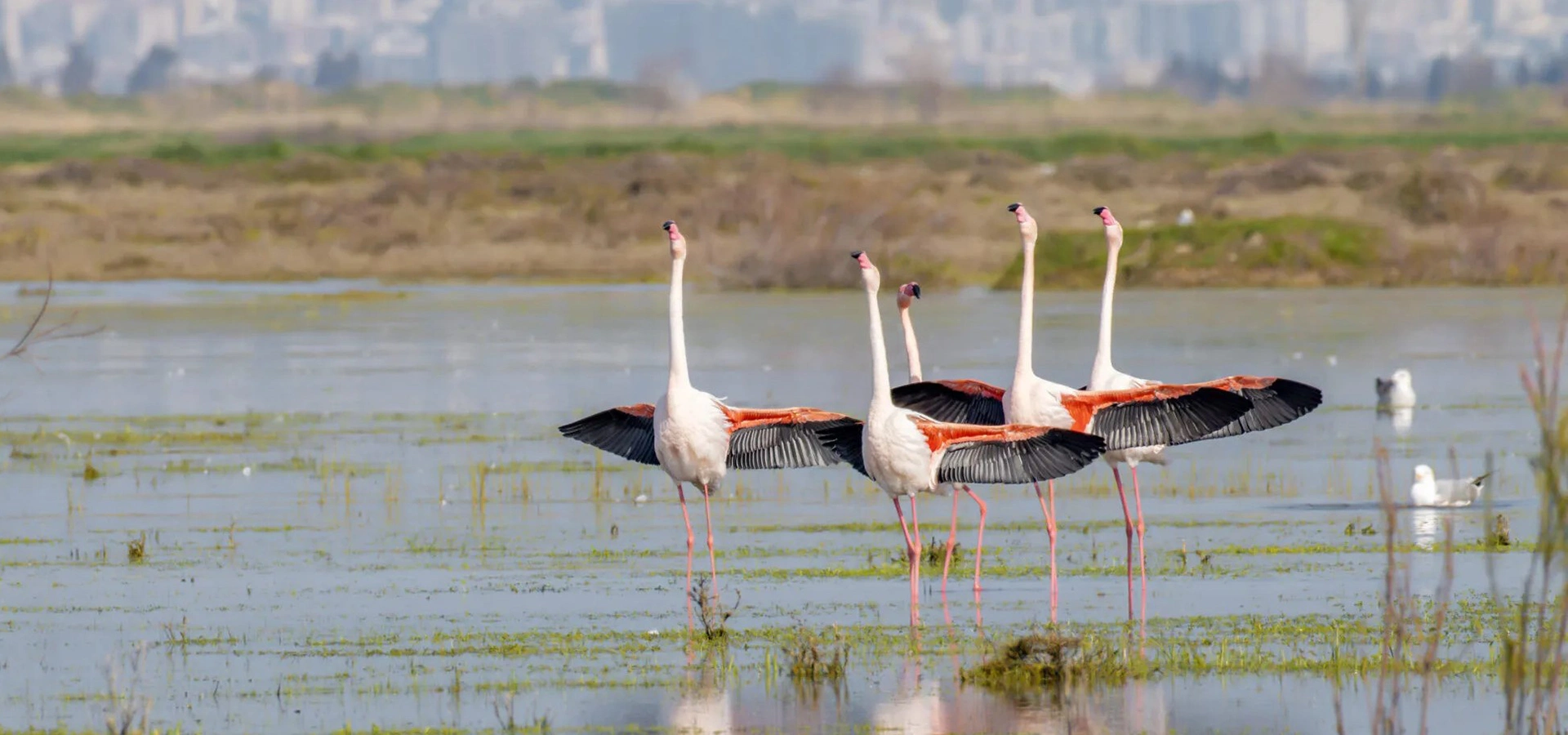
Combine İzmir Wildlife Park with the remarkable wetlands of the Gediz Delta for a day connecting animal conservation, birdlife and the natural environment surrounding İzmir Bay.
Request a Private Nature Experience