Private Kemeraltı & Historic İzmir Experience
Ask us about a tailor-made city day combining Konak Square, Kemeraltı, Kızlarağası Hanı, Jewish heritage, the Agora and İzmir's waterfront.
Request a Custom Tour





Few places explain İzmir as clearly as Kemeraltı Bazaar. Stretching inland from Konak Square toward the old city around Mezarlıkbaşı and Basmane, this enormous historic commercial district is not a single market hall but a dense urban world of streets, passages, courtyards, hans, mosques, workshops, food shops and neighbourhood institutions.
Kemeraltı developed into İzmir's commercial centre from the seventeenth century onward. Its unusual street pattern preserves the memory of an older geography: the broad curve followed by Anafartalar Street traces the edge of İzmir's former inner harbour. As the harbour gradually silted up and was reclaimed, new commercial land appeared and the bazaar expanded across what had once been waterfront.
The result is one of the richest historic districts in western Türkiye. Within a relatively compact area you can move from Hisar Mosque and the eighteenth-century Kızlarağası Hanı to Ali Paşa Square, traditional shopping streets, the old Jewish quarter around Havra Street, historic synagogues, local restaurants and small artisan businesses that continue to serve İzmir residents rather than functioning only for tourism.
Kemeraltı is also central to the wider heritage identity of İzmir. The historic port-city area, including the Kemeraltı–Kadifekale axis and ancient Smyrna, has been on Türkiye's UNESCO World Heritage Tentative List since 2020. Yet the bazaar's greatest appeal remains everyday life: tea glasses on small tables, shopkeepers greeting regular customers, the smell of roasted coffee and spices, crowded produce lanes, old stone courtyards and sudden glimpses of domes or minarets above the shop signs.
Kemeraltı grew around İzmir's old inner harbour and became the city's principal market and trading district.
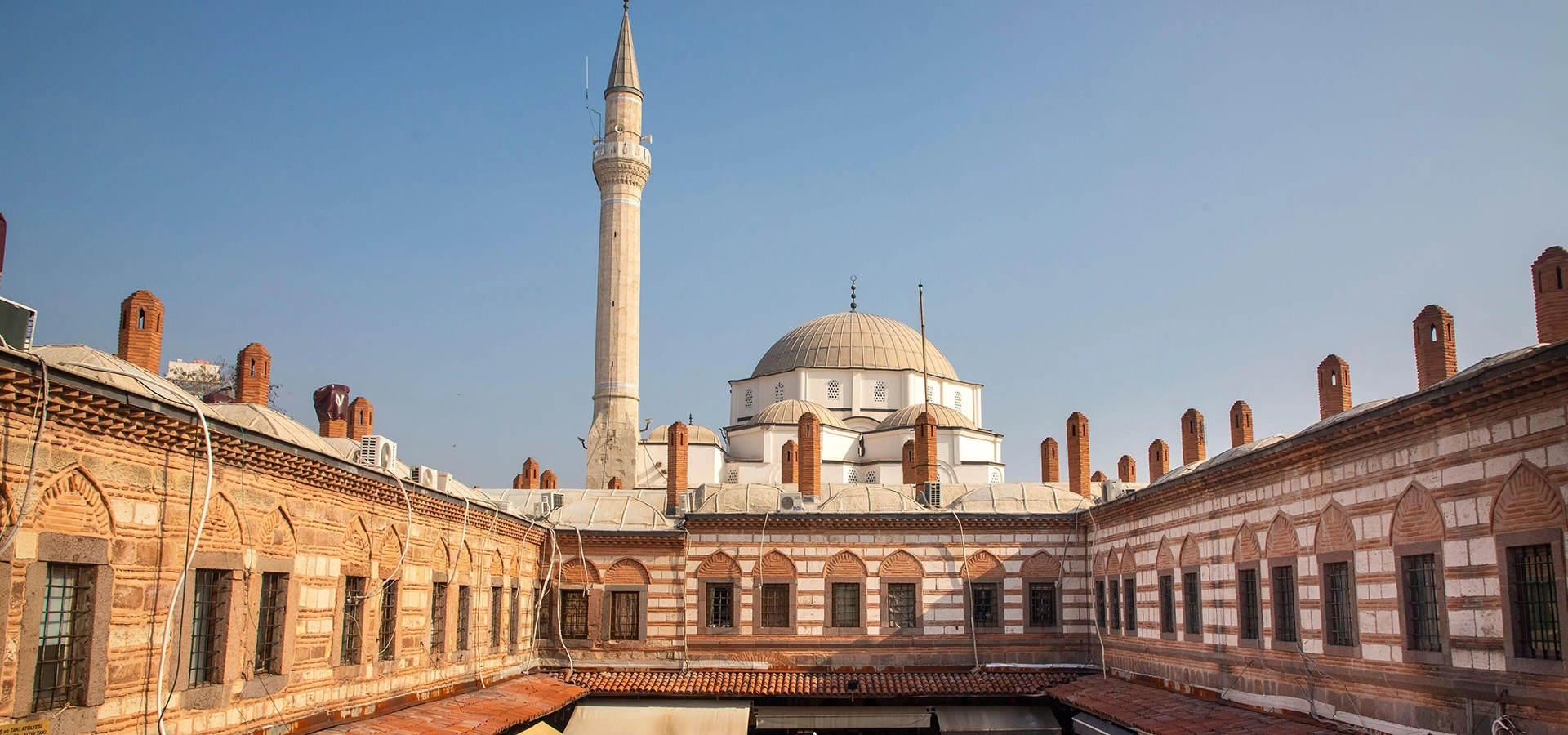
Kızlarağası Hanı, Abacıoğlu Han and other commercial buildings preserve the architecture of Ottoman trade.
Mosques, synagogues, Jewish commercial streets and traces of older communities reveal İzmir's cosmopolitan port-city history.
Kemeraltı remains an active shopping and food district used every day by local residents, merchants and visitors.
Essential information for exploring İzmir's historic market district, old inner-harbour streets and multicultural commercial heritage.
Central Konak, beginning close to Konak Square and extending inland through the historic centre toward Mezarlıkbaşı and Basmane.
The district became İzmir's major commercial centre from the seventeenth century onward.
Part of modern Kemeraltı occupies land created as İzmir's former inner harbour gradually silted up and was reclaimed.
A vast open-air historic commercial district rather than one enclosed bazaar building.
Anafartalar Street curves through the district, following the approximate line of the historic inner harbour.
Kızlarağası Hanı, built in 1743–44, is one of the best-preserved Ottoman commercial buildings in İzmir.
Hisar Mosque, traditionally dated to the late sixteenth century, stands beside the historic commercial core.
Havra Street and the surrounding Juderia preserve one of İzmir's most important concentrations of synagogue heritage.
The bazaar is one of the best places in İzmir for Turkish coffee, local street food, traditional sweets and old-style lokantas.
The Historical Port City of İzmir has been on Türkiye's UNESCO World Heritage Tentative List since 2020.
There is no ticket to enter Kemeraltı itself; individual museums, synagogues or special heritage sites may have separate arrangements.
Allow at least 2–3 hours, or half a day to combine the bazaar with the synagogue quarter, Agora and Konak Square.
Kemeraltı is not simply a shopping stop. It is one of the best places to understand how İzmir grew from an Ottoman port into a modern Aegean metropolis.
The first reason to visit is urban history. The bazaar preserves the shape of İzmir's vanished inner harbour. Streets that seem irregular today make much more sense once you realize that merchants, inns, mosques and warehouses originally developed around a working waterfront.
The second reason is architecture. Kemeraltı contains hans, bedestens, mosques, fountains, synagogues, passages and commercial buildings from different periods. Many are not monumental in scale, but together they create a dense historic environment in which architecture is discovered gradually while walking.
The third reason is living culture. Unlike a reconstructed heritage quarter, Kemeraltı remains commercially active. Local residents come for jewellery, textiles, household goods, spices, food, repairs, wedding shopping, gold, religious goods, kitchenware and countless everyday services. Tourism is present, but it has not replaced the bazaar's local function.
Finally, Kemeraltı is one of the strongest places in İzmir for understanding multicultural history. Muslim, Jewish, Greek Orthodox, Levantine and other communities shaped the wider port city. The synagogue concentration around Havra Street, Ottoman mosques along the old harbour arc and commercial buildings created by generations of merchants all belong to the same urban story.
Kemeraltı lies in the Konak district of central İzmir. The easiest visitor entrance is from Konak Square, where the Clock Tower stands only a few steps from the western edge of the bazaar. From there, streets lead east and northeast through Anafartalar Street, Hisar, Kızlarağası Hanı, Havra Street and the deeper historic centre.
The bazaar is not defined by a single gate. Instead, it spreads through a wide network of streets and quarters between Konak, Mezarlıkbaşı, Basmane and the Agora. This is why first-time visitors often feel they have entered a small city rather than a market.
Its location also makes Kemeraltı an ideal link between different periods of İzmir history. Begin at the late Ottoman civic landscape of Konak Square, walk through the Ottoman commercial city, continue to the Jewish quarter and then reach the Agora of Smyrna, where the Roman city survives beneath the modern streets.
Kemeraltı's story is inseparable from the rise of İzmir as a major eastern Mediterranean port. By the seventeenth century the city was expanding rapidly through international commerce, drawing merchants, sailors, craftsmen, brokers and communities from across the Ottoman Empire and Europe.
At that time, the shoreline looked very different. A protected inner harbour extended much farther inland than today's coast. Commercial structures developed around its edge: warehouses, inns, customs-related facilities, mosques, coffeehouses and markets served both maritime trade and caravan routes arriving from the Anatolian interior.
The harbour gradually became shallower through silting and reclamation. As sections were filled, new building land appeared. The bazaar expanded over the former shoreline, while the curved route of what is now Anafartalar Street continued to preserve the old harbour's outline.
During the eighteenth and nineteenth centuries, Kemeraltı became one of İzmir's great commercial engines. Hans accommodated merchants and goods, specialized trades occupied particular streets, religious buildings served different communities and market life connected the port with agricultural and manufacturing regions deep inside western Anatolia.
Twentieth-century modernization, new roads, changing trade patterns, fires, earthquakes and redevelopment altered parts of the historic fabric. Yet Kemeraltı survived because it remained useful. The district continues to function as a major commercial centre while heritage restoration has increasingly drawn attention to its architectural and multicultural significance.
One of the most important things to understand before walking through Kemeraltı is that much of the district once stood beside water. The historic inner harbour penetrated inland behind the modern shoreline and formed a natural focus for commerce.
The most visible clue is Anafartalar Street. Its broad curve is not accidental: the route follows the approximate edge of the former harbour. Mosques, hans and commercial areas developed along this waterfront, creating a sequence of activity around the harbour arc.
As the harbour silted up and reclamation advanced, former waterfront areas became dry land. Squares such as Ali Paşa Square preserve this history especially clearly; the area was once associated with ship landing and later became a major commercial meeting point.
Walking Kemeraltı with this vanished geography in mind transforms the experience. The bazaar stops looking like an accidental maze and begins to read as the fossilized plan of a port city whose shoreline moved outward over several centuries.
The Turkish name Kemeraltı can be understood as “under the arch” or “beneath the vault.” Official cultural descriptions connect the name with sections of the historic bazaar that were once roofed or covered.
In earlier periods, parts of the market had the character of a more enclosed bazaar. Streets and side lanes included covered sections with tiled roofs or barrel-vaulted passages, particularly around the commercial core between Şadırvanaltı and Havra Street.
Most of Kemeraltı today is open to the sky, but covered passages, bedestens and enclosed commercial spaces still preserve something of this older atmosphere. The name therefore carries a memory of a bazaar that was architecturally more sheltered than the one visitors see now.
Anafartalar Caddesi is the street that best organizes a first visit to Kemeraltı. Beginning near Konak and continuing toward Basmane, it bends through the historic district in the same broad arc once formed by the inner harbour.
The street is busy, visually dense and easy to underestimate. Ground-floor shopfronts often dominate attention, but the upper levels preserve historic façades, old hotels, passages, commercial buildings and architectural details from different periods.
Take time to look upward. Birdhouses, projecting windows, old signs, stone details and unexpected rooflines reveal layers that disappear if you concentrate only on the merchandise at eye level.
Anafartalar is also useful as a navigation line. When the side streets become confusing, returning to the main artery helps reorient you toward Konak, Havra Street, the Agora or Basmane.
The best-known historic commercial building in Kemeraltı is Kızlarağası Hanı. Built in the 1740s by Hacı Beşir Ağa, an influential Ottoman court official, the han stands beside Hisar Mosque in the heart of the old bazaar.
Its location was originally closely connected with the harbour. Merchants could move goods between ships, storage spaces and caravan routes, while travellers and traders used the rooms and commercial facilities of the complex.
Architecturally, the han follows the classic courtyard caravanserai tradition. Two-storey ranges surround a central courtyard, while bedesten sections historically provided protected commercial space. Stone and brick construction, vaulted corridors and repeated arches create one of the most atmospheric historic interiors in İzmir.
After restoration in the late twentieth century, the han returned to active commercial use. Today its shops sell jewellery, antiques, handicrafts, textiles, decorative objects and souvenirs, while the courtyard is one of the most popular places in Kemeraltı to stop for Turkish coffee or tea.
Immediately beside Kızlarağası Hanı stands Hisar Mosque, one of the most important mosques of historic İzmir. Municipal sources date its construction to 1592 and associate it with Yakup Bey, while other historical accounts preserve slightly different traditions about its foundation.
The mosque takes its name from a fortress that once guarded the entrance to İzmir's inner harbour. That lost defensive structure explains the word Hisar, meaning fortress, and reminds visitors that the mosque originally stood within a very different waterfront landscape.
With its large central dome, surrounding smaller domes and richly decorated interior, Hisar Mosque has a more monumental character than many of the smaller market mosques around Kemeraltı. Its location beside the han also shows how closely commerce and religious life were connected in the Ottoman city.
The mosque remains an active place of worship. Visitors should dress modestly, remove shoes where required, avoid busy prayer periods and never interrupt worship for photography.
The mosque that carries the bazaar's name is another valuable marker of the old shoreline. Kemeraltı Mosque, also known historically as Ahmet Ağa Mosque, was built in the seventeenth century and official local sources date its construction to 1667–68.
Evliya Çelebi's account is especially interesting because it describes the difficulty of establishing the minaret on land partly reclaimed from the sea. This small detail is powerful evidence for how rapidly İzmir's waterfront was changing during the period in which Kemeraltı developed.
The mosque is not simply a religious monument; it is part of the archaeological logic of the market. Together with the other mosques positioned along the old harbour arc, it helps visitors reconstruct where the water once reached.
Başdurak Mosque is another of the historic mosques built along the commercial route around the old inner harbour. Historical descriptions connect the mosque with the seventeenth century and the grain merchant Hacı Hüseyin Bey.
Its lead-covered dome, carved stone minaret and decorative interior are worth noticing, but the most characteristic feature is the way commerce occupies the lower level and immediate surroundings. This integration of shops and religious architecture is entirely appropriate for Kemeraltı, where sacred, commercial and social functions have always overlapped.
Rather than treating the mosque as an isolated monument, look at how it sits within the movement of the market. Goods, food, worship, conversation and street circulation all meet within a few metres.
Ali Paşa Square is one of the best places to visualize the former harbour. In the early nineteenth century the area was associated with ships and landing activity, and later the surrounding hans and merchants helped turn it into one of the commercial centres of Kemeraltı.
At the centre stands the Hacı Salih Paşa Fountain, built in 1828. Old images show caravans gathering around the fountain, making the square a meeting point between maritime commerce, inland trade and everyday urban life.
Today the atmosphere is much more relaxed. Restaurants and small food businesses surround the square, making it a good place to pause between the denser shopping streets and the nearby hans.
Abacıoğlu Han represents another side of Kemeraltı's commercial architecture. Built during the period when trade through İzmir was expanding strongly, the han served functions connected with accommodation, storage and commerce.
Its restored courtyard now offers a calmer atmosphere than the busiest market streets. Trees, restaurants and small businesses occupy spaces around the historic structure, making it an excellent place to understand how old commercial buildings can remain useful without losing their architectural identity.
The han is also well positioned for continuing toward Havra Street and the Jewish heritage zone. It therefore works naturally as a bridge between the Ottoman commercial core and the multicultural residential and religious history of the deeper old city.
One of the most historically important parts of Kemeraltı lies around Havra Street. The Turkish word havra is commonly used for synagogue, and the street takes its name from the remarkable concentration of Jewish religious buildings hidden behind the surrounding market façades.
Sephardic Jews expelled from the Iberian Peninsula in the late fifteenth century settled first in several Ottoman centres, and Jewish communities increasingly concentrated in İzmir from the later sixteenth century onward. The neighbourhood around Havra Street developed into the city's Juderia, or Jewish quarter.
Synagogues, rabbinical buildings, commercial spaces and residential life existed very close together. Official local heritage sources describe a group of nine synagogues around the street, including several built immediately beside one another — an unusually dense architectural concentration.
Havra Street itself remains commercially active. Produce, fish, cheese, pickles and other foods give the street a market character that continues long after much of the Jewish population left İzmir during the twentieth century.
Visitors should remember that synagogues are religious and community spaces, not simply tourist attractions. Access can vary because of restoration, worship, security arrangements and special opening procedures, so do not assume that every building can be entered spontaneously.
The synagogue heritage of Kemeraltı is one of the district's most distinctive cultural layers. Behind relatively plain exterior walls are prayer spaces that preserve the memory of a once-thriving Sephardic community connected with commerce, education, charitable institutions and neighbourhood life.
Among the historically important names associated with the area are Etz Hayim, Shalom, Algazi, Signora Giveret, Bikur Holim and Hevra. Their histories are complex, and individual buildings have experienced fires, earthquakes, rebuilding, restoration and changes in use over centuries.
Several synagogues are especially notable for interior layouts in which the tevah, or reader's platform, occupies a central position surrounded by seating. This arrangement creates an intimate spatial character very different from the monumental Ottoman mosques elsewhere in Kemeraltı.
Because access conditions can change, travellers specifically interested in Jewish heritage should check current visiting arrangements in advance rather than relying on ordinary bazaar opening hours.
Kemeraltı has long been an important centre for gold and jewellery, with specialist shops concentrated in several traditional commercial streets.
Freshly roasted and ground coffee is one of the most characteristic purchases, especially from long-established local roasters.
Look for spices, herbs, dried fruit, nuts, olives, pickles and other pantry products used in Aegean cooking.
Fabrics, towels, scarves, clothing, household textiles and wedding-related goods remain an important part of the bazaar economy.
Leather bags, belts, jackets and accessories appear throughout the central tourist and traditional shopping zones.
Antique dealers and second-hand bookshops offer old household items, prints, books, records, collectibles and decorative pieces.
Kızlarağası Hanı is a good place to look for small artisan objects, jewellery, ceramics, decorative arts and handmade gifts.
Metalware, cookware, knives, serving pieces and practical household goods reveal the bazaar's strong local rather than purely tourist character.
Specialist shops supply objects connected with religious practice, weddings, celebrations and traditional household rituals.
Packaged sweets, coffee, nuts, spices and regional products can be easier to transport than fragile decorative souvenirs.
Sahaf shops can reward patient browsing with older books, prints, postcards and unexpected pieces of İzmir memory.
Do not overlook ordinary shops. Kemeraltı is fascinating precisely because local people still use it for practical daily purchases.
Prices and quality can vary between shops. For higher-value items, look at several sellers before making a decision.
For products without clear labels, confirm the price before purchase rather than assuming a fixed amount.
Negotiation can be normal for some souvenirs, jewellery or higher-value goods, but many food and everyday retail shops use fixed prices.
If buying silver, gold, leather or handmade products, ask clearly about material, hallmarking, origin and care.
Receipts are useful for higher-value purchases, guarantees and customs questions when travelling internationally.
Cards are common in many businesses, but small purchases and older shops can still be easier with Turkish lira.
The best finds often appear in side streets and upper floors rather than along the most obvious visitor routes.
For food, jewellery, antiques or crafts, a shop that clearly specializes in one category is often more informative than a general souvenir store.
Food is one of the best reasons to spend several hours in Kemeraltı. The district contains old-style lokantas, specialist street-food counters, dessert shops, coffee roasters, produce markets and small restaurants hidden around courtyards and squares.
İzmir's famous flaky pastry is a classic breakfast choice, traditionally enjoyed with tea and often a boiled egg.
İzmir's crisp sesame ring is closely related to simit but has its own local preparation and texture.
A distinctive local street food served with finely chopped meat, herbs, onion, tomato and spices in bread.
Kemeraltı is one of the best places in the city to drink traditional coffee and buy freshly roasted beans or ground coffee.
A dense syrup-soaked semolina dessert strongly associated with İzmir and particularly satisfying during a market walk.
Small pieces of fried dough soaked in syrup remain one of the city's most familiar sweet traditions.
Midye dolma is a common İzmir street snack, particularly around busy market and waterfront areas.
Havra Street is especially atmospheric for vegetables, fish, cheese, pickles and other everyday market foods.
Old commercial squares and side streets contain simple local restaurants serving fast, filling market lunches.
Look for lokantas serving olive-oil dishes, greens, beans and seasonal vegetables associated with western Turkish cooking.
Remember that the street follows the former inner-harbour edge; the shape is one of the strongest clues to old İzmir's geography.
Historic façades, old hotels, projecting windows and architectural details often survive above modern ground-floor shops.
Modest doorways can lead into unexpectedly large courtyards, vaulted passages and two-storey commercial buildings.
Notice how religious buildings, fountains and retail spaces are woven together rather than separated into isolated monument zones.
Public fountains mark historic gathering points and reveal how water infrastructure supported market life.
Small architectural birdhouses survive on some historic façades and reward visitors who remember to look upward.
Several Jewish religious buildings are deliberately discreet from the street, so the heritage can be easy to miss without context.
Watch for specialist clusters of jewellers, metalworkers, textile sellers, food merchants and repair businesses.
Historic hans are best appreciated by sitting for a while rather than photographing them quickly and leaving.
One of Kemeraltı's pleasures is the rapid shift from jewellery to produce, religious heritage, food, textiles and quiet residential lanes.
Modern shop signs, old lettering and surviving commercial names form an informal archive of the district's changing trades.
As you move east, Ottoman commercial İzmir gradually meets the archaeological landscape of ancient Smyrna.
Kemeraltı remains energetic, crowded and commercially diverse. Some lanes are heavily oriented toward visitors, particularly around Kızlarağası Hanı, while others feel completely local and specialize in products that travellers may never have considered buying.
This mixture is exactly what makes the district valuable. Kemeraltı is not frozen at a single historical moment. Ottoman buildings, Republican-era commercial architecture, modern shopfronts, restoration projects and everyday market life all occupy the same streets.
The atmosphere changes quickly by location. Near Konak and the main shopping arteries the pace can be intense; inside a restored han or mosque courtyard it becomes quieter; Havra Street feels like a food market; and side lanes toward the Agora can become much less polished and more residential.
Visitors looking for a perfectly curated heritage district may find Kemeraltı visually chaotic. Visitors interested in how a historic commercial centre continues to function in a modern city usually find that same complexity to be its greatest strength.
Kemeraltı is a public urban district rather than a gated attraction, so there is no entrance fee and no single opening or closing time for the bazaar as a whole.
Most of the experience depends on individual businesses. Traditional shops, food sellers, hans and specialist markets keep their own hours, and activity is strongest during the daytime. Sundays and public holidays can be considerably quieter, with some traditional businesses closed.
Mosques follow prayer schedules, while synagogues and heritage buildings can have separate access rules, restoration closures, security procedures or appointment systems. If a specific interior matters to you, check its current arrangements before planning the day around it.
Mild temperatures make long walks through Konak, Kemeraltı and the Agora especially comfortable.
Warm weather and long daylight are excellent for combining the bazaar with the waterfront and evening photography.
Expect strong heat. Start early, use shaded lanes and indoor hans, and take regular café or lunch breaks.
Warm weather with softer light makes early autumn one of the most pleasant periods for exploring central İzmir on foot.
Cooler conditions make the bazaar comfortable for food and shopping, although rain becomes more possible.
Kemeraltı remains lively in winter, but rain can make stone paving and busy streets less comfortable.
For most travellers, spring and early autumn offer the best balance of comfortable walking conditions, open-air exploration and easy continuation to the rest of historic İzmir.
Morning is excellent if you want to see food markets and traditional businesses coming to life. Havra Street is particularly atmospheric when fresh produce and food shopping are active.
From late morning through early afternoon, the bazaar reaches its most energetic rhythm. This is the best period for experiencing Kemeraltı as a working commercial district, although the busiest lanes can become crowded.
Late afternoon is often more relaxed and works well for Kızlarağası Hanı, coffee, shopping and continuing back toward Konak Square. Some specialist shops may begin closing before the general streets empty, so do not leave must-see businesses until too late.
After the commercial day ends, Kemeraltı becomes much quieter. Restaurants and a few social areas remain active, but the bazaar is most rewarding when the shops, markets and workshops are open.
The easiest approach is simply to walk east from the Clock Tower; the historic market streets begin almost immediately.
Use the central rail network to reach Konak or nearby central stations, then continue into the bazaar on foot.
The city-centre tram corridor along the waterfront provides a convenient approach to Konak and western Kemeraltı.
Arriving at Konak by ferry is one of the most enjoyable approaches and connects the bazaar directly with İzmir Bay.
Numerous city routes serve Konak and the central districts around the bazaar; check current routing on the day.
Ask for Konak, Kemeraltı or a specific landmark such as Kızlarağası Hanı if you want to enter from the historic core.
Walk west through the historic centre toward Anafartalar Street, entering Kemeraltı from its eastern side.
Driving inside the historic commercial core is inconvenient; use a central car park and continue on foot.
Enough for a quick walk from Konak to Kızlarağası Hanı, but far too short to understand the wider district.
Visit the main historic core, Hisar Mosque, Kızlarağası Hanı, Ali Paşa Square and several market streets.
Add coffee, shopping, food and a walk through Havra Street and the Jewish heritage area.
The best choice for first-time visitors who want history, food, shopping and time to explore side streets without rushing.
Combine Kemeraltı with Konak Square, the Agora of Smyrna, Kadifekale or the wider historic port-city route.
Kemeraltı rewards repetition; different trades, food streets and heritage buildings become visible once the basic geography feels familiar.
Two hours gives a strong introduction, but avoid treating this as a rigid itinerary. Kemeraltı is at its best when an interesting doorway, food smell, courtyard or side street persuades you to change direction.
Use the repeating arches, brickwork and upper galleries to create strong symmetrical compositions.
Frame the mosque dome and minaret above the commercial roofs to show how sacred and market architecture overlap.
Photograph the curves, signs and crowds from a slight distance to capture the scale of the commercial corridor.
Havra Street offers strong colour and texture through vegetables, fish, pickles, cheeses and traditional shop displays.
Look for old doors, fountains, window frames, birdhouses, stone inscriptions and architectural fragments above eye level.
Midday can create dramatic contrasts between shaded arcades and bright open courtyards inside historic hans.
Craftspeople and specialist businesses can make excellent documentary subjects, but ask permission before close-up photography.
Follow all photography rules inside mosques and synagogues and never photograph worshippers without permission.
Kemeraltı can work very well for families because there is no single long museum visit. Children can move between food stops, courtyards, fountains, shops and open streets while adults explore the history and architecture.
The main challenge is crowding. Narrow lanes can become busy with pedestrians, delivery vehicles and commercial activity, so families with small children should keep close together and avoid the most intense periods if possible.
Accessibility varies. Main streets are generally manageable, but historic paving, kerbs, slopes, crowded passages and steps inside older hans can create obstacles for wheelchairs and strollers. A route based around Konak, Anafartalar Street and the main ground-floor commercial areas is easier than one that depends on upper galleries and smaller side streets.
Summer heat is another factor. The bazaar contains shaded lanes and indoor spaces, but some routes between sites are exposed. Morning visits, water and regular breaks are especially important for children and older travellers in July and August.
Do not block entrances, shop displays or delivery routes while taking photographs or checking maps.
Shopkeepers, craftspeople and market customers are not exhibits; request permission for close portraits.
Dress appropriately, remove shoes where required and avoid entering during congregational prayer.
Do not photograph entrances, security procedures or worshippers when restrictions are in place.
Buying coffee, food, crafts or practical goods from local merchants helps preserve the living commercial culture of the district.
Avoid leaning merchandise, bags or equipment against carved stone, fountains, old doors and fragile architectural details.
Use refillable water where practical and dispose of food packaging responsibly in a district that already carries heavy daily footfall.
Traditional food, repair, textile and household-goods areas are just as important to Kemeraltı's identity as visitor-oriented shops.
The Clock Tower gives you a clear western orientation point and creates a natural route into the bazaar.
If you lose your sense of direction, return to the main curving commercial street and reorient from there.
The street network can feel labyrinthine, and small lanes do not always match the mental map you form from the main road.
A good Kemeraltı visit can easily become several kilometres of walking across varied paving and crowded streets.
İzmir can be hot for much of the year, especially in open streets between the shaded commercial sections.
Use ordinary big-city precautions in crowded streets and keep phones, wallets and bags under control.
Do not treat eating as an afterthought; a coffee courtyard, market lunch or local dessert is part of the Kemeraltı experience.
If a synagogue or specific restored building is essential to your visit, confirm current entry conditions in advance.
Some of the best architecture survives above heavily modernized shopfronts and can be missed at normal walking pace.
Side streets are part of the experience as long as you keep a general sense of Konak, Anafartalar and the Agora.
The 1901 landmark in Konak Square is the best-known symbol of İzmir and the ideal starting point for entering Kemeraltı.
The small eighteenth-century mosque beside the Clock Tower adds another layer to the historic civic landscape of Konak.
Roman arches, colonnades and water channels reveal the ancient city immediately beyond the Ottoman commercial district.
The ancient acropolis above İzmir offers panoramic views and helps explain the relationship between Hellenistic Smyrna and the modern city.
The historic waterfront complex reflects the nineteenth-century transformation of İzmir's port and commercial economy.
Historic hotels, religious buildings and older residential streets continue the multicultural story east of Kemeraltı.
Ancient sculpture and archaeological finds provide useful context for Smyrna and the wider civilizations of western Anatolia.
Asansör combines urban history with one of the most enjoyable elevated views across İzmir Bay.
Explore one of the Mediterranean's great ancient cities, including monumental streets, baths, theatres and the Library of Celsus.
Visit the hilltop acropolis and Asklepion of one of the most important Hellenistic and Roman centres of western Anatolia.
The former Lydian capital combines a monumental Roman gymnasium, synagogue, Temple of Artemis and the landscape of the Pactolus valley.
Combine a historic castle and marina with beaches and the westernmost landscapes of the İzmir Peninsula.
Stone architecture, cafés, restaurants and windsurfing culture make Alaçatı one of the region's best-known coastal towns.
Explore coastal villages, archaeological heritage, food culture and vineyards on the peninsula west of the city.
Kemeraltı is in central Konak, İzmir, beginning close to Konak Square and extending inland toward Mezarlıkbaşı and Basmane.
Mostly no. It is a large historic open-air commercial district with covered passages, hans, bedestens and some enclosed sections.
The district developed as İzmir's major commercial centre from the seventeenth century onward, although the surrounding city is far older.
The street follows the approximate edge of İzmir's former inner harbour, which was gradually filled and reclaimed.
Official cultural sources connect the name with sections of the old bazaar that were historically roofed or covered by arches and vaults.
Yes. There is no general admission ticket because Kemeraltı is a public urban shopping district.
The streets themselves are public, but shops have individual business hours. The bazaar is most active from morning through late afternoon.
The district remains accessible, but Sundays can be much quieter and some traditional businesses may be closed.
Allow at least 2–3 hours. A half day is better if you want history, food, shopping and the Jewish heritage area.
Konak Square and the İzmir Clock Tower provide the easiest orientation point for first-time visitors.
Kızlarağası Hanı is the best-known historic commercial building and one of İzmir's most atmospheric Ottoman hans.
It was built in the 1740s, with official sources commonly giving 1743 or 1744.
Hisar Mosque is one of the major historic mosques of İzmir, standing beside Kızlarağası Hanı near the former inner harbour.
Havra Street lies in İzmir's historic Jewish quarter and is known for its food market and concentration of synagogue heritage.
Some can be visited under specific arrangements, but access varies because of worship, restoration and security requirements. Check current conditions in advance.
Kemeraltı forms part of the Historical Port City of İzmir area, which has been on Türkiye's UNESCO World Heritage Tentative List since 2020. It is not currently a fully inscribed World Heritage Site.
Popular choices include coffee, spices, jewellery, textiles, leather goods, handicrafts, antiques, books and local food products.
It depends on the business. Negotiation may be normal for some souvenirs or higher-value goods, while food shops and many everyday retailers use fixed prices.
Many shops accept cards, but carrying some Turkish lira is useful for small food purchases and older businesses.
Try boyoz, gevrek, İzmir söğüş, Turkish coffee, şambali, lokma, stuffed mussels and Aegean-style local dishes.
Kızlarağası Hanı is the classic atmospheric choice, but traditional coffee shops can be found throughout the bazaar.
It is a busy central commercial district. Use normal city precautions, especially in crowded streets, and keep valuables secure.
Yes, especially for a shorter visit with food and courtyard stops, although crowded lanes require close supervision of younger children.
Accessibility is mixed. Main streets are easier, while old paving, kerbs, crowded passages and upper floors of historic buildings can be difficult.
Yes, but July and August can be very hot. Start early, use shaded lanes and hans, and take regular breaks.
Yes. The Agora of Smyrna is one of the best continuations and creates a fascinating transition from Ottoman commercial İzmir to the ancient city.
Absolutely. Konak Square and the Clock Tower stand immediately beside the western entrance to the historic market district.
Morning is good for active food markets and softer crowds, while courtyards and architectural details can work well throughout the daytime.
No, but a knowledgeable guide can reveal the vanished harbour line, synagogue history, hans and architectural details that are easy to miss independently.
It preserves centuries of commercial, religious and multicultural urban history while continuing to function as one of the city's most important living market districts.
A private İzmir route can use Kemeraltı as the centre of a deeper city experience, connecting Ottoman trade, Jewish heritage, ancient Smyrna, local food and the Aegean waterfront in one carefully paced day.
Tell us whether your priority is historic architecture, Jewish heritage, local food, photography, markets, ancient Smyrna or a broader Aegean itinerary, and we can shape the route around your interests and available time.
Ask us about a tailor-made city day combining Konak Square, Kemeraltı, Kızlarağası Hanı, Jewish heritage, the Agora and İzmir's waterfront.
Request a Custom Tour
Continue with our complete İzmir guide for archaeology, neighbourhoods, museums, waterfront, food and the best excursions across the province.
View İzmir Guide
Combine your stay in İzmir with a privately guided journey to Ephesus and the major archaeological monuments of the central Aegean.
Request a Private Ephesus Tour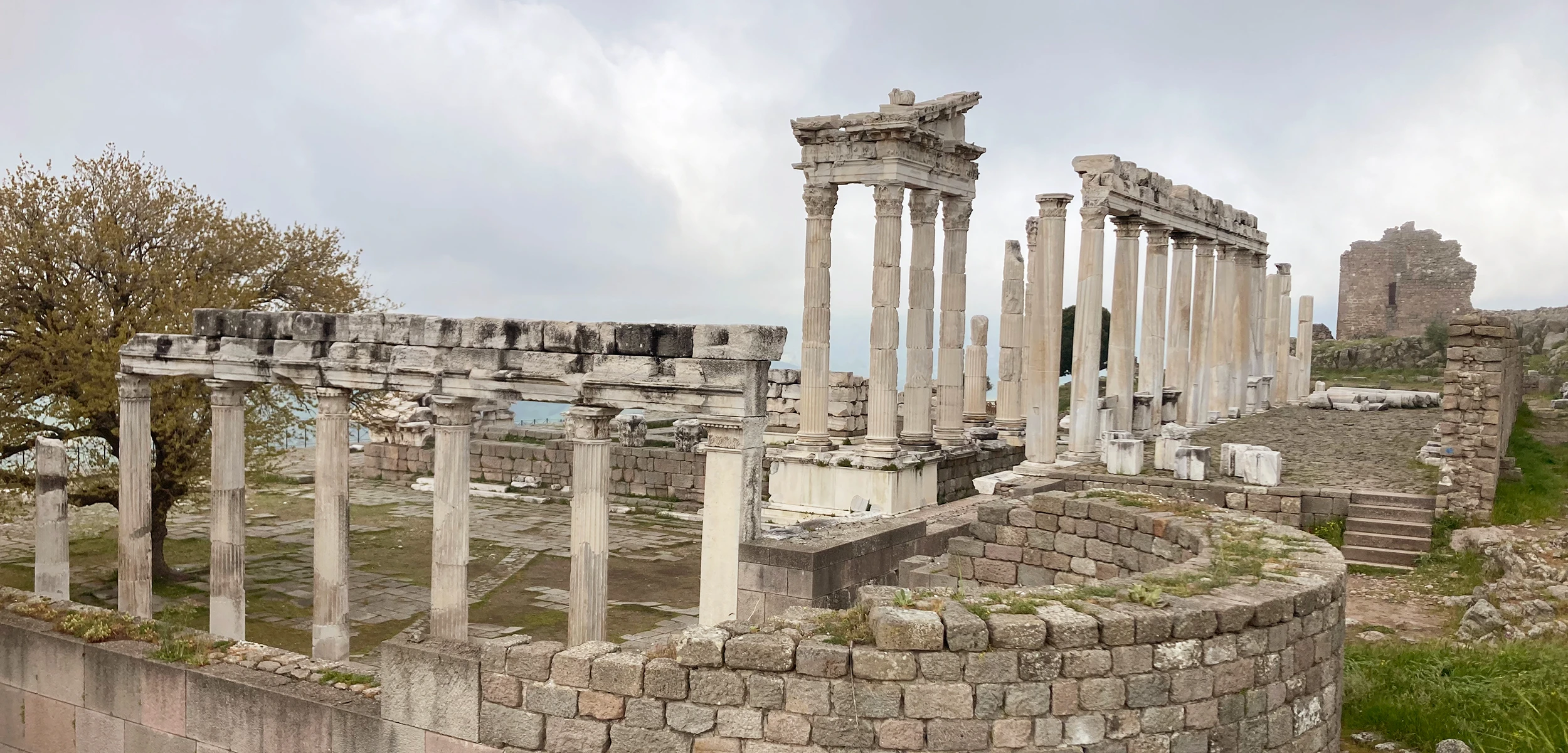
Travel north from İzmir for a private day exploring the Acropolis, Asklepion and the extraordinary Hellenistic and Roman legacy of Pergamon.
Request a Private Pergamon Tour