Private Key Museum Experience
Discover more than a century of automotive history among classic automobiles, motorcycles, scale models, hood ornaments and remarkable period displays.
Request a Private Experience





Hidden in the countryside of Torbalı south of İzmir, Key Museum is one of Türkiye's most impressive private museums and an unexpected destination for anyone interested in design, engineering, history or classic automobiles.
Opened in 2015, the museum grew from the collecting passion of Murat and Selim Özgörkey and today occupies approximately 7,000 square meters.
Its main collection contains 89 automobiles and 46 motorcycles, presenting more than a century of automotive development through beautifully preserved and restored machines.
Visitors encounter famous names including Mercedes-Benz, BMW, Porsche, Cadillac and Ford, alongside elegant European classics, American automobiles, sports cars and motorcycles.
Yet Key Museum extends far beyond full-size vehicles.
Thousands of scale models, hundreds of historic hood ornaments, automobile-themed scarves, vintage petrol-station equipment and the atmospheric Key Street exhibition transform the museum into a much broader celebration of twentieth-century motoring culture.
A major collection illustrating more than a century of automobile design, engineering and style.
Historic motorcycles reveal another fascinating chapter in the evolution of personal transportation.
A spacious purpose-designed exhibition environment in Torbalı, south of İzmir.
Scale models, hood ornaments, historic petrol equipment and period street displays expand the story far beyond the vehicles themselves.
Essential information for visiting Türkiye's remarkable classic automobile and motorcycle museum in Torbalı.
Çapak, Torbalı district, İzmir Province, western Türkiye.
Open on Google MapsThe principal museum collection currently contains 89 automobiles.
The main collection also includes 46 motorcycles.
Key Museum opened to visitors in 2015.
The museum occupies approximately 7,000 square meters.
The exhibitions trace the development of motoring from the pioneering era of the late nineteenth century onward.
Key Museum is not simply a garage filled with old vehicles. It is a carefully presented journey through engineering, design, craftsmanship and changing ideas about mobility.
Even visitors who do not consider themselves automobile enthusiasts are often surprised by the visual impact of the museum.
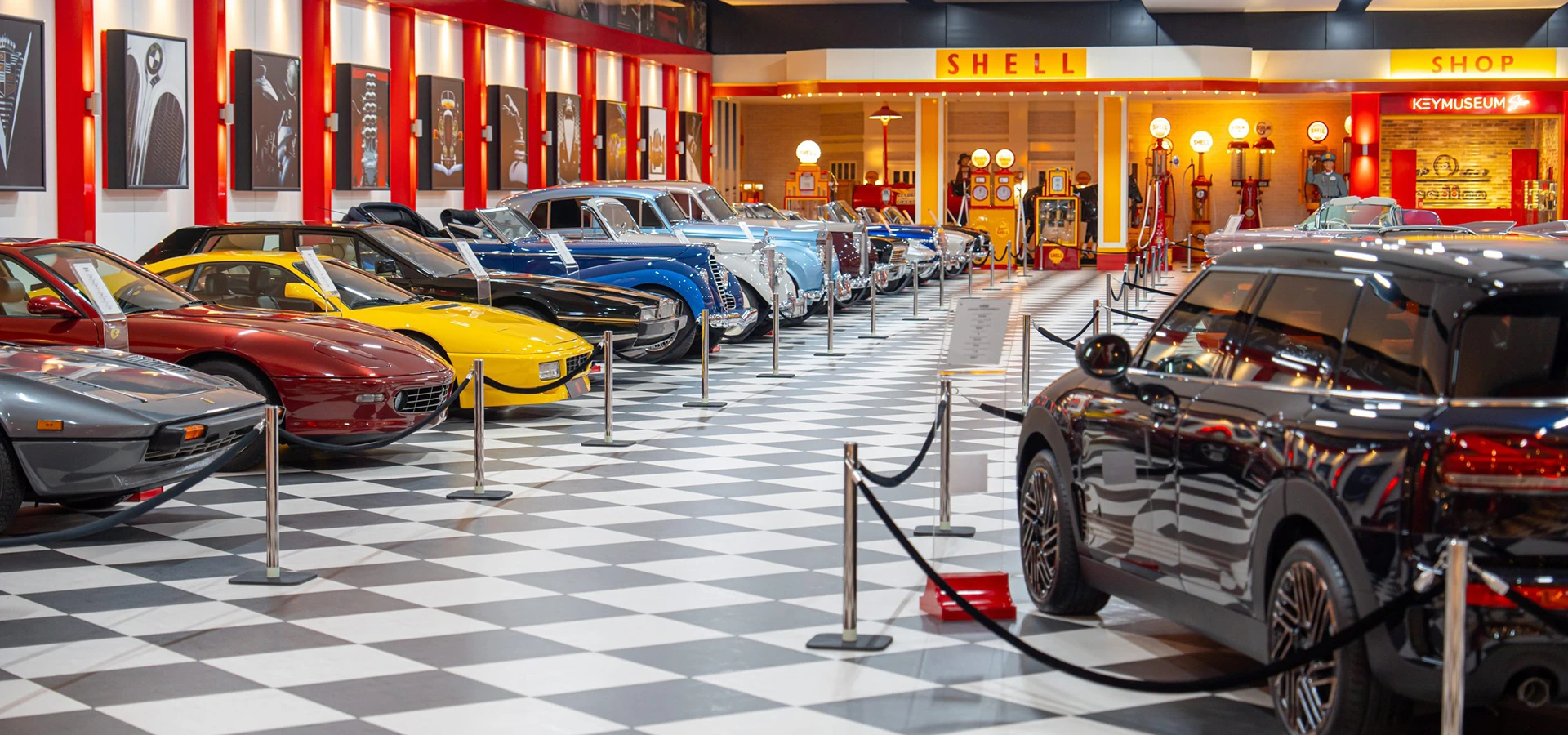
Rows of polished vehicles stand against dramatic interiors where chrome, glass, paintwork and carefully restored details become part of the exhibition itself.
A car from the early twentieth century tells a very different story from a streamlined sports car produced several decades later.
Together, the vehicles show how dramatically transportation changed within little more than a century.
Automobiles became faster, safer and more technically sophisticated, but they also became objects of style, prestige, freedom and popular culture.
Key Museum allows visitors to follow all of these stories in a single location.
The origins of Key Museum lie in the collecting interests of Murat Özgörkey and Selim Özgörkey.
Murat Özgörkey's interest in collecting developed from childhood interests and later expanded into model automobiles.
Selim Özgörkey brought another perspective through his strong connection with motorsports and experience in rallying and circuit racing.
The collection that would ultimately form Key Museum began developing seriously around 2001.
Over the following years, historically important automobiles, motorcycles and motoring objects were gradually assembled.
The collection finally entered a new phase when Key Museum opened to the public in Torbalı in 2015.
The automobiles are naturally the heart of Key Museum.
The museum's current principal collection consists of 89 cars, representing different periods, manufacturers, countries and approaches to automobile design.
Visitors can follow the transformation of the motorcar from an experimental mechanical invention into one of the defining technologies of modern life.
Early automobiles reveal an era when engineers were still establishing the basic form of the motor vehicle.
Later models demonstrate the emergence of enclosed cabins, improved suspension, stronger engines, sophisticated bodywork and increasingly recognizable brand identities.
By the middle decades of the twentieth century, automobiles had also become powerful expressions of lifestyle and design.
The museum includes vehicles connected with celebrated manufacturers such as Mercedes-Benz, BMW, Porsche, Cadillac and Ford.
Discover the experimental period when the automobile was still a revolutionary new form of transport.
Elegant engineering and coachwork reveal changing European ideas about performance and refinement.
Large bodies, powerful engines, generous chrome and dramatic styling represent another distinctive automotive tradition.
Performance-oriented vehicles demonstrate the close relationship between engineering, racing and automotive design.
Certain automobiles became cultural symbols whose shapes remain recognizable generations later.
Moving through the collection reveals enormous changes in engines, materials, safety and mechanical complexity.
It is easy to walk through Key Museum simply looking for the most beautiful car.
A slower approach reveals much more.
Begin with the oldest vehicles and observe how closely some resemble horse-drawn carriages.
Then look at how windscreens, roofs, lights, wheels and passenger compartments gradually changed.
Notice when radiators and grilles became important parts of a manufacturer's visual identity.
Observe how dashboards evolved from simple mechanical controls into increasingly complex interfaces.
Finally, compare the proportions of later sports and prestige cars with their early predecessors.
The collection becomes especially rewarding when viewed as an evolutionary sequence rather than a row of individual machines.
Key Museum's principal collection also contains 46 motorcycles.
Although physically smaller than automobiles, motorcycles played an equally fascinating role in the history of mechanized transportation.
Their exposed engines and mechanical components make it especially easy to appreciate how power is transferred from the engine to the wheels.
Historic motorcycles also demonstrate the constant search for a balance between weight, performance, control and reliability.
For many enthusiasts, this section offers a completely different visual language from the automobile galleries.
Engines, frames and mechanical components remain much more visible than on most automobiles.
Motorcycle designers had to combine performance and structural strength within a remarkably small machine.
Historic examples reveal developments in suspension, brakes, engines and rider ergonomics.
Motorcycles became symbols of mobility, sport, independence and popular culture.
One of the greatest pleasures of Key Museum is seeing vehicles from different eras standing within the same exhibition environment.
Early automobiles were largely shaped by mechanical necessity.
As the industry matured, bodywork became increasingly important.
Long bonnets, flowing mudguards, upright radiator grilles, curved wings and elaborate chrome decoration began to communicate elegance and prestige.
Later designers experimented with aerodynamics, lower rooflines and increasingly integrated body shapes.
By comparing automobiles from different decades, visitors can see that car design is closely connected with architecture, fashion, technology and the broader visual culture of its time.
Early manufacturers often developed distinctive grille shapes that became powerful brand signatures.
Lighting evolved from separate external components into integrated elements of automobile design.
Materials, size and control layouts changed dramatically as driving technology developed.
Simple gauges gradually developed into increasingly sophisticated instrument panels.
Bright metal decoration became an important expression of prestige during several periods of twentieth-century design.
Manufacturer symbols reveal how automobile companies created identities that became recognized around the world.
One of the most remarkable parts of Key Museum is its enormous collection of scale-model automobiles.
The museum's dedicated information describes approximately 2,550 model cars in scales including 1:8, 1:12 and 1:18.
These miniatures allow visitors to discover vehicles that would be almost impossible to assemble together as full-size originals.
The level of craftsmanship can be extraordinary.
Fine models reproduce details such as wheels, headlights, interiors, grilles, dashboards and bodywork at carefully calculated scales.
For collectors, the miniature gallery can be every bit as fascinating as the life-size automobile halls.
Large and highly detailed models capable of reproducing extremely fine mechanical and interior features.
A substantial format allowing excellent detail while remaining considerably smaller than the original vehicle.
One of the most popular scales among serious collectors of detailed model automobiles.
The collection reveals the extraordinary breadth of twentieth- and twenty-first-century automotive design.
Key Museum preserves more than 300 automobile mascots and hood ornaments.
These objects may be small, but they reveal an extraordinary chapter in automobile design.
During the early decades of motoring, manufacturers increasingly used sculptural ornaments on radiator caps and bonnets to give their automobiles a recognizable identity.
Owners could also personalize vehicles with decorative mascots.
The practice became particularly prominent during the 1920s through the 1950s.
Some hood ornaments developed into legendary brand symbols while others were miniature works of sculpture.
Among the most fascinating traditions associated with historic hood ornaments are the glass automobile mascots created by French artist René Lalique.
Lalique transformed an otherwise functional area of the automobile into a place for art.
His glass mascots could appear clear, frosted or decorated and became associated with prestigious automobiles of the interwar period.
The first Lalique automobile mascot, Cinq Chevaux, was designed for Citroën in 1925.
Over the following years Lalique produced many additional designs, creating one of the most memorable intersections between decorative glass and automotive culture.
The history of the automobile is also a history of fashion and lifestyle.
Key Museum includes a collection of automobile-themed scarves that illustrates how motoring imagery moved far beyond mechanical objects.
Automobiles became symbols of speed, elegance, independence and modernity.
Designers translated that visual world into textiles and accessories.
This collection helps visitors understand that twentieth-century automobile culture influenced much more than engineering.
It entered advertising, fashion, art, photography and everyday visual culture.
One of Key Museum's most atmospheric displays recreates a historic Shell petrol station.
The installation incorporates original equipment collected from the early twentieth century through the 1960s.
Vintage fuel pumps, signs and service-station objects recreate an environment once encountered by motorists on roads throughout Europe and beyond.
The display expands the story of the automobile beyond the vehicle itself.
Mass automobile ownership required an entirely new infrastructure of petrol stations, garages, repair shops, road signs and roadside businesses.
The recreated filling station makes that wider history visible.
Fuel equipment reflects changing technology and commercial design.
Signs and logos reveal the development of twentieth-century roadside visual culture.
Petrol stations once represented places where motorists could refuel, repair and prepare for long journeys.
The installation places the automobile within the larger infrastructure required by mass motoring.
Key Street adds another dimension to the museum by recreating the atmosphere of a street from approximately the 1940s–1960s.
Rather than concentrating entirely on automobiles, the exhibition evokes everyday life and traditional trades from the period.
Its recreated environments include a barber shop, shoe-shine area, carpenter's workshop and tailor's shop.
Objects were assembled from collections and auctions in Türkiye, Europe and the United States to create an atmospheric period environment.
The result provides useful cultural context for the vehicles displayed elsewhere in the museum.
Classic automobiles become easier to understand when visitors can also imagine the streets, shops and everyday world through which they once travelled.
An exceptional classic automobile collection depends on restoration.
A historic vehicle is far more complicated to preserve than a static decorative object.
Engines, transmissions, suspension, electrical systems, instruments, upholstery, paintwork and countless individual mechanical components may all require specialist attention.
Key Museum describes its restoration philosophy as a highly detailed “nut and bolt” restoration process.
Vehicles may be dismantled to individual components, carefully repaired or restored and rebuilt with the objective of maintaining historical authenticity and extremely high mechanical condition.
According to the museum, the automobiles and motorcycles displayed in its collection are maintained in working condition.
The automobile changed much more than transportation.
It transformed the geography of cities, encouraged the construction of highways and created entirely new industries.
Factories produced vehicles on enormous scales.
Petrol stations appeared beside roads.
Hotels, restaurants and roadside businesses developed around increasingly mobile societies.
Families could travel farther, businesses could move goods more efficiently and people gradually reorganized their daily lives around motorized transportation.
A museum such as Key therefore tells part of the larger story of industrialization and modern life.
Automobile manufacturers gradually discovered that technical performance alone was not enough.
A successful automobile also needed identity.
Distinctive radiator grilles, badges, mascots, colors and body shapes allowed buyers to recognize manufacturers immediately.
Certain brands became associated with performance.
Others emphasized engineering, elegance, affordability or prestige.
Walking through Key Museum makes it possible to observe the development of these brand identities across multiple generations.
The principal collections are displayed within large purpose-designed exhibition spaces.
Cars and motorcycles are presented as museum objects rather than vehicles in an ordinary storage collection.
Expect far more than cars, including motorcycles, models, mascots and period environments.
Chrome, bodywork, period graphics and dramatic interiors create excellent visual compositions.
Design, fashion, social history and decorative arts broaden the museum beyond specialist automotive interests.
The scale of the collection rewards a slower visit rather than a quick walk through the galleries.
Possible for a relatively quick overview focused mainly on the principal automobile galleries.
A comfortable visit for exploring cars, motorcycles and the museum's additional collections.
Recommended for serious automobile enthusiasts, photographers and visitors who enjoy reading individual displays carefully.
The museum's official visitor information currently lists the following admission categories.
Key Museum is located outside central İzmir and is particularly convenient to reach by private vehicle.
The museum states that free visitor parking is available.
This makes it easy to include the museum during a road journey south from İzmir or as part of a wider day around Torbalı.
Key Museum is located in the Çapak area of Torbalı, south of İzmir.
Its published address is Çapak Mahallesi, Özgörkey Caddesi No: 5, Torbalı, İzmir.
The museum's position south of İzmir also makes it a natural stop for travelers moving between İzmir and the archaeological landscapes farther south.
Travel south toward Torbalı before continuing toward Çapak and the museum.
A private vehicle is the simplest option and visitor parking is available at the museum.
The museum advises passengers to travel to Tepeköy station and continue using the Çapak minibus.
The museum lies only a short journey from the Torbalı urban area.
Open the museum location in Google Maps and plan your route from İzmir or Torbalı.
View LocationTravelers without a car can use İzmir's suburban rail network for much of the journey.
The museum's official instructions recommend taking İZBAN to Tepeköy station.
From the station exit, visitors can continue with a Çapak minibus, which passes the museum.
Because local minibus schedules and routes can change, checking the return journey before entering the museum is sensible.
Unlike many archaeological attractions around İzmir, Key Museum is primarily an indoor museum experience.
Visitors are not navigating ancient stone paths, steep hills or exposed archaeological terrain.
The large exhibition halls and controlled indoor setting can therefore make the museum particularly useful during periods of intense summer heat or poor weather.
Visitors with specific mobility or accessibility requirements should confirm current arrangements directly with the museum before travelling.
Combine the indoor museum with archaeological and countryside exploration around Torbalı.
The indoor galleries offer a welcome alternative during the hottest part of an Aegean sightseeing day.
Comfortable regional temperatures make it easy to combine the museum with nearby outdoor attractions.
Its indoor setting makes Key Museum particularly valuable when weather is less suitable for archaeological sites.
An early visit leaves plenty of time for another Torbalı-area destination afterward.
Works well after another nearby visit, but remember that final museum admission ends shortly before closing.
Classic automobiles are naturally photogenic, and Key Museum provides an unusually rich environment for automotive photography.
Symmetrical compositions emphasize the identity and personality of individual vehicles.
Headlamps, bumpers, mascots and trim provide excellent close-up subjects.
Historic instruments and steering wheels reveal the atmosphere of another era of motoring.
Rows of vehicles create strong perspective lines across the museum floor.
Miniature vehicles reward close photography because of their intricate details.
Highly polished paintwork can create both beautiful images and challenging reflections.
Key Museum can work especially well for families because the objects are instantly understandable.
Children do not need specialist knowledge to notice the differences between a tiny early automobile, an enormous classic American car and a low modern sports car.
The miniature automobile collection can be particularly engaging for younger visitors.
Parents can turn the experience into an informal game by looking for unusual headlights, colors, hood ornaments or steering wheels.
As with any vehicle museum, children should remain within visitor areas and avoid touching the automobiles unless explicitly permitted.
For automobile enthusiasts, the challenge at Key Museum is not finding something interesting.
It is deciding where to spend the most time.
Bodywork details, wheel designs, instruments, engine technology, badges, interiors and manufacturing techniques can each become separate areas of study.
A visitor interested in one particular manufacturer may discover several generations of design thinking within a relatively short walk.
The miniature collection and mascot displays then add entirely different levels of detail.
For enthusiasts, a visit of two hours or more is easy to justify.
Visitors sometimes assume an automobile museum is only interesting to people who already know engine specifications and model numbers.
Key Museum demonstrates why that assumption is too narrow.
A classic automobile is simultaneously a machine, an industrial product, a fashion object and a piece of visual design.
Its materials reveal manufacturing technology.
Its shape reflects the aesthetics of its period.
Its interior reveals changing expectations of comfort.
Its advertising and branding tell stories about society and consumer culture.
Seen in this way, the museum becomes a broad exploration of twentieth-century design and social history.
One of the most interesting aspects of visiting Key Museum is its proximity to the archaeological landscape of Torbalı.
The ancient city of Metropolis lies in the same wider district.
Combining the two creates an extraordinary contrast.
At Metropolis, stone streets, public buildings and archaeological remains reveal urban life in antiquity.
At Key Museum, polished machines demonstrate technologies that transformed mobility thousands of years later.
The combination makes an excellent Torbalı day for travelers interested in both ancient history and the technological history of the modern world.
Historic paintwork, chrome, upholstery and decorative surfaces can be extremely delicate.
Remain within designated visitor areas around the vehicles.
Ensure younger visitors remain safely away from display vehicles and exhibition equipment.
Observe instructions regarding flash, video equipment and professional photography.
The stories behind the vehicles often reveal details that are impossible to understand from appearance alone.
A museum collection of this quality rewards careful observation rather than simply counting how many cars you have seen.
Do not try to photograph every automobile immediately.
Choose one early car.
Look at its wheels, steering system, lights and passenger compartment.
Then choose a car produced several decades later.
Compare them.
Move forward another generation and repeat the process.
Within only a few vehicles, an extraordinary story begins to emerge.
The automobile transforms from a mechanical carriage into a completely integrated modern machine.
Afterward, visit the model cars, mascots and recreated petrol station.
These smaller collections reveal how deeply the automobile entered modern culture.
Historic vehicles are important cultural objects.
They preserve evidence of industrial design, engineering, manufacturing, craftsmanship and changing social expectations.
A steering wheel reveals how people once controlled a machine.
A dashboard shows which information engineers considered important.
A body shape reveals the aesthetics of an era.
A mascot demonstrates the importance of brand identity and decorative art.
A petrol pump reveals the infrastructure required by a motorized society.
Together, Key Museum's collections preserve a remarkably broad record of the culture created around the automobile.
Vehicles preserve mechanical solutions developed across more than a century.
Changing materials and forms illustrate the evolution of mass-produced objects.
Mascots, emblems and interiors demonstrate that automobile history also contains significant artistic craftsmanship.
Cars became symbols within film, advertising, fashion and twentieth-century visual culture.
Automobiles changed where people lived, worked, travelled and spent their leisure time.
Restoration keeps mechanical objects available for future generations to study and appreciate.
Key Museum is located in the Çapak area of Torbalı district, south of İzmir in western Türkiye.
Key Museum is a major private automobile and motorcycle museum devoted to the history, engineering and design of motor vehicles and related motoring culture.
The museum opened to visitors in 2015.
The museum grew from the automotive collecting interests of Murat and Selim Özgörkey.
The museum occupies approximately 7,000 square meters.
The museum currently describes its principal collection as containing 89 automobiles.
The main collection currently includes 46 motorcycles.
The collection includes automobiles associated with important manufacturers such as Mercedes-Benz, BMW, Porsche, Cadillac and Ford, among others.
No. The museum also contains motorcycles, thousands of scale-model cars, hundreds of automobile mascots, automobile-themed scarves, a historic Shell filling-station display and Key Street.
The museum's dedicated model-car information describes approximately 2,550 scale models in several sizes.
Automobile mascots are decorative sculptures or emblems historically positioned on radiator caps or bonnets, often representing a manufacturer or personalizing a vehicle.
Key Street is a period street-style exhibition designed to evoke the atmosphere of approximately the 1940s–1960s with traditional trades and everyday environments.
Yes. Key Museum contains a Shell petrol-station installation assembled using historic equipment dating from the early twentieth century through the 1960s.
Restoration is an important part of the museum's work, and Key Museum states that its displayed automobiles and motorcycles are maintained in high condition and working order.
The current official schedule lists Wednesday, Thursday, Friday, Saturday and Sunday as visitor days.
The current official visiting hours are 09:30–16:30, with last ticket sales and entry at 16:15.
No. The museum is currently closed on Mondays and Tuesdays.
No. The museum's official visitor information states that Müzekart is not valid.
Yes. The museum states that free parking is available for visitors.
Yes. The museum recommends travelling by İZBAN to Tepeköy station and continuing by Çapak minibus.
Approximately 1.5–2 hours is comfortable for most visitors, while automobile enthusiasts may easily spend two to three hours exploring the collections in greater detail.
Yes. The visually striking automobiles, motorcycles and miniature model collection can make the museum particularly accessible to families.
No. The collection is also interesting from the perspectives of industrial design, engineering, fashion, decorative arts and twentieth-century social history.
Yes. Metropolis Ancient City is located in the wider Torbalı area and makes an excellent historical contrast with the museum's automotive collections.
For travelers interested in automobiles, design, engineering, photography or unusual museums, Key Museum offers one of the most distinctive indoor cultural experiences in the İzmir region.
Combine one of Türkiye's finest automotive collections with the archaeological heritage and fertile landscapes of Torbalı on a privately arranged journey south of İzmir.
Explore an extraordinary contrast between ancient urban history and the technologies that transformed the modern world.
Discover more than a century of automotive history among classic automobiles, motorcycles, scale models, hood ornaments and remarkable period displays.
Request a Private Experience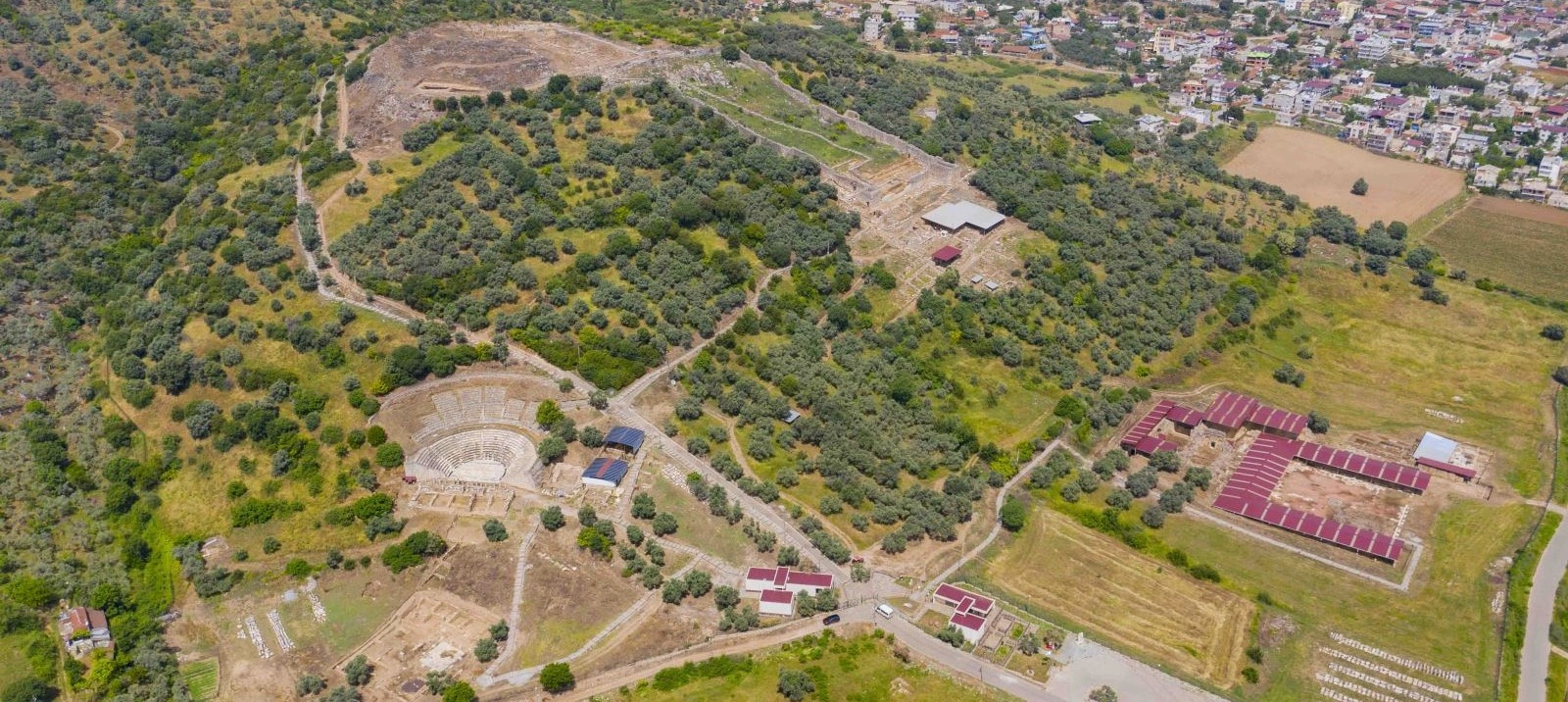
Travel from the ancient streets and public buildings of Metropolis to the polished machines and industrial design of the modern automotive age.
Plan Your Torbalı Day