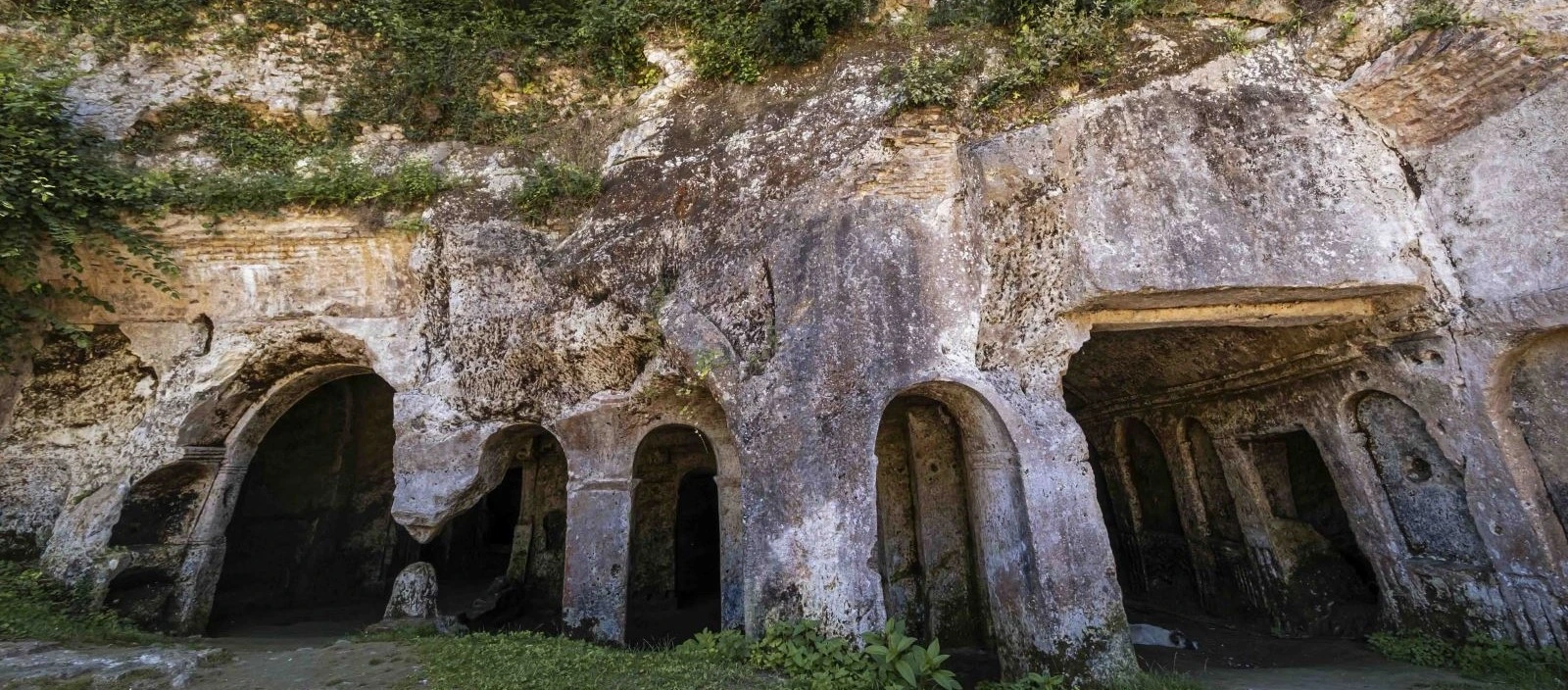
Private Kıyıköy & Aya Nikola Heritage Experience
Ask us about a tailor-made journey through Kıyıköy's Byzantine heritage, rock-cut monastery, rivers, forests and Black Sea landscapes at your own pace.
Request a Custom Tour





Hidden on a wooded slope just outside Kıyıköy, Aya Nikola Monastery is one of the most remarkable rock-cut religious monuments in Turkish Thrace.
Commonly dated to the 6th century and associated with the reign of Byzantine Emperor Justinian I, the complex was shaped by carving a natural rock mass into a church, a holy spring and a series of connected monastic spaces.
The monastery's architecture follows the slope in levels. The principal church occupies the main floor, the sacred spring lies lower down, and spaces traditionally associated with the monks were arranged above and beside the church.
Although erosion, moisture, vegetation, vandalism and the loss of later additions have affected the monument, its interior still reveals the ambition of its builders. Vaults, piers, three aisles and even the iconostasis were cut directly from the living rock.
For visitors exploring Kıyıköy's coast, rivers and Byzantine heritage, Aya Nikola offers an unforgettable meeting of architecture, faith and landscape.
Discover a Byzantine monastery generally associated with the age of Emperor Justinian I.
Step into a church whose vaults, piers, aisles and sanctuary screen were carved from the rock.
See the lower ayazma, an essential spiritual and architectural element of the complex.
Experience the monastery within the green Pabuçdere landscape near the Black Sea town of Kıyıköy.
Essential information about Kıyıköy's extraordinary Byzantine rock-cut monastery.
Approximately 700–800 metres west of Kıyıköy, along the Pabuçdere road.
Open on Google MapsByzantine rock-cut monastery with a church, holy spring and connected monastic spaces.
Generally dated to the 6th century and the reign of Emperor Justinian I.
A large church and much of its architectural decoration were carved from a single rock mass.
A rock-cut ayazma occupies a lower level and is reached from the northern side.
Allow around 30–45 minutes, or longer when combining the site with Kıyıköy.
The monastery preserves an unusually complete architectural idea created not by assembling blocks, but by removing stone from a natural rock mass.
Aya Nikola Monastery is important as one of the finest surviving examples of Byzantine rock-cut monastic architecture in Turkish Thrace. Unlike a conventional masonry church, its principal spaces were excavated directly into the hillside.
The complex combines worship, sacred water and daily monastic life. Its church, holy spring, corridors and adjoining rooms show how spiritual and practical functions could be organized within a compact, multi-level sanctuary.
Architectural features normally built from stone blocks—including piers, vaults, arches and the iconostasis separating the sanctuary from the nave—were instead shaped from the rock itself. This makes the site valuable for understanding both Byzantine liturgy and the skill of its craftsmen.
Its setting also matters. The monastery stands outside the fortified town, close to the forested Pabuçdere landscape, combining seclusion with access to water, agricultural ground and the historic settlement of Kıyıköy.
The Kırklareli cultural heritage inventory dates Aya Nikola Monastery to the 6th century, placing it within the Byzantine period and the age traditionally associated with Emperor Justinian I, who ruled from 527 to 565.
Some older descriptions refer to a 4th-century origin while also linking the monument with Justinian. Because these statements are chronologically incompatible, the more consistent official inventory dating of the existing monument to the 6th century is generally preferred.
The monastery was dedicated to Saint Nicholas, known in Turkish as Aya Nikola. Its remote but accessible position allowed a religious community to live near Kıyıköy while maintaining the separation traditionally valued in monastic life.
The complex developed through more than one phase. While its defining spaces were cut into the rock, additional rooms and façades of stone, brick and timber were constructed outside the excavated core.
During the 19th century, the local Greek community added a wooden structure in front of the rock galleries. That addition and the associated wooden access elements have not survived, leaving the carved interior as the monastery's most powerful remaining feature.
Today the monument is no longer used as a functioning monastery. It survives as a protected cultural site whose fragile surfaces require careful conservation and responsible visitation.
The existing complex is generally dated to the early Byzantine period and the reign of Justinian I.
The church, spring and adjoining spaces supported worship, retreat and daily communal life.
A wooden frontage was built before the rock galleries but has since disappeared.
The monastery is recognized as an important historic religious monument of Kırklareli Province.
Aya Nikola is the Turkish form of the Greek name for Saint Nicholas. Churches and monasteries throughout the Byzantine world were frequently dedicated to saints whose protection, virtues or miracles held special meaning for their communities.
Saint Nicholas became especially revered as a protector of sailors, travelers and people in danger. That association feels particularly appropriate in Kıyıköy, a historic settlement overlooking the Black Sea and shaped by rivers, fishing and maritime life.
The dedication connects this secluded monastery with a much wider geography of Saint Nicholas devotion across Anatolia, the Balkans and the eastern Mediterranean. However, the surviving architecture tells us more about the monastery than the limited historical record reveals about the individual community that once lived here.
The monastery was formed by carving into a single rock mass. Its principal components are a large church, a holy spring to the southwest and two successive rooms adjoining the narthex.
The church's narthex resembles a long corridor extending toward the holy spring. Its central bay carries a cross vault, while the side sections are covered by barrel vaults. Arches and piers articulate the wall, and carved reliefs imitate the form of balustrade panels.
A lintelled doorway beneath a square opening leads from the central narthex bay into the naos, the main worship space. The square naos is divided into three aisles by two pairs of rock-cut piers.
The central and side aisles are covered by barrel vaults. At the eastern end, the bema forms the sanctuary, separated from the congregation by an iconostasis also carved directly from the rock.
This integration is what makes the monument extraordinary. Structure, liturgical planning and decoration were conceived as parts of the same sculpted interior.
The entrance hall extends like a corridor and links the church with the holy spring area.
The central narthex bay is crowned by a cross vault cut from the natural rock.
Two pairs of piers divide the square worship space into a central aisle and two narrow side aisles.
Curved rock-cut ceilings cover the naos, side aisles and sections of the narthex.
Even the screen dividing the sanctuary from the naos was sculpted from the original rock.
Arches, piers and relief panels give architectural rhythm to the excavated interior.
Below and southwest of the main church lies the monastery's ayazma, a holy spring associated with sacred water and devotional practice. It is reached by steps on the northern side of the complex.
The ayazma is a square rock-cut chamber with a trefoil arrangement. Its position below the principal worship space creates the stepped organization for which Aya Nikola is widely known.
Upper and adjoining spaces are traditionally identified with the monks' accommodation and daily activities. Rock-cut cells and galleries were supplemented over time by external rooms constructed from stone and brick.
Together these areas show that a monastery was more than a church. It was also a self-contained environment for prayer, rest, work, water collection and communal life.
The monastery rewards slow observation. Its most important features are architectural rather than decorative, so allow your eyes time to adjust and follow the way each space was carved from the rock.
Begin by studying how the natural cliff was transformed into the entrance of a religious complex.
Follow the long entrance hall connecting the church with the lower sacred-water area.
Look upward to distinguish the central cross vault from the surrounding barrel-vaulted sections.
The piers define the church's three aisles while remaining part of the original rock mass.
Stand in the main worship space and read the division between central and side aisles.
Observe the rock-cut sanctuary screen that once framed the church's liturgical focus.
Where access is permitted, notice the lower chamber associated with sacred water and devotion.
Connected chambers and cells hint at the daily lives of the monks beyond communal worship.
Look for traces showing where constructed stone-and-brick rooms extended the carved complex.
The surrounding trees and slope help explain why this secluded location suited a monastery.
Aya Nikola Monastery stands outside central Kıyıköy on the road toward Pabuçdere, approximately 700–800 metres from the town. The final approach passes through a green, semi-rural landscape.
Visitors should expect an unrestored archaeological monument rather than a staffed museum. Surfaces may be uneven, damp or slippery, and some chambers or levels may be inaccessible because of conservation or safety concerns.
Reliable official opening hours and a permanent ticket schedule are not consistently published. Access arrangements can change during restoration, maintenance or periods of increased risk, so check local signs or ask Kıyıköy authorities before making a special journey.
The monastery can be appreciated in every season, but dry weather improves footing and makes the wooded approach more comfortable.
Green vegetation and mild temperatures create a beautiful setting around the rock-cut monument.
Visit in the morning before Kıyıköy's beaches and roads become busier on weekends.
Changing forest colors add atmosphere, while mild days suit a wider Kıyıköy walk.
The site is peaceful, but rain, mud and moisture can make the approach and interior slippery.
Early hours usually offer softer light, cooler temperatures and a quieter experience.
Use extra caution: wet rock, steps, moss and fallen leaves may create hazardous footing.
Enough for a short look at the principal church, narthex and exterior setting.
Ideal for exploring the permitted areas slowly and studying the rock-cut architecture.
Add a relaxed walk through the surrounding landscape toward Kıyıköy or Pabuçdere.
Combine the monastery with Kıyıköy's historic center, walls, harbor and coastal viewpoints.
Explore the town, monastery, rivers, beach and selected Black Sea landscapes without rushing.
Allow extra time to compare the narthex, vaults, piers, aisles and rock-cut sanctuary screen.
Aya Nikola is a dramatic place to photograph, but its dark interior and fragile condition call for patience and respect.
Use a wider composition to show how the monastery disappears into the natural rock face.
Side light can reveal the sculptural depth of the church's carved architectural forms.
Frame the piers symmetrically to communicate the original organization of the naos.
Let entrance light guide the image rather than using harsh flash on vulnerable surfaces.
Include vegetation and the surrounding slope to capture the monastery's secluded atmosphere.
Avoid tripods or equipment that obstructs narrow passages, damages rock or inconveniences other visitors.
The monastery is located west of Kıyıköy town center, along the route toward Pabuçdere. It is close enough to form part of a longer walk, although road and path conditions should be considered.
A private vehicle offers the greatest flexibility for travelers arriving from Vize, Kırklareli or Istanbul. Park only in a safe and permitted place without blocking the narrow road, then approach the monument carefully on foot.
Follow the Pabuçdere road west for approximately 700–800 metres toward the monastery.
Drive northeast through the Istranca landscape to Kıyıköy, then continue toward Pabuçdere.
Travel southeast toward Vize and continue to Kıyıköy before following local signs.
Kıyıköy is possible as a long road trip and is best enjoyed as a full-day private excursion.
Use a suitable parking place and avoid obstructing local access or sensitive archaeological ground.
Wear supportive shoes and remain alert to traffic, loose gravel, mud and uneven terrain.
The monastery is best combined with the historic streets, rivers and coastal scenery of Kıyıköy.
Explore Byzantine heritage, traditional streets, a Black Sea harbor, beaches and two river valleys.
See surviving Byzantine gates and fortifications that once protected the historic settlement.
Follow the green river landscape near the monastery toward its meeting with the Black Sea.
Discover the second river embracing Kıyıköy's rocky peninsula and forested surroundings.
Experience a protected landscape where forest, river, lagoon and Black Sea coast meet.
Continue to Roman, Byzantine and Ottoman monuments in one of eastern Thrace's oldest towns.
Explore the vast forests, valleys and rural landscapes surrounding Kıyıköy and northern Thrace.
Discover prehistoric archaeology, caves, historic towns, local food and Black Sea nature across the province.
The monastery is approximately 700–800 metres west of central Kıyıköy, along the Pabuçdere road in Vize district, Kırklareli Province.
The official Kırklareli cultural heritage inventory dates the monument to the 6th-century Byzantine period. It is commonly associated with the reign of Emperor Justinian I, from 527 to 565.
Some older tourism descriptions mention the 4th century while also attributing the complex to Justinian, who ruled in the 6th century. The official cultural heritage inventory identifies the surviving monument as a 6th-century Byzantine work.
Aya Nikola is the Turkish form of the Greek name for Saint Nicholas, the saint to whom the monastery was dedicated.
Saint Nicholas is widely venerated as a protector of sailors and travelers. The dedication is especially evocative in a historic Black Sea settlement such as Kıyıköy.
Yes. Its principal church, narthex, vaults, piers, iconostasis, holy spring and several adjoining spaces were shaped by excavating a natural rock mass.
Visitors can identify a long narthex, a three-aisled naos, rock-cut piers and vaults, the sanctuary area, a carved iconostasis, a holy spring and connected monastic chambers.
An ayazma is a sacred spring or water source associated with Christian devotion. At Aya Nikola it occupies a lower rock-cut chamber southwest of the church.
No. It is no longer a functioning monastery or church. It survives as a protected historical and archaeological monument.
A reliable permanent ticket arrangement is not consistently published. Check current local signs or ask in Kıyıköy because access conditions may change.
Official visiting hours are not consistently published. Daylight visits are the most practical, but restoration work or safety concerns may temporarily restrict access.
Allow approximately 30–45 minutes for the principal spaces. Spend half a day or more if you also want to explore Kıyıköy and its river landscapes.
Access may be difficult because of uneven ground, slopes, steps and damp rock surfaces. Not every level or chamber is suitable for visitors with mobility limitations.
Yes, but close supervision is essential around slippery steps, dark chambers, uneven rock and potentially unstable archaeological areas.
Choose supportive, non-slip footwear and bring a light layer for the cool interior. After rain, expect mud and slippery rock on the approach.
Yes. Combine Kıyıköy and Aya Nikola Monastery with Vize for a rewarding Byzantine and ancient heritage route through eastern Thrace.
Yes, especially for travelers interested in Byzantine architecture, Christian heritage and unusual rock-cut monuments. Its combination of sacred space and forested landscape is unique in the region.
Names and graffiti permanently destroy original surfaces and make conservation more difficult.
Closed chambers and fenced areas may contain unstable rock or sensitive archaeological remains.
Climbing damages carved architecture and exposes visitors to falls and loose stone.
Smoke, heat and wax stain the stone and create a serious fire risk in the surrounding vegetation.
Carry all rubbish back to Kıyıköy and help preserve the monastery's natural setting.
Never move or collect stone, pottery, metal or any other potential archaeological material.
Do not contaminate the water chamber or leave offerings that could harm the monument.
Inform the appropriate local authority if you notice vandalism, illegal excavation or a safety hazard.
Discover Byzantine rock-cut architecture, historic Black Sea towns, ancient monuments, rivers and forests with a private route designed around your interests.
Combine Aya Nikola Monastery with Kıyıköy's Byzantine walls, historic center, river valleys and Black Sea scenery.
Ask us about a tailor-made journey through Kıyıköy's Byzantine heritage, rock-cut monastery, rivers, forests and Black Sea landscapes at your own pace.
Request a Custom Tour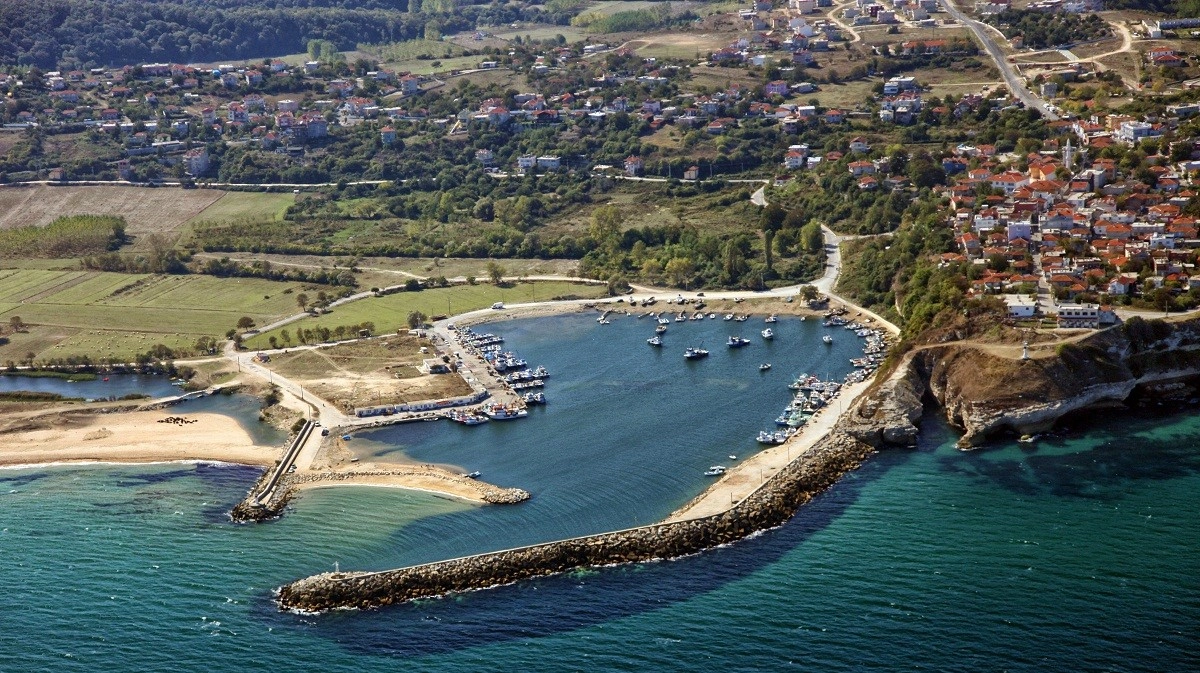
Discover the complete story of Kıyıköy, from its Byzantine walls and monastery to its harbor, beaches, rivers and forested Black Sea setting.
View Kıyıköy GuideCombine Kıyıköy's Byzantine heritage with the ancient towns, forests and protected landscapes of Turkish Thrace.
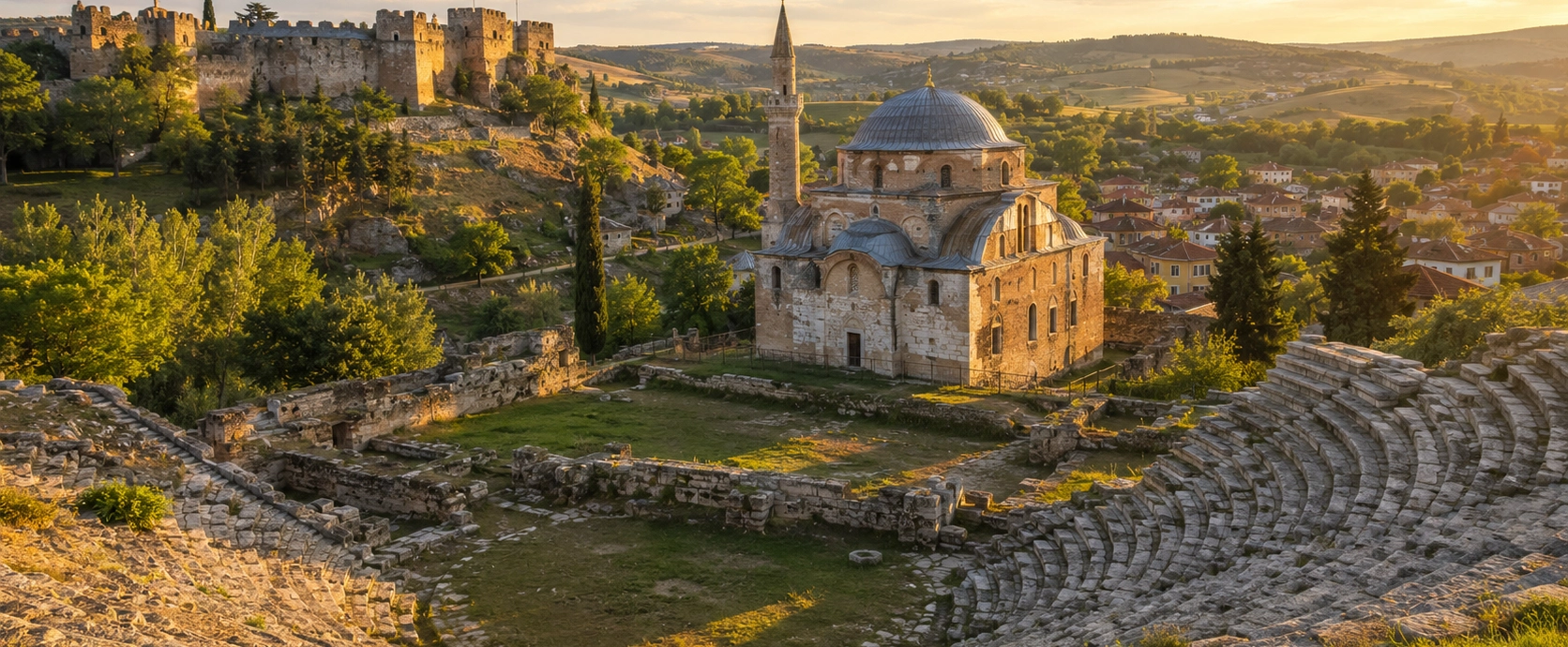
Explore an ancient Thracian and Roman city with Byzantine fortifications, historic churches and Ottoman heritage.
Explore Vize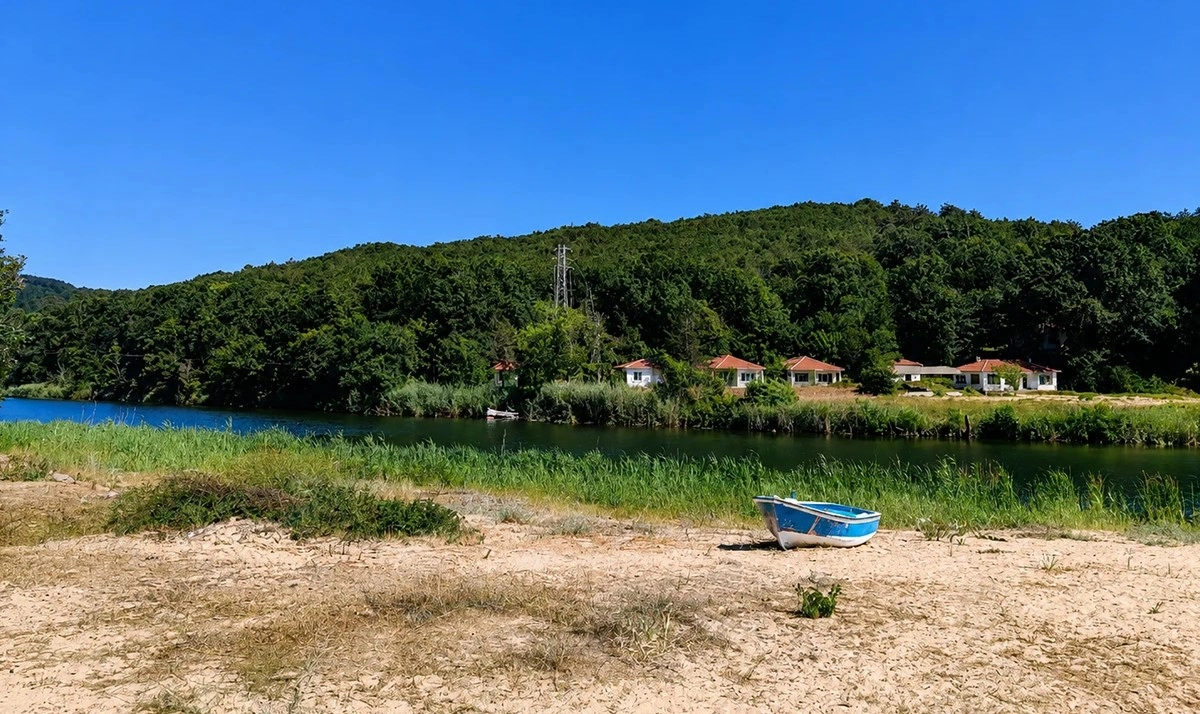
Discover a protected Black Sea landscape where river, lagoon, beach and Istranca forest meet.
Discover Kastro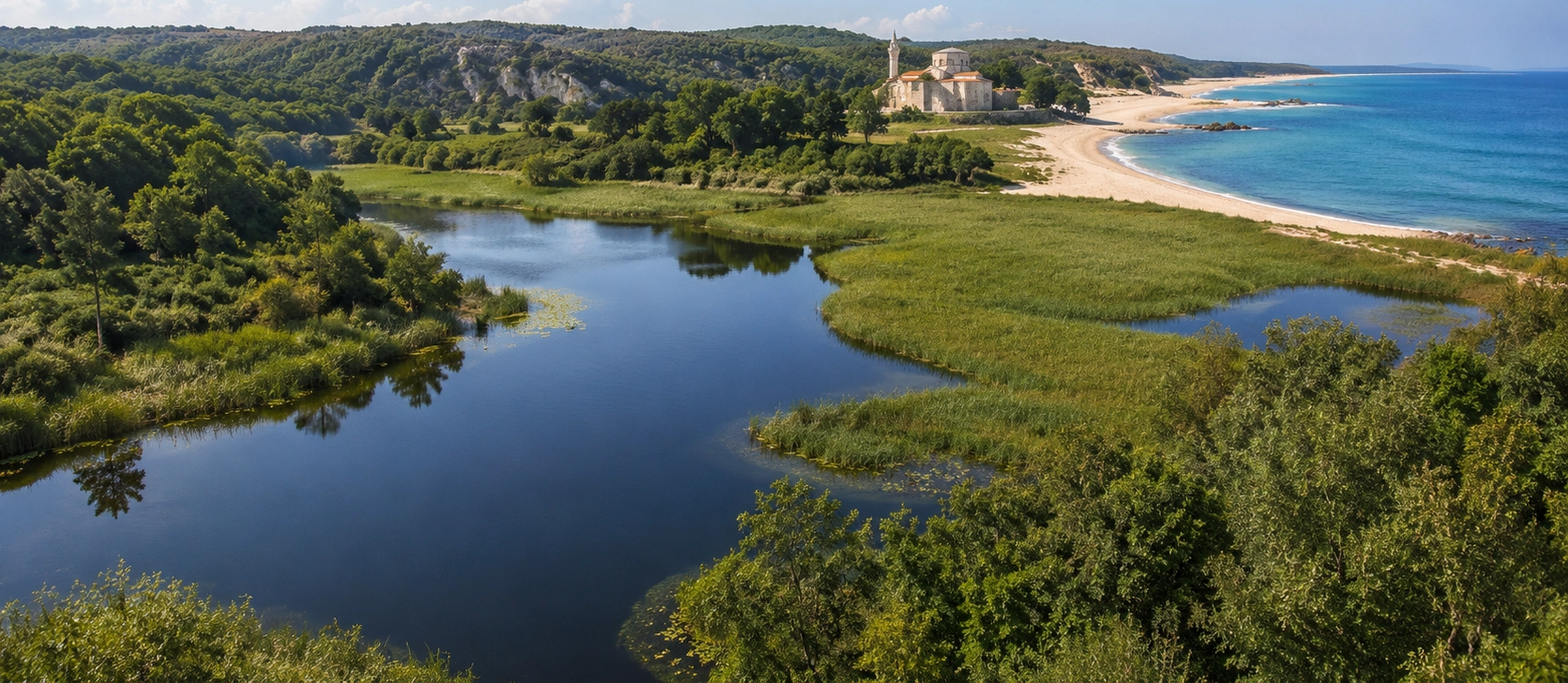
Plan a wider journey through prehistoric sites, historic towns, caves, forests, local food and the Black Sea coast.
View Kırklareli Guide