Private Vize Byzantine Heritage Experience
Ask us about a tailor-made journey through ancient Bizye, combining Byzantine, Roman and Ottoman heritage at your own pace.
Request a Custom Tour





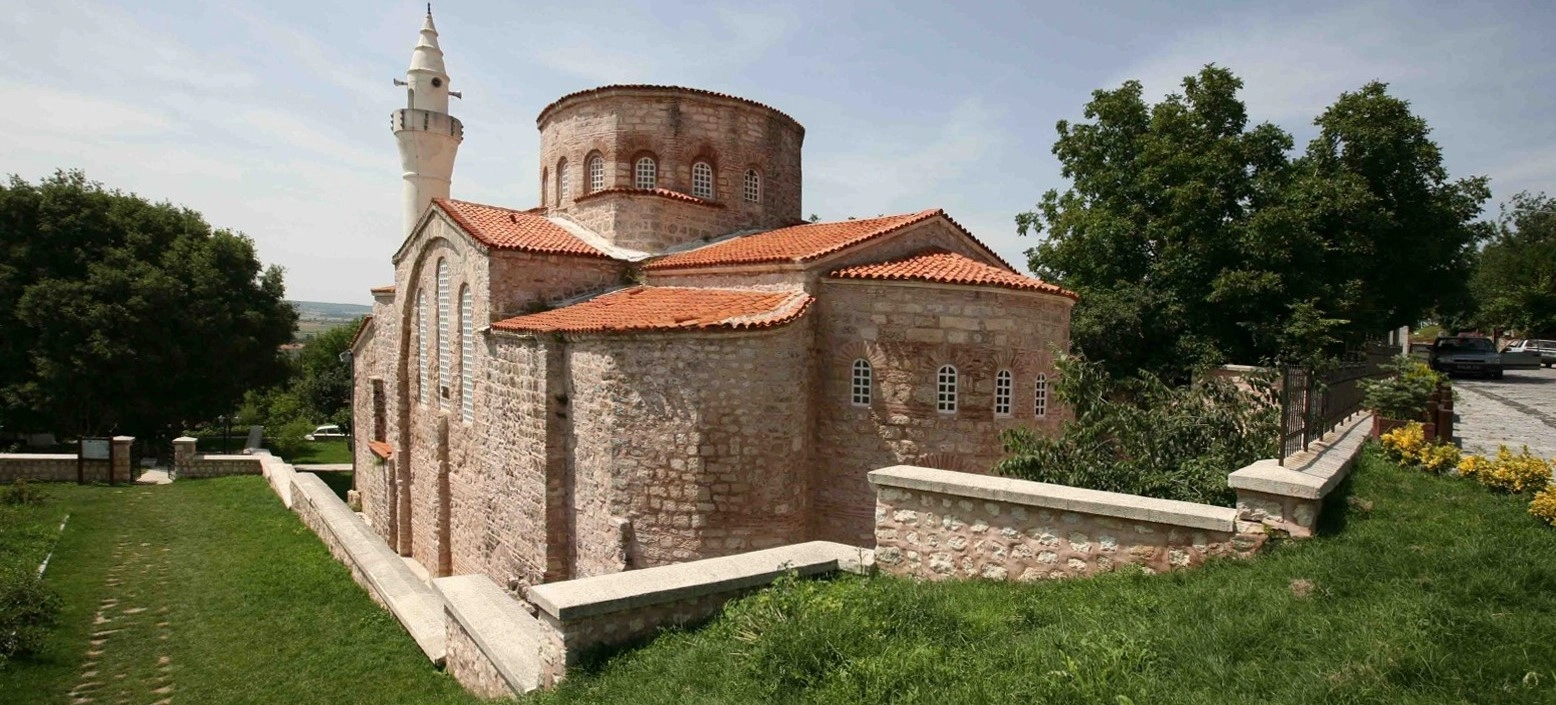
Hidden among the historic streets and fortifications of Vize, one of the most fascinating surviving monuments of Byzantine Thrace rises above the surrounding town.
Known today as Little Hagia Sophia, Vize Hagia Sophia or Gazi Süleyman Paşa Mosque, the building began its life as a Christian church and was later adapted for Muslim worship during the Ottoman period.
Its importance goes far beyond its age. The monument preserves an unusual architectural design in which basilican planning, galleries, vaults and a central dome are brought together in a form that has fascinated historians of Byzantine architecture for generations.
The precise chronology of the surviving building remains debated. Traditional local accounts associate the church with the 6th-century reign of Emperor Justinian I, while architectural historians have proposed later dates and several phases of construction extending through the medieval Byzantine period.
Today the building remains one of the essential places to see in Vize, linking the ancient city of Bizye, its Byzantine Christian community and centuries of Ottoman history within a single monument.
Explore one of the most important surviving religious buildings of the Byzantine city once known as Bizye.
See a rare combination of basilican ground-floor planning, galleries, barrel vaults and a central dome.
Discover a monument that continued its sacred role after Vize entered the Ottoman world.
Combine Little Hagia Sophia with Vize's Roman theatre, fortifications and other remains of ancient Bizye.
Essential information about the Byzantine church now known as Gazi Süleyman Paşa Mosque in Vize.
Vize, Kırklareli Province, Turkish Thrace.
Open on Google MapsByzantine Christian church, probably one of the principal churches of medieval Bizye.
An active mosque known as Gazi Süleyman Paşa Mosque.
Traditionally associated with the 6th century, although the surviving building's precise Byzantine construction date remains debated.
A distinctive combination of basilican planning, galleries, apses, vaults and a central dome.
Allow around 30–45 minutes, or longer when exploring the surrounding historic quarter of Vize.
The monument is important not simply because it is old, but because its architecture preserves an unusual chapter in the development of Byzantine church design.
During the Byzantine period, Vize was known as Bizye, an important fortified settlement in eastern Thrace. The city possessed churches, defensive walls and a Christian community important enough for Bizye to function as an episcopal center.
Little Hagia Sophia occupies a commanding position within the historic fortified area and has long been regarded as one of the city's most significant surviving Byzantine structures.
Its architecture is particularly valuable because it does not fit neatly into a single simple category. At ground level, the interior has a strongly basilican organization, while the upper structure and gallery system create a more centralized, cross-like spatial arrangement around the dome.
This unusual combination has made the monument an important case study for scholars attempting to understand the transformation of Byzantine architecture between the great domed churches of Late Antiquity and the smaller cross-domed churches of the Middle Byzantine period.
Visitors will often see the church described as a 6th-century monument from the reign of Emperor Justinian I. This is the traditional dating presented in many local and official tourism descriptions.
The academic history of the monument, however, is considerably more complicated. Architectural historians have proposed dates ranging from the early medieval Byzantine period to the later Byzantine centuries.
Some scholars have argued that the surviving church belongs primarily to the late 8th or 9th century, while others have suggested later medieval construction or more than one major building phase.
Archaeological work has also identified remains of an earlier Christian structure beneath or beside the present building, showing that religious architecture existed on the site before the monument took its surviving form.
Local accounts commonly associate the church with the reign of Emperor Justinian I in the 6th century.
Several important Byzantine scholars have argued for a construction date around the late 8th or 9th century.
Other interpretations suggest alterations or major building campaigns during the Middle or Late Byzantine centuries.
Archaeological remains indicate that an earlier Christian building existed at the site.
Modern Vize occupies the site of ancient Bizye, a settlement with roots stretching far back into Thracian antiquity.
During the Roman and Byzantine periods, its strategic position overlooking the plains of eastern Thrace made the town an important regional center.
Bizye was also a center of Christian administration. Historical evidence indicates that it had an episcopal see by the early Byzantine period, although the exact identity and chronology of its principal churches are not always certain.
Because of the impressive size and location of Little Hagia Sophia, several scholars have proposed that it may have served as the cathedral or principal episcopal church of Byzantine Bizye.
Standing here therefore provides more than an encounter with one isolated monument. The church belongs to the wider story of an ancient fortified town whose religious importance continued for centuries.
Explore Our Complete Vize GuideThe church is approximately rectangular in overall form and was built primarily from stone, brick and reused architectural material. Its exterior is relatively restrained compared with the complex organization of the interior.
The most striking architectural feature is the relationship between the lower and upper levels. At ground-floor level, rows of supports create the impression of a three-aisled basilica.
Above this, vaulted galleries and the central domed space create a more centralized arrangement. The combination has often been described as a hybrid between basilican and cross-domed church architecture.
The sanctuary terminates in three apses, while the central dome rises above a polygonal drum. Together these elements give the building an architectural character unlike the more standardized churches of later Byzantine centuries.
The eastern sanctuary is articulated by a central apse accompanied by smaller side apses.
The central space is crowned by a dome carried high above the principal supports.
Upper galleries help create the monument's unusual combination of longitudinal and centralized space.
Vaulted sections extending from the central space contribute to the cross-like organization of the upper level.
The masonry records construction, repair and alteration carried out over many centuries.
Older marble and carved architectural fragments were reused or preserved around the building.
The interior is where the unusual architecture becomes easiest to understand. Large supports rise toward the dome, while columns and arcades organize the lower space into longitudinal zones.
Some surviving marble columns have Corinthian-style capitals, reminding visitors that the interior once possessed a considerably richer architectural appearance than is visible today.
The relationship between the ground floor, galleries, vaults and dome produces changing views as you move through the building. Rather than reading as a single open hall, the interior unfolds through a sequence of spaces.
Because the monument was later converted into a mosque, elements associated with Islamic worship were introduced while much of the fundamental Byzantine spatial organization remained recognizable.
Surviving columns and carved capitals preserve traces of the church's original architectural richness.
The essential spatial organization of the former church remains easy to recognize despite later alterations.
Elements required for Islamic worship were introduced after the building became a mosque.
Different masonry, repairs and decorative traces reveal centuries of adaptation rather than one untouched construction phase.
The name Hagia Sophia means "Holy Wisdom" in Greek and was used for several important Byzantine churches.
Vize's monument should not be confused with the much larger Hagia Sophia in Istanbul or with Istanbul's own church traditionally known today as Little Hagia Sophia.
In modern Turkish usage, the Vize monument is frequently called Vize Ayasofya, Vize Küçük Ayasofya or Küçük Ayasofya Kilisesi.
The surviving historical evidence does not securely establish how early the dedication to Hagia Sophia was used for this particular church. The name is firmly documented only in comparatively recent historical sources.
One of the most intriguing historical connections surrounding the church involves Saint Mary the Younger, a Byzantine holy woman who lived in Bizye and died in the early 10th century.
Her medieval Life describes her burial in the city's principal church and the development of a local cult around her tomb.
Because Little Hagia Sophia may have been the cathedral of Byzantine Bizye, scholars have explored the possibility that the church mentioned in the saint's Life was connected with the surviving monument.
The identification cannot be treated as absolutely certain, but the association is one of the reasons the building is particularly important for historians studying Byzantine religious life in Thrace.
Saint Mary the Younger lived in the Byzantine city corresponding to modern Vize.
Her death is generally placed in AD 902.
Her Life refers to burial in the city's principal church, encouraging scholars to investigate Little Hagia Sophia.
Stories surrounding her tomb reveal the religious importance of medieval Bizye.
Vize passed between Byzantine and Ottoman control during the turbulent final centuries of the Byzantine Empire before becoming permanently incorporated into the Ottoman realm.
At some point after the Ottoman conquest, the former church was converted into a mosque and eventually became known as Gazi Süleyman Paşa Camii.
The exact date of the conversion and the identity of the Süleyman Paşa associated with the monument are not completely secure. Several historical possibilities have been proposed.
This uncertainty is itself part of the monument's story. Rather than a building with one perfectly documented moment of transformation, Little Hagia Sophia reflects the gradual political, religious and architectural changes that reshaped Thrace during the transition from Byzantine to Ottoman rule.
Despite the change in religious function, the building's Byzantine plan and monumental character remained clearly visible. Today this combination allows visitors to read both Christian Byzantine and Muslim Ottoman chapters within the same structure.
Little Hagia Sophia has not survived unchanged. It has been repaired, altered, neglected and restored repeatedly during its long history.
By the 20th century, parts of the structure had deteriorated seriously, and scholars recorded concerns over the condition of the masonry, roofing, galleries and surviving architectural decoration.
Archaeological and documentation campaigns carried out around the building also revealed important fragments of earlier architecture and helped researchers understand its complicated construction history.
A joint cleaning and documentation effort involving Kırklareli Museum and Trakya University was undertaken in 1997, while a major restoration under the General Directorate of Foundations followed in the 2000s.
The building's restored appearance should therefore be understood as the latest chapter in a history of preservation extending across many centuries.
Repeated repairs and alterations have changed parts of the original Byzantine fabric.
Surveys around the church revealed earlier structural remains and reused architectural pieces.
Kırklareli Museum and Trakya University participated in cleaning and conservation-related work.
The building later underwent substantial restoration under the General Directorate of Foundations.
Walk around the eastern side to understand the tripartite sanctuary arrangement of the Byzantine church.
Look upward from inside to appreciate how the central dome organizes the entire interior space.
Look for surviving marble supports and Corinthian-style carved capitals.
The upper levels are essential for understanding why historians regard the church's plan as so unusual.
Exterior walls reveal construction techniques, repairs and later interventions from different periods.
Observe how the Byzantine interior was adapted to serve Islamic worship without completely erasing its earlier architectural identity.
Step outside and notice the building's relationship with the elevated fortified landscape of old Vize.
Reused and surviving stone elements provide clues to the richer decoration once associated with the site.
Little Hagia Sophia is located in the historic area of Vize and functions today as the Gazi Süleyman Paşa Mosque.
Because this is an active place of Muslim worship rather than a conventional archaeological museum, visitors should approach it respectfully and avoid disturbing prayer.
Access conditions can change for religious services, maintenance or restoration. There is no need to treat the monument like a timed museum attraction, but it is sensible to visit outside the principal congregational prayer periods.
The monument can be visited throughout the year, and unlike remote archaeological sites, its location within Vize makes seasonal access relatively straightforward.
Mild temperatures make spring ideal for combining the monument with a longer walk through historic Vize.
Visit in the morning or later afternoon if you plan to explore several outdoor monuments around town.
Cooler weather and the wooded landscapes surrounding Vize make autumn particularly atmospheric.
The monument remains rewarding in winter and can be combined with a quieter exploration of the historic center.
Morning usually provides a peaceful atmosphere and attractive light on the exterior masonry.
Avoid sightseeing during congregational prayer and give worshippers priority at all times.
Enough for a brief exterior and interior look when passing through Vize.
Ideal for appreciating the architecture, apses, dome and historical setting without rushing.
Combine the monument with a relaxed walk through the historic fortified quarter.
Add the Roman theatre, fortifications, old neighborhoods and other historic monuments.
Combine Vize with nearby Istranca landscapes or continue toward the Black Sea.
Allow extra time to study the masonry and understand the church's complicated architectural development.
The monument is particularly rewarding for architectural photography. Its restrained exterior, historic masonry and unusual interior structure offer very different compositions.
Photograph the sanctuary end from outside to show the layered Byzantine form of the building.
Wide-angle compositions can reveal the relationship between the principal supports, galleries and dome.
Carved capitals and surviving marble details reward close-up photography.
Stone, brick and repaired sections help tell the monument's complicated construction history.
Include the surrounding neighborhood to show that the monument remains part of living Vize.
Never photograph people praying without permission and avoid intrusive photography during religious services.
Shoulders and knees should be covered, with clothing appropriate for a functioning mosque.
Follow the local arrangement for removing shoes before entering carpeted prayer areas.
Remember that the monument is first and foremost a place of worship for the local community.
If worship is taking place, wait outside or return after the congregation has finished.
Check before photographing inside and never photograph worshippers intrusively.
Avoid touching carved stone, historic masonry, painted surfaces or architectural fragments.
Little Hagia Sophia stands within Vize district of Kırklareli Province, in the elevated historic area associated with the ancient and Byzantine fortifications.
Once you are in central Vize, the monument is easy to combine with the town's principal historical attractions.
Follow the historic quarter toward the fortified upper part of town and Gazi Süleyman Paşa Mosque.
Travel southeast toward Vize and allow time to explore the historic town rather than visiting only the church.
Vize can be reached by road and works well as part of a wider Turkish Thrace or Black Sea journey.
Combine the Black Sea coast with Byzantine and Roman heritage in Vize on the same regional journey.
A private vehicle is the easiest option when combining Vize with other destinations across Kırklareli.
Once in the historic center, several of Vize's monuments can be explored as part of a relaxed walking route.
Little Hagia Sophia is best experienced as part of a wider exploration of Vize, where Thracian, Roman, Byzantine and Ottoman history survive within a remarkably compact landscape.
Explore the complete history of one of Kırklareli's most important ancient and medieval towns.
See the remarkable Roman theatre discovered at Çömlektepe, one of the great archaeological highlights of Turkish Thrace.
Explore surviving sections of the ancient and Byzantine defensive walls surrounding the historic upper town.
Continue toward the Black Sea for Byzantine heritage, rivers, cliffs and one of Kırklareli's most atmospheric coastal towns.
Discover forest, river and Black Sea landscapes where the Istranca Mountains reach the coast.
Combine Vize's history with the great forest landscapes of northern and eastern Kırklareli.
Explore more archaeological sites, Ottoman monuments, caves, forests, museums and regional food across the province.
Little Hagia Sophia is located in Vize district of Kırklareli Province in European Türkiye.
The building was originally a Byzantine Christian church and was later converted into a mosque. It functions today as Gazi Süleyman Paşa Mosque.
No. They are completely different monuments. When searching for this building, use the names Vize Ayasofya, Vize Küçük Ayasofya or Gazi Süleyman Paşa Camii.
Local tourism sources traditionally describe it as a 6th-century church from the reign of Emperor Justinian I. However, scholars have long debated the date of the surviving architecture, with important studies proposing early medieval and later Byzantine construction phases.
It may have been. Its size, prominent position and historical associations have led several scholars to identify it as the principal or episcopal church of Byzantine Bizye, although the identification is not absolutely proven.
Saint Mary the Younger was a Byzantine holy woman associated with Bizye who died in AD 902. Her Life records her burial in the city's principal church, creating an important possible historical connection with the surviving Hagia Sophia.
The building combines features of a basilica with a centralized domed church. Its ground level, galleries, barrel vaults and dome create an unusual architectural arrangement important for understanding Byzantine church development.
Yes. The eastern sanctuary is divided into three apsidal sections, one of the characteristic features still visible in the monument.
Visitors can generally see the building, but it is an active mosque and religious use always takes priority. Access arrangements may change during prayers, religious events, maintenance or restoration.
The building functions as a mosque rather than a conventional ticketed archaeological attraction. Visitors should nevertheless check current local conditions when they arrive.
Around 30–45 minutes is normally sufficient for the monument itself. Allow several hours if combining it with the Roman theatre, fortifications and historic streets of Vize.
Because Little Hagia Sophia is now an active mosque, visitors should wear respectful clothing appropriate for a Muslim place of worship.
Photography should be discreet and respectful. Never disturb people praying, and follow any photography restrictions displayed locally.
Combine Little Hagia Sophia with the Vize Roman Theatre, historic fortifications, old neighborhoods and the wider archaeological landscape of ancient Bizye.
Yes. Kıyıköy is an excellent continuation toward the Black Sea, combining Byzantine heritage with rivers, cliffs, forest and coastal scenery.
Absolutely. It is one of the most historically and architecturally fascinating monuments in Turkish Thrace and an essential stop for travelers interested in Byzantine history.
Give local worshippers priority and avoid sightseeing while congregational prayer is taking place.
Do not touch, lean against or climb on historic masonry, columns or carved architectural elements.
Speak quietly inside and around the mosque.
Respect any temporary restrictions connected with worship, conservation or restoration.
Architecture can be photographed without turning worshippers into unwanted subjects.
Walking between Vize's monuments helps reduce traffic pressure within the historic center.
Discover Byzantine churches, Roman archaeology, historic towns, forests and Black Sea landscapes with a private route designed around your interests.
Combine Little Hagia Sophia with ancient Bizye, the Roman theatre, historic fortifications and selected cultural highlights of Kırklareli.
Ask us about a tailor-made journey through ancient Bizye, combining Byzantine, Roman and Ottoman heritage at your own pace.
Request a Custom Tour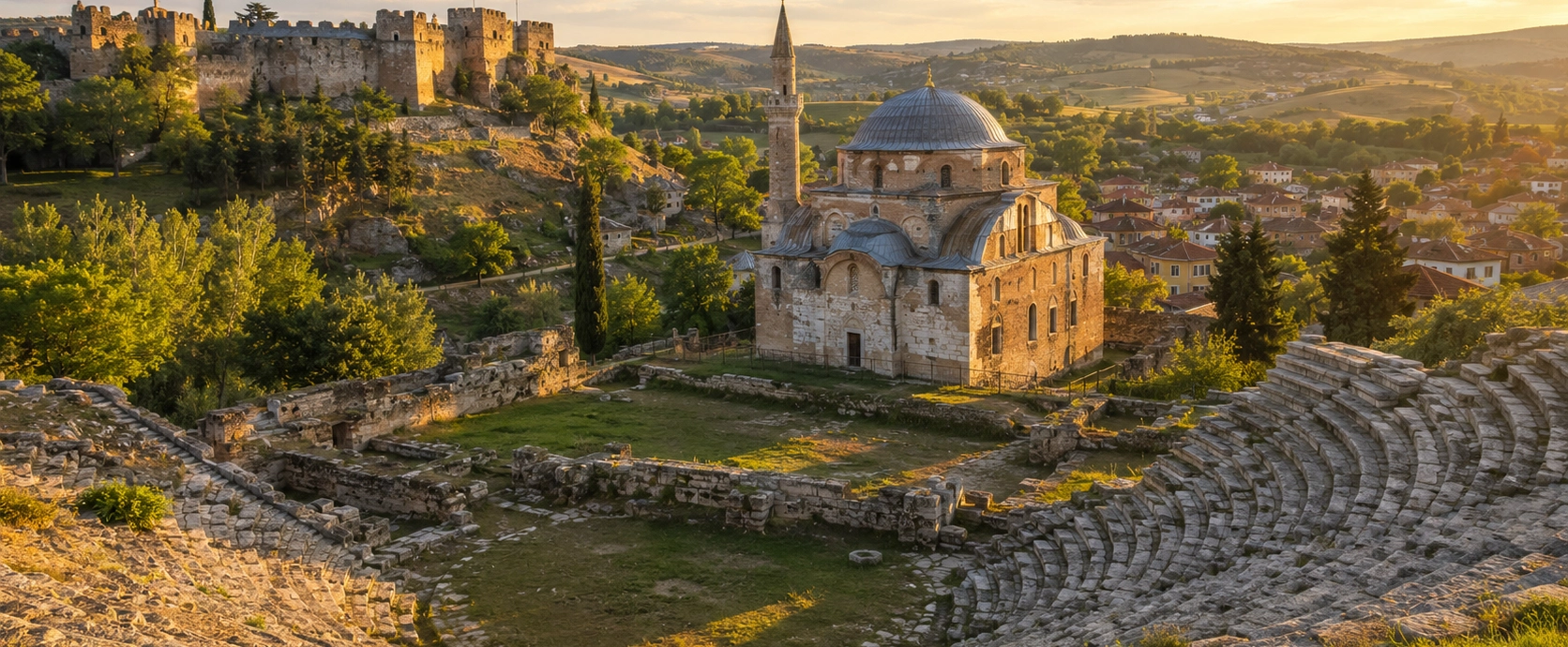
Discover the complete story of Vize, from ancient Thracian and Roman remains to Byzantine churches, Ottoman monuments and the surrounding Istranca landscape.
View Vize GuideCombine the monuments of Vize with the forests, Black Sea towns and cultural landscapes of Turkish Thrace.
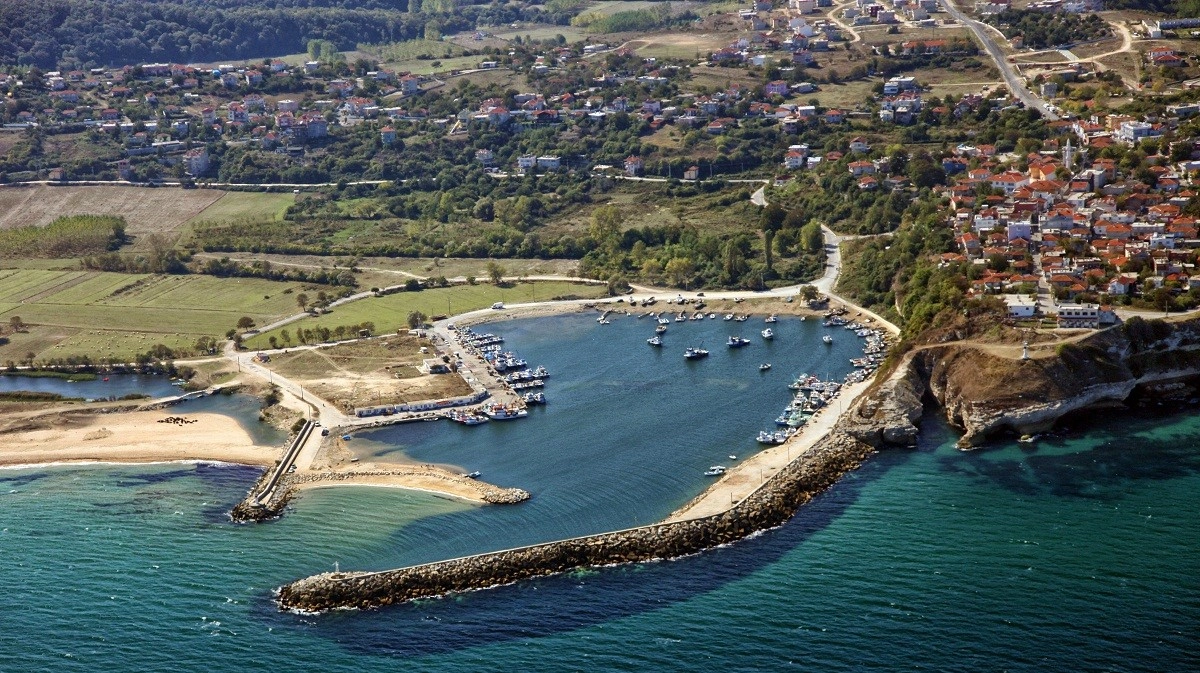
Continue from Vize toward the Black Sea for Byzantine heritage, rivers, forests, cliffs and coastal scenery.
Explore Kıyıköy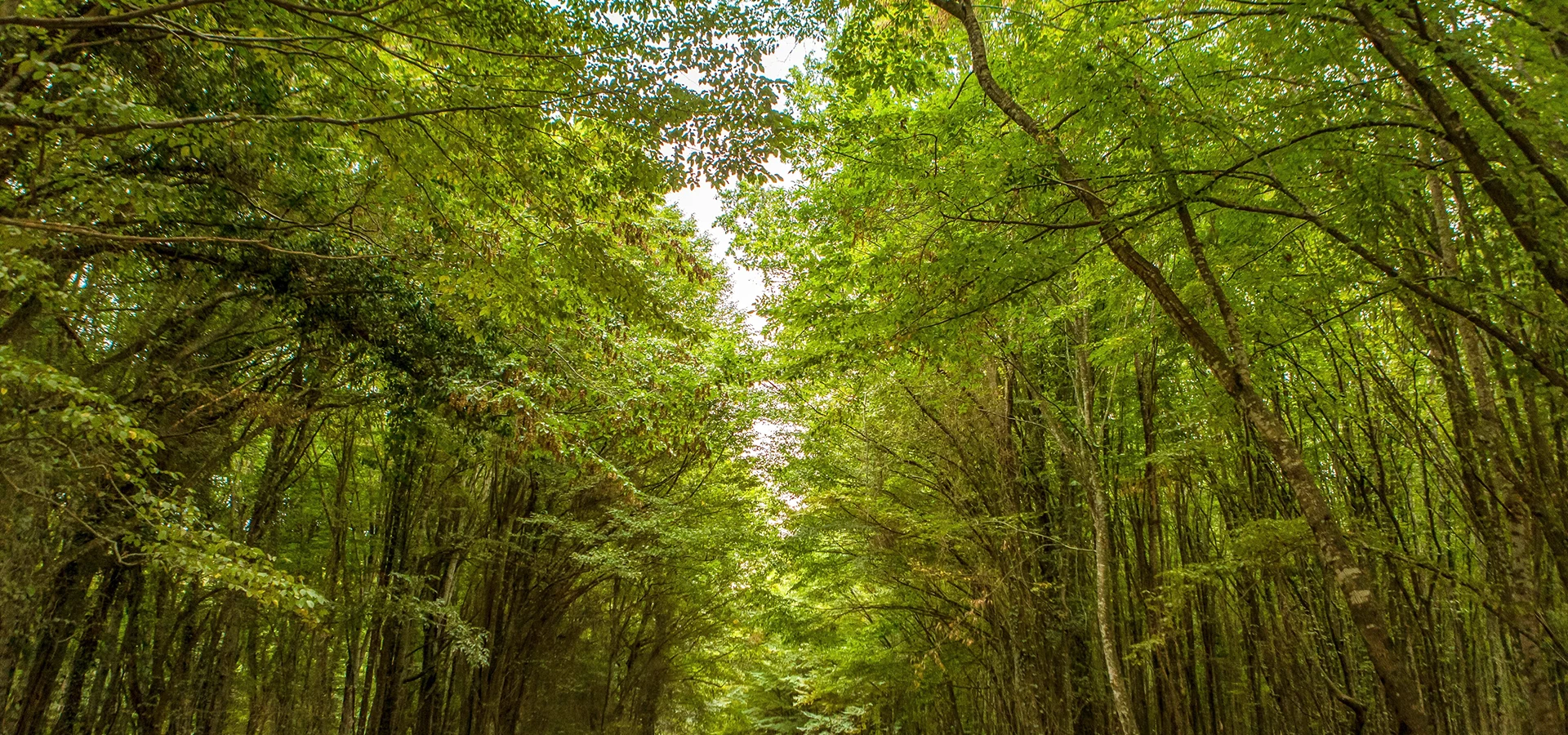
Leave the historic towns behind and explore the vast forest landscapes, valleys and rural roads of northern Thrace.
Discover Istranca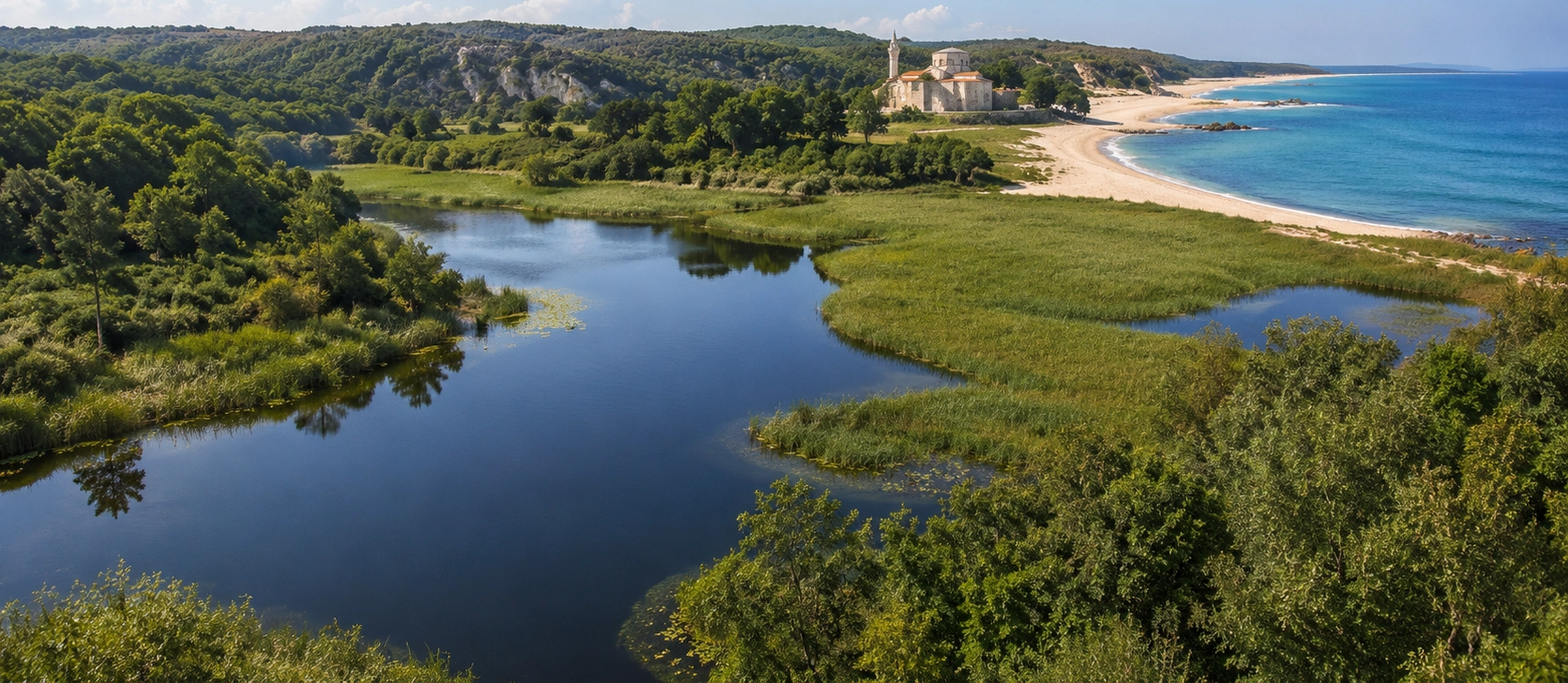
Discover prehistoric archaeology, Roman and Byzantine monuments, Ottoman heritage, caves, forests and the Black Sea coast.
View Kırklareli Guide