Private Misi Village & Bursa Tour
Ask us about a tailor-made route combining Misi's historic streets, cultural venues and creek-side landscape with the highlights of Bursa.
Request a Custom Tour





The historic settlement commonly known as Misi Village, officially Gümüştepe Mahallesi, is one of the most atmospheric places to visit near central Bursa. Set between wooded hills in the Nilüfer district, the village combines traditional houses, narrow streets, gardens, cultural venues and the waterside landscape of Misi Creek.
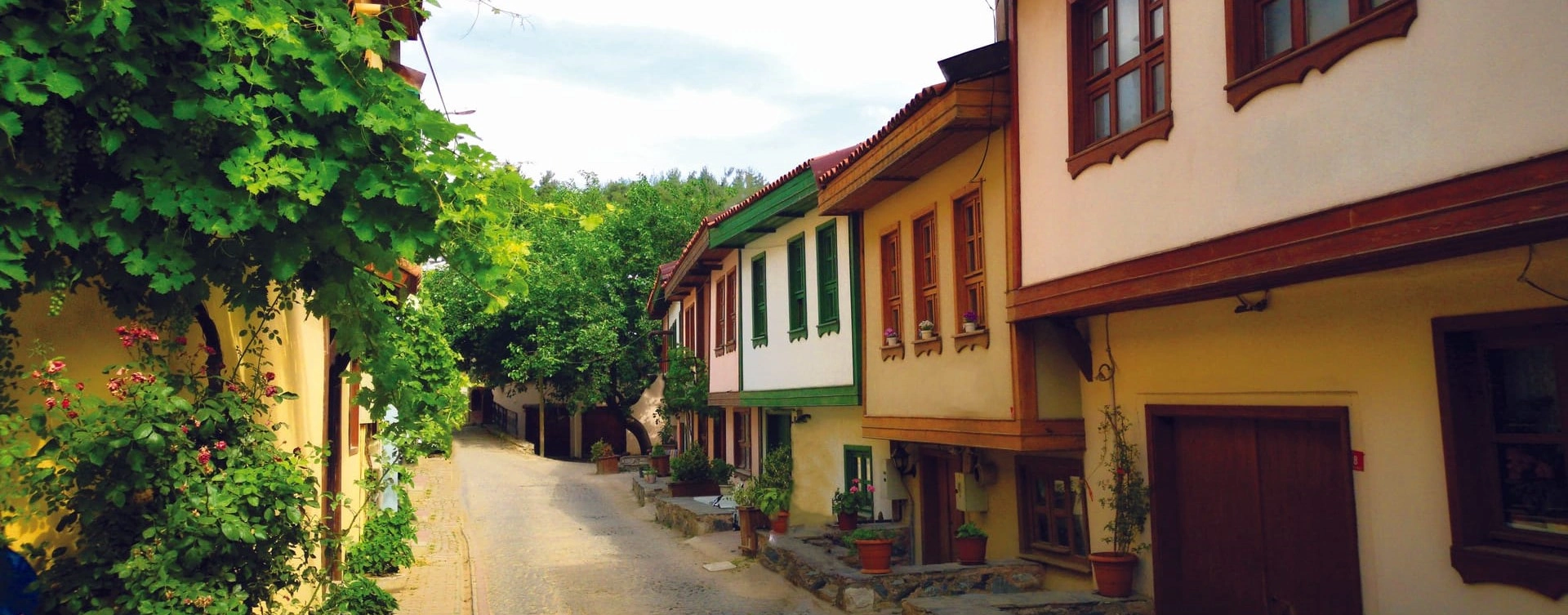
Despite being close to the modern city, Misi has preserved the feeling of an old Anatolian settlement. Colorful houses with timber details rise along sloping streets, vines climb across garden walls and cafés spread beneath mature trees beside the creek.
The settlement also has deep historical associations. Its name has long been connected with the ancient region of Mysia, while local historical traditions associate the area with early Christian communities. The surviving village itself, however, is especially valuable for the historic residential landscape and cultural traditions that developed here through later centuries.
Today, restored buildings house cultural institutions including the Nilüfer Photography Museum, Misi Silk House, Misi Children's Library and arts initiatives. Together with riverside tea gardens, traditional food and nearby forested hills, they make Misi an easy half-day escape from Bursa.
Walk among traditional houses, tiled roofs, gardens and narrow neighborhood streets.
Relax beneath trees beside Misi Creek and the green hills surrounding the settlement.
Discover Bursa's long relationship with sericulture, cocoons and silk craftsmanship.
Explore museums, workshops, village traditions and a living residential community.
Essential information for visiting historic Misi, officially known as Gümüştepe Mahallesi.
Gümüştepe Mahallesi in Nilüfer district, southwest of central Bursa.
Open on Google MapsThe historic village of Misi is officially part of Gümüştepe Mahallesi.
The historic settlement was designated an urban conservation area in 1989.
A creek-side settlement surrounded by wooded hills, gardens and fruit-growing countryside.
The village streets are free to explore; museums and cultural venues operate independently.
Allow 2–4 hours for the village, museums, riverside break and photography.
Misi preserves an unusual combination of historic architecture, village life, natural scenery, traditional crafts and contemporary cultural activity.
Misi is particularly valuable because it survives as a living historic neighborhood rather than a reconstructed heritage attraction. Families still live among the traditional houses while cafés, workshops, museums and cultural centers occupy restored buildings nearby.
The village's streets reveal architectural characteristics once common in many settlements around Bursa. Timber-framed upper floors, projecting bays, tiled roofs, garden walls and narrow lanes adapt closely to the sloping terrain and create constantly changing views as visitors walk through the neighborhood.
Misi also helps explain Bursa's relationship with its surrounding countryside. For centuries, villages around the city supplied agricultural produce while participating in regional traditions of grape cultivation, silk production, forestry and trade.
Modern restoration and cultural projects have given several historic houses new functions, helping preserve traditional architecture while introducing visitors to photography, literature, children's education, contemporary art and Bursa's famous silk heritage.
For travelers following our Bursa visitor guide, Misi offers an excellent contrast to the monumental mosques, tombs, bazaars and imperial complexes of the city center.
Misi is considered one of the older settlements in the Bursa region. Its traditional name has often been connected with Mysia, the ancient geographical region that covered a large part of northwestern Anatolia. Ancient writers including Herodotus and Strabo referred to Mysia and its inhabitants, although the precise relationship between the ancient regional name and the present village should be treated cautiously.
Local historical traditions also associate Misi with the spread of Christianity around the slopes of ancient Mount Olympus, today's Uludağ. Accounts repeated in regional sources describe a monk called Alex arriving with followers during the Roman period and settling in the Misi and İnkaya area. Traditions concerning an early Christian council and a manuscript hidden near a monastery also survive locally, although these stories should not be confused with securely documented archaeological evidence.
During the medieval period, settlements around the northern slopes of Uludağ stood along routes connecting Bursa with rural communities to the south and west. Misi eventually became incorporated into the expanding Ottoman world, before Bursa itself became the first major Ottoman imperial capital.
Agriculture remained fundamental to village life for centuries. The fertile valley supported orchards, vines and gardens, while Muscat grapes, grape leaves, pekmez and local wine became particularly associated with Misi. Silk production and cocoon cultivation also belonged to the wider economic traditions of Bursa and its villages.
The settlement's official name was changed to Gümüştepe in the 20th century, although residents and visitors continued to use the historic name Misi. As urban Bursa expanded, the former village became administratively integrated into Nilüfer district.
Recognition of Misi's architectural character led to its designation as an urban conservation area in 1989. Restoration projects later repaired historic houses and transformed several buildings into museums, cultural spaces, libraries and workshops.
The name Misi is traditionally connected with Mysia, the ancient region of northwestern Anatolia.
Local traditions preserve stories of Christian communities established around the Uludağ foothills.
The village became part of the rural landscape surrounding Ottoman Bursa.
Vines, fruit, grape products and other crops shaped the local economy for generations.
Misi's historic settlement was designated an urban conservation area.
Historic houses coexist with museums, cafés, cultural projects and everyday neighborhood life.
The historic houses are one of the greatest reasons to visit Misi. Rather than being arranged around a rigid street plan, the buildings follow the natural slopes and curves of the valley, creating narrow passages, small squares and constantly changing views.
Many houses display characteristics associated with traditional Bursa and northwestern Anatolian domestic architecture. Ground floors are often comparatively solid and enclosed, while upper levels may use timber framing, projecting rooms, rows of windows and broad roof eaves.
Red clay roof tiles, wooden shutters, plastered façades and garden walls give the settlement much of its visual character. Restoration projects have introduced brighter façade colors to parts of the village, making several streets particularly attractive for photography.
Historic architecture in Misi should not be understood as one uniform style. Buildings have been repaired and altered across generations, and restored cultural properties now stand beside newer homes and everyday village structures. That mixture is part of Misi's identity as a living neighborhood.
Wooden structural details and upper floors reflect regional building traditions.
Traditional houses often extend above narrower lower levels and garden boundaries.
Warm-colored clay tiles form one of the defining elements of the village skyline.
Stone and plaster walls conceal small gardens, vines, fruit trees and private courtyards.
The settlement follows naturally sloping terrain rather than a formal geometric plan.
Several heritage buildings now serve as museums, libraries and cultural centers.
Misi's setting is as important as its architecture. The settlement lies in a green valley surrounded by wooded hills, with water flowing through the village from the direction of the Uludağ foothills.
The creek creates one of Misi's most characteristic scenes. Mature trees shade the banks while tea gardens, cafés and restaurants provide places to sit beside the water during the warmer months.
Fruit trees, vines, gardens and forest vegetation soften the edges of the historic neighborhood. In spring the surrounding countryside becomes intensely green, while autumn brings warm colors to both orchards and woodland.
The combination of flowing water and historic architecture means visitors do not need a complicated itinerary. A slow walk through the streets followed by tea or breakfast beside the creek is often the most enjoyable way to experience Misi.
The waterway running through the settlement forms the natural heart of the village.
Tea gardens and restaurants provide shaded places to rest close to the water.
Forest-covered slopes surround the settlement and create a sheltered valley atmosphere.
Gardens and orchards reflect the agricultural traditions of Bursa's countryside.
Grapes and grape products have long been associated with Misi's local identity.
Trees, gardens and the creek support a greener environment than central urban Bursa.
Misi is compact enough to explore without a rigid sightseeing schedule. The best experience comes from combining its historic streets, restored cultural buildings and creek-side landscape.
Walk through streets lined with traditional timber houses, tiled roofs and colorful façades.
Follow the tree-lined waterway and pause at one of the traditional tea gardens.
Discover the history and art of photography inside a restored traditional Misi house.
Learn about Bursa's sericulture and silk traditions through displays, crafts and workshops.
Explore objects associated with regional domestic life, dress, crafts and traditional culture.
See how a restored heritage building has been transformed into a community library for children.
A restored village property used for contemporary art projects, workshops and cultural activities.
Leave the main creek area and wander uphill for quieter architecture and broader views.
One of Misi's most interesting cultural attractions is the Nilüfer Photography Museum, established by Nilüfer Municipality inside a restored traditional house overlooking the village center.
The museum explores the development of photography through displays dealing with photographic technology, image-making techniques and the history of photography in Türkiye. Its collections and temporary exhibitions also provide a visual record of Bursa and wider Turkish life.
The building itself forms part of the experience. Traditional domestic architecture has been adapted to create exhibition rooms, a photography library, educational spaces and facilities associated with darkroom techniques.
Learn how photographic equipment and image-making methods developed over time.
Discover important photographers and documentary traditions from Türkiye.
Historic images help visitors understand how Bursa and its communities have changed.
The restored building adds an architectural dimension to the museum visit.
Temporary displays can change, giving repeat visitors different photographic perspectives.
The museum supports talks, workshops and programs connected with photographic culture.
Few crafts are more closely associated with Bursa than silk. For centuries, the city stood on international trade routes and became one of the Ottoman world's most important centers for silk textiles.
Rural communities around Bursa participated in this economy by cultivating mulberry trees and raising silkworms, while urban workshops processed and wove the valuable fiber. Misi's restored İpek Evi – Silk House introduces visitors to this heritage.
The building includes displays devoted to the history of sericulture, spaces associated with weaving and handicrafts, and areas where locally produced work can be presented and sold.
A visit provides useful context before exploring Bursa's historic commercial center, where the city's silk trade once filled caravanserais, bazaars and hans.
Learn how silkworm cultivation formed the beginning of the traditional production cycle.
Mulberry cultivation was essential because its leaves feed domesticated silkworms.
See how delicate silk fibers originate from the cocoons produced by silkworms.
Discover the labor-intensive stages required before silk can be woven into fabric.
Local craft production connects traditional knowledge with contemporary village culture.
Misi's rural heritage complements Bursa's famous silk bazaars and historic caravanserais.
One of the most successful aspects of Misi's conservation story is the reuse of historic village houses for cultural purposes. Rather than leaving restored buildings empty, several have become museums, libraries, workshops and creative spaces.
A museum dedicated to photographic history, visual culture and exhibitions.
A cultural center interpreting Bursa's silk and sericulture traditions.
Traditional objects, clothing and regional material culture are displayed inside a historic house.
A restored village building transformed into an inviting reading and learning space.
A space for research-led projects, contemporary art, workshops and cultural activities.
A residency and creative environment serving writers, researchers, translators and other cultural guests.
Food is part of the Misi experience, particularly because the village remains closely associated with the agricultural landscape surrounding Bursa. Restaurants and cafés range from simple tea gardens to places serving substantial Turkish breakfasts and regional dishes.
Historically, Misi was especially known for Muscat grapes. Grape leaves, grape molasses or pekmez, and wine production became closely connected with the village's reputation.
Seasonal fruit, homemade preserves, pastries and locally prepared breakfast dishes may also appear at village businesses. As menus change, it is better to ask what is genuinely homemade or locally sourced that day rather than expecting one standardized "Misi menu."
Cheese, olives, eggs, pastries, vegetables, jams and tea make a relaxed start to a Misi visit.
Aromatic grape varieties have long been strongly associated with the village.
Traditional grape molasses reflects Misi's historic viticulture and household food production.
Fresh and preserved vine leaves are another product traditionally connected with local vineyards.
Fruit trees and gardens around the village contribute to its rural food culture.
A glass of tea beside the creek remains one of the simplest and most enjoyable Misi experiences.
Misi is easy to visit, but its popularity with Bursa residents means the atmosphere can vary dramatically according to the day and time. A little planning makes the experience considerably more rewarding.
Morning offers quieter streets, easier parking and softer light for photography.
The historic center is compact, and walking reveals details impossible to appreciate from a vehicle.
Walk into the upper streets instead of spending the entire visit beside the restaurants.
Some lanes are sloping, uneven or paved with cobbles and similar hard surfaces.
Opening hours and exhibitions can change independently from the village itself.
Misi is better enjoyed slowly than treated as a rapid photograph-and-leave destination.
Saturday and Sunday afternoons can feel considerably busier than weekday mornings.
Do not enter private courtyards or photograph people closely without permission.
Begin near the village center and spend a few minutes orienting yourself before walking into the quieter historic streets. Look for timber-framed houses, rooflines, garden walls, wooden windows and views toward the green slopes surrounding the settlement.
Continue to the Nilüfer Photography Museum. The museum provides both an interesting cultural visit and an opportunity to see how a traditional Misi house can be adapted for modern use.
From here, continue toward the Misi Silk House to learn about Bursa's sericulture tradition and the journey from silkworm cocoon to textile. Depending on current opening arrangements, you can also investigate the Ethnography House and other cultural buildings.
Finish by returning to Misi Creek. Choose a tea garden or restaurant beneath the trees and allow time simply to enjoy the water and village atmosphere.
Misi itself is a residential neighborhood and therefore has no general entrance ticket or village opening hours. Public streets and the creek-side area can normally be visited freely. Museums, libraries and other municipal cultural venues maintain their own schedules.
As listed by Nilüfer Municipality in September 2026, the Nilüfer Photography Museum currently lists visiting hours of 09:00–17:00. The Misi Silk House currently lists hours of 09:00–17:30.
The municipal Misi Children's Library currently lists 09:00–18:00 on weekdays and 10:00–18:00 at weekends. These schedules can change because of holidays, exhibitions, maintenance or municipal programming.
Misi can be visited throughout the year, but the experience changes significantly with the seasons. Because much of the attraction lies outdoors, weather and weekend crowds should influence your plans.
Lush vegetation, comfortable temperatures and flowing water make this one of the best seasons.
Visit before midday for cooler streets and quieter tables beneath the riverside trees.
Changing leaves, grape traditions and softer light create excellent photographic conditions.
The village becomes quieter and more local, although rain can make paved streets slippery.
Ideal for travelers wanting peaceful streets and fewer vehicles around the creek.
If visiting Saturday or Sunday, arrive early before lunch and afternoon visitors increase.
Take a short walk through the historic streets and stop briefly beside the creek.
Explore the village center, photograph historic houses and enjoy tea by the water.
Add either the Photography Museum or Silk House to your village walk.
The ideal first visit with museums, quiet streets and a relaxed meal or tea break.
Explore slowly, visit several cultural venues and enjoy breakfast or lunch beside the creek.
Combine Misi with another attraction in Nilüfer or central Bursa.
Misi is one of the most photogenic settlements near central Bursa. Its strongest images often come not from one monumental landmark, but from combinations of houses, foliage, tiled roofs, creek reflections and everyday village details.
Early light and fewer visitors make the historic lanes especially rewarding.
Look for contrasting façades, wooden windows, rooflines and vines.
Use trees, bridges, water and café terraces to frame the village landscape.
Photograph timber joints, doors, shutters, tiles and traces of traditional construction.
Walk uphill for wider compositions showing houses against the wooded valley.
The village becomes especially atmospheric when surrounding foliage begins to change.
Accessibility varies considerably across Misi. The main road and sections beside the creek are comparatively straightforward, while historic side streets may include slopes, uneven paving, steps and narrow passages.
Much of the main restaurant and tea-garden zone can be approached at street level.
Slopes and uneven paving can make some routes difficult for visitors with limited mobility.
Historic architecture can create stairs and internal access limitations.
Contact individual museums beforehand to confirm current accessible entrances and facilities.
A compact stroller works around flatter areas but may be awkward on steep side streets.
Visitors with mobility concerns can reduce walking by arranging a drop-off near the center.
Misi lies in Nilüfer district, southwest of central Bursa, along the corridor leading toward Orhaneli. Its proximity to the city makes it suitable for a short morning, afternoon or half-day excursion.
Drive from central Bursa toward Nilüfer and the Bursa–Orhaneli road, following signs for Gümüştepe or Misi.
A taxi provides one of the easiest options for travelers staying in central Bursa.
Local Bursa public transportation serves the Gümüştepe area; check current routes before departure.
A private car is useful when combining Misi with several attractions outside central Bursa.
Parking becomes more difficult during busy weekend breakfast and lunch periods.
Once you arrive, explore the historic center primarily on foot.
Misi's location makes it easy to combine with the historical and cultural attractions of Bursa. Use our complete Bursa guide to build a longer itinerary through the former Ottoman capital and its surrounding countryside.
Explore the remarkable mosque, madrasa and tomb complex created for Sultan Murad I.
Discover Bursa's historic thermal district, Ottoman monuments and traditional bath culture.
Visit a historic Bursa mansion preserving objects associated with Mustafa Kemal Atatürk.
Explore archaeological discoveries from Bursa and ancient northwestern Anatolia.
Continue toward the mountain for forests, viewpoints, hiking and winter recreation.
Combine Misi with the Grand Mosque, Koza Han, historic bazaars and early Ottoman monuments.
Explore one of Bursa's most distinctive early Ottoman religious complexes.
Discover the ancient civilizations and archaeological heritage of the Bursa region.
Misi Village is in Nilüfer district of Bursa. Its official modern name is Gümüştepe Mahallesi.
Yes. Misi is the traditional and still widely used name of the settlement officially known today as Gümüştepe Mahallesi.
Misi is located only a short drive southwest of central Bursa. Exact distance depends on your starting point within the city.
It is known for traditional houses, colorful streets, Misi Creek, historic grape cultivation, Bursa's silk heritage and restored cultural buildings.
Regional sources describe Misi as a very old settlement with a history extending back roughly two millennia or more. Its name is traditionally connected with the ancient region of Mysia. Individual historical claims concerning its earliest foundation should be treated cautiously.
The name has long been associated with Mysia, the ancient region of northwestern Anatolia. However, the precise historical relationship between the present village and specific ancient settlements is more complex than the similarity of the names alone suggests.
Local historical traditions associate the Misi and Uludağ area with early Christian communities and monastic activity during the Roman and Byzantine periods. Some stories remain traditions rather than firmly established archaeological facts.
The historic settlement contains traditional houses with tiled roofs, timber details, projecting upper floors, garden walls and architectural characteristics associated with the Bursa region.
Highlights include historic streets, traditional houses, Misi Creek, the Nilüfer Photography Museum, Misi Silk House, cultural venues and riverside tea gardens.
It is a museum inside a restored historic Misi house dedicated to photographic history, technology, Turkish photography and exhibitions.
Misi Silk House is a cultural venue explaining Bursa's historic silk and sericulture traditions, with displays and activities connected with cocoons, weaving and handicrafts.
Yes. There is no admission fee to enter the village or walk through its public streets. Individual museums or special activities may have separate arrangements.
The residential village itself does not have opening hours. Museums, libraries and cultural buildings maintain their own operating schedules.
Two to four hours is ideal for most visitors. This allows time for walking, one or two cultural venues and a relaxed meal or tea beside the creek.
Spring and autumn are excellent for comfortable walking and photography. During summer, morning is preferable because temperatures are cooler and the village is quieter.
It can be. Misi is a popular breakfast and leisure destination for Bursa residents, particularly on pleasant weekends. Arriving early usually provides a quieter experience.
Yes. Restaurants and tea gardens around the village, particularly near the creek, make Misi a popular location for Turkish breakfast and leisurely meals.
The village has traditionally been associated with Muscat grapes, grape leaves, pekmez and wine, while restaurants also serve broader Bursa and Turkish dishes.
Yes. The compact village, creek-side setting and Misi Children's Library can make it an enjoyable family excursion, although young children should always be supervised near the water and traffic.
Some central and creek-side areas can be approached fairly easily, but sloping streets, historic paving and stairs inside heritage buildings can create accessibility difficulties.
Yes. Misi is close enough to Bursa to combine easily with attractions such as Çekirge, the Hüdavendigar Complex, Bursa Archaeology Museum or the historic city center.
Yes. It is one of the easiest places near Bursa to combine traditional architecture, local culture, green scenery, museums and a relaxed village atmosphere in a single visit.
Historic houses may look like attractions but many remain private residences.
Request permission before taking close portraits or photographing people inside private spaces.
Carry away bottles, food packaging and all other waste.
Choose locally operated cafés, craft producers and cultural initiatives when possible.
Do not climb walls, remove architectural fragments or mark historic surfaces.
Remember that Misi remains a residential neighborhood rather than a closed tourist attraction.
Combine the historic streets and green setting of Misi with Bursa's Ottoman monuments, bazaars, museums, village traditions and local food through a private itinerary designed around your interests and without compulsory shopping stops.
Choose a relaxed Misi visit focused on architecture, photography, silk heritage, village culture, local food and the natural landscape.
Ask us about a tailor-made route combining Misi's historic streets, cultural venues and creek-side landscape with the highlights of Bursa.
Request a Custom Tour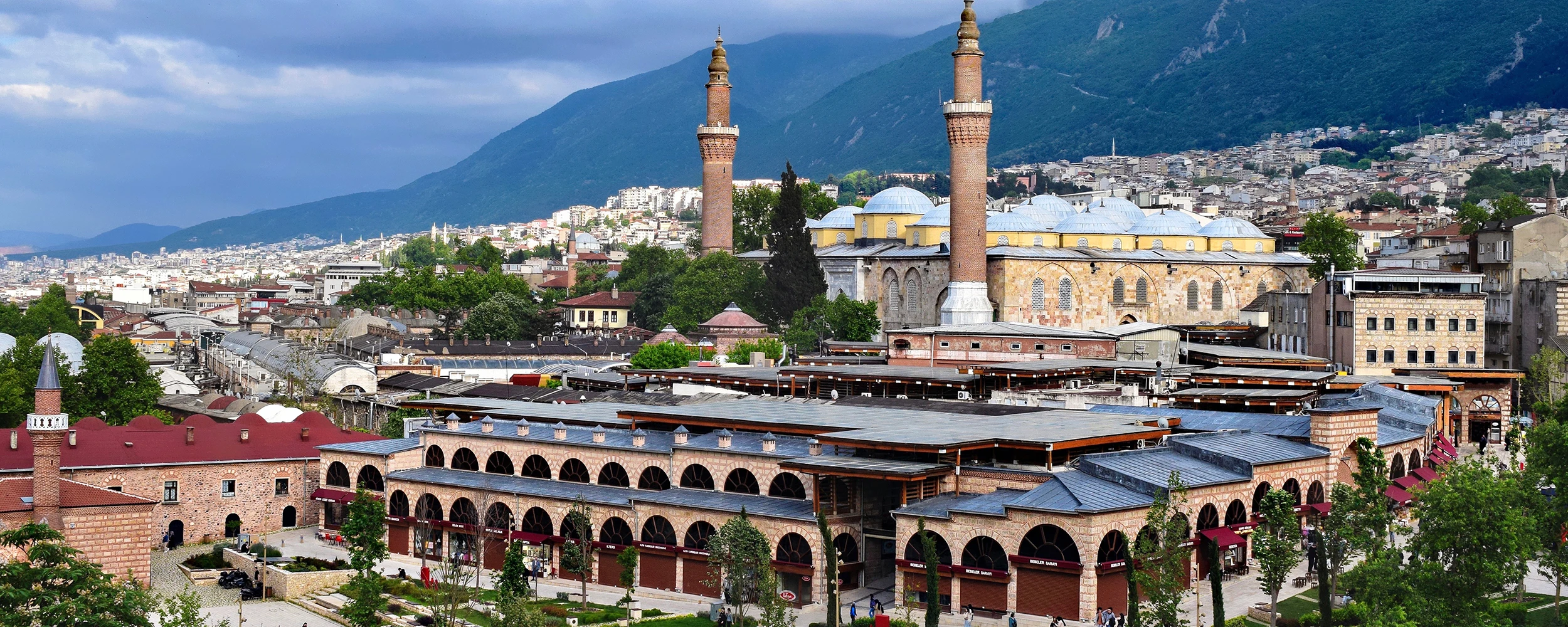
Discover early Ottoman architecture, historic bazaars, museums, traditional villages, thermal districts and Uludağ.
View Bursa GuideConnect Misi with the museums, monuments and neighborhoods of Türkiye's first great Ottoman capital.
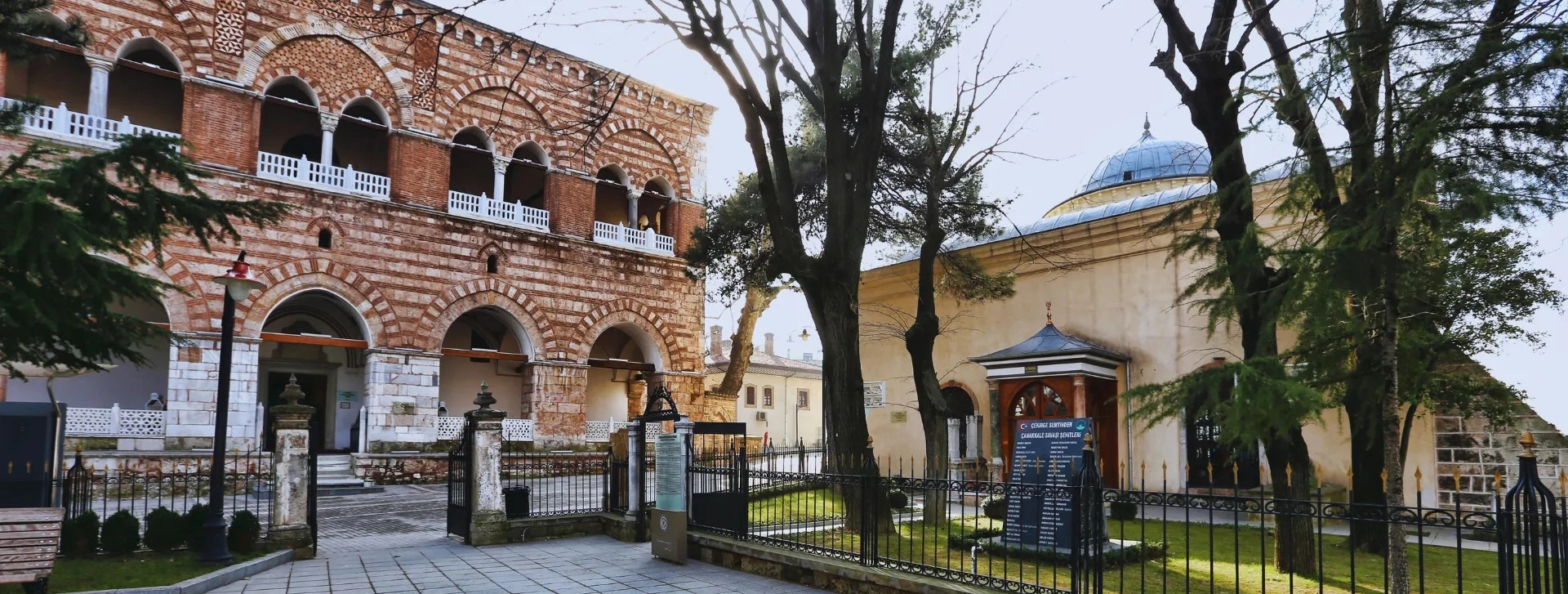
Discover the extraordinary mosque, madrasa and tomb complex created for one of the most important early Ottoman sultans.
Explore Hüdavendigar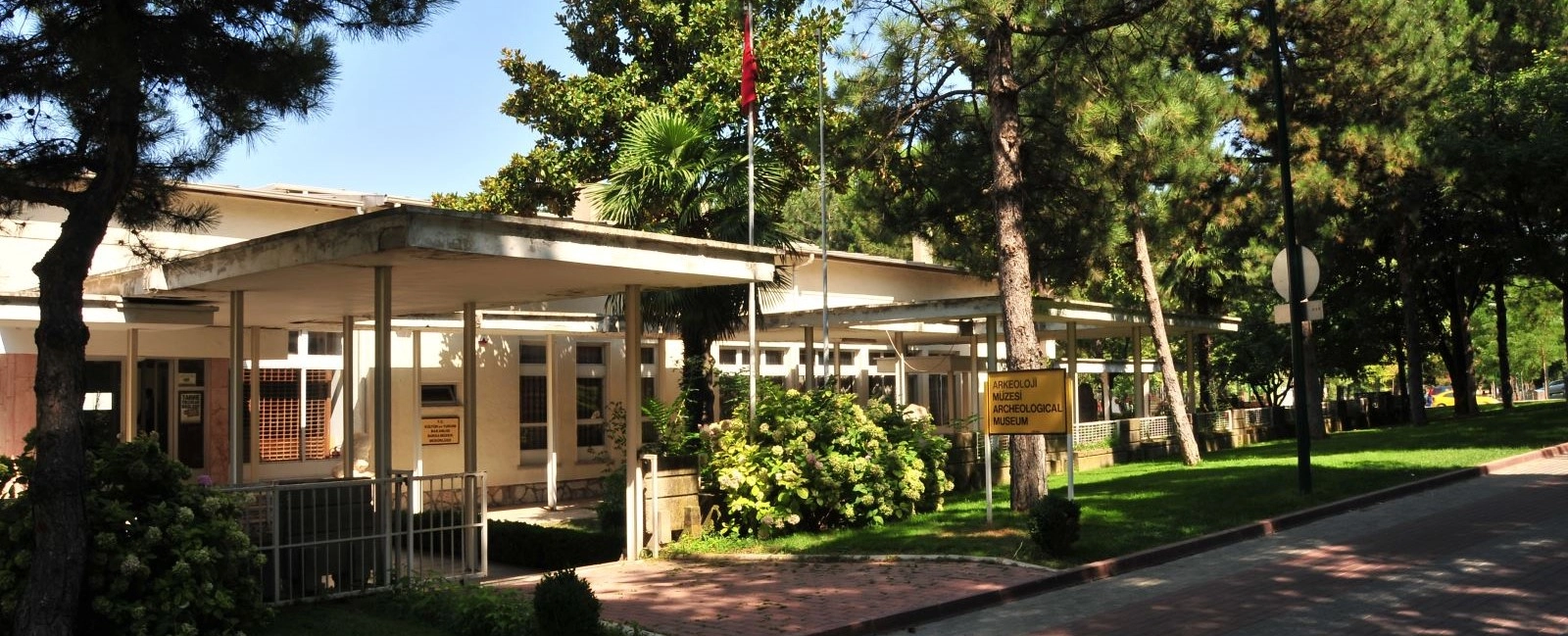
Explore archaeological discoveries that illuminate thousands of years of history across Bursa and northwestern Anatolia.
Explore the Museum
Continue to the Grand Mosque, Koza Han, Ottoman tombs, historic bazaars, museums and traditional neighborhoods.
Continue Exploring Bursa