Private Ottoman Thrace Heritage Experience
Ask us about a tailor-made journey combining Lüleburgaz, the Sokullu Mehmed Pasha Complex, Kırklareli and the historic landscapes of Turkish Thrace.
Request a Custom Tour





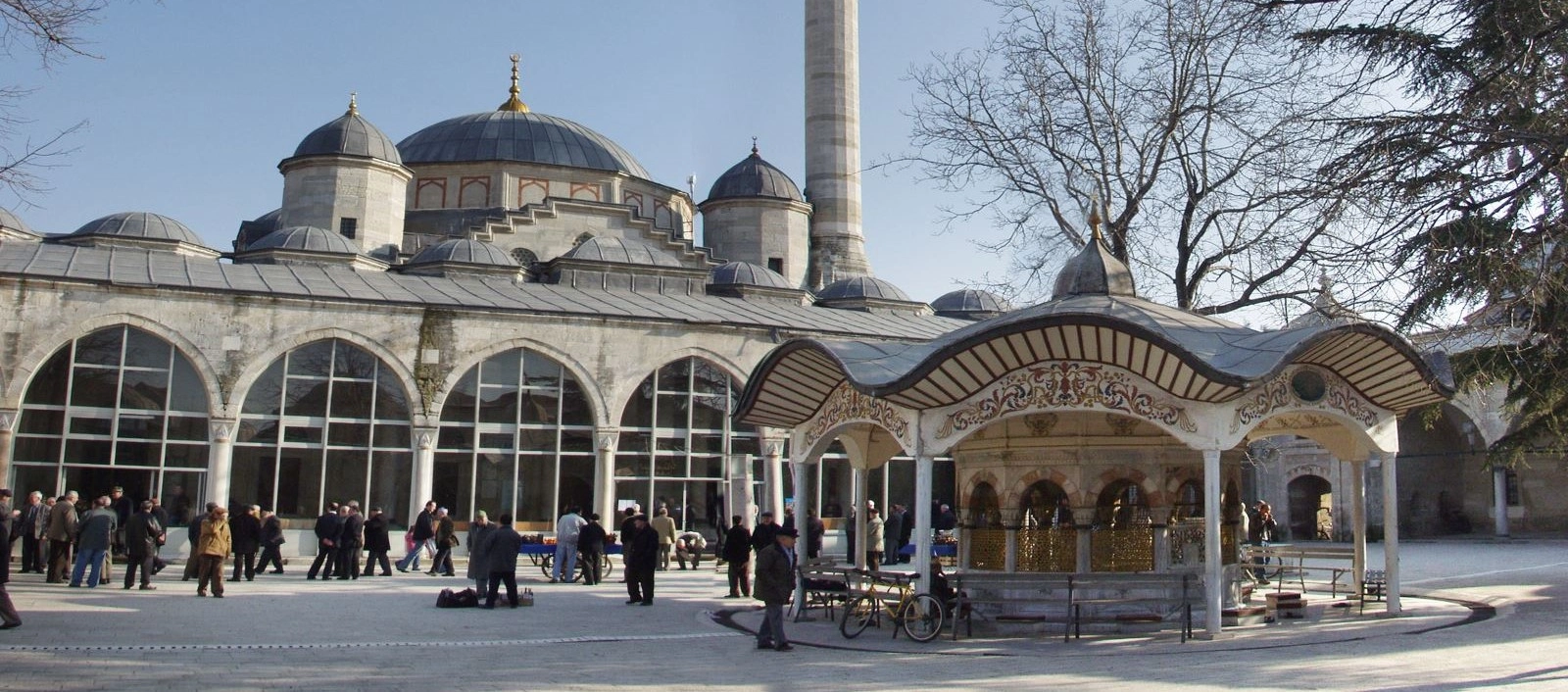
Standing in the heart of Lüleburgaz in Kırklareli Province, the Sokullu Mehmed Pasha Mosque Complex is one of the most important surviving monuments of classical Ottoman architecture in Turkish Thrace.
The complex was commissioned by the powerful Ottoman grand vizier Sokullu Mehmed Pasha and constructed in 1569–1570 by the great imperial architect Mimar Sinan and the Hassa Architects.
But this was never simply a mosque. The original külliye covered approximately 40,000 square meters and brought together religion, education, commerce, hospitality, bathing and transportation within a single urban complex.
Its buildings once included a mosque, madrasa, caravanserai, imaret, tabhane, arasta, hammam, primary school, fountain, bridge, water system, burial area and other structures.
Much of the original complex has disappeared or been altered, but the surviving mosque, madrasa courtyard, arasta elements, hammam, monumental gates and other remains still reveal the ambition of one of the most important Ottoman foundations on the historic road toward the Balkans.
A major classical Ottoman complex constructed during the reign of Sultan Selim II.
Designed and constructed under the direction of the greatest architect of the classical Ottoman age.
The original foundation incorporated religious, educational, commercial and travelers' facilities.
The complex served travelers and communications moving between Istanbul, Edirne and the Balkans.
Essential information about one of Lüleburgaz's greatest Ottoman monuments.
Central Lüleburgaz, Kırklareli Province, European Türkiye.
Open on Google Maps1569–1570 AD / 977 AH.
Sokullu Mehmed Pasha, one of the most powerful grand viziers of the Ottoman Empire.
Mimar Sinan and the Ottoman imperial architectural organization.
Classical Ottoman architecture of the 16th century.
The mosque remains an active place of Islamic worship.
The story of the complex is inseparable from Lüleburgaz's position on one of the great routes connecting Istanbul with Edirne and the Balkans.
The Sokullu Mehmed Pasha Complex was created during the high classical period of the Ottoman Empire, when imperial roads stretched from Istanbul across Thrace toward Edirne and southeastern Europe.
Lüleburgaz occupied an important position on this route. Armies, officials, merchants, messengers, pilgrims and ordinary travelers all passed through the region, making the town a natural location for a major Ottoman foundation.
In 1569–1570, Grand Vizier Sokullu Mehmed Pasha commissioned an enormous külliye here. The project was entrusted to Mimar Sinan, chief architect of the Ottoman Empire, together with the imperial architectural organization.
Rather than constructing only a monumental mosque, the project created an entire religious, commercial and transportation center. The original complex occupied an area of approximately 40,000 square meters outside the remains of the earlier Byzantine fortifications.
It included a mosque, madrasa, primary school, arasta, caravanserai, tabhane, imaret, double hammam, fountains, water infrastructure, burial ground, shops, courtyards and other facilities.
The complex also supported the Ottoman menzil – imperial staging and communications system. Fresh horses and services were essential for messengers carrying official correspondence between Istanbul, Edirne and the Balkan provinces.
The külliye therefore functioned almost like a small city within the city. Travelers could pray, eat, sleep and care for their animals, while residents could study, shop, bathe and conduct business.
Over the centuries, fires, political upheaval, changes to Lüleburgaz's street plan and modern construction altered the original ensemble. Several major components disappeared completely.
Most notably, the monumental caravanserai was largely demolished in 1935 when a road was opened through the area. Only limited architectural remains now help visitors understand its former scale.
Despite these losses, the surviving monuments continue to form one of the most important collections of Ottoman architectural heritage in Kırklareli Province.
Sokullu Mehmed Pasha was one of the most influential statesmen of the 16th-century Ottoman Empire.
After serving in a series of important military and administrative positions, he became Grand Vizier in 1564 and remained in that position until his death in 1579.
His career therefore extended across the reigns of several Ottoman sultans, placing him at the center of imperial politics during one of the empire's most powerful periods.
Like many important Ottoman statesmen, Sokullu Mehmed Pasha established charitable foundations and commissioned architecture across the empire. Mosques, bridges, caravanserais and public institutions bearing his name can still be found in different parts of the former Ottoman world.
The Lüleburgaz complex was particularly ambitious because it was intended not simply as a religious monument but as a piece of urban and transportation infrastructure.
Sokullu Mehmed Pasha served as the Ottoman Empire's chief minister from 1564 until 1579.
He sponsored important architectural and charitable foundations across Ottoman territories.
The Lüleburgaz complex supported both the local population and traffic along the imperial road.
More than four centuries later, his name remains closely connected with the historic center of Lüleburgaz.
The Sokullu Mehmed Pasha Complex belongs to the architectural world of Mimar Sinan, the most celebrated architect of the Ottoman classical period.
As chief imperial architect, Sinan supervised an enormous organization responsible for mosques, bridges, aqueducts, palaces, baths, schools and public buildings throughout Ottoman territories.
At Lüleburgaz, his challenge was larger than designing a single monument. The project required the careful organization of worship, education, trade, accommodation and transportation within a coherent urban plan.
The result demonstrates one of the great strengths of classical Ottoman planning: architecture was used not simply to create individual buildings, but to organize the daily life of an entire district.
Sinan served as chief architect during the height of 16th-century Ottoman power.
The complex demonstrates how Ottoman architecture could organize an entire section of a town.
Religious, educational, commercial and transportation buildings were designed as parts of one foundation.
Domes, stone masonry, pointed arches and balanced proportions characterize the surviving buildings.
The original Sokullu foundation was extraordinarily extensive. Historical documentation describes a complex occupying approximately 40,000 square meters.
A külliye was an Ottoman architectural complex in which several buildings with different social functions were organized around a mosque and supported through a charitable foundation.
The spiritual center of the complex and its most important surviving monument.
Provided religious and scholarly education around the mosque courtyard.
Offered secure accommodation for travelers, merchants, animals and goods.
A charitable kitchen and service institution connected with the social functions of the foundation.
Provided accommodation and hospitality for travelers and other guests of the complex.
Commercial shops generated activity and income within the foundation.
A public bath serving different sections of the population while producing revenue for the complex.
The sıbyan mektebi provided elementary education for children.
The nearby Sokullu Mehmed Pasha Bridge supported movement along the great road through Thrace.
Fountains, water channels and related structures supplied essential water to the foundation.
A burial area formed part of the religious landscape surrounding the complex.
Monumental entrances and open spaces connected the different areas into a unified architectural ensemble.
The mosque is the architectural and religious center of the surviving complex.
Its design belongs to the single-dome tradition of classical Ottoman mosque architecture, but the interior arrangement creates a surprisingly broad and unified sense of space.
The main dome is supported at the corners by substantial structural supports connected through broad pointed arches. This arrangement allows the central prayer hall to remain visually open beneath the dome.
The mosque also has an unusually substantial double son cemaat yeri – entrance and prayer portico. The inner portico contains a rhythmic sequence of arches, small domes and a central vault.
The building historically occupied a carefully chosen position between other elements of the complex, demonstrating how Sinan organized the mosque as part of a much larger architectural composition.
One of the most interesting features of the complex is the relationship between the mosque and madrasa.
Rather than functioning as completely separate institutions, the mosque and madrasa share the same courtyard, bringing worship and education into a closely connected architectural environment.
At the center stands the historic 12-sided şadırvan, or ablution fountain.
The fountain remains one of the courtyard's most distinctive visual features. Its later inscription belongs to the reign of Sultan Mahmud II, demonstrating that the complex continued to evolve long after the age of Mimar Sinan.
The mosque and madrasa are organized around the same central open space.
The historic ablution fountain forms a focal point at the center of the courtyard.
Arches and domed spaces create the ordered rhythm characteristic of classical Ottoman complexes.
The courtyard remains part of an active religious monument rather than simply an archaeological setting.
The interior is dominated by the great central dome and the broad arches that transfer its weight toward the structural supports at the corners.
The mihrab, indicating the direction of Mecca, stands on the qibla axis opposite the principal entrance. Its restrained geometry allows the architectural proportions of the prayer hall to remain the dominant visual experience.
Marble was used for important elements, including the mihrab area and the muezzin's platform.
The interior decoration visible today reflects several different periods. Like many active Ottoman mosques, the building has experienced repairs, repainting and restoration during its long history.
The dome creates a unified and monumental prayer space.
Broad structural arches carry the load of the central dome toward the corner supports.
The prayer niche forms the ceremonial focus of the qibla wall.
Marble architectural furniture contributes to the restrained classical character of the interior.
Religious inscriptions and decorative elements continue the Ottoman visual tradition of the mosque.
Restoration campaigns introduced additional painted ornament into parts of the building.
The mosque's son cemaat yeri is one of its particularly interesting architectural features.
Unlike a simple open portico, the entrance area forms a substantial architectural mass projecting beyond the main prayer hall.
The inner section is carried by nine pointed arches and covered by eight small domes and a central vault.
Windows were incorporated into the enclosing walls to bring additional light into the portico, an important consideration in the climate of Thrace.
Looking carefully at this area gives visitors a better understanding of Sinan's attention not only to monumental appearance but also to practical regional conditions.
A slender stone minaret rises beside the mosque and remains one of the defining elements of the Lüleburgaz skyline.
The minaret visible today does not survive completely in its original 16th-century form.
Historical damage required reconstruction, and the upper structure was rebuilt in 1937 in a form intended to reflect its earlier appearance.
Its vertical line provides an elegant contrast with the broad horizontal mass of the domed mosque and surrounding courtyard buildings.
The slender masonry tower rises beside the main mosque structure.
Its elegant vertical form contrasts with the broad domed mass of the mosque.
The present upper structure reflects reconstruction undertaken during the Republican period.
The minaret remains one of the easiest elements of the historic complex to recognize from surrounding streets.
Education was an essential component of major Ottoman charitable foundations, and Lüleburgaz was no exception.
The madrasa was organized directly around the mosque courtyard, physically connecting learning with religious life.
Students and teachers once occupied spaces arranged around the arcaded courtyard, creating an environment in which study, prayer and community life occurred side by side.
The surviving relationship between the madrasa and mosque is particularly valuable because it helps visitors understand the külliye as an integrated institution rather than simply a collection of unrelated monuments.
The Sokullu complex also contained an arasta – a planned row of commercial shops.
These shops were not unrelated additions. Commerce played an important role in the financial sustainability of Ottoman charitable foundations.
Income generated by commercial properties could help maintain religious, educational and public-service institutions.
The arasta therefore demonstrates how religious architecture and economic life were woven together in an Ottoman town.
Parts of the historic commercial environment remain visible today, allowing visitors to imagine the movement of shopkeepers, customers, travelers and worshippers through this busy section of 16th-century Lüleburgaz.
One of the greatest components of the original complex was its enormous caravanserai.
Located toward the northern part of the külliye, it stood together with facilities associated with hospitality and charitable service.
The caravanserai provided secure accommodation for merchants and travelers moving along the Istanbul–Edirne–Balkans route, as well as space for their animals and goods.
The Ottoman traveler Evliya Çelebi later described the Lüleburgaz caravanserai as an exceptionally large and carefully controlled establishment, illustrating the importance of the town to long-distance travel.
Unfortunately, the caravanserai did not survive intact. In 1935, a substantial part of the structure was demolished when a road was opened through the historic complex.
Today only fragments survive, including sections of masonry, niches and architectural remains around its former entrance area.
The historic Sokullu Hammam was constructed together with the main complex in 1569–1570.
It follows the traditional Ottoman çifte hamam – double bath arrangement, with separate sections designed for different users.
The building was not simply a place for bathing. Ottoman hammams were important centers of hygiene, social interaction and urban life.
The Lüleburgaz hammam was also surrounded by income-producing shops, demonstrating how commercial activity helped support the wider charitable foundation.
The hammam has experienced significant changes and restoration during its long history, so current access and use should always be checked locally.
The hammam was constructed as part of the original Sokullu foundation.
It belongs to the classical Ottoman çifte hamam tradition.
Traditional Ottoman bathing spaces were organized beneath a sequence of masonry domes.
Commercial units around the hammam were designed to generate income connected with the foundation.
The nearby Sokullu Mehmed Pasha Bridge was constructed in the same period as the külliye and also belongs to the architectural legacy of Sokullu Mehmed Pasha and Mimar Sinan.
The bridge crossed the watercourse on the historic road toward Edirne, making it an important component of the wider transportation system surrounding Lüleburgaz.
Its role was practical and strategic. Bridges such as this allowed commercial caravans, government messengers and Ottoman military forces to continue along major roads regardless of local waterways.
Visiting the bridge together with the mosque complex provides a much clearer understanding of the Sokullu foundation as part of an imperial network of roads and infrastructure.
The location of the Sokullu complex was not accidental.
Lüleburgaz stood on one of the major routes linking Istanbul with Edirne and the Balkan provinces of the Ottoman Empire.
Official decrees, government correspondence and other documents had to travel rapidly between the capital and distant administrative centers.
A system of staging points known as menzil helped make this possible. At important stops, messengers could replace tired horses with rested animals and continue their journey.
At the same time, merchants, pilgrims, soldiers and other travelers required food, water, accommodation, markets and places of worship.
The Sokullu Mehmed Pasha Complex provided many of these functions in one location, making Lüleburgaz an important station within a much larger Ottoman transportation landscape.
The importance of the Sokullu Mehmed Pasha Complex goes far beyond the artistic quality of its mosque.
It demonstrates how the Ottoman state, powerful officials and charitable foundations could reshape urban space around major roads.
Within a single project, Sinan's architectural organization brought together faith, education, trade, charity, hospitality, hygiene and transportation.
For visitors interested in Ottoman history, this makes Lüleburgaz especially rewarding. The complex helps explain not only what Ottoman architecture looked like, but also how an Ottoman city functioned.
The complex belongs to the architectural legacy of the greatest master of the classical Ottoman period.
Its caravanserai, bridge and services supported movement between Istanbul and the Balkans.
The külliye deliberately brought different public functions together within one district.
The mosque continues to serve its religious purpose centuries after the complex was founded.
Modern visitors should not expect the entire 16th-century külliye to survive exactly as Mimar Sinan designed it.
The complex experienced centuries of alteration, demolition, repair and urban development. Some buildings remain substantial, while others survive only in fragments or through historical documentation.
The principal surviving monument and the spiritual center of the historic foundation.
Helps preserve the original connection between worship and education.
The 12-sided ablution fountain remains a distinctive feature of the central courtyard.
Historic commercial architecture recalls the economic role of the foundation.
The double bath is another major component of the original Sokullu foundation.
Limited masonry survives from what was once one of the largest structures in the complex.
Monumental entrances help visitors understand the organization of the original ensemble.
The nearby bridge continues the story of the complex beyond the mosque precinct.
The complex is located in central Lüleburgaz and can easily be explored on foot while visiting the historic center.
Although the Sokullu Mehmed Pasha Mosque is one of Lüleburgaz's most important historic attractions, it remains first and foremost an active mosque.
Sightseeing is generally easiest between the daily prayer periods.
Follow the arrangements provided before entering the carpeted prayer area.
Wear clothing appropriate for entering an active mosque.
The prayer hall and courtyard should remain calm and respectful.
Avoid walking directly in front of people who are praying.
Photograph the architecture discreetly and never photograph worshippers closely without permission.
A particularly pleasant time for exploring the mosque courtyard and surrounding historic streets before the town center becomes busier.
Lower sunlight can emphasize the stone textures, arches, domes and minaret of the complex.
Comfortable temperatures make these seasons ideal for combining the complex with a longer walk around Lüleburgaz.
Avoid sightseeing inside the mosque during the main Friday congregational prayer.
The complex offers excellent opportunities for architectural photography, especially because several different elements can be photographed within a relatively compact area.
Vertical compositions can emphasize the relationship between the broad dome and slender minaret.
The courtyard fountain creates one of the most recognizable compositions in the entire complex.
Use the arcades to create natural frames around the mosque and fountain.
Closer photographs reveal masonry, capitals, arches and other classical Ottoman architectural details.
The historic commercial section provides a different view of the complex beyond religious architecture.
Include the surrounding modern city to show how Sinan's monument remains embedded within Lüleburgaz today.
Enough for a brief look at the mosque, courtyard and şadırvan.
Recommended if you want to appreciate the mosque, madrasa courtyard, arasta and architectural details without rushing.
Better for exploring the wider complex, hammam area, caravanserai remains and nearby historic streets.
Ideal for combining the külliye with the Sokullu Bridge, Zindan Baba Tomb and a relaxed exploration of central Lüleburgaz.
The importance of the site becomes much clearer when you explore the surrounding remains of the wider külliye.
The relationship between the mosque, madrasa and şadırvan is one of the most interesting parts of the complex.
The substantial double entrance portico is an important element of the mosque's architecture.
The commercial area helps explain how Ottoman religious foundations were financially and socially integrated into cities.
The modern site represents only part of a much larger 16th-century urban complex.
The Sokullu Bridge completes the story of the site's relationship with the historic imperial road.
This allows you to appreciate the mosque interior while minimizing disturbance to worshippers.
The complex is best experienced as part of a relaxed exploration of the surrounding town center.
The complex is located in central Lüleburgaz in Kırklareli Province.
Its position reflects the historic importance of Lüleburgaz on the main route linking Istanbul, Edirne and the Balkans.
The complex stands within the central urban area and is easy to reach on foot from surrounding streets.
Lüleburgaz is reached by road westward from Istanbul and works well as a stop on a journey through Turkish Thrace.
The provincial capital and Lüleburgaz can easily be combined during a wider exploration of Kırklareli Province.
A vehicle is useful if continuing toward Babaeski, Kırklareli, Vize, Kıyıköy or other destinations in Thrace.
The külliye is an excellent starting point for discovering the historic landscapes of Lüleburgaz and wider Kırklareli Province.
Visit the historic Ottoman bridge built as part of the same transportation landscape that connected Lüleburgaz with the imperial road.
Another well-known historic monument in central Lüleburgaz that can easily be combined with the Sokullu complex.
Explore the streets surrounding the complex to understand how the historic Ottoman foundation became part of the modern city.
Continue to the provincial capital for Ottoman monuments, museums, traditional neighborhoods and the wider history of Thrace.
Discover one of Kırklareli's most important early Ottoman monuments, founded in 1383.
Explore Roman, Byzantine and Ottoman remains in one of the most historically layered towns of eastern Thrace.
Continue north toward the Istranca Mountains to experience one of the most impressive cave systems in Turkish Thrace.
Combine Ottoman history with Byzantine heritage, forest landscapes, river valleys and the Black Sea coast.
The complex is located in central Lüleburgaz, in Kırklareli Province in European Türkiye.
The complex was constructed in 1569–1570 AD / 977 AH.
It was commissioned by Sokullu Mehmed Pasha, one of the most influential grand viziers of the Ottoman Empire.
The complex was constructed under Mimar Sinan and the Ottoman imperial architectural organization.
Lüleburgaz stood on an important road between Istanbul, Edirne and the Balkans. The complex served local residents as well as merchants, official messengers, soldiers and other travelers using this route.
Historical descriptions indicate that the foundation originally occupied approximately 40,000 square meters.
The original complex included a mosque, madrasa, caravanserai, tabhane, imaret, arasta, primary school, double hammam, bridge, fountains, water systems, burial area and other supporting structures.
No. Several major structures have disappeared or survive only partially. The mosque and a number of associated architectural elements still preserve the character of the historic foundation.
The enormous historic caravanserai was largely demolished in 1935 when a road was opened through part of the complex. Limited architectural remains survive.
Yes. Sokullu Mehmed Pasha Mosque continues to function as an active place of worship.
Visitors can normally enter active historic mosques outside prayer periods, provided that they dress appropriately, remove their shoes where required and respect worshippers and local instructions.
The mosque and madrasa share the same courtyard, and a distinctive 12-sided şadırvan stands at its center.
The minaret has undergone reconstruction. The present structure includes work completed in 1937 in a form intended to follow its earlier appearance.
An arasta is a planned group of shops. Commercial properties such as these were frequently connected with Ottoman charitable foundations and could help generate income for their maintenance.
Yes. The historic double hammam was constructed as part of the original 16th-century Sokullu foundation.
Yes. The bridge was constructed in the same period and supported movement along the major road passing through Lüleburgaz.
Allow approximately 45–90 minutes for the main complex. Two hours or more is better if you also plan to see the hammam, bridge, Zindan Baba Tomb and surrounding historic center.
The mosque is an active religious building rather than a conventional museum. Arrangements for other sections of the complex can change, so check current information locally.
Architectural photography is generally possible, but visitors should avoid disturbing worship or photographing individual worshippers without permission.
Absolutely. For travelers interested in Mimar Sinan, Ottoman architecture, Silk Road and caravan history, or the lesser-known heritage of European Türkiye, it is one of the most important monuments in Kırklareli Province.
The Sokullu Mehmed Pasha Complex has survived for more than four centuries despite major changes to the surrounding city.
Visitors can help protect both its architectural heritage and its continuing religious function.
Avoid sightseeing inside the mosque during congregational prayer.
Follow normal mosque etiquette and any instructions displayed at the entrance.
Do not climb on, scratch or unnecessarily touch historic architectural surfaces.
Focus on the architecture without treating worshippers as photographic subjects.
Walking between the surviving components helps reveal the original relationship between the mosque, shops, bath and road.
Local cafés, restaurants and independent businesses help connect heritage tourism with the surrounding community.
Discover the Sokullu Mehmed Pasha Complex as part of a tailor-made journey through the Ottoman monuments, historic towns, ancient sites and landscapes of Turkish Thrace.
Follow the historic road through European Türkiye, combining the architectural heritage of Lüleburgaz with Kırklareli, Vize and other remarkable destinations across Thrace.
Ask us about a tailor-made journey combining Lüleburgaz, the Sokullu Mehmed Pasha Complex, Kırklareli and the historic landscapes of Turkish Thrace.
Request a Custom Tour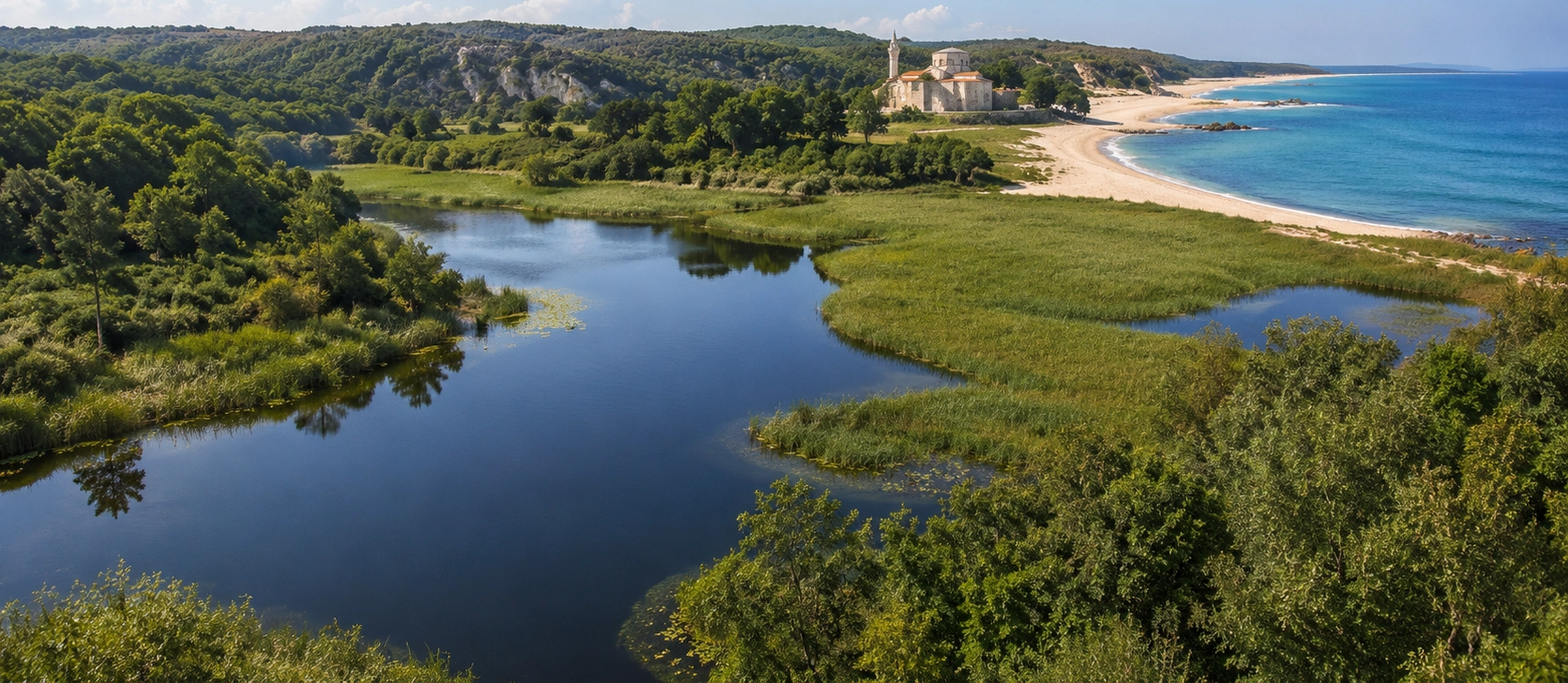
Discover the wider province, from Ottoman monuments and archaeological sites to historic towns, caves, forests and traditional regional food.
View Kırklareli GuideCombine Lüleburgaz's classical Ottoman architecture with earlier Ottoman monuments, Roman and Byzantine heritage, caves and the Black Sea landscapes of eastern Thrace.
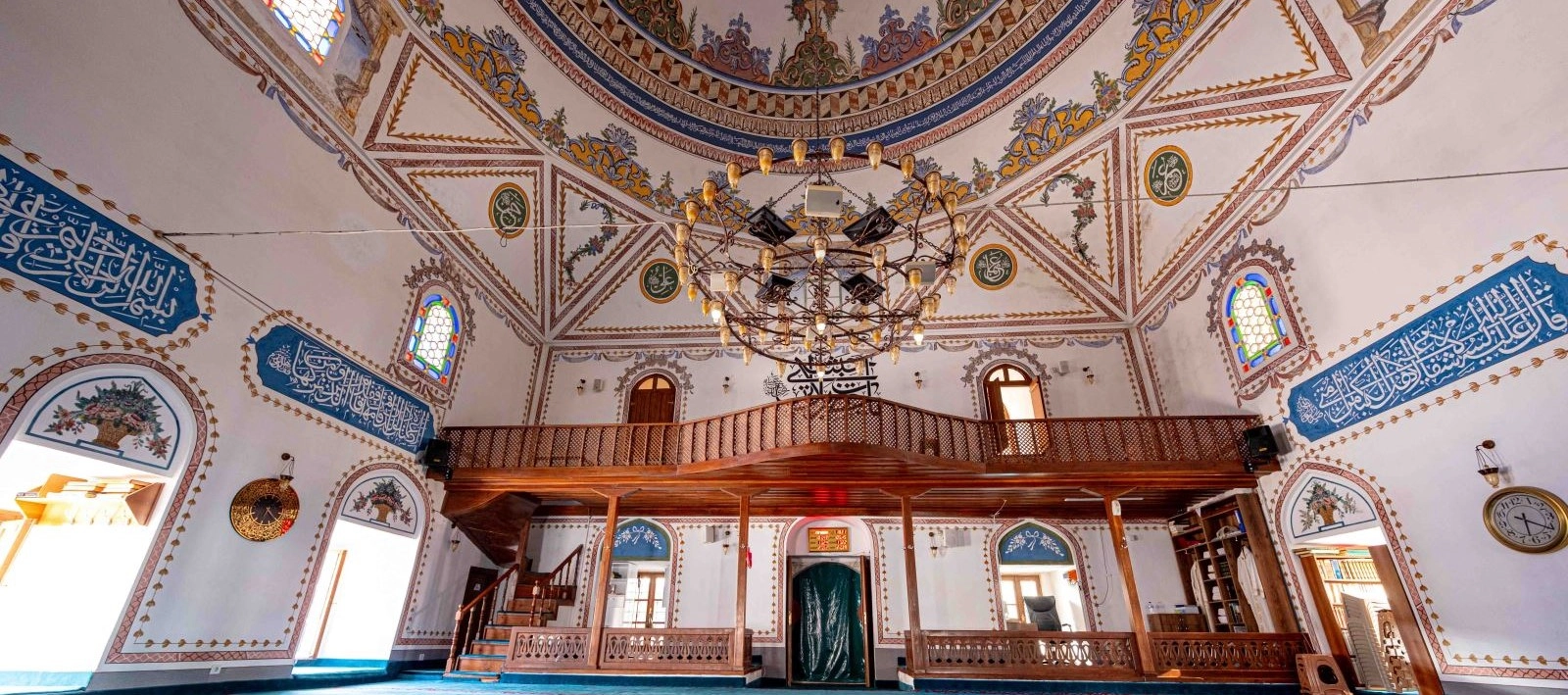
Compare the classical Ottoman architecture of Lüleburgaz with one of Kırklareli's most important 14th-century monuments.
Discover Hızır Bey Mosque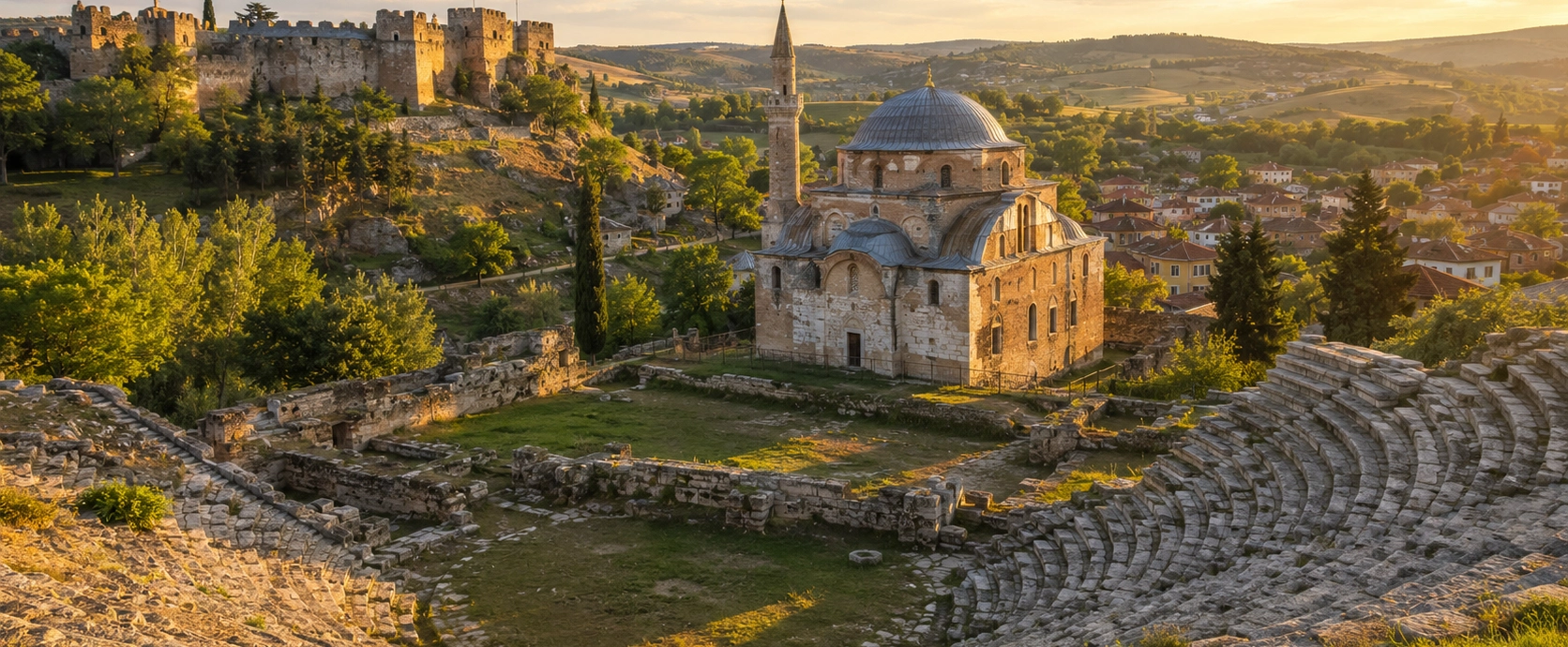
Continue east to one of Thrace's most historic towns for Roman, Byzantine and Ottoman monuments spanning almost two thousand years.
Explore Vize
Continue through eastern Kırklareli toward Byzantine monuments, forest-covered river valleys and the Black Sea coast.
Explore Kıyıköy