Private Tophane & Ottoman Bursa Route
Ask us about a tailor-made route combining Osman Gazi and Orhan Gazi Tombs, Tophane, Bursa Grand Mosque, Koza Han, Muradiye, Yeşil and other historic Bursa highlights.
Request a Custom Tour





High above Bursa's historic commercial centre, on the fortified hill traditionally known as the Hisar, stands one of the city's most symbolic historic landscapes.
This is Tophane, home to the tombs of Osman Gazi, founder of the Ottoman dynasty, and his son Orhan Gazi, the ruler under whom Bursa was conquered in 1326.
The two mausoleums stand only a short distance apart inside a landscaped square overlooking the modern city and the Bursa plain.
Beside them rises the six-storey Tophane Clock Tower, one of Bursa's most recognizable landmarks, while sections of the old citadel, historic streets and panoramic terraces remind visitors that this hill was once the fortified heart of Byzantine Prusa.
The location carries several layers of history.
According to Ottoman tradition, Osman Gazi asked to be buried near the Gümüşlü Kümbet — the “Silver Dome” — which could be seen inside the Byzantine city during the long Ottoman siege of Bursa.
Osman died before the conquest was completed. After Orhan Gazi captured the city, his father's remains were transferred to the hill in accordance with that wish.
Orhan himself was later buried nearby.
The original medieval burial structures no longer survive in their first form. Fire and the devastating 19th-century Bursa earthquakes badly damaged the monuments, and the tombs visible today were substantially reconstructed during the reign of Sultan Abdülaziz.
For travelers interested in Ottoman history, Tophane is therefore much more than a viewpoint.
It is one of the most important places in Bursa for understanding the transition from a frontier principality into a state with an urban capital, royal monuments and a developing dynastic identity.
Visit the mausoleum of Osman Gazi, whose frontier principality gave its name to the Ottoman dynasty and empire.
Stand beside the tomb of Orhan Gazi, who completed the conquest of Bursa in 1326 and transformed the city into an early Ottoman political centre.
See Bursa's landmark 1905 clock tower, rising 33 metres above one of the city's finest panoramic terraces.
Discover Ottoman tombs standing within the former Byzantine citadel landscape, with surviving archaeological traces beneath and around the monuments.
Essential information about Bursa's founder tombs, Tophane Square, the Clock Tower, historical significance, visitor atmosphere and the best way to include the area in a wider Bursa itinerary.
Tophane, in the Osmangazi district of central Bursa, immediately above the historic bazaar and Grand Mosque area.
Osman Gazi, founder of the Ottoman dynasty, and Orhan Gazi, his son and the conqueror of Bursa.
Bursa was conquered by the forces of Orhan Gazi in 1326 after a prolonged Ottoman campaign against the Byzantine city.
The mausoleums visible today largely reflect 19th-century reconstruction after the destruction of earlier structures.
The present Tophane Clock Tower dates from 1905 and rises approximately 33 metres above the square.
The terraces provide broad views over Bursa's historic and modern cityscape and across the Bursa plain.
The square is a public historic space. Tomb access is generally free but may vary during ceremonies, maintenance or official events.
Allow around 45–75 minutes, or longer when combining Tophane with the surrounding Hisar streets and city walls.
Few places in Bursa bring visitors as close to the beginnings of the Ottoman dynasty as Tophane.
The importance of the site comes first from the people commemorated here.
Osman Gazi gave his name to the Ottoman dynasty, while Orhan Gazi transformed the emerging principality through territorial expansion, urban development and the conquest of important Byzantine centres.
Bursa was among the most decisive of those conquests.
Its capture gave the Ottomans an established city with fortifications, markets, religious buildings, roads and access to the rich agricultural lands of northwestern Anatolia.
The city subsequently became one of the principal political, commercial and cultural centres of the early Ottoman state.
Placing the tombs of Osman and Orhan on the former Byzantine citadel hill also carried powerful symbolic meaning.
The burial landscape connected the dynasty's founder directly with the city that represented one of its first great victories.
Over the centuries the hill became a place of dynastic memory, civic identity, religious respect and public ceremony.
Today, the combination of founder tombs, surviving citadel geography, the Clock Tower and panoramic views makes Tophane one of the best places to begin understanding historic Bursa.
Tophane occupies part of the fortified hill that formed the core of ancient and medieval Bursa.
Long before the Ottoman conquest, this elevated area belonged to the defended Byzantine city of Prusa.
The Ottoman principality expanded steadily around Bursa during the early 14th century.
Rather than falling in a single assault, the fortified city endured a prolonged period of pressure and isolation.
Osman Gazi died before the final conquest.
The campaign was completed under his son Orhan Gazi, and Bursa surrendered in 1326.
According to Ottoman tradition, Osman had requested burial near a building visible within the city walls and remembered as the Gümüşlü Kümbet.
After the conquest, his remains were transferred to Bursa and interred on the citadel hill.
Orhan Gazi was later buried close to his father.
The area remained an important dynastic memorial throughout the Ottoman centuries.
The buildings, however, experienced repeated destruction.
A major fire at the beginning of the 19th century affected the Osman Gazi tomb, while the catastrophic earthquakes that struck Bursa in the middle of the century destroyed or severely damaged many historic buildings across the city.
The founder tombs were subsequently reconstructed during the reign of Sultan Abdülaziz in the 1860s.
The surrounding hill continued to develop, and a clock tower was eventually constructed near the tombs.
The present Tophane Clock Tower was completed during the reign of Sultan Abdülhamid II in 1905.
Today the square combines monuments from very different periods but remains unified by its relationship with Bursa's political and dynastic history.
The hill formed part of the fortified Byzantine city of Prusa and contained religious and defensive structures.
Ottoman forces gradually surrounded and pressured Bursa during the expansion led by Osman and later Orhan Gazi.
Orhan Gazi completed the conquest of Bursa and the city became a central base of the expanding Ottoman state.
Osman Gazi's remains were transferred to the citadel hill according to the burial tradition associated with the Gümüşlü Kümbet.
Fire and major earthquakes destroyed or badly damaged the earlier mausoleums.
The tombs were rebuilt during the reign of Sultan Abdülaziz in the architectural language of the period.
The present Tophane Clock Tower was completed during the reign of Sultan Abdülhamid II.
Tophane remains one of Bursa's principal historic, ceremonial and panoramic public spaces.
Osman Gazi, also known historically as Osman I, stands at the beginning of the dynasty that would rule the Ottoman Empire for more than six centuries.
He emerged as a frontier ruler in northwestern Anatolia during a period when Byzantine authority was weakening and several Turkish principalities were competing for territory and influence.
The political entity associated with Osman was initially small.
Its position on the Byzantine frontier, however, gave his followers opportunities for expansion into Bithynia.
Strongholds and rural districts surrounding Bursa gradually came under Ottoman pressure.
Bursa itself was a far more difficult objective.
Protected by walls and an elevated citadel, the city required a long campaign rather than a quick attack.
Osman did not live to see its final capture.
His son Orhan continued the campaign and completed the conquest in 1326.
Osman's connection to Bursa nevertheless became permanent through his burial on the citadel hill.
For later generations, the tomb became much more than the grave of an individual ruler.
It represented the origins of the dynasty and the memory of the frontier principality from which the Ottoman state developed.
One of the most famous traditions connected with Osman Gazi's tomb concerns a structure remembered as the Gümüşlü Kümbet, literally the “Silver Dome.”
Historical accounts associate the name with a Byzantine religious structure located inside the fortified city.
Its roof apparently reflected the light strongly enough to create the impression of a shining or silver-colored dome when viewed from outside Bursa.
Ottoman tradition records that Osman Gazi indicated this landmark while the city was still under Byzantine control and expressed a wish to be buried there after Bursa was conquered.
When Orhan captured the city, his father's remains were transferred from the earlier burial place and brought to the citadel.
The precise medieval appearance of the building cannot be reconstructed from the present mausoleum.
Official Bursa heritage inventories associate the site with a Byzantine monastic or chapel complex traditionally identified with Saint Elias.
The story is important because it connects landscape, memory and conquest.
From the Ottoman perspective, the shining dome became a visual symbol of a city not yet conquered; after 1326, the same location became the burial place of the dynasty's founder.
The present Osman Gazi Tomb stands close to the entrance of the Tophane memorial area.
Its architecture is very different from the simple early Ottoman buildings that visitors may expect from the beginning of the 14th century.
That is because the structure visible today largely dates from the major reconstruction carried out in the 19th century.
The mausoleum has an octagonal plan and is covered by a dome.
Cut stone gives the exterior a restrained monumental character, while the interior contains decorative work reflecting later Ottoman taste.
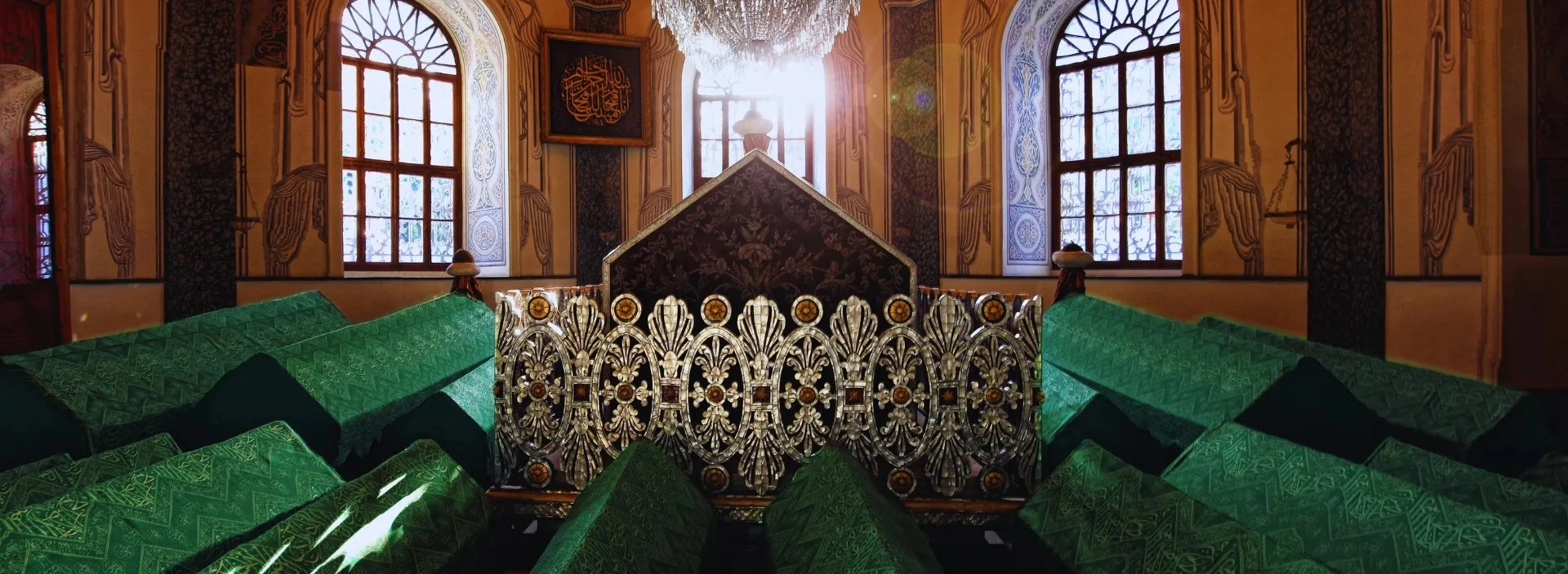
At the centre stands the prominent cenotaph of Osman Gazi.
The ceremonial wooden sarcophagus and surrounding enclosure create the visual focus of the interior.
Additional cenotaphs belonging to members of the dynasty and family stand around the founder's monument.
Visitors should remember that the visible sarcophagi are commemorative structures above the burial level rather than exposed graves.
The mausoleum is organised around an eight-sided plan beneath a central dome.
Osman Gazi's large ceremonial sarcophagus dominates the centre of the burial chamber.
Painted decoration and ornamental details reflect the later Ottoman reconstruction rather than an untouched medieval interior.
Other members of the extended Ottoman family are represented by additional cenotaphs within the mausoleum.
Across the Tophane memorial area stands the mausoleum of Orhan Gazi, Osman Gazi's son and successor.
Orhan's reign marked a decisive stage in the transformation of the Ottoman principality.
The conquest of Bursa in 1326 provided a major urban centre from which the developing state could organize government, commerce, religious foundations and further military expansion.
During Orhan's rule, Ottoman territory spread farther across northwestern Anatolia.
Important Byzantine cities including İznik and İzmit also came under Ottoman control.
Bursa developed rapidly through mosques, charitable foundations, commercial structures, baths and neighbourhoods associated with the new rulers.
The Orhan Gazi Complex in the lower city became one of the major anchors of this emerging Ottoman urban landscape.
When Orhan died, he was buried near his father on the citadel hill.
Their neighbouring tombs therefore commemorate two connected stages in Ottoman history: the establishment of the dynasty under Osman and its consolidation into an increasingly organized state under Orhan.
The Orhan Gazi Tomb differs architecturally from the nearby octagonal mausoleum of Osman Gazi.
The present building is arranged on a broadly square plan.
Inside, four substantial columns help define the central space and support arches carrying the main dome.
Vaulted areas surround this central zone, producing a more complex interior than the exterior initially suggests.
The principal cenotaph of Orhan Gazi stands prominently within the mausoleum and is surrounded by additional dynastic burials.
Official heritage inventories record members of the extended Ottoman family among those commemorated inside.
The interior is relatively restrained compared with some of Bursa's later royal mausoleums.
Its greatest historical surprise, however, lies beneath the Ottoman memorial architecture.
One of the most fascinating details at Tophane is the survival of Byzantine-period floor remains associated with the site beneath the Orhan Gazi mausoleum.
Parts of mosaic pavement can still be identified within the tomb.
These traces are important because they make the transition from Byzantine Prusa to Ottoman Bursa physically visible.
The Ottoman founders were not buried on an empty hill.
They were placed within a landscape that had already contained religious buildings, fortifications and urban structures for centuries.
Rather than seeing the Byzantine and Ottoman layers as completely separate chapters, Tophane allows visitors to observe how one historical city was transformed into another.
The relationship between the surviving mosaic fragments and the later mausoleum also makes Orhan Gazi's tomb especially rewarding for visitors interested in archaeology.
The neighbouring position of the two tombs is central to the meaning of Tophane.
Osman represents the dynasty's beginnings.
Orhan represents the generation that transformed those beginnings into a more stable territorial state centred increasingly on major towns.
Bursa connects their stories.
The city had been one of Osman's great objectives, but the final conquest was achieved by his son.
By fulfilling the burial wish associated with the Gümüşlü Kümbet and later being buried nearby himself, Orhan linked the memory of the founder directly to the newly conquered city.
Later Ottoman rulers eventually established monumental burial traditions in other cities, including Edirne and Istanbul.
Yet Bursa remained the great dynastic landscape of the dynasty's formative generations.
Visiting Osman and Orhan Gazi together therefore provides one of the clearest introductions to the earliest chapter of Ottoman royal commemoration.
Visitors sometimes assume that the two mausoleums have survived unchanged from the 14th century.
They have not.
Bursa has experienced destructive fires and earthquakes throughout its history, and the founder tombs were among the monuments affected.
A fire in 1801 caused serious damage in the Osman Gazi burial area.
The devastating earthquakes that struck Bursa in the middle of the 19th century then caused widespread destruction across the city and ruined the earlier mausoleums.
The disaster affected many of Bursa's greatest monuments, including mosques, minarets, markets and royal foundations.
The tombs were subsequently reconstructed under Sultan Abdülaziz.
As a result, their present architectural appearance belongs largely to the 19th-century Ottoman restoration of a much older sacred and dynastic site.
The rebuilding of the Osman and Orhan Gazi tombs during the reign of Sultan Abdülaziz was more than a practical response to earthquake damage.
It was also an act of dynastic remembrance.
By the 19th century, the Ottoman dynasty had ruled for more than five hundred years.
Restoring the graves of its founder and his successor connected the contemporary imperial state with the small frontier principality from which it had emerged.
The architects did not attempt to create archaeological reproductions of hypothetical 14th-century mausoleums.
Instead, the reconstructed buildings incorporated architectural and decorative elements characteristic of their own period.
This explains why visitors can encounter 19th-century decorative language inside monuments commemorating rulers who lived more than five centuries earlier.
The contrast is one of the most interesting aspects of Tophane.
Only a short walk from the founder tombs rises another of Bursa's most recognizable landmarks: the Tophane Clock Tower — Tophane Saat Kulesi.
The present tower was completed in 1905 during the reign of Sultan Abdülhamid II.
It replaced an earlier clock tower associated with the reign of Sultan Abdülaziz.
The square-plan structure rises approximately 33 metres and is divided into six levels.
Cut stone, projecting horizontal cornices and regularly arranged windows give the tower a strong vertical rhythm.
Clock faces occupy the upper level.
The tower was not merely ornamental.
Its commanding position above the city also allowed it to serve as a fire-watch point, an important function in an Ottoman city where dense timber neighbourhoods were repeatedly threatened by fire.
Today the Clock Tower forms the visual counterpoint to the low domes of the founder tombs and is one of the best photographic subjects in central Bursa.
The present structure was completed in 1905 during the reign of Sultan Abdülhamid II.
Approximately 33 metres.
Six architectural levels rise above the Tophane terrace.
The tower combined public timekeeping with a strategic fire-observation role.
Historic cannons positioned near the Clock Tower add another layer to the atmosphere of Tophane.
The hill's name itself reflects its long association with artillery and military functions.
The cannons beside the tower are particularly connected with the traditional announcement of iftar, the moment when the daily Ramadan fast ends at sunset.
For generations, the firing of a cannon provided a dramatic public signal that could be heard across the city.
Modern technology has made such signals unnecessary for practical timekeeping, but the tradition remains part of Bursa's cultural memory and ceremonial life.
History is the main reason to visit Tophane, but the location is also one of Bursa's most popular panoramic viewpoints.
The old citadel occupies an elevated position above the commercial centre.
From the terraces near the Clock Tower, the city spreads out below in a dense mixture of historic neighbourhoods, modern districts, mosques and urban avenues.
The view also demonstrates why this hill was such a valuable defensive position.
Standing here, visitors can understand the relationship between the fortified upper settlement and the lower city that expanded dramatically under Ottoman rule.
The panorama is particularly attractive in the late afternoon when sunlight becomes softer and city lights gradually begin appearing below.
Use the open terrace near the Clock Tower for the widest panorama over central Bursa and the plain.
Late afternoon and the period approaching sunset usually provide softer light and stronger atmosphere.
Return after dark to see city lights below and the illuminated Clock Tower above the historic hill.
Use the viewpoint to understand the strategic difference between the fortified Hisar and the commercial city below.
Tophane is not only an archaeological and architectural site.
It remains an active place of public commemoration.
A ceremonial tradition known as the Sancak Nöbeti, or Banner Guard, has been associated with the Osman Gazi tomb in recent years.
Ceremonially dressed guards evoke the military traditions of the early Ottoman frontier and emphasize the symbolic status of the dynasty's founder.
Guard changes and related ceremonies are especially prominent during official commemorations of the conquest of Bursa.
Visitors should not build a fixed itinerary around a particular ceremony unless the current schedule has been confirmed locally, as timings and arrangements may change.
Best for a quieter visit to the tombs, uncrowded photographs and a contemplative atmosphere.
Ideal when walking uphill from the Grand Mosque and Koza Han as part of a historic-centre itinerary.
Excellent for combining the tombs with softer light and panoramic city photography.
The terraces become especially atmospheric as light fades across Bursa and the city begins to illuminate.
The illuminated Clock Tower and city lights make Tophane worthwhile even after the tomb interiors have closed.
Comfortable walking temperatures and greener surroundings make spring excellent for exploring Hisar on foot.
Another strong season for walking, photography and combining Tophane with Bursa's wider historic centre.
Historically meaningful and atmospheric, but expect larger gatherings and temporary changes to visitor circulation.
Enough for a quick visit to both tombs and a photograph of the Clock Tower.
Recommended for both mausoleums, architectural details, the Clock Tower and panoramic terrace.
Allows a slower visit with photography, archaeological details and exploration of the surrounding Hisar streets.
Ideal when combining Tophane with the city walls, historic gates and a walk down toward Ulu Camii and Koza Han.
Combine Tophane, Muradiye, Bursa Grand Mosque, Koza Han and the historic bazaar.
Add the Green Mosque and Green Tomb for a chronological journey through the city's early Ottoman monuments.
The mausoleums are major historical attractions, but they are also respected burial and devotional spaces.
Many visitors enter to offer prayers or quietly pay their respects.
Tourists are welcome when they behave in a way appropriate to that atmosphere.
Avoid loud conversations, amplified explanations and telephone calls inside the mausoleums.
Modest clothing is appropriate for a dynastic burial site with continuing religious significance.
Observe signs concerning entrances, footwear, visitor circulation and any temporarily restricted areas.
Give space to visitors who are praying and avoid walking directly in front of them unnecessarily.
Remain behind protective railings and avoid leaning on historic fittings or decorative surfaces.
Use non-intrusive photography where permitted and avoid photographing people closely without consent.
Tophane provides an unusually broad range of photographic subjects within a compact area.
Architecture, tomb interiors, trees, historic stonework, panoramic city views and the tall Clock Tower can all be photographed within a short walk.
Use a slightly wider exterior composition that includes the trees and surrounding memorial garden rather than photographing only the façade.
Look for the relationship between the central cenotaph, supporting columns, dome and surviving archaeological traces.
Step farther back to include surrounding trees and open sky, emphasizing the tower's vertical proportions.
Late afternoon usually produces more dimensional city views than harsh midday sunlight.
The period immediately after sunset can create excellent contrast between the illuminated tower and deepening sky.
Photograph inscriptions, masonry, railings and surviving floor remains rather than focusing only on wide views.
The main Tophane square itself is relatively compact, but reaching it on foot from Bursa's lower historic centre involves a noticeable uphill climb.
This is important for visitors with limited mobility.
Historic paving, thresholds and differences in level around individual monuments can also affect access.
A taxi or private vehicle can greatly reduce the climb by approaching the Tophane area directly.
The panoramic terrace and much of the outdoor square can generally be enjoyed without covering long distances.
Access into individual mausoleums may be more limited because of door thresholds, visitor controls or temporary arrangements.
Tophane lies in the Osmangazi district immediately above Bursa's principal historic commercial centre.
The tombs are close to one another inside Tophane Park and can easily be visited together.
Visitors staying around central Bursa can reach the hill on foot, although the final approach involves a significant climb.
Those arriving by taxi can simply ask for “Tophane,” “Osman Gazi Türbesi” or “Tophane Saat Kulesi.”
Walk uphill through the historic centre toward Hisar and Tophane. Allow extra time for the gradient and photographs along the way.
The route is similar to Ulu Camii because Koza Han lies immediately beside the Grand Mosque and historic bazaar.
Tophane and Muradiye lie relatively close to one another and combine naturally in a royal-tombs itinerary.
The easiest option for visitors who want to avoid climbing from the lower city or have limited sightseeing time.
A private vehicle works especially well when combining Tophane with Cumalıkızık, Yeşil, Muradiye or other parts of Bursa.
Walking is the most rewarding option for understanding the relationship between the citadel hill and the commercial centre below.
Exploring Tophane together with the surrounding Hisar neighbourhood involves slopes and historic paving.
Osman and Orhan Gazi should be understood together rather than treating one mausoleum as an optional extra.
Do not miss the surviving archaeological traces associated with the Orhan Gazi burial site.
Allow at least a few minutes at the panoramic terrace instead of leaving immediately after visiting the tombs.
Official commemorations and guard ceremonies can temporarily affect circulation around the memorial area.
Remember that local visitors may come primarily to pray rather than for tourism.
Starting at Tophane and walking downhill toward Ulu Camii can be easier than approaching from the bazaar.
If staying overnight in Bursa, Tophane is one of the easiest historic places to revisit for evening atmosphere.
The principal monuments stand close together, making Tophane easy to explore even when your Bursa itinerary is busy.
Tophane works exceptionally well as the starting point for a chronological journey through Bursa's Ottoman history.
Travelers particularly interested in the Ottoman dynasty can connect Tophane with Muradiye to create one of the best royal-history routes in Türkiye.
Visit Bursa's monumental multi-domed congregational mosque, famous for its calligraphy, central fountain and extraordinary wooden minbar.
Walk through one of Bursa's most atmospheric Ottoman commercial courtyards and discover the city's centuries-old silk heritage.
Continue the dynastic story through the tombs of Sultan Murad II and generations of Ottoman princes, princesses and royal family members.
See some of Bursa's finest early Ottoman stone carving, tilework and royal architecture associated with Sultan Mehmed I.
Explore the old citadel neighbourhood surrounding Tophane, where fragments of defensive walls and traditional streets preserve Bursa's earliest urban core.
See one of the reconstructed monumental gateways associated with Bursa's historic citadel and the traditional entrance into Hisar.
Descend toward covered markets, hans, traditional shops, textile streets and the commercial landscape that developed around early Ottoman Bursa.
Continue planning with Bursa's mosques, tombs, markets, museums, villages, cuisine, thermal heritage and nearby destinations.
Both tombs are located at Tophane in the Osmangazi district of central Bursa, inside the historic citadel area above the city's traditional commercial centre.
Osman Gazi was the founder and namesake of the Ottoman dynasty, which developed from a small northwestern Anatolian principality into the Ottoman Empire.
Orhan Gazi was Osman Gazi's son and successor. He completed the conquest of Bursa in 1326 and greatly expanded and institutionalized the early Ottoman state.
Bursa was conquered in 1326 under Orhan Gazi after a prolonged Ottoman campaign against the fortified Byzantine city.
No. Osman Gazi participated in the long process of surrounding and pressuring Bursa but died before the final conquest. His son Orhan completed it.
Ottoman tradition records that Osman wished to be buried near the shining Byzantine structure remembered as the Gümüşlü Kümbet once Bursa was conquered. His remains were later transferred to the city by Orhan Gazi.
The name means approximately “Silver Dome” and refers to the Byzantine religious structure traditionally associated with the location chosen for Osman Gazi's burial.
No. The burial sites are medieval in origin, but fire and major earthquakes destroyed the earlier structures. The mausoleums visible today largely reflect reconstruction under Sultan Abdülaziz in the 19th century.
The present mausoleum has an octagonal plan beneath a dome.
Orhan Gazi's mausoleum is broadly square in plan, with a central domed space structured around four large columns and surrounding vaulted areas.
Yes. Surviving Byzantine-period floor remains and mosaic fragments are associated with the earlier religious building beneath the present mausoleum.
The present mausoleums were reconstructed in the 19th century during the reign of Sultan Abdülaziz following severe earthquake destruction.
The present Clock Tower dates from 1905 and was completed during the reign of Sultan Abdülhamid II.
The tower is approximately 33 metres high and is divided into six levels.
In addition to public timekeeping, its commanding position allowed the tower to serve as a fire-observation point above Bursa.
The historic cannons are associated particularly with the tradition of announcing the end of the daily Ramadan fast at sunset.
The Sancak Nöbeti is a ceremonial banner guard associated with the Osman Gazi memorial area. Guard changes are particularly visible during official commemorations, although schedules may vary.
Absolutely. It combines the tombs of the Ottoman dynasty's first two rulers, archaeological layers, a historic clock tower, citadel geography and one of central Bursa's best panoramic viewpoints.
The outdoor Tophane memorial area is a public space and the tombs are generally visited without a museum-style admission ticket. Access conditions can change during official ceremonies, restoration or special events.
Allow around 45–75 minutes for both tombs, the Clock Tower and panoramic terrace. Allow longer if exploring the surrounding Hisar neighbourhood.
Morning is best for a quieter historic visit, while late afternoon and sunset are especially attractive for panoramic photography.
The outdoor square and panoramic area can be atmospheric after dark, particularly when the Clock Tower and city are illuminated. Interior tomb access follows separate operating arrangements.
Yes. The founder tombs, Clock Tower, city panorama, historic trees, archaeological details and evening lights provide varied subjects within a very compact area.
Photography may be possible where not restricted, but visitors should follow current signs, avoid flash and never disturb people who are praying.
The outdoor square can be easier than the steep approach from the lower city, but historic paving, gradients and mausoleum thresholds may create difficulties. Arriving directly by vehicle is often the better option for limited mobility.
Yes. The distance is relatively short, but the route climbs significantly from the lower historic centre toward the former citadel.
Starting at Tophane and walking downhill toward Ulu Camii is physically easier and creates a natural historical route from the old citadel toward the Ottoman commercial centre.
Yes. Tophane and the Muradiye Complex form an excellent dynastic route connecting the dynasty's founders with later Ottoman sultans, princes, princesses and royal family members.
Bursa Grand Mosque, Koza Han, Muradiye, the historic bazaar, Hisar, the Green Mosque and Green Tomb are among the easiest monuments to combine with Tophane.
No, but Tophane benefits greatly from historical explanation because Byzantine Bursa, the 1326 conquest, the Gümüşlü Kümbet tradition, the 19th-century reconstruction and the wider development of the Ottoman state are not immediately obvious from the monuments alone.
Treat the mausoleums as active memorial and devotional spaces rather than ordinary museum displays.
Do not touch painted decoration, inscriptions, historic woodwork or archaeological remains unnecessarily.
Respect railings around cenotaphs, protected floors and any temporary conservation zones.
Avoid loud explanations and conversations inside the founder tombs.
Do not photograph people praying at close range without permission and avoid disruptive equipment.
Allow space for official commemorations, guard changes, prayers and local remembrance events.
Never step into restricted areas simply to obtain a better view of mosaic or masonry fragments.
Use bins and help preserve one of Bursa's most important public historic landscapes.
Discover the birthplace of Ottoman urban history through a tailor-made private Bursa itinerary connecting founder tombs, monumental mosques, silk markets, royal complexes, historic neighbourhoods and local cuisine — without compulsory shopping stops.
Build a private route around Ottoman history, architecture, royal tombs, local culture, photography and Bursa's traditional commercial centre according to your interests and available time.
Ask us about a tailor-made route combining Osman Gazi and Orhan Gazi Tombs, Tophane, Bursa Grand Mosque, Koza Han, Muradiye, Yeşil and other historic Bursa highlights.
Request a Custom Tour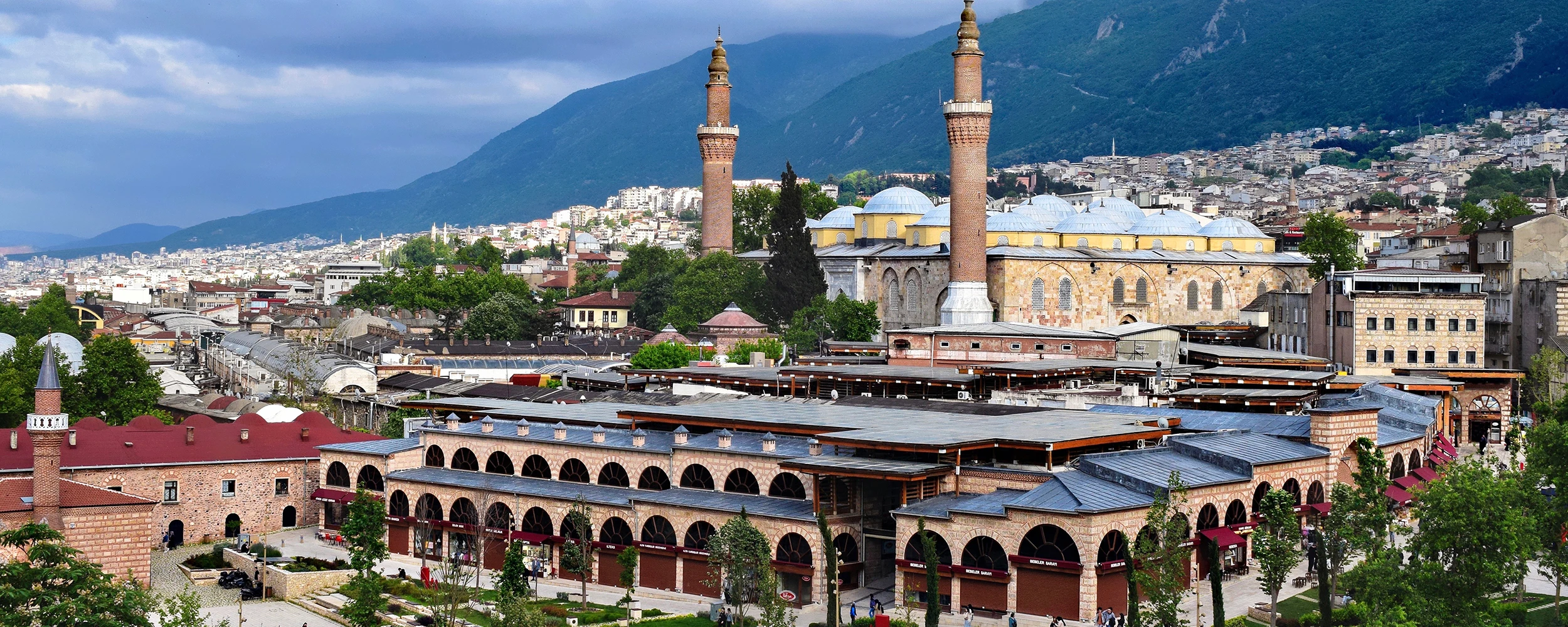
Continue planning with Bursa's mosques, royal tombs, silk markets, UNESCO heritage, traditional neighbourhoods, villages, regional cuisine and nearby excursions.
Explore BursaFollow the story from Osman and Orhan Gazi to the monumental mosques, commercial institutions and dynastic complexes that transformed Bursa into one of the great cities of the early Ottoman world.
Descend from the founder tombs to monumental Ulu Camii, with its twenty domes, celebrated calligraphy, central fountain and masterful wooden minbar.
Explore Bursa Grand Mosque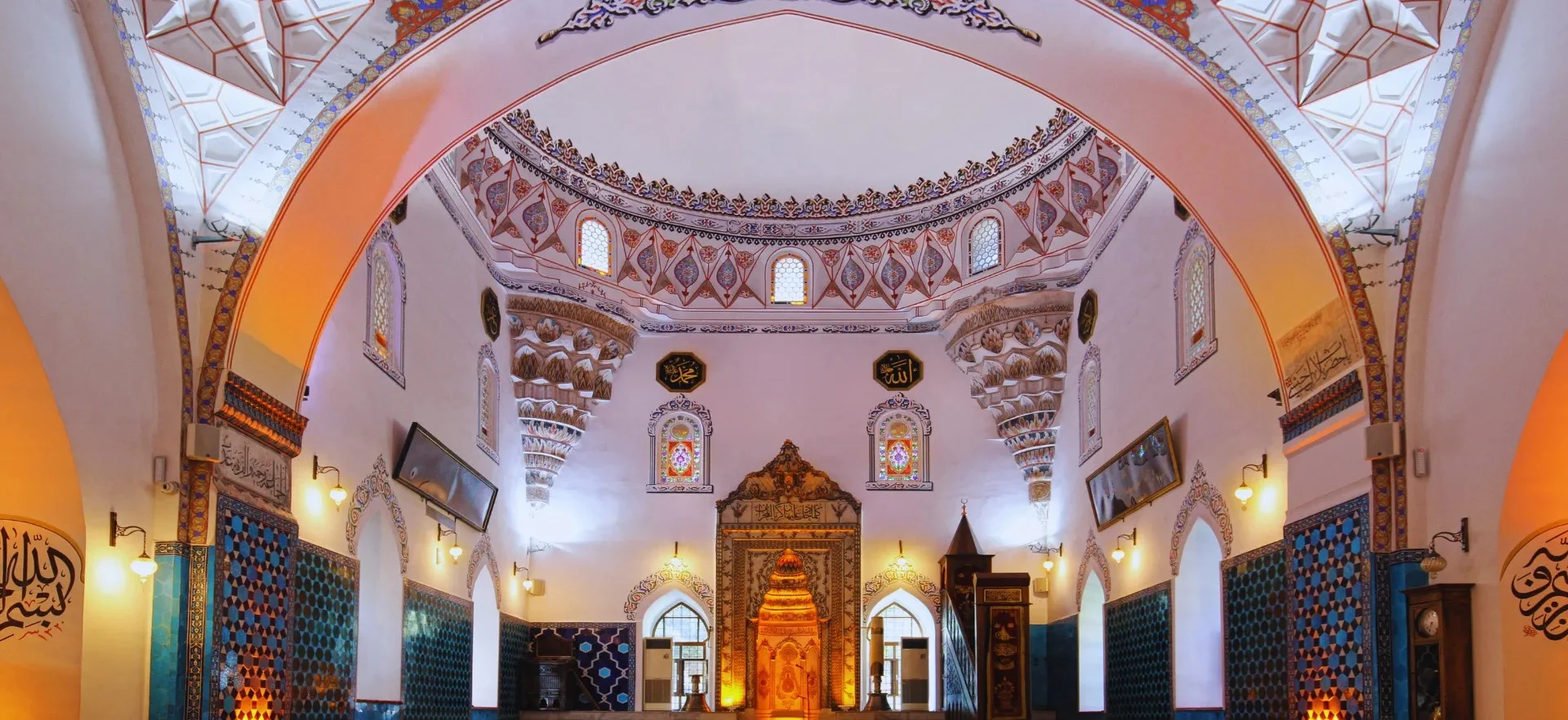
Follow the Ottoman dynasty from its founders at Tophane to the remarkable garden of royal mausoleums surrounding Sultan Murad II's final Bursa complex.
Explore Muradiye