A gentle rather than rushed itinerary
An Akçakent day should allow for country-road conditions, village life and ethical nature visits. Avoid intrusive photographing of homes, and obtain permission before approaching churches or rural property.






Discover Akçakent in Kırşehir Province through its local landscape, heritage, community traditions and realistic travel planning.
Akçakent became a district in 1990 according to provincial administrative history. The official guide distinguishes it for its natural oak woodland, an important landscape contrast within a dry-plateau province. The forest is a local ecological feature, not a guarantee of national-park infrastructure.
Akçakent became a district in 1990 according to provincial administrative history. The official guide distinguishes it for its natural oak woodland, an important landscape contrast within a dry-plateau province. The forest is a local.
The Hacıfakılı church entry places a fragmentary brick church inside the district’s Hacıfakılı village and notes reused Byzantine architectural material in surrounding walls. That surviving evidence suggests a landscape with longer.
An Akçakent day should allow for country-road conditions, village life and ethical nature visits. Avoid intrusive photographing of homes, and obtain permission before approaching churches or rural property.
The culture directorate records Akçakent becoming a district on 9 May 1990. More interesting for a traveller than an administrative boundary is its oak woodland: it is described in the regional overview as Kırşehir’s only natural.
Key distinctions, reliable context and practical considerations.
Akçakent, Kırşehir, Türkiye
Explore a Kırşehir district
Akçakent became a district in 1990 according to provincial administrative history. The official guide distinguishes it for its natural oak woodland, an important landscape contrast within a dry-plateau province. The forest is a.
Visitor information: Opening hours, admission, site access and road conditions are not guaranteed. Please verify locally before travel, especially for remote ruins and research areas.
Page-specific research and local distinctions, not generic regional claims.
Akçakent became a district in 1990 according to provincial administrative history. The official guide distinguishes it for its natural oak woodland, an important landscape contrast within a dry-plateau province. The forest is a local ecological feature, not a guarantee of national-park infrastructure.
The Hacıfakılı church entry places a fragmentary brick church inside the district’s Hacıfakılı village and notes reused Byzantine architectural material in surrounding walls. That surviving evidence suggests a landscape with longer settlement history, but the structure’s exact founding date cannot be read from one general web description.
Original Kırşehir context, significant details and interpretation from the researched guide.
An Akçakent day should allow for country-road conditions, village life and ethical nature visits. Avoid intrusive photographing of homes, and obtain permission before approaching churches or rural property.
The culture directorate records Akçakent becoming a district on 9 May 1990. More interesting for a traveller than an administrative boundary is its oak woodland: it is described in the regional overview as Kırşehir’s only natural forest. This creates a marked contrast with the drier farming landscapes usually associated with central Anatolia.
Hacıfakılı village adds a small-scale historical dimension. Its surviving church fragment and reused Byzantine building material are documented, but should not be presented as an intact monumental church complex. A sensible itinerary treats Akçakent as woodland scenery plus a carefully arranged village heritage visit.
Begin with the district centre and the road landscape, then consider a woodland stop on established public tracks. Hacıfakılı village may be included only if local access to the church fragment can be confirmed; the historic material is partly incorporated into present-day village walls. An organised visit should focus on appreciating the living village without treating private gardens or old stonework as free-access exhibits. This is a good example of why guide itineraries must differ by district: Akçakent offers woodland and a fragmentary Byzantine story, while Kaman has an established archaeology museum and Mucur a different tradition of underground spaces. If travelling in a rural setting, plan fuel and food rather than presuming that every stop offers tourist facilities. The point is depth of local understanding, not a list of invented landmarks.
Begin with the district centre and the road landscape, then consider a woodland stop on established public tracks. Hacıfakılı village may be included only if local access to the church fragment can be confirmed; the historic material is partly incorporated into present-day village walls. An organised visit should focus on appreciating the living village without treating private gardens or old stonework as free-access exhibits. This is a good example of why guide itineraries must differ by district: Akçakent offers woodland and a fragmentary Byzantine story, while Kaman has an established archaeology museum and Mucur a different tradition of underground spaces. If travelling in a rural setting, plan fuel and food rather than presuming that every stop offers tourist facilities. The point is depth of local understanding, not a list of invented landmarks.
Akçakent became a district in 1990 according to provincial administrative history. The official guide distinguishes it for its natural oak woodland, an important landscape contrast within a dry-plateau province. The forest is a local ecological feature, not a.
The Hacıfakılı church entry places a fragmentary brick church inside the district’s Hacıfakılı village and notes reused Byzantine architectural material in surrounding walls. That surviving evidence suggests a landscape with longer settlement history, but the.
An Akçakent day should allow for country-road conditions, village life and ethical nature visits. Avoid intrusive photographing of homes, and obtain permission before approaching churches or rural property.
The culture directorate records Akçakent becoming a district on 9 May 1990. More interesting for a traveller than an administrative boundary is its oak woodland: it is described in the regional overview as Kırşehir’s only natural forest. This creates a marked.
Visitor information: Opening hours, admission, site access and road conditions are not guaranteed. Please verify locally before travel, especially for remote ruins and research areas.
Akçakent in Kırşehir Province, central Türkiye. Check the exact approach or local kitchen before travel.
Akçakent became a district in 1990 according to provincial administrative history. The official guide distinguishes it for its natural oak woodland, an important landscape contrast within a dry-plateau province. The forest is a.
Visitor information: Opening hours, admission, site access and road conditions are not guaranteed. Please verify locally before travel, especially for remote ruins and research areas.
Explore our Kırşehir province guide to plan related places and regional food traditions.
Distances and availability of local transport matter more than a straight line on a map.
Private land, agricultural work and religious spaces deserve courtesy.
Small heritage places and cultural spaces can require advance arrangements.
A focused district route is usually more rewarding than a long list of distant stops.
Look for monuments and traditions tied to the district itself.
Consider the terrain, agriculture and seasonal changes that shape rural life.
Plan fewer stops and allow time for context rather than hurried sightseeing.
Connect the district to wider Kırşehir routes without assuming short distances.
These guides are linked by subject or region; they are not necessarily within walking distance of one another.
Explore this connected Kırşehir guide and its distinctive local story.
Explore this connected Kırşehir guide and its distinctive local story.
Explore this connected Kırşehir guide and its distinctive local story.
Explore this connected Kırşehir guide and its distinctive local story.
Explore all Kırşehir attractions, districts and food guides.
Akçakent is associated with Akçakent, in Kırşehir province, central Türkiye. Confirm the exact entrance or meeting point before setting out.
Access arrangements for Akçakent can change. For archaeological sites, ruins, thermal sources and small cultural houses especially, verify whether public admission is currently possible.
Use the Kırşehir province guide to plan other district stops and consider the Kaman museum, the historic city centre or Mucur depending on your route.
Look for the subject's real character, rather than using a photograph from a different site or a generic representation as documentary evidence.
Akçakent became a district in 1990 according to provincial administrative history. The official guide distinguishes it for its natural oak woodland, an important landscape contrast within a dry-plateau province. The forest is a local.
The Hacıfakılı church entry places a fragmentary brick church inside the district’s Hacıfakılı village and notes reused Byzantine architectural material in surrounding walls. That surviving evidence suggests a landscape with longer.
An Akçakent day should allow for country-road conditions, village life and ethical nature visits. Avoid intrusive photographing of homes, and obtain permission before approaching churches or rural property.
The culture directorate records Akçakent becoming a district on 9 May 1990. More interesting for a traveller than an administrative boundary is its oak woodland: it is described in the regional overview as Kırşehir’s only natural.
Schedules and conditions vary. These are planning considerations, not fixed opening hours or admission guarantees.
Choose a small number of places with a sensible driving sequence.
Conditions can affect country roads and outdoor attractions.
Rural opening hours and transport options may be limited.
Allow extra time and check permissions where relevant.
Choose a realistic combination of Kırşehir heritage and landscapes, taking road distances, access permissions and conservation requirements into account.
Sources below were used in the previous research and editorial review. Historical inventories do not by themselves guarantee current opening, access, prices or conservation status. Where published sources disagree, the text distinguishes the accounts rather than presenting an invented certainty.
Editorial review: November 2026. For current arrangements, consult the operator or relevant local authorities.
Discover related places and traditions; linked guides do not imply the existence of a particular scheduled tour.
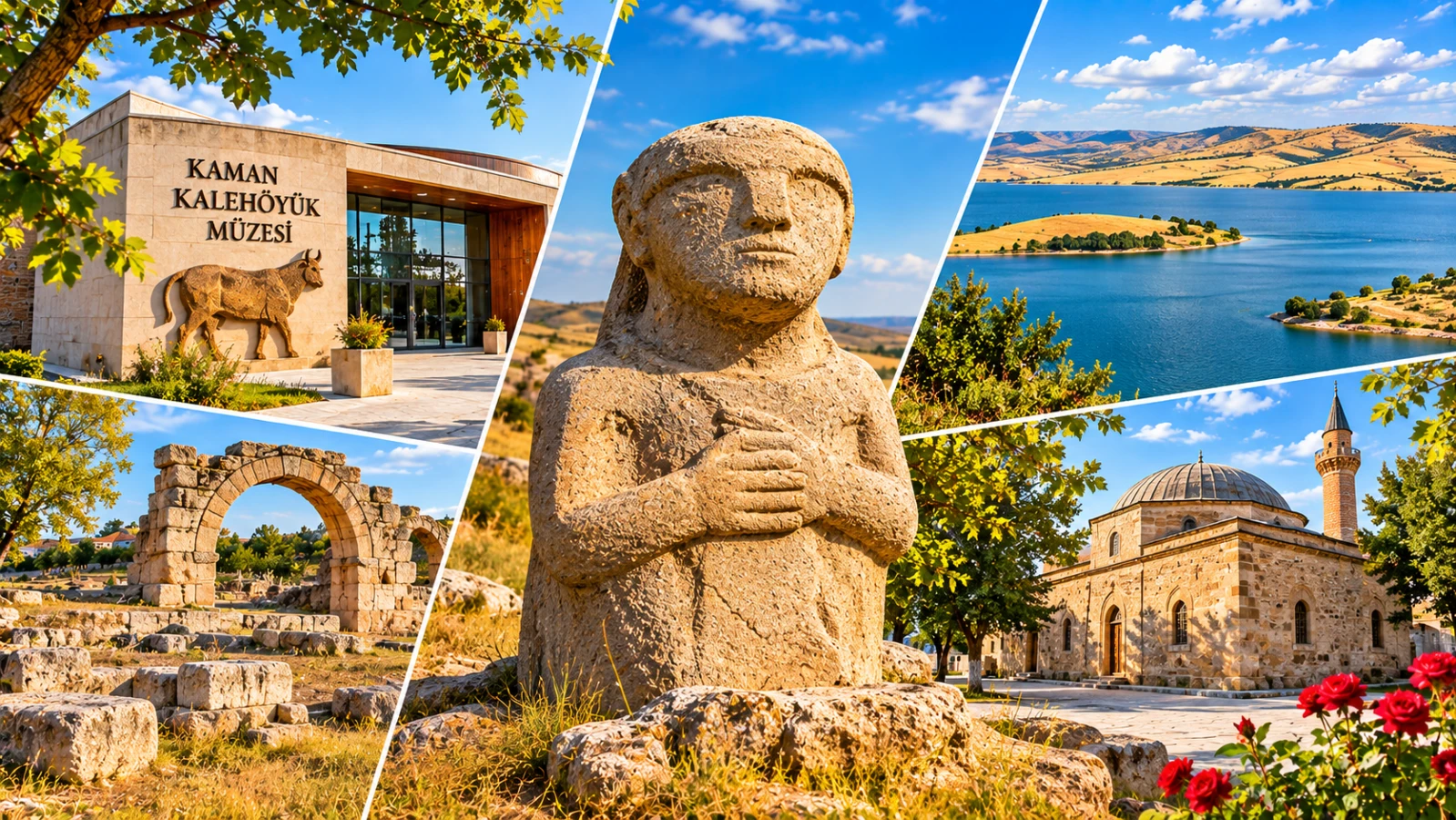
Read this related Kırşehir travel guide for context and practical considerations.
Read travel guide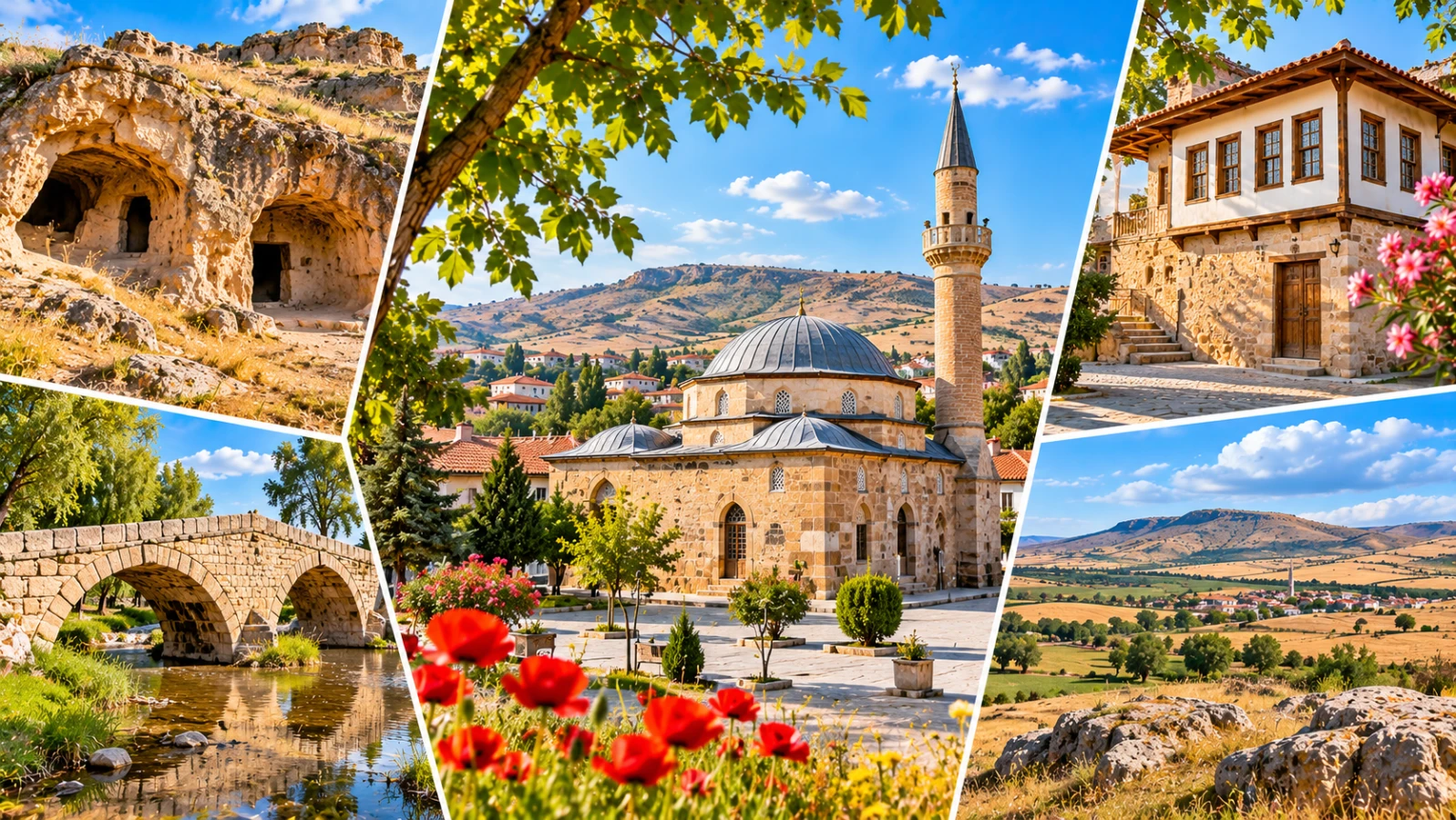
Read this related Kırşehir travel guide for context and practical considerations.
Read travel guide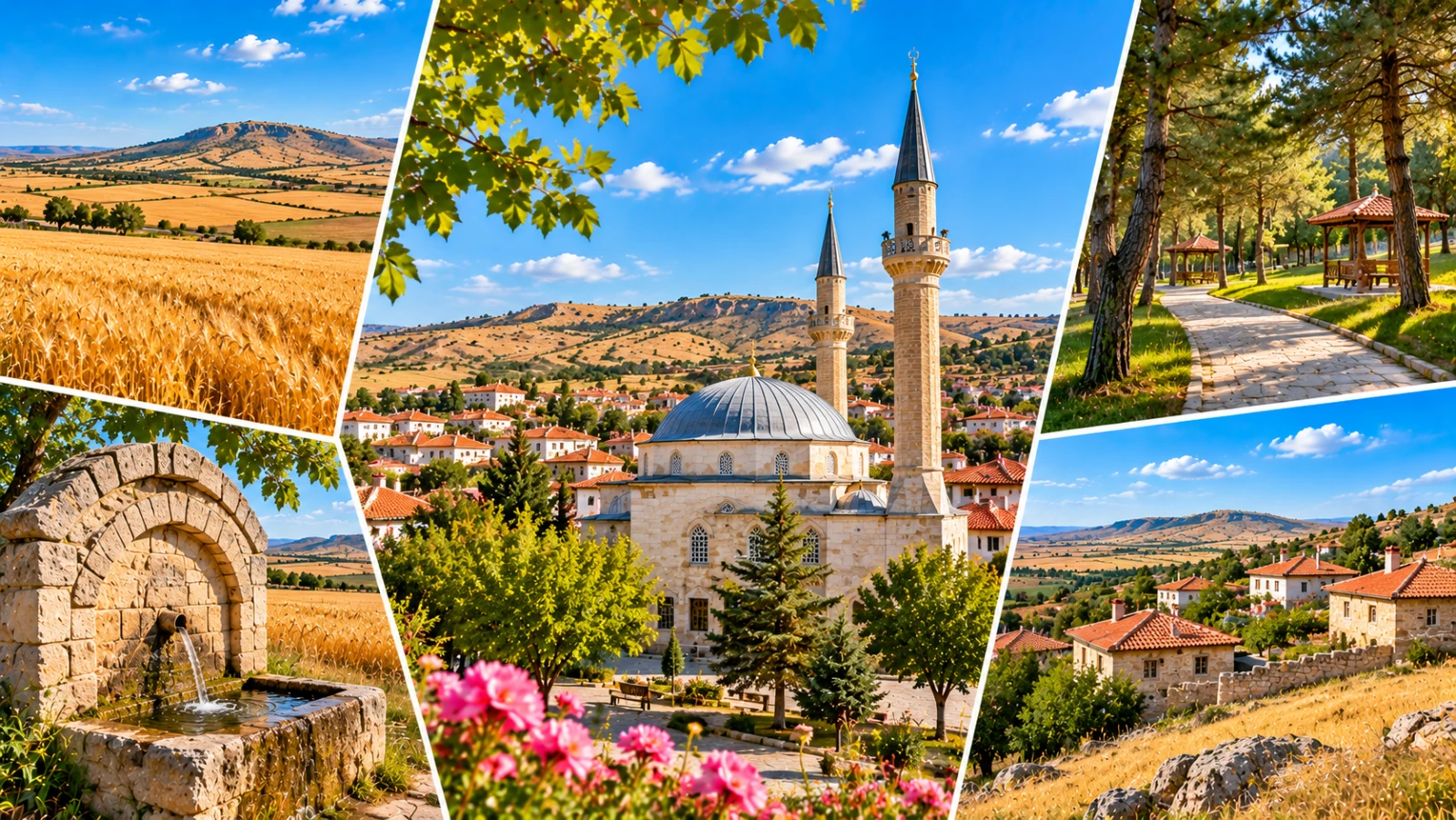
Read this related Kırşehir travel guide for context and practical considerations.
Read travel guide