From Bronze Age Settlement to Byzantine Stronghold
The History of Assos
Assos developed from an early settlement into a fortified Greek polis, a major Aegean port, a Roman city, and later a Byzantine centre.
Archaeological research indicates that settlement in the area of Assos reaches back into the Bronze Age. Ancient literary traditions describe the Greek city as being founded by settlers from Methymna on the island of Lesbos, generally associated with the 7th century BCE. The location was exceptionally well chosen: a steep volcanic hill provided natural defence, while the harbour connected the city with maritime routes across the Aegean.
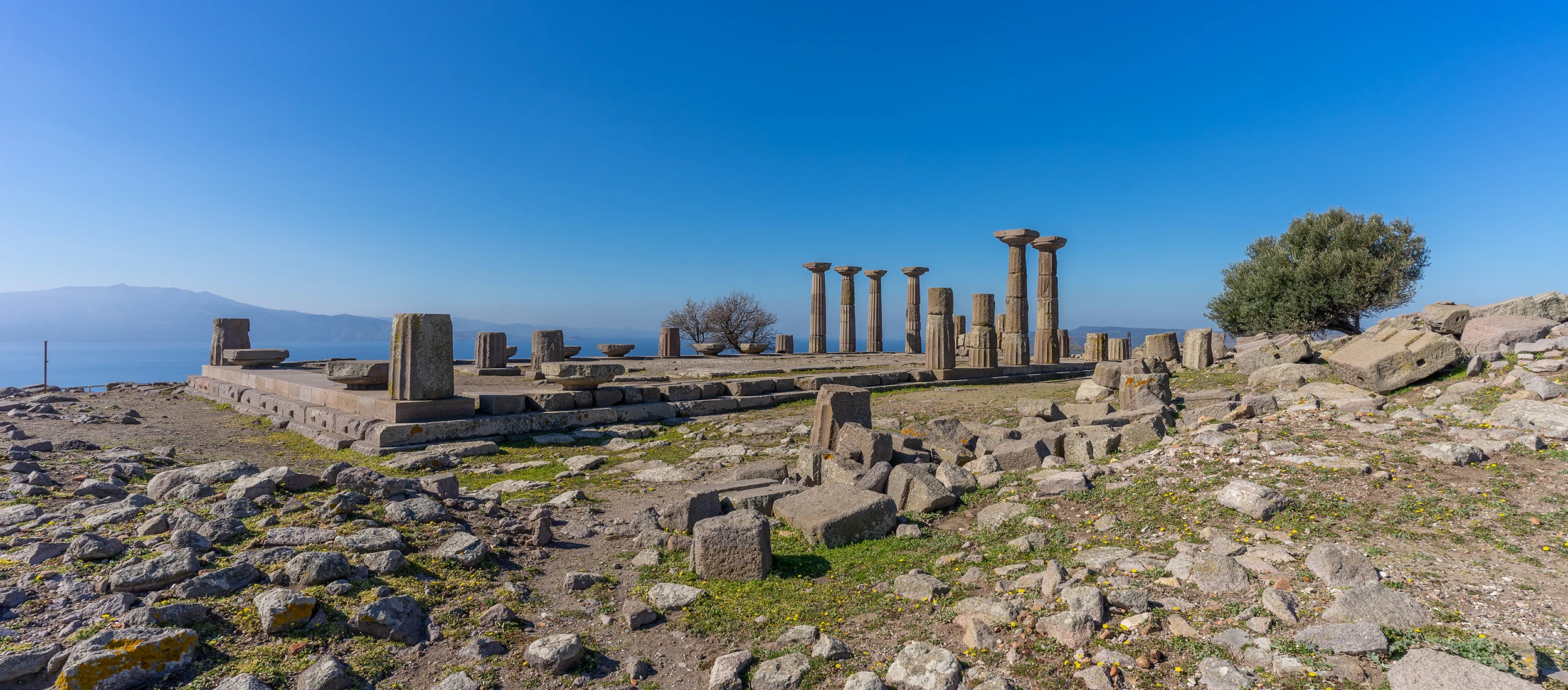
By the Archaic period, Assos had developed into a substantial polis surrounded by powerful fortifications. Around the middle of the 6th century BCE, the inhabitants constructed the Temple of Athena on the summit of the acropolis. Built largely from local andesite, the temple is particularly important because it represents the only known Archaic Doric temple in Anatolia, a region where Ionic architecture was far more common.
Assos later came under Persian influence. During the 4th century BCE, the city was associated with the ruler Hermias of Atarneus, whose court attracted philosophers connected with Plato's Academy. After Plato's death, Aristotle travelled to this region and lived in Assos during one of the most important transitional periods of his career before later moving to nearby Lesbos.
Alexander the Great's campaigns changed the political balance of the region in the late 4th century BCE. Assos subsequently passed through the complex Hellenistic world and eventually came under the Kingdom of Pergamon. When the last Attalid king bequeathed his kingdom to Rome in 133 BCE, Assos became part of the Roman sphere and continued as a strategically placed port city in the province of Asia.
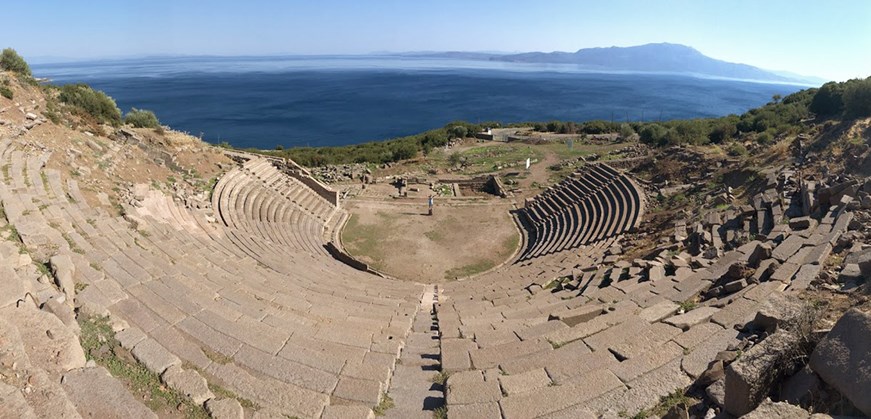
During the Roman period the city retained its agora, theatre, public buildings, streets, harbour connections, and extensive burial grounds. Assos also entered Christian history. The Acts of the Apostles records Saint Paul travelling on foot to Assos while his companions sailed from Alexandria Troas; they met him there and continued by sea toward Mytilene.
In Late Antiquity and the Byzantine era, Assos remained occupied and became an episcopal centre. Churches, burials, and later defensive adaptations reflect the city's Christian period. After Turkish control was established in the region, settlement continued around the acropolis. The historic village now known as Behramkale, together with the Ottoman Murat Hüdavendigar Mosque and nearby bridge, adds another important layer to the cultural landscape surrounding the ancient city.