From Bronze Age Citadel to Roman Ilion
The History of Ancient Troy
Troy was not one single city, but a succession of settlements built and rebuilt on the same strategic mound for thousands of years.
Troy, also known in antiquity as Troia, Ilios, or Ilion, developed on the mound of Hisarlık near the southern entrance of the Dardanelles. In the Bronze Age the coastline lay much closer to the settlement than it does today, making the location especially important for communities connected with maritime routes between the Aegean Sea, the Dardanelles, the Sea of Marmara, and the Black Sea.
The earliest major settlement phases begin around the early third millennium BC. Archaeologists traditionally divide the mound into principal cities known as Troy I through Troy IX, each with many internal phases. These layers record repeated cycles of growth, earthquake damage, fire, warfare, abandonment, and rebuilding.
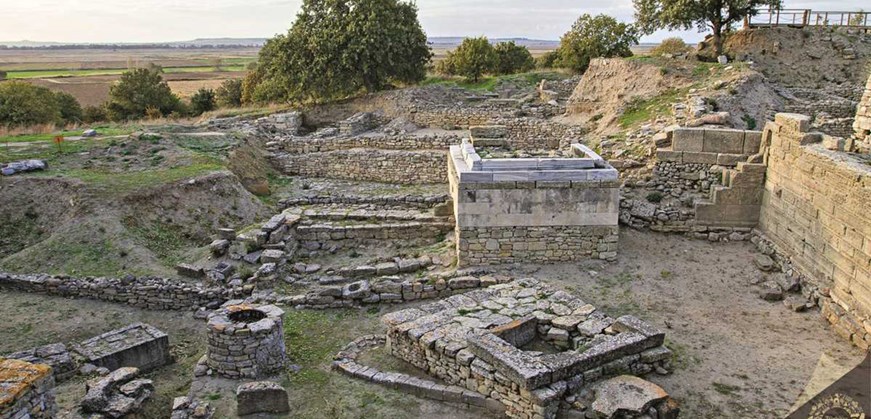
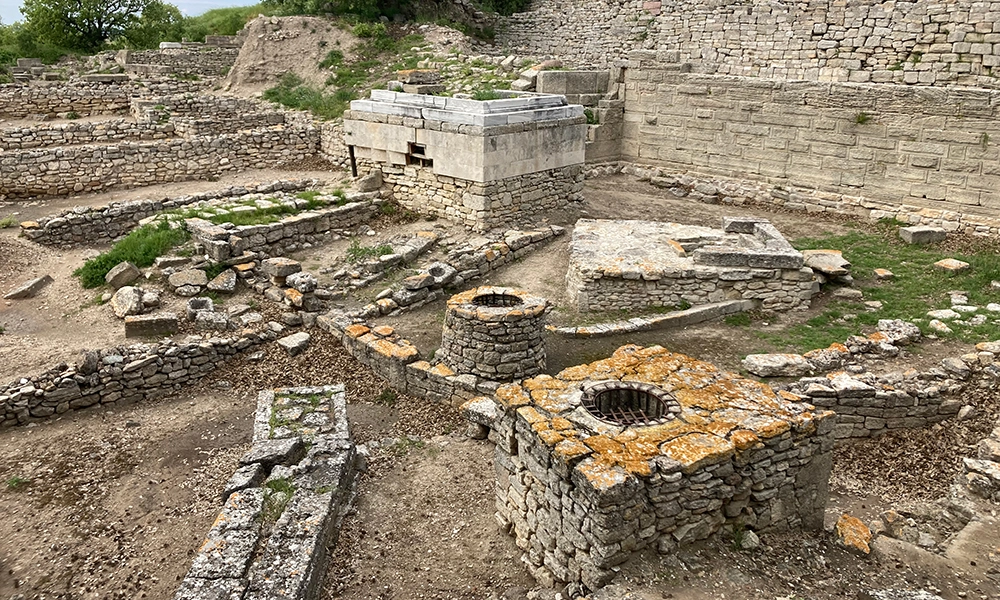
Troy II was a prosperous Early Bronze Age citadel known for its monumental ramp, fortification walls, and large megaron-style buildings. Centuries later, Troy VI developed into a much larger and more impressive fortified centre, with massive sloping limestone walls, projecting towers, and carefully designed gates. Troy VI was severely damaged around the thirteenth century BC, probably in an earthquake.
The following settlement, usually called Troy VIIa, is one of the layers most frequently discussed in connection with the historical background of the Trojan War tradition. Archaeological evidence shows a densely occupied settlement that ended violently around the late Bronze Age. Whether this destruction corresponds directly to the war described in Homer cannot be proven, but the chronology and regional setting have kept the connection central to archaeological debate.
In later centuries, Greek settlers venerated the site as the city of Homeric heroes. The settlement known as Ilion developed temples, sanctuaries, public buildings, and civic institutions. Alexander the Great visited the region in 334 BC, and later rulers continued to honour Troy because of its legendary prestige.
Under Roman rule, Roman Ilium became an important religious and cultural centre. Roman leaders associated themselves with Trojan ancestry through the story of Aeneas, whose descendants were believed in Roman tradition to have played a role in the origins of Rome. The city received new public architecture, including an Odeon, civic buildings, and expanded sacred areas.
The site continued to be occupied into the Byzantine period but gradually lost its former political importance. By the medieval era, the precise location of Homeric Troy was no longer widely understood in the outside world. Its rediscovery and excavation in the nineteenth century would make Hisarlık one of the most famous archaeological sites on Earth.