Private Bademli & Dikili Coastal Experience
Ask us about a tailor-made North Aegean day combining Bademli village, scenic coves, island viewpoints, Dikili and relaxed coastal stops.
Request a Custom Tour





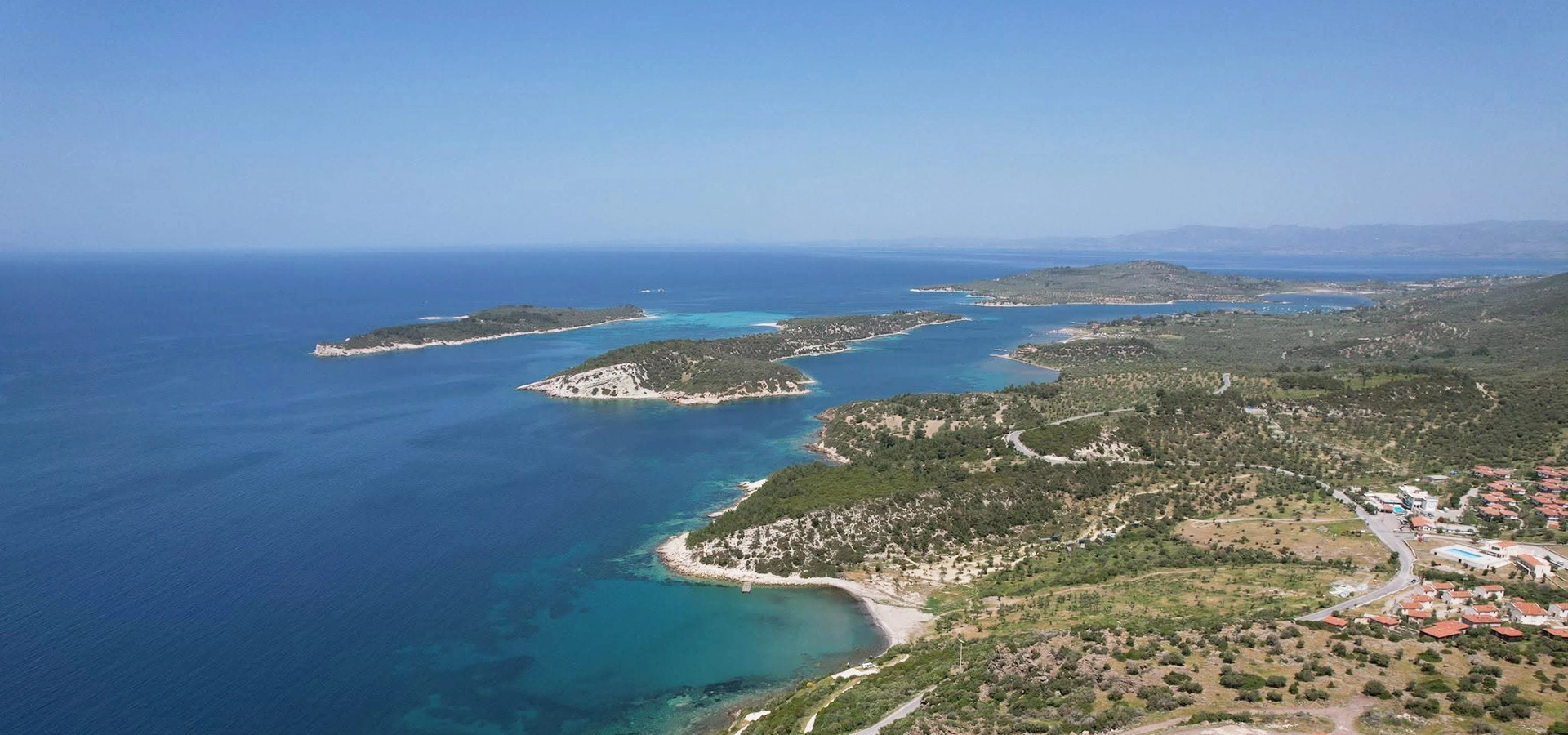
Only a short drive south of Dikili, Bademli is one of the most distinctive coastal landscapes in northern İzmir Province. Olive-covered hills descend toward a deeply indented shoreline of beaches, small bays, rocky headlands and remarkably clear Aegean water.
Yet Bademli is much more than a collection of beaches. The settlement itself is a historic village with traditional houses, narrow streets and a cultural memory shaped by the communities that lived along this coast before and after the population exchange of the early twentieth century.
Offshore, Garip Island and Kalem Island form one of the most recognizable seascapes around Dikili. These islands belonged to the ancient Arginusae group, known to classical historians as the setting of an important naval battle between Athens and Sparta in 406 BCE.
Today most travellers come for simpler pleasures: swimming in clear water, taking a small boat through the surrounding coves, watching the sun fall behind the Aegean islands, walking through olive groves or spending an unhurried afternoon beside the sea.
Bademli is famous for sheltered coves, pale sandy shallows and water that can appear intensely turquoise on calm sunny days.
The islands offshore create one of Dikili's most beautiful coastal landscapes and preserve a connection with the ancient Arginusae.
Traditional houses, olive groves and the compact village centre preserve another side of Bademli beyond its summer beaches.
Bademli lies within one of the geothermal landscapes that make the wider Dikili region unusual among Aegean seaside destinations.
Essential information for planning a visit to Bademli village, its beaches, islands and surrounding North Aegean coastline.
Bademli lies on the Aegean coast of Dikili district in northern İzmir Province, south of Dikili town.
The village is approximately 7 km from central Dikili and is most convenient to explore by car or taxi.
Clear turquoise water, secluded coves, beaches, olive groves, island scenery and a quiet traditional village atmosphere.
Garip Island and Kalem Island lie immediately offshore and form part of Bademli's characteristic coastal landscape.
Small boats and seasonal excursions from the Bademli and Dikili area provide access to offshore swimming locations and coves.
The islands around Bademli are associated with the ancient Arginusae, scene of a major naval battle in 406 BCE.
Bademli forms part of the geothermal landscape of Dikili and is known for a natural coastal thermal spring.
Olive trees dominate much of the countryside and remain one of the defining elements of the village environment.
Expect a mixture of natural coves, simple beaches, seasonal beach businesses and boat-access swimming locations.
Late May through September is best for swimming; June and September usually provide a quieter coastal experience.
Bademli itself has no entrance fee. Individual beach clubs, parking areas, boats or private facilities may charge separately.
Allow at least half a day, or a full day if combining swimming, the village, a boat trip and several coastal stops.
Bademli offers a very different experience from a large resort town. Its appeal lies in the relationship between village, olive grove, island and sea.
The strongest reason to come is the coastline. Small peninsulas and offshore islands shelter sections of the sea, producing shallow turquoise water and intimate coves that feel very different from the long open beaches elsewhere around Dikili.
The second reason is landscape. Bademli has not developed as one continuous urban resort. Olive groves, rural roads, village houses, rocky shorelines and small agricultural plots still separate many of the beaches.
The third reason is history. The surrounding islands were known in antiquity as part of the Arginusae group, while Bademli itself preserves the architectural memory of an older Aegean village shaped by both Greek and Turkish communities.
Finally, Bademli works especially well for travellers who enjoy exploring slowly. Rather than arriving at one attraction, you can move between the village, different coves, an island viewpoint, a seaside lunch and a quiet sunset stop while experiencing several versions of the North Aegean within one compact area.
Bademli is located within the district of Dikili in northern İzmir Province. It lies roughly 7 kilometres south of central Dikili and inland from a highly indented stretch of Aegean coastline.
The village itself is slightly removed from several of the best-known swimming areas. From the centre, smaller roads continue through olive groves toward beaches, coves, the harbour area and viewpoints facing Garip and Kalem islands.
This geography is important when planning a visit. Bademli should not be imagined as a single beachfront village where every attraction is accessible on foot. Exploring several beaches normally requires a vehicle, while some offshore coves are best reached by boat.
Bademli is a historic settlement whose character reflects the complicated demographic history of the Aegean coast. Before the population movements of the early twentieth century, it was home to an established Greek Orthodox community.
Following the 1923 population exchange between Greece and Türkiye, new families arrived from areas of Greece while former residents departed. Similar transformations occurred throughout the Aegean and profoundly changed the human geography of coastal western Anatolia.
Traditional houses, street proportions, stone walls, courtyards and agricultural patterns still preserve traces of the older village. Although many buildings have been altered over time, the settlement retains a recognizably rural Aegean atmosphere.
Agriculture, particularly olive cultivation, became central to village life. Olive trees remain one of the strongest visual elements around Bademli today, covering slopes and surrounding the narrow roads that descend toward the coast.
Modern tourism has added a new economic layer, particularly during summer, but Bademli has never completely lost its identity as a village connected with agriculture, seasonal rhythms and the surrounding countryside.
Many visitors drive directly toward the beaches and never spend time in the village itself. That is a mistake if you want to understand Bademli beyond its famous water.
The historic centre contains narrow streets, traditional houses, older stonework, shaded courtyards and modest village architecture. It is not a restored open-air museum; modern life and old buildings sit beside one another.
A short walk is enough to reveal the area's quieter personality. Look for old doors, stone walls, garden gates, olive trees, tiled roofs and houses that still retain the proportions of earlier Aegean domestic architecture.
The village also works well as a practical pause between beaches. Small businesses, cafés and local shops can provide supplies before you continue toward more isolated sections of the coast where facilities may be limited.
Bademli's coastline is unusually varied for such a compact area. Instead of one continuous beach, the shore is broken into small coves, rocky points, shallow bays and island channels.
This geography helps explain the water colours for which the area has become famous. Pale sand and light-coloured seabeds can create brilliant turquoise tones, while deeper channels beyond the shallows quickly change to dark Aegean blue.
Conditions vary significantly from one cove to another. A bay that is almost completely calm can sit only a short distance from an exposed shoreline affected by wind and waves.
Do not expect every beach to provide the same infrastructure. Some have seasonal businesses with sunbeds, food and showers; others remain simple natural coves where bringing water, shade and basic supplies is essential.
Pissa Beach is one of the best-known coastal stops in the Bademli area and lies approximately 12 kilometres from central Dikili.
The beach is particularly attractive on calm mornings, when the pale seabed and clear water can produce striking turquoise colour. It is often included in photographs representing the wider Bademli coastline.
Facilities around natural beaches in this part of Dikili can change from season to season. Do not assume that food, showers, toilets, umbrellas or sunbeds will always be available simply because the beach is well known.
If Pissa is an important part of your day, arrive with water, sun protection and enough flexibility to continue to another beach if access, parking or crowd levels are not comfortable.
Killik is another well-known swimming area around Bademli. Narrow local roads descend through the olive landscape toward a small bay where the water can be especially clear in settled weather.
The wider area has an additional historical dimension. Ancient geographical references place Kane or Canae in this coastal landscape, close to the islands once known as the Arginusae.
Modern beach conditions, road quality, parking arrangements and commercial facilities can change between seasons. Drive slowly on minor roads and never assume a route suitable for normal cars after heavy rain or intensive summer traffic.
For travellers interested in both landscape and history, Killik is a useful reminder that these apparently quiet holiday coves were once part of a strategically important maritime zone between the Anatolian coast and Lesbos.
One of the best ways to understand the Bademli coastline is from the water. Small boats and seasonal excursions operate around the coast, providing access to places that are difficult or impossible to reach comfortably by road.
Boat routes vary with weather, demand, sea conditions and the operator, but the attraction is straightforward: swim in clear offshore water, move between secluded coves and see the relationship between Bademli, Garip Island and Kalem Island from the sea.
Some coves reached by boat have little or no infrastructure. This is part of their appeal, but it also means visitors should carry appropriate sun protection, drinking water and anything else requested by the boat operator.
In midsummer, book ahead if you have a specific day in mind. Outside the busiest weeks, boat availability can become more limited and departures may depend on minimum passenger numbers.
Garip Island lies just offshore from Bademli and is one of the area's most recognizable natural landmarks. Official local tourism information places it only a few hundred metres from the mainland.
The island is reached by boat rather than by a normal road connection. Its shoreline is attractive for swimming, but the natural setting means visitors should not expect the level of infrastructure found at a developed beach facility.
Shade is limited and permanent visitor services may be absent, so a trip to Garip should be treated more like an excursion into a natural coastal environment than a conventional beach-club day.
Garip is also historically important. Together with neighbouring Kalem Island and a former island that later became attached to the mainland, it formed part of the ancient Arginusae.
Immediately opposite the Bademli coast lies Kalem Island, a narrow green island that helps create the sheltered channels and vivid water colours characteristic of this part of Dikili.
Kalem Island is privately managed and should not be treated as an unrestricted public beach. Access arrangements can be connected with the island's accommodation and private facilities, so check current conditions rather than attempting to enter without permission.
You do not need to stay on the island to appreciate it. Some of the finest views come from the mainland roads, surrounding bays and boat routes that pass through the water between Bademli and the islands.
Like Garip, Kalem belongs to the landscape of the ancient Arginusae, linking one of today's most tranquil stretches of Aegean coastline with a dramatic episode of Classical Greek naval history.
The waters around modern Garip and Kalem islands have an unexpectedly important place in ancient history. In Classical antiquity they formed part of an island group known as the Arginusae.
In 406 BCE, during the final years of the Peloponnesian War, a major naval battle took place here between the fleets of Athens and Sparta.
Athens won the battle, but the story became controversial because severe weather prevented the rescue or recovery of many sailors from damaged ships. The political consequences in Athens became almost as famous as the battle itself.
Very little in the modern landscape announces this history. Visitors see calm coves, olive groves and holiday boats rather than an archaeological battlefield. Yet standing on the coast and looking across the channels toward the islands gives an unusually direct geographical connection with the ancient event.
The name Aquarium Bay is used locally for exceptionally clear sections of water around Bademli's island zone, particularly in the area between the mainland, Garip and Kalem islands.
It is important not to imagine this as a large conventional beach with a car park and promenade. The attraction is primarily the water itself, and visiting by boat is usually the easiest way to experience it.
On a calm day, visibility through the shallow water can be excellent. Pale sand and rock beneath the surface create the bright blue and green colours for which Bademli has become widely photographed.
Sea conditions matter. Wind, boat traffic, currents and visibility can change quickly, so follow the instructions of your captain or local operator before entering the water offshore.
Known as Hanımın Koyu and also locally associated with the name Kokarot, this secluded bay is one of the coastal stops that demonstrates why exploring Bademli by boat can be so rewarding.
Land access is difficult, which has helped the bay retain a quieter and more natural character than beaches reached directly by road.
The sheltered water and pale shoreline make it attractive for swimming stops, but there may be little or no permanent visitor infrastructure.
Boat itineraries are never guaranteed to include every named cove. If Hanımın Bay is a priority, ask the operator about the planned route before departure.
Dikili is unusual among Aegean seaside districts because geothermal water appears in several locations close to the coast. Bademli is one of the areas officially associated with these thermal resources.
The natural coastal spring commonly known as Bademli Deniz Ilıcası offers a striking contrast: warm mineral water emerging within a landscape otherwise defined by cool Aegean sea water and olive-covered shores.
This is not necessarily a conventional spa complex with controlled pools, lockers and formal facilities. Natural conditions and access can change, so visitors should approach it as a natural geothermal site rather than expecting a resort-style thermal bath.
Avoid making medical assumptions about thermal water. Anyone with cardiovascular conditions, pregnancy, circulation problems or other health concerns should obtain appropriate medical advice before prolonged exposure to hot water.
One of the area's best-known beaches, valued for clear water, pale shallows and a beautiful coastal setting.
A smaller Bademli cove reached through the olive landscape and associated with the wider ancient Kane coastline.
Reachable by boat and ideal for travellers looking for a more natural island-swimming experience.
Boat-access swimming areas around the island channels are especially attractive when the sea is calm.
A secluded boat-access cove with limited land access and a much less developed atmosphere.
Several seasonal businesses operate around Bademli, offering varying combinations of sunbeds, food, showers and parking.
Another attractive beach area in the wider Dikili coastline and an easy addition if you are exploring by car.
Useful alternatives when you prefer easier access, restaurants and urban facilities rather than isolated coves.
Choose a sheltered cove or an offshore boat stop on a calm, low-wind morning.
Prioritize beaches with easy road access, shade, toilets and gently shelving water rather than isolated coves.
A managed seasonal beach facility can provide sunbeds, food, showers and easier parking.
Select a less-developed cove and arrive fully prepared with water, shade and everything you need for the visit.
Choose beaches or viewpoints facing Kalem and Garip islands or spend part of the day on a boat.
Visit outside weekends and Turkish public holidays, particularly in June or September.
Morning light often reveals the clearest water colours before stronger afternoon wind develops.
Stay closer to Dikili town or use an organized excursion rather than trying to connect multiple remote coves independently.
Bademli is famous for clear water, but conditions differ according to wind direction, depth, seabed and the amount of protection offered by surrounding islands and headlands.
Some beaches have shallow entries over sand, while others include stones, rock or patches of marine vegetation. Water shoes can be useful if you plan to explore several different coves.
The North Aegean can also feel cooler than sheltered Mediterranean resorts, particularly early in the season or after windy weather.
Never assume offshore channels are safe simply because islands appear close. Boat traffic, current and changing wind can make swimming between mainland and island unsafe. Use boats for island crossings unless local professionals explicitly advise otherwise.
Bademli is not primarily a gastronomic destination, but the surrounding North Aegean landscape naturally lends itself to olive oil, vegetables, herbs, seafood and simple seasonal cooking.
Olive groves dominate the local landscape, making regional olive products the most natural food connection with Bademli.
Look for small dishes based on vegetables, greens, yoghurt, beans, olive oil and seasonal local produce.
Coastal restaurants around Dikili often offer straightforward fish and seafood menus appropriate for a summer evening.
Calamari, octopus and seasonal seafood commonly appear on menus throughout coastal western Türkiye.
A Turkish breakfast with cheese, tomatoes, olives, eggs, bread and tea works well before a full day of swimming.
Summer fruit is ideal for beach days, particularly when visiting natural coves without restaurants.
A coffee stop in the village gives you a reason to slow down and experience Bademli away from the beach.
Simple cold treats become particularly welcome after hot afternoons moving between beaches and viewpoints.
Choose one sheltered beach and allow enough time to enjoy the water rather than racing between every named bay.
See the coastline from the sea and reach swimming points that cannot be comfortably accessed by road.
Approach the island by boat for one of the classic Bademli coastal experiences.
The olive-covered island and surrounding turquoise shallows create some of the finest coastal compositions around Dikili.
Spend time away from the beach among old houses, stone walls, small streets and everyday village life.
Slow drives between the village and coast reveal the agricultural landscape that defines Bademli.
Discover the geothermal dimension of Dikili at Bademli's natural sea-side thermal area.
West-facing viewpoints around Dikili can produce beautiful evening light across the Aegean.
Finish with a waterfront walk, dinner or evening swim in the district centre.
Travellers interested in history can combine the coast with the extraordinary ancient monuments of nearby Bergama on a longer itinerary.
For much of the year, Bademli retains the rhythm of a small Aegean settlement surrounded by olive agriculture and a relatively quiet coastline.
Summer changes the atmosphere significantly. Beach traffic increases, seasonal businesses open and popular coves can become busy, particularly on weekends and during Turkish public holidays.
Even in high season, however, Bademli does not feel like one continuous built-up resort. Roads still pass through olive groves, many sections of coast remain low-rise and the islands continue to dominate the visual character of the landscape.
This balance is also fragile. Increasing visitor numbers place pressure on parking, minor roads, natural coves and waste management. Visiting carefully is one of the best ways to help preserve the qualities that make Bademli worth travelling to in the first place.
Bademli is a village and coastal area rather than a gated attraction, so there is no general opening time or entrance ticket.
Individual beach businesses, parking areas, restaurants and boat operators establish their own seasonal opening hours and prices. These can change substantially from one summer to the next.
Natural beaches may be freely accessible where public access is available, but this should not be confused with services offered by private businesses operating nearby.
Kalem Island is privately managed, while Garip Island and offshore coves require appropriate boat access. Always respect signs, private property and local instructions.
Excellent for village walks and countryside scenery, but the sea is still cool for most swimmers.
Warm days begin to arrive and the landscape remains fresh, although sea temperatures can still feel cool.
One of the best periods for combining swimming with relatively manageable crowds and long daylight.
Reliable beach weather but much stronger visitor numbers, especially at popular coves and private facilities.
Peak summer conditions, warm water and the highest likelihood of crowding, parking pressure and busy roads.
Perhaps the best all-round month, with warm sea temperatures and a quieter atmosphere after the main holiday period.
Beautiful for peaceful coastal exploration when the weather remains settled, although seasonal services begin to close.
The coast becomes very quiet and is better suited to scenery and village exploration than a conventional beach holiday.
For travellers whose priority is swimming, June and September usually provide the best balance between warm weather, water conditions and visitor numbers.
Early morning is ideal in summer. Roads are quieter, beaches are less crowded and the sea is often at its calmest before afternoon wind develops.
Late morning through early afternoon produces the most vivid turquoise water because strong sunlight penetrates the pale shallows. This is excellent for swimming and aerial-style coastal photography but also the hottest part of the day.
Late afternoon becomes more comfortable for village walking and scenic drives. It is also a good time to move away from the busiest beaches and find a viewpoint for softer light.
If you plan to stay for sunset, remember that remote beach roads can become much darker after dusk than urban visitors expect. Leave enough time to navigate unfamiliar minor roads safely.
Drive south from central Dikili toward Bademli; the village is only a short distance from the district centre.
Approach northern İzmir Province by the main road network toward Aliağa and Dikili, then continue locally to Bademli.
Bademli can be combined with Bergama on a North Aegean itinerary, although archaeology and beach time are better divided carefully.
The easiest option because beaches and coves are scattered along separate minor roads rather than concentrated in one centre.
Useful from Dikili if visiting one specific beach, but arrange your return in advance from less-developed coastal areas.
Local transport can reach the broader Bademli area, but it is less practical for exploring several isolated beaches in one day.
The best option for Garip Island, offshore swimming locations and coves without convenient land access.
A private route can connect Bademli with Dikili, Bergama or other North Aegean destinations without worrying about local transport.
A car gives you freedom, but local coastal roads require patience. Many were created for village and agricultural traffic rather than high-volume tourism.
Expect sections that are narrow, uneven or dusty, particularly on approaches to smaller coves. Road conditions can change after winter rain, repairs or intensive summer use.
Parking is one of the main challenges during July and August. Never block agricultural entrances, emergency access, private property or the narrow road itself simply to park closer to the sea.
Offline navigation is useful, but do not follow a digital map blindly down an obviously unsuitable track. If a route looks questionable, ask locally before continuing.
Enough for a quick village stop or one beach, but too short to understand the wider coastline.
Choose one good swimming cove and add a short walk through Bademli village.
Ideal for two coastal stops, village exploration and a relaxed lunch or coffee.
The best option if you want swimming, islands, a boat element, the thermal spring and sunset.
Allows a dedicated boat day plus a separate road-based exploration of beaches, Dikili and the surrounding countryside.
Excellent for combining Bademli with Pergamon, Çandarlı, Dikili and other destinations along the North Aegean coast.
The exact order should remain flexible. Wind and sea conditions matter more in Bademli than following a rigid sightseeing timetable.
Use the narrow channel and island vegetation to create a layered composition of turquoise water and green landscape.
Boat-level perspectives show the clarity and colour of the water better than distant roadside photographs.
Strong sunlight can reveal extraordinary colour where white sand lies beneath shallow water.
Narrow rural roads, stone walls and old olive trees create a completely different visual identity from the beach.
Look for old doors, stone façades, tiled roofs, courtyard details and quiet street scenes.
Use a secure strap and protect equipment from spray while photographing islands and coves from moving boats.
Earlier hours can offer calmer surfaces, fewer swimmers and cleaner reflections.
Late light across the Aegean creates warm contrast with the cooler blues of the water.
Bademli can be excellent for families, particularly at beaches with shallow water, toilets, shade, food service and controlled parking.
The important point is to choose the beach carefully. A beautiful natural cove with no facilities may be perfect for independent adults but inconvenient for families carrying strollers, toys, food and beach equipment.
Accessibility varies significantly. Natural beaches can involve sand, stones, rough tracks, steps or uneven ground, while older village streets and boat access can also present difficulties for travellers with limited mobility.
Private seasonal beach facilities may provide easier access, but standards differ. Travellers who require step-free routes or specific accessibility arrangements should confirm directly with the facility before travelling.
Children should be supervised closely around boat jetties, rocky shorelines and offshore swimming areas, regardless of how calm the water appears.
Natural coves have limited waste infrastructure. Carry out everything you bring in.
Do not drive or park inside agricultural land unless an area is clearly designated for visitors.
Coastal beauty does not automatically mean every road, island, garden or shoreline facility is public.
Narrow access lanes must remain open for residents, farmers, emergency vehicles and other visitors.
Bring refillable water containers and reusable food boxes where practical.
Do not remove shells, marine organisms or underwater material from natural swimming areas.
Natural beaches are shared spaces; loud portable speakers can completely change the experience for everyone else.
Avoid creating new tracks through fragile shoreline vegetation simply to reach a photograph or private-looking cove.
Summer roads, parking areas and popular coves become progressively busier from late morning onward.
Wind direction can completely change which side of the coastline offers the calmest swimming.
Never assume an undeveloped beach will have a shop or reliable drinking-water source.
A portable umbrella can be invaluable at beaches and islands with little natural shade.
They are useful when moving between sandy beaches, pebble entries and rocky coves.
Minor roads can be confusing and mobile coverage is not a substitute for sensible route planning.
One excellent cove enjoyed slowly is usually more rewarding than spending the day constantly driving.
Weather and passenger numbers can affect routes, times and whether seasonal excursions operate at all.
Smaller seasonal businesses and local parking arrangements may not always offer the same payment options as city businesses.
Dikili town is an easy backup for dinner, supplies or a waterfront walk after your beach day.
The district centre offers a long waterfront, beaches, restaurants and a more urban base only a short drive from Bademli.
A boat-access island immediately offshore and one of the defining natural landmarks of the Bademli coast.
The olive-covered private island creates some of the most recognizable scenery in northern İzmir.
A famous Bademli swimming area with clear water and pale shallows.
A smaller cove connected geographically with the ancient Kane and Arginusae landscape.
An inland nature excursion offering a completely different landscape from the open Aegean coast.
A coastal town south of Dikili known for its historic castle, harbour and long relationship with the ancient city of Pitane.
One of western Türkiye's greatest historical destinations, with Pergamon's Acropolis, Asklepion, Red Basilica and historic old town.
Explore the Acropolis, Asklepion, Red Basilica and archaeological legacy of one of the ancient world's great cultural centres.
Traditional streets, historic houses, bazaars and local neighbourhoods reveal the living town below ancient Pergamon.
Combine a historic castle, harbour and swimming with the ancient geography of Pitane.
Explore the historic harbour, stone townscape and island-studded coastline of ancient Phokaia.
Travel inland above Bergama into a forested highland landscape famous for pine trees and rural villages.
A longer excursion south connects Bademli with Kemeraltı, the Agora of Smyrna, Kordon and the museums of İzmir.
Bademli is a coastal village in the Dikili district of İzmir Province on Türkiye's North Aegean coast.
The village is approximately 7 kilometres from central Dikili.
It is known for clear turquoise water, secluded coves, olive groves, Garip and Kalem islands, traditional village character and thermal resources.
It offers an excellent combination of swimming, island scenery, quiet countryside and traditional North Aegean village atmosphere.
Yes. The wider Bademli coastline contains numerous coves and swimming areas, including Pissa and Killik.
On calm days the sheltered coves and pale seabed can produce exceptionally clear turquoise water.
The North Aegean is generally coolest early in the season and becomes most comfortable for swimming during midsummer and September.
Pissa is one of the best-known beaches around Bademli, appreciated for its clear water and attractive natural setting.
Killik is a smaller Bademli coastal area reached through the olive-growing countryside and associated with the ancient Kane landscape.
Garip is a small island just offshore from Bademli and part of the ancient Arginusae island landscape.
It can be reached by boat. Facilities and shade are very limited, so visitors should arrive prepared.
Kalem Island lies opposite Bademli and is one of the area's most recognizable coastal landmarks.
The island is privately managed, so access conditions differ from those of a public beach and should be checked in advance.
They were a group of islands known in Classical antiquity in the waters around modern Bademli, including today's Garip and Kalem islands.
Yes. The Battle of Arginusae between Athens and Sparta took place in this island region in 406 BCE during the Peloponnesian War.
Seasonal boat excursions and small-boat services operate around the Bademli and Dikili coast, although routes depend on weather and demand.
The name is commonly used for exceptionally clear offshore swimming areas around the channels between Bademli's islands.
Many of the clearest offshore swimming areas are better approached by boat rather than as conventional road-access beaches.
It is a natural coastal thermal area reflecting the geothermal resources for which the wider Dikili district is known.
Yes. There is no ticket for the village itself, although private beaches, parking areas and boats may charge fees.
June and September are particularly attractive for warm-weather swimming with fewer crowds than peak July and August.
Popular beaches can become very busy during July, August, weekends and national holidays.
Early morning usually provides easier parking, lower temperatures, fewer crowds and calmer water.
A car is the easiest way to explore because Bademli's beaches and viewpoints are spread across different local roads.
You can reach the wider area without a car, but visiting several isolated coves in one day is significantly more difficult.
Main approaches are straightforward, but some coastal access roads can be narrow, rough or dusty and may change seasonally.
Parking can be difficult at popular beaches during peak summer periods, especially on weekends.
No. Some beaches have seasonal facilities while natural coves may have no food, water, toilets or shade.
Yes if visiting undeveloped beaches or Garip Island, where natural shade can be limited.
Yes. Beach entrances vary between sand, pebbles, rock and mixed seabeds.
Yes when you choose a sheltered beach with appropriate facilities, shallow water and easy access.
Accessibility is mixed. Natural coves, sand, rough tracks, boats and old village streets can create difficulties.
Camping rules differ by location. Never assume overnight camping or fires are permitted simply because a beach appears undeveloped.
This is not recommended without professional local guidance because currents, wind and boat traffic can make apparently short crossings dangerous.
Yes for scenery, village walks and a very quiet coastal atmosphere, but most seasonal beach services will not operate.
A half day gives a good introduction, while a full day is better for swimming, village exploration and a boat trip.
Very easily. Dikili is only a short drive away and works well for dinner, accommodation and evening waterfront walks.
Yes. Bademli and Bergama make an excellent North Aegean combination, particularly over two days.
Bring water, sun protection, a hat, swimwear, suitable footwear, a towel and extra supplies if visiting undeveloped coves.
Its beaches remain interwoven with olive agriculture, village life, small roads and natural coastline rather than forming one continuous tourism development.
A private North Aegean route can combine Bademli's turquoise coastline with Dikili, ancient Pergamon, traditional villages and the wider landscapes of northern İzmir at a relaxed pace.
Tell us whether your priority is swimming, secluded coves, archaeology, village life, photography, local food or a combination of coast and history, and we can shape the day around your interests and available time.
Ask us about a tailor-made North Aegean day combining Bademli village, scenic coves, island viewpoints, Dikili and relaxed coastal stops.
Request a Custom Tour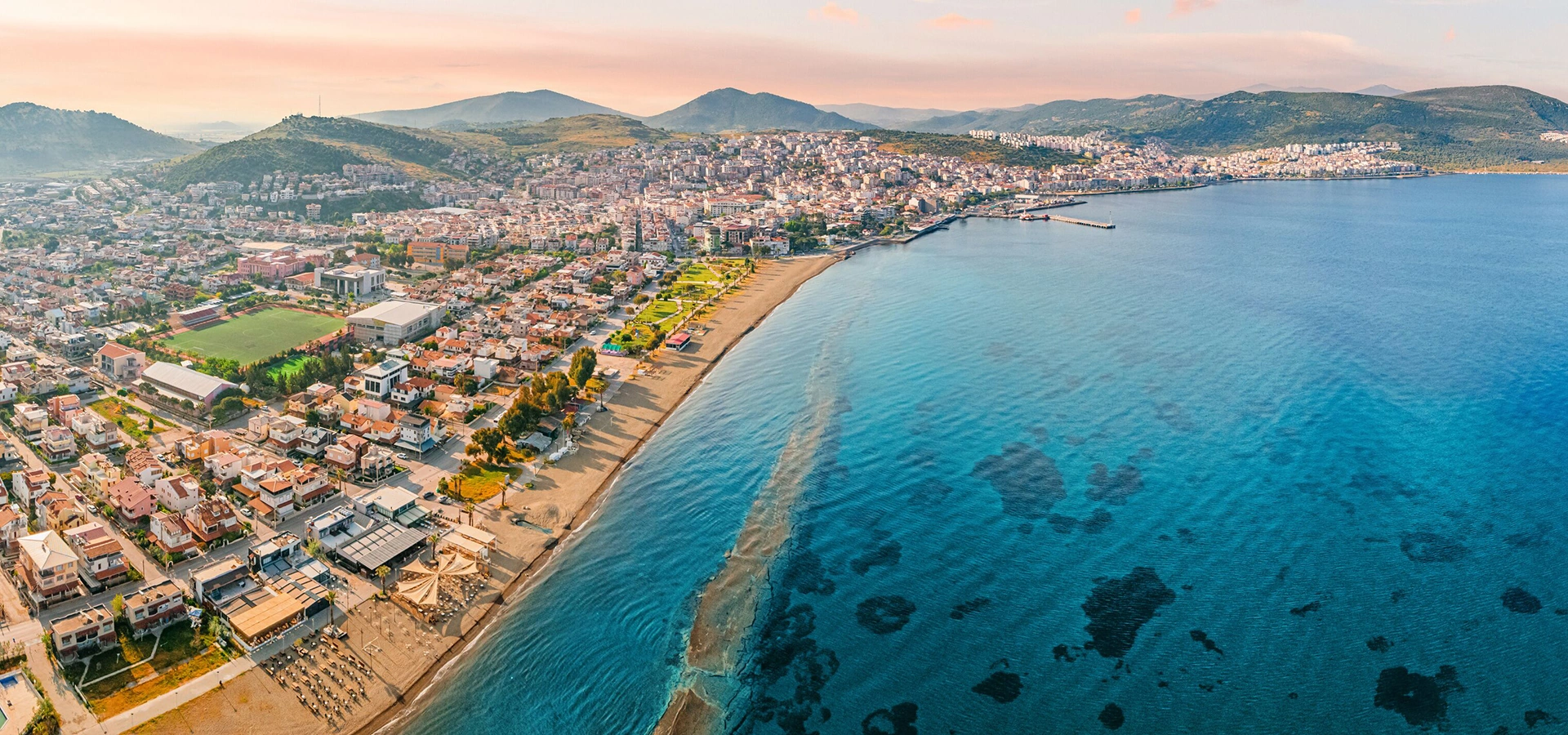
Continue with our complete Dikili guide for beaches, thermal springs, islands, ancient landscapes, nature and the best places to explore across the district.
View Dikili Guide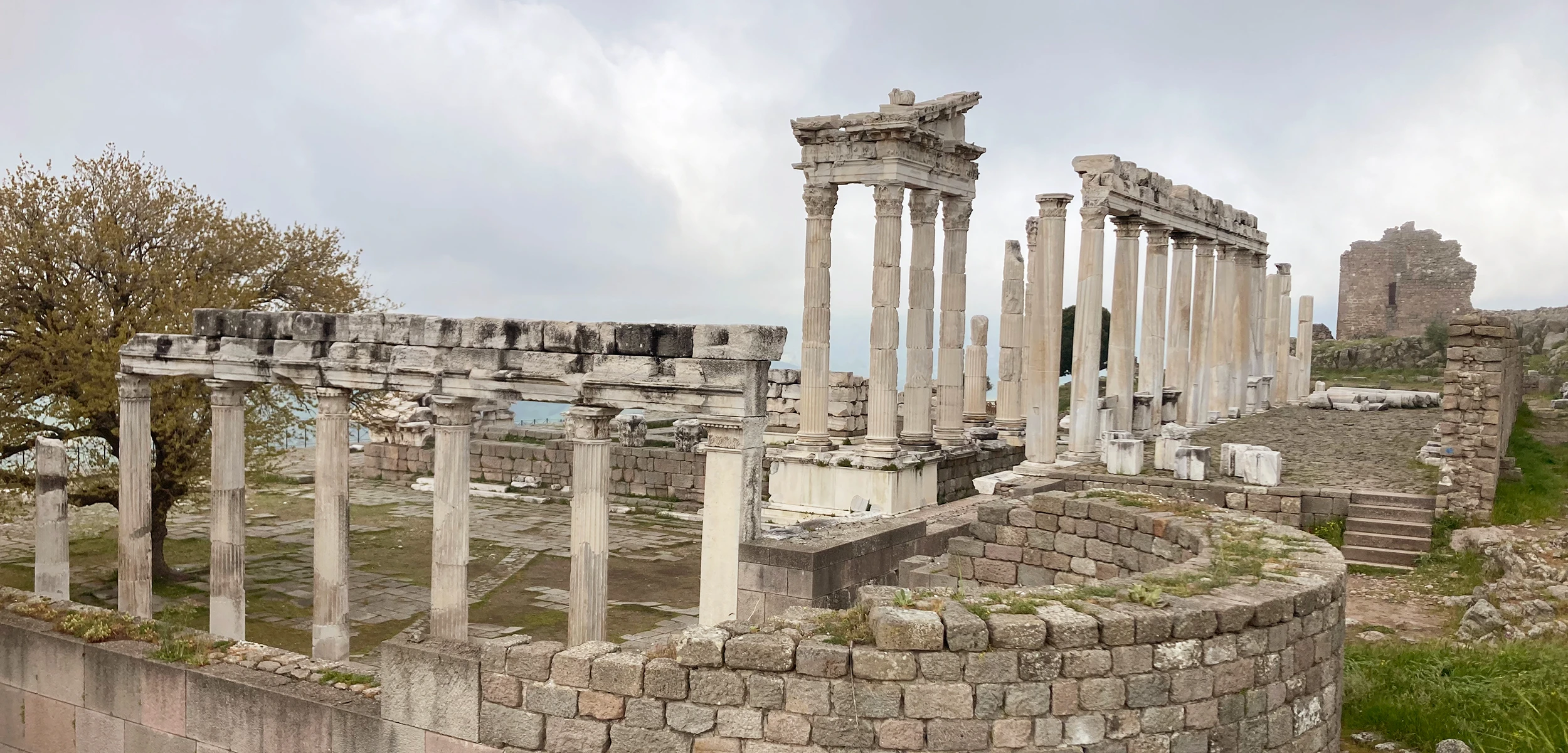
Combine the North Aegean coast with a privately guided visit to the Acropolis, Asklepion, Red Basilica and extraordinary archaeological heritage of Pergamon.
Request a Private Pergamon Tour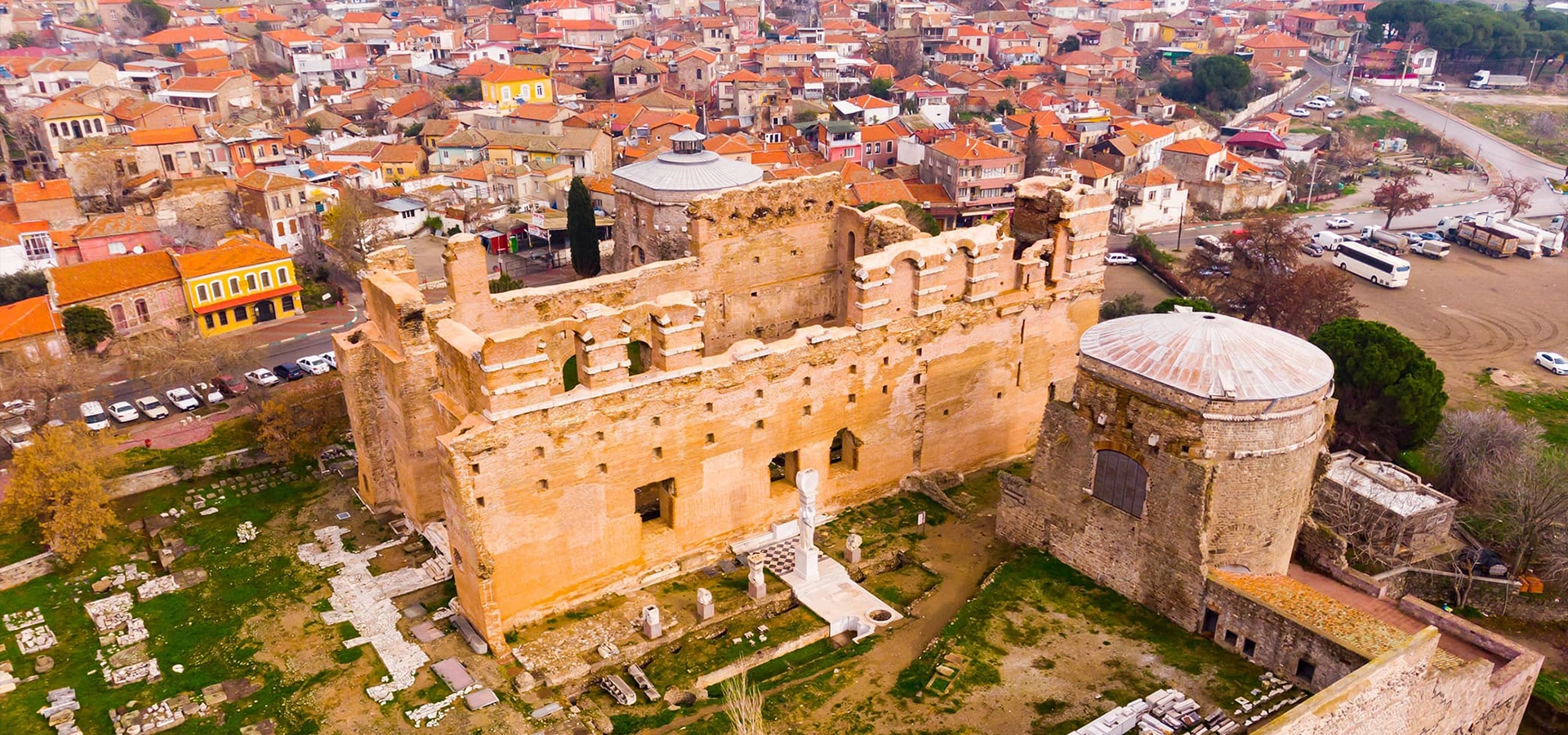
Go beyond the ancient monuments and discover Bergama's historic streets, traditional architecture, markets and everyday North Aegean town life.
View Bergama Guide