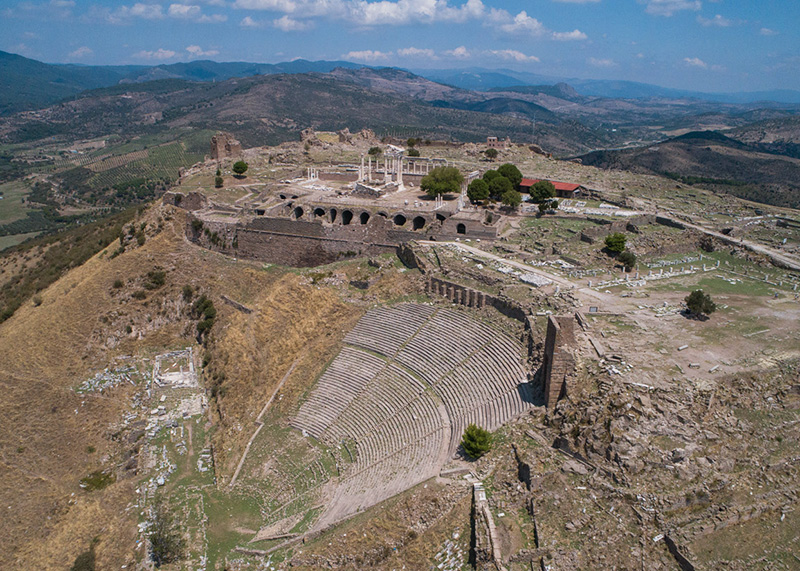
Pergamon Acropolis
Rise above Bergama to explore the extraordinary Hellenistic royal capital, steep ancient theatre, temples, terraces and commanding views across the Bakırçay Plain.
Explore Pergamon Acropolis





Most travellers arrive in Bergama for its ancient ruins.
They ride toward the Pergamon Acropolis, explore the Asklepion, visit the monumental Red Basilica and then continue their journey.
But some of Bergama's most revealing history is not separated behind an archaeological entrance.
It is still alive in the streets.
At the foot of the ancient city, Bergama Old Town preserves a remarkable urban landscape of narrow lanes, traditional houses, mosques, historic commercial streets, bridges, courtyards and neighbourhood squares.
Here, the ancient city of Pergamon gradually became Byzantine Pergamon, medieval Bergama and eventually an Ottoman town.
The transition is visible everywhere.
Stone from older structures appears inside later buildings.
Traditional Turkish houses stand beside masonry houses reflecting the town's former Greek communities.
The Selinos River moves through the historic centre beneath bridges whose history reaches back through different periods.
In the Arasta, the commercial organisation of the Ottoman town survives in a network of small shops and market streets.
Higher on the slope, Kale Mahallesi winds toward the ancient Acropolis through some of Bergama's most atmospheric historic residential streets.
This is what makes Bergama unusual.
The ancient city is not isolated from the modern town.
The layers continue into one another.
Bergama forms part of the UNESCO-listed Pergamon and its Multi-Layered Cultural Landscape, where ancient, Byzantine, Ottoman and modern urban history overlap.
Traditional Turkish houses, stone-built former Greek houses and later architectural styles create one of the town's most distinctive streetscapes.
Bergama's historic Ottoman market developed through organised craft and trading streets that once served different professional guilds.
Few places allow you to move so naturally from an ancient royal capital into neighbourhood streets where everyday life still continues.
Essential information for exploring the historic neighbourhoods, traditional houses, Ottoman commercial centre and living heritage below the Pergamon Acropolis.
A living urban district containing traditional residential, commercial and religious architecture.
Part of Pergamon and its Multi-Layered Cultural Landscape, inscribed on the UNESCO World Heritage List.
Ancient Pergamon, Roman, Byzantine, Turkish, Ottoman and modern Bergama overlap throughout the town.
Surviving examples include traditional Ottoman-period Turkish houses and masonry houses associated with Bergama's former Greek community.
Bergama Arasta developed as an Ottoman commercial district organised around different crafts and trades.
Stone bridges cross the Selinos River, connecting different parts of Bergama's historic urban landscape.
Central Bergama, below the ancient Acropolis in İzmir Province, western Türkiye.
On foot, allowing time to wander between Kale Mahallesi, Selinos, Arasta and nearby monuments.
The streets of the historic town are public and require no general admission ticket.
Allow approximately 2–3 hours for a relaxed old-town walk, or half a day with nearby monuments.
Excellent for architectural details, street scenes, stone houses, bridges and views toward the Acropolis.
Combine historical exploration with cafés, local shops, market streets and everyday neighbourhood life.
Bergama Old Town is not a fenced archaeological attraction. It is a living part of the modern town, so visitors explore ordinary streets, neighbourhoods, historic commercial areas and public spaces alongside local residents.
There is no single entrance gate to Bergama Old Town.
The best approach is to think of it as a historical walking district rather than one conventional attraction.
Allow yourself to leave the larger roads and enter the smaller streets.
The most interesting details are often easy to miss: old wooden doors, projecting upper floors, stone walls, courtyard entrances, historic fountains, rooflines, small workshops and views toward Kale Hill.
Because these are living neighbourhoods, visitors should also respect residential privacy.
Because the story of Pergamon did not end with antiquity.
It changed.
The population moved.
Religious traditions changed.
Commercial centres shifted.
Older buildings were reused.
New neighbourhoods developed beneath the ancient hill.
And the result became the town we now call Bergama.
Walking through the Old Town allows you to see this transition physically.
The Acropolis remains above you, but below it are later streets, houses, mosques, markets and bridges representing completely different periods of history.
This is one reason UNESCO describes Pergamon as a multi-layered cultural landscape.
Bergama is not simply an ancient archaeological site surrounded by a modern settlement.
The settlement itself is part of the story.
For travellers who enjoy architecture, photography, urban history or simply wandering through places that still feel lived in, the historic centre provides one of the most rewarding experiences in Bergama.
The phrase multi-layered is especially important when understanding Bergama.
Different historical periods did not simply replace one another and disappear.
They accumulated.
The Hellenistic capital developed on Kale Hill.
Roman Pergamon expanded and transformed the city.
Byzantine settlement continued through another political and religious world.
Later Turkish and Ottoman communities developed new neighbourhoods and civic structures across the lower town.
Mosques, baths, bridges, markets, khans, bedestens and water systems became part of the inherited urban landscape.
Some buildings changed function.
Some streets followed much older routes.
Older construction material could be reused inside later architecture.
Ancient remains sometimes survive directly inside the modern urban fabric.
This continuity is exactly what makes Bergama different from an archaeological site that was abandoned completely.
The modern town grew from the historical city rather than beside it.
Pergamon rose to extraordinary importance during the Hellenistic period.
Under the Attalid dynasty, it became the capital of a powerful kingdom, with monumental architecture spread dramatically across Kale Hill.
Roman rule brought another period of prosperity.
New temples, public buildings, entertainment structures and infrastructure expanded the urban landscape.
The Asklepion became one of the ancient world's celebrated healing centres.
The monumental sanctuary now known as the Red Basilica was constructed during the Roman imperial period.
During the Byzantine era, Pergamon's regional position changed.
The enormous ancient metropolis gradually became a smaller settlement, although its religious and strategic importance continued.
With Turkish settlement and later Ottoman rule, another urban transformation took place.
Activity became increasingly concentrated across the lower slopes and plain.
New religious, commercial and civic buildings appeared.
The town developed markets, baths, mosques, bridges and residential quarters.
These layers eventually created historic Bergama.
If you have time for only one residential area, make it Kale Mahallesi.
The neighbourhood climbs beneath the ancient Acropolis through narrow, curving streets.
Historic houses stand close together.
Stone walls, timber details, upper-storey projections, balconies, old doors and tiled roofs create constantly changing street scenes.
The oldest surviving examples of Bergama's traditional houses reach back to the 18th century.
Different architectural traditions exist side by side.
Traditional Ottoman-period Turkish houses generally use timber-frame construction combined with masonry and plaster.
Other streets contain substantial masonry houses associated with Bergama's former Greek community.
Later buildings introduce another layer from the early Republican period.
This mixture makes Kale Mahallesi more interesting than a perfectly uniform preserved village.
It developed through real historical change.
And importantly, it remains a living neighbourhood.
People still live behind these old façades.
That everyday life is part of what gives the area its atmosphere.
Do not expect every historic house to look the same.
Bergama's residential architecture reflects different communities, construction traditions and periods.
Many Ottoman-period houses combine masonry lower walls with timber-framed upper construction and plastered façades.
Stone-built houses associated with the town's former Greek population create a noticeably different architectural character in parts of the historic district.
Cumbas and projecting rooms expand upper-floor living space while adding rhythm to narrow historic streets.
Some residences turn inward toward private courtyards rather than presenting their main domestic spaces directly to the street.
Historic wooden doors, shutters, frames and stone surrounds provide some of the most rewarding architectural details for careful observers.
Early 20th-century houses add another architectural period to a town already shaped by ancient, Byzantine and Ottoman history.
Some buildings have been carefully restored.
Others show weathering, repair and alteration accumulated through everyday use.
Both conditions tell part of the town's story.
Historic Bergama is visually rich because its architecture was designed at the scale of pedestrians.
Streets are narrow.
Buildings sit close to the pavement.
Views are revealed gradually rather than all at once.
A corner may suddenly frame the Acropolis.
A brightly painted door may appear inside an otherwise weathered stone wall.
A projecting upper floor may almost reach toward the house opposite.
Grapevines, flowers, washing, chairs and everyday objects add another layer of life.
Look especially for wooden doors, stone masonry, timber framing, cumbas, balconies, roof tiles, courtyard gates and reused architectural fragments.
The strongest experience comes from walking slowly enough to notice these details.
The Selinos River is one of the most important natural elements shaping Bergama's historic centre.
It descends from the area around Kale Hill and passes through the town.
For centuries, the river influenced routes, bridges, neighbourhoods and monumental architecture.
Historic stone bridges still connect streets across the water.
Many have been repaired and reused through different periods, demonstrating the same continuity visible elsewhere in Bergama.
The river becomes particularly extraordinary near the Red Basilica.
Roman engineers constructed enormous substructures allowing the ancient sanctuary complex to extend across the watercourse.
That means the river does not simply flow beside Bergama's history.
At one of the city's greatest Roman monuments, it literally passes beneath it.
Walking along sections of the Selinos also provides excellent views toward traditional houses and the slopes of the Acropolis.
A town divided by a river needs crossings.
Bergama has preserved a remarkable collection of historic bridges along the Selinos.
Several developed from ancient routes and construction traditions, while later generations repaired, altered and continued using them.
Their importance is therefore not limited to architecture.
They show how the circulation of the city endured across centuries.
People crossed the same river under different rulers, languages, religions and political systems.
The bridges also create some of the best viewpoints for understanding how water, historic houses and the monumental landscape fit together.
When walking the Old Town, do not treat the bridges simply as shortcuts.
Stop and look upstream, downstream and toward the surrounding streets.
The residential streets tell only half of Bergama's story.
The other half is commercial.
Bergama's Arasta began taking shape from approximately the 14th and 15th centuries onward.
An arasta is a traditional commercial arrangement in which small shops belonging to related trades are organised along streets or around market spaces.
Historically, Bergama's market included groups such as shoemakers, bootmakers, textile merchants, saddlers and grain dealers.
These were not simply random stores.
Traditional Ottoman urban commerce was closely connected with guild organisation.
Craftsmen working in similar professions often operated near one another.
Khans, market buildings and other commercial structures developed around this activity.
The majority of the Arasta buildings visible today are later than the earliest market, partly because a major fire in 1853 destroyed much of the earlier commercial fabric.
The rebuilt market nevertheless continued the historic commercial role of the area.
Today, walking through the Arasta provides one of the easiest ways to imagine Bergama not as an archaeological destination, but as a working Ottoman and post-Ottoman town.
The Arasta rewards slow exploration.
Look beyond the obvious shopfronts.
The real character lies in the scale of the streets, small workshops, traditional commercial units, shaded corners and social spaces between them.
Some historic trades have disappeared.
Others survive in altered form.
Cafés, tea gardens and newer businesses now share the area with older commercial traditions.
That mixture should not be seen as a failure of preservation.
Historic market districts survive because they continue to change and remain useful.
A short coffee or tea stop here can be more revealing than walking through the market simply to take photographs.
Bergama's historic centre also preserves an extraordinary religious landscape.
Ancient Pergamon contained major sanctuaries dedicated to Greek, Roman and Egyptian deities.
Christianity later transformed important parts of the city.
Pergamon became associated with the Seven Churches of Asia mentioned in the Book of Revelation.
The Red Basilica is one of the clearest examples of changing religious use.
Originally constructed as a monumental Roman sanctuary, part of the complex was later adapted for Christian worship.
Other portions of the wider complex were associated with Jewish and Islamic religious use.
Ottoman Bergama added mosques, religious complexes and neighbourhood institutions across the town.
As a result, a walk through Bergama can move between pagan, Christian, Jewish and Islamic history without leaving the same urban landscape.
Perhaps the most important thing to remember while walking through Old Bergama is that the neighbourhoods are still inhabited.
Historic houses are not simply scenery.
They are homes.
Streets are used by residents.
People sit outside their doors, shop, work, park, talk with neighbours and carry out ordinary daily routines.
That is precisely what makes Bergama so valuable.
Its architectural heritage has not survived only as a reconstructed tourist environment.
Much of it remains embedded within ordinary urban life.
Walk respectfully.
Avoid pointing cameras directly through windows or open doorways.
Ask permission before photographing people closely.
And remember that the authenticity of the neighbourhood depends on the community that continues to use it.
Explore the narrow residential streets climbing toward the Acropolis and some of Bergama's finest surviving historic houses.
Look for timber-framed construction, projecting upper floors, tiled roofs and houses organised around private domestic spaces.
Notice the substantial masonry façades, stone details, balconies and different residential character in parts of the old neighbourhood.
Walk through the old commercial district where guilds and craft-based trading streets once organised the economic life of the Ottoman town.
Follow sections of the historic watercourse and observe its relationship with bridges, neighbourhoods and the Red Basilica.
Stop on the historic crossings for views of the river, old houses and the slopes rising toward the Acropolis.
Old wooden doors, stone portals and courtyard entrances reveal details that disappear when walking too quickly.
Projecting upper-storey rooms and balconies give the narrow streets much of their architectural rhythm.
Watch for older architectural fragments incorporated into later walls and buildings throughout the historic town.
Look uphill whenever the streets open: the ancient city remains a dramatic visual presence above modern Bergama.
Enough for a quick walk through one part of the historic centre, but far too short to appreciate the Old Town properly.
A useful introduction covering sections of the Arasta, Selinos and several historic streets.
A comfortable amount of time for the market district, historic houses, bridges and photography.
Ideal for a relaxed exploration including Kale Mahallesi, the Arasta, Selinos and time for coffee or lunch.
Add the Red Basilica and Bergama Museum while continuing through the historic centre on foot.
Combine the Old Town with the Pergamon Acropolis, Asklepion, Red Basilica and Bergama Museum.
Quiet streets and softer light make this excellent for photographing historic houses before the town becomes busier.
Warm directional light can bring out the texture of stone walls, roof tiles and colourful façades.
Mild temperatures make long walks between the Old Town and archaeological sites particularly comfortable.
Start earlier in the day or explore toward late afternoon, as midday heat can make uphill walking tiring.
One of the most pleasant periods for combining street exploration with the Acropolis and Asklepion.
Quieter streets can be atmospheric, although rain can make cobbled and sloping surfaces slippery.
Bergama is particularly rewarding for travellers who prefer details and street scenes to monumental postcard views.
Use the curved lanes, stone walls and projecting houses to create layered architectural compositions.
Weathered wood, colourful paint, stone surrounds and ironwork provide excellent close architectural studies.
Look for streets that naturally frame Kale Hill and the ancient ruins above the rooftops.
Historic bridges provide strong viewpoints for photographing the relationship between water and the urban landscape.
Small shops, shaded alleys and traditional commercial architecture work especially well for documentary-style photography.
Late afternoon light can transform pale plaster, stone and roof tiles into much warmer compositions.
Always remember that Kale Mahallesi is residential.
Avoid photographing directly into private homes, and ask before taking identifiable close photographs of residents.
Bergama's historic centre developed long before modern accessibility standards.
Some sections are relatively level and easy to explore.
Others, particularly toward Kale Mahallesi, include steep streets, uneven paving, cobbles and irregular historic surfaces.
Visitors with limited mobility may prefer to explore the flatter commercial centre, Arasta and accessible sections around the Selinos by vehicle and short walks.
The upper historic neighbourhood is more demanding.
Comfortable, secure footwear is strongly recommended.
After rain, smooth stone and cobbled surfaces may become slippery.
The historic town is not a separate destination outside Bergama.
It forms part of the centre itself.
Simply begin walking toward the traditional commercial streets, Selinos and the neighbourhoods beneath Kale Hill.
The surrounding historic streets connect naturally with the Old Town and make the basilica an excellent starting or finishing point.
The museum is close enough to combine with the central historic area as part of the same half-day itinerary.
Descend into the modern town after visiting the archaeological site and continue exploring the later neighbourhoods below Kale Hill.
Travel back toward central Bergama by taxi, private vehicle or local transport before continuing on foot.
Bergama can be reached by road from İzmir and explored independently or as part of a full-day heritage itinerary.
If you want to understand Bergama rather than simply collect individual monuments, connect the historic centre into one continuous walk.
Begin with the archaeological objects that introduce ancient Pergamon before entering the living town.
Move into the streets that developed as the economic heart of Ottoman and later Bergama.
Explore the traditional market streets and pause for tea or coffee among the small commercial spaces.
Enter one of the clearest examples of Bergama's extraordinary Roman, Christian and later religious layers.
Walk beside the water and cross one or more historic bridges while looking toward the older neighbourhoods.
Finish by wandering uphill through narrow streets lined with historic houses beneath the ancient Acropolis.
If you still have energy, continue to the Pergamon Acropolis or save the ancient city for the following morning.
One of the great pleasures of walking through Bergama is the constant presence of Kale Hill.
The ancient city rises dramatically above the streets.
This changes how the Old Town feels.
The archaeological site is never completely separate from modern life.
You may look past an Ottoman house and see the ancient hill.
You may cross a historic bridge built into a route used for centuries.
You may stand beside the Red Basilica, where Roman engineering interacts directly with the Selinos River.
Then a few minutes later, you may sit in a modern café.
That relationship between ancient monument, historic town and everyday life is one of Bergama's defining characteristics.
Climb above modern Bergama to explore the royal, religious and civic centre of one of the Hellenistic world's most extraordinary cities.
Visit the monumental Roman sanctuary that later became associated with Christian, Jewish and Islamic religious history.
Explore the ancient healing sanctuary associated with medicine, sacred water, dream therapy and the physician Galen.
See archaeological finds from Pergamon and the surrounding region before or after walking through the historic town.
Experience the historic Ottoman commercial district and the small-scale urban fabric that shaped everyday economic life.
Wander through historic residential streets beneath the Acropolis and discover some of Bergama's most atmospheric architecture.
Practical answers about Kale Mahallesi, historic houses, Bergama Arasta, Selinos River, walking conditions, UNESCO heritage and nearby attractions.
It occupies the historic centre of modern Bergama beneath the Pergamon Acropolis in İzmir Province, western Türkiye.
The modern historic town developed across and beside earlier settlement layers, forming part of the extraordinary continuity between ancient Pergamon and modern Bergama.
Yes. Pergamon and its Multi-Layered Cultural Landscape is inscribed on the UNESCO World Heritage List.
It describes the way Hellenistic, Roman, Byzantine, Ottoman and later historical layers coexist within the same city and surrounding landscape.
No general admission ticket is required for walking through the streets and historic neighbourhoods.
No single timetable applies because it is a living urban district, although individual museums, monuments, shops and religious buildings have their own hours.
Allow approximately 2–3 hours for a relaxed walk, or half a day when combining it with the Red Basilica and Bergama Museum.
It is the historic residential area climbing beneath Kale Hill, known for narrow streets, traditional houses and views toward the ancient Acropolis.
The oldest surviving examples are generally associated with the 18th century, while many others belong to the 19th and early 20th centuries.
The town preserves traditional Ottoman-period Turkish houses, masonry houses associated with its former Greek community and later Republican-period buildings.
Yes. Kale Mahallesi and other old neighbourhoods remain living residential areas rather than functioning solely as museum districts.
Yes, but respect privacy and avoid photographing directly inside homes or taking close photographs of residents without permission.
It is Bergama's historic Ottoman commercial district, where small shops were traditionally organised according to crafts and professional guilds.
The commercial area began taking shape from approximately the 14th and 15th centuries, although many surviving structures are later.
A major fire in 1853 destroyed much of the earlier market fabric, after which many commercial buildings were reconstructed.
Historic guilds included trades connected with footwear, textiles, saddlery, grain and other crafts and commercial activities.
It is the historic watercourse passing through Bergama beneath Kale Hill and through important parts of the old urban landscape.
Yes. Several historic stone bridges cross the Selinos and remain important elements of the town's historic circulation network.
Yes. Roman engineering works carried the monumental sanctuary complex across the river, making this one of Bergama's most remarkable architectural features.
Yes. The Red Basilica sits directly within the historic urban landscape and is naturally combined with an Old Town walk.
Yes. The museum and central historic districts can easily be combined as part of the same walking itinerary.
It is possible for fit visitors, but the ascent is substantial. Many travellers prefer to reach the archaeological site by vehicle or cable car and explore the Old Town separately on foot.
Some areas are easy, but Kale Mahallesi contains slopes, cobbled lanes and uneven historic surfaces.
Comfortable walking shoes with good grip are recommended, especially if you plan to explore the sloping streets below the Acropolis.
The flatter central streets are easier, but many historic lanes contain uneven paving, gradients and other obstacles that can make wheelchair access difficult.
Morning and late afternoon are especially pleasant, with cooler temperatures and attractive light for photography.
Spring and autumn are particularly comfortable for combining long walks through town with archaeological sites.
Yes. The Old Town reveals what happened to Pergamon after antiquity and adds Byzantine, Ottoman and modern layers that the Acropolis alone cannot show.
Yes. Historic houses, narrow streets, colourful façades, stone bridges, market scenes and views toward the Acropolis create excellent photographic opportunities.
Yes. The central market area and surrounding streets contain cafés, tea gardens and places to pause during a walking route.
No. It is part of a real town where residential, commercial and religious life continues alongside protected historic architecture.
Bergama had a historically diverse population, and masonry houses associated with its former Greek community remain an important part of the architectural landscape.
Yes. Mosques, commercial buildings, baths, bridges and other Ottoman-period structures remain important components of the historic town.
Yes. Archaeological remains and reused stone appear within parts of Bergama's later urban fabric, reflecting the city's unusually long continuity.
The strongest combination is the Pergamon Acropolis, Asklepion, Red Basilica and Bergama Museum.
Yes, but a full day is recommended if you want to see the major archaeological sites and still have meaningful time for the historic town.
Because Bergama's streets reveal how ancient Pergamon evolved through Byzantine, Ottoman and modern periods, completing the historical story that begins on the Acropolis.
Bergama Old Town becomes even more meaningful when you connect its living Ottoman and modern streets with the ancient monuments that shaped the city for more than two thousand years.
Move from the royal Acropolis to ancient medicine, Roman religion, archaeological collections and the historic neighbourhoods that transformed Pergamon into modern Bergama.
Rise above Bergama to explore the extraordinary Hellenistic royal capital, steep ancient theatre, temples, terraces and commanding views across the Bakırçay Plain.
Explore Pergamon Acropolis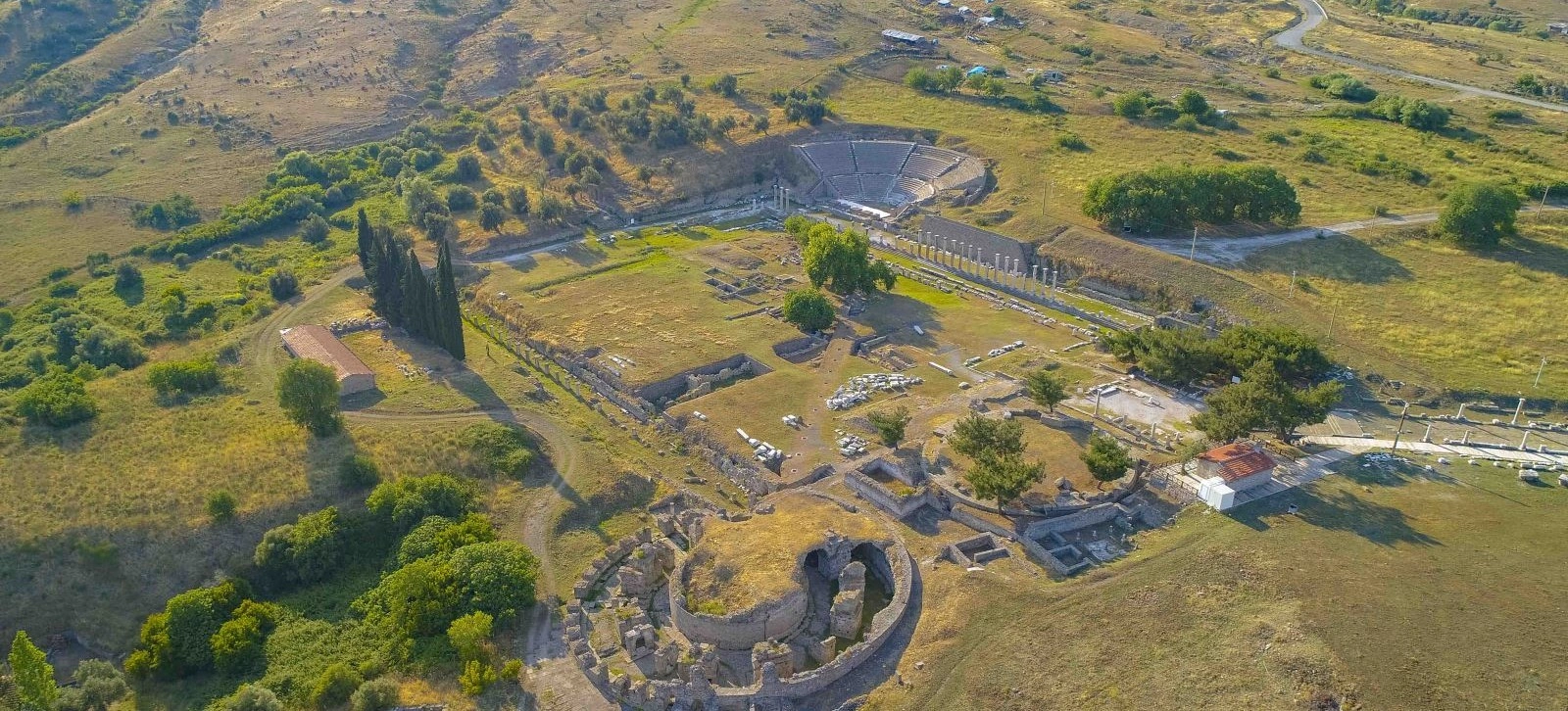
Discover one of antiquity's most famous healing sanctuaries and explore the world of sacred medicine associated with Pergamon and Galen.
Explore the Asklepion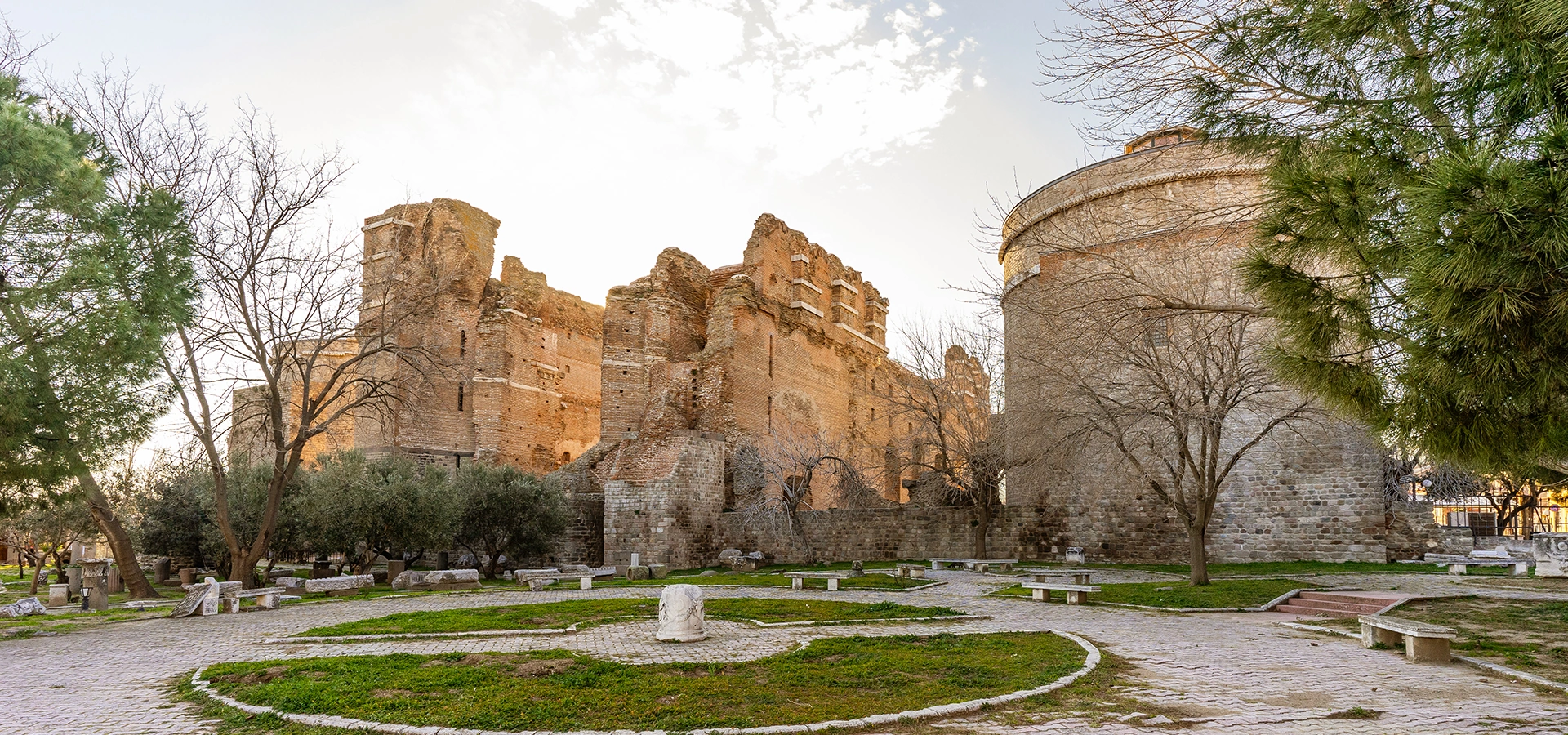
Explore one of Pergamon's most extraordinary Roman monuments and see how its history connects Egyptian religion, Christianity, Judaism and Islam.
Explore the Red Basilica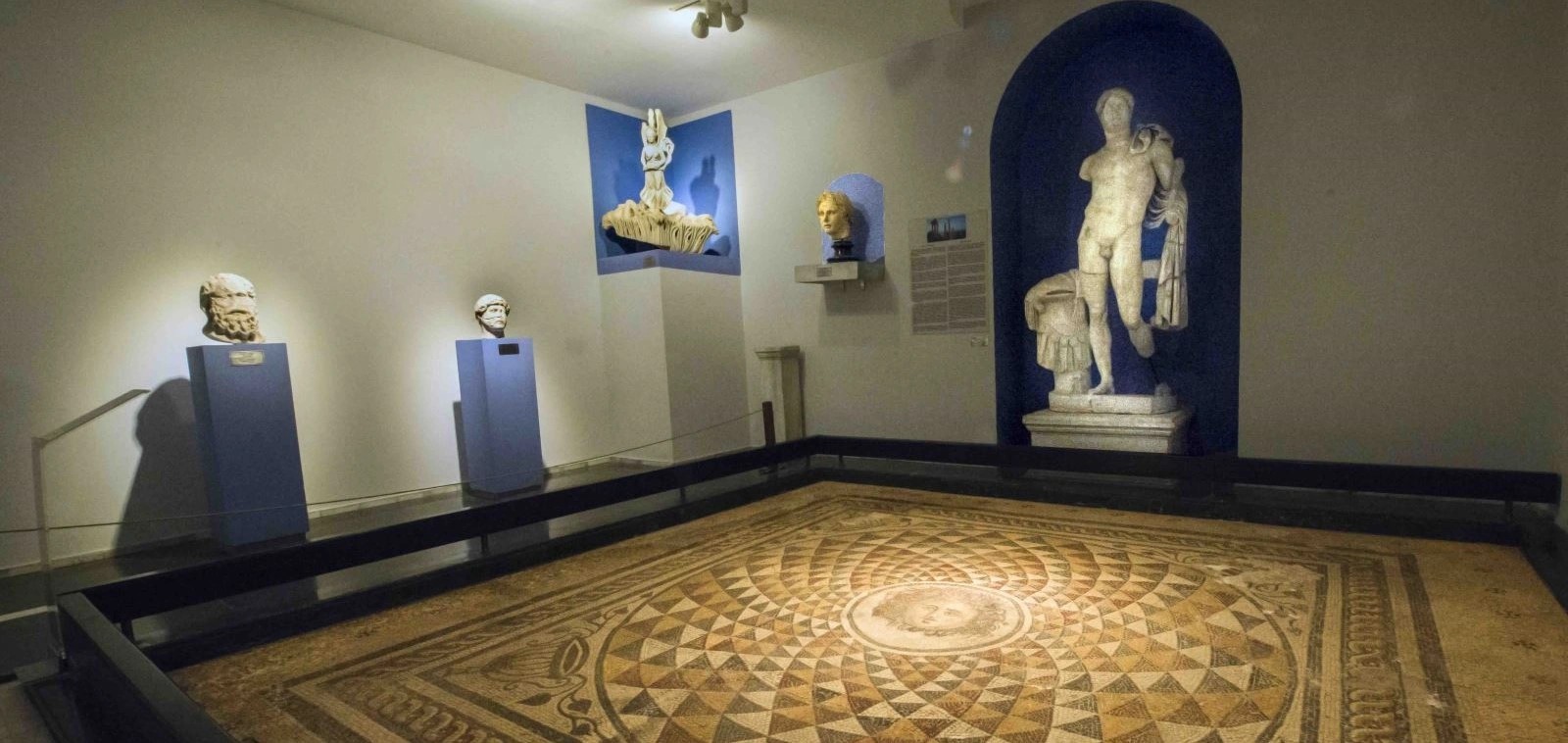
See archaeological discoveries from Pergamon and the surrounding region and place the monuments of the ancient city within their wider historical context.
Explore Bergama Museum