Private Iron Church & Fener–Balat Tour
Ask us about a tailor-made route combining Bulgarian St. Stephen Church, the Ecumenical Patriarchate, historic Fener, Balat and other Christian heritage sites around the Golden Horn.
Request a Custom Tour




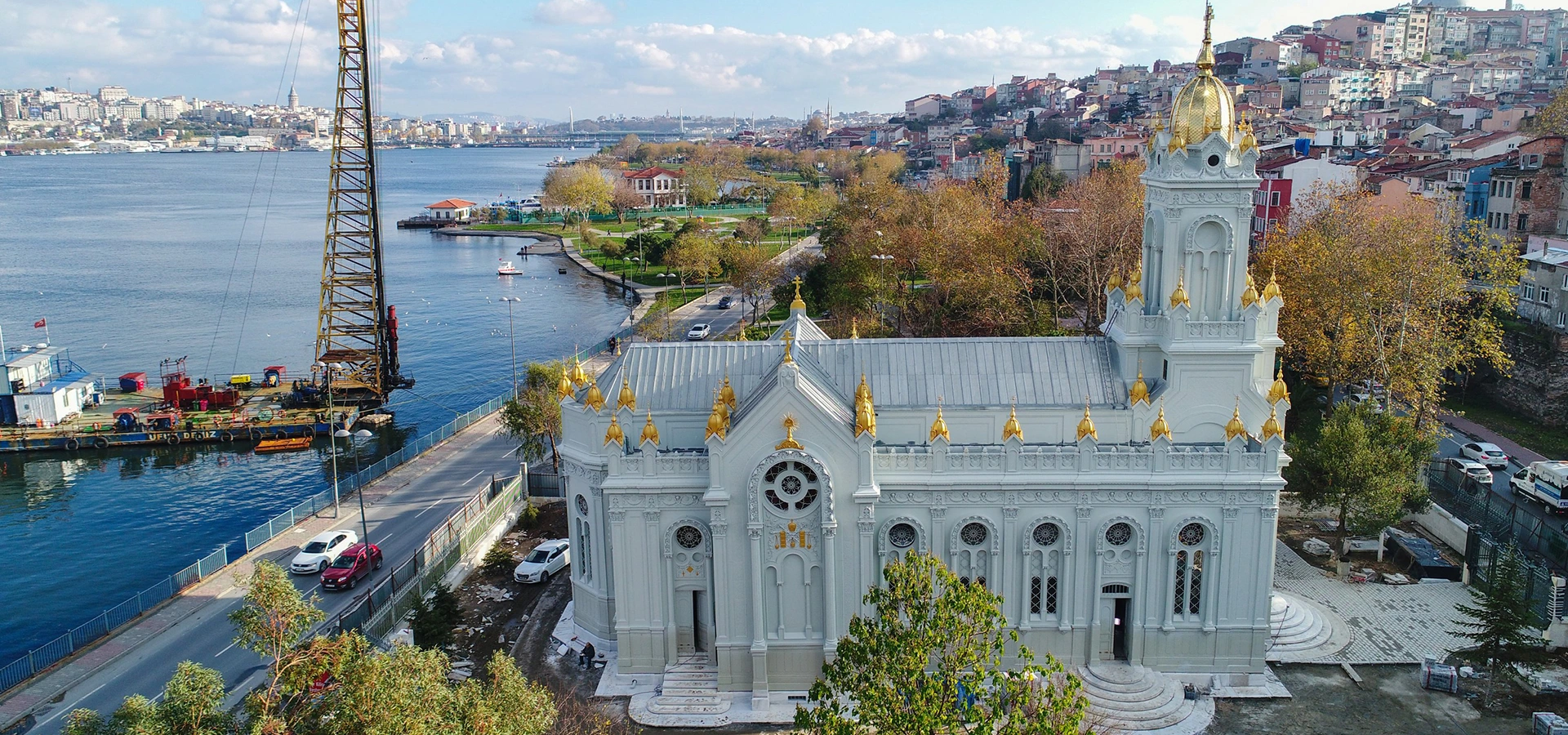
The Bulgarian St. Stephen Church, also known as Sveti Stefan Church, St. Stephen of the Bulgars and the Iron Church, stands beside the Golden Horn between the historic neighborhoods of Fener and Balat. With its pale metal exterior, slender bell tower, gilded details and richly decorated Orthodox interior, it is one of the most distinctive religious buildings in Istanbul.
The present church was completed in 1898 for Istanbul's Bulgarian Orthodox community. Designed by architect Hovsep Aznavur, its prefabricated iron components were manufactured in Vienna, transported by water to Constantinople and assembled on the Golden Horn. Historical records commonly place the total amount of cast iron used at around 500 tons.
Yet St. Stephen is much more than an engineering curiosity. The site became closely connected with the Bulgarian church movement of the 19th century, when Bulgarian Orthodox Christians sought greater ecclesiastical independence and worship in their own language. A major Ottoman decree establishing the Bulgarian Exarchate in 1870 was publicly read at the earlier Bulgarian church on this site.
After an extensive restoration lasting through much of the 2010s, the church was ceremonially reopened in January 2018. Today it remains a functioning Bulgarian Orthodox church and one of the most rewarding stops on a walking route through Fener, Balat and Istanbul's wider Christian heritage.
The present Bulgarian St. Stephen Church was consecrated and opened for worship.
Municipal heritage sources record roughly 500 tons of cast iron used in the prefabricated structure.
The prominent bell tower above the entrance rises to approximately 40 metres.
The restored church reopened after a major multi-year conservation project.
Essential information for visiting the famous Iron Church on Istanbul's Golden Horn.
Golden Horn waterfront between Fener and Balat in Fatih, Istanbul.
Open on Google MapsAn active Bulgarian Orthodox church dedicated to St. Stephen.
A prefabricated metal church assembled from components manufactured in Vienna.
Completed and consecrated in 1898 during the late Ottoman period.
Approximately 40 metres high, with bells originally cast in Yaroslavl, Russia.
Allow around 30–45 minutes, or longer when exploring Fener and Balat.
St. Stephen combines an extraordinary prefabricated metal structure with a central place in the history of the Bulgarian Orthodox community of Ottoman Constantinople.
The first reason St. Stephen is remarkable is architectural. Instead of conventional stone or brick construction, the present church uses a prefabricated metal system whose principal components were manufactured in Vienna and transported to Istanbul for assembly. This industrial method gave the church the enduring nickname “Demir Kilise” — the Iron Church.
The second reason is historical. The site became one of the most important centers of the Bulgarian ecclesiastical movement in the Ottoman Empire. In the 19th century, Bulgarian Christians increasingly sought church administration, bishops and worship that reflected their own language and community. The earlier church at St. Stephen became a symbolic center of that movement.
The church is also important because it survives as a living religious monument. Its significance does not end with the politics of the 19th century. Bulgarian Orthodox services, commemorations and community gatherings continue to connect the building with the people for whom it was created.
For travelers following our guide to places to visit in Istanbul, St. Stephen offers a rare combination of late Ottoman history, European industrial technology, Orthodox sacred art and the multicultural story of the Golden Horn.
The story begins in the middle of the 19th century, when the Bulgarian Orthodox population of Constantinople was seeking a more visible religious and communal presence in the imperial capital. A leading Ottoman statesman of Bulgarian origin, Prince Stefan Bogoridi, donated property beside the Golden Horn for use by the community.
A wooden building on the property was adapted as a church and consecrated in 1849. The earlier St. Stephen soon became a focal point for Bulgarian worship, education and community organization in Constantinople.
As the Bulgarian church movement grew, the site acquired significance far beyond the local neighborhood. An Ottoman decree of 1870 creating the Bulgarian Exarchate was publicly read here, making St. Stephen closely associated with one of the decisive moments in modern Bulgarian ecclesiastical history.
The community later planned a larger and more durable church. Architect Hovsep Aznavur designed the present building, while the metal components were produced in Vienna by the firm associated with Rudolf von Wagner. The parts were transported by water and assembled on the Golden Horn.
The new church was consecrated on September 8, 1898 by Exarch Joseph I. More than a century later, a major restoration carried out between 2011 and 2018 returned the structure and interior to renewed condition. The church reopened ceremonially on January 7, 2018.
The first Bulgarian church on the site was consecrated in a converted wooden building.
The Ottoman decree establishing the Bulgarian Exarchate was publicly read at the church.
The present prefabricated Iron Church was consecrated and opened for worship.
The architect responsible for the design of the present church.
The church's prefabricated metal components were manufactured in the Austrian capital.
The church reopened following a major restoration campaign.
During the 19th century, Bulgarian Orthodox Christians within the Ottoman Empire increasingly sought greater control over their own ecclesiastical affairs. Questions of language, education, the appointment of bishops and church administration became closely connected with the wider Bulgarian National Revival.
St. Stephen in Constantinople became one of the movement's principal urban centers. Its position in the imperial capital made it a natural place for meetings, liturgies and the public expression of Bulgarian religious aspirations.
In 1870, an Ottoman firman established the Bulgarian Exarchate. The decree is traditionally recorded as having been read publicly at St. Stephen, giving the site an enduring place in Bulgarian collective memory. The first Bulgarian Exarch was elected in 1872.
The creation of the Exarchate also produced a serious ecclesiastical dispute with the Ecumenical Patriarchate of Constantinople. The separation was condemned as schismatic in 1872, and full communion was not restored until 1945. Today the historical story can be understood as part of a much longer relationship between two neighboring Orthodox traditions in Istanbul.
The church movement formed part of a wider cultural and national awakening during the 19th century.
The Ottoman decree establishing the Bulgarian Exarchate became one of the movement's defining documents.
The imperial capital was the key political and ecclesiastical setting for the movement.
The ecclesiastical dispute with the Ecumenical Patriarchate developed into a formal schism.
Communion was restored and the Bulgarian Church's autocephalous status was recognized.
St. Stephen remains one of the strongest surviving symbols of Bulgarian Orthodox heritage in Istanbul.
The nickname comes directly from the building's unusual construction. Rather than relying on a conventional masonry shell, the church was created with a prefabricated metal structural system and extensive cast-iron architectural components.
The individual elements were manufactured in Vienna, where late 19th-century foundries had the technology to cast and fabricate complex architectural pieces with great precision. Historical sources connected with Istanbul's heritage administration record roughly 500 tons of cast iron for the project.
The components were transported from Central Europe by river and sea, then assembled in Istanbul beside the Golden Horn. This made St. Stephen an extraordinary example of how industrial manufacturing, international transport and religious architecture could be combined before modern container shipping or mechanized construction.
Look closely at the exterior and the logic of prefabrication becomes easier to understand. Wall panels, window surrounds, decorative moldings, stairs, structural members and tower elements form a coordinated system that was produced away from the final construction site and then fitted together in Constantinople.
Major components were manufactured before being transported to Istanbul for assembly.
The Austrian capital was the manufacturing center for the church's metal elements.
Local heritage sources record approximately 500 tons of cast iron.
The components reached Constantinople by a combination of river and maritime routes.
The building demonstrates a late 19th-century approach to industrialized construction.
Its preservation makes the church an exceptional monument of metal ecclesiastical architecture.
St. Stephen immediately stands apart from the surrounding urban fabric. Its bright exterior, pointed arches, ornamental pinnacles and tall entrance tower create a highly vertical silhouette beside the Golden Horn.
The church follows a cross-shaped plan and is traditionally described as having three domes. Its exterior combines the visual language of Neo-Gothic, Neo-Baroque and other historicist styles popular in late 19th-century Europe.
The approximately 40-metre bell tower rises directly above the main entrance and acts as the building's principal landmark. Gilded finials and crosses catch the light, while repeating arches, tracery and molded metal ornament give the façade a delicacy that seems surprising for a structure made from industrially produced components.
Inside, the atmosphere changes from pale exterior metalwork to a richly colored Orthodox sacred space. The iconostasis, icons, chandeliers, painted surfaces and decorative metal elements create a warmer and more ceremonial setting.
The church is organized around a traditional cruciform composition.
The roofline is articulated by a three-dome arrangement and gilded details.
The entrance bell tower gives the church its strongest vertical accent.
Neo-Gothic, Neo-Baroque and Orthodox architectural influences appear together.
Much of the façade's elaborate decoration is integrated directly into the prefabricated metal system.
The waterfront location gives the church a highly visible and memorable silhouette.
The present church was designed by Hovsep Aznavur, an Ottoman Armenian architect active during a period when Istanbul architecture was becoming increasingly international. His design had to satisfy both the needs of an Orthodox congregation and the unusual technical demands of prefabricated metal construction.
The manufacturing work was undertaken in Vienna, associated with the firm of Rudolf von Wagner. The Austrian capital was one of Europe's major centers of engineering, metal fabrication and historicist architecture, making it well suited to a project of this scale.
The church's journey is part of its architectural story. After production, the components traveled east through river and maritime networks before being assembled in Constantinople. The result was a building that was at once Bulgarian in religious identity, Ottoman in historical setting and Central European in industrial fabrication.
The interior offers one of the most memorable contrasts in the building. From outside, St. Stephen can appear almost like an elaborate piece of industrial metalwork. Inside, the space becomes unmistakably Orthodox, with a strongly ceremonial axis leading toward the sanctuary.
A large iconostasis dominates the eastern end of the church. Local heritage sources describe it as a wooden iconostasis in a Modern Renaissance style. Gilding, icons and carved ornament create a visual focus that balances the cool metal structure surrounding it.
Large chandeliers, painted panels, icons of Christ, the Virgin Mary and Orthodox saints, together with decorative railings and galleries, add further layers of color and detail. The upper gallery also helps visitors understand the scale and spatial organization of the building.
Because St. Stephen remains a place of worship, its interior should not be approached simply as an exhibition. Candles, icons and liturgical furnishings continue to serve devotional purposes, especially during feast days and community services.
The richly ornamented wooden screen is the central artistic focus of the sanctuary.
Painted sacred images connect the church with the devotional tradition of Eastern Orthodoxy.
Large hanging lights emphasize the vertical space and ceremonial character of the nave.
Decorative structural elements reveal the church's industrial construction even inside.
The upper level provides a different perspective on the nave when visitor access is permitted.
The interior remains an active sacred space rather than a museum installation.
The bell tower is one of St. Stephen's most recognizable features. Rising approximately 40 metres above the entrance, it gives the church a powerful vertical presence when viewed from the Golden Horn waterfront.
Historical records state that the church received six bells cast in Yaroslavl, Russia. Municipal heritage information notes that two of the bells remain usable today. The Russian origin of the bells adds another international layer to a building already linking Constantinople, Bulgarian religious life and Austrian engineering.
From outside, the tower is especially photogenic in morning or late-afternoon light, when the pale façade, gilded details and blue sky create the strongest contrast.
The church was equipped with six bells made for the Bulgarian Orthodox community.
The bells were cast in the historic Russian city of Yaroslavl.
Local heritage information reports that two of the original bells remain functional.
The tower rises approximately 40 metres above the main entrance.
Metal architecture can be visually spectacular, but it also requires careful maintenance. Moisture, corrosion and the exposed waterfront environment created long-term conservation challenges for St. Stephen.
A comprehensive restoration was therefore undertaken between 2011 and 2018. The project addressed both the structural metalwork and the church's decorative interior, returning details that had become darkened or damaged to a much clearer condition.
The restored church was ceremonially reopened on January 7, 2018 in the presence of senior Turkish and Bulgarian representatives. The event underscored the church's importance not only as an architectural monument but also as a shared piece of Istanbul's and Bulgaria's cultural history.
The major modern restoration period began.
Structural and decorative iron elements required extensive treatment against deterioration.
The project also restored decorative surfaces and liturgical features inside the church.
The restored St. Stephen Church was officially reopened.
The church is dedicated to St. Stephen the Protomartyr, remembered in Christian tradition as the first martyr to die for faith in Christ. His story appears in the Acts of the Apostles, where Stephen is described as a man of faith who preached publicly and was eventually stoned to death.
St. Stephen has been venerated throughout both Eastern and Western Christianity. In the Orthodox tradition, his feast is celebrated immediately after the Nativity period, placing him among the most familiar saints of the early Church.
At Istanbul's Bulgarian church, the dedication also became intertwined with the name of Stefan Bogoridi, whose donation of property made the original Bulgarian church possible. The shared name gives the foundation story an additional symbolic resonance.
Stephen is traditionally honored as Christianity's first martyr.
The New Testament preserves the principal account of his ministry and martyrdom.
St. Stephen is deeply venerated throughout the Eastern Orthodox world.
The donor who enabled the original Bulgarian church on the site carried the same Christian name.
St. Stephen is compact enough to explore without rushing, but its most interesting details are spread across both the exterior and interior. Take time to walk around the building before entering.
Study the repeating panels, arches, columns and molded ornament that reveal the prefabricated system.
Look upward from the entrance to appreciate the approximately 40-metre tower and gilded details.
The waterfront setting is essential to understanding the church's remarkable silhouette.
Inside, focus on the gilded wooden iconostasis and its icons.
The hanging lights emphasize the height and symmetry of the nave.
Look for exposed structural and decorative components that make the building technically unusual.
If open to visitors, the gallery gives a valuable elevated view of the interior.
Observe the devotional images and donated church objects associated with the Bulgarian community.
The small landscaped area around the church provides good exterior viewpoints.
Continue on foot to understand the church within the multicultural landscape of the Golden Horn.
Morning is excellent for a quieter visit and often gives attractive light on the waterfront façade.
Choose clothing appropriate for a functioning Orthodox church.
People may be praying even when no formal service is underway.
The tower, roofline, chandeliers and upper structural details are easy to miss if you focus only at eye level.
The side elevations reveal the prefabricated construction more clearly than the entrance alone.
Follow current photography rules and protect both the atmosphere of worship and historic surfaces.
The Ecumenical Patriarchate is close enough to include naturally in the same heritage walk.
The Golden Horn tram makes the Fener–Balat waterfront straightforward to reach from Eminönü.
Begin at the Ecumenical Patriarchate & St. George Church in Fener. Allow around 45–60 minutes to see the patriarchal church, its iconostasis, historic throne, relics and sacred objects.
Continue downhill toward the Golden Horn and walk through the historic streets of Fener. The short distance between the Greek Orthodox Patriarchate and the Bulgarian church makes the route especially meaningful: two neighboring institutions tell very different chapters of Orthodox history in Ottoman Constantinople.
Arrive at Bulgarian St. Stephen Church and allow around 30–45 minutes. Walk around the exterior first, then enter to see the iconostasis, chandeliers and metal structure.
Continue west into Balat, where historic houses, churches, synagogues and neighborhood streets reflect the long multicultural history of the Golden Horn. If time allows, move uphill toward Fethiye Mosque / Pammakaristos Church.
St. Stephen stands on Mürselpaşa Caddesi beside the Golden Horn in Fatih, Istanbul, between the commonly used neighborhood labels of Fener and Balat. It is easy to identify by its pale metal façade and tall bell tower.
Current visitor listings in 2026 commonly report daily opening hours of approximately 09:00–17:00 and free admission. Because the building is a functioning Orthodox church, access arrangements can change for services, religious holidays, community events, maintenance or official ceremonies.
There is no conventional museum circuit. Visitors normally enter the church, observe the nave and iconostasis, and spend additional time around the exterior and waterfront. If the upper gallery is accessible, follow staff guidance and any posted restrictions.
A strong choice for quieter interiors and attractive light around the church exterior.
The Golden Horn setting can become especially photogenic as the light softens.
Best for travelers interested in seeing the church as a living Orthodox community, but behave discreetly around worship.
Mild temperatures make a longer Fener–Balat walking route more comfortable.
Another excellent season for exploring the Golden Horn without intense summer heat.
Culturally meaningful but potentially busier and subject to different visitor arrangements.
Enough for a quick look at the exterior, nave and iconostasis.
Ideal for a careful visit without rushing the architectural details.
Allow this if you enjoy architecture, photography or quiet observation.
Combine St. Stephen with the Ecumenical Patriarchate, Fener, Balat and Pammakaristos.
St. Stephen is one of the most photogenic churches in Istanbul. Its position beside the Golden Horn allows both close architectural details and wider compositions showing the waterfront setting.
Outside, the strongest subjects include the bell tower, gilded roof details, repeating iron façade panels, arched windows and diagonal views from the church grounds. A slightly wider lens can help capture the full height of the tower.
Inside, the iconostasis, central aisle, chandeliers and upper galleries create dramatic symmetrical compositions. However, photography should remain secondary to the church's religious function.
Follow all current signs and staff instructions. Avoid flash, do not block worshippers, and never photograph people at close range during prayer without permission.
A low-angle exterior view emphasizes the church's unusual verticality.
Include the waterfront context to show why the church is such a distinctive Istanbul landmark.
Close-ups reveal rivets, molded panels, tracery and other prefabricated elements.
The richly decorated sanctuary screen provides the strongest interior focal point.
A symmetrical composition can include chandeliers, icons and the sanctuary together.
Never allow photography to interfere with services or private devotion.
The church's Golden Horn location is easier to approach than many monuments situated higher in the steep streets of Fener and Balat. The nearby T5 tram corridor also improves access from central Istanbul.
The immediate surrounding area is generally easier than the steep upper streets of Fener and Balat.
Some entrances, thresholds or interior areas may not match modern accessibility standards.
The Golden Horn tram line provides a practical low-floor public-transport connection.
Upper-level areas may involve stairs and should not be assumed to be step-free.
A taxi can reduce walking distance for visitors with limited mobility.
If step-free access is essential, verify current arrangements before making a dedicated journey.
The church stands directly beside the Golden Horn on Mürselpaşa Caddesi in the Fatih district. Its location makes it especially easy to combine with Fener, Balat and the Ecumenical Patriarchate.
Use the T5 Eminönü–Alibeyköy tram line. Fener and Balat stations both serve the surrounding heritage area; choose according to the rest of your walking route.
The T5 tram follows the Golden Horn northwest from Eminönü, making this one of the easiest public-transport approaches.
Walk through Fener toward the waterfront; the two Orthodox landmarks fit naturally into the same route.
Walk east along or near the Golden Horn waterfront until the white Iron Church and its tower come into view.
Golden Horn ferry services can be useful for reaching the Fener–Balat area from other waterfront districts; check the current Şehir Hatları timetable.
Ask for “Sveti Stefan Bulgar Kilisesi” or “Demir Kilise, Balat” as recognizable local destination names.
The Iron Church sits inside one of Istanbul's richest historic landscapes. A single walk can connect Orthodox churches, former Byzantine monuments, Ottoman neighborhoods and the multicultural heritage of Fener and Balat. Use our complete Istanbul visitor guide to continue planning.
Visit the principal church of the Ecumenical Patriarchate and see major Orthodox relics, icons and the historic patriarchal throne.
Explore the steep historic streets associated for centuries with Istanbul's Greek Orthodox community.
Walk through a neighborhood shaped by Jewish, Christian and Muslim communities across many centuries.
Discover an important former Byzantine church and one-time seat of the Ecumenical Patriarchate.
Visit one of the largest surviving Byzantine religious complexes in Istanbul.
Walk along the shoreline for open views and an easier connection between Fener and Balat.
Discover more churches, mosques, palaces, museums, fortresses and historic neighborhoods across the city.
It stands beside the Golden Horn on Mürselpaşa Caddesi in Fatih, between the historic areas commonly known as Fener and Balat.
It is commonly called Sveti Stefan Kilisesi, Bulgar Kilisesi or Demir Kilise, meaning the Iron Church.
The present church was built using a prefabricated metal structural system with extensive cast-iron architectural components manufactured in Vienna and assembled in Istanbul.
The present Iron Church was completed and consecrated in 1898.
Yes. A wooden building donated by Stefan Bogoridi was adapted as a Bulgarian church and consecrated in 1849.
The present building was designed by Hovsep Aznavur, an Ottoman Armenian architect.
The prefabricated metal components were manufactured in Vienna and transported to Constantinople for assembly.
Istanbul heritage sources record approximately 500 tons of cast iron for the church.
The prefabricated components traveled from Central Europe by river and sea before being assembled beside the Golden Horn.
The tower above the main entrance rises to approximately 40 metres.
The six bells were cast in Yaroslavl, Russia. Local heritage information reports that two remain usable today.
The church is an eclectic late 19th-century design combining Neo-Gothic and Neo-Baroque features with an Orthodox church plan and interior.
Highlights include the iconostasis, icons, chandeliers, metal structural details, central nave and upper gallery when it is open.
The Bulgarian Exarchate was established by Ottoman firman in 1870 as a major step toward separate Bulgarian Orthodox church administration.
The 1870 decree establishing the Exarchate was publicly read at the earlier Bulgarian church on this site, making St. Stephen a major symbol of Bulgarian ecclesiastical history.
A serious ecclesiastical dispute led to a formal schism in 1872. Full communion was restored in 1945.
A major restoration took place from 2011 to 2018, and the church ceremonially reopened on January 7, 2018.
Yes. It remains a functioning Bulgarian Orthodox church and community landmark.
Visitors are normally able to enter during public opening periods, but access can change for services, religious celebrations or maintenance.
Current 2026 visitor listings commonly give daily hours of approximately 09:00–17:00. Confirm on the day because church schedules can change.
Current visitor information generally lists admission as free, though policies can change.
About 30–45 minutes is ideal for the church itself. Allow half a day if you are combining it with Fener, Balat and the Ecumenical Patriarchate.
Photography may be permitted, but visitors should always follow current signs and staff instructions and avoid disturbing worship.
Dress respectfully for an active Orthodox church and avoid clothing that would be inappropriate in a place of worship.
The T5 Eminönü–Alibeyköy tram serves the Golden Horn corridor, with Fener and Balat stations both useful for the surrounding area.
Yes. The two churches are close enough to form one of the most interesting Orthodox heritage walks in Istanbul.
Combine the Iron Church with Fener, Balat, the Ecumenical Patriarchate, Pammakaristos Church and the Golden Horn waterfront.
Yes. Its prefabricated iron architecture, Bulgarian Orthodox history, restored interior and Golden Horn setting make it one of Istanbul's most distinctive religious monuments.
Remain quiet and avoid unnecessary movement if prayers or services are taking place.
Remember that St. Stephen is an active Orthodox church, not only an architectural attraction.
Do not touch painted, gilded or historic decorative surfaces unnecessarily.
Flash can disturb worship and is inappropriate around historic icons and decorative finishes.
Do not block icons, candle stands or devotional areas while taking photographs.
Respect any temporary restrictions affecting galleries, photography or visitor circulation.
Connect the Iron Church with the Ecumenical Patriarchate, Fener, Balat, Pammakaristos and other layers of Istanbul's Christian history through a private route shaped around your interests and without compulsory shopping stops.
Choose a focused half-day exploration of Bulgarian St. Stephen Church, the Ecumenical Patriarchate and historic Fener–Balat, or build a deeper private itinerary around Byzantine churches, Orthodox communities, Ottoman religious history and the multicultural heritage of the Golden Horn.
Ask us about a tailor-made route combining Bulgarian St. Stephen Church, the Ecumenical Patriarchate, historic Fener, Balat and other Christian heritage sites around the Golden Horn.
Request a Custom Tour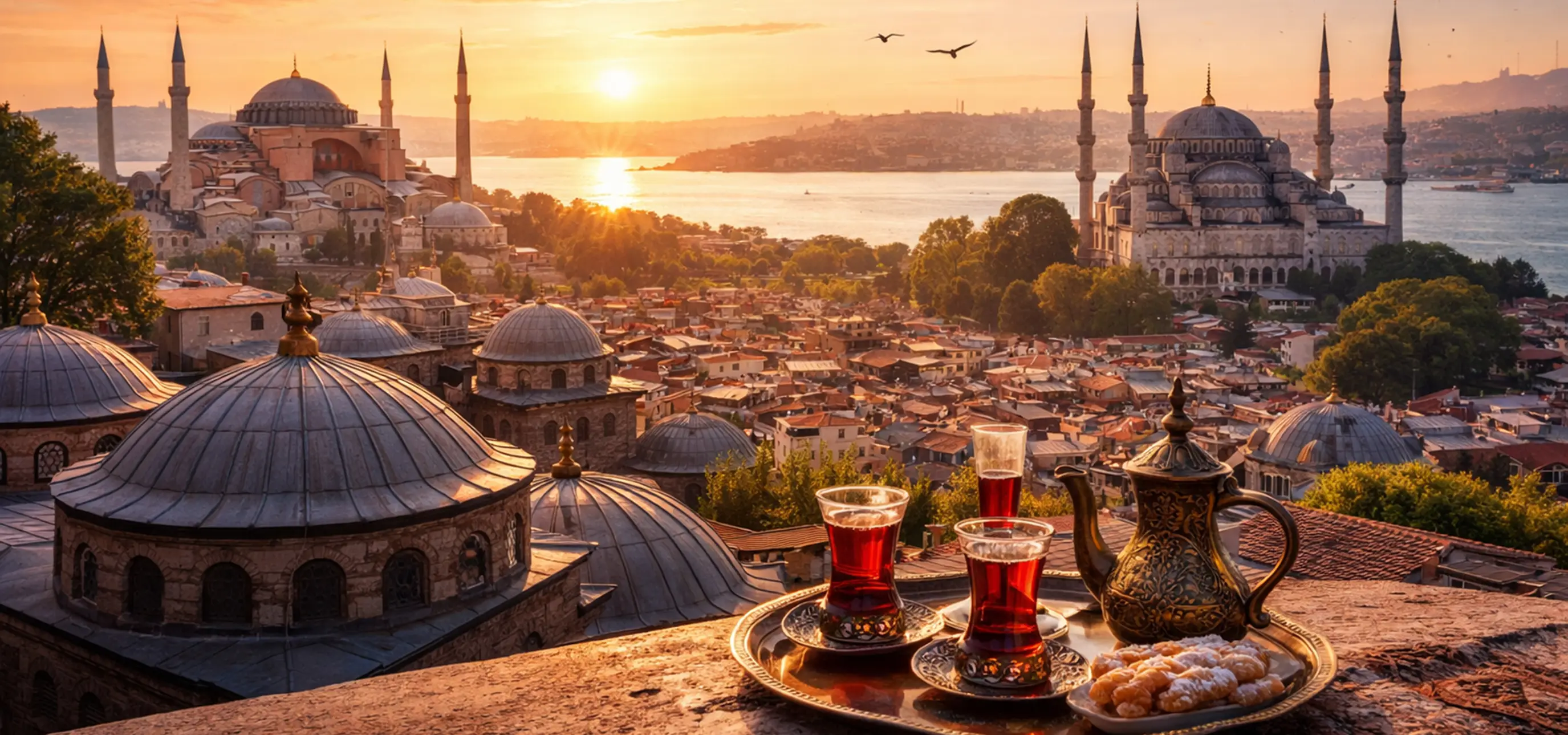
Create a private Istanbul itinerary around Byzantine monuments, Orthodox churches, Ottoman heritage, historic neighborhoods and the city's lesser-visited cultural treasures.
View Private Istanbul ToursUse St. Stephen Church as a starting point for a deeper journey through the sacred architecture and historic communities of the Golden Horn and old city.
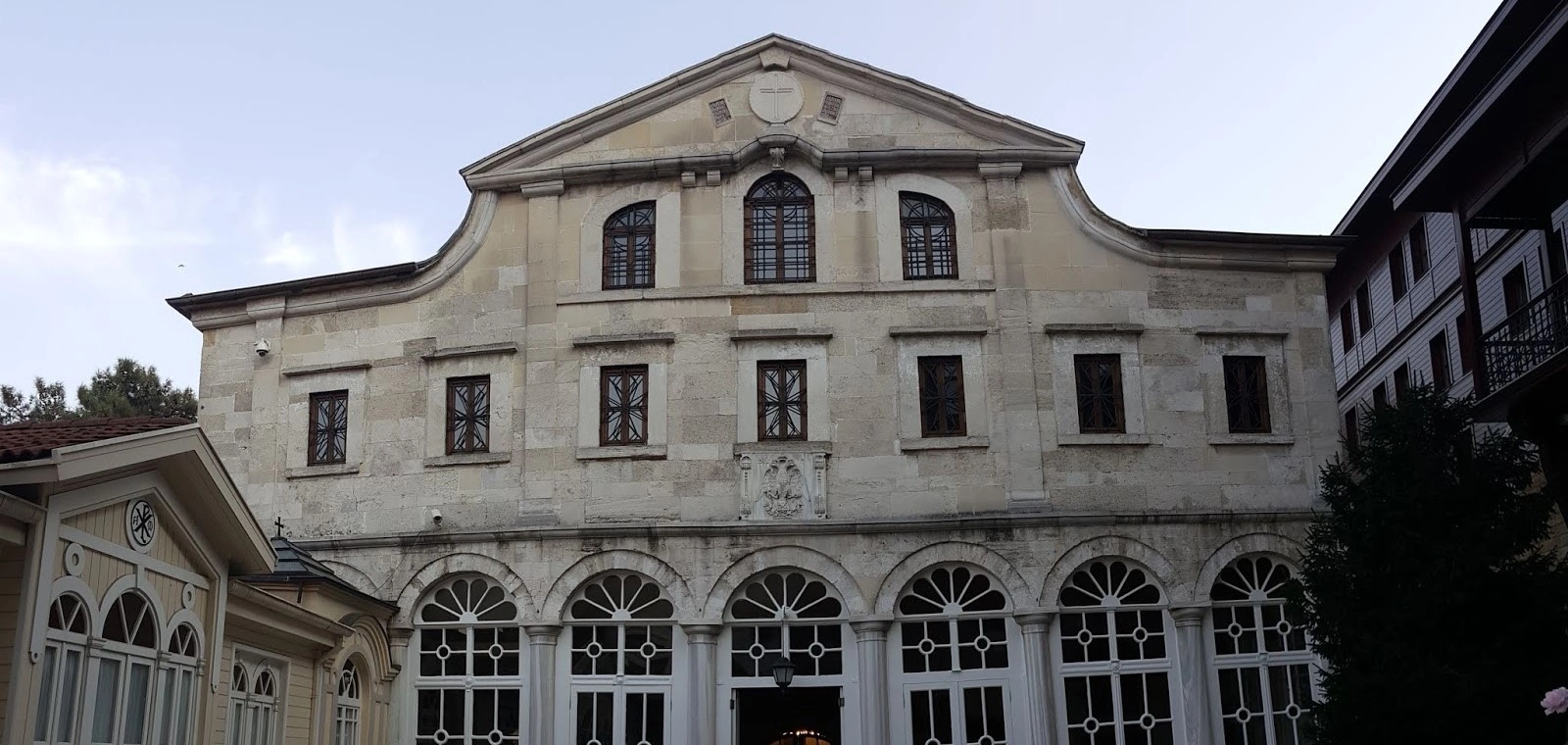
Continue through Fener to the principal church of the Ecumenical Patriarchate and explore one of Istanbul's most important living Orthodox sites.
Explore St. George Church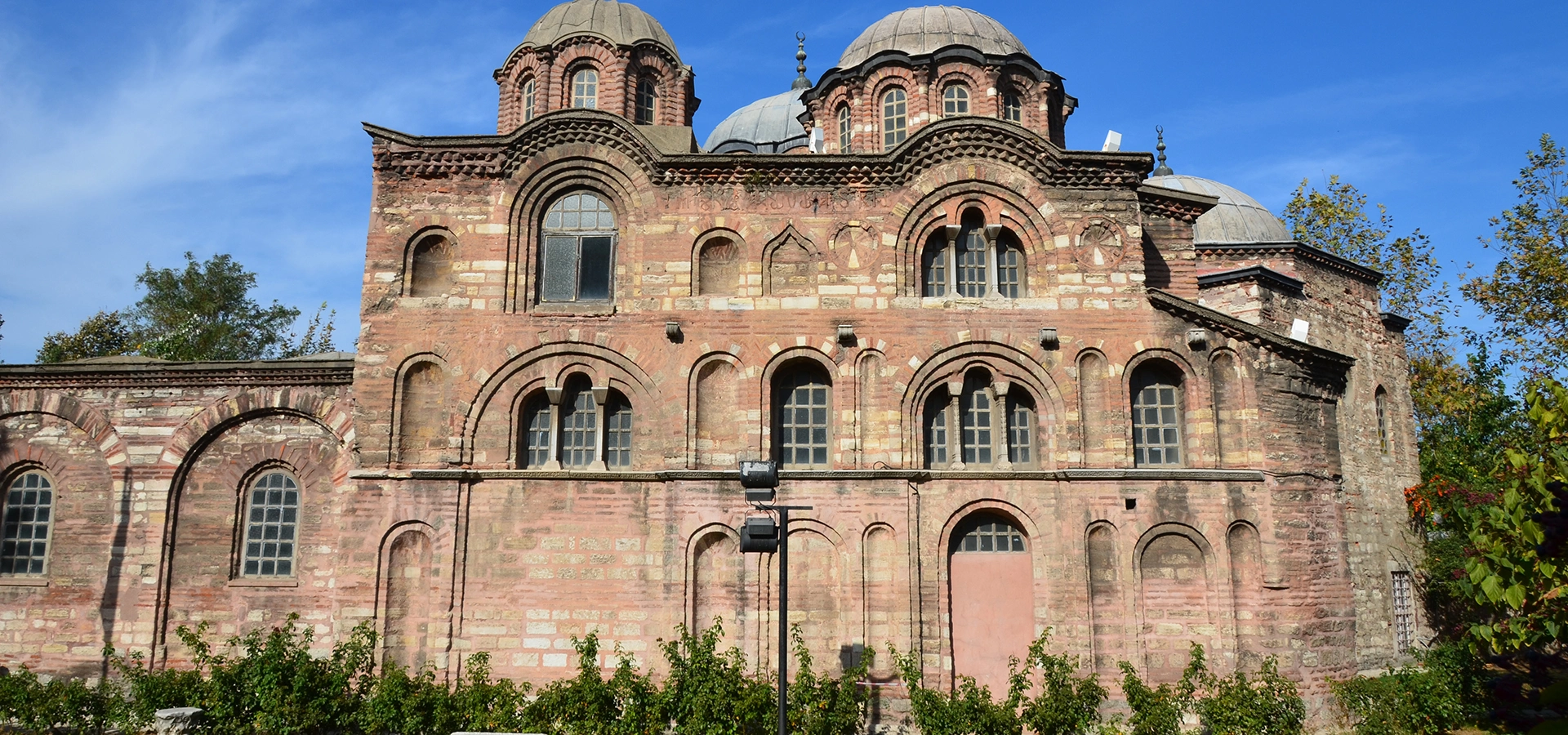
Discover an important former Byzantine church and one-time patriarchal seat with surviving late Byzantine mosaics.
Explore Pammakaristos
Discover more churches, mosques, palaces, fortresses, museums, neighborhoods and hidden historic sites across Istanbul.
Explore Istanbul
Wow Cappadocia designs unique travel experiences across Turkey. Our expert local guides help travelers explore the country's most iconic destinations including Cappadocia, Istanbul, Ephesus, Pamukkale and Antalya.
Official member of TURSAB (Association of Turkish Travel Agencies).