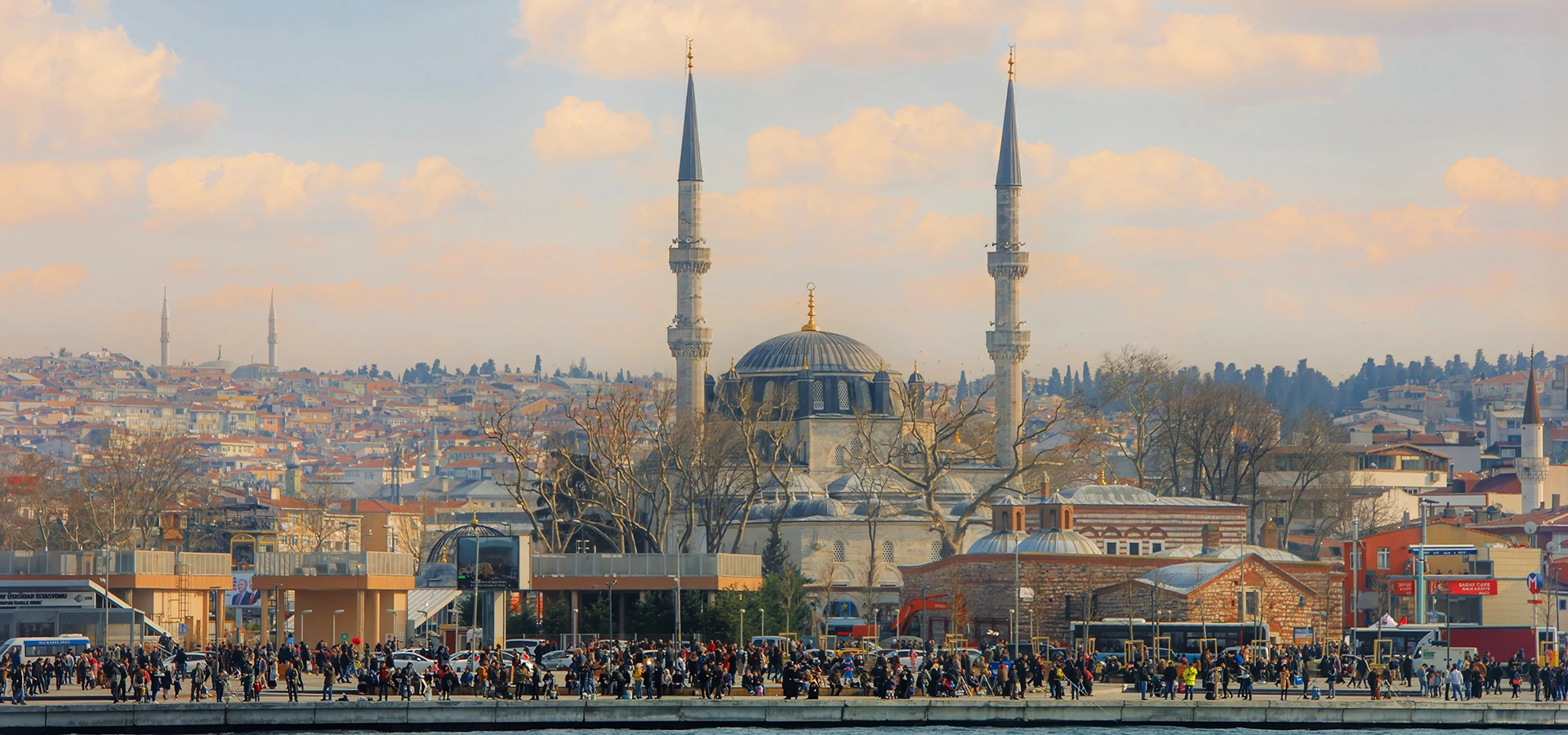
Private Eyüp Sultan & Golden Horn Tour
Ask us about a tailor-made route focused on Eyüp Sultan Mosque, the tomb, Ottoman ceremonial history, the cemetery, Pierre Loti and the Golden Horn.
Request a Custom Tour





The Eyüp Sultan Mosque, known in Turkish as Eyüp Sultan Camii, stands near the upper reaches of the Golden Horn in one of Istanbul's most important religious districts. The mosque is inseparable from the nearby tomb of Abu Ayyub al-Ansari, a companion of the Prophet Muhammad who is traditionally believed to have died during an early Arab campaign against Constantinople.
After the Ottoman conquest of Constantinople in 1453, tradition holds that the location of Abu Ayyub's grave was identified with the guidance of the scholar and spiritual figure Akşemseddin. Sultan Mehmed II, better known as Mehmed the Conqueror, then commissioned a tomb and mosque beside the site. The first mosque was completed in the 15th century and became one of the earliest great Ottoman religious foundations created after the conquest.
The building seen today is largely the result of a major reconstruction ordered by Sultan Selim III after the original mosque was severely damaged by the earthquake of 1766. Work began in 1798, and the rebuilt mosque was ceremonially opened in 1800. Its domed prayer hall, marble fittings, courtyard, fountain, historic plane tree and tiled tomb create one of Istanbul's most atmospheric sacred ensembles.
Eyüp Sultan is more than an architectural monument. For centuries it became a place of pilgrimage, prayer, royal ceremony and burial. Ottoman sultans came here for the famous sword-girding ceremony after accession, while statesmen, scholars, poets and ordinary Istanbulites sought burial in the surrounding cemetery. The district remains a living religious center today.
Discover one of the first major Ottoman religious foundations created after the conquest of Constantinople.
Visit the revered tomb of the Prophet Muhammad's companion known in Türkiye as Eyüp Sultan.
See the elegant mosque rebuilt during the reign of Sultan Selim III after the 1766 earthquake.
Experience a place where worship, pilgrimage, Ottoman history and daily Istanbul life still meet.
Essential information for visiting one of Istanbul's most important active mosques and pilgrimage destinations.
Eyüp Merkez, Eyüpsultan district, on the northern shore of the Golden Horn.
Open on Google MapsCommissioned by Sultan Mehmed II after the Ottoman conquest; the first mosque was completed in 1458.
Largely rebuilt between 1798 and 1800 during the reign of Sultan Selim III.
The complex contains the revered tomb of Abu Ayyub al-Ansari, known in Türkiye as Eyüp Sultan.
No admission ticket is required for the mosque; respectful mosque etiquette is essential.
Allow around 60–90 minutes for the mosque, tomb, courtyards and immediate historic surroundings.
Few places in Istanbul combine religious devotion, imperial ceremony and urban history as powerfully as Eyüp Sultan.
The importance of Eyüp Sultan begins with the memory of Abu Ayyub al-Ansari, a respected companion of the Prophet Muhammad. His association with the early Muslim attempts to reach Constantinople gave the site a sacred meaning that was transformed after the Ottoman conquest.
For Mehmed II, establishing a mosque and tomb beside the newly identified grave connected the Ottoman conquest of 1453 with a much older Islamic memory of Constantinople. The sanctuary therefore became both a religious foundation and a symbolic bridge between the early Islamic world and the new Ottoman capital.
Over the following centuries, the district developed into one of the most prestigious sacred landscapes of the empire. Mosques, tekkes, fountains, schools, charitable buildings, tombs and cemeteries gathered around the sanctuary. Many prominent Ottomans wished to be buried close to Eyüp Sultan.
The mosque also played a distinctive role in Ottoman political ritual. New sultans came to Eyüp to participate in the kılıç kuşanma, or sword-girding ceremony, a public act that linked the ruler to conquest, dynasty, religion and the memory of his predecessors.
For travelers using our guide to places to visit in Istanbul, Eyüp Sultan offers an experience very different from the monumental core around Sultanahmet. This is not simply a historic building to observe; it is a living sanctuary where worship, pilgrimage and neighborhood life continue every day.
The story of Eyüp Sultan reaches back to the early Muslim expeditions against Byzantine Constantinople in the 7th century. Abu Ayyub al-Ansari, whose Arabic name was Abu Ayyub Khalid ibn Zayd al-Ansari, was remembered as one of the companions of the Prophet Muhammad and as a participant in one of these campaigns.
According to long-established tradition, Abu Ayyub died near the walls of Constantinople and was buried close to the city. His grave became part of local religious memory, although the precise details of its early medieval history are difficult to reconstruct from surviving evidence.
After Mehmed II captured Constantinople in 1453, Ottoman tradition credits his spiritual teacher Akşemseddin with identifying the location of Abu Ayyub's burial. A tomb was constructed over the grave and a mosque was built nearby. The mosque was completed in 1458, creating a major sacred foundation only a few years after the conquest.
The complex was enlarged and repaired by later Ottoman rulers. Its minarets were rebuilt and heightened in the 18th century, while royal patronage added fountains, ceremonial spaces and other architectural elements to the surrounding sanctuary.
The destructive earthquake of 1766 left the earlier mosque too badly damaged for ordinary repair. A new rebuilding campaign began under Sultan Selim III in 1798. Most of the old mosque was replaced, while important earlier elements and the sacred relationship with the tomb were preserved.
The reconstructed mosque was completed in 1800 and formally opened with the participation of Sultan Selim III. Further repairs followed after later earthquakes, fires and periods of structural wear, allowing the sanctuary to remain one of Istanbul's most continuously visited religious sites.
Abu Ayyub al-Ansari is traditionally believed to have died during an early Muslim campaign against Constantinople.
Constantinople is conquered by Mehmed II, and Ottoman tradition associates Akşemseddin with identifying Abu Ayyub's grave.
The first Eyüp Sultan Mosque is completed beside the newly constructed tomb.
A major earthquake severely damages the earlier mosque.
Sultan Selim III rebuilds the mosque in the form that largely defines the sanctuary today.
Eyüp Sultan remains an active mosque, pilgrimage destination and one of Istanbul's strongest centers of religious memory.
Abu Ayyub al-Ansari was an early Muslim from Medina and is remembered in Islamic tradition as one of the close companions of the Prophet Muhammad. He is particularly famous for hosting the Prophet in his home after the migration from Mecca to Medina.
Later tradition also associates Abu Ayyub with military campaigns beyond Arabia. Despite his advanced age, he is said to have joined an expedition directed against Byzantine Constantinople and to have died near the city during the campaign.
In Istanbul he is commonly known as Eyüp Sultan. The honorific "Sultan" in this context reflects reverence rather than political kingship. His tomb became one of the most important Islamic pilgrimage destinations in the Ottoman capital.
For centuries, visitors have come to the sanctuary to pray, recite the Qur'an, seek spiritual comfort and honor the memory of a companion whose life connected the earliest Islamic community with Constantinople.
The Ottoman conquest of Constantinople fundamentally changed the meaning of the area around Abu Ayyub's burial. According to Ottoman tradition, Mehmed II asked the respected scholar and spiritual teacher Akşemseddin to identify the location of the companion's grave.
The discovery story became one of the most important foundation narratives of Ottoman Istanbul. By marking the grave, constructing a tomb and building a mosque beside it, Mehmed II transformed the site into a sacred center for the new capital.
This decision had powerful symbolism. The Ottoman ruler who had finally conquered Constantinople was connecting his victory with a Muslim figure who had approached the city centuries earlier. Eyüp therefore became a place where the memory of early Islam and Ottoman imperial identity reinforced one another.
The foundation quickly attracted charitable institutions, religious buildings and burials. Over time, the district developed into a major spiritual suburb beyond the old city walls, centered on the mosque and tomb but extending across the surrounding Golden Horn landscape.
The site connected Mehmed II's conquest with much older Islamic traditions concerning Constantinople.
The scholar and Sufi figure is traditionally credited with identifying Abu Ayyub's burial place.
Mehmed II immediately elevated the site through a tomb, mosque and charitable foundation.
The sanctuary encouraged the growth of a wider religious and funerary landscape around Eyüp.
The mosque founded by Mehmed II survived for more than three centuries, but repeated repairs could not completely protect the structure from earthquakes and age. The great Istanbul earthquake of 1766 caused especially serious damage.
By the end of the 18th century, rebuilding was considered necessary. Construction of the present mosque began in 1798 during the reign of Sultan Selim III. The project preserved the sacred focus of the earlier complex while giving the mosque a new architectural form.
The reconstructed building was completed after approximately twenty-eight months and opened in 1800. Sultan Selim III attended the ceremonial opening and Friday prayer, strengthening the mosque's continuing relationship with the Ottoman dynasty.
The rebuilding explains why Eyüp Sultan can feel stylistically different from the great 15th- and 16th-century imperial mosques of Istanbul. The sanctuary has medieval origins, but much of the architecture visible today belongs to the late 18th-century Ottoman world.
The present mosque has a compact monumental form centered on a large main dome. The prayer hall is organized around an octagonal structural system, with supporting piers and columns carrying arches beneath the central dome.
Smaller domed and semi-domed spaces soften the transition toward the outer walls. The mihrab projects toward the qibla side, while the minbar is made of marble. Galleries extend along parts of the interior, creating additional levels around the main worship space.
Before entering the prayer hall, visitors pass through a domed portico and courtyard. The ensemble is especially memorable because the mosque is not isolated: the tomb, fountains, historic tree, cemetery entrances and surrounding religious buildings all form part of the experience.
The two slender minarets preserve important earlier phases of the complex. They were rebuilt and altered before Selim III's reconstruction, demonstrating how different Ottoman periods remain layered together at the site.
A large dome dominates the prayer hall and gives the mosque its strong interior focus.
The main dome is carried through an eight-part structural arrangement characteristic of the present design.
The prayer direction is emphasized by a projecting mihrab and refined marble architectural details.
The pulpit continues the restrained but elegant late Ottoman character of the interior.
Arcades, fountain elements and the historic plane tree create one of Istanbul's most atmospheric mosque courtyards.
The minarets reflect earlier phases of Ottoman rebuilding and survived the late 18th-century reconstruction.
The Eyüp Sultan Tomb stands beside the mosque and is the spiritual center of the entire complex. Constructed soon after the Ottoman conquest, it marks the burial place traditionally identified as that of Abu Ayyub al-Ansari.
The tomb is an octagonal, single-domed structure built in finely cut stone. Its interior became increasingly rich through centuries of royal patronage, with İznik tiles, calligraphy, silver fittings, lamps and ceremonial objects contributing to the devotional atmosphere.
Visitors approach the enclosed cenotaph in a steady flow. Many stop to pray quietly, recite verses or simply stand in respectful silence. The tomb is not presented like a conventional museum display: it remains an active devotional space.
A revered footprint relic associated by tradition with the Prophet Muhammad is also connected with the tomb complex. As with many sacred relic traditions, visitors should approach the object within the religious context in which it is venerated.
The compact polygonal tomb is crowned by a single dome.
Historic tiles contribute color and refinement to the interior decoration.
Later Ottoman fittings surround the symbolic cenotaph and emphasize the sanctity of the space.
The tomb continues to receive worshippers and visitors throughout the year.
Eyüp Sultan held a unique place in Ottoman political ritual because newly enthroned sultans came here for the ceremonial girding of the sword. Known as the Kılıç Alayı, the ceremony functioned as one of the defining public acts of accession.
The ritual linked the new ruler with the memory of Mehmed II, the conquest of Constantinople and the sacred prestige of Abu Ayyub al-Ansari. In this way, the sultan's authority was expressed not only through dynastic succession but through a symbolic relationship with religion and conquest.
The precise details of the ceremony changed over the centuries. Sultans might travel to Eyüp by land or by boat along the Golden Horn, visit important tombs, pray in the mosque and then receive one or more ceremonial swords.
Afterward, the imperial procession through Istanbul allowed subjects to see the new ruler. The ceremony therefore combined devotion, dynasty, public theater and political legitimacy in a way found nowhere else in the Ottoman capital.
The ceremony took place after a new Ottoman sultan came to the throne.
Eyüp connected the ruler with Abu Ayyub al-Ansari and the Islamic memory of Constantinople.
The ritual reinforced continuity with Mehmed II and the conquest of 1453.
The journey to and from Eyüp allowed the new ruler to appear before the people of the capital.
The mosque and tomb attracted pilgrims from across the Ottoman Empire. Visitors came before military campaigns, before journeys, during religious festivals and at important moments of family life. The sanctuary gradually acquired a devotional rhythm distinct from the administrative and commercial center of Istanbul.
Even today, Eyüp can be especially busy during Ramadan, holy nights, Fridays and religious holidays. Families also visit after weddings, circumcision celebrations and other important occasions, continuing traditions that connect personal life with the sacred character of the district.
This living religious role is essential to understanding the site. Visitors should avoid treating Eyüp Sultan as a purely historical attraction. Photography and sightseeing are welcome when conducted respectfully, but worshippers always have priority.
The sacred prestige of Abu Ayyub's tomb made burial near Eyüp Sultan highly desirable. Over centuries, the hills behind the mosque filled with graves, mausoleums and funerary monuments belonging to Ottoman statesmen, scholars, military figures, artists and ordinary citizens.
The result is one of Istanbul's most extraordinary historic cemeteries. Paths climb steeply from the mosque toward Pierre Loti Hill, passing thousands of Ottoman and later gravestones carved with calligraphy, floral decoration and symbols indicating rank or profession.
Important figures buried in the wider Eyüp cemetery include grand viziers, religious leaders, writers, poets and military commanders. The cemetery is valuable not only for the people buried there but also for the development of Ottoman stone carving and calligraphic art.
Walking through the cemetery should be done quietly and respectfully. Stay on established paths, avoid touching or leaning on old gravestones, and remember that this remains an active burial ground rather than an archaeological park.
Study carved inscriptions, turbans, floral motifs and symbols of social identity.
The sanctuary attracted the tombs of prominent statesmen and religious figures.
The cemetery paths climb naturally toward Pierre Loti Hill and its Golden Horn viewpoint.
Many areas remain active burial grounds and deserve the same respect as the mosque itself.
A meaningful visit should include more than the prayer hall. The spiritual and historical importance of Eyüp Sultan is best understood by moving slowly through the mosque, the tomb, courtyards and surrounding funerary landscape.
Look upward toward the central dome and observe the late Ottoman spatial organization of the rebuilt mosque.
Notice the marble fittings that define the qibla wall and ceremonial focus of the interior.
Visit the revered octagonal tomb of Abu Ayyub al-Ansari beside the mosque.
Spend time around the fountain, arcades and celebrated plane tree at the heart of the complex.
Observe how mosque, tomb, shops, fountains and public life blend into a continuous sacred district.
Continue uphill through one of Istanbul's most important historic Muslim cemeteries.
Shoulders and knees should be covered. Women should cover their hair when entering the main prayer hall.
Shoes must be removed before entering carpeted prayer areas. Use the provided bags or designated storage.
Sightseeing is easiest between congregational prayers, especially outside the busy Friday noon period.
Remember that worship, Qur'an recitation and private prayer continue throughout the day.
Ramadan, Fridays, holy nights and religious holidays can bring very large numbers of visitors.
Pierre Loti Hill, Eyüp Cemetery and the Golden Horn make this an excellent half-day Istanbul route.
Begin at Eyüp Sultan Square and enter the mosque complex before the busiest part of the day. Visit the main prayer hall quietly, then continue to the tomb of Abu Ayyub al-Ansari. Allow time to observe the courtyard and the surrounding religious buildings rather than moving immediately onward.
From the mosque, enter the historic Eyüp Cemetery and follow the uphill paths toward Pierre Loti Hill. The climb passes some of Istanbul's finest Ottoman gravestones and gradually opens views toward the Golden Horn.
At the top, pause for the panoramic view. You can return by walking downhill through the cemetery or use the TF2 Eyüp–Pierre Loti cable car when operating.
Finish with a walk along the Golden Horn waterfront. If you have additional time, continue toward Artİstanbul Feshane or explore the historic streets, fountains and small mosques of the wider Eyüp district.
Eyüp Sultan is a working mosque, not a ticketed museum. The mosque is used for the five daily prayers, Friday congregational prayer, Ramadan worship, funerals and religious ceremonies. Visitors should therefore plan sightseeing around the rhythm of worship.
The mosque itself is generally accessible every day as a place of prayer. For ordinary sightseeing, the calmest approach is to visit between prayer periods and to avoid entering the main prayer area while a congregational prayer is in progress.
The Eyüp Sultan Tomb has its own official visiting schedule. As checked in August 2026, the Istanbul Provincial Directorate of Culture and Tourism schedule for the period from 1 May to 1 October 2026 lists the tomb as open daily from 06:30 to 23:00. The schedule also notes extended opening on certain holy days and nights.
Opening arrangements can change seasonally, and religious ceremonies can temporarily affect access. Always check current official information shortly before visiting if the tomb is a priority.
Usually the calmest time for architecture, courtyard photography and a quiet tomb visit.
Beautiful Golden Horn light makes it easy to continue toward the cemetery and Pierre Loti Hill.
Spiritually important but very busy around the midday congregational prayer; sightseeing is easier at another time.
Exceptionally atmospheric, especially in the evening, but expect large crowds and active worship.
Mild weather is ideal for combining the mosque with the steep cemetery walk and Golden Horn waterfront.
The sanctuary can become extremely crowded as worshippers arrive from across Istanbul and beyond.
Enough for a brief look at the mosque courtyard and main prayer hall outside prayer time.
The best range for the mosque, tomb, courtyards and immediate historic surroundings.
Add part of Eyüp Cemetery and time to study the Ottoman gravestones.
Combine the sanctuary with the full cemetery walk, Pierre Loti Hill and the Golden Horn waterfront.
Eyüp Sultan offers excellent architectural and documentary photography, but the needs of worshippers must come before the desire for a photograph. The courtyard, minarets and surrounding cemetery provide many strong compositions without disturbing prayer.
Frame the domes, arcades and plane tree together to capture the character of the sanctuary.
Photograph upward from the side of the prayer hall without standing in front of worshippers.
Use restraint around the tomb, where devotional activity is continuous and personal.
The carved Ottoman gravestones reward close study, especially in soft morning or afternoon light.
Pierre Loti Hill provides a classic panoramic perspective across the upper Golden Horn.
Avoid photographing people during prayer or private acts of devotion without permission.
The mosque is located in a busy, largely pedestrianized central square and the main sanctuary is easier to reach than many of Istanbul's hilltop monuments. However, thresholds, crowds, shoe-removal areas and historic surfaces can affect mobility.
Vehicles generally stop outside the immediate pedestrian core, leaving a short approach on foot.
Step-free arrangements may be available at selected entrances, but routes can change during busy periods.
The tomb can become crowded and narrow; allow extra time if mobility is limited.
The uphill cemetery route toward Pierre Loti is steep and includes uneven historic surfaces.
The TF2 cable car can reduce the steep climb when visiting Pierre Loti Hill.
If step-free access is essential, confirm current entrance arrangements before visiting.
Eyüp Sultan Mosque stands in Eyüp Merkez on the northern side of the Golden Horn. Public transport is usually easier than driving because the streets around the sanctuary are busy and parts of the immediate center are pedestrianized.
Use the T5 Eminönü–Alibeyköy tram along the Golden Horn and walk from the Eyüpsultan stop area toward the mosque.
Take the T1 tram to Eminönü, then change to the T5 Golden Horn tram toward Eyüpsultan.
Reach Eminönü by tram, ferry or walking across Galata Bridge, then continue on the T5 line.
Use metro and tram connections toward the Golden Horn, or take a taxi directly to Eyüp Sultan Square.
Golden Horn ferry services can provide a scenic approach when schedules and routes are convenient.
Ask for "Eyüp Sultan Camii." Traffic can be heavy around Fridays, Ramadan evenings and religious holidays.
Eyüp Sultan can anchor an excellent half-day or full-day route through the upper Golden Horn. Use our complete Istanbul visitor guide to connect the sanctuary with Byzantine monuments, Ottoman neighborhoods and waterfront cultural sites.
Climb through the cemetery or use the cable car for one of the best-known panoramas over the Golden Horn.
Walk among historic Ottoman graves, mausoleums and calligraphic funerary monuments.
Continue along the waterfront to the restored Ottoman industrial complex now used for exhibitions and cultural events.
Continue toward the land walls to explore the defenses that protected the Byzantine capital for centuries.
Explore one of Istanbul's greatest surviving monuments of Late Byzantine mosaic and fresco decoration.
Discover another important Byzantine church complex in the historic neighborhoods above the Golden Horn.
Continue toward one of Constantinople's largest surviving Middle Byzantine monastic complexes.
Follow the historic peninsula inward to one of Roman Constantinople's most impressive engineering monuments.
It is in Eyüp Merkez in Istanbul's Eyüpsultan district, on the northern side of the Golden Horn.
The adjoining tomb is traditionally identified as the burial place of Abu Ayyub al-Ansari, a companion of the Prophet Muhammad known in Türkiye as Eyüp Sultan.
He was a companion of the Prophet Muhammad from Medina, remembered for hosting the Prophet after the migration to Medina and for participating in an early Muslim campaign against Constantinople.
The first mosque was commissioned by Mehmed II and completed in 1458. The present mosque largely dates from the rebuilding of 1798–1800 under Sultan Selim III.
No. The earlier mosque was badly damaged by the 1766 earthquake and was largely rebuilt at the end of the 18th century.
It combines the revered tomb of Abu Ayyub al-Ansari with the memory of Mehmed II's conquest and centuries of Ottoman pilgrimage and imperial ceremony.
After accession, Ottoman sultans came to Eyüp for the ceremonial girding of a sword, a ritual connecting the ruler with dynasty, conquest and sacred legitimacy.
Yes. It is an active mosque rather than a ticketed museum, so no general admission ticket is required.
Visitors of all backgrounds can normally enter respectfully outside congregational prayer periods, subject to current mosque arrangements.
Women should cover their hair inside the main prayer hall, and all visitors should wear clothing that covers shoulders and knees.
Yes. Shoes must be removed before entering the carpeted prayer areas.
Because Eyüp Sultan is an active mosque, sightseeing may be restricted during congregational prayers. Visiting between prayer periods is more comfortable.
A weekday morning is usually best for a quieter experience. Friday noon, Ramadan evenings and holy nights are much busier.
The current Istanbul Provincial Directorate schedule for 1 May–1 October 2026 lists the tomb as open daily from 06:30 to 23:00. Hours can change seasonally.
Allow around 60–90 minutes for the mosque, tomb and courtyards. A half day is ideal if you also visit the cemetery and Pierre Loti Hill.
Discreet photography is generally possible, but never disturb worshippers or photograph people engaged in prayer without permission.
It became one of the Ottoman Empire's most prestigious burial grounds and preserves a remarkable collection of historic gravestones and mausoleums.
Yes. The traditional route climbs through Eyüp Cemetery. The path is steep but historically atmospheric.
Yes. The TF2 Eyüp–Pierre Loti cable car connects the lower Eyüp area with the hill when operating.
Absolutely, especially for travelers interested in Ottoman history, Islamic heritage and the living religious culture of Istanbul beyond the main tourist center.
Never stand in front of someone praying or block access to prayer rows and entrances.
Modest clothing shows respect for the religious function of the mosque and tomb.
Avoid loud conversation, speakerphone use and disruptive group behavior.
Do not turn private prayer, grief or pilgrimage into intrusive photography.
Stay on paths and never sit, climb or place belongings on historic gravestones.
Religious ceremonies and crowd management may temporarily alter normal visitor routes.
Connect Eyüp Sultan with Ottoman ceremonial history, Byzantine Constantinople, historic cemeteries and the neighborhoods of the Golden Horn through a private route shaped around your interests and without compulsory shopping stops.
Choose a focused half-day visit around the mosque and Pierre Loti, or a deeper private route linking Eyüp with the city walls, Byzantine churches and historic Fatih.
Ask us about a tailor-made route focused on Eyüp Sultan Mosque, the tomb, Ottoman ceremonial history, the cemetery, Pierre Loti and the Golden Horn.
Request a Custom Tour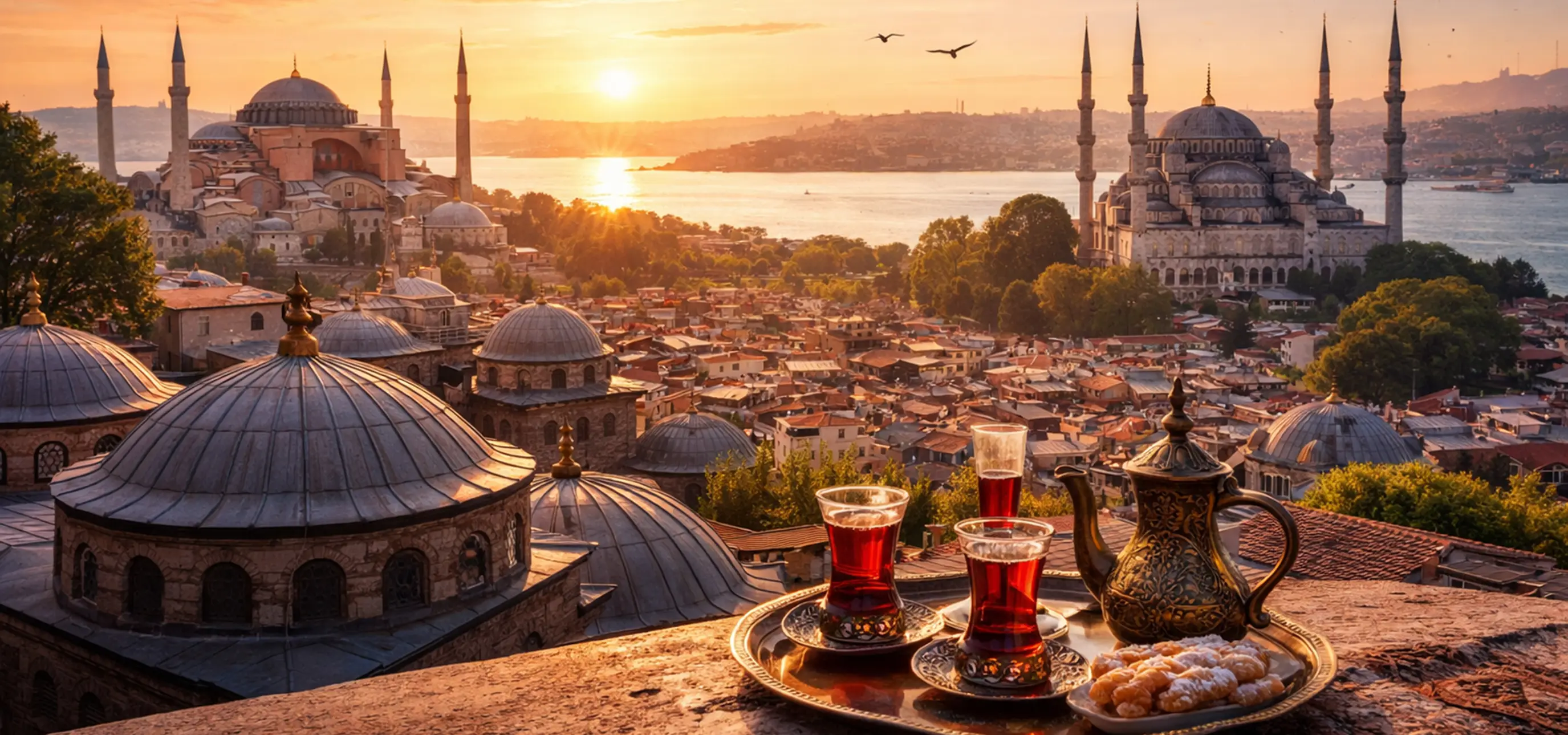
Discover imperial mosques, Byzantine churches, archaeological sites, historic neighborhoods, markets and waterfront districts across Istanbul.
View Istanbul GuideFollow the story from the sacred Golden Horn to the Byzantine walls and monuments of Constantinople.
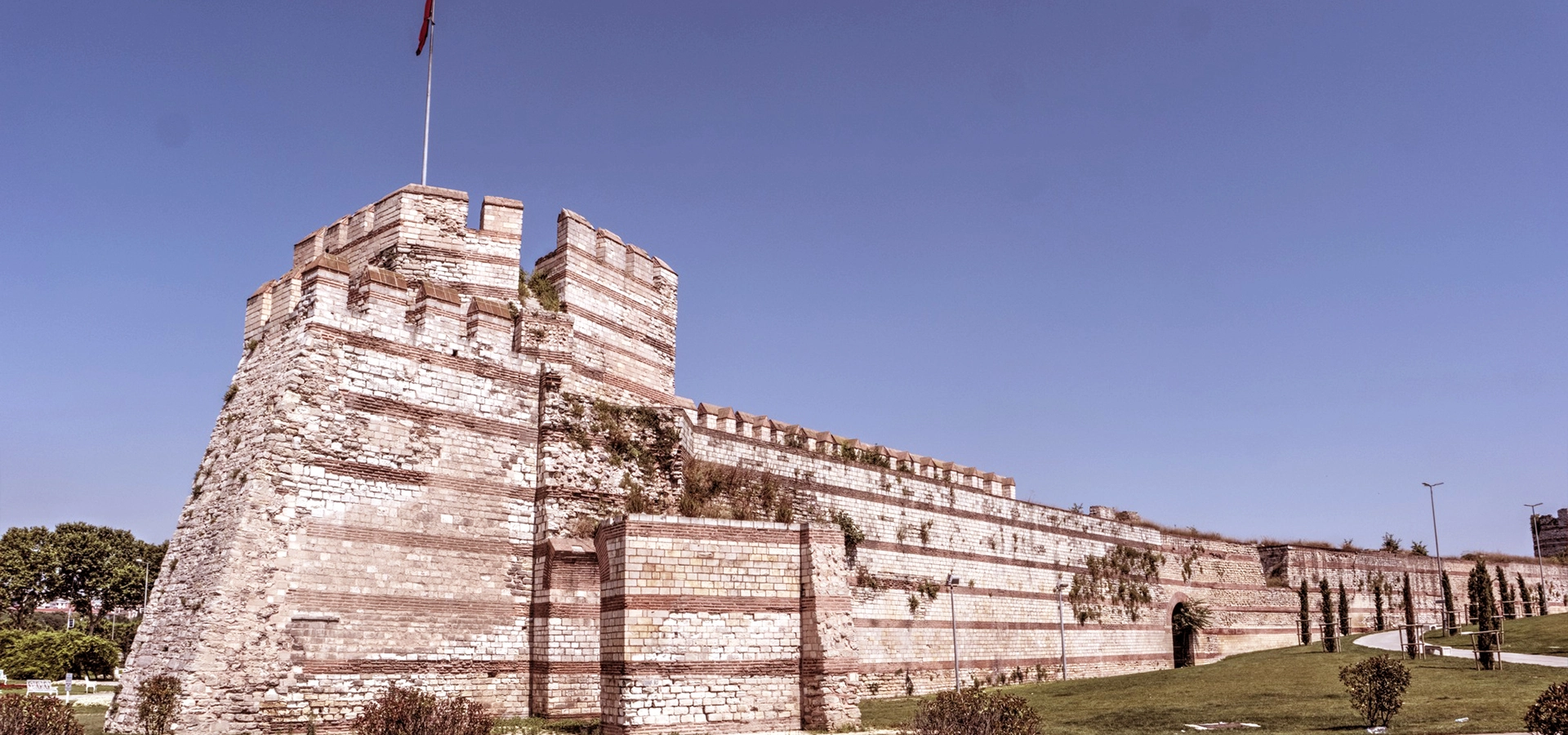
Explore the defenses that shaped the sieges, conquest and history of Byzantine Constantinople.
Explore the City Walls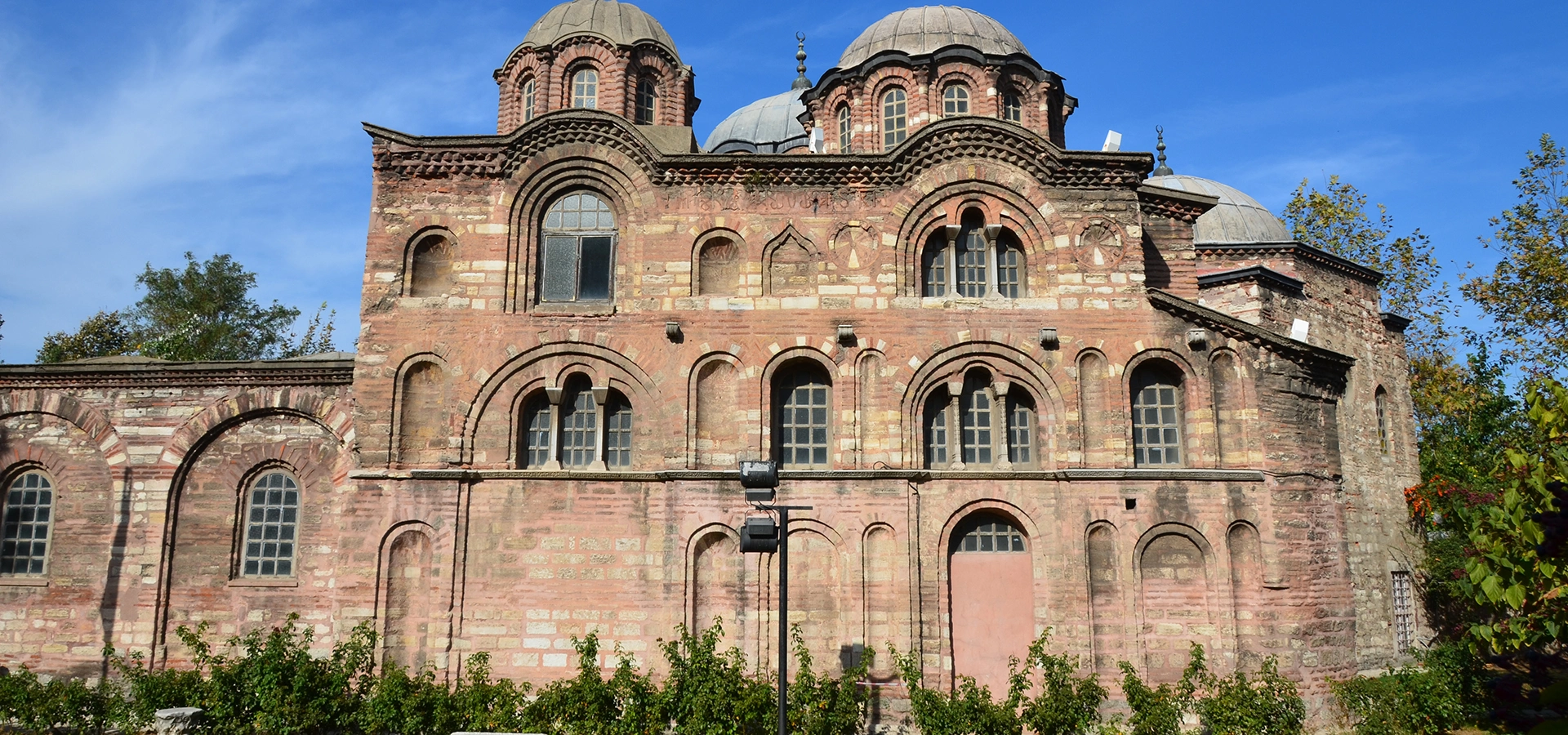
Continue through the historic neighborhoods above the Golden Horn to an important Byzantine church complex.
Explore Pammakaristos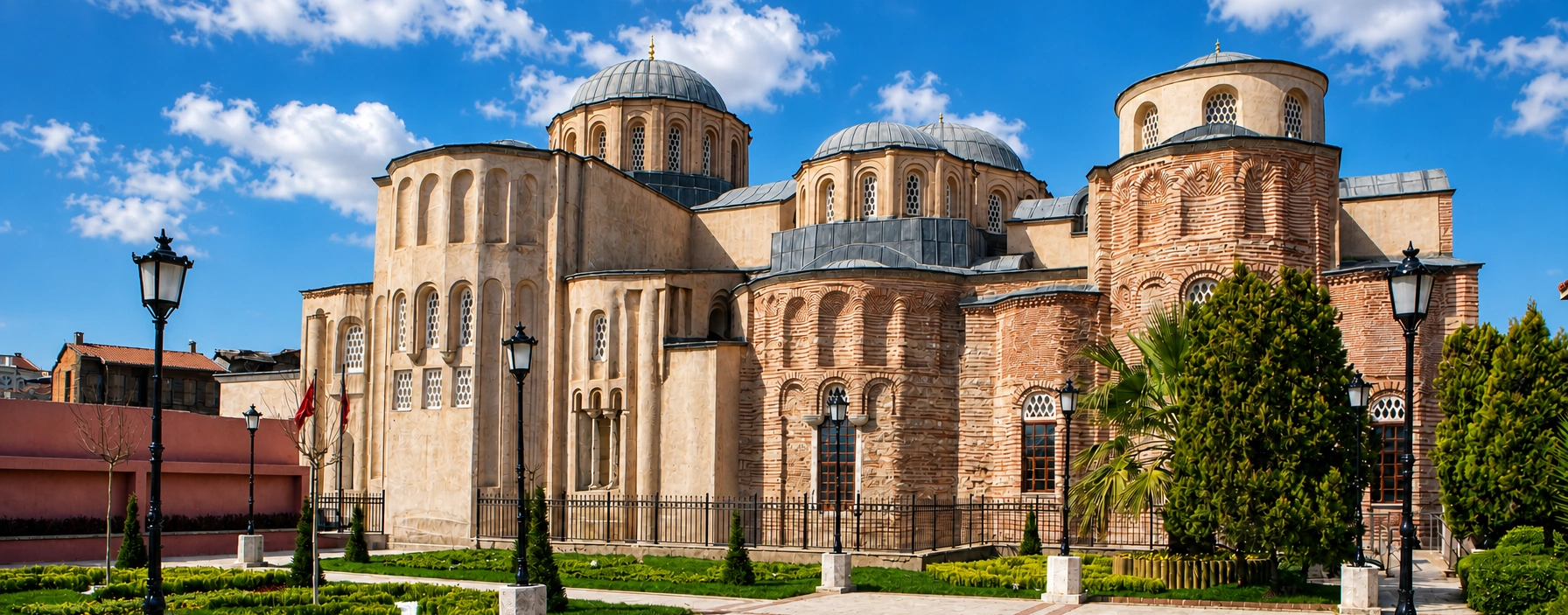
See one of Constantinople's greatest surviving Middle Byzantine monastic foundations above the Golden Horn.
Explore Zeyrek