Private Foça & Ancient Phokaia Experience
Ask us about a tailor-made day combining ancient Phokaia, Beşkapılar, Eski Foça's harbour, local food and selected coastal stops.
Request a Custom Foça Tour





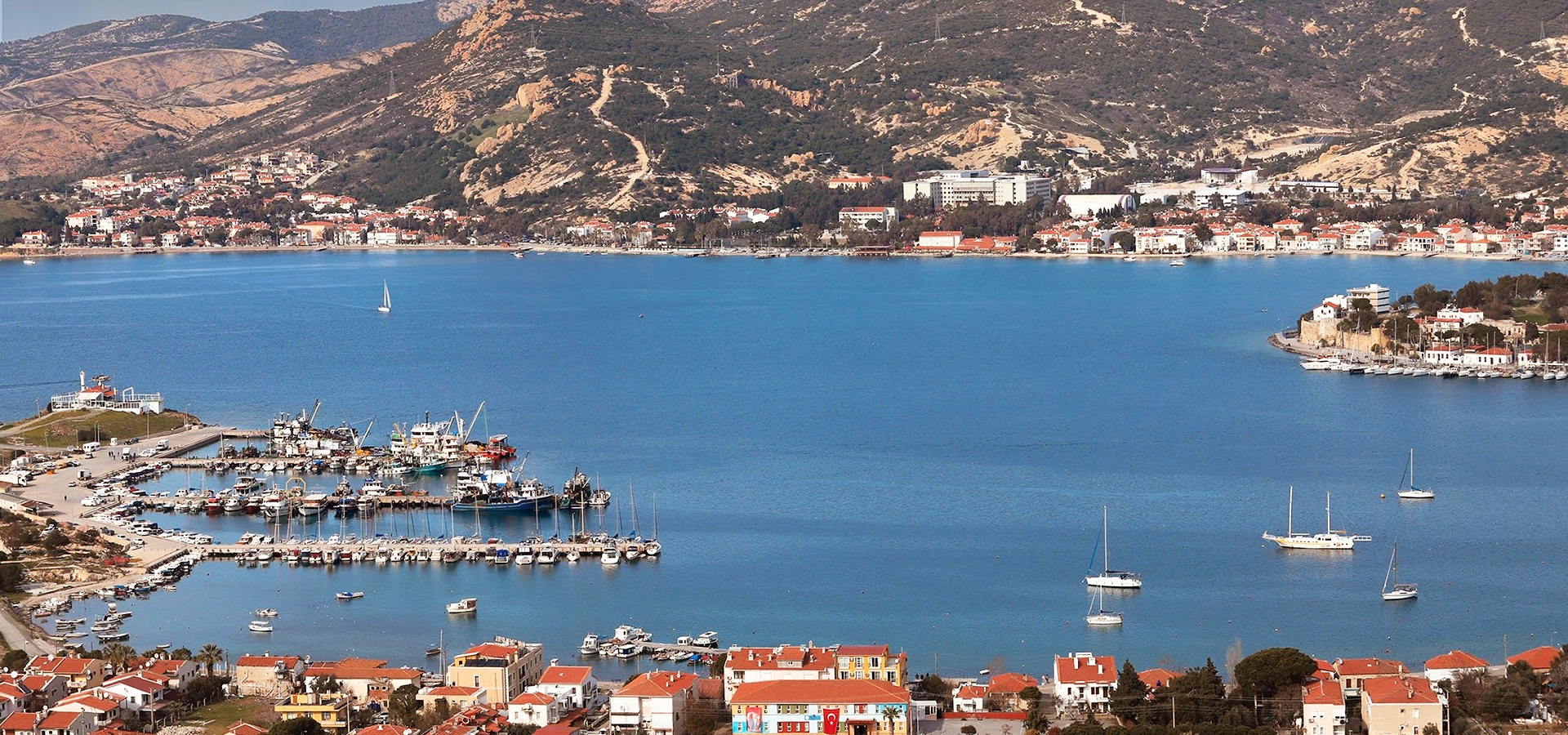
Foça is one of those Aegean places where the present town and the ancient city occupy almost the same ground. Fishing boats, waterfront restaurants and stone houses surround a peninsula that once belonged to Phokaia, one of the great maritime cities of ancient Ionia.
Its sailors travelled extraordinary distances for their time and helped establish settlements across the western Mediterranean. The Phocaean story is still visible in archaeology, city walls, ancient sanctuaries and the wider identity of a town that has always looked toward the sea.
Modern Foça adds another layer: Eski Foça's historic streets and harbour, Beşkapılar Castle, the Foça Islands, Siren Rocks, Mediterranean monk seal habitat, boat trips, Mersinaki bays, Yeni Foça and Kozbeyli Village.
The result is a destination that works equally well for archaeology lovers, photographers, swimmers, seafood travellers and anyone looking for a smaller coastal base with a strong sense of place.
Trace an Ionian maritime city whose sailors connected Anatolia with Massalia, Corsica, Italy and the western Mediterranean.
Walk between stone houses, fishing boats, historic fortifications, mosques and the twin harbour landscape of Eski Foça.
Explore a protected coastal environment of islands, caves and rocky shores associated with the endangered Mediterranean monk seal.
Combine clear-water bays with wild greens, fresh fish, seafood, local market produce and a long sunset dinner by the harbour.
Essential information for planning archaeology, harbour walks, boat trips, beaches, food and day trips across the Foça district.
Northern İzmir Province on the Aegean coast, roughly 70 km northwest of central İzmir.
Phokaia, one of the most important maritime cities of ancient Ionia.
Phocaean sailors were famous for long-distance navigation and western Mediterranean colonisation.
Foça Fortress and Beşkapılar, shaped by Byzantine, Genoese and Ottoman periods.
Foça Fortress is included in Türkiye's UNESCO Tentative List nomination for the Genoese Maritime Network.
Foça is one of Türkiye's best-known Mediterranean monk seal landscapes, although sightings are never guaranteed.
Foça forms a Special Environmental Protection Area with islands, bays and sensitive marine habitat.
Orak, İncir, Fener and other islands shape the seascape in front of Foça.
Mersinaki bays, Karakum and coastal areas between Eski Foça and Yeni Foça offer varied swimming options.
Fresh fish, seafood, wild Aegean greens, fish soup and regional olive-oil dishes.
Foça's main farmers market is held on Tuesdays; Yeni Foça's market is held on Wednesdays.
May–June and September–October for the best overall balance of weather, sea, archaeology and lighter crowds.
Foça is especially rewarding because its history, landscape and everyday life are still tightly connected to the sea.
The first reason to come is Phokaia. This was not a minor coastal settlement. It was one of Ionia's great maritime cities, and its sailors pushed far beyond the Aegean to establish or support settlements in the western Mediterranean.
The second reason is Eski Foça itself. Stone houses, fishing boats, low-rise streets, waterfront cafés and the peninsula's two harbour fronts create a town that is enjoyable even when you are not visiting a formal monument.
The third reason is the protected marine landscape. Foça's islands, caves and rocky shores are part of a Special Environmental Protection Area and are closely associated with the Mediterranean monk seal.
Finally, Foça has enough variety for more than a day trip. Archaeology, beaches, boat excursions, Yeni Foça, Kozbeyli, local markets and long seafood evenings can easily fill two or three relaxed days.
Foça lies on the northern side of the Gulf of İzmir, about 70 kilometres northwest of central İzmir. The district faces a deeply indented Aegean coast of headlands, coves, small islands and natural harbours.
The historic centre is usually called Eski Foça or Old Foça. This is where you will find the best-known harbour, Beşkapılar, old streets, waterfront restaurants and most of the visible historic character.
Yeni Foça lies farther north and has its own beach, promenade, marina and summer-town atmosphere. Between the two are Mersinaki bays and a long stretch of coastal road.
Eski Foça is the historic heart of the district. It contains the old harbour, Beşkapılar, traditional houses, archaeological remains, fish restaurants and the compact waterfront most first-time visitors associate with Foça.
Yeni Foça is a separate coastal settlement farther north. It has a broader summer-resort character, beaches, a long waterfront and a modern marina, and it becomes especially active in the warmer months.
If you have only one day, concentrate on Eski Foça and ancient Phokaia. If you have two or more days, the drive between Eski Foça and Yeni Foça is worthwhile because it reveals the bays and coastal landscapes that connect the two.
Kozbeyli and inland villages add a third dimension: rural Foça, with village streets, breakfast, olive landscapes and local coffee traditions.
Archaeology shows settlement in the Foça area long before the classical city reached its height. By the early first millennium BC, Phokaia had become part of the Ionian world and developed into one of its most outward-looking maritime centres.
The city's major rise came in the seventh and sixth centuries BC. Phocaean sailors traded widely and travelled as far as the western Mediterranean, while the city minted early electrum coinage and built strong fortifications.
In 546 BC, Persian forces under Harpagos captured Phokaia after the fall of the Lydian kingdom. Ancient literary traditions describe many inhabitants leaving by sea rather than accepting Persian rule, although settlement later continued.
Phokaia subsequently passed through Hellenistic, Roman and Byzantine rule. During the medieval period, Genoese influence became important in Foça, particularly because of regional maritime trade and alum production around Yeni Foça.
Foça entered Ottoman rule in 1455. Fortifications were repaired and adapted, mosques were built, and the harbour continued to function as an important local maritime centre. The result today is a town where ancient, medieval and Ottoman layers frequently overlap.
Phokaia was famous above all for the sea. Ancient writers describe Phocaean sailors using fast fifty-oared vessels and travelling beyond the central Mediterranean at a time when such voyages required exceptional navigational skill.
The city's maritime network reached the Adriatic, Etruria, Iberia and the region of Tartessos in southern Spain. Phocaean settlers were closely connected with Massalia, modern Marseille, founded around 600 BC, and with other western Mediterranean settlements including Alalia on Corsica and Elea in southern Italy.
This expansion matters because it places Foça inside a much larger story of cultural exchange. Ancient Phokaia was not merely connected with nearby Ionian cities; it was one of the communities that helped carry eastern Greek trade, art and urban culture deep into the western Mediterranean.
Founded by Phocaean settlers around 600 BC and one of the most enduring links between ancient Phokaia and the western Mediterranean.
A major Phocaean settlement whose history became tied to conflict between Greek, Etruscan and Carthaginian maritime powers.
Established in southern Italy by Phocaean refugees and later famous for the Eleatic school of philosophy.
Part of the wider Phocaean-Massaliot trading network on the northeastern coast of the Iberian Peninsula.
Much of ancient Phokaia lies beneath the modern town, so this is not an archaeological site with a single ticket gate and continuous monumental route. Instead, the ancient city appears in separate excavated areas, walls, sanctuaries, tombs and landscape features.
That fragmented character is part of the experience. You are walking through a living town built over an ancient one, where archaeological remains can appear beside streets, houses and modern public spaces.
The city's principal sanctuary, begun around 590–580 BC on a commanding position within ancient Phokaia.
Rock-cut niches and ritual features associated with the Anatolian mother goddess and the maritime edge of the ancient city.
A fourth-century BC theatre discovered through modern excavations and one of the city's important civic monuments.
Archaic fortification remains that show the impressive scale and defensive strength of Phokaia in the sixth century BC.
Finds from later occupation demonstrate that the city continued to develop through the Roman period.
The Devil's Bath and Persian-influenced monumental tombs preserve another dimension of ancient funerary culture.
The Temple of Athena was the principal sanctuary of ancient Phokaia and occupied a prominent position overlooking the city and harbours. Archaeological evidence places the beginning of its monumental construction around 590–580 BC.
Athena was the city's protective deity, and the temple belonged to the period when Phokaia was at the height of its maritime power. Architectural fragments recovered during excavation help reconstruct the scale and quality of the sanctuary even though the monument does not survive standing.
Because the archaeological area is integrated into the modern town, access and visibility can vary. Treat it as part of a wider Phokaia walk rather than expecting a fully reconstructed temple precinct.
The Kybele Open-Air Sanctuary is one of Foça's most unusual archaeological remains. Rock-cut niches of different sizes were used for images and offerings connected with Kybele, the great mother goddess of Anatolia.
The sanctuary is generally dated to the Archaic period, around the early sixth century BC. Small lamp niches and a rock-cut basin indicate ritual activity in a setting closely connected with the ancient shoreline.
Its importance lies in the combination of Anatolian religious tradition and Ionian urban life. Phokaia was outward-looking and maritime, but its sacred landscape also retained deep local and Anatolian elements.
The ancient theatre, dated to approximately 340–330 BC, demonstrates that Phokaia remained an important urban centre well after the Archaic period. Its surviving remains are limited, but the monument helps reconstruct civic and cultural life in the Hellenistic transition.
Even more important for understanding the city's scale are the Archaic fortifications. Excavations and surviving sections associated with the so-called Herodotus Wall indicate that Phokaia was enclosed by a substantial defensive circuit in the sixth century BC.
These walls matter because they correct the impression created by today's compact peninsula. Ancient Phokaia extended beyond the picturesque harbour centre and occupied a much larger urban landscape.
A fourth-century BC civic monument associated with performance and public life.
Strong sixth-century BC fortifications that reveal the scale and strategic importance of Phokaia.
The ancient city benefited from more than one harbour zone, reinforcing its maritime strength.
Large parts of ancient Phokaia remain beneath the contemporary settlement, making archaeology unusually integrated with daily life.
East of Foça stands one of the district's most distinctive ancient monuments: the rock-cut structure commonly called the Persian Tomb, Taş Kule or Taş Ev.
Generally dated to the fourth century BC, the two-level monument reflects Persian-period artistic influence and a funerary tradition different from the Greek sanctuaries of central Phokaia.
Its isolated roadside setting makes it easy to underestimate. In historical terms, however, it is an important reminder that Foça's story did not end with the Persian conquest of 546 BC; Persian political and artistic influence became part of the region's later landscape.
Despite its name, Şeytan Hamamı is not an ancient bath. It is a rock-cut tomb complex on the southwestern side of Eski Foça, traditionally reached through the Can Dede Hill area.
The monument includes a long entrance corridor and burial chambers carved directly into the rock. Archaeological finds have led to a date around the late fourth century BC.
This is a good example of why Foça rewards travellers who look beyond the waterfront. Some of the district's most informative ancient remains sit quietly in the surrounding landscape rather than in the centre of town.
The fortifications around Foça's peninsula form one of the town's most visible historic layers. The castle was repaired and adapted repeatedly through the Byzantine, Genoese and Ottoman periods.
The section known as Beşkapılar — literally “Five Gates” — is the best-known surviving part. Its waterside arches are associated with the Ottoman-period boathouse area, and an inscription records major repairs in 1538–1539 during the reign of Sultan Süleyman I.
Foça Fortress also belongs to a wider Mediterranean story. In 2026, UNESCO's Tentative List includes Foça Fortress as one component of The Genoese Maritime Network: Trading Posts and Fortifications from the Mediterranean to the Black Sea.
The waterfront is the social heart of Eski Foça. Fishing boats, excursion vessels, small yachts, cafés and restaurants line the harbour, while the old fortifications and peninsula frame views in almost every direction.
Foça's geography creates a distinctive twin-harbour feeling. Walking from one side of the peninsula to the other takes only a short time, but the change in wind, light and boat traffic can make the two sides feel very different.
Morning belongs to fishermen, walkers and quiet photography. Late afternoon brings the best harbour light, while evening is when the waterfront fills with long dinners and a much livelier promenade.
Traditional Foça houses are a major part of the town's visual identity. Stone façades, narrow street fronts, wooden details, courtyards and climbing plants create the intimate scale that makes the historic centre enjoyable on foot.
Local architectural descriptions often distinguish between different house types, including taller tower houses and more closely packed row houses. Their form reflects both the constraints of the peninsula and the social history of a maritime town.
The best streets are not necessarily the busiest. Leave the immediate harbour, walk slowly through the residential lanes and remember that these are living neighbourhoods rather than a preserved stage set.
Look for thick masonry, simple façades and details adapted to the Aegean climate.
Taller historic house forms that stand out in Foça's architectural tradition.
Compact streets create shade, framed sea views and excellent walking routes.
Many historic-looking buildings remain private homes, so photograph respectfully.
Historic windmill remains stand on the heights above Foça and form one of the town's most recognisable silhouettes. They recall an older agricultural landscape in which grain production and milling were part of daily local life.
The structures themselves are weathered, but the hill is valuable for the panorama. From the higher ground you can understand the peninsula, harbours, islands and the relationship between the ancient settlement and the sea.
Go in cooler weather or toward late afternoon, and wear proper footwear because surfaces around the hill can be rough.
Foça's Ottoman heritage is most visible in the historic centre, where mosques, inscriptions, cemetery remains and the rebuilt fortress record the centuries after the Ottoman conquest in 1455.
The principal Ottoman religious monument in Foça, associated with the period after the conquest and later sixteenth-century rebuilding.
A smaller historic mosque that adds another layer to the old town's Ottoman street fabric.
Historic gravestones south of the old centre preserve evidence for the district's Turkish settlement history.
Repair inscriptions around the castle and Beşkapılar help date major Ottoman rebuilding phases.
These monuments are still part of an inhabited town. Dress and behave respectfully when entering functioning mosques, especially around prayer times.
The islands in front of Foça are not decorative background; they are central to the district's geography and environmental identity. Among the best known are Orak, İncir and Fener islands, together with smaller islets and rocky formations.
Their cliffs, caves and sheltered water create important habitat for marine life and help explain why Foça became one of Türkiye's earliest and best-known Mediterranean monk seal conservation areas.
Boat trips provide the best general view, but access to individual islands or coves may be restricted according to environmental protection rules, weather and local regulations.
The Siren Rocks are among Foça's most dramatic natural features. Wind and waves have carved pale volcanic and sedimentary formations into cliffs, cavities and irregular shapes that are best appreciated from the water.
Local tradition connects these rocks with the Sirens of Homer's Odyssey. That association is part of Foça's modern cultural identity, but it should be understood as a mythological tradition rather than a securely identified location from the ancient epic.
The rocks are also important because the surrounding islands and caves form part of the monk seal habitat. Responsible boat operators keep distance from sensitive areas and avoid unnecessary noise.
The Mediterranean monk seal, Monachus monachus, is one of the most important species associated with Foça. The district's inaccessible caves, rocky coasts and island habitats helped make Foça a nationally important focus for seal research and conservation.
Foça's protected status is not only about scenery. The Special Environmental Protection Area was created to conserve a landscape in which ecological, archaeological and urban values overlap.
A seal sighting should be treated as a rare privilege, not as a guaranteed boat-tour attraction. Never ask a captain to approach a seal closely, enter a resting cave or remain near an animal for photographs.
Wild seals move freely. A responsible tour never guarantees that you will see one.
If a seal appears, allow it space and avoid blocking its route to open water.
Caves may be used for resting, pupping and shelter. Entering them can cause serious disturbance.
Choose operators and businesses that follow local protected-area rules and wildlife guidance.
Boat excursions are one of the best ways to understand Foça's geography. Routes usually combine island scenery, open-water views and swimming stops in bays that cannot be appreciated properly from the road.
Exact routes change with wind and sea conditions. Some operators may pass near Orak or İncir Island and provide views toward the Siren Rocks, while others focus more strongly on sheltered swimming coves.
Before booking, ask about boat capacity, shade, lunch, drinks, swimming stops, environmental rules and whether the operator follows wildlife-distance guidance. A small boat or private charter can be worthwhile if you prefer quieter stops.
Foça's coast is varied rather than defined by one enormous beach. You will find small coves, sand-and-pebble sections, rocky swimming points and managed beach facilities between Eski Foça and Yeni Foça.
A chain of coves between Eski Foça and Yeni Foça, with clear water, beach facilities and some of the district's best-known swimming stops.
A convenient coastal area near Eski Foça for travellers who want to combine swimming with the historic centre.
Longer stretches of summer beach life, promenade access and a broader resort atmosphere farther north.
Several managed beaches around Foça operate seasonally; access terms and facilities differ, so check before travelling.
Smaller coastal sections reward confident swimmers, but entry conditions and sea urchins can make water shoes useful.
Foça can be breezy. A bay that is perfect one day may feel exposed the next, so choose according to daily conditions.
Foça also participates actively in the Blue Flag programme. Türkiye's 2026 national Blue Flag award ceremony was held at Yenifoça Oasis Marina, and several beaches and facilities in the district hold current awards. Always check the individual beach's current-season status rather than assuming every stretch of coast is certified.
Yeni Foça sits farther north on the Çandarlı Gulf side of the district and has a different rhythm from the historic centre. Its identity is shaped more by summer houses, beaches, promenade life and modern marina activity.
Historically, the area also has important medieval connections. Genoese activity and regional alum production made New Phocaea significant in the later Middle Ages.
Today it works best as a beach-and-waterfront complement to Eski Foça. Stay for sunset, walk the promenade and use it as a base for exploring the northern part of the district.
Yeni Foça's main market is held on Wednesdays, making it a useful day for local produce if your trip falls midweek.
Kozbeyli is one of the best inland additions to a Foça trip. The village sits on the slopes of Şaphane Mountain and preserves a compact historic character that feels very different from the seaside.
Its settlement history reaches back several centuries, with connections to the Saruhanoğulları period and traces of older occupation in the surrounding landscape.
Visitors usually come for a slow village breakfast, stone lanes and the famous dibek coffee, traditionally prepared from coffee ground in a mortar. It is especially pleasant in the morning before the coast becomes busy.
Foça's food is inseparable from the Aegean. The strongest meals combine fresh fish and seafood, wild greens, olive oil, simple vegetables and long shared meze tables.
Ask what came in that day rather than choosing only by menu. Grilled seasonal fish is the classic Foça harbour meal.
A local seafood staple highlighted in Foça food traditions and especially satisfying outside the hottest summer months.
A richer seafood dish worth looking for in traditional fish restaurants and meze kitchens.
A distinctive local preparation pairing fish with yoghurt; unusual for some visitors but part of Foça's regional food repertoire.
Arapsaçı, turp otu, nettle, fennel and mallow appear in salads, sautés and olive-oil dishes depending on season.
Octopus, calamari, mussels and changing cold mezes turn dinner into a long waterfront ritual.
Seasonal vegetables and herbs are central to the wider İzmir and northern Aegean table.
Kozbeyli is a strong choice for cheese, olives, eggs, tomatoes, preserves, bread and local produce.
Finish a village meal in Kozbeyli with mortar-ground coffee, one of the area's best-known food experiences.
Foça's Tuesday market is useful for seasonal fruit, vegetables, herbs, olives, cheese and everyday local products.
Local markets are useful for seeing the district beyond restaurants and tourist shops. They bring together vegetables, fruit, herbs, cheese, olives, household goods and seasonal products from Foça and the surrounding agricultural plain.
Schedules can be adjusted by local authorities or for special circumstances, so confirm locally if a market is the main reason for your visit.
Choose labelled regional producers and ask about harvest date and storage.
A practical local purchase from markets and food shops, especially if vacuum-packed for travel.
Fresh or dried Aegean herbs can be an excellent seasonal souvenir.
Look for jams, pickles and pantry products made by small producers.
Foça's ancient ceramic history makes contemporary pottery and handmade tableware a fitting local purchase.
Small shops sell jewellery, prints and decorative objects inspired by boats, islands and the monk seal.
Kozbeyli and rural stops can offer honey, breakfast products and small-batch foods.
Weekly markets carry practical textiles and household goods alongside food.
For food products, choose clearly labelled producers and consider refrigeration if buying cheese or perishable seafood products.
Foça is at its best when the heat fades. Fishing boats settle in the harbour, the promenade fills with walkers and the stone façades around the old town catch warm evening light.
A classic evening is simple: walk between the two harbour sides, stop for sunset photographs, then choose a fish restaurant or meyhane-style table and let dinner take its time.
Summer weekends are much busier and livelier. Spring, early summer and September evenings feel calmer and are often better for travellers who value atmosphere over nightlife.
Green hills, cool archaeology walks and a quiet harbour; sea temperatures remain cool.
One of the strongest periods overall, with warm days, flowers, comfortable sightseeing and improving swimming conditions.
Peak beach and boat season, with hot afternoons, crowded weekends and the greatest accommodation pressure.
Excellent sea temperatures, softer light and fewer crowds; ideal for combining swimming with archaeology.
Quiet waterfronts, fresh fish, local markets and good walking weather between rainy periods.
Very calm and atmospheric, though boat trips and some seasonal beach businesses may be closed.
For most first-time visitors, May–June and September–October offer the best balance of sea, history, walking and manageable crowds.
Early morning is best for stone streets, fishing boats and harbour photography before day visitors arrive.
Late morning works well for archaeology, the fortress and hill viewpoints before summer heat becomes stronger.
Afternoon belongs to beaches or boat trips. Check wind conditions because the northern Aegean can change quickly.
Sunset and evening are essential. Foça's western-facing views, island silhouettes and harbour reflections are among the main reasons to stay after a day trip would normally end.
Drive northwest toward Menemen and Foça; by road the historic centre is roughly 70 km from central İzmir.
Use İZBAN toward Hatundere, then connect with ESHOT line 744 between Hatundere Transfer Centre and Foça.
İZBAN plus the Hatundere/Foça connection is possible; rental car or private transfer is easier with luggage.
Best for combining Eski Foça, Mersinaki, Yeni Foça, Kozbeyli and nearby archaeology in one itinerary.
A comfortable choice for airport arrivals, families and travellers planning a wider northern İzmir route.
Local road and bus connections serve the northern settlement; check current schedules because seasonal demand can affect frequency.
ESHOT's current 2026 timetable lists line 744 between Foça and Hatundere Transfer Centre, with Hatundere connections designed around İZBAN arrivals. Always check the official timetable on your travel day because services can change.
Walk. The harbour, Beşkapılar, old streets, mosques and many archaeological points are close together.
Several remains are dispersed through and around town; a map or planned route helps.
A car or taxi gives the most flexibility for comparing different swimming areas.
Use a car, taxi or local bus rather than trying to walk the full coastal distance.
A vehicle is the practical choice for the village and for combining it with Yeni Foça.
Arrive early on weekends because central Eski Foça and popular beaches can become congested.
Walk Eski Foça, see Beşkapılar and the harbour, then stay for a seafood meal.
Add key Phokaia archaeology, a windmill viewpoint and either a beach or sunset boat atmosphere.
Include a proper boat trip or beach day plus Kozbeyli or Yeni Foça.
Explore the district at a relaxed pace with archaeology, islands, beaches, markets and village food.
Use Foça as a base for Bergama, Aliağa–Kyme, Çandarlı and other northern İzmir excursions.
Two nights gives the strongest balance of history, sea, food and evening atmosphere.
If you prefer archaeology over swimming, replace the beach with the Persian Tomb and a more detailed Phokaia route. If sea is the priority, take a boat trip and keep the land programme shorter.
Go early for working boats, reflections and cleaner backgrounds before the promenade fills.
Late-afternoon side light brings out the texture of the stone walls and arches.
Look for framed sea views, climbing flowers, doors and quiet residential details.
Use the higher ground for broad views over the peninsula and island horizon.
Photograph from a responsible boat distance; the strongest images use sea and cliff scale together.
Sunset turns the island silhouettes into Foça's signature coastal image.
Morning light suits stone lanes, village houses and breakfast scenes.
Tuesday in Foça is strong for food photography, but ask permission before close portraits of sellers.
Foça works well for families because the historic centre is compact and easy to combine with food, short walks and swimming.
The main challenges are heat, uneven old-town paving and dispersed archaeological remains. Some sites are more like active archaeological landscapes than fully accessible visitor attractions.
Modern waterfront areas and managed beaches are generally easier for pushchairs and visitors with limited mobility, but accessibility differs by exact location.
If step-free access is essential, confirm your chosen beach, hotel, restaurant and archaeological stop before travelling.
Never approach resting animals, enter seal caves or ask a boat captain to chase a sighting.
Landing and access can be limited in sensitive habitats; follow local protected-area rules.
Do not climb fragile remains or remove pottery, stone or other archaeological material.
Foça's photogenic lanes are living neighbourhoods, not an open-air set.
Carry rubbish back from small coves and avoid unnecessary single-use plastics.
Summer puts pressure on coastal communities; avoid wasteful water use.
Prefer operators that keep distance from wildlife and explain environmental rules.
Markets, village businesses and small restaurants help keep the district's food culture economically meaningful.
Parking and harbour traffic become much easier before late-morning day visitors arrive.
Foça is exposed to northern Aegean breezes; choose beaches and boat days according to conditions.
Archaeology, hill viewpoints and boat decks can be exposed for long periods.
Cards are common, but markets, small cafés and village producers can still be easier with Turkish lira.
Historic paving, windmill paths and archaeological areas are more comfortable in supportive footwear.
Ask about capacity, shade, lunch, route, wildlife policy and swimming-stop duration.
Ancient Phokaia is spread through the modern town, so plan a route rather than one entrance.
Foça is Tuesday, Yeni Foça Wednesday and Kozbeyli Sunday according to current municipal listings.
Small hotels and popular fish restaurants can fill quickly.
Leaving Foça in late afternoon means missing one of the town's strongest experiences.
Travel northeast for the Acropolis, Asklepion, Red Basilica and one of western Anatolia's great archaeological landscapes.
Explore another important ancient Aeolian city and the industrial-maritime geography north of İzmir.
A coastal town with a major fortress and an easy northern Aegean extension from Yeni Foça.
Combine Foça with Kemeraltı, Konak, Smyrna Agora, Alsancak and the Gulf waterfront.
Useful urban stops on the northern side of İzmir Bay for cafés, parks and ferry connections.
A longer southbound excursion for Klazomenai, vineyards, olive culture and an excellent food scene.
Continue into the southern İzmir Peninsula for a living castle quarter and another major Ionian city.
Best as a separate overnight or multi-day peninsula extension rather than a rushed add-on.
Spend a full day with the Acropolis, Asklepion, Red Basilica and Bergama's historic streets.
Follow the northern coast for beaches, fortifications and a different view of the Çandarlı Gulf.
Explore Kemeraltı, Konak, Smyrna Agora, Kızlarağası Hanı and the long Gulf promenade.
Build a slow day around village breakfast, coffee, local roads and northern coastal scenery.
Combine industrial maritime history with one of Aeolis's important ancient cities where access allows.
Link Foça, Yeni Foça and Çandarlı with scenic stops according to time and weather.
Yes. It combines ancient Ionian history, a beautiful harbour town, fortifications, islands, beaches, boat trips and excellent Aegean food in a compact area.
Foça is known for ancient Phokaia, its maritime history, Beşkapılar, stone houses, fishing harbour, islands, Siren Rocks and Mediterranean monk seals.
The ancient city was called Phokaia, usually rendered as Phocaea in Latinised English.
Yes. It became one of the most important maritime cities of ancient Ionia.
Its sailors and merchants travelled widely across the Mediterranean, and Phocaean networks were connected with settlements including Massalia, Alalia and Elea.
Ancient Massalia, modern Marseille, was founded by Phocaean settlers around 600 BC.
Persian forces under Harpagos captured the city after the fall of Lydia; ancient traditions describe many Phocaeans leaving by sea.
Yes, but the remains are dispersed through the modern town rather than contained in one large archaeological park.
It was the principal sanctuary of ancient Phokaia, with monumental construction beginning around 590–580 BC.
It is a rock-cut open-air sacred area with niches and ritual features associated with the Anatolian mother goddess Kybele.
Beşkapılar is the famous five-arched waterfront section of Foça's historic fortress complex.
No. Foça Fortress is part of a current UNESCO Tentative List nomination for the Genoese Maritime Network; tentative status is not the same as World Heritage inscription.
The monument known as Taş Kule or Taş Ev is a Persian-influenced rock-cut tomb east of Foça, generally dated to the fourth century BC.
Despite the name, it is an ancient rock-cut family tomb rather than a bath.
They are dramatic offshore rock formations associated in local tradition with the Sirens of Homer's Odyssey.
Possibly, but sightings are rare and never guaranteed. The correct approach is to keep distance and never enter or approach seal caves.
Its islands, bays, marine habitats, archaeological landscape and Mediterranean monk seal population make the area ecologically and culturally important.
Yes. Seasonal boats operate from the harbour for island views and swimming stops; routes depend on weather and sea conditions.
There is no single best beach for everyone. Mersinaki bays are among the most popular, while Karakum and Yeni Foça offer convenient alternatives.
Yes. Several Foça beaches and facilities participate in the programme, but certification is specific to individual beaches and seasons.
Eski Foça is the historic harbour centre built over ancient Phokaia; Yeni Foça is a separate northern coastal settlement with beaches, promenade life and a modern marina.
Yes, especially for a village breakfast, stone streets and its famous dibek coffee.
Try fresh fish, fish soup, seafood mezes, stuffed calamari, wild greens, olive-oil dishes and local seasonal produce.
The main Foça farmers market is listed for Tuesday.
The Yeni Foça market is listed for Wednesday.
May, June, September and early October are excellent overall; July and August are best for peak beach life but are busier.
Yes. The harbour, history, local food and town atmosphere remain rewarding, although boat trips and beach businesses may be limited.
One day covers the highlights, but two nights is much better for a boat trip, swimming, Yeni Foça or Kozbeyli.
Yes. Leave early and focus on Eski Foça, ancient Phokaia, Beşkapılar, lunch and sunset rather than trying to cover the whole district.
A practical current route is İZBAN to Hatundere followed by ESHOT line 744 to Foça. Check the official timetable on the day of travel.
Not for Eski Foça itself, but a car is very useful for Mersinaki, Yeni Foça, Kozbeyli and wider district exploration.
Yes. The compact harbour, beaches, boat trips and flexible food options make it easy to build a family-friendly day.
Accessibility is mixed. Modern waterfront and managed beach areas are easier, while historic paving, hills and archaeological surfaces can be uneven.
Yes. Bergama is one of the strongest onward destinations and works particularly well as a separate full-day archaeology excursion.
Treating Foça only as a beach stop. Its ancient maritime history, fortifications, islands, villages and evening atmosphere are what make it distinctive.
A private day can combine archaeology, harbour history, village food, photography and the coast without forcing everything into a fixed large-group route.
Tell us whether your priority is archaeology, photography, food, beaches, villages, boat scenery or a broader İzmir itinerary, and we can shape the day around your available time.
Ask us about a tailor-made day combining ancient Phokaia, Beşkapılar, Eski Foça's harbour, local food and selected coastal stops.
Request a Custom Foça Tour
Focus on the Athena sanctuary, Kybele worship, ancient walls, Persian-period monuments and the extraordinary maritime history of Phokaia.
Request an Archaeology-Focused Day
Continue with our complete İzmir guide for historic neighbourhoods, archaeology, museums, food and excursions across the province.
View İzmir Guide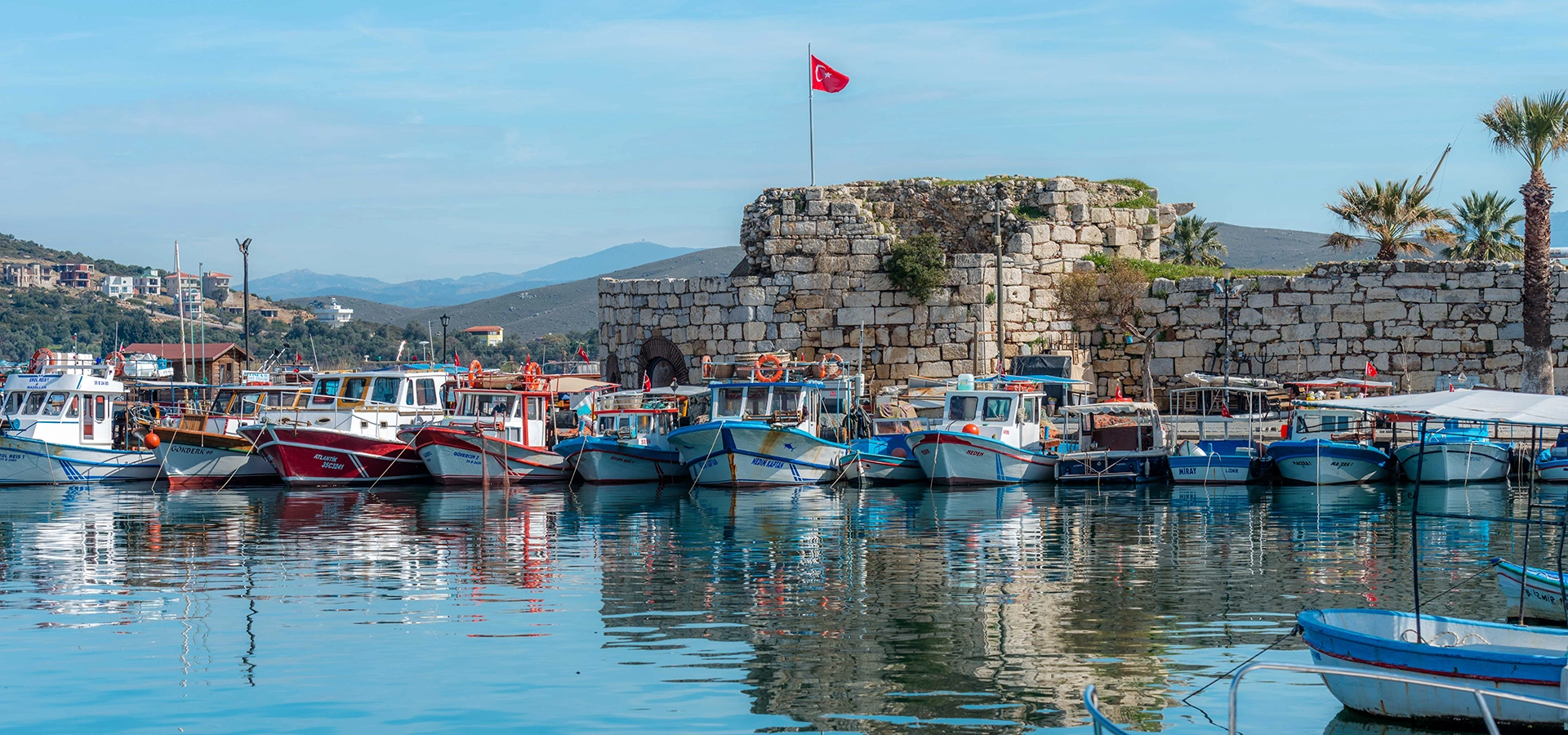
Continue south for Sığacık Castle, ancient Teos, producer markets, beaches and another distinctive corner of the İzmir coast.
View Sığacık & Seferihisar Guide