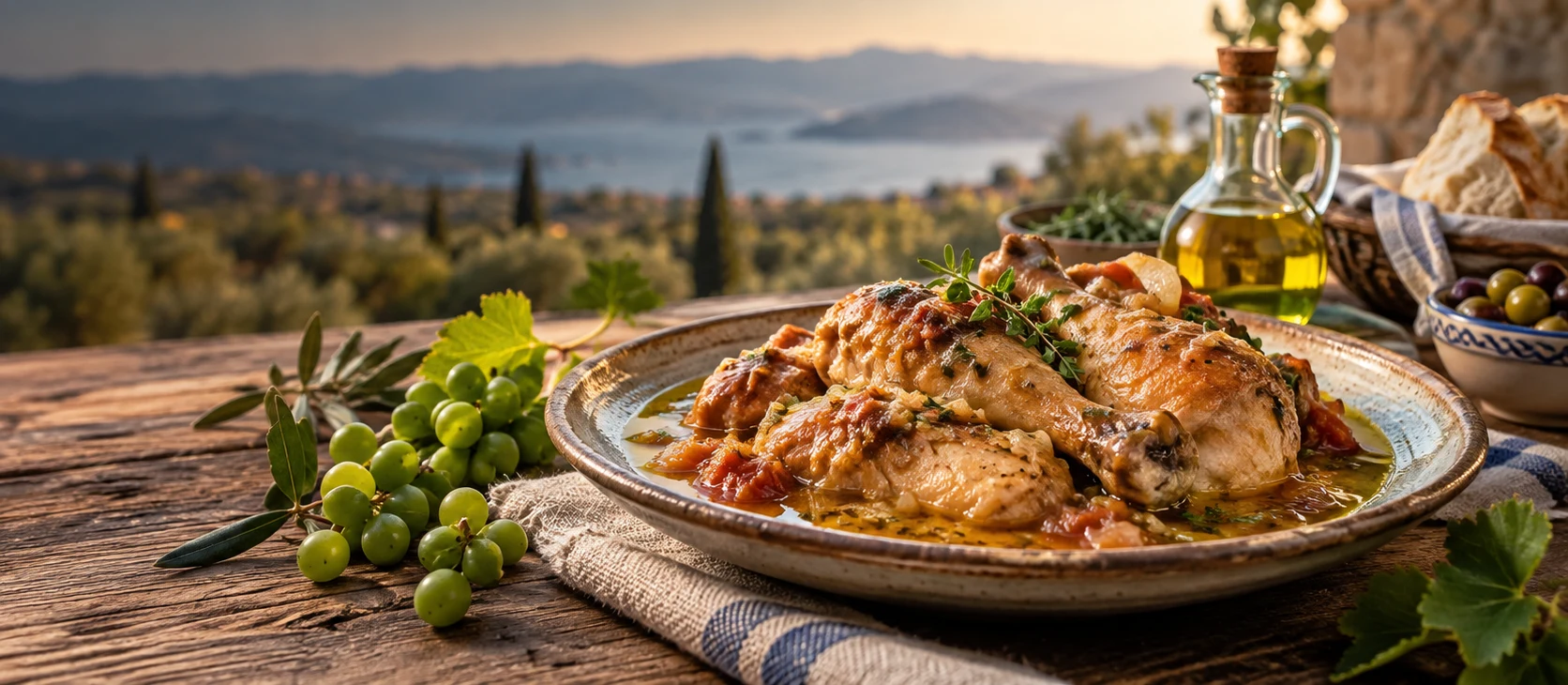
A Historic Culinary Treasure of Aydın's Germencik District

Germencik Sour Chicken – Complete Food Guide

Discover traditional village chicken, tangy unripe grape juice,
fragrant olive oil, slow-cooked vegetables, and a remarkable Aegean culinary heritage.

Discover Germencik Sour Chicken

Discover the Traditional Sour Chicken of Germencik

Germencik Sour Chicken, known in Turkish as Germencik Ekşili Tavuk, is one of the most distinctive traditional dishes of Aydın Province in western Türkiye. The speciality combines village-raised chicken, olive oil, onions, garlic, tomatoes, tomato paste, regional seasonings, and the intensely flavoured juice of unripe grapes, locally called koruk ekşisi.

Unlike ordinary chicken stews, Germencik Sour Chicken follows a characteristic three-stage preparation. The chicken is initially boiled, lightly fried in olive oil, and finally simmered with vegetables, its cooking liquid, and sour grape juice. After cooking, the dish is allowed to rest so that its characteristic tangy flavour penetrates the meat.

The dish is also closely connected with a significant episode in modern Turkish history. According to its official geographical-indication registration, Germencik Sour Chicken was served to Mustafa Kemal Atatürk during his visit to Hıdırbeyli in 1937. His appreciation of the dish became an important part of its local cultural identity.

Today, Germencik Ekşili Tavuk is officially recognised as a geographically indicated speciality. This complete guide explores its historical background, traditional ingredients, unique sour grape preparation, registered recipe, cooking techniques, flavour, serving traditions, local cultural significance, and practical advice for travellers wishing to experience the authentic cuisine of Aydın.

Traditional Village Chicken

Country-style chicken provides the characteristic flavour and texture of the original preparation.

Koruk Ekşisi

Sour juice prepared from unripe grapes gives the dish its defining tangy character.

Three-Stage Cooking

Boiling, olive-oil frying, and simmering create layers of flavour and tenderness.

Protected Culinary Heritage

Officially registered in 2020 under geographical-indication number 607.

Know Before You Taste

Germencik Sour Chicken – Quick Facts

Essential information about this historic sour-grape chicken speciality from western Türkiye.

📍

Origin

Germencik district, Aydın Province, in Türkiye's Aegean region.

Open Germencik on Google Maps
🍇

Signature Ingredient

Koruk ekşisi, a distinctive sour preparation made from unripe grapes.

🍗

Cooking Method

Village chicken is boiled, fried in olive oil, and simmered in a tangy vegetable sauce.

🏅

Geographical Indication

Registered by TÜRKPATENT as Germencik Ekşili Tavuk, number 607.


A Taste of Rural Aydın

The Culinary Heritage of Germencik Sour Chicken

Discover how local agriculture, village cooking, and generations of culinary knowledge shaped this remarkable Aegean dish.

Germencik lies within the fertile landscape of the Büyük Menderes region, an agricultural area traditionally associated with olive groves, vineyards, fig cultivation, and rural food production. These agricultural traditions have strongly influenced the local cuisine.

Village cooking in the Aydın region has long relied on seasonal ingredients, locally produced olive oil, traditional meat dishes, fresh vegetables, and sour flavourings derived from agricultural products. Germencik Ekşili Tavuk brings several of these elements together in one distinctive recipe.

The preparation reflects a style of cooking in which the main ingredient is treated carefully through several separate stages. The chicken is first heated in water, then browned in olive oil, and finally combined with a richly seasoned sauce.

The sour element comes from unripe grapes rather than the lemon juice or vinegar commonly used in other regional recipes. This creates a distinctive flavour that connects the dish directly with local grape cultivation and the preservation of seasonal produce.

Germencik Sour Chicken is also associated with hospitality and the preparation of food for special guests. Its reputation extends beyond an everyday village meal because of the historical story connected with Mustafa Kemal Atatürk's visit in 1937.

The continued preparation of the dish represents an important example of how local cooking techniques, agricultural resources, and historical memories can become part of a region's protected culinary heritage.

Atatürk, Hıdırbeyli, and the Story of Germencik Sour Chicken

One of the most remarkable aspects of Germencik Sour Chicken is its association with the founding leader of the Republic of Türkiye, Mustafa Kemal Atatürk. The story is recorded in the official geographical-indication registration for the dish.

1937 – The Aegean Manoeuvres

Atatürk visited the region in 1937 during the military exercises remembered as the Great Aegean Manoeuvres.

Hıdırbeyli's Hospitality

During his visit, local residents of Hıdırbeyli presented their traditional sour chicken dish to Atatürk.

A Dish Remembered

According to the registered historical account, Atatürk appreciated the meal, strengthening its significance in local memory.

The Military Medal

The account records that Hıdırbeyli received the Ege 2. Ordu Medal in recognition of the hospitality extended to soldiers.


The official registration states that the medal and its accompanying certificate have been preserved by Germencik Municipality. This historical association is specifically identified as one of the reasons the dish has developed a recognised reputation connected with Germencik.

Visitors discovering the dish today encounter more than a regional chicken recipe. They discover a culinary tradition linked to a memorable historical event and to the hospitality of the local community.

What Makes It Special

Distinctive Features of Germencik Sour Chicken

The identity of the dish comes from its ingredients, preparation method, and the characteristic sourness of unripe grapes.

Traditional Village Chicken

The registered recipe specifies a whole village chicken, known locally as köy tavuğu. This provides a deeper poultry flavour than many rapidly prepared chicken dishes.

  • Traditional ingredient: Whole village chicken
  • Preparation: Initially boiled
  • Result: A substantial, savoury main dish

Unripe Grape Juice

Koruk ekşisi is the ingredient that gives Germencik Sour Chicken its distinctive identity. Its sharp acidity balances the richness of the chicken and olive oil.

  • Turkish name: Koruk ekşisi
  • Source: Unripe grapes
  • Flavour: Fresh, tangy, and fruity

Aegean Olive Oil

Olive oil plays an important role in the cooking method. The boiled chicken is browned in hot olive oil before the sauce is prepared.

  • Ingredient: Olive oil
  • Function: Browning and sauce preparation
  • Regional connection: Aegean olive cultivation

Onions and Garlic

Generous quantities of onion and garlic are cooked until softened, creating an aromatic foundation that balances the sour grape juice.

  • Onions: Four medium-sized
  • Garlic: Three cloves
  • Role: Sweetness, aroma, and depth

Tomatoes and Tomato Paste

Fresh tomatoes and tomato paste contribute colour, body, and savoury richness to the sauce. Preserved tomatoes may be used when fresh tomatoes are out of season.

  • Fresh ingredient: Two tomatoes
  • Concentrated ingredient: Tomato paste
  • Effect: A rich red-orange sauce

Three-Stage Cooking Method

The dish is prepared through boiling, frying, and final simmering. This sequence is one of its defining registered characteristics.

  • Stage one: Initial boiling
  • Stage two: Olive-oil frying
  • Stage three: Simmering in sour sauce

Traditional Seasonings

Salt, black pepper, and red pepper powder enhance the natural flavour of the chicken without overwhelming the sour grape sauce.

  • Seasonings: Salt and black pepper
  • Colour: Red pepper powder
  • Style: Balanced, aromatic, and savoury

Resting Before Serving

After the final simmer, the dish is traditionally left to rest for at least two hours so the sour grape flavour can penetrate the chicken.

  • Resting time: At least two hours
  • Purpose: Flavour development
  • Serving: Reheated and served hot

Germencik Sour Chicken's Geographical Indication

Germencik Ekşili Tavuk is officially registered by the Turkish Patent and Trademark Office, known as TÜRKPATENT. It is protected as a Mahreç İşareti, a Turkish geographical-indication category recognising the product's relationship with its place of origin and established reputation.

Official Registered Name

Germencik Ekşili Tavuk

Registration Number

607

Registration Date

23 November 2020

Application Date

5 February 2020

Registered Institution

Germencik Municipality

Geographical Boundary

Germencik district, Aydın Province


What Does the Registration Protect?

The official geographical-indication specification records the traditional ingredients, distinctive unripe-grape preparation, three-stage cooking process, historical reputation, and connection with Germencik.

Under this registration, the production stages of the geographically indicated product must take place within the defined district. Its use is subject to the conditions and inspections described in the registration.

The registration provides formal recognition of Germencik's culinary heritage while helping preserve the techniques associated with the traditional dish.

View the Official TÜRKPATENT Registration for Germencik Ekşili Tavuk

Ingredients Used in Germencik Sour Chicken

The official geographical-indication recipe provides quantities for approximately four to six servings. Its flavour depends on the combination of village chicken, vegetables, olive oil, seasonings, and the essential sour grape juice.

Village Chicken

One whole village chicken, traditionally called köy tavuğu.

Onions

Four medium-sized onions, chopped and softened during sauce preparation.

Garlic

Three garlic cloves, prepared with the onions for the aromatic sauce.

Olive Oil

One Turkish tea glass of olive oil, used for frying and cooking the sauce.

Koruk Ekşisi

One water glass of sour unripe grape juice preparation.

Black Pepper

One teaspoon of ground black pepper.

Salt

One and a half dessertspoons of salt, following the registered recipe.

Red Pepper Powder

One tablespoon of ground red pepper, contributing colour and flavour.

Tomato Paste

One tablespoon of tomato paste for the savoury sauce.

Fresh Tomatoes

Two medium-sized tomatoes, or preserved tomatoes according to the season.


Additional Cooking Requirements

Cooking Water Water for the initial boiling stage; the resulting broth is reused in the sauce
Traditional Heat Source The registered method describes initial boiling over a wood fire
Cooking Equipment A suitable pot, frying pan, cooking utensils, and serving dish
Resting Period At least two hours after cooking before reheating and serving

Important: This ingredient list follows the registered Germencik preparation. Other dishes called ekşili tavuk may use lemon, flour, chickpeas, or different seasonings, but those ingredients are not part of this registered recipe.

What Is Koruk Ekşisi?

Koruk is the Turkish word commonly used for grapes harvested before they ripen. At this early stage, the grapes retain pronounced acidity, producing a distinctly sour juice that can be used in cooking.

Koruk ekşisi is one of the defining ingredients of Germencik Sour Chicken. It introduces a fruity acidity that contrasts with the richness of the chicken, olive oil, onions, and tomato sauce.

Harvested Before Ripening

Grapes are collected while still unripe and naturally acidic.

Traditional Grape Variety

The official specification mentions a locally grown grape known as yediveren, described as round and seeded.

Freshly Extracted Juice

The harvested grapes are pressed so that their sour juice can be collected.

Preserved for Cooking

The liquid is strained, boiled, cooled, and bottled according to the traditional registered process.


How Traditional Germencik Koruk Ekşisi Is Prepared

1. Harvest the Grapes Collect the locally grown yediveren grapes before they have fully ripened
2. Press the Grapes Traditionally, the grapes are pressed in permeable sacks to extract the sour juice
3. Strain the Liquid Separate the juice from grape skins, seeds, and other solid material
4. Heat the Juice Boil the strained sour grape juice as described in the registered method
5. Cool and Store Allow the prepared liquid to cool before bottling it for later use

This process demonstrates how a seasonal agricultural product becomes an ingredient used throughout the year in the traditional cuisine of Germencik.

Koruk ekşisi is not the same as ordinary grape vinegar. It is obtained from unripe grapes, and its preparation and flavour differ from fermented vinegar.

The Three Cooking Stages of Germencik Sour Chicken

One of the dish's most important characteristics is its preparation in three distinct stages. Each stage contributes something different to the finished meal.

Stage One – Boiling

The village chicken is initially boiled. This begins cooking the meat and creates a flavourful liquid that will later become part of the sauce.

Stage Two – Frying

The partially cooked chicken is transferred to hot olive oil and browned, developing flavour and colour on its surface.

Stage Three – Simmering

The chicken is combined with an aromatic vegetable sauce, its cooking broth, and sour grape juice before being simmered together.


These stages distinguish Germencik Sour Chicken from ordinary chicken dishes in which all ingredients are placed directly into a single pot and cooked together.

Browning the chicken separately creates a different flavour from boiling alone, while the final simmer brings the meat and its tangy sauce together.

How Germencik Sour Chicken Is Traditionally Prepared

The following method follows the sequence and principal timings documented in the official geographical-indication registration. Actual cooking time may need adjustment according to the size and maturity of the chicken.

1. Prepare the Chicken Use one whole village chicken, cleaned and prepared for cooking
2. Begin Boiling Place the chicken in a suitable pot with water and begin cooking; the registered method describes an initial 15-minute boil over a wood fire
3. Preserve the Broth Retain the chicken cooking liquid because it is essential to the final sauce and simmering stage
4. Heat the Olive Oil Transfer the initially boiled chicken to a pan containing heated olive oil
5. Brown the Chicken Fry for approximately five minutes in the registered method, turning the chicken to develop colour on its surfaces
6. Set the Chicken Aside Remove the browned chicken while retaining the cooking pan for the sauce
7. Cook the Tomato Paste Add tomato paste to the pan and cook briefly in the remaining oil
8. Add Onion and Garlic Add the prepared onions and garlic, cooking until softened and lightly coloured
9. Add the Tomatoes Introduce the chopped fresh tomatoes or preserved tomatoes according to seasonal availability
10. Season the Sauce Add salt, black pepper, and red pepper powder
11. Add Some Chicken Broth Pour approximately one Turkish tea glass of the reserved cooking broth into the vegetable mixture
12. Combine the Ingredients Transfer the chicken, prepared sauce, and remaining cooking liquid into a suitable pot
13. Add Koruk Ekşisi Pour in one water glass of the traditional sour unripe grape juice preparation
14. Simmer the Dish Bring the ingredients together and simmer for approximately 25 minutes as specified in the registered method
15. Allow the Flavours to Develop Leave the finished dish to rest for at least two hours, allowing the sour flavour to penetrate the chicken
16. Reheat and Serve Reheat thoroughly and serve the chicken hot with its aromatic sour grape sauce

Food safety: The historical recipe's time estimates are not a substitute for checking that poultry is fully cooked. The thickest part should reach a safe internal temperature of at least 74°C (165°F). If resting for two hours, do not leave cooked poultry at room temperature; keep it safely hot or refrigerate promptly, then reheat thoroughly before serving.

Why Does Germencik Sour Chicken Need to Rest?

An especially interesting feature of the registered preparation is the resting period after cooking. The official specification describes allowing the completed dish to stand for at least two hours before reheating.

Flavour Penetration

The sour grape sauce has additional time to flavour the chicken.

A More Integrated Sauce

The vegetable, broth, oil, and sour components have time to settle into a harmonious mixture.

Traditional Timing

Resting is specifically included in the registered method, making it part of the traditional preparation rather than an optional garnish.

Hot Final Presentation

The dish is reheated before serving, so guests receive a hot meal with a well-developed sauce.


In a modern kitchen, this resting stage should be managed with appropriate food temperature controls. Once the dish is cooled and refrigerated safely, it can be reheated thoroughly for serving.

The Role of Wood-Fire Cooking in Germencik Sour Chicken

The official registered preparation describes the first cooking stage taking place in a pot over a wood fire. This reflects traditional rural cooking methods associated with village kitchens.

In many Anatolian communities, wood-fired kitchens historically provided heat for cooking everyday meals and preparing larger dishes for family occasions.

Village Cooking Environment

Wood-fired stoves and hearths formed an important part of traditional rural kitchens.

Controlled Cooking

Experienced cooks manage the fire, liquid level, and cooking vessel to maintain the desired heat.

Traditional Equipment

Metal cooking pots and pans make it possible to prepare the dish through its different stages.

Modern Adaptation

Similar flavours can be explored in contemporary home kitchens, although the registered method specifies its traditional preparation.

What Does Germencik Sour Chicken Taste Like?

Germencik Sour Chicken offers a distinctive combination of savoury chicken, aromatic vegetables, olive oil, and refreshing grape acidity. Its flavour is more complex than the name "sour chicken" might suggest.

Tangy Grape Acidity

Koruk ekşisi creates a pronounced sourness with a fresh, fruity character.

Rich Poultry Flavour

Traditional village chicken gives the sauce a substantial savoury foundation.

Sweetness from Onions

Cooked onions and tomatoes help soften and balance the sharp sour-grape notes.

Warm Seasoning

Black pepper and red pepper powder provide gentle warmth and aromatic depth.

Olive-Oil Richness

Olive oil adds body to the sauce and contributes the familiar richness of Aegean home cooking.

Aromatic Tomato Sauce

The tomato paste, fresh tomatoes, garlic, and chicken broth create a savoury sauce that carries the grape acidity.


The dish should not be confused with sweet-and-sour chicken found in some international cuisines. The traditional Germencik preparation does not depend on added sugar or a sugary glaze. Its character comes from the interplay of naturally sour grapes, vegetables, and savoury chicken.

What Makes Authentic Germencik Ekşili Tavuk Different?

Although several Turkish regions prepare dishes known as ekşili tavuk, Germencik's protected preparation has its own clearly documented characteristics.

Origin The authentic geographically indicated version is associated with Germencik district in Aydın Province
Chicken A whole village chicken is specified in the registered recipe
Sour Ingredient Koruk ekşisi made from unripe grapes, rather than lemon juice or vinegar
Vegetable Base Onion, garlic, tomato, and tomato paste
Cooking Fat Olive oil is used for browning the chicken and preparing the sauce
Method Three distinct stages of boiling, frying, and simmering
Final Preparation A resting period followed by reheating and hot service

Home cooks may adapt the recipe according to personal preferences and ingredient availability. However, these changes should be distinguished from the officially registered Germencik method.

How Germencik Sour Chicken Is Served

The registered recipe concludes by reheating the rested chicken and serving it hot. The sauce is an essential part of the meal, so the chicken should be presented with enough liquid to appreciate its characteristic sour-grape flavour.

Traditional presentation can vary between households and restaurants. The following accompaniments are suitable serving suggestions rather than additional requirements of the registered recipe.

Hot Chicken Serve the chicken warm, with its aromatic sour grape sauce
Fresh Village Bread Crusty bread is useful for enjoying the rich sauce
Rice Pilaf Plain rice pilaf provides a mild accompaniment to the tangy chicken
Bulgur Pilaf A traditional Anatolian side dish that complements the savoury sauce
Seasonal Salad Fresh local vegetables can provide a light contrast to the cooked dish
Water or Ayran Simple refreshing drinks can accompany the meal

When tasting the dish for the first time, try a small amount of the sauce separately before combining it with bread or pilaf. This allows you to appreciate the distinctive acidity of koruk ekşisi.

Germencik Sour Chicken and Aegean Food Culture

Germencik Sour Chicken represents a distinctive side of Aegean cuisine. While western Türkiye is internationally associated with vegetables, olive oil, seafood, herbs, and fruit, the region also preserves a rich tradition of meat and poultry dishes.

Village Hospitality

The dish is closely connected with the history of hospitality in Germencik and Hıdırbeyli.

Agricultural Traditions

Its ingredients reflect the important role of poultry, grapes, olive oil, and vegetables in regional food production.

Special Occasions

Local accounts associate the dish with gatherings, celebrations, and hospitality for important guests.

Knowledge Passed Down

The preparation requires familiarity with browning, sauce-making, sour flavour balance, and resting times.

Historical Memory

The story of Atatürk's 1937 visit forms an important part of the dish's cultural identity.

Regional Recognition

The 2020 geographical-indication registration gives formal recognition to this culinary tradition.

Where to Eat Germencik Sour Chicken

Travellers interested in tasting authentic Germencik Sour Chicken should begin their search in the Germencik district, particularly around the town centre, traditional local restaurants, and communities where regional home-style cooking is preserved.

Germencik Town Centre

Ask local restaurants about the availability of Germencik Ekşili Tavuk prepared with traditional koruk ekşisi.

Traditional Local Restaurants

Restaurants specialising in regional home cooking may offer the dish as a prepared speciality.

Hıdırbeyli

The community associated with the dish's 1937 historical story is an important part of Germencik's culinary heritage.

Local Food Events

Regional gastronomy events and culinary heritage presentations may provide opportunities to discover traditional recipes.


Because Germencik Sour Chicken requires several preparation stages and an extended resting period, it may not be available at every restaurant throughout the day. Contact the establishment in advance and ask whether the dish is being prepared.

For the most authentic experience, ask whether the dish uses koruk ekşisi, village chicken, and the traditional three-stage cooking method.

Explore Germencik on Google Maps

Germencik Sour Chicken Visitor Tips

Ask for Ekşili Tavuk

Use the Turkish name Germencik Ekşili Tavuk when asking about the speciality.

Confirm Availability

Some restaurants may prepare the dish only on particular days or with advance notice.

Look for Koruk Ekşisi

Authentic regional flavour depends on sour unripe grape juice, rather than ordinary vinegar.

Expect a Tangy Flavour

The sourness is intentional and forms the defining character of the dish.

Ask About Village Chicken

The registered recipe specifies köy tavuğu, which may have a different texture from standard commercial chicken.

Enjoy the Sauce

The chicken is only part of the experience. The sour vegetable sauce carries the dish's identity.

Order a Simple Side

Bread or plain pilaf allows the chicken's distinctive flavour to remain the focus.

Ask About the History

Local residents may share the story of the dish's association with Atatürk and Hıdırbeyli.

Other Traditional Foods to Try Around Germencik

Germencik Sour Chicken belongs to a wider culinary landscape that includes grilled meats, olive-oil dishes, regional breads, agricultural products, and traditional desserts. Exploring several local specialities provides a broader introduction to the flavours of Aydın.

Ortaklar Çöp Şiş

Small pieces of meat grilled on thin skewers over charcoal. This well-known regional speciality is closely associated with Ortaklar in Germencik district.

Aydın Yuvarlaması

A traditional regional dish prepared with small meat-based pieces and a flavourful broth.

Aydın Figs

The province is especially famous for its figs, enjoyed fresh, dried, and in many local recipes.

Memecik Olive Oil

Olive oil associated with the Memecik olive variety reflects the agricultural and culinary identity of the Aegean region.

Nazilli Pide

A regional style of Turkish pide, closely associated with the town of Nazilli.

Nazilli Snow Halva

A refreshing traditional speciality associated with mountain snow and sweet fruit syrup.

Places to Visit Around Germencik

A visit to Germencik can combine traditional food with ancient history, rural landscapes, thermal springs, and the wider heritage of Aydın's Büyük Menderes region.

Germencik Town

Explore the district's agricultural character, local markets, small restaurants, and everyday Aegean town life.

Hıdırbeyli

Discover the community associated with the 1937 historical account that helped establish the reputation of Germencik Sour Chicken.

Ancient Magnesia

Visit the archaeological remains of Magnesia on the Maeander, known for its ancient urban planning and monumental architecture.

Ortaklar

Experience another of Germencik's celebrated culinary traditions: charcoal-grilled Ortaklar Çöp Şiş.

Germencik Thermal Springs

Discover the region's geothermal landscape and its traditional thermal-water heritage.

Olive Groves and Fig Landscapes

Explore the agricultural scenery that has helped shape Germencik's local economy and food culture.

Ephesus

Combine a culinary journey through Germencik with an excursion to the magnificent ancient city of Ephesus near Selçuk.

Kuşadası

Visit this lively Aegean coastal destination for its harbour, seaside atmosphere, and access to surrounding historical sites.

Frequently Asked Questions About Germencik Sour Chicken

What is Germencik Sour Chicken?

Germencik Sour Chicken is a traditional chicken dish from Germencik district in Aydın Province. Village chicken is boiled, browned in olive oil, and simmered with onions, garlic, tomatoes, seasonings, and sour unripe grape juice.

What is Germencik Sour Chicken called in Turkish?

The dish is called Germencik Ekşili Tavuk. The name literally refers to Germencik-style sour chicken.

Where does Germencik Sour Chicken originate?

It originates from Germencik district in Aydın Province, western Türkiye. The dish's historical reputation is particularly connected with Hıdırbeyli.

Why is Germencik Sour Chicken sour?

Its distinctive sourness comes from koruk ekşisi, a preparation made from unripe grapes. This ingredient provides a naturally tangy flavour.

What is koruk ekşisi?

Koruk ekşisi is sour grape juice or a sour preparation obtained from grapes harvested before ripening. In Germencik, its traditional preparation involves pressing, straining, and boiling the juice.

Is Germencik Sour Chicken a geographically indicated product?

Yes. It is officially registered by the Turkish Patent and Trademark Office as a Mahreç İşareti geographical indication with registration number 607.

When was Germencik Sour Chicken registered?

Its geographical-indication registration was completed on 23 November 2020.

Who registered Germencik Sour Chicken?

The registration was obtained by Germencik Municipality, which applied to the Turkish Patent and Trademark Office.

What is the connection between Germencik Sour Chicken and Atatürk?

According to the official registration, Mustafa Kemal Atatürk was served Germencik Sour Chicken during his visit to Hıdırbeyli in 1937. His appreciation of the dish became part of its historical reputation.

What happened in Hıdırbeyli in 1937?

During the Great Aegean Manoeuvres, Atatürk visited the region, and local residents offered traditional sour chicken. The registered historical account also records the community's hospitality towards soldiers and the award of a military medal.

What type of chicken is traditionally used?

The official preparation specifies one whole village chicken, known in Turkish as köy tavuğu.

What are the main ingredients?

The registered ingredients are village chicken, onions, garlic, olive oil, koruk ekşisi, black pepper, salt, red pepper powder, tomato paste, and tomatoes.

Is lemon juice used in the authentic recipe?

No. Although some other sour chicken dishes use lemon juice, the registered Germencik recipe specifically uses koruk ekşisi made from unripe grapes.

Is Germencik Sour Chicken spicy?

It contains black pepper and red pepper powder. The overall spice intensity depends on the ingredients used, but the distinctive feature is its sourness rather than extreme chilli heat.

How is Germencik Sour Chicken cooked?

It follows three main stages. First, the chicken is boiled. Next, it is browned in olive oil. Finally, it is simmered with the vegetable sauce, reserved broth, and koruk ekşisi.

Why is the chicken fried after boiling?

The frying stage develops surface colour and adds flavour before the chicken is combined with the sour vegetable sauce.

Why is the chicken cooking water reused?

The cooking liquid contributes savoury chicken flavour to the sauce and helps combine the ingredients during the final simmering stage.

Why does Germencik Sour Chicken rest after cooking?

The registered method specifies resting for at least two hours so that the sour grape flavour can penetrate the chicken. Appropriate food-temperature control is essential during this stage.

How long does Germencik Sour Chicken take to prepare?

The registered method describes an initial 15-minute boil, approximately five minutes of frying, and around 25 minutes of final simmering, followed by at least two hours of resting. Actual cooking may take longer depending on the chicken, and safe doneness must always be verified.

Can Germencik Sour Chicken be prepared at home?

Yes. Home cooks can prepare the dish using the traditional ingredients and cooking sequence. However, reproducing the registered geographically indicated product involves its specified requirements, including its geographical boundary.

Is Germencik Sour Chicken gluten-free?

The registered ingredient list does not include wheat flour. However, anyone avoiding gluten should verify the ingredients of packaged seasonings, tomato paste, and any restaurant preparation, including possible cross-contact.

What should I eat with Germencik Sour Chicken?

Bread, rice pilaf, bulgur pilaf, and simple seasonal salads can complement the dish. These are serving suggestions, not required components of the registered recipe.

Can the dish be prepared without koruk ekşisi?

Other acidic ingredients may be used in adapted home recipes, but koruk ekşisi is essential to the traditional registered Germencik preparation.

Is Germencik Sour Chicken the same as sweet-and-sour chicken?

No. Germencik Sour Chicken is a traditional Turkish dish whose flavour comes from sour unripe grape juice, olive oil, vegetables, and savoury chicken. It is not based on a sweet, sugary sauce.

Where can I try authentic Germencik Sour Chicken?

Begin with traditional restaurants in Germencik district and ask about their preparation of Germencik Ekşili Tavuk. Availability should be confirmed before travelling specifically to taste the dish.

What else is Germencik famous for?

Germencik is known for its agricultural landscape, olive and fig production, geothermal resources, ancient Magnesia, and the celebrated Ortaklar Çöp Şiş.

Is Germencik Sour Chicken worth trying?

Yes. For travellers interested in regional Turkish cuisine, it offers a distinctive combination of Aegean agricultural ingredients, traditional cooking techniques, and historical heritage.

Best Photos of Germencik Sour Chicken

Germencik Sour Chicken offers interesting opportunities for culinary photography. Its richly coloured sauce, rustic cooking techniques, traditional ingredients, and agricultural surroundings help tell the story of the dish.

The Finished Dish

Photograph the chicken surrounded by its glossy, tomato-coloured sour grape sauce.

Unripe Grapes

Include green grape clusters to illustrate the distinctive koruk ingredient.

Traditional Olive Oil

A small bowl or bottle of olive oil provides an attractive connection to Aegean food culture.

The Cooking Process

Capture the chicken browning in the pan before being combined with the sauce.

Rustic Table Presentation

Present the dish with traditional bread, pottery, and simple village-style tableware.

Germencik Countryside

Combine food imagery with local vineyards, olive groves, and traditional agricultural scenery.


For authentic food photography, preserve the natural appearance of the dish rather than adding ingredients that are not part of the traditional recipe. Ask permission before photographing cooks, restaurant staff, or private dining spaces.

Private Aydın Tours and Culinary Experiences

Explore the historical landscapes, traditional villages, regional cuisine, olive groves, and archaeological heritage of western Türkiye through a personalised private travel experience.

Private Aydın and Germencik Experiences

Discover the region's countryside, ancient sites, and culinary heritage with flexible private arrangements. Traditional food experiences can be discussed according to local availability.

Explore More of Western Türkiye

Combine Germencik's food traditions with the archaeological treasures, coastal destinations, and cultural landscapes of the Aegean region.