Private Hıdiv Pavilion & Asian Bosphorus Tour
Ask us about a tailor-made route combining Hıdiv Kasrı, Kanlıca, Anadolu Fortress, Küçüksu Pavilion and the historic landscapes of Beykoz.
Request a Custom Tour





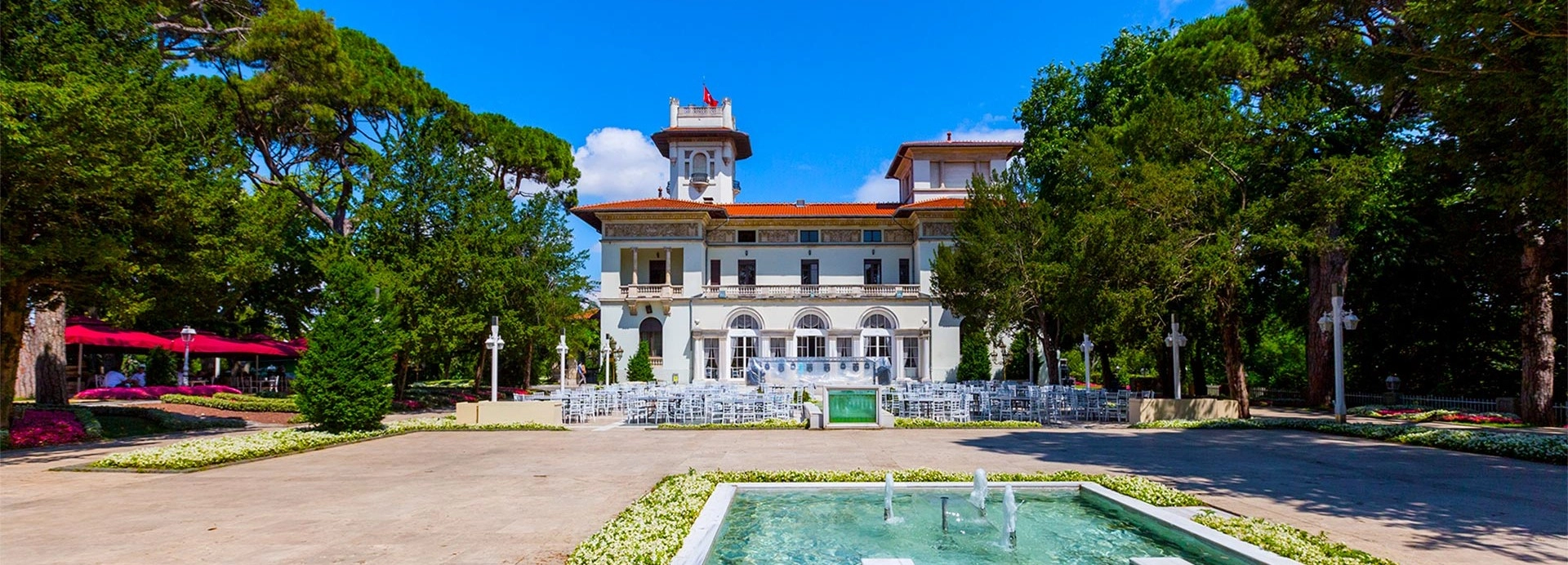
The Hıdiv Pavilion, known in Turkish as Hıdiv Kasrı, rises among the wooded slopes of Çubuklu in Beykoz on Istanbul's Asian side. Built in 1907 for Abbas Hilmi Pasha, the last Khedive of Egypt, it is one of the most distinctive residences overlooking the Bosphorus.
Official local sources attribute the pavilion to the Italian architect Delfo Seminati. Its architecture reflects the fashionable European tastes of the period, particularly Art Nouveau, while its fountains, ornamental details, landscaped setting and ceremonial spaces create an atmosphere very different from Istanbul's traditional Ottoman waterfront pavilions.
The residence was built on approximately 1,000 square metres within an estate traditionally described as covering around 270 dönüm. Its most memorable architectural feature is the tall observation tower commanding the Bosphorus, which was historically reached using both stairs and one of Istanbul's early steam-powered lifts.
Today Hıdiv Kasrı is surrounded by the green landscape of Çubuklu Grove and is associated with gardens, walking routes, dining and special events. For travelers exploring the quieter Asian shore of the Bosphorus, it combines architecture, late Ottoman history, Egyptian dynastic connections and one of Beykoz's most attractive green spaces.
The pavilion was completed for Egypt's last Khedive, Abbas Hilmi Pasha.
The residence reflects the fashionable European architectural language of the early 20th century.
The historic estate extended across a vast wooded landscape on the Çubuklu slopes.
A distinctive tower was designed to command sweeping views across the strait.
Essential information about this unusual Art Nouveau residence overlooking Istanbul's Bosphorus from Çubuklu.
Çubuklu, Beykoz, on the Asian side of the Bosphorus.
Open on Google MapsCompleted in 1907 as an Istanbul residence for Abbas Hilmi Pasha.
Abbas Hilmi II, the last Khedive of Egypt.
Best known for its Art Nouveau character and European-influenced decorative design.
A large wooded estate with walking areas and one of Istanbul's celebrated rose gardens.
Allow 60–90 minutes, or several hours when combining the pavilion with the grove and nearby Bosphorus sites.
Hıdiv Kasrı is far more than a scenic Bosphorus mansion: it is a surviving architectural document of the complex relationship between late Ottoman Istanbul and khedival Egypt.
The pavilion is first important because of its owner. Abbas Hilmi II was the last ruler of Egypt to carry the title of Khedive, governing during a period when Egypt remained formally connected to the Ottoman Empire while living under powerful British influence. His Istanbul residence therefore belongs to both Ottoman and modern Egyptian history.
Architecturally, Hıdiv Kasrı represents a completely different world from classical Ottoman palaces. Its European-inspired design, flowing decorative details, stained glass, ornamental fountains and distinctive tower place it among Istanbul's important early-20th-century Art Nouveau residences.
The landscape is equally important. Rather than occupying a narrow waterfront plot, the residence sits high above the Bosphorus within a substantial wooded estate. The combination of architecture, gardens and distant views gives Hıdiv Kasrı the character of a country palace while remaining closely connected with Istanbul.
For travelers using our guide to places to visit in Istanbul, Hıdiv Pavilion is particularly valuable because it reveals an architectural and political story that is very different from Topkapı, Dolmabahçe or the traditional Ottoman pavilions.
The story of Hıdiv Kasrı begins during a complicated period in Egyptian history. Although Egypt remained formally within the Ottoman imperial system, British occupation after 1882 dramatically changed the country's political balance.
Abbas Hilmi II became Khedive of Egypt in 1892. Seeking greater political room for manoeuvre and maintaining close connections with the Ottoman capital, he spent significant periods in Istanbul. During the early 20th century he acquired property around Çubuklu on the Asian shore of the Bosphorus.
In 1903, property associated with two wooden waterfront residences entered the developing khedival estate. Abbas Hilmi subsequently expanded his holdings into the wooded slopes above the shore, creating the extensive grounds in which the present pavilion stands.
Construction of the new residence took place during the first decade of the 20th century, with the pavilion completed in 1907. Official municipal and cultural sources credit the project to Italian architect Delfo Seminati.
The residence combined fashionable European design with spectacular landscape planning. Its tower overlooked the Bosphorus, while fountains, stained glass, gardens and richly decorated interiors reflected the cosmopolitan world inhabited by elite families in late Ottoman Istanbul.
Abbas Hilmi's political position changed dramatically during the First World War. Britain formally ended Ottoman sovereignty over Egypt in 1914 and removed Abbas Hilmi from power. He subsequently lived outside Egypt, while members of his family remained associated with the Istanbul estate.
In 1937, the property was sold to the Istanbul Municipality. After a long period of changing use and deterioration, a major restoration was undertaken in 1983–1984 under the direction of the Türkiye Turing ve Otomobil Kurumu and Çelik Gülersoy.
Further restoration took place during the 1990s, and the complex later came under BELTUR operation. Today the pavilion functions primarily as a restaurant, social and event venue within one of Beykoz's most attractive historic landscapes.
Abbas Hilmi II became Khedive of Egypt.
The Çubuklu property forming the basis of the later estate was acquired.
The present Hıdiv Pavilion was completed.
Abbas Hilmi was removed from the khedival throne during the First World War.
The property was sold to Istanbul Municipality.
A major restoration returned the neglected pavilion to active use.
Abbas Hilmi II, also known in Turkish as Abbas Hilmi Pasha, was born in 1874 and became Khedive of Egypt while still a young man. He was the final member of his dynasty to rule Egypt under the historic title of Khedive.
His reign unfolded during an unusual political situation. Egypt remained legally associated with the Ottoman Empire, but Britain exercised enormous political and military influence after its occupation of the country. Abbas Hilmi repeatedly attempted to protect his own authority while balancing British, Ottoman and wider European interests.
Istanbul consequently became particularly important to him. Establishing a residence on the Bosphorus strengthened his physical and symbolic connection with the Ottoman capital and the sultan's government.
Hıdiv Kasrı should therefore not be understood simply as an extravagant summer house. Its location, scale and architectural ambition also reflect the position of a ruler operating between Cairo, Istanbul and European political networks at the beginning of the 20th century.
Abbas Hilmi II was born into Egypt's ruling Muhammad Ali dynasty.
He succeeded to the khedival throne at a young age.
The Ottoman capital became an important political and personal base for the ruler.
The wooded Bosphorus property became his principal architectural legacy in Istanbul.
Britain formally ended his rule during the First World War.
He was the final ruler of Egypt to officially hold the khedival title.
The Turkish word Hıdiv, usually rendered in English as Khedive, was a ruler's title associated especially with the governors of Egypt from the dynasty founded by Muhammad Ali Pasha.
The title represented a position more elevated than that of an ordinary provincial governor. Egypt's rulers exercised considerable hereditary authority while formally remaining within the Ottoman imperial system.
By the late 19th century this arrangement had become increasingly complicated. Egypt possessed its own dynasty and administration, the Ottoman sultan retained formal sovereignty, and Britain increasingly dominated the country's political affairs.
The name Hıdiv Kasrı therefore simply means “the Khedive's Pavilion” or “the Khedive's Residence,” referring directly to Abbas Hilmi Pasha.
Hıdiv Kasrı is one of Istanbul's most recognizable examples of the cosmopolitan architecture that appeared in the final decades of the Ottoman period. Official sources describe the building principally as Art Nouveau, although the overall composition also reflects broader European eclectic influences.
Unlike traditional Ottoman timber waterfront houses, the pavilion has the presence of a European country villa or small palace. Its asymmetrical massing, tower, terraces, curved forms, decorative stonework and ornamental details create a striking silhouette among the trees.
The building occupies approximately 1,000 square metres. Its internal arrangement develops around interconnected halls, while fountains and water features were incorporated into the architectural experience.
Perhaps the building's defining feature is its tall Bosphorus observation tower. Rising above the surrounding tree line, it transformed the pavilion into both a residence and a panoramic viewpoint.
Flowing forms and decorative details reflect one of Europe's most fashionable styles around 1900.
The pavilion resembles a continental villa more than a traditional Ottoman waterfront mansion.
Official descriptions place the building footprint at approximately one thousand square metres.
The elevated tower creates the pavilion's most recognizable silhouette.
Fountains and pools form an unusual part of the interior architectural composition.
The building was conceived together with its large wooded setting and Bosphorus views.
At the beginning of the 20th century, Art Nouveau was transforming architecture and decorative art in cities from Paris and Brussels to Vienna, Cairo and Istanbul. The style favored flowing lines, floral ornament, elegant curves and the integration of architecture with decorative detail.
Istanbul developed its own highly cosmopolitan interpretation of this movement. Art Nouveau elements appeared in apartment buildings, commercial structures, private residences and diplomatic architecture, particularly in districts linked with international communities.
Hıdiv Kasrı belongs to this world. Its decorative language feels noticeably different from both classical Ottoman architecture and the grand mid-19th-century palace style represented by Dolmabahçe.
Look especially at the relationship between curved openings, decorative metalwork, floral forms, stained glass, interior woodwork and the building's picturesque silhouette. Together they reveal a residence designed according to the international tastes of an elite family moving between Egypt, Istanbul and Europe.
The tower rising above Hıdiv Kasrı is the feature that gives the pavilion much of its dramatic character. From its elevated position on the Çubuklu slopes, the tower was designed to overlook the surrounding woodland and the Bosphorus.
Historic descriptions note that the tower could be reached by both staircase and lift. The pavilion is particularly famous for possessing one of Istanbul's early steam-powered elevators, a remarkable technological feature for a private residence of its period.
The tower includes a middle level with a balcony and an upper open terrace. Historically these levels provided outstanding views of the strait and surrounding hills.
Visitors should not assume that the tower or historic lift is always accessible today. Hıdiv Kasrı operates as a functioning hospitality and event venue, and access to individual historic spaces can change according to operational and conservation requirements.
The tower was positioned to command the surrounding strait and wooded landscape.
The pavilion is associated with one of Istanbul's early steam-powered lifts.
A staircase provided an alternative route through the tower.
An intermediate level allowed elevated views before reaching the top.
The uppermost level was designed as a panoramic terrace.
Ask staff whether the tower is accessible during your visit.
The interior of Hıdiv Kasrı continues the pavilion's mixture of architectural display and refined residential comfort. One of the most memorable features is the use of water inside the building.
A monumental marble fountain occupies the entrance area, while additional fountains and pools appear within the interior sequence. The arrangement of interconnected halls around these features creates an unusually theatrical spatial experience.
Stained-glass ceilings introduce colored light into important areas of the building, while marble surfaces, wood paneling, fireplaces and decorative details reinforce the European character of the residence.
Historic descriptions also mention two large upper-floor bedrooms with extensive wood paneling and private bathroom facilities, showing the level of comfort expected in an elite residence of the early 20th century.
A prominent fountain forms the focal point of the entrance.
Water features continue through the building rather than remaining only in the garden.
Colored glass creates some of the pavilion's most atmospheric interior light.
A large ground-floor room with a fireplace reflects the residence's European character.
Decorative timber surfaces enrich the private rooms and circulation areas.
Upper-level rooms were designed for the Khedive and his household.
The landscape surrounding Hıdiv Kasrı is almost as important as the building itself. The khedival estate developed across approximately 270 dönüm of wooded hillside above the Bosphorus.
Mature trees create a remarkable sense of separation from the surrounding city. Paths climb through the grove, making the area popular for walking as well as architectural sightseeing.
Close to the pavilion is a celebrated rose garden, frequently described as one of Istanbul's largest. During the flowering season, the combination of roses, historic architecture and wooded slopes makes this one of the most photogenic parts of the site.
The wider green area forms part of the historic landscape commonly associated with Çubuklu Grove. It provides a valuable glimpse of the broad wooded estates that once characterized many parts of the Bosphorus hills.
The historic estate extended across a substantial part of the Çubuklu hillside.
The pavilion is famous for one of Istanbul's most extensive historic rose displays.
Mature trees create a peaceful environment despite the site's urban location.
The surrounding grove is popular for relaxed walks and exercise.
Birds and small urban woodland animals add to the garden atmosphere.
Spring roses and autumn foliage create very different experiences through the year.
Hıdiv Kasrı occupies one of the higher points above the Asian shore of the Bosphorus. The location was deliberately selected to combine privacy within woodland with commanding views across the strait.
The historic tower provided the most dramatic panorama, but the relationship with the Bosphorus can also be understood from the surrounding grounds and elevated approaches.
Trees have matured considerably since the pavilion was built, so views today can vary according to season, vegetation and which parts of the estate are accessible. This is part of the site's charm: the pavilion often appears gradually through dense greenery rather than dominating an open waterfront.
After the khedival family left the property, Hıdiv Kasrı entered a new chapter when it was sold to the Istanbul Municipality in 1937.
The building subsequently experienced periods of neglect. A major restoration was undertaken in 1983–1984 by the Türkiye Turing ve Otomobil Kurumu under the direction of Çelik Gülersoy.
The restored building was used for hospitality purposes, including a period of hotel operation. Further work followed between 1994 and 1996, after which the pavilion became closely associated with municipal hospitality services.
Today Hıdiv Kasrı functions primarily as a restaurant and social venue and is also used for weddings, meetings, receptions and other private events. This active use has helped keep the property integrated into Istanbul life, but it also means that access to specific rooms can vary.
The estate was transferred to Istanbul Municipality.
A major restoration revived the neglected historic building.
The influential preservationist was closely associated with the restoration project.
Further restoration preceded the modern municipal operation of the site.
The pavilion now functions as a historic dining and hospitality venue.
Weddings and private functions can affect visitor access to certain spaces.
Begin with the pavilion from the surrounding gardens before moving closer. The tower, curved façades and terraces are easier to understand when viewed together with the wooded slope.
Study the unusual European composition and Art Nouveau decorative details.
Look for the monumental marble fountain forming the centerpiece of the entrance.
Colored glazing is among the pavilion's most distinctive decorative features.
See the structure designed to command panoramic Bosphorus views.
Visit during flowering season for one of the most attractive garden scenes in Beykoz.
Walk through the surrounding woodland to appreciate the scale of the former estate.
Notice how fountains and pools were incorporated into the architectural design.
Look for viewpoints that reveal why Abbas Hilmi selected this elevated location.
Private events can affect restaurant, terrace, garden or interior access.
The grove and gardens are an essential part of the Hıdiv Kasrı experience.
The surrounding terrain is hilly and some walking paths have noticeable gradients.
Late spring and early summer can be especially rewarding for the garden.
Dining or walking through Çubuklu Grove can easily turn a short stop into a two-hour visit.
Do not assume the historic observation tower is open to visitors.
The restaurant and gardens can become busy during weekends and special events.
Küçüksu, Anadolu Fortress, Kanlıca and Beykoz work naturally with Hıdiv Kasrı.
Begin at Hıdiv Pavilion in the morning, when the gardens are generally quieter and the softer light works beautifully with the historic façade. Allow around one hour for the pavilion surroundings and additional time for the grove.
Continue downhill toward Kanlıca, one of the Bosphorus's best-known historic neighborhoods. The waterfront here provides a completely different perspective from the wooded heights of Hıdiv Kasrı.
Travel south along the Asian shore toward Anadolu Fortress, built by Sultan Bayezid I before the Ottoman conquest of Constantinople.
Finish at Küçüksu Pavilion, where the intimate 19th-century Ottoman imperial residence creates an excellent architectural contrast with the European Art Nouveau character of Hıdiv Kasrı.
Hıdiv Kasrı is located at Hıdiv Kasrı Caddesi in Çubuklu, Beykoz and is currently associated with Istanbul municipal hospitality operations. Unlike National Palaces sites such as Küçüksu or Beylerbeyi, it does not function primarily as a conventional ticketed museum.
The building is used as a restaurant, social facility and special-event venue, while the surrounding grove and gardens are also an important part of the visitor experience.
Because weddings, receptions and private functions may take place at Hıdiv Kasrı, access to particular halls, terraces or the tower can change even when the wider site is operating normally.
There is generally no separate museum-style admission system simply for seeing the surrounding historic landscape, but restaurant services, parking, organized events and other facilities have their own charges. Always confirm current arrangements before making a special journey.
Usually the best choice for quieter gardens and easier photography.
One of the most attractive periods for the famous rose garden.
Long daylight makes it easy to combine Hıdiv Kasrı with other Bosphorus sites.
Changing foliage gives the wooded estate a particularly atmospheric character.
Leafless trees can sometimes open unexpected views through the landscape.
Expect more restaurant guests, walkers and possible private events.
Enough for a quick look at the exterior and immediate gardens.
A comfortable visit including the pavilion surroundings and part of the grove.
Ideal when adding a relaxed walk, photography or refreshments.
Combine Hıdiv Kasrı with Kanlıca, Anadolu Fortress and Küçüksu Pavilion.
Hıdiv Kasrı offers a very different photographic atmosphere from Istanbul's waterfront palaces. The building is surrounded by dense greenery, allowing the tower and pale façades to appear between trees and garden planting.
The rose garden is especially attractive during flowering season. Rather than photographing only individual flowers, step farther back and use the roses to frame the pavilion.
The tower is the most useful architectural focal point. Vertical compositions work particularly well when photographing it through the surrounding trees, while wider images can show how the residence sits within the landscape.
Commercial photography, wedding photography and professional equipment may require advance permission, particularly because the property is also an event venue. Always ask staff before arranging a dedicated shoot.
Use the vertical silhouette as the main focal point against trees or sky.
Late spring can provide the most colorful foreground for pavilion photographs.
Look for symmetrical compositions around the monumental entrance and fountain.
If interior photography is permitted, watch how daylight changes the colored glazing.
Use trees and curving paths to give the estate a secluded country-house atmosphere.
Professional and wedding photography may be subject to reservations or permission.
Hıdiv Kasrı stands on the steep slopes above Çubuklu, so the historic landscape includes gradients, stairs, paths and changes in level. Visitors with limited mobility should plan their approach carefully.
The pavilion sits well above the Bosphorus shoreline on the Çubuklu slopes.
Arriving close to the pavilion by vehicle can reduce the amount of uphill walking required.
Some woodland routes may be steep or uneven.
Not every historic interior should be assumed to offer modern step-free circulation.
Ask staff about the most suitable entrance and currently accessible dining areas.
Contact the venue directly if step-free access is essential to your visit.
Hıdiv Kasrı is located in Çubuklu in Beykoz, on Istanbul's Asian side and above the eastern shore of the Bosphorus. Because the pavilion stands uphill from the waterfront, the final part of the journey is important when planning your visit.
Travel north along the Asian Bosphorus toward Beykoz and Çubuklu, then continue uphill to Hıdiv Kasrı.
Kanlıca is nearby and provides a useful waterfront starting point before continuing toward the pavilion.
Use current Bosphorus ferry services to reach the most convenient nearby Asian-shore pier, then continue by road.
Several public-transport routes follow the Üsküdar–Beykoz corridor; use a live planner for the best current connection.
Ask for “Hıdiv Kasrı, Çubuklu, Beykoz” to reach the upper entrance directly.
Road access is straightforward outside peak traffic, although Bosphorus-side traffic can be heavy at weekends.
Hıdiv Kasrı fits naturally into an exploration of the Asian Bosphorus between Üsküdar, Kandilli, Küçüksu, Kanlıca and Beykoz. Use our complete Istanbul visitor guide to extend the route through the rest of the city.
Enjoy a historic Bosphorus neighborhood famous for its waterfront atmosphere and traditional yogurt.
Visit the Ottoman fortress built by Sultan Bayezid I at one of the narrowest points of the Bosphorus.
Compare Hıdiv Kasrı with an intimate 19th-century Ottoman imperial pavilion beside the water.
Discover a historic recreation landscape where streams meet the Bosphorus beside Anadolu Fortress.
Continue north toward historic neighborhoods, waterfront parks and wooded estates along the upper Bosphorus.
Explore another imperial residence surrounded by extensive landscaped grounds on the Asian shore.
Enjoy elevated views toward the Bosphorus and Fatih Sultan Mehmet Bridge from the Kavacık area.
Discover more pavilions, palaces, fortresses, neighborhoods and viewpoints throughout the city.
Hıdiv Pavilion is in Çubuklu in the Beykoz district, on the Asian side of the Bosphorus.
It is called Hıdiv Kasrı. In English it is commonly known as Hıdiv Pavilion, Hidiv Pavilion or the Khedive's Pavilion.
The pavilion was completed in 1907 during the final decades of the Ottoman Empire.
It was commissioned by Abbas Hilmi II, the last Khedive of Egypt.
Official Turkish cultural and municipal sources attribute the pavilion to the Italian architect Delfo Seminati.
Abbas Hilmi II was the final ruler of Egypt to hold the title of Khedive and maintained close political and personal connections with Istanbul.
Hıdiv is the Turkish form of Khedive, a title historically used by the hereditary rulers of Egypt under Ottoman sovereignty.
The residence is primarily associated with Art Nouveau and wider European eclectic architectural influences of the early 20th century.
The tower was designed to take advantage of the pavilion's elevated position and provide panoramic views over the Bosphorus.
Yes. The residence is famous for having one of Istanbul's early steam-powered lifts, historically used to reach the tower.
Do not assume that the tower is open. Access can vary according to operations, events, maintenance and conservation requirements.
Official descriptions state that the building was constructed on approximately 1,000 square metres.
The historic estate is traditionally described as covering approximately 270 dönüm of wooded landscape.
Yes. Its gardens include one of Istanbul's best-known large rose displays.
Notable features include a monumental entrance fountain, additional water features, stained glass, fireplaces, decorative woodwork and historic private rooms.
The property was sold to Istanbul Municipality in 1937.
A major restoration took place in 1983–1984, followed by further restoration work during the 1990s.
No. Today it functions primarily as a historic restaurant, social facility and event venue rather than as a conventional museum.
The surrounding historic landscape and grove can form part of a visit, but access arrangements can change, particularly during private events. Check current conditions before travel.
Hıdiv Kasrı does not normally operate with the conventional museum-ticket system used at Istanbul's National Palaces. Separate charges may apply for dining, parking, events or other services.
Operating hours can change according to the restaurant and special-event schedule. Check the current BELTUR listing before making a dedicated journey.
Allow about 60–90 minutes for the immediate grounds and architecture, or longer if you plan to walk through the grove or dine there.
Weekday mornings are generally quieter, while late spring and early summer are particularly attractive for the rose garden.
Yes. The tower, Art Nouveau architecture, rose gardens, woodland paths and elevated Bosphorus setting provide excellent photographic subjects.
The site is widely used for weddings and professional photography, but organized shoots may require advance arrangements or permission.
Some facilities may be accessible, but the historic building and steep surrounding landscape can create difficulties. Confirm the current accessible route directly with the venue.
Yes, but the pavilion stands on the Çubuklu slopes and the approach includes a significant uphill climb.
Kanlıca, Anadolu Fortress, Küçüksu Pavilion, Göksu and other Beykoz attractions make excellent additions to the same route.
Yes. Its Ottoman-Egyptian history, Art Nouveau architecture, tower, rose garden and wooded setting make it one of the most distinctive lesser-known historic residences on the Bosphorus.
Do not touch stained glass, decorative woodwork, fountains or fragile architectural details.
Do not enter rooms or terraces closed for private events.
Stay outside planted beds and avoid damaging flowers for photographs.
Remain on established routes through the historic grove whenever requested.
Use bins and take all waste with you when walking in the surrounding green areas.
Access and photography rules can change according to conservation and operational needs.
Connect Hıdiv Kasrı with Kanlıca, Anadolu Fortress, Küçüksu Pavilion and the quieter heritage of Istanbul's Asian Bosphorus through a private route shaped around your interests and without compulsory shopping stops.
Choose a relaxed half-day exploration of Hıdiv Kasrı and nearby Bosphorus neighborhoods, or build a deeper private itinerary around Ottoman palaces, Egyptian history, fortresses, gardens and the historic communities of the Asian shore.
Ask us about a tailor-made route combining Hıdiv Kasrı, Kanlıca, Anadolu Fortress, Küçüksu Pavilion and the historic landscapes of Beykoz.
Request a Custom Tour
Create a private Istanbul itinerary around Ottoman palaces, Byzantine monuments, Bosphorus neighborhoods, historic fortresses and the city's lesser-visited architectural treasures.
View Private Istanbul ToursUse Hıdiv Kasrı as the starting point for a deeper journey through Beykoz, Kanlıca, Anadolu Hisarı and Istanbul's historic Bosphorus landscapes.
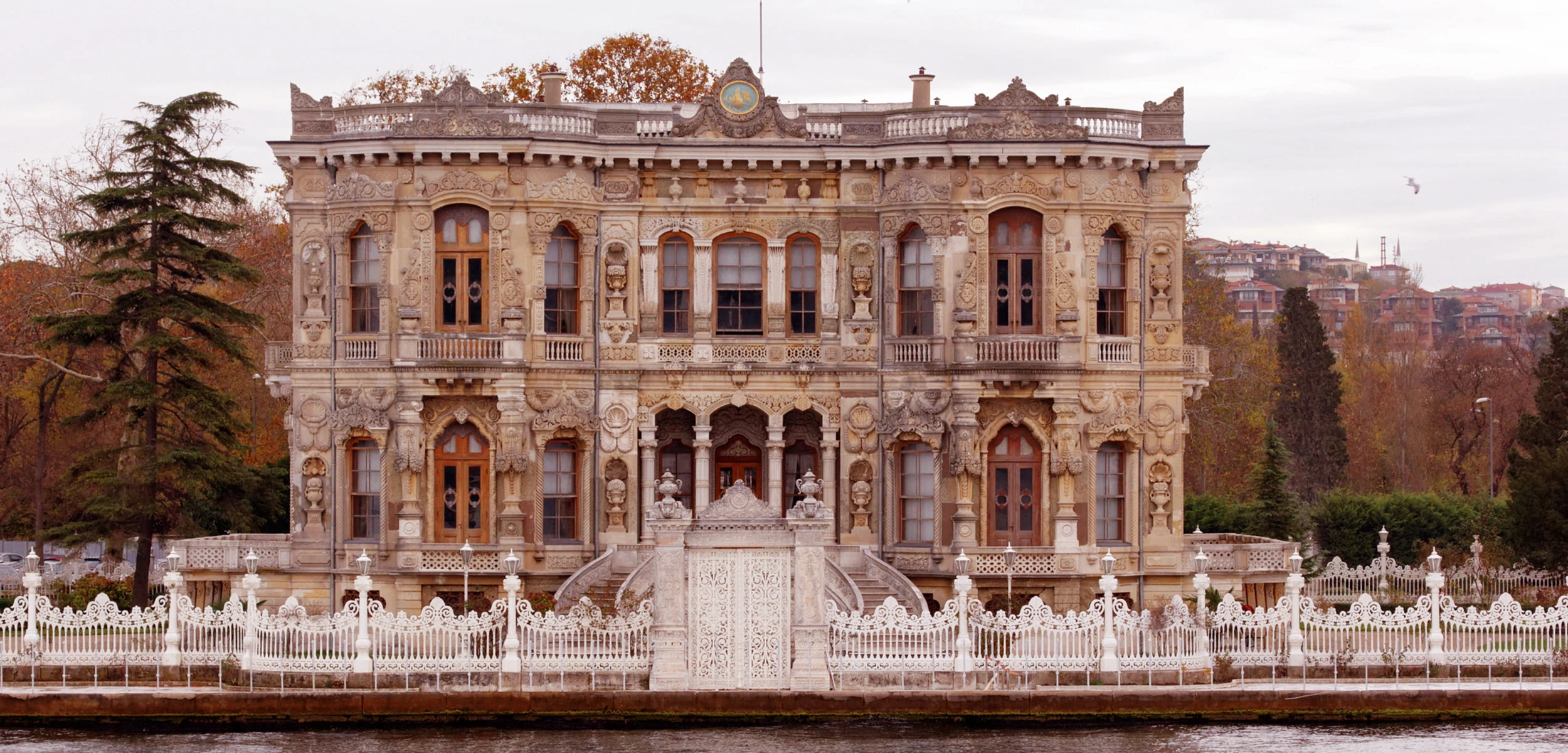
Compare Hıdiv Kasrı's early-20th-century Art Nouveau world with the ornate 19th-century imperial architecture of Küçüksu Pavilion.
Explore Küçüksu Pavilion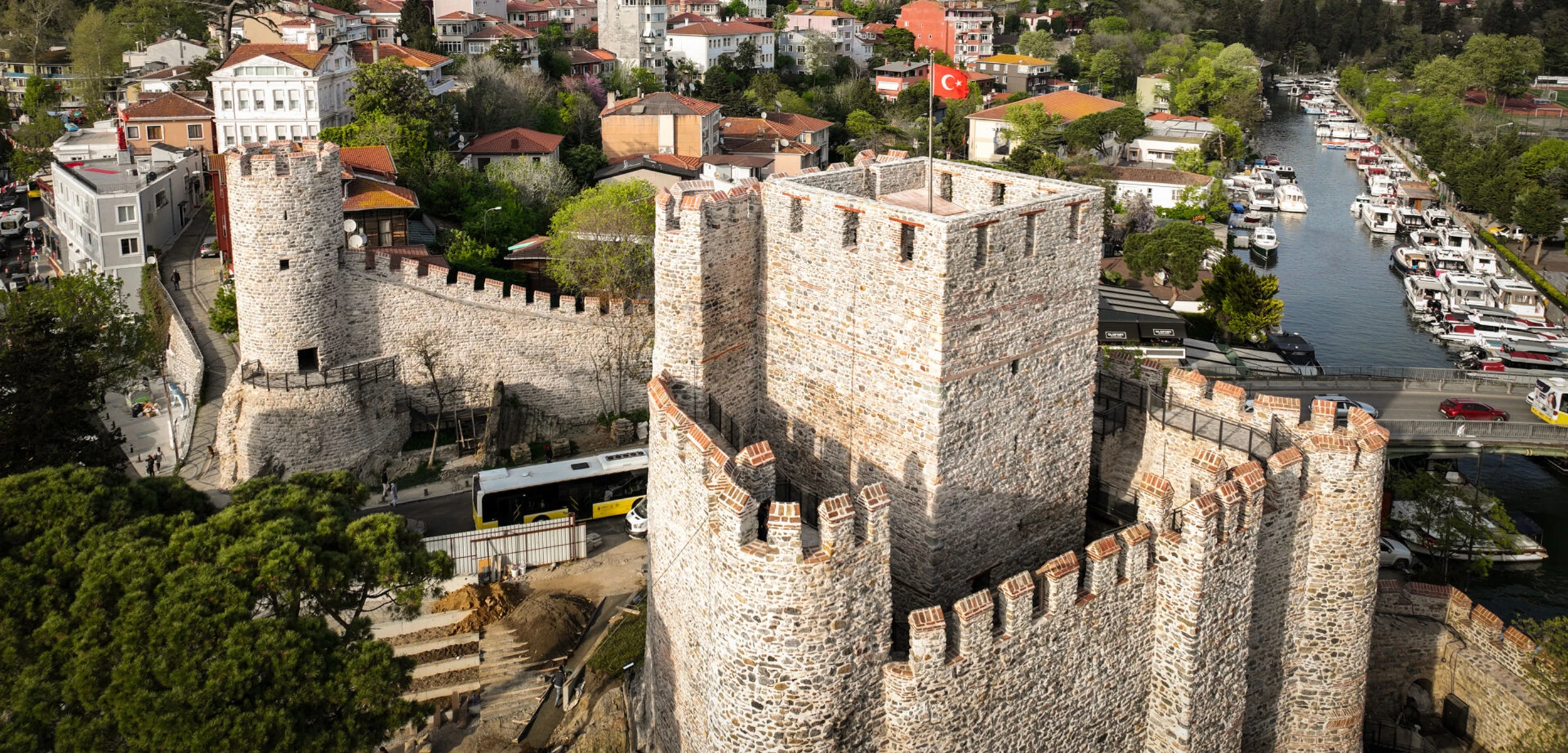
Continue south to the strategic Ottoman fortress built by Bayezid I decades before the conquest of Constantinople.
Explore Anadolu Fortress
Discover more palaces, pavilions, fortresses, mosques, museums, neighborhoods and hidden historic sites across Istanbul.
Explore Istanbul
Wow Cappadocia designs unique travel experiences across Turkey. Our expert local guides help travelers explore the country's most iconic destinations including Cappadocia, Istanbul, Ephesus, Pamukkale and Antalya.
Official member of TURSAB (Association of Turkish Travel Agencies).