Sultan Abdülmecid, the Balyan Family, Merasim & Maiyet Pavilions

Ihlamur Pavilion Istanbul – Complete Visitor Guide

Discover two intimate Ottoman pavilions hidden in a green valley,
where Baroque decoration, imperial gardens and 19th-century court life meet.

Explore Ihlamur Pavilion

Ihlamur Pavilion – An Imperial Retreat Hidden Between Beşiktaş and Nişantaşı

The Ihlamur Pavilions, known in Turkish as Ihlamur Kasırları, stand within a surprisingly peaceful garden in the historic Ihlamur Valley between Beşiktaş, Yıldız and Nişantaşı on Istanbul's European side. Commissioned by Sultan Abdülmecid I in the mid-19th century, the complex consists of two separate buildings: the richly ornamented Merasim Köşkü, or Ceremonial Pavilion, and the more restrained Maiyet Köşkü, or Retinue Pavilion.

The present pavilions replaced an earlier imperial retreat in a valley long used for recreation, hunting, archery and quiet excursions. Abdülmecid renamed the setting Nüzhetiye, a name associated with freshness, pleasure and happiness, and transformed the old country landscape into a refined courtly retreat.

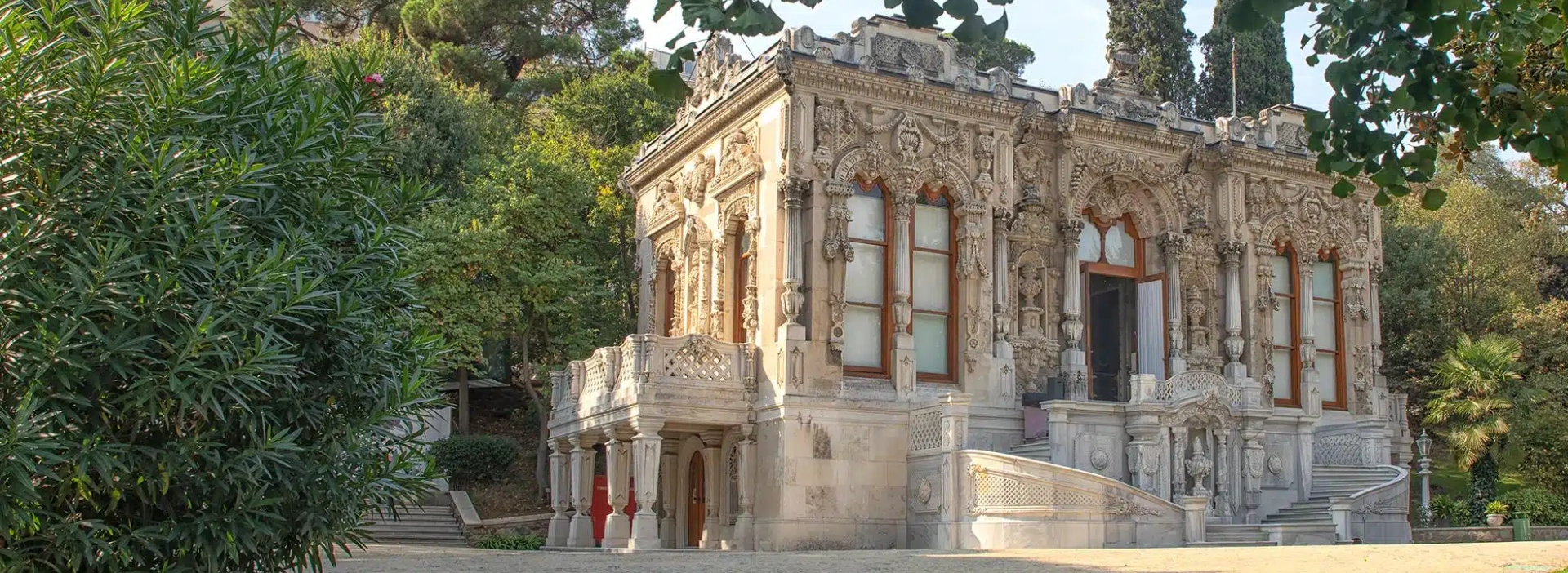
The Merasim Pavilion was created for the sultan's own use, official meetings and receptions. Its sculptural façade, dramatic Baroque staircase, carved stone decoration and Western-influenced interiors make it one of Istanbul's most elegant small-scale imperial buildings. The nearby Maiyet Pavilion served members of the court and imperial family and preserves a more traditional central-hall arrangement.

Today, the garden and surviving pavilions offer a rare chance to experience Ottoman palace culture on a human scale. Instead of monumental ceremonial halls and vast courtyards, Ihlamur presents two compact buildings surrounded by mature trees, pools and landscaped grounds only a short distance from the busy streets of central Istanbul.

1849–1855

The present pavilions were built during the reign of Sultan Abdülmecid I.

2 Pavilions

The complex consists of the Merasim and Maiyet pavilions.

24,724 m²

A historic garden preserves a green fragment of the former Ihlamur Valley.

1985

The restored pavilions opened to visitors as a museum-palace complex.

Know Before You Go

Ihlamur Pavilion – Quick Facts

Essential information for visiting this elegant pair of Ottoman imperial pavilions in central Istanbul.

📍

Location

Türkali neighborhood, Beşiktaş, between Nişantaşı and Yıldız.

Open on Google Maps
👑

Patron

Sultan Abdülmecid I commissioned the present 19th-century pavilions.

🏛️

Main Buildings

Merasim Köşkü and Maiyet Köşkü form the surviving imperial complex.

📅

Construction

The current pavilions were constructed between 1849 and 1855.

🎟️

Entrance

Ticketed National Palaces site; Museum Card is currently valid under general rules.

⏱️

Suggested Visit

Allow 60–90 minutes, or 3–5 hours with Nişantaşı, Yıldız and Beşiktaş.


Two Small Buildings with a Remarkably Rich Court History

Why Are the Ihlamur Pavilions Important?

Ihlamur preserves the architecture, landscape and day-to-day leisure culture of the 19th-century Ottoman court in one of central Istanbul's most intimate imperial settings.

The Ihlamur Pavilions are important because they reveal how Ottoman sultans used smaller royal retreats beyond the monumental palaces of the Bosphorus. These buildings were designed for short stays, receptions, rest, hunting excursions and private court life rather than for the permanent administration of an empire.

The complex also offers an unusually clear comparison between two architectural ideas. The Merasim Pavilion is outward-looking and ceremonial, with a richly sculpted façade and highly Westernized decorative language. The Maiyet Pavilion is quieter and more traditional, organized around a central hall with surrounding rooms.

Equally important is the garden itself. Before modern neighborhoods filled the surrounding slopes, Ihlamur Valley was a wooded excursion landscape associated with linden trees, the Fulya stream, imperial gardens, archery and hunting. The surviving grounds preserve a small but evocative fragment of that environment.

For travelers following our guide to places to visit in Istanbul, Ihlamur is an excellent choice when you want Ottoman palace architecture without the scale and crowds of Istanbul's largest royal complexes.

History of Ihlamur Pavilion

The lower part of Ihlamur Valley was once associated with vineyards owned by Hacı Hüseyin Ağa, an administrator of the Ottoman imperial dockyard during the reign of Sultan Ahmed III. The property later entered the imperial domain and developed into a hasbahçe, or private royal garden.

Sultans Abdülhamid I, Selim III and Mahmud II all used the wider valley. Historic shooting stones on the slopes toward Yıldız preserve memories of archery and shooting competitions connected with Selim III and Mahmud II.

Before the present buildings existed, a modest wooden imperial lodge stood in the garden. The French poet and statesman Alphonse de Lamartine was received here by Sultan Abdülmecid in 1846 and later described the quiet garden, linden trees and small pavilion in his memoirs.

Sultan Abdülmecid I subsequently replaced the older retreat with two new masonry pavilions built between 1849 and 1855. The landscaped estate was also known as Nüzhetiye, a poetic name conveying ideas of freshness, relief, pleasure and happiness.

The pavilions continued to be used by later Ottoman rulers and members of the dynasty. After the abolition of the sultanate, they passed under public administration, were transferred to Istanbul Municipality in 1951, and were later allocated to National Palaces in 1966. Following restoration and landscaping, the complex opened to visitors as a museum-palace in 1985.

18th Century

The former Hacı Hüseyin vineyards became part of an imperial garden landscape.

Selim III & Mahmud II

The valley became associated with imperial recreation and shooting competitions.

1846

Abdülmecid received the French poet Alphonse de Lamartine at the older pavilion.

1849–1855

The present Merasim and Maiyet pavilions were built for Sultan Abdülmecid.

1966

The complex was allocated to the administration of National Palaces.

1985

The restored pavilions opened to the public as a museum-palace complex.

Ihlamur Valley and the Meaning of Nüzhetiye

The pavilions make more sense when viewed as part of the old Ihlamur Valley rather than as isolated buildings. The valley once stretched through a greener landscape between Beşiktaş, Yıldız and Nişantaşı, with the Fulya stream flowing beneath plane and linden trees.

The Turkish word ıhlamur means linden or lime tree, and the name reflects the trees historically associated with the valley. Before dense urban development, the area offered a cool, shaded environment well suited to picnics, hunting, walking and imperial recreation.

During Abdülmecid's reign, part of the valley was planted and terraced as a refined garden landscape. The sultan used the name Nüzhetiye for the estate, evoking freshness, delight and recreation rather than the formality of a permanent palace complex.

Although roads and neighborhoods have transformed the surrounding valley, the surviving garden still creates a strong sense of separation from the city. This sudden shift from busy Beşiktaş streets into a quiet imperial enclosure is one of the pleasures of visiting Ihlamur today.

Linden Trees

The historic vegetation gave Ihlamur Valley and the pavilions their modern name.

Fulya Stream

The old watercourse once helped shape the valley's rural and recreational character.

Nüzhetiye

Abdülmecid used this name to express freshness, pleasure and relaxation.

Imperial Garden

The landscape became a hasbahçe used by the Ottoman dynasty.

Shooting Grounds

Selim III and Mahmud II are associated with shooting contests on the upper slopes.

Urban Oasis

The surviving garden now preserves an unexpectedly green pocket of central Istanbul.

Sultan Abdülmecid I and the Balyan Architectural Tradition

Sultan Abdülmecid I ruled during the Tanzimat period, when the Ottoman state was reforming its institutions and adopting a more international architectural language. His reign transformed the imperial image of Istanbul through projects that included Dolmabahçe Palace, Küçüksu Pavilion and the rebuilding of smaller royal residences.

The design of Ihlamur is closely associated with the famous Balyan family, the Ottoman Armenian architectural dynasty responsible for many of the capital's best-known 19th-century palaces, mosques and waterfront buildings. Published sources differ over whether the primary architect should be identified as Nigoğos Balyan or Karabet Balyan, so the safest description is that the complex belongs to the Balyan architectural tradition and workshop.

At Ihlamur, the designers had an unusual opportunity to create two related but contrasting buildings. One could serve ceremonial and official functions with a highly decorative architectural vocabulary, while the other could remain more domestic, practical and connected to traditional Ottoman spatial planning.

That contrast is precisely what makes the complex so rewarding. Visitors can move from the theatrical sculptural exterior of the Merasim Pavilion to the more restrained Maiyet Pavilion and see two different expressions of court architecture within the same garden.

Abdülmecid I

The Tanzimat-era sultan who commissioned the present Ihlamur Pavilions.

Balyan Family

The dynasty of imperial architects that helped redefine 19th-century Istanbul.

Architect Attribution

Sources variously name Nigoğos or Karabet Balyan; both belong to the same architectural family.

Two Functions

The pair separates ceremonial royal use from the needs of the sultan's entourage.

Architecture of the Ihlamur Pavilions

The two Ihlamur pavilions were conceived as separate architectural personalities within a shared garden. Both belong to the 19th-century Ottoman court world, but they differ clearly in scale, plan, ornament and function.

The Merasim Pavilion is the more spectacular of the pair. Built of stone and raised above a strong basement level, it presents a richly ornamented façade with carved reliefs, tall openings and an especially memorable curving staircase at the entrance.

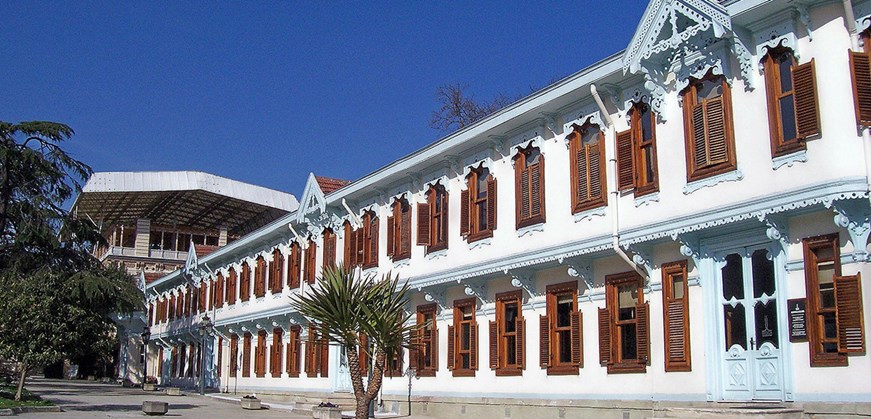
The Maiyet Pavilion is more restrained and more closely related to traditional Ottoman domestic planning. Its rooms are arranged around a central hall, creating a calmer, more residential character appropriate to members of the sultan's household and entourage.

Together, the two structures illustrate the eclectic nature of Ottoman architecture under Abdülmecid. European Baroque and Rococo-inspired decoration could coexist with long-established Ottoman room arrangements, local materials, hand-woven textiles and palace furnishings produced in imperial workshops.

Masonry Construction

The surviving pavilions are permanent stone structures rather than temporary garden kiosks.

Eclectic Style

European-inspired ornament is combined with Ottoman court traditions.

Baroque Staircase

The Merasim entrance is framed by one of the complex's most dramatic architectural features.

Traditional Hall Plan

The Maiyet Pavilion uses rooms opening around a central hall or sofa.

Decorative Stonework

Reliefs and carved surfaces give the ceremonial pavilion a sculptural façade.

Garden Composition

Architecture, paths, pools and mature planting were intended to be experienced together.

Merasim Köşkü – The Architectural Highlight of Ihlamur

The Merasim Köşkü, literally the Ceremonial Pavilion, is the building most visitors identify with Ihlamur Kasrı. It was reserved primarily for the sultan's own use, official work, receptions and the entertainment of distinguished guests.

Its entrance façade is immediately recognizable. A broad, curving Baroque staircase rises toward the central doorway while dense relief decoration covers the stone surfaces around windows, pilasters and architectural frames. The result is theatrical despite the pavilion's modest size.

Inside, the plan is relatively compact, with an entrance hall and rooms arranged to either side. The decorative treatment, however, is anything but restrained: gilded details, painted ceilings, elaborate doors, rich textiles and European-style furniture create the atmosphere of a miniature imperial reception palace.

Because the building was designed for short royal visits rather than permanent residence, every room works hard visually. There is little wasted space, and visitors can appreciate the relationship between architecture, furniture and surface decoration without the long distances encountered in larger Ottoman palaces.

Ceremonial Function

The pavilion served the sultan during receptions, official meetings and private visits.

Baroque Staircase

A dramatic double-curving exterior stair defines the main entrance.

Relief Façade

Stone ornament gives the exterior exceptional depth and movement.

Western Interiors

The rooms reflect the European-influenced taste of Abdülmecid's court.

Compact Plan

A small number of rooms creates a focused museum experience.

Imperial Reception

The building was intended to impress guests without functioning as a full-time palace.

Do not miss: Stand back from the main staircase before entering. The relationship between the steps, carved façade and central doorway is one of the finest small-scale ceremonial compositions in 19th-century Istanbul.

Maiyet Köşkü – The More Traditional Side of Ihlamur

A short distance from the Merasim Pavilion stands the Maiyet Köşkü, or Retinue Pavilion. It was used by members of the sultan's entourage and, at times, members of the imperial family and harem who accompanied the ruler during visits to Ihlamur.

Architecturally, the building is more restrained than the Merasim Pavilion. Its arrangement around a central hall with rooms at the corners recalls the spatial logic of the traditional Ottoman house and gives the interior a more domestic rhythm.

One of its most distinctive decorative features is the use of colored stucco intended to imitate marble. This technique allowed interior surfaces to achieve a polished and luxurious appearance while remaining visually different from the denser carved decoration of the ceremonial building.

The Maiyet Pavilion is important precisely because it provides a counterpoint to the Merasim Pavilion. Viewed together, the two buildings show how architecture could distinguish rank and function within a compact imperial estate.

Retinue Use

The pavilion accommodated members of the sultan's entourage and imperial household.

Central Hall

Rooms open around a shared hall in a more traditional Ottoman arrangement.

Two Storeys

The building develops vertically while remaining smaller and simpler in expression.

Marble-Look Stucco

Colored plasterwork imitates polished stone on interior wall surfaces.

Domestic Character

The atmosphere is less ceremonial and more closely connected to courtly daily life.

Architectural Contrast

Its simplicity makes the richness of the Merasim Pavilion even more striking.

Interior Decoration of Ihlamur Pavilion

The interiors of Ihlamur belong to the richly international decorative world of the mid-19th-century Ottoman court. Ceilings, wall treatments, doors, curtains, carpets and furniture were selected as complete ensembles rather than as unrelated objects.

The Merasim Pavilion is especially elaborate. Painted and gilded ceilings create strong focal points above the rooms, while large doors and windows increase the sense of scale inside a relatively small building. European-style furnishings sit naturally within this Western-influenced decorative setting.

Historic descriptions and collections associated with the pavilions also reveal the importance of Ottoman textile production. Upholstery and curtains were produced at Hereke, carpets came from Hereke and Feshane traditions, and prayer rugs represented weaving centers such as Gördes, Çal and Kula.

The Maiyet Pavilion offers a different decorative experience. Its colored stucco surfaces imitate marble, allowing visitors to compare the refined illusionistic techniques of palace interiors with the more sculptural treatment of the ceremonial building.

Painted Ceilings

Decorative ceiling compositions add color and visual height to the principal rooms.

Gilded Details

Gold-toned ornament emphasizes borders, moldings and ceremonial focal points.

European Furniture

Imported and European-style furnishings reflect the cosmopolitan Ottoman court.

Hereke Textiles

Fine upholstery, curtains and carpets connect Ihlamur with imperial textile production.

Handwoven Rugs

Traditional weaving centers supplied carpets and prayer rugs for palace interiors.

Colored Stucco

The Maiyet Pavilion uses polished plaster to imitate expensive marble surfaces.

The Ihlamur Pavilion Garden

The garden is not simply a setting around the buildings; it is part of the historical experience of Ihlamur. The surviving estate covers roughly 24,724 square meters and preserves mature planting, pools, paths and open spaces within one of Istanbul's busiest central districts.

Historic accounts describe linden, plane, chestnut and fruit trees in the valley. Although the modern city has transformed the wider landscape, the enclosed grounds still offer shade, seasonal color and a sense of retreat that helps explain why Ottoman rulers repeatedly returned here.

The wider Ihlamur landscape was also connected with imperial shooting practice. Historic nişan taşları, or shooting stones, record competitions and shooting achievements associated with Sultan Selim III and Sultan Mahmud II on the slopes toward Yıldız.

National Palaces currently lists a separate garden-only ticket for visitors who want to enjoy the grounds without the full museum visit. A cafeteria within the complex also makes the garden a pleasant place to pause before continuing toward Nişantaşı, Yıldız or Beşiktaş.

24,724 m²

The historic garden forms a substantial green enclosure around the two pavilions.

Historic Trees

Linden and other mature trees preserve the character of the old valley.

Pools

Water features soften the formal architecture and recall the estate's pleasure-garden character.

Shooting Stones

Nearby monuments preserve memories of imperial shooting competitions.

Garden Ticket

National Palaces currently lists a separate admission option for the garden.

Cafeteria

A National Palaces café provides a convenient break within the historic grounds.

How the Ottoman Sultans Used Ihlamur Pavilion

Ihlamur was principally a day-use imperial retreat rather than a permanent royal residence. The sultan could leave the formal environment of the main palace, enter a green valley close to the city and spend part of the day resting, receiving guests or participating in outdoor activities.

The Merasim Pavilion provided a suitably impressive setting for official meetings and distinguished visitors. The Maiyet Pavilion supported the entourage and imperial household, allowing the complex to function efficiently without the enormous service departments of Dolmabahçe or Topkapı.

The site's history also includes the French poet Alphonse de Lamartine, who met Abdülmecid at the earlier pavilion in 1846. Later rulers continued to use Ihlamur, and Sultan Mehmed V Reşad received visiting Balkan monarchs here in the early 20th century.

Ihlamur also has a solemn association with Abdülmecid himself. Historical accounts record that the sultan died at Ihlamur in 1861, giving the retreat a deeply personal place in the history of his reign.

Primary RoleShort imperial visits, rest, receptions and leisure
Ceremonial BuildingMerasim Pavilion for the sultan, official work and receptions
Supporting BuildingMaiyet Pavilion for the imperial entourage and family
Landscape ActivitiesHunting, shooting practice, walking and garden recreation
Famous GuestAlphonse de Lamartine was received at the earlier pavilion in 1846

Lamartine and the Earlier Ihlamur Pavilion

One of the most evocative episodes in Ihlamur's history occurred before the present pavilions were built. In 1846, French poet, politician and traveler Alphonse de Lamartine visited Sultan Abdülmecid at the modest older imperial lodge in the valley.

Lamartine later described a garden shaded by large linden and chestnut trees, with a small fountain and a quiet pavilion where the sultan could rest and reflect. His account is valuable because it captures Ihlamur at the moment just before Abdülmecid transformed the older retreat into the more elaborate complex seen today.

The story also highlights an important point about Ottoman imperial life. Royal architecture did not always need to be monumental. The earlier Ihlamur lodge was intentionally modest, valued for its setting, privacy and atmosphere rather than for overwhelming scale.

When the new Merasim and Maiyet pavilions replaced that earlier building, the function of the site remained similar even though its architectural language became much more sophisticated. The valley continued to be a place of retreat from the ceremonial center of the capital.

Historical perspective: Lamartine's visit helps visitors imagine the Ihlamur landscape before the present buildings. When walking through the garden, look beyond the architecture and try to picture the wider valley as a wooded imperial excursion ground rather than a central-city museum.

Ihlamur Pavilions as a Museum-Palace Complex

The Ihlamur Pavilions were allocated to National Palaces in 1966 and later restored together with their landscaped setting. The complex opened to the public as a museum-palace in 1985 with historic furnishings and decorative elements preserved as part of the visitor experience.

Conservation at Ihlamur involves more than maintaining two historic structures. Painted ceilings, gilded surfaces, textiles, furniture, stucco, carved stone, woodwork and garden features all require different forms of protection and periodic restoration.

Because the Merasim Pavilion is compact and highly decorated, visitor circulation may be carefully managed. Rooms, garden areas or furnishings can occasionally be inaccessible because of conservation, official functions or temporary maintenance.

Move slowly and follow staff instructions. Ihlamur rewards close observation, and the small size of the buildings makes it easy to compare architectural details without rushing.

Museum-Palace

The pavilions are presented as historic interiors rather than empty architectural shells.

Original Furnishings

Furniture and decorative objects help reconstruct the atmosphere of imperial use.

Delicate Surfaces

Gilding, paint, stucco and textiles require careful visitor management.

Historic Garden

The surrounding landscape is protected as part of the museum experience.

What to See at Ihlamur Pavilion

Begin by walking through the garden so you can see both pavilions in relation to one another. Then focus on the Merasim Pavilion's exterior before entering, because its staircase and relief-covered façade are among the strongest visual statements in the entire complex.

Merasim Pavilion

See the sultan's richly decorated ceremonial building and principal museum interior.

Baroque Staircase

Study the curving entrance steps and their relationship with the sculpted façade.

Relief Decoration

Look closely at carved motifs around windows, wall panels and architectural frames.

Painted Ceilings

Notice how color, gilding and ornament transform the compact reception rooms.

Maiyet Pavilion

Compare its calmer, more traditional plan with the ceremonial building nearby.

Marble-Look Stucco

Observe the colored wall finishes designed to imitate polished stone.

Historic Garden

Walk among mature trees, pools and open spaces within the former imperial estate.

Palace Furnishings

Look for European-style furniture, textiles and decorative objects inside the museum rooms.

Best comparison: Do not treat the two buildings as duplicates. The most rewarding way to understand Ihlamur is to compare the theatrical Merasim Pavilion with the more restrained Maiyet Pavilion and ask how architecture expressed different functions within the imperial household.

Practical Tips for Visiting Ihlamur Pavilion

Check Official Details

Opening hours, ticket prices and holiday schedules can change; confirm them before travel.

Avoid Monday

The Ihlamur Pavilions are currently closed to visitors every Monday.

Arrive Before 17:00

The current ticket-office closing time is earlier than the end of visiting hours.

Allow Garden Time

The grounds are an important part of the experience, not simply a path to the museum.

Travel Light

Compact historic rooms are easier to visit without large bags or luggage.

Follow Photo Rules

Interior photography restrictions may change; ask staff before taking pictures.

Use the Café

The National Palaces cafeteria is useful for a quiet break inside the garden.

Add Nişantaşı or Yıldız

The central location makes it easy to build Ihlamur into a half-day neighborhood route.

Suggested Ihlamur Pavilion, Nişantaşı and Yıldız Route

Begin at Ihlamur Pavilion soon after opening. Allow approximately 60–90 minutes to see the Merasim Pavilion, compare it with the Maiyet Pavilion and enjoy the garden without rushing.

Continue uphill toward Nişantaşı if you want cafés, elegant 19th- and early-20th-century streets and a modern neighborhood atmosphere. Alternatively, walk or take a short taxi toward Yıldız Park for a greener continuation of the imperial landscape theme.

From Yıldız, descend toward Beşiktaş and the Bosphorus. The district's waterfront, markets and Ottoman monuments provide a lively contrast with the secluded garden atmosphere of Ihlamur.

For a deeper palace-focused day, continue south to Dolmabahçe Palace, where Abdülmecid's imperial architecture expands from the intimate scale of Ihlamur into one of the grandest royal residences of the 19th century.

Stop 1Ihlamur Pavilions and historic garden
Stop 2Nişantaşı streets or Yıldız Park
Stop 3Beşiktaş neighborhood and waterfront
Optional ExtensionDolmabahçe Palace
Total TimeApproximately 3–5 hours depending on pace and route
Planning note: Ihlamur and Dolmabahçe have separate tickets and different visitor arrangements. If you want to combine both on the same day, check current opening hours first and visit the more time-sensitive museum early.

Ihlamur Pavilion Visitor Information

Ihlamur Pavilions are administered by the Presidency of the Republic of Türkiye, Directorate of National Palaces. According to the official listing checked in August 2026, the site is open Tuesday to Sunday from 09:00 to 17:30, closed on Mondays, and the ticket office closes at 17:00.

The current official admission prices are 100 TL for domestic visitors, 280 TL for foreign visitors and 50 TL reduced admission. National Palaces also lists a 60 TL garden ticket for visitors using the grounds without the standard museum admission.

The Museum Card is currently valid for Ihlamur Pavilions under the general National Palaces rules. The official list of Museum Card exceptions does not include Ihlamur Pavilions, although ticket policies and access arrangements can change.

The National Palaces cafeteria at Ihlamur is currently listed as open from 09:00 to 18:00. Before visiting, confirm the latest museum information on the official National Palaces Ihlamur Pavilions page.

SiteIhlamur Pavilions / Ihlamur Kasırları
AddressTürkali Mah., Hakkı Yeten Cad. No:1, Beşiktaş, Istanbul
Current HoursTuesday–Sunday 09:00–17:30; Monday closed
Ticket OfficeCurrently closes at 17:00
Admission100 TL domestic; 280 TL foreign; 50 TL reduced
Garden TicketCurrently 60 TL
Museum CardCurrently valid under National Palaces rules
Suggested Time60–90 minutes for the pavilions and immediate garden
Important: All prices, card rules, public-holiday arrangements and accessible areas are subject to change. Use the official National Palaces page as the final authority before your visit.

Best Time to Visit Ihlamur Pavilion

Weekday Morning

Tuesday–Friday mornings are generally best for a quieter museum experience.

Spring

Fresh greenery and flowering plants make the historic garden especially attractive.

Early Summer

Long daylight and leafy trees emphasize the retreat-like atmosphere of the grounds.

Autumn

Mild temperatures and changing foliage create beautiful garden photography.

Rainy Day

The museum interiors remain rewarding, although the garden becomes less comfortable.

Weekend Morning

Arrive early before central Beşiktaş traffic and garden visitors increase.

How Much Time Do You Need at Ihlamur Pavilion?

40–50 Minutes

Enough for a focused visit to the main museum areas when time is limited.

60–90 Minutes

The ideal range for the pavilions, façade details and a relaxed garden walk.

2 Hours

Add café time, photography and a slower exploration of the landscaped grounds.

Half Day

Combine Ihlamur with Nişantaşı, Yıldız Park, Beşiktaş or Dolmabahçe Palace.

Photography at Ihlamur Pavilion

The most recognizable photograph of Ihlamur is the front façade of the Merasim Pavilion with its sweeping Baroque staircase. Step back far enough to include the whole stair, central entrance and surrounding relief decoration in one balanced frame.

Side angles are useful for revealing the pavilion's modest scale and the depth of its carved stonework. Trees, garden paths and railings can be used as natural foreground elements without overwhelming the architecture.

The Maiyet Pavilion offers quieter compositions. Its simpler façade and more domestic proportions photograph well when framed by the garden, especially in spring and autumn.

Interior photography rules may change depending on conservation requirements and visitor conditions. Always ask museum staff before photographing inside and avoid flash, tripods or professional equipment unless specifically permitted.

Merasim Façade

Capture the staircase, entrance and relief decoration as a single composition.

Staircase Details

Closer angles reveal the curves, balustrades and sculptural character of the entrance.

Garden Frames

Use mature trees and paths to place the architecture within its historic landscape.

Maiyet Pavilion

Look for quieter views that emphasize scale and traditional proportions.

Seasonal Foliage

Spring greens and autumn leaves add depth to exterior photographs.

Interior Rules

Confirm the current policy before photographing historic rooms and furnishings.

Photography tip: Soft morning or late-afternoon light is usually kinder to the pale stone reliefs than harsh midday sun. For the main façade, a moderate wide-angle lens helps include the full staircase without excessive distortion.

Accessibility at Ihlamur Pavilion

Ihlamur is a protected historic complex with raised entrances, stairs, old thresholds and landscaped garden surfaces. The dramatic staircase of the Merasim Pavilion is an important architectural feature, but it can also create access challenges for visitors with limited mobility.

Historic Stairs

Some museum areas require movement across original staircases and raised entrances.

Garden Paths

Outdoor surfaces may vary in smoothness, width and gradient.

Compact Rooms

Interior circulation can be narrow when visitor numbers are high.

Resting Options

The garden and café may provide useful breaks during a longer visit.

Assistance

Ask staff about the current accessible route and any available assistance on arrival.

Confirm Before Travel

Contact National Palaces in advance if step-free access is essential.

Accessibility note: Historic-site access arrangements can change after restoration or conservation work. If mobility access is a deciding factor for your visit, confirm the current route directly with Ihlamur Pavilions before traveling.

How to Get to Ihlamur Pavilion

Ihlamur Pavilions are located at Türkali Mahallesi, Hakkı Yeten Caddesi No:1, Beşiktaş, in the valley between Beşiktaş and Nişantaşı. The site is central, but it sits away from the main tourist tram corridor, so the best route depends on your starting point.

From Beşiktaş

Walk uphill through the district or use a short local bus or taxi toward Ihlamur.

From Nişantaşı

Walk downhill from the Teşvikiye area toward Ihlamur Valley and the pavilion entrance.

From Taksim

Use the metro toward Osmanbey or travel by bus or taxi toward Nişantaşı and Ihlamur.

From Sultanahmet

Take the T1 tram toward Kabataş, then continue by bus, taxi or a longer uphill walk.

By Metro

Osmanbey on the M2 line is useful for approaching from the Nişantaşı side.

By Taxi

A taxi can be practical from Beşiktaş, Taksim or Dolmabahçe when traffic is reasonable.

Transport tip: Central Istanbul bus routes and traffic conditions change frequently. Use a live transport planner on the day of travel and enter “Ihlamur Kasırları” as the destination rather than relying on a fixed bus number.

Places to Visit Near Ihlamur Pavilion

Ihlamur Pavilion is exceptionally well placed for a half-day or full-day route through the European side of central Istanbul. Use our complete Istanbul visitor guide to connect the pavilions with the city's wider imperial, architectural and neighborhood heritage.

Nişantaşı

Walk uphill to elegant streets, cafés and architecture around Teşvikiye and Abdi İpekçi.

Yıldız Park

Continue the imperial-garden theme in one of the largest historic green areas nearby.

Beşiktaş

Explore a lively waterfront district filled with markets, cafés and Ottoman monuments.

Dolmabahçe Palace

Compare Ihlamur's intimate scale with Abdülmecid's monumental Bosphorus residence.

Naval Museum

Discover Ottoman imperial caiques and maritime history beside Beşiktaş waterfront.

Ortaköy

Continue north toward a famous Bosphorus neighborhood beneath the bridge.

Maçka Park

Enjoy another green corridor linking the Nişantaşı and Dolmabahçe areas.

Explore More of Istanbul

Plan routes through palaces, mosques, museums, neighborhoods and Bosphorus landmarks.

Frequently Asked Questions About Ihlamur Pavilion

Where is Ihlamur Pavilion in Istanbul?

It is in Beşiktaş on Istanbul's European side, in the historic Ihlamur Valley between Beşiktaş, Yıldız and Nişantaşı.

What is Ihlamur Pavilion called in Turkish?

The complex is called Ihlamur Kasırları, meaning the Ihlamur Pavilions. The site contains two separate historic buildings.

What does Ihlamur mean?

Ihlamur means linden or lime tree in Turkish, referring to the trees historically associated with the valley.

How many pavilions are at Ihlamur?

There are two principal surviving buildings: the Merasim Köşkü, or Ceremonial Pavilion, and the Maiyet Köşkü, or Retinue Pavilion.

Who commissioned Ihlamur Pavilion?

Sultan Abdülmecid I commissioned the present pavilions during his mid-19th-century building program.

Who designed Ihlamur Pavilion?

The complex belongs to the Balyan architectural tradition. Published sources variously attribute the work to Nigoğos Balyan or Karabet Balyan.

When was Ihlamur Pavilion built?

The present Merasim and Maiyet pavilions were constructed between 1849 and 1855.

What stood here before the present pavilions?

A modest wooden imperial lodge stood within the older garden and was used by Ottoman sultans before Abdülmecid rebuilt the estate.

Why was Ihlamur Pavilion built?

It served as a short-stay imperial retreat for rest, receptions, hunting excursions and courtly recreation near central Istanbul.

What is the Merasim Pavilion?

It is the more ornate ceremonial building, used by the sultan for official work, receptions and distinguished guests.

What is the Maiyet Pavilion?

It is the more restrained building used by the sultan's entourage and members of the imperial household.

What is special about the Merasim Pavilion?

Its curving Baroque staircase, relief-covered façade, gilded interiors and European-style furnishings make it the architectural highlight of the complex.

What is Nüzhetiye?

Nüzhetiye was a name used by Sultan Abdülmecid for the Ihlamur estate, expressing ideas of freshness, delight and recreation.

Did Lamartine visit Ihlamur Pavilion?

Yes. Alphonse de Lamartine was received by Sultan Abdülmecid at the earlier pavilion in 1846, before the present buildings were completed.

When did Ihlamur Pavilion become a museum?

After transfer to National Palaces and restoration, the pavilions opened to the public as a museum-palace complex in 1985.

What are Ihlamur Pavilion's opening hours?

As checked in August 2026, the official schedule is Tuesday–Sunday 09:00–17:30, with Monday closed and the ticket office closing at 17:00.

How much are Ihlamur Pavilion tickets?

As checked in August 2026, admission is 100 TL domestic, 280 TL foreign and 50 TL reduced. A 60 TL garden ticket is also listed.

Is the Museum Card valid at Ihlamur Pavilion?

Yes. Ihlamur Pavilions are currently covered by the general National Palaces Museum Card rules and are not listed among the exceptions.

Can I visit only the Ihlamur garden?

Yes. National Palaces currently lists a separate garden ticket, useful if you want to enjoy the grounds without a full museum visit.

Is there a café at Ihlamur Pavilion?

Yes. National Palaces operates a cafeteria within the complex, currently listed from 09:00 to 18:00.

How long should I spend at Ihlamur Pavilion?

Allow about 60–90 minutes for the pavilions and garden, or around two hours if adding a relaxed café break and photography.

Is Ihlamur Pavilion suitable for children?

Yes. The garden is pleasant for families, although children should be supervised around historic interiors, steps and museum objects.

Is Ihlamur Pavilion wheelchair accessible?

Historic stairs and thresholds can affect access. Contact National Palaces before travel if step-free access is essential.

Is photography allowed inside Ihlamur Pavilion?

Interior rules may change for conservation reasons. Ask staff on arrival and avoid flash, tripods or professional equipment without permission.

What is the best time to visit Ihlamur Pavilion?

A weekday morning in spring or autumn is ideal for quieter interiors and pleasant garden conditions.

How do I get to Ihlamur Pavilion from Sultanahmet?

Take the T1 tram toward Kabataş, then continue toward Beşiktaş and Ihlamur by local transport or taxi.

Can I combine Ihlamur Pavilion with Dolmabahçe Palace?

Yes. They make an excellent comparison between Abdülmecid's intimate garden architecture and his monumental Bosphorus palace.

What else can I visit nearby?

Nişantaşı, Yıldız Park, Beşiktaş, Dolmabahçe Palace, the Naval Museum, Maçka Park and Ortaköy are good additions.

Is Ihlamur Pavilion worth visiting?

Yes. The combination of richly decorated architecture, peaceful gardens and a central location makes it one of Istanbul's most rewarding lesser-visited imperial sites.


Responsible Visiting at Ihlamur Pavilion

Do Not Touch

Furniture, textiles, walls, stucco and decorative surfaces are historic museum objects.

Follow the Route

Remain within the areas opened by museum staff and respect temporary barriers.

Avoid Flash

Strong light can damage sensitive textiles, painted surfaces and historic furnishings.

Keep Interiors Quiet

The pavilions are compact, so low voices help preserve a calm museum atmosphere.

Respect the Garden

Stay on permitted paths, protect planted areas and use bins for all waste.

Follow Staff Guidance

Conservation needs can change access, photography rules and visitor circulation.

Private Ihlamur Pavilion & Imperial Istanbul Experiences

Connect Ihlamur Pavilion with Dolmabahçe, Yıldız, Beşiktaş and Nişantaşı through a private route shaped around your interests and without compulsory shopping stops.

Custom Ottoman Palaces & Garden Pavilions Experience

Choose a focused half-day route around Ihlamur and Beşiktaş, or create a deeper private journey linking Sultan Abdülmecid, the Balyan family, imperial gardens and 19th-century palace architecture.

Continue Exploring Historic Istanbul

Use Ihlamur as a starting point for a deeper route through Abdülmecid's Istanbul, the Beşiktaş waterfront and the city's wider imperial heritage.

Popular Destinations in Turkey

Cappadocia | Istanbul | Ephesus | Pamukkale | Antalya | Mount Nemrut | Turkey Travel Guide