Private Jewish Heritage İzmir Tour
Explore Havra Street, Kemeraltı's synagogue quarter, Sephardic history, Karataş and the wider story of Jewish İzmir with a private route shaped around your interests.
Request a Private İzmir Tour





Hidden among the crowded market streets of Kemeraltı is one of İzmir's most remarkable cultural landscapes: a historic Jewish quarter where synagogues, courtyards, markets, religious schools and communal institutions developed within only a few streets of one another.
The heart of this heritage is Havra Sokağı — Synagogue Street. Around it survives an extraordinary concentration of historic synagogues including Etz Hayim, Shalom, Algazi, Sinyora, Bikur Holim, Hevra, Portugal, Forasteros and Bet Hillel. Some remain religious buildings, others have been conserved or adapted for cultural use, and several are subjects of continuing restoration and preservation work.
Jewish life in İzmir, however, extends far beyond a single street. From the 19th century onward, many Jewish families moved from the old quarter toward Karataş, where the imposing Bet Israel Synagogue was built and businessman Nesim Levi created the city's famous Tarihi Asansör. Later community life also developed around Alsancak, where Shaar Ashamayim serves contemporary religious life.
Together these places tell a story stretching across centuries: ancient Jewish presence in Smyrna, the development of an important Sephardic community under the Ottoman Empire, rabbinic scholarship, Ladino culture, commerce, music, migration, philanthropy and the continuing effort to preserve Jewish İzmir for future generations.
Discover a concentration of historic synagogues within the old Jewish quarter of Kemeraltı unlike almost anywhere else in Türkiye.
Walk through the commercial street that once stood at the centre of Jewish religious, market and everyday life in Ottoman İzmir.
Explore architecture, Ladino culture, rabbinic traditions and communal history shaped strongly by Sephardic Jewish life.
Follow the Jewish community's later movement toward the southern waterfront and one of İzmir's most impressive synagogues.
Essential information for understanding and respectfully exploring İzmir's historic Jewish neighbourhoods and synagogues.
Kemeraltı, Havra Street, İkiçeşmelik and the streets surrounding the ancient Agora of Smyrna.
A layered Jewish history shaped by ancient communities, Ottoman-era migration and a particularly important Sephardic tradition.
The historic Jewish quarter developed around Kemeraltı, Havra Street, İkiçeşmelik and the Agora area.
From the 19th century onward many families moved toward Karataş, Karantina and the southern shores of İzmir Bay.
The Kemeraltı cluster includes Etz Hayim, Shalom, Algazi, Sinyora, Bikur Holim, Hevra, Portugal, Forasteros and Bet Hillel.
Meaning “Tree of Life,” it is traditionally regarded as one of İzmir's oldest surviving synagogue traditions.
İzmir became an important centre of Jewish learning associated with scholars including Joseph Escapa and Hayim Palachi.
Judeo-Spanish, commonly called Ladino, became an important language of İzmir's Sephardic Jewish community.
Do not assume synagogue interiors are open for walk-in sightseeing. Visits should be arranged in advance through authorised channels.
Allow 2–3 hours for Kemeraltı Jewish heritage, or half a day when combining it with Karataş and nearby historic sites.
The historic Kemeraltı section is best experienced on foot because most heritage sites lie within a compact street network.
Remember that several sites belong to a living religious community rather than functioning simply as tourist monuments.
İzmir's Jewish heritage reveals a layer of the city that can easily remain invisible to visitors walking through Kemeraltı without knowing what lies behind its walls.
The strongest reason to explore the area is its extraordinary concentration of synagogues. Several historic places of worship stand within a very small section of the old commercial city, sometimes hidden behind high courtyard walls and ordinary-looking entrances.
The second reason is the opportunity to understand Ottoman İzmir as a multicultural port city. Muslim, Jewish, Greek Orthodox, Armenian, Catholic and Levantine communities all contributed to the commercial and social life of Smyrna, and Kemeraltı still contains traces of this complex urban history.
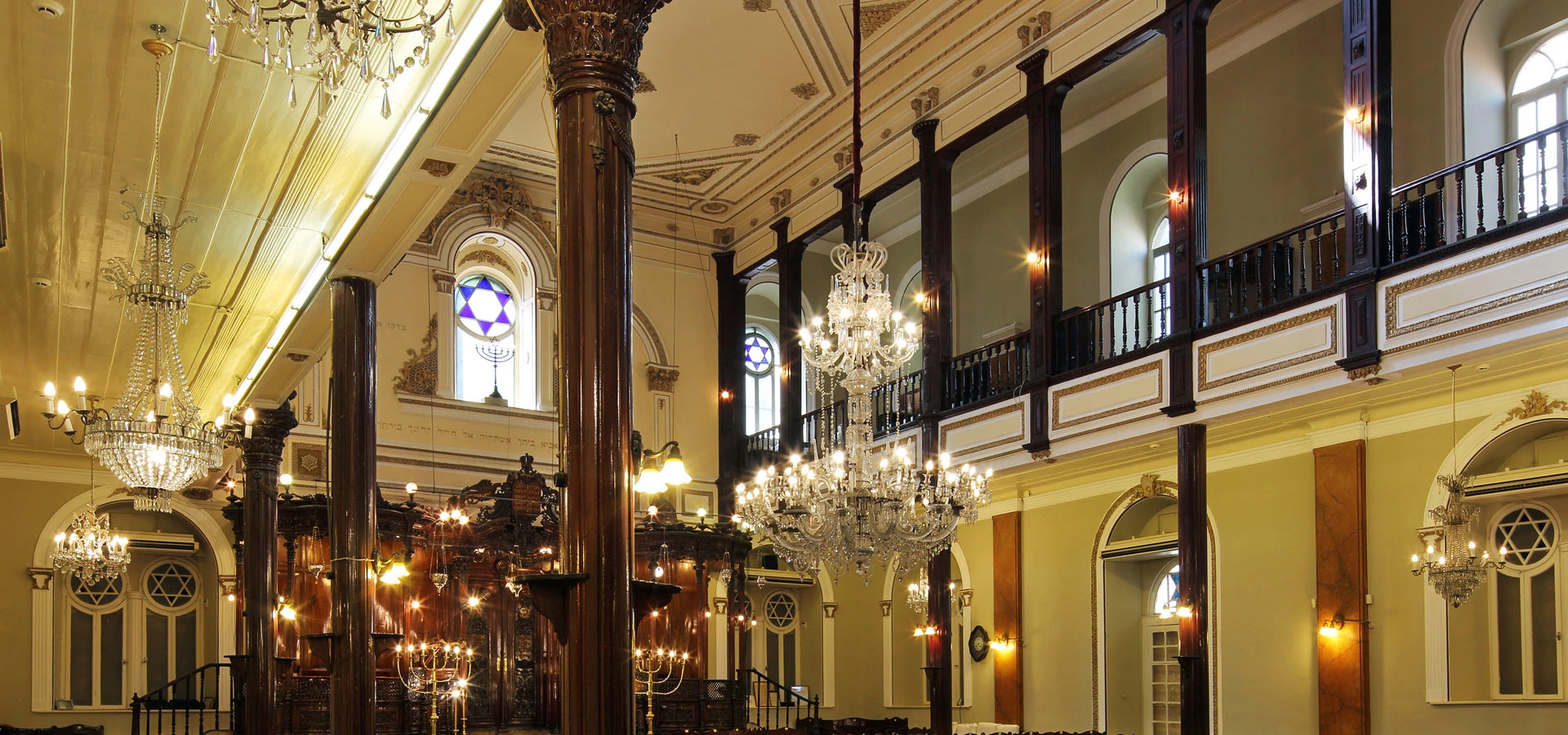
A third reason is the architecture. Historic İzmir synagogues developed distinctive arrangements involving the Tevah, Ehal, women's galleries, courtyards and study spaces. Their relatively discreet exteriors often contrast dramatically with decorated interiors.
Finally, Jewish İzmir is not solely a story of buildings. It includes Ladino language, religious scholarship, music, food traditions, family memory, philanthropy and migration. Understanding these elements turns a synagogue walk into a much richer exploration of the city.
Jewish presence in western Anatolia reaches far back into antiquity, and Jewish communities are documented in the wider region long before the Ottoman period. The exact continuity between ancient Smyrna's Jewish population and later communities is difficult to establish, so the history is better understood as a sequence of communities, migrations and renewals rather than one uninterrupted line.
The community that shaped much of the Jewish heritage visible in İzmir today developed particularly strongly during the 17th century, as İzmir grew into a major Ottoman trading port. Jewish families arrived from other Ottoman cities and from communities whose roots reached back to the Iberian Peninsula.
The expansion of trade brought merchants, rabbis, craftsmen, printers and families into the city. The area around today's Havra Street, İkiçeşmelik and the Agora developed into the principal Jewish quarter, often described as the city's first Juderia.
By the 17th and 18th centuries İzmir had become an important centre of Sephardic religious and intellectual life. Synagogues, yeshivas and charitable institutions served communities that maintained distinct family and regional traditions while increasingly forming a shared urban Jewish culture.
During the 19th century, economic development and changes in urban life encouraged many Jewish families to move toward Karataş, Karantina and Göztepe. This shift produced new synagogues and institutions and eventually led to the construction of Bet Israel, a building very different in scale and architecture from the older Kemeraltı synagogues.
Migration during the 20th century reduced the size of the community, but Jewish life never disappeared from İzmir. Historic sites, archives, traditions and active religious institutions continue to connect modern İzmir with this long and important chapter of its history.
The oldest surviving concentration of Jewish heritage in İzmir lies within the densely built historic centre around Kemeraltı, İkiçeşmelik and the Agora. This area became the principal Jewish neighbourhood during the development of Ottoman İzmir.
Unlike a monumental religious district planned around broad streets, the quarter developed within the commercial fabric of the city. Synagogues often stood behind walls and courtyards, mixed among houses, workshops and market streets.
This inward-looking architecture served both religious and practical purposes. Visitors walking past some of the buildings today may have little idea that richly decorated prayer halls lie behind seemingly modest street façades.
The density of the synagogue cluster is one of the most important characteristics of Jewish İzmir. Rather than one large central synagogue, different congregational groups historically maintained places of worship only a short distance from one another.
Havra Sokağı literally means “Synagogue Street,” and its name reflects the concentration of Jewish religious buildings located in and around this part of Kemeraltı.
Historically, Havra Street was much more than an approach to places of worship. It formed part of a lively commercial district where Jewish residents purchased food and household goods and where products prepared according to Jewish dietary requirements could once be found.
The wider neighbourhood contained butchers, food sellers, wine producers, workshops, residences, study spaces and communal institutions. Religious and commercial life were therefore closely intertwined.
Today the street remains strongly commercial, with fruit, vegetables, fish and other market goods creating a busy local atmosphere. Its present-day market character should not be confused with historic religious practice: visitors requiring certified kosher food should verify current options independently.
The best way to experience Havra Street is to understand the ordinary street itself as part of the heritage. The synagogues were never isolated monuments; they belonged to the everyday neighbourhood surrounding them.
Historic İzmir synagogues developed architectural characteristics that make them particularly interesting even for visitors unfamiliar with Jewish religious buildings.
The raised platform from which prayers and Torah readings are conducted. In many older İzmir synagogues it originally occupied the centre of the prayer hall.
The sacred cabinet or Ark containing Torah scrolls. Historic İzmir synagogues are especially associated with elaborate multi-part Ehal arrangements.
Several historic synagogues were organised around a central Tevah supported or defined by four columns.
The four-column arrangement could visually divide the ceiling into nine sections, giving many old synagogue interiors a distinctive geometry.
Traditional synagogues commonly include an upper or screened section historically used by women during worship.
A smaller prayer, study or teaching space could be associated with the main synagogue complex.
Many synagogues are approached through enclosed courtyards rather than presenting a monumental façade directly to the street.
Woodwork, painted ceilings, floral designs, geometric motifs and richly treated sacred furniture contrast with often restrained exteriors.
The interiors also reveal interaction with the wider visual culture of İzmir. Decorative traditions found in Ottoman houses and other local buildings influenced colour, woodwork and ornamental details inside the synagogues.
Etz Hayim means “Tree of Life.” The synagogue is traditionally described as one of the oldest surviving synagogue traditions in İzmir, although claims that its origins extend continuously to the Byzantine period should be understood as historical tradition rather than a securely documented construction date.
The building survived a long history of earthquakes, fires and rebuilding. It was damaged during the major 1841 fire and repaired in 1851 by Daniel de Sidi.
Its architecture reflects characteristics associated with historic İzmir synagogues, including the central-plan tradition and the relationship between the Tevah, Ehal and surrounding seating.
Conservation work has given Etz Hayim a new role within the preservation of İzmir's Jewish heritage, and the building has also hosted cultural activities.
Shalom Synagogue is one of the most historically important synagogues in Kemeraltı and is closely associated with Chief Rabbi Joseph Escapa, one of the central figures in the development of organised Jewish communal life in 17th-century İzmir.
The synagogue is particularly notable because it survived the destructive 1841 fire that damaged or destroyed several other Jewish religious buildings.
Its interior is known for an engraved ceiling and seating with floral upholstery extending along the walls, giving the prayer hall an atmosphere sometimes compared with a traditional Anatolian house.
Shalom originally reflected the central-plan synagogue tradition, although later changes moved the Tevah away from its earlier central position.
Algazi Synagogue, also known historically as Kal de Arriva — the Upper Synagogue, stands within the Kemeraltı synagogue cluster close to Havra Street.
An entrance inscription points to 1724 and associates the building with Ishak Algazi. Other traditions suggest a synagogue may have existed here earlier, possibly during the 17th century.
The Algazi family produced notable rabbis and cantors, and the synagogue is particularly associated with Isaac Ben Salomon Algazi, a cantor and respected figure in religious, secular and classical Turkish music.
Architecturally, the building preserves characteristics associated with İzmir's historic synagogue tradition, including the central Tevah and multi-part Ehal composition.
Known as Sinyora, Giveret or La Signora, this synagogue is one of the most atmospheric buildings within the historic Kemeraltı cluster.
Older local tradition associated its foundation with the famous Portuguese Jewish benefactor Doña Gracia Nasi. More recent historical research, however, points toward a woman named Lea, who donated property to the İzmir Jewish community in 1664 before leaving for the Holy Land.
The building suffered repeated fires and was destroyed during the catastrophic fire of 1841. It was subsequently rebuilt with support from Moiz Bengiat Yerushalmi.
Its plan shows how older İzmir synagogue architecture evolved over time, moving from a central arrangement toward a later double-Tevah configuration.
Bikur Holim, meaning “visiting the sick,” combines religious history with the charitable traditions of İzmir's Jewish community.
Its history is closely connected with Salomon de Ciaves, a Dutch Jew of Portuguese origin who in 1724 donated one of his large courtyard houses for use as a synagogue and provided religious books and sacred objects.
He also endowed neighbouring property so that rental income could help support the institution — an example of the way religious, charitable and economic structures often worked together within the community.
The name Bikur Holim is commonly connected with the use of the basement as a hospital during periods of epidemic disease. The synagogue was destroyed by fire in 1772 and rebuilt in 1800 by Manuel de Ciaves.
Its prayer hall is one of the most visually striking among İzmir's historic synagogues, with floral and fruit decoration, coloured columns and a prominent central Tevah.
Hevra Synagogue, known in older sources as Talmud Torah, belongs to the important group of synagogues associated with the 17th-century community of Rabbi Joseph Escapa.
The building experienced repeated destruction. After a fire in 1838 it was rebuilt by the Chelebi and Menahem Hacez brothers, only to suffer again during the great fire of 1841.
The synagogue later remained in a vulnerable condition for many years, and its roof collapsed in 1999. Rescue and stabilisation work was completed in 2020, while restoration planning has formed part of the wider programme to preserve the historic synagogue cluster.
Architecturally, Hevra is an important example of the classic İzmir type, with a central plan, triple Ehal arrangement and associated Midrash.
Because conservation status can change as projects progress, visitors should confirm the current situation before planning an interior visit.
Portugal Synagogue is unusual because its name directly preserves the geographic origins associated with its founding community.
It was already one of the synagogues known in İzmir during the period of Chief Rabbi Joseph Escapa in the 1620s and was described as one of the city's most important Jewish places of worship.
The building became closely involved with the extraordinary story of Sabbatai Zvi in the 17th century. Initially associated with opponents of his messianic movement, the synagogue later became connected with his followers after a confrontation between the two groups.
A fire in 1976 severely damaged the building. It was eventually restored and reopened in 2018 for social and cultural activities.
Portugal Synagogue therefore represents an important example of adaptive heritage conservation: an old religious structure continuing to serve as a place where İzmir's Jewish history can be interpreted and remembered.
The historic synagogue known as Forasteros or Orahim preserves a fascinating clue about the movement of people into Ottoman İzmir.
Both names carry the sense of foreigners, visitors or newcomers, suggesting that the congregation served Jewish immigrants arriving in İzmir and entering the city's established Jewish community.
The synagogue is thought to have originated in the 17th century. After serious fire damage it ceased functioning as an ordinary synagogue, and its courtyard later served other community purposes.
Forasteros has become particularly important within modern conservation planning because restoring the building can help reconnect different parts of the tightly grouped Kemeraltı synagogue complex.
Bet Hillel Synagogue is closely connected with one of the most important rabbinic families in İzmir's history: the Palachi family.
The building originally functioned as a yeshiva, a place of Jewish religious study. Rabbi Hayim Palachi and his sons were associated with the institution, and Rabbi Abraham Palachi converted it into a place of worship in 1840.
Rabbi Hayim Palachi became one of İzmir's most respected religious scholars. His writings circulated far beyond the city, connecting İzmir with Jewish intellectual networks across the Ottoman world, Europe and the Middle East.
Bet Hillel has been restored as a memorial space associated with Palachi and the city's rabbinic heritage.
One of the most dramatic episodes associated with Jewish İzmir concerns Sabbatai Zvi, who was born in Smyrna in the 17th century and later proclaimed himself the Jewish Messiah.
His movement spread far beyond İzmir and created intense disagreement within Jewish communities across the Mediterranean and Europe.
Chief Rabbi Joseph Escapa, associated with Shalom Synagogue, had earlier participated in Zvi's religious education but later became an opponent when the messianic claims intensified.
The Portugal Synagogue became another important location in the conflict between supporters and opponents of Sabbatai Zvi. For visitors interested in religious history, the synagogue district therefore provides a physical setting for events that had consequences far beyond the city.
The story should be understood within the religious and social conditions of the 17th century rather than as the defining story of Jewish İzmir, whose history is considerably broader.
During the 19th century, İzmir's Jewish geography began to change significantly. As sections of the community became more prosperous and urban conditions evolved, families increasingly moved away from the crowded historic quarter toward Karataş, Karantina and Göztepe.
Karataş developed into an important new centre of Jewish life, sometimes described as the city's Second Juderia. New homes, synagogues and charitable institutions appeared along the southern shore and hills overlooking İzmir Bay.
The contrast with Kemeraltı is striking. Whereas the old quarter consists of narrow commercial lanes and hidden courtyard synagogues, Karataş represents the expansion of Jewish İzmir into a more open residential landscape.
Two landmarks tell this story especially well: Bet Israel Synagogue and the nearby Tarihi Asansör.
As Karataş's Jewish population increased, the existing neighbourhood synagogues became insufficient. The community therefore sought permission to construct a much larger place of worship.
Construction of Bet Israel Synagogue began in 1905, during the reign of Sultan Abdülhamid II, and the synagogue opened for prayer in 1907.
Its architecture differs considerably from the older synagogues of Kemeraltı. Rather than the traditional central arrangement, Bet Israel was designed with a more linear spatial organisation and a double Tevah.
The interior is particularly known for its extensive mahogany woodwork, produced by Italian craftsmen and influenced by European synagogue design. Economic difficulties meant that the full interior decoration was not completed until the mid-20th century.
The upper floor now also contains a small display of objects, photographs and documents connected with Jewish religious and community history.
The famous Tarihi Asansör — Historical Elevator is one of İzmir's most recognisable landmarks, but its connection with the city's Jewish history is sometimes overlooked.
It was built in 1907 by Nesim Levi, also known as Nesim Levi Bayraklı or Bayraklıoğlu, a Jewish businessman and philanthropist.
The steep cliff separating the lower Mithatpaşa waterfront from the neighbourhood above created a major obstacle for residents. Before the elevator, pedestrians had to climb a staircase of approximately 155 steps.
Nesim Levi financed the elevator as a practical piece of public infrastructure. Revenue from the project was also connected with support for the Karataş Jewish Hospital, illustrating the strong tradition of community philanthropy associated with him.
Today Asansör is open to the wider public and offers panoramic views across İzmir Bay. Adding it to a Jewish heritage route helps connect religious history with the social and urban history of Karataş.
Jewish İzmir did not stop moving with the development of Karataş. During the 20th century, community life increasingly shifted toward other neighbourhoods, particularly Alsancak.
Shaar Ashamayim Synagogue was established in the mid-1960s to serve Jewish families living in the area. It was later rebuilt and reopened on 1 December 2019.
The synagogue has a modern interior but retains references to older İzmir traditions, including the triple Ark arrangement found in several historic synagogues.
It is particularly important because it represents living Jewish İzmir rather than only preserved historical architecture. According to the İzmir Jewish Community, it is the city's synagogue in regular daily religious use.
It should therefore be approached first and foremost as an active place of worship and community institution rather than a conventional tourist attraction.
Architecture is only one part of Jewish İzmir. For centuries, one of the most important cultural languages of the community was Judeo-Spanish, often called Ladino.
The language developed from forms of Spanish carried by Sephardic Jews and evolved across the Ottoman world through contact with Turkish, Hebrew, Greek, French, Italian and other languages.
In İzmir it could be heard in homes, markets, songs, sayings, publications and everyday conversation. The city also developed a notable Jewish press and literary tradition.
Music provides another bridge between communities. Cantors and musicians such as members of the Algazi family moved between religious music and wider Ottoman and Turkish musical traditions.
Projects documenting Ladino, music, memories, ritual objects, textiles and family stories are therefore just as important to Jewish heritage preservation as restoring synagogue walls.
The synagogue district should not be imagined as a collection of religious monuments standing separately from daily life. The surrounding neighbourhood once contained houses, courtyards, schools, workshops, markets and charitable institutions.
Havra Street connected religious life with everyday trade and food shopping in the heart of the old quarter.
Yeshivas and study rooms helped establish İzmir as an important centre of Jewish religious scholarship.
Community welfare included support for the sick, poor and other residents in need.
İzmir became an important centre for Jewish religious publishing and intellectual exchange.
Sephardic food traditions formed part of domestic and communal identity alongside the wider cuisine of İzmir.
Religious melodies, Ladino songs and wider Ottoman musical traditions interacted throughout community life.
Judeo-Spanish remained a powerful carrier of family memory, humour, songs and oral tradition.
Figures such as Nesim Levi contributed not only to Jewish institutions but also to the wider development of İzmir.
The most important practical point is that synagogue access should not be treated like ordinary museum access.
Havra Street and the surrounding streets of Kemeraltı can of course be explored as part of the public historic city centre, but access to synagogue interiors depends on the individual building, conservation work, religious use, events and community arrangements.
The İzmir Jewish Community advises visitors to arrange relevant synagogue and heritage visits in advance through the authorised visit route.
If seeing particular interiors is essential to your visit, organise access before finalising your daily itinerary rather than arriving at the door and expecting admission.
A synagogue may be an important historic monument but can still be a sacred space belonging to a living religious community.
Use the entrance indicated by your host or guide and follow any site-specific guidance given during the visit.
Choose clothing appropriate for entering a religious building and follow any additional requirements communicated locally.
Ask before photographing synagogue interiors, religious objects, worshippers or community activities.
Avoid touching Torah scrolls, ceremonial objects, textiles and historic woodwork unless specifically invited to do so.
If worship is taking place, remain quiet and follow the directions of the congregation or visit organiser.
Do not photograph people at close range simply because they are part of a religious or cultural community.
Access may occasionally change because of religious observance, community events or conservation requirements.
Walk through Havra Street and explore the exterior setting of the historic synagogue quarter.
Add the wider Kemeraltı streets, synagogue cluster and nearby Agora surroundings.
Best when a pre-arranged synagogue interior visit is included with a historical walking route.
Combine Kemeraltı Jewish heritage with Karataş, Bet Israel and Tarihi Asansör.
Add Smyrna Agora, Kemeraltı, Konak, Asansör and other multicultural heritage sites of central İzmir.
Researchers and visitors with family or religious interests may want considerably longer and should arrange relevant access beforehand.
The historic synagogue district lies inside central Konak and is best approached as part of a walking exploration of Kemeraltı.
Walk into Kemeraltı and continue through the bazaar toward Havra Street and the Agora side of the historic centre.
Central metro stations provide easy access to Kemeraltı, after which the synagogue quarter is explored on foot.
The central coastal tram corridor provides convenient connections with Konak and nearby parts of the city centre.
Numerous municipal bus routes serve Konak and surrounding districts.
Ask for Kemeraltı, Havra Sokağı or the Agora area depending on where you plan to begin.
Once inside Kemeraltı, walking is the most practical way to understand the relationship between the synagogues and surrounding streets.
Avoid trying to drive through the inner market streets. Kemeraltı is dense, busy and much easier to understand on foot.
A good time for photography, cooler temperatures and exploring Kemeraltı before its busiest hours.
Ideal for experiencing Havra Street when the surrounding market is fully active.
Useful when combining the Jewish quarter with Smyrna Agora, Konak and other nearby historic sites.
Often easiest for creating a heritage itinerary, although pre-arranged synagogue access remains essential.
Start earlier because walking through central İzmir can become hot during midday.
Usually the most comfortable seasons for a long walking route through Kemeraltı and Karataş.
Do not assume tourist access during Jewish religious observances; community use naturally takes priority.
Confirm any organised synagogue visit shortly before your planned date because circumstances and access can change.
Market activity and narrow historic streets provide strong context for the synagogue district.
Look for the transition between crowded commercial streets and quieter enclosed religious spaces.
When photography is permitted, historic synagogue ceilings reveal some of the richest decorative details.
The relationship between the central reading platform and Torah Ark is one of the best ways to photograph synagogue architecture intelligently.
Historic benches, galleries, carved furniture and sacred architectural elements reward careful detail photography.
Photograph the broader urban landscape to understand how Jewish residential life moved beyond the old quarter.
The tower and panoramic terrace provide visual context for the geography of the later Karataş community.
Interior photography is not an automatic right. Follow the instructions of synagogue representatives or your authorised guide.
This itinerary can be shortened considerably if synagogue interiors are not part of the visit. When access has been arranged, allow extra time rather than trying to rush between religious buildings.
The Roman civic centre lies immediately beside the historic neighbourhood and adds the ancient layer of Smyrna's history.
Continue through the commercial streets that connected Muslim, Jewish and other communities within Ottoman İzmir.
Explore one of the city's best-known Ottoman commercial buildings and enjoy the atmosphere of historic Kemeraltı.
See İzmir Clock Tower and the waterfront civic centre before or after exploring the historic market district.
Climb above the old city for a broader understanding of ancient Smyrna's geography and İzmir Bay.
One of the best additions to a Jewish heritage route because of its direct connection with philanthropist Nesim Levi.
Explore the later geography of Jewish İzmir and the transition from the old Juderia toward the southern waterfront.
Finish the historical day beside İzmir Bay with a waterfront walk and sunset.
One of the strongest combinations for understanding how different historical layers occupy the same central İzmir landscape.
Place the Jewish quarter within the commercial world of the wider Ottoman city.
Combine architectural history with the intellectual legacy of Rabbi Hayim Palachi.
Follow the movement of Jewish families from the first Juderia toward the city's later residential districts.
An excellent pairing for understanding early-20th-century Jewish life, philanthropy and urban change.
End an intensive historical day with the open waterfront atmosphere of modern İzmir.
Combine Jewish heritage with mosques, churches, Ottoman hans and Levantine architecture to understand İzmir's diverse urban history.
Ideal for visitors interested in Sephardic history, genealogy, religious heritage, architecture, Ladino culture or family connections.
If synagogue interiors matter to you, organise access before building the rest of your itinerary.
Kemeraltı's historic streets and the longer route through Karataş involve considerable walking.
Navigation through Kemeraltı is part of the experience and is rarely as direct as walking through a modern district.
The buildings are far more meaningful when the architecture, terminology and community history are properly explained.
Heritage tourism should never interfere with prayer, religious holidays or community events.
Permission policies can vary between buildings and events.
Do not focus only on synagogue interiors. The neighbourhood itself is an essential part of the story.
Seeing both Kemeraltı and Karataş makes the historical movement of the community much easier to understand.
Yes. İzmir preserves a major Jewish heritage landscape including historic synagogues, former Jewish neighbourhoods, rabbinic traditions, Sephardic culture and living community institutions.
The principal historic area is around Kemeraltı, Havra Street, İkiçeşmelik and the Agora of Smyrna.
Havra Sokağı means Synagogue Street and takes its name from the concentration of Jewish religious buildings in the surrounding area.
Yes. Havra Street is part of the public Kemeraltı market area and can be explored on foot.
No. Do not assume walk-in access. Visits to relevant community and heritage sites should be arranged in advance through authorised channels.
The historic cluster includes Etz Hayim, Shalom, Algazi, Sinyora, Bikur Holim, Hevra, Portugal, Forasteros and Bet Hillel.
Etz Hayim is traditionally presented as one of İzmir's oldest surviving synagogue traditions, although the exact origins of the earliest building cannot be established with certainty.
Etz Hayim means “Tree of Life.”
It is associated with Chief Rabbi Joseph Escapa and was notable for surviving the devastating İzmir fire of 1841.
An entrance inscription points to 1724, although traditions also suggest an earlier 17th-century history.
Its name means “visiting the sick,” and its history is connected with both charitable activity and a beautifully decorated historic prayer hall.
Hevra, also called Talmud Torah, is an important historic synagogue whose rescue and restoration form part of ongoing heritage preservation work.
It is one of İzmir's older synagogues and the only one whose name directly preserves the geographic origin associated with its founding congregation.
He was a 17th-century Jewish figure born in Smyrna who proclaimed himself the Messiah and inspired a major international religious movement and controversy.
He was an influential 17th-century chief rabbi closely associated with the organisation of Jewish communal life in İzmir and with Shalom Synagogue.
Hayim Palachi was a highly influential 19th-century İzmir rabbi, scholar and author whose reputation extended well beyond the city.
Bet Hillel is a historic religious and educational site associated with the Palachi family and İzmir's rabbinic heritage.
Bet Israel is located in Karataş, the district that became a major centre of Jewish residential life from the 19th century onward.
Construction began in 1905 and the synagogue opened for prayer in 1907, although its interior was completed later.
It is generally described by the İzmir Jewish Community as the city's largest synagogue.
The elevator was built in 1907 by Jewish businessman and philanthropist Nesim Levi to connect the lower and upper streets of Karataş.
The term refers to the later Jewish residential geography centred particularly around Karataş after families began moving away from the older Kemeraltı quarter.
Yes. Jewish communal and religious life continues in the city, although on a much smaller scale than during earlier centuries.
Shaar Ashamayim in Alsancak is identified by the İzmir Jewish Community as the city's synagogue in regular daily use.
Judeo-Spanish, commonly known as Ladino, was an important community language alongside Turkish, Hebrew and other languages used in different contexts.
The Tevah is the raised platform used for Torah reading and prayer and is a defining element of many historic İzmir synagogue interiors.
The Ehal is the sacred Ark in which Torah scrolls are kept.
Historic synagogues were often positioned within enclosed courtyards behind high walls rather than presenting monumental façades directly onto busy streets.
Allow at least one to two hours for the neighbourhood, or longer when a pre-arranged synagogue visit is included.
A half day works well for Kemeraltı, Karataş, Bet Israel and Tarihi Asansör when logistics and access have been organised in advance.
Photography policies vary. Always ask your guide or synagogue representative before photographing interiors, religious objects or people.
No. Its heritage also includes neighbourhoods, markets, cemeteries, rabbinic scholarship, Ladino, music, food, printing, philanthropy and family memory.
The Agora of Smyrna lies immediately beside the historic neighbourhood and makes an excellent combination with the Jewish quarter.
Explore Havra Street and the Kemeraltı synagogue cluster first, then continue to Karataş, Bet Israel and Tarihi Asansör.
A knowledgeable guide is particularly valuable because many important buildings are visually discreet and much of their significance depends on historical context.
It preserves the memory of a community that contributed for centuries to the city's commerce, scholarship, music, philanthropy and distinctive multicultural identity.
A private İzmir heritage route can connect Havra Street and the historic synagogue quarter with Kemeraltı, Smyrna Agora, Karataş, Bet Israel, Tarihi Asansör and other layers of the city's multicultural history.
Tell us whether your priority is Sephardic history, synagogue architecture, rabbinic heritage, Ladino culture, family history, photography or a broader multicultural İzmir experience, and we can shape the route around your interests. Interior synagogue access is always subject to advance arrangement, availability and community authorisation.
Explore Havra Street, Kemeraltı's synagogue quarter, Sephardic history, Karataş and the wider story of Jewish İzmir with a private route shaped around your interests.
Request a Private İzmir Tour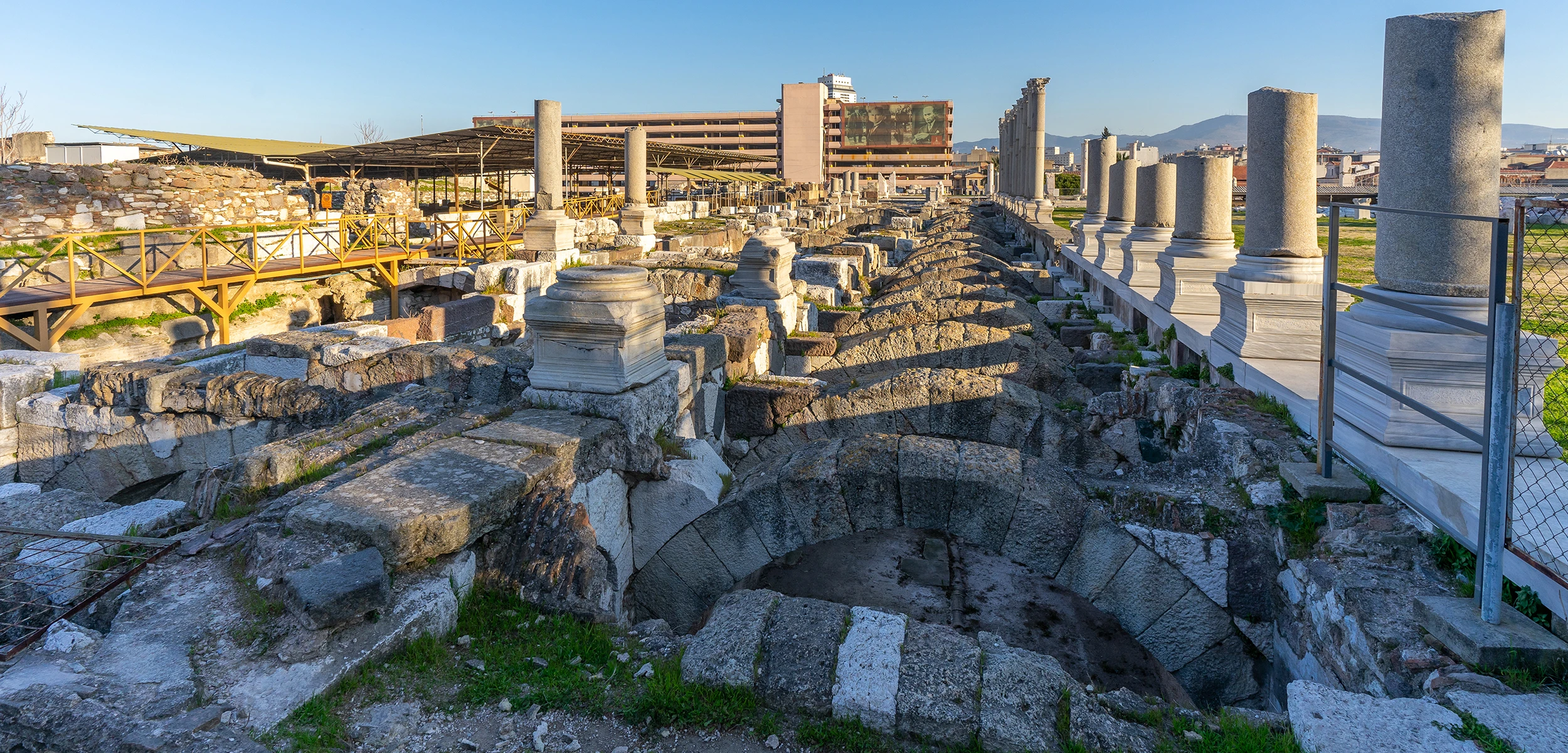
Combine the historic synagogue district with the Roman Agora to explore the remarkably deep historical layers concentrated within central İzmir.
Explore Smyrna Agora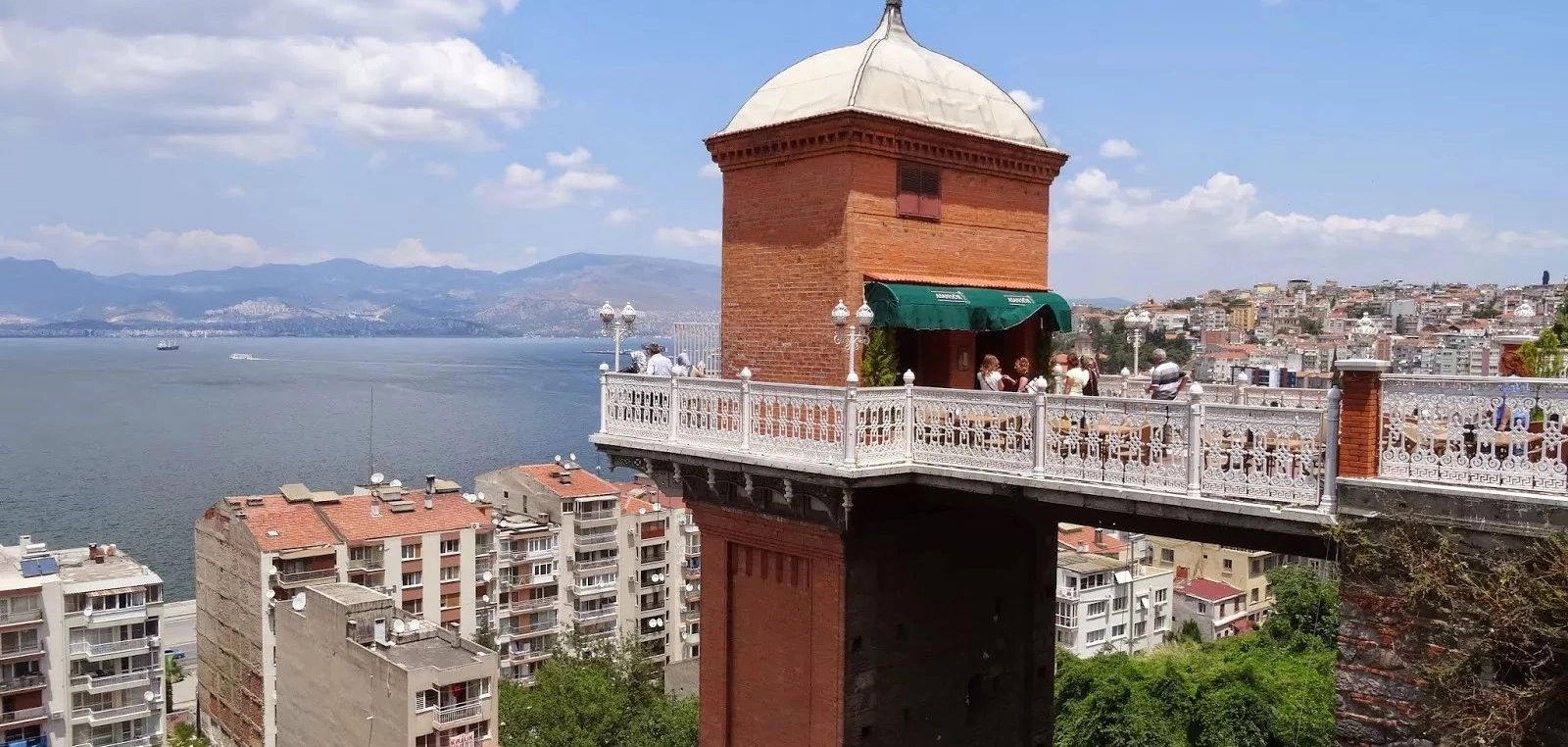
Continue from the old Juderia toward Karataş and discover the landmark built in 1907 by Jewish businessman and philanthropist Nesim Levi.
Explore Tarihi Asansör
Continue with our complete İzmir guide for ancient sites, Ottoman heritage, historic neighbourhoods, coastal culture, local food, museums and day trips.
View İzmir Guide