Private İznik Lake Basilica & Nicaea Tour
Ask us about a tailor-made route focused on the basilica, Saint Neophytos, the First Council of Nicaea, Hagia Sophia, the city walls and İznik's archaeological heritage.
Request a Custom Tour





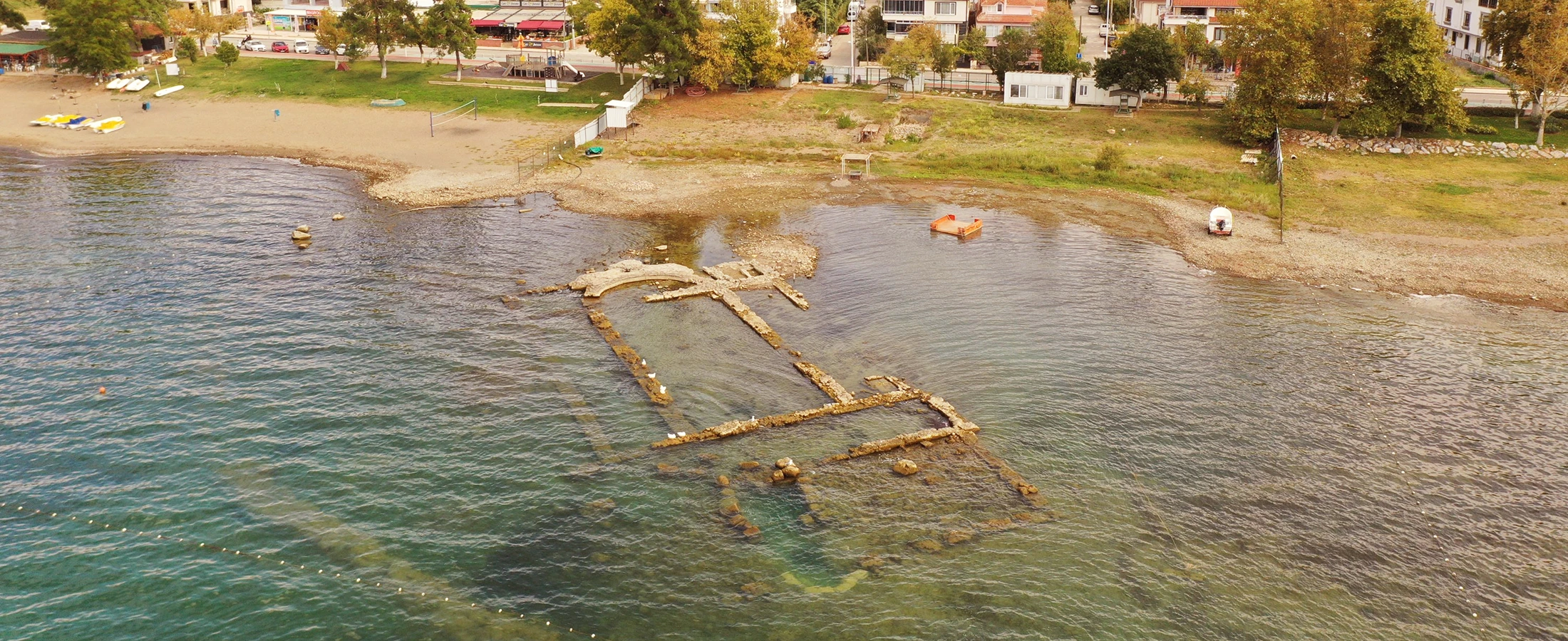
The İznik Lake Basilica is one of Türkiye's most extraordinary archaeological discoveries. The remains of a large Early Christian basilica lie beside the historic town of İznik, ancient Nicaea, where the outlines of walls, an apse and associated structures were revealed through aerial photography in 2014.
For centuries the ruins remained hidden by Lake İznik. Underwater archaeological work beginning in 2015 transformed the site into an important research project, raising questions about the church's construction, its relationship with the martyr Saint Neophytos, the changing shoreline of the lake, and even the location of meetings connected with the First Council of Nicaea in AD 325.
The site has changed dramatically in recent years. A purpose-built visitor center with a museum, café, shop and walking platform was completed in 2025, and the İznik Lake Basilica Archaeological Site Museum opened to visitors on 28 October 2025. The basilica therefore offers far more than a distant view of underwater ruins: it is now an interpreted archaeological site where visitors can understand the excavation, architecture and wider history of Christian Nicaea.
The basilica also gained renewed international attention in November 2025, when Pope Leo XIV, Ecumenical Patriarch Bartholomew I and representatives of Christian Churches gathered beside the excavations for an ecumenical prayer service commemorating the 1,700th anniversary of the First Council of Nicaea.
The basilica became known after aerial photography revealed its plan beside Lake İznik.
Explore a major church complex associated with the Christian history of ancient Nicaea.
Learn how archaeologists investigate architecture, burials and artifacts affected by changing lake levels.
Follow an archaeological story in which interpretations continue to develop as new evidence emerges.
Essential information for visiting the lakeside basilica and archaeological museum in İznik, Bursa.
On the Lake İznik shoreline beside İznik, ancient Nicaea, in Bursa Province.
Open on Google MapsEarly Christian basilica, archaeological excavation area and modern visitor museum.
2014 during aerial-photography work documenting Bursa's historic cultural heritage.
A large three-aisled basilical church with an apse, burials and multiple construction phases.
Official 2026 listing: €3 for adult foreign visitors; MüzeKart is valid for eligible Turkish citizens.
Allow about 60–90 minutes for the museum, walking platform and archaeological views.
The site combines archaeology, early Christian history, environmental change and one of the most important unresolved questions about ancient Nicaea.
Ancient Nicaea occupied a central place in Roman and Byzantine history. Most famously, Emperor Constantine I summoned bishops to the city in AD 325 for the First Council of Nicaea, a gathering that played a decisive role in the development of Christian doctrine and produced the foundation of what became known as the Nicene Creed.
The discovery of a substantial early Christian church immediately outside the ancient walls therefore attracted international interest. Unlike monuments that have been visible for centuries, the Lake Basilica emerged as a largely forgotten archaeological landscape whose plan could suddenly be read from above. Its position on the historic shoreline provides rare evidence for the relationship between Nicaea, Lake Ascania — the ancient name of Lake İznik — and the Christian communities that developed around the city.
The excavations are particularly important because the site preserves multiple phases rather than a single moment. Archaeologists have investigated architectural walls, collapsed masonry, burials, ceramics, coins, glass, metal finds and traces that may belong to earlier structures. Each season has therefore contributed to a changing interpretation of when the church was built, how long it remained in use and when the area finally disappeared beneath the lake.
For travelers following our complete Bursa guide, the basilica is also one of the best places to understand why İznik should be viewed not simply as an Ottoman tile town, but as one of the major historic cities of the Roman, Byzantine, Seljuk and Ottoman worlds.
The basilica was identified in early 2014 during aerial photography carried out as part of a Bursa Metropolitan Municipality project to document historic cultural heritage. From the air, the outline of a large rectangular church and its semicircular apse became clearly visible beneath the shallow water near the shore.
The discovery quickly attracted international attention because the church's basic plan could be read unusually well from above. The site was subsequently investigated through surface survey, underwater documentation and archaeological excavation. Underwater excavation began in November 2015, following survey work undertaken earlier that year.
Changing lake levels have continued to transform the appearance of the site. At times the walls have been clearly visible beneath shallow water; during periods of lower lake level, parts of the archaeological area have become exposed or surrounded by much shallower water. This makes historic photographs look very different from one another and is one reason visitors should not expect the basilica to appear exactly as it does in older aerial images.
Aerial photography reveals the complete outline of the basilica beside Lake İznik.
Systematic archaeological survey and underwater excavation begin under official authorization.
Excavations investigate architecture, graves, artifacts, chronology and the relationship with earlier structures.
The new archaeological-site museum and visitor facilities open, making the ruins easier to interpret.
The exact chronology of the basilica is still being refined by archaeological research. The visible stone church belongs to the Early Christian and Byzantine history of Nicaea, but excavations suggest that the lakeside location may have been sacred before the final monumental basilica took shape.
One important interpretation connects the site with Saint Neophytos, a young Christian martyr traditionally believed to have been killed near Nicaea during the persecutions of the early 4th century. Recent archaeological discussions propose that a smaller memorial structure or martyrion may have existed at the location before the larger basilica developed.
Christian worship expanded dramatically after the legalization of Christianity in the Roman Empire during the early 4th century. Nicaea became especially important in AD 325, when Constantine summoned bishops to the First Council of Nicaea. The later stone basilica may preserve the memory — and perhaps archaeological remains — of an earlier church used during this crucial period, but the identification remains an active scholarly question rather than an established certainty.
For many years, the basilica's collapse was commonly associated with the powerful earthquake of AD 740. More recent excavation evidence, however, indicates medieval activity at the site and has complicated a simple 8th-century destruction story. Finds from later centuries suggest that parts of the complex or the surrounding area remained in use, were reused, or were accessible long after the original basilica was damaged. The precise sequence of collapse, abandonment, shoreline change and final submergence is therefore still debated.
Traditional date associated with the martyrdom of Saint Neophytos near Nicaea.
Christian worship gains legal protection within the Roman Empire, allowing churches to expand more openly.
The First Council of Nicaea brings bishops from across the Christian world to the city.
The monumental basilica develops through one or more architectural phases beside the lake.
Later finds show that the history of the site continued beyond the earliest destruction theories.
Rising water, sediment and changing shoreline conditions eventually conceal the remains until their rediscovery.
The basilica is frequently called the Basilica of Saint Neophytos because archaeologists have explored the possibility that the church developed around the place where the young martyr was remembered. Christian tradition places the death of Neophytos during the persecutions associated with Emperor Diocletian in the early 4th century.
The location is significant because early Christian churches were often built over or beside the graves and martyrdom places of revered saints. Archaeological work beneath and around the later basilica has identified earlier structural remains and numerous burials, which support the interpretation of the area as a long-lived sacred landscape.
The dedication cannot be treated as completely proven in the same way as an inscription naming the church. Instead, the association is built from archaeological evidence, literary traditions, location and the history of Christian Nicaea. For visitors, this uncertainty is part of what makes the site fascinating: the excavation is still answering questions that once seemed permanently lost beneath the lake.
Saint Neophytos is associated with the early 4th-century persecutions of Christians.
The lakeshore setting may have preserved the memory of his martyrdom and burial.
Archaeologists have explored whether a smaller shrine existed beneath the later monumental basilica.
Graves found around the church reinforce the site's long-term religious and commemorative importance.
The most exciting question surrounding the İznik Lake Basilica is whether an earlier church at this location hosted part of the First Council of Nicaea in AD 325. The council was summoned by Emperor Constantine I and brought together bishops to address major theological disputes affecting the rapidly expanding Christian Church.
Ancient descriptions do not provide a modern-style street address for the council. Different sessions may also have taken place in different settings. The historian and bishop Eusebius of Caesarea, who attended the council, described an initial gathering in a house of prayer and later ceremonies associated with Constantine's palace.
Recent archaeological interpretation has increased interest in the lakeside site. Researchers have proposed that an earlier, largely wooden church may have stood here before the monumental stone basilica. Finds such as large numbers of nails and traces beneath the later structure have been used to argue for an earlier building phase that could belong to the age of Constantine.
This possibility is historically significant, but visitors should distinguish between a compelling archaeological hypothesis and a universally proven identification. The exact location or locations used during the First Council remain subjects of scholarly discussion. What is certain is that the basilica now forms one of the most important physical landscapes through which the Christian history of Nicaea is interpreted.
The basilica became the setting for a major international Christian commemoration on 28 November 2025. Pope Leo XIV traveled to İznik during his first Apostolic Journey and joined Ecumenical Patriarch Bartholomew I and leaders and representatives of numerous Christian Churches for an ecumenical prayer service beside the archaeological excavations.
The gathering marked 1,700 years since the First Council of Nicaea. Participants processed from the visitor center to a platform near the excavation area, where prayers and readings were held and the Nicene-Constantinopolitan Creed was recited together.
The event did not transform an archaeological hypothesis into automatic proof that the surviving basilica itself was the exact council hall. Its significance was broader: modern Christian leaders returned to Nicaea and chose the lakeside archaeological landscape as the focal point for commemorating the council's legacy.
The ecumenical service is held beside the basilica excavations in İznik.
The Pope visits İznik during his first international Apostolic Journey.
The Ecumenical Patriarch joins the commemoration together with other Christian leaders.
The gathering marks the anniversary of the First Council convened in Nicaea in AD 325.
The visible monument follows the general plan of an Early Christian basilica. The building is approximately 20 by 40 meters and extends on an east-west axis, with a large central nave, side aisles and an apse marking the sanctuary end of the church.
Because much of the superstructure collapsed long ago, visitors are not looking at a standing Byzantine church with columns and a roof. Instead, the archaeology survives mainly as foundations, low walls, collapsed stone, architectural fragments and features discovered beneath or around the later church. The plan is therefore easiest to understand from elevated viewpoints, aerial photographs and the museum's interpretive displays.
Excavation has also revealed burials around the basilica and evidence suggesting that the site was remodeled over time. The church should therefore be imagined not as an isolated building but as the center of a larger sacred zone used for worship, commemoration and burial.
The broad main worship space formed the central axis of the basilica.
Parallel aisles created the characteristic three-part interior plan of a basilical church.
The semicircular eastern end marked the principal liturgical focus of the building.
Structures beneath the later basilica may preserve evidence for earlier Christian activity.
Graves around the church show the importance of burial close to a sacred site.
Stone debris inside and around the plan records major structural destruction and later change.
Archaeology in a lake environment requires very different methods from excavation on dry land. Researchers have used underwater survey, photography, measured drawings, diving, geophysical work, conservation techniques and carefully controlled excavation to record the site.
The excavation has produced pottery, coins, glass objects, metal finds and other material that helps date different phases of activity. Medieval material recovered from the complex has been especially important because it shows that the site's history continued much later than an uncomplicated 8th-century destruction date would suggest.
Environmental evidence is equally important. Lake levels change through time, and archaeologists must consider earthquakes, shoreline movement, sediment, erosion and long-term climate conditions when reconstructing how a building once standing on land eventually became associated with shallow water.
Divers document walls and architectural fragments that cannot be excavated like an ordinary land site.
Coins help establish when different parts of the complex were used, disturbed or filled.
Pottery fragments provide chronological evidence extending into the medieval history of the site.
Human remains and graves reveal how the basilica functioned as a sacred burial landscape.
Nails, masonry and earlier features help researchers reconstruct lost building phases.
The relationship between the ruins and the water is part of the archaeological story itself.
The experience combines the archaeological ruins with a modern museum and lakeside interpretation. Visibility of the historic walls depends partly on water level, weather and season, so the best visit is one that treats the museum, excavation and surrounding landscape as a single story.
Trace the rectangular church, its aisles and the curved apse that made the site recognizable from the air.
Use the visitor platform for an elevated view over the archaeological area and changing shoreline.
Study archaeological finds, reconstructions and interpretation that explain the site beyond what can be seen outdoors.
Observe the relationship between the church and the graves discovered around its sacred precinct.
Look for explanations of the features beneath the later basilica that have reshaped theories about its origins.
Study the wider lakeshore to understand how environmental change transformed a land monument into a submerged site.
Learn why researchers have connected the site with traditions surrounding the First Council of Nicaea.
See the setting chosen for the international Christian gathering marking 1,700 years since the council.
The archaeological site is now officially open as the Bursa İznik Lake Basilica museum and archaeological area. The current Ministry of Culture and Tourism listing gives opening hours of 08:00–17:00, with the ticket office closing at 16:30 and the site closed on Mondays.
As checked in September 2026, the official Turkish Museums listing gives admission for adult foreign visitors as €3. It also lists the site as accepting MüzeKart for eligible Turkish visitors. Prices, free-entry categories and opening arrangements can change, so always verify the official museum page before traveling.
The visitor center was completed in May 2025 and includes a museum, cafeteria, sales shop and walking platform. These facilities make the site much easier to understand than it was when visitors could only view the ruins from the lakeshore.
The site can be visited throughout the year, but the outdoor experience changes with sunlight, lake level and weather. Because much of the archaeological landscape is exposed to the sky, mild days and clear conditions provide the most comfortable visit.
Mild weather, fresh landscapes and comfortable temperatures make spring ideal for combining the basilica with İznik's monuments.
Soft light and cooler temperatures are excellent for archaeology, photography and walking through the old town.
Arrive early for gentler light and lower temperatures before the strongest afternoon heat.
The site is quieter, but wind, rain and gray lake conditions can reduce outdoor comfort.
Clear skies and calm water can make wall lines and the relationship with the lake easier to understand.
Expect the appearance of the ruins to differ from photographs taken in previous years.
Enough for a quick look from the platform, but too short to understand the archaeology in depth.
A practical minimum for the museum, interpretation and views across the excavation area.
Ideal for visitors who want time to read displays, photograph the ruins and study the basilica plan carefully.
Allow this if you are especially interested in archaeology, early Christianity or the Council of Nicaea.
Combine the basilica with Hagia Sophia, the İznik Museum and nearby sections of the ancient city walls.
Explore the basilica together with İznik's gates, Roman theatre, mosques, tile heritage and lakeside promenade.
The basilica is especially photogenic because its meaning depends on the relationship between architecture, water and landscape. The most famous images are aerial views, but visitors can also create strong photographs from the official platform and lakeside perspectives.
Use the walking platform to show the basilica plan and surrounding shoreline in the same composition.
Earlier light often creates cleaner detail and more comfortable conditions for photographing stone and water.
Look for the long lines of the nave and aisles and the curve of the apse.
Include Lake İznik and the distant hills to show why this is unlike almost any other church site in Türkiye.
Photograph graves, masonry and interpretive elements only from areas open to visitors.
Follow museum rules for photography and never cross barriers or enter the excavation for a better angle.
The modern visitor center makes the basilica significantly easier to experience than a conventional underwater archaeological site. However, the archaeological area is outdoors and conditions can change with excavation work, weather and water level.
The museum building provides an indoor interpretation space with visitor facilities.
The purpose-built platform provides an organized way to view the archaeological site from above.
Bring sun protection in summer and rain protection during unsettled weather.
Contact the museum directly before visiting if step-free access to every viewing area is essential.
Keep children close around platforms, excavation boundaries and the lakeshore.
The visitor center includes restrooms and a café, useful for families and longer İznik visits.
The basilica is located on the lakeshore beside the town of İznik in Bursa Province. The official address is Selçuk Mahallesi, Kutalmışoğlu Süleymanşah Caddesi No:6, İznik/Bursa. Because the site now has a dedicated visitor center, navigation apps generally recognize the museum directly.
The basilica is close to the historic town and can be reached easily by a short taxi ride or a longer walk depending on your starting point.
Travel by road toward İznik, then follow local signs for the lake basilica archaeological site and visitor center.
İznik can be reached by road using routes around the eastern Marmara region; journey time varies greatly with traffic and route choice.
A car is useful for combining the basilica with other monuments spread around İznik and the surrounding countryside.
A private route makes it easier to connect the basilica with the city walls, Hagia Sophia, museum and İznik's tile heritage.
Search for “Bursa İznik Göl Bazilikası” or “İznik Lake Basilica” rather than navigating only to the general lake shoreline.
Begin at the İznik Lake Basilica while the light is good and the museum is quiet. Spend time in the visitor center before going to the viewing platform, because understanding the church plan and excavation history makes the outdoor ruins much more meaningful.
Continue into historic İznik to visit Hagia Sophia, a monument closely connected with the city's later Christian and Ottoman history. Then visit the İznik Museum to place the basilica within the much longer archaeological story of Nicaea, from Roman antiquity through the Byzantine period.
Afterward, explore sections of the İznik city walls and monumental gates such as Lefke Gate or Istanbul Gate. Finish with the Green Mosque, a traditional İznik tile workshop and a walk beside Lake İznik near sunset.
İznik is compact enough to combine several major monuments in one day. Use our Bursa travel guide to continue into Bursa and the wider region after exploring ancient Nicaea.
Visit the historic church associated with the Second Council of Nicaea in 787 and later converted into a mosque.
Explore archaeological finds from Nicaea and the surrounding region in the restored Nilüfer Hatun Imaret.
See one of the great Roman and Byzantine entrances through the ancient city walls.
Study another monumental gateway that preserves the scale of Nicaea's defensive system.
Visit the remains of the city's large Roman theatre, one of the major monuments of ancient Nicaea.
Admire one of early Ottoman architecture's most elegant monuments and its distinctive tiled minaret.
Discover the ceramic tradition that made the town famous across the Ottoman world.
Finish with a peaceful walk and sunset views across one of the Marmara region's largest freshwater lakes.
The ruins make much more sense after seeing the plan, finds and archaeological interpretation indoors.
The site is currently closed on Mondays, so plan your İznik itinerary around the official schedule.
Lake levels vary. The basilica may look more submerged or more exposed than in photographs you have seen online.
The archaeological area is exposed, particularly during hot and bright summer days.
Respect barriers and excavation zones even when low water makes parts of the site appear easy to reach.
The basilica becomes much more meaningful when combined with the city walls, Hagia Sophia and museum.
Treat links with Saint Neophytos and the First Council as developing archaeological interpretations, not simplistic certainties.
Excavation work, special events and heritage conservation can occasionally affect visitor routes.
It is the archaeological remains of a large Early Christian basilica beside Lake İznik at ancient Nicaea, now presented through an official museum, visitor center and archaeological site.
The ruins were identified in early 2014 during aerial-photography work documenting Bursa's historical and cultural heritage.
Its relationship with the water changes as Lake İznik rises and falls. Historically much of the plan was visible beneath shallow water, while lower lake levels have exposed more of the archaeological area in recent years.
Older archaeological descriptions place the church only a short distance offshore, but the visible distance changes with lake level and shoreline conditions.
Recent archaeological descriptions give the monumental basilica dimensions of approximately 20 by 40 meters.
Saint Neophytos was an early Christian martyr traditionally associated with Nicaea and the persecutions of the early 4th century. Researchers have proposed that the basilica developed around the place connected with his martyrdom.
The association is strongly discussed in archaeological literature, but it should be described as an interpretation supported by location, tradition and excavation rather than as an identification proven by a surviving dedicatory inscription.
Possibly, but the identification remains debated. Recent research argues that an earlier church beneath the later basilica may have been connected with the council of AD 325, while the exact council venue or venues are still under scholarly discussion.
Emperor Constantine I convened bishops in Nicaea in AD 325 to address major disputes within the Christian Church. The council produced the foundation of the Nicene Creed and became one of the defining events of early Christian history.
AD 740 has long been proposed as a major destruction date, but later archaeological evidence suggests the site's history continued into the medieval period. The exact sequence of destruction, reuse, abandonment and submergence is still being studied.
There is no single universally accepted date. Archaeological finds indicate that the final submergence happened after a complicated period of damage, later activity and changing lake conditions.
Visitors experience the site through the official museum, walking platform and designated viewing areas. The excavation itself is protected and should not be entered unless an area is specifically opened to the public.
Do not swim, snorkel or dive within the protected archaeological zone without explicit official authorization. It is an active cultural-heritage and excavation site.
Yes. The İznik Lake Basilica Archaeological Site Museum opened on 28 October 2025 after completion of the new visitor center.
As checked in September 2026, the official listing gives 08:00–17:00, with the ticket office closing at 16:30 and Monday closed. Always verify before visiting.
As checked in September 2026, the official Turkish Museums listing gives the foreign adult admission price as €3. Prices and free-entry categories can change.
Yes. The official Ministry listing states that MüzeKart is valid for eligible Turkish citizens.
He visited on 28 November 2025 for an ecumenical prayer service commemorating the 1,700th anniversary of the First Council of Nicaea, together with Patriarch Bartholomew I and representatives of Christian Churches.
About 60–90 minutes is comfortable for most visitors. Archaeology and Christian-history enthusiasts may prefer up to two hours.
Combine the basilica with Hagia Sophia, İznik Museum, the Roman theatre, Lefke Gate, Istanbul Gate, Green Mosque, tile workshops and the lakeside promenade.
Yes. It is one of the most unusual archaeological sites in Türkiye and an exceptional place for understanding ancient Nicaea, early Christianity, underwater archaeology and the continuing search for the setting of the First Council.
Use the museum, platform and marked routes rather than walking across the archaeological remains.
Even small fragments can be archaeologically important and must remain in their documented context.
Temporary closures and barriers protect both visitors and ongoing scientific research.
Take all rubbish with you and avoid anything that could pollute the shoreline or water.
The site is both archaeological heritage and a place of profound religious importance for many visitors.
Underwater cultural heritage is legally protected; diving or removing material without permission is prohibited.
Discover the Lake Basilica, the Council of Nicaea, Byzantine monuments, Ottoman architecture and İznik's celebrated tile tradition through a private route shaped around your interests and without compulsory shopping stops.
Choose a focused archaeology and Christian-history route or a broader full-day exploration of İznik's monuments and lakeside heritage.
Ask us about a tailor-made route focused on the basilica, Saint Neophytos, the First Council of Nicaea, Hagia Sophia, the city walls and İznik's archaeological heritage.
Request a Custom Tour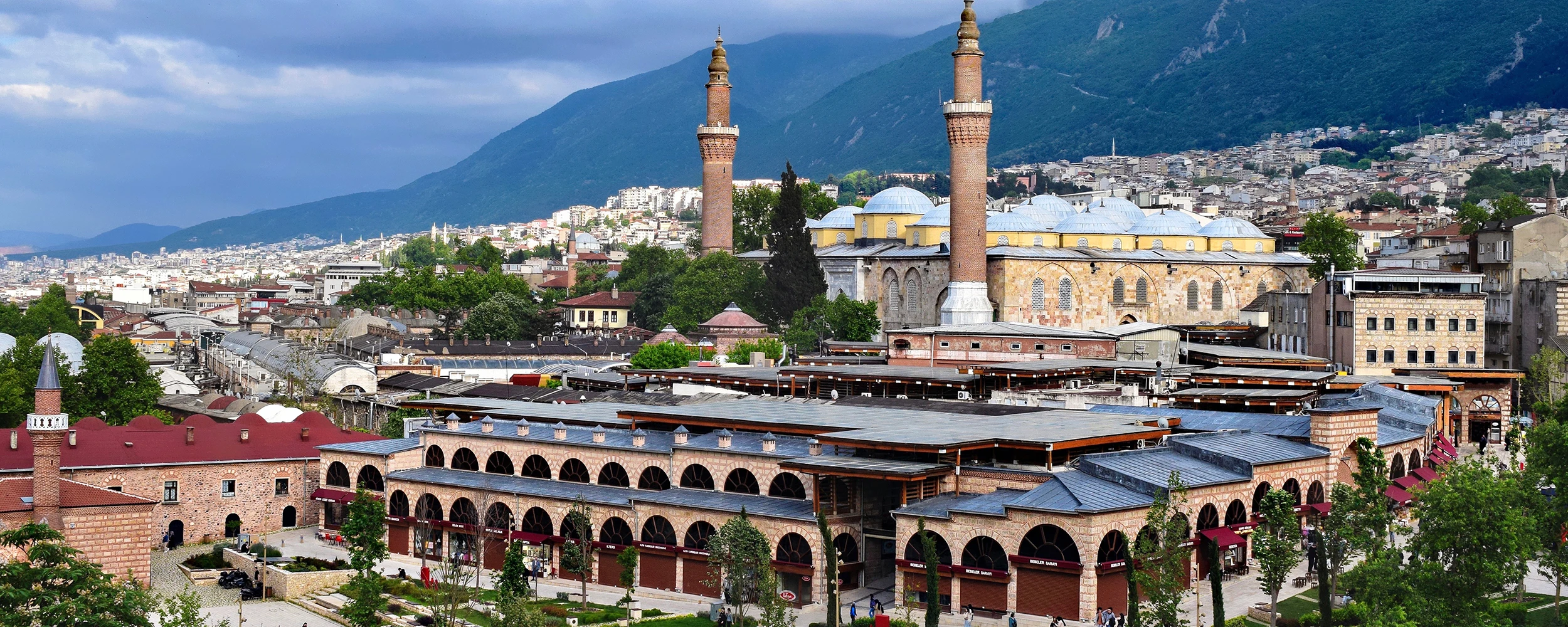
Continue from İznik to Bursa for Ottoman complexes, historic markets, museums, traditional neighborhoods, food and the green landscapes of northwestern Türkiye.
View Bursa GuideCombine ancient Nicaea with Bursa's museums, archaeological sites and natural landscapes.
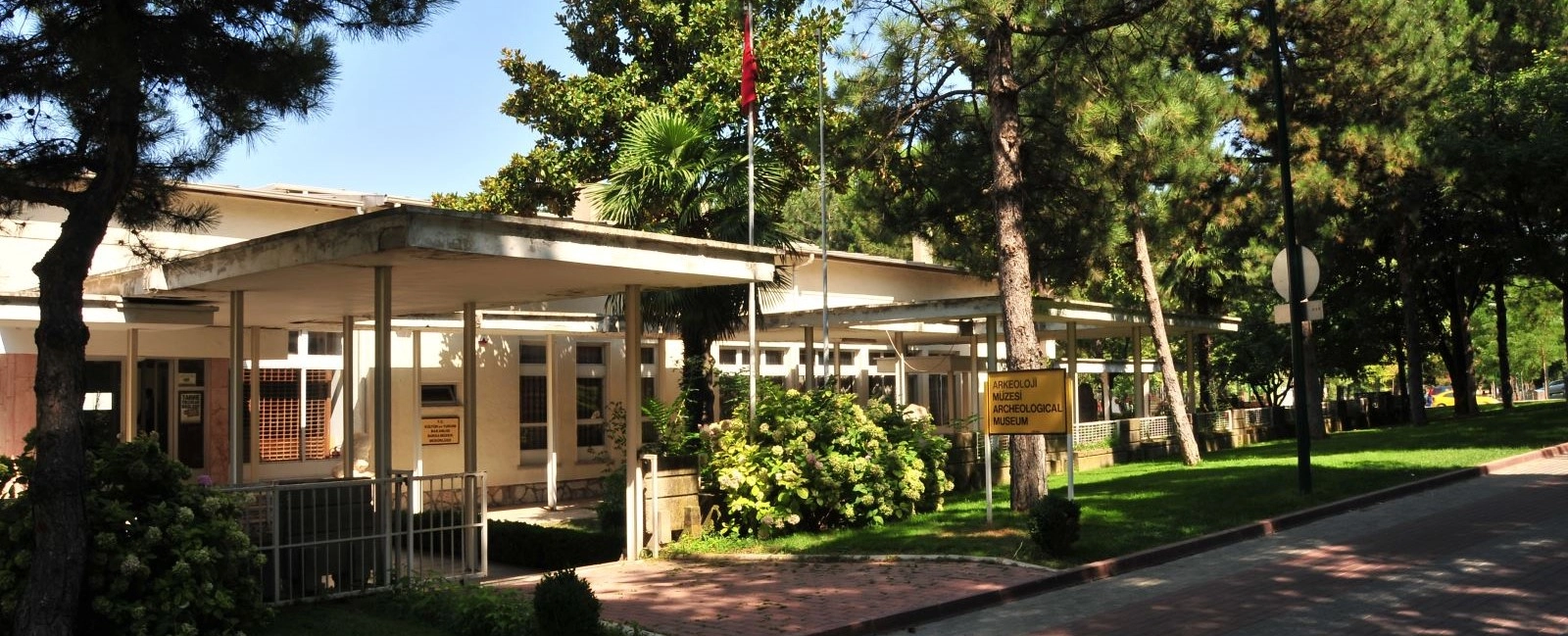
Explore archaeological finds from Bursa Province and place Nicaea within the wider ancient history of the region.
Explore the Museum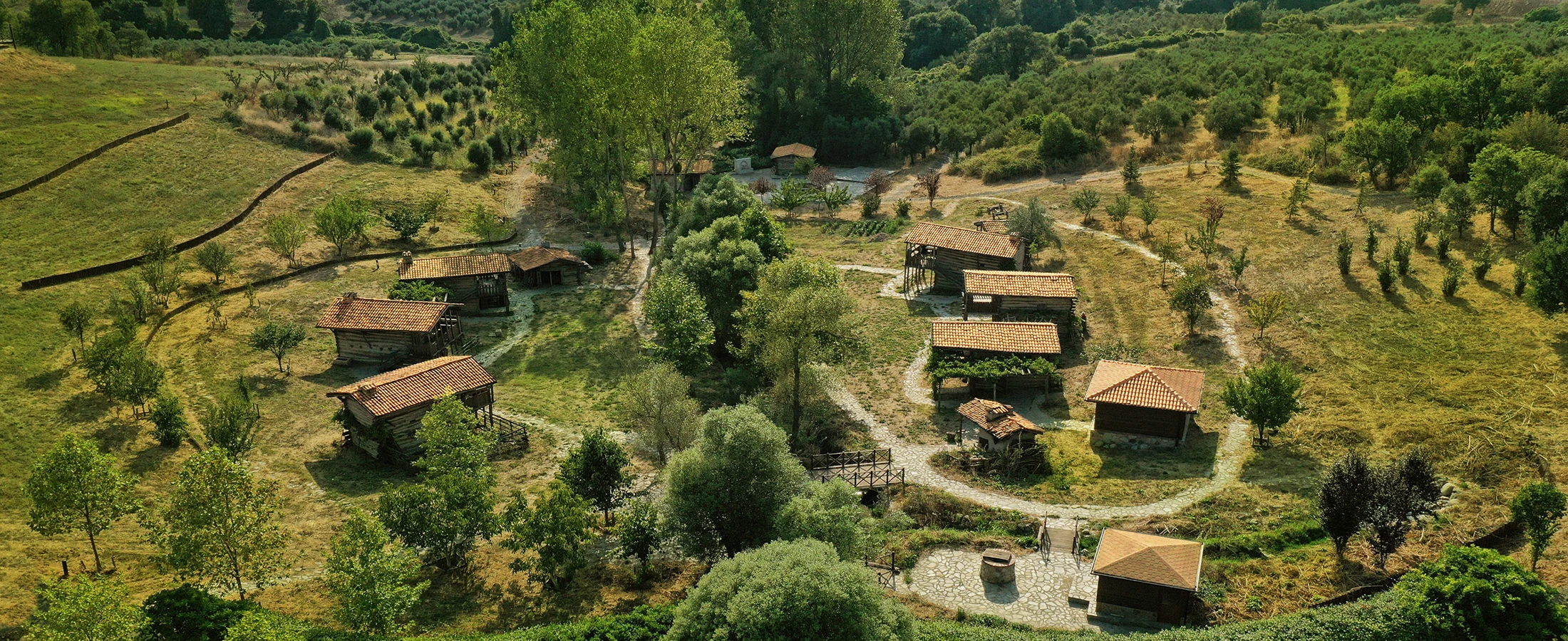
Travel much deeper into Bursa's past at one of the region's most important prehistoric settlement landscapes.
Explore Aktopraklık
Continue to mosques, tombs, bazaars, museums, villages, waterfalls and nature destinations across Bursa Province.
Continue Exploring Bursa