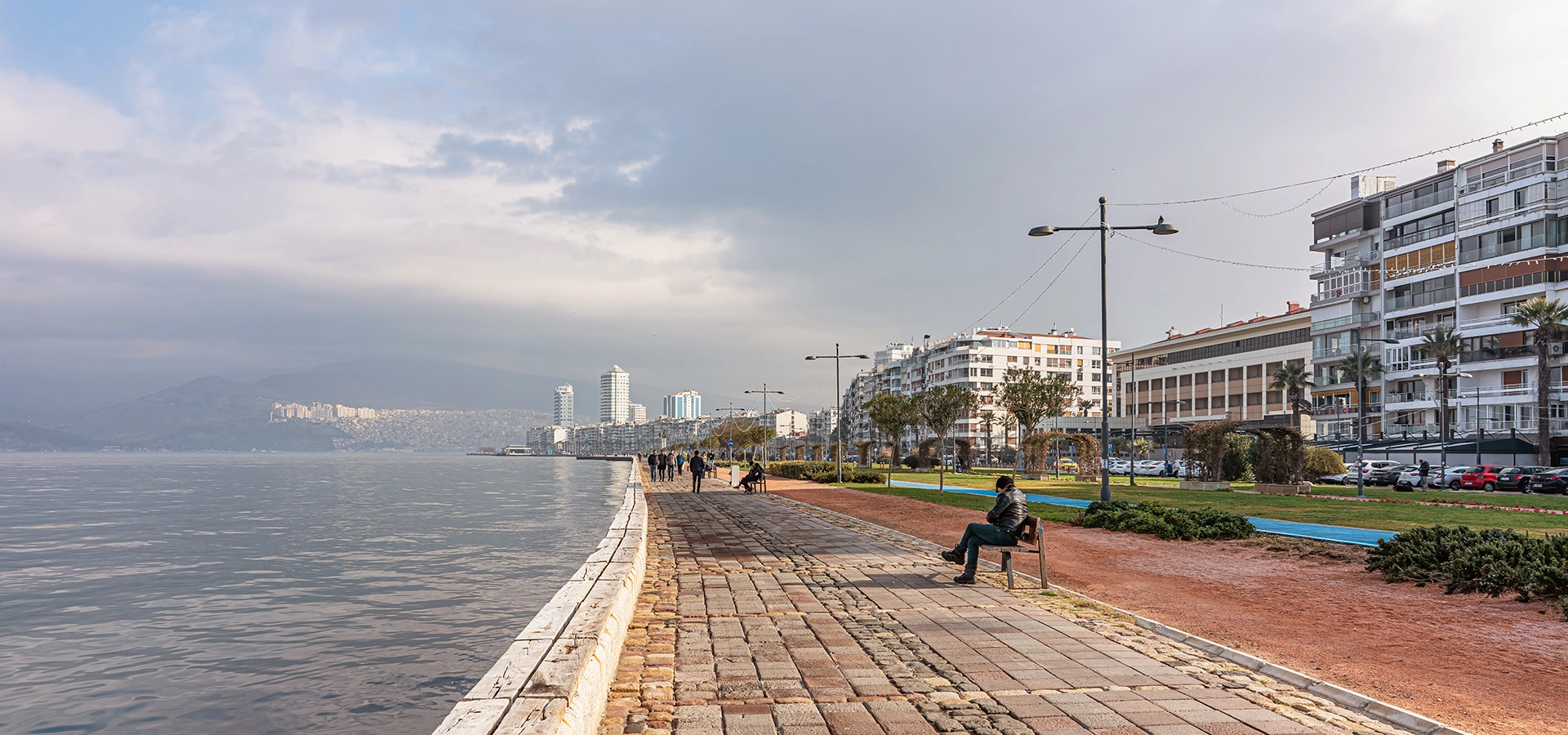
Private Kordon & Alsancak Walk
Explore İzmir's waterfront, Alsancak streets, local history, food and city atmosphere with a private route shaped around your interests.
Request a Private İzmir Tour





Few places express the character of İzmir as clearly as Kordon. Stretching along the Gulf of İzmir between central Konak and Alsancak, the waterfront brings together sea views, green lawns, walking and cycling paths, ferries, cafés, historic buildings and the relaxed outdoor rhythm for which the city is famous.
Behind the seafront lies Alsancak, one of central İzmir's liveliest districts. Its streets combine late Ottoman and early Republican architecture, old Levantine houses, churches, museums, restaurants, bars, boutiques and one of Türkiye's oldest railway stations. The area once known as Punta developed rapidly during İzmir's 19th-century expansion as an international port city.
Kordon is not a conventional attraction with an entrance gate or fixed route. It is a place to experience slowly: walk beside the water, watch ferries cross the gulf, sit on the grass, drink tea or coffee, photograph the sunset and then continue into Alsancak for dinner or an evening stroll along Kıbrıs Şehitleri Caddesi.
For many visitors, this is where İzmir feels most immediate. Archaeological sites explain the city's ancient past, while Kordon shows how İzmir lives today — open to the sea, sociable, walkable and deeply connected to the Aegean.
Walk between the Gulf of İzmir and the historic city centre along one of Türkiye's best-known urban promenades.
Join locals on the lawns of First Kordon for golden-hour views, sea breezes and relaxed evening atmosphere.
Explore the former Punta district, old houses, churches, museums, railway heritage and streets shaped by İzmir's cosmopolitan past.
Continue from the waterfront into Alsancak for seafood, meze, kumru, cafés, bars, bakeries and late-night city life.
Essential information for exploring İzmir's famous seafront and the lively historic neighbourhood immediately behind it.
Konak district, central İzmir, along the Gulf of İzmir between Konak and Alsancak Port.
Waterfront walks, green lawns, cycling, sunset, cafés, sea views and relaxed Aegean city atmosphere.
The historic and entertainment district immediately behind Kordon, formerly associated with the Punta quarter.
Kordon's modern waterfront character developed strongly during İzmir's 19th-century port expansion.
Walk slowly from Cumhuriyet Square toward Gündoğdu Square and Alsancak, stopping wherever the view invites you.
The waterfront includes a popular bicycle route and is one of central İzmir's easiest recreational corridors.
Late afternoon through sunset for atmosphere; morning for quieter walking and photography.
Free. Kordon is public waterfront space and can be visited at any time.
Allow 2–3 hours for Kordon and Alsancak, or half a day when adding museums, lunch and historic streets.
Easy access by tram, ferry, İZBAN, bus, taxi and on foot from many parts of central İzmir.
Excellent for seafood, meze, kumru, boyoz, cafés, bakeries, breakfast and contemporary dining.
Best subjects include the bay, ferries, historic façades, Gündoğdu Square, palm-lined streets and sunset silhouettes.
Kordon is one of the best places to understand İzmir not as a collection of monuments, but as a living Mediterranean-Aegean city built around public space and the sea.
The first reason to visit is the waterfront itself. The broad edge of the Gulf of İzmir creates a long open horizon in the middle of a major city. Ferries move constantly across the water, cyclists and walkers share the promenade, and the grassy seafront turns into an informal social space in the late afternoon.
The second reason is Alsancak's historic urban fabric. A few streets inland, the atmosphere changes from wide seafront to narrow streets filled with restaurants, old houses, churches, museums, shops and traces of the cosmopolitan communities that shaped late Ottoman İzmir.
The third reason is the area's food and evening culture. Kordon and Alsancak are among the easiest places in İzmir to move naturally from sightseeing into dinner, drinks, coffee or a late evening walk without changing neighbourhoods.
Finally, the district connects easily with the rest of central İzmir. From Kordon you can continue toward Konak Square, Kemeraltı, Kızlarağası Hanı, Smyrna Agora or in the opposite direction toward Alsancak Station and the port area.
In everyday İzmir usage, Kordon refers to the long waterfront promenade running along the city's central bay. The best-known section is Birinci Kordon — First Kordon, closely following today's Atatürk Caddesi and the seafront between the Konak side of the centre and Alsancak.
The area includes landscaped green space, seating, walking and running areas, a bicycle route, cafés and long uninterrupted views across the gulf. Rather than being a single park, Kordon is a continuous urban edge where transport, recreation, social life and city history overlap.
Visitors sometimes use “Kordon” and “Alsancak” interchangeably, but they are not exactly the same. Kordon is the waterfront corridor; Alsancak is the wider neighbourhood behind and around its northern section. Together they form one of İzmir's most popular visitor areas.
The modern story of Kordon is closely tied to İzmir's transformation into one of the most important commercial ports of the eastern Mediterranean during the 19th century. As trade expanded, the city needed better quays where large ships could load and unload cargo efficiently.
A concession for major quay construction was granted in 1867. Work began soon afterward and the waterfront project was largely completed during the 1870s, with the remaining sections finished by 1880. The works reshaped the shoreline, created valuable new land and helped define the Kordon that became synonymous with modern Smyrna.
Railway and port development reinforced one another. Alsancak Station, opened in 1858 at the beginning of the İzmir–Aydın railway, connected agricultural production from western Anatolia with İzmir's port economy. Tram lines later ran along the waterfront, carrying passengers by day and freight connected with the railway and port at other times.
The northern district, historically known as Punta, became associated with Levantine families, merchants, workers, warehouses, factories, clubs, churches and new forms of urban entertainment. Kordon itself gained hotels, residences, cafés and institutions serving a cosmopolitan port population.
The 1922 Great Fire of Smyrna devastated large parts of the central city and transformed the built environment behind sections of Kordon. The Republican era brought new planning, public squares, apartment blocks and modern infrastructure, yet the waterfront retained its role as İzmir's great public façade toward the sea.
Today, Kordon's historic importance lies not in one surviving monument but in the continuity of the waterfront idea itself: a place where transport, trade, architecture, leisure and the city's relationship with the gulf have met for more than a century.
Gündoğdu Square is one of the principal public spaces on Kordon and a natural landmark when walking between central Kordon and Alsancak. Its broad open setting creates a visual break in the line of waterfront buildings and lawns.
The square is used for public events, concerts, celebrations and gatherings, while on ordinary days it functions as a large open meeting point beside the sea. The Tree of the Republic Monument gives the square a clear visual focus.
For visitors, Gündoğdu is also useful as a navigation point. From here you can continue north toward Alsancak's cafés, Kıbrıs Şehitleri Caddesi and the port, or south toward Cumhuriyet Square, Pasaport and Konak.
At the southern end of the classic Kordon walk, Cumhuriyet Square forms another major open space beside the gulf. The square is dominated by the equestrian Atatürk Monument and plays an important ceremonial role in the city.
Its location makes it an excellent link between Kordon and the older centre. Continue south and you reach Pasaport, Konak Square and Kemeraltı; continue north and the seafront gradually becomes the relaxed lawns and café-lined streets associated with Alsancak.
One of the most important historic buildings directly on Kordon is the İzmir Atatürk Museum. The neoclassical building was constructed as a residence in the late 19th century and is one of the notable surviving historic façades along First Kordon.
The building later became closely associated with Mustafa Kemal Atatürk and his stays in İzmir. Today its rooms contain period furnishings, documents and personal objects connected with Atatürk and the early Republican period.
The museum is worth adding because it changes the character of a Kordon visit from pure waterfront leisure into a more layered urban-history experience. Allow approximately 30–45 minutes and check current seasonal opening hours before visiting.
The seafront is only half the experience. Turn inland from Kordon and Alsancak becomes a dense network of pedestrian-friendly streets filled with historic façades, apartment buildings, cafés, restaurants, bars, shops, bakeries and small cultural venues.
Some streets preserve fragments of the old Levantine and cosmopolitan architecture associated with 19th- and early-20th-century Smyrna. Others show the modern commercial identity that makes Alsancak one of the busiest parts of the city today.
The best approach is not to follow one rigid route. Use Kıbrıs Şehitleri Caddesi as a central spine, then explore the smaller side streets. Within a few blocks, you can move from quiet residential corners to crowded dining streets and back toward the open waterfront.
Kıbrıs Şehitleri Caddesi is one of Alsancak's busiest pedestrian streets and the most obvious inland counterpart to Kordon. Where the waterfront is open and horizontal, Kıbrıs Şehitleri is energetic, commercial and densely urban.
The avenue and its side streets are lined with cafés, restaurants, shops, dessert places, bookstores, bars and everyday services. It is especially lively from late afternoon into the evening and is an easy place to continue after sunset on Kordon.
For first-time visitors, the best combination is simple: spend daylight and sunset near the sea, then move inland to Kıbrıs Şehitleri for dinner, coffee or an evening walk.
At the northern side of the district, Alsancak Station is one of the most important landmarks in İzmir's transport history. It opened in 1858 at the beginning of the İzmir–Aydın railway, one of the earliest railway projects in the Ottoman Empire.
The railway connected İzmir's port with the agricultural hinterland of western Anatolia, helping move products such as figs, grapes and other goods toward international markets. That connection between railway and harbour was fundamental to the growth of the Punta-Alsancak area.
The station retains late Ottoman architectural details and remains an important part of the district's identity. Even if you are not travelling by train, the building is worth seeing as part of a walk linking Kordon with the northern end of Alsancak.
Sunset is when Kordon changes from a pleasant promenade into one of İzmir's signature experiences. People gather on the grass, friends bring snacks and drinks, cyclists slow down, and the gulf begins reflecting the warm colours of the evening sky.
The exact position of the setting sun changes through the year, so the sun will not always fall directly over the same part of the bay. The atmosphere, however, remains reliable: long light across the water, silhouettes of ferries and a gradual transition into the illuminated city.
Arrive 45–60 minutes before sunset if photography is important. This gives you time to walk, choose a viewpoint and enjoy the changing light rather than arriving only for the final few minutes.
45–60 minutes before sunset for a relaxed walk and changing light.
The lawns around central and northern Kordon become especially lively in good weather.
Stay after sunset to photograph the shoreline lights while colour remains in the sky.
Visit early in the morning for softer crowds, cooler temperatures and open views.
Kordon is one of the easiest places in central İzmir to explore under your own power. The route is mostly flat, visually open and connected with other waterfront districts, making it suitable for walking, jogging and cycling.
The waterfront includes dedicated recreational space and a bicycle corridor. Cyclists should remain aware of pedestrians, especially around busy squares, café areas and sunset crowds where people may cross the path unexpectedly.
Strong walkers can continue south toward Pasaport and Konak or use ferry connections to extend the day across the bay. Because the route is exposed to sun and wind, a hat, water and sun protection are useful in summer.
Kordon and Alsancak are among the easiest parts of İzmir for combining sightseeing with food. The waterfront offers cafés, restaurants and sea-view tables, while the inland streets provide a much wider range of casual and contemporary dining.
Try İzmir's famous sandwich, usually made with local bread and fillings that can range from cheese and tomato to grilled sausage combinations.
A classic İzmir pastry, often eaten with a boiled egg and tea, especially at breakfast.
Kordon is a natural place for fish, seafood and a long meze dinner overlooking the gulf.
Stuffed mussels are a familiar İzmir street-food choice; select busy, reputable vendors and eat them freshly served.
Sweet stops range from traditional lokma to modern pastry shops and ice cream.
Pause in Alsancak for coffee after a waterfront walk or before continuing into the evening.
Meze, seafood and conversation are central to the evening rhythm of many Alsancak restaurants.
Alsancak also has international cuisine, contemporary restaurants, brunch places and specialty coffee shops.
Alsancak is one of İzmir's principal nightlife districts. The atmosphere ranges from quiet wine bars and meyhanes to lively pubs, live-music venues and busy streets that remain active well into the night.
The strongest evening flow usually moves between the Kordon seafront, Kıbrıs Şehitleri Caddesi and the side streets around central Alsancak. Visitors looking for a calmer night can stay near the waterfront, while those wanting more energy can move inland.
As in any busy entertainment district, keep normal city awareness late at night and use licensed taxis or established transport options when returning to accommodation after public transport becomes less frequent.
Best for quiet walking, jogging, architecture and relatively empty waterfront photographs.
Good for museums, cafés and combining Kordon with the historic centre, although summer can be hot.
The waterfront becomes more social as temperatures soften and the light begins to warm.
The classic Kordon experience and generally the most atmospheric time of day.
Best for restaurants, cafés, bars and walking through lively Alsancak streets.
Often the most comfortable seasons for long walks, cycling and outdoor meals.
Expect heat and strong sun during the day; early morning and evening are much more pleasant.
Mild days can be beautiful, but sea wind and rain can make the exposed waterfront feel much colder.
Enough for a short waterfront walk and sea views, ideally around sunset.
Walk between Gündoğdu and Cumhuriyet Square with time for coffee or photographs.
Combine Kordon with Kıbrıs Şehitleri Caddesi and several Alsancak side streets.
Add the Atatürk Museum, Alsancak Station, lunch and a slow waterfront walk.
Combine Kordon and Alsancak with Konak Square, Kemeraltı, Kızlarağası Hanı and Smyrna Agora.
Arrive before sunset, sit by the sea and continue into Alsancak for dinner and nightlife.
The Konak Tram follows the central coastal corridor and is one of the easiest ways to reach different sections of Kordon.
Use central ferry services to connect the opposite side of the gulf with the Konak and Alsancak area.
Alsancak Station provides convenient rail access from districts connected to the metropolitan rail network.
Numerous municipal bus routes serve central Konak and Alsancak; choose the stop closest to your preferred section of the waterfront.
Ask for Kordon, Gündoğdu Meydanı, Cumhuriyet Meydanı or Kıbrıs Şehitleri depending on where you want to begin.
Kordon is easily reached from Konak Square and many central hotels, especially if you enjoy city walking.
Because the district is busy and parking can be difficult, public transport is usually more convenient than bringing a private vehicle into central Alsancak.
Kordon's main waterfront promenade is comparatively flat and is generally one of the easier central İzmir areas for visitors with limited mobility. The wide open seafront also provides frequent places to pause and rest.
Conditions become more variable in the interior streets of Alsancak, where pavements, busy crossings, older buildings and crowded restaurant areas may create obstacles. Museum accessibility can also differ by building.
Visitors using wheelchairs or travelling with specific mobility requirements should treat this as general guidance rather than a formal accessibility audit and confirm individual venues when step-free entry is essential.
Kordon works well for families because there is no fixed itinerary and children can move between walking, sitting on the grass, watching ferries and taking food breaks without the pressure of a museum route.
The main concerns are ordinary waterfront and city safety. Younger children should stay close to adults near the water, bicycle routes, tram crossings and busy evening crowds.
A short ferry ride can also turn the day into a more memorable family experience, especially for children who enjoy boats and city views from the water.
Wide-angle compositions work well when the gulf, promenade and city share the frame.
Moving ferries add scale and activity to otherwise static seascapes.
Look inland as well as toward the water; surviving older buildings add context to the modern promenade.
The open space, monument and gulf create strong geometric compositions.
Late light warms the façades and creates reflections and silhouettes across the bay.
Stay after sunset for the balance between a coloured sky and illuminated shoreline.
Alsancak's cafés, old houses and pedestrian streets provide a completely different visual language from the waterfront.
Avoid intrusive close-up photographs and ask permission when individuals are clearly the main subject.
A Kordon visit easily becomes several kilometres of walking once Alsancak and Konak are added.
The waterfront is exposed and shade can be limited, especially during summer midday hours.
Even warm days can become breezy after sunset, particularly in spring, autumn and winter.
Good weather brings crowds to the lawns and popular waterfront seating areas.
Tram, ferry and rail connections make central Alsancak easier than driving and searching for parking.
Do not spend the entire visit looking only at the sea; the streets behind Kordon are an essential part of Alsancak.
If the Atatürk Museum is part of your plan, confirm current seasonal opening information before arrival.
The district is at its best when a waterfront walk flows naturally into an evening meal in Alsancak.
This route is deliberately slow. Kordon is most rewarding when you allow time to sit, watch the city and change direction rather than treating the waterfront as a checklist of monuments.
See İzmir Clock Tower, Yalı Mosque and the symbolic waterfront centre of the city.
Move from open seafront into historic market streets filled with food, mosques, synagogues, hans and shops.
Visit the atmospheric Ottoman commercial inn for courtyard architecture, Turkish coffee and small shops.
Explore the Roman civic centre of ancient Smyrna and its remarkable vaulted galleries and inscriptions.
Walk through İzmir's major central park, exhibition and cultural area a short distance inland from Alsancak.
Continue south through central İzmir to the historic elevator and one of the city's best panoramic viewpoints.
Enjoy another historic stretch of the waterfront between Kordon and Konak, with ferry connections and coastal architecture.
See one of İzmir's most important railway heritage buildings and the northern end of the historic district.
The essential combination and the best way to understand both the seafront and the neighbourhood behind it.
Add a historic interior to an otherwise outdoor waterfront visit.
Walk along the city's central waterfront between two of İzmir's most recognisable public spaces.
Contrast the open Aegean seafront with the dense lanes of the historic bazaar.
Pair contemporary city life with the archaeological remains of ancient Smyrna.
Combine sea-level waterfront atmosphere with a panoramic view high above the Gulf of İzmir.
See İzmir from the water and experience the gulf as part of the city's everyday transport network.
The classic evening plan: waterfront golden hour followed by food, drinks or coffee inland.
Kordon is the city's famous central waterfront promenade beside the Gulf of İzmir, especially the First Kordon section running toward Alsancak.
No. Kordon is the waterfront corridor, while Alsancak is the larger neighbourhood immediately behind and around its northern section.
It runs along the central Gulf of İzmir in Konak district, connecting the Konak side of the city centre with Alsancak.
Birinci Kordon, or First Kordon, is the best-known seafront section along Atatürk Caddesi beside the gulf.
İkinci Kordon is the common local name for the parallel inland corridor around Cumhuriyet Bulvarı behind First Kordon.
Yes. The waterfront is public space and there is no admission fee.
It is famous for waterfront walks, green lawns, cycling, sea views, sunset, cafés and its relaxed Aegean atmosphere.
Alsancak is known for historic streets, cafés, restaurants, nightlife, shopping, museums and railway heritage.
The northern waterfront district was historically associated with the name Punta during the late Ottoman period.
Its modern form developed strongly during İzmir's 19th-century port expansion, especially with major quay works between the late 1860s and 1880.
It formed part of İzmir's modern port frontage and became closely connected with international trade, tram transport, residences, hotels and commercial life.
Alsancak Station entered service in 1858 at the beginning of the İzmir–Aydın railway.
Yes. İzmir Atatürk Museum is located directly on First Kordon at Atatürk Caddesi No. 248.
Allow at least two hours for a relaxed walk; half a day is better when combining Kordon with Alsancak streets, a museum and a meal.
Late afternoon through sunset is the classic experience, while early morning is quieter and better for walking or photography.
Yes. Sunset is one of the most popular times, especially when the lawns fill with locals enjoying the evening.
The grass areas along central and northern Kordon provide many informal viewpoints; choose a section with an open view across the gulf.
Yes. The waterfront includes a popular bicycle route, although cyclists should watch carefully for pedestrians in crowded sections.
Yes. The waterfront route is one of the most pleasant long walks in central İzmir.
Yes. The Konak Tram follows the central coastal corridor and provides convenient access to several sections of the waterfront.
Yes. Alsancak Station is part of İzmir's metropolitan rail network.
Yes. Ferry services across the gulf are one of the most enjoyable ways to approach central İzmir.
Parking can be difficult in busy central streets, so public transport is usually the easier option.
Good choices include kumru, boyoz, seafood, meze, stuffed mussels, lokma and a wide range of modern café and restaurant food.
Yes. It is one of İzmir's main districts for bars, meyhanes, cafés, live music and late-night social life.
Yes. The open space, ferries and flexible walking route work well for families, but young children should be supervised near the water and bicycle paths.
The main waterfront is relatively flat, but conditions vary in older Alsancak streets and individual historic buildings.
Yes. The waterfront remains active into the evening, and the illuminated shoreline gives the area a very different atmosphere after dark.
It is a heavily used central public area. Use ordinary city awareness, especially late at night and around busy traffic crossings.
It is a major public square on Kordon used for gatherings, concerts and city events, marked by the Tree of the Republic Monument.
It is a major waterfront square at the southern side of Kordon, known for its equestrian Atatürk Monument.
It is one of Alsancak's principal pedestrian streets, lined with shops, restaurants, cafés and nightlife.
Good combinations include Konak Square, Kemeraltı, Kızlarağası Hanı, Smyrna Agora, Kültürpark and Tarihi Asansör.
Walk between Cumhuriyet Square and Gündoğdu Square in late afternoon, stay for sunset and then continue into Alsancak for dinner.
Add the Atatürk Museum, Kıbrıs Şehitleri Caddesi, historic Alsancak streets and a meal to your waterfront walk.
It combines the city's port history with its modern social life and remains one of the clearest symbols of İzmir's relationship with the Gulf of İzmir.
A private İzmir city route can connect the relaxed waterfront atmosphere of Kordon with Alsancak's historic streets, Konak Square, Kemeraltı, Kızlarağası Hanı, Smyrna Agora, local food and other layers of the city according to your interests.
Tell us whether your priority is waterfront atmosphere, history, architecture, archaeology, local food, photography, museums or a complete city-centre walk, and we can shape the experience around your interests.
Explore İzmir's waterfront, Alsancak streets, local history, food and city atmosphere with a private route shaped around your interests.
Request a Private İzmir Tour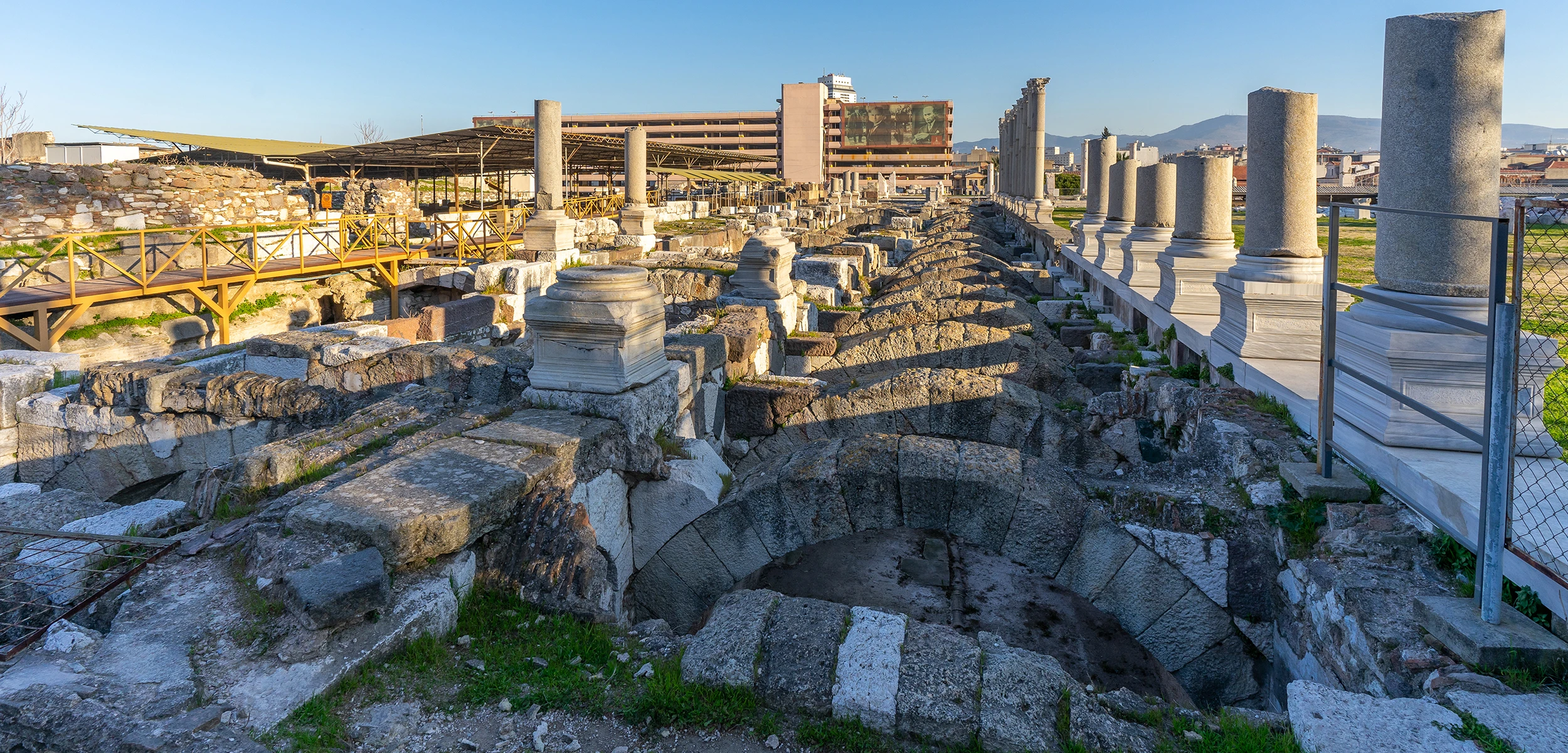
Combine İzmir's modern waterfront with the Roman civic centre of ancient Smyrna for a journey across very different layers of the same city.
Explore Smyrna Agora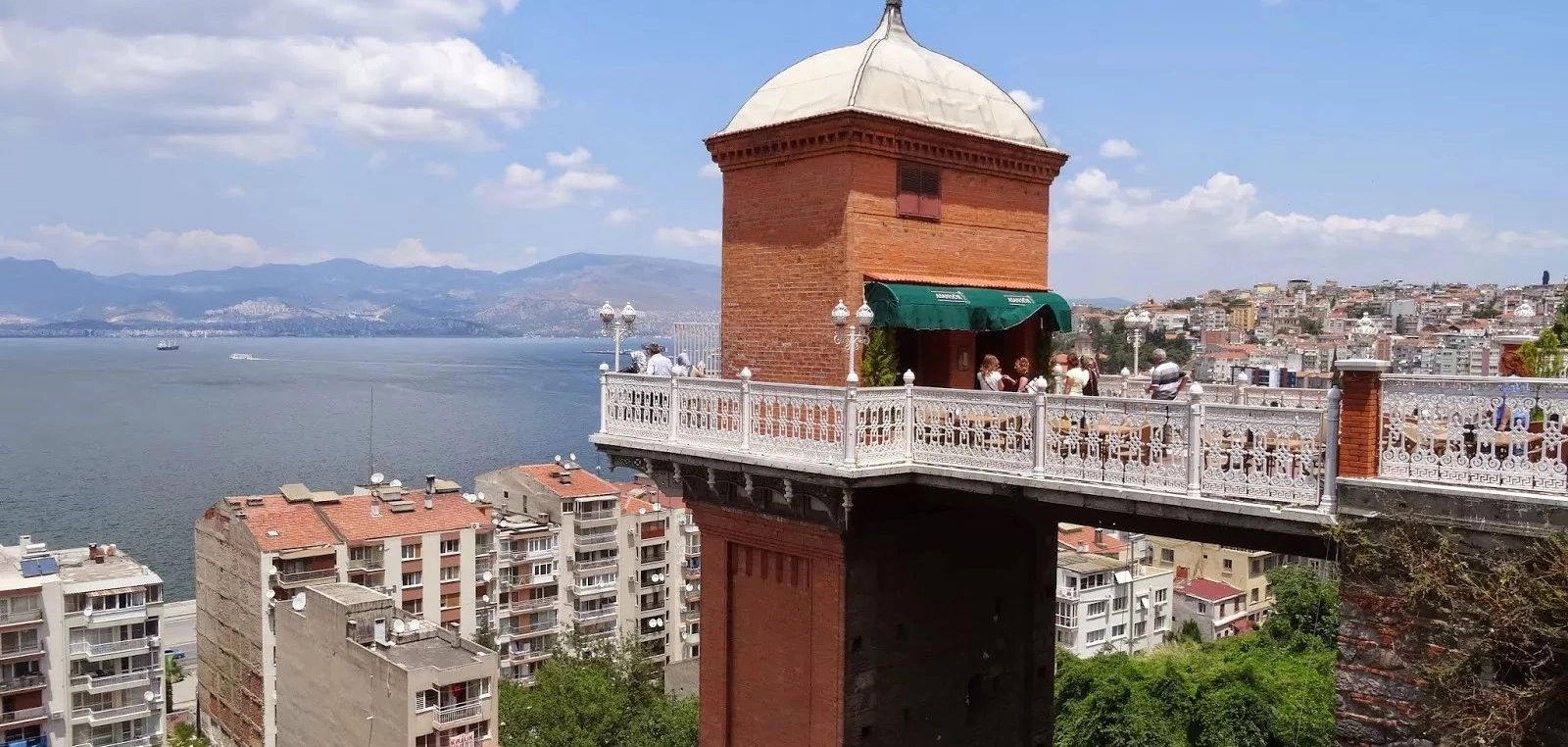
Move from the sea-level promenade to one of İzmir's most memorable panoramic viewpoints above the historic Karataş neighbourhood.
Explore Tarihi Asansör
Continue with our complete İzmir guide for archaeology, coastal towns, historic neighbourhoods, local food, museums and the best day trips.
View İzmir Guide