Mudanya Armistice 1922, İsmet Paşa, Allied Generals, Signing Hall, Historic Documents, Wooden Seaside Mansion, Turkish War of Independence & Road to Lausanne

Mudanya Armistice House Museum – 1922 History & Complete Visitor Guide

Step inside the waterfront mansion where the Mudanya Armistice was signed on 11 October 1922,
ending the military phase of the Turkish War of Independence and opening the road toward Lausanne.

Discover Mudanya Armistice House

Stand Inside the Room Where War Gave Way to Diplomacy

On the waterfront of the small Marmara town of Mudanya stands one of the most important houses connected with the final phase of the Turkish War of Independence.

Today known as the Mudanya Armistice House Museum or Mudanya Mütareke Evi Müzesi, this elegant late nineteenth-century wooden mansion witnessed negotiations that helped transform a military victory into a political settlement.

Between 3 and 11 October 1922, representatives of the Ankara Government and the Allied powers gathered here to decide how fighting would cease, how Greek forces would evacuate Eastern Thrace and how authority over the region would pass to the Turkish government.

Türkiye was represented by İsmet Paşa, later İsmet İnönü, while Britain, France and Italy sent senior military representatives. The Greek delegation came to Mudanya, but did not participate directly in the negotiations inside the house.

After tense discussions, the Mudanya Armistice was signed on 11 October 1922. It came into force on 15 October, bringing the Turkish-Greek military conflict to an end and preparing the diplomatic environment for the negotiations that would eventually produce the Treaty of Lausanne in 1923.

The museum preserves much more than the signing room. Visitors can see İsmet Paşa's study, period furniture, bedrooms, photographs, documents, historic objects and displays recreating the atmosphere of the negotiations.

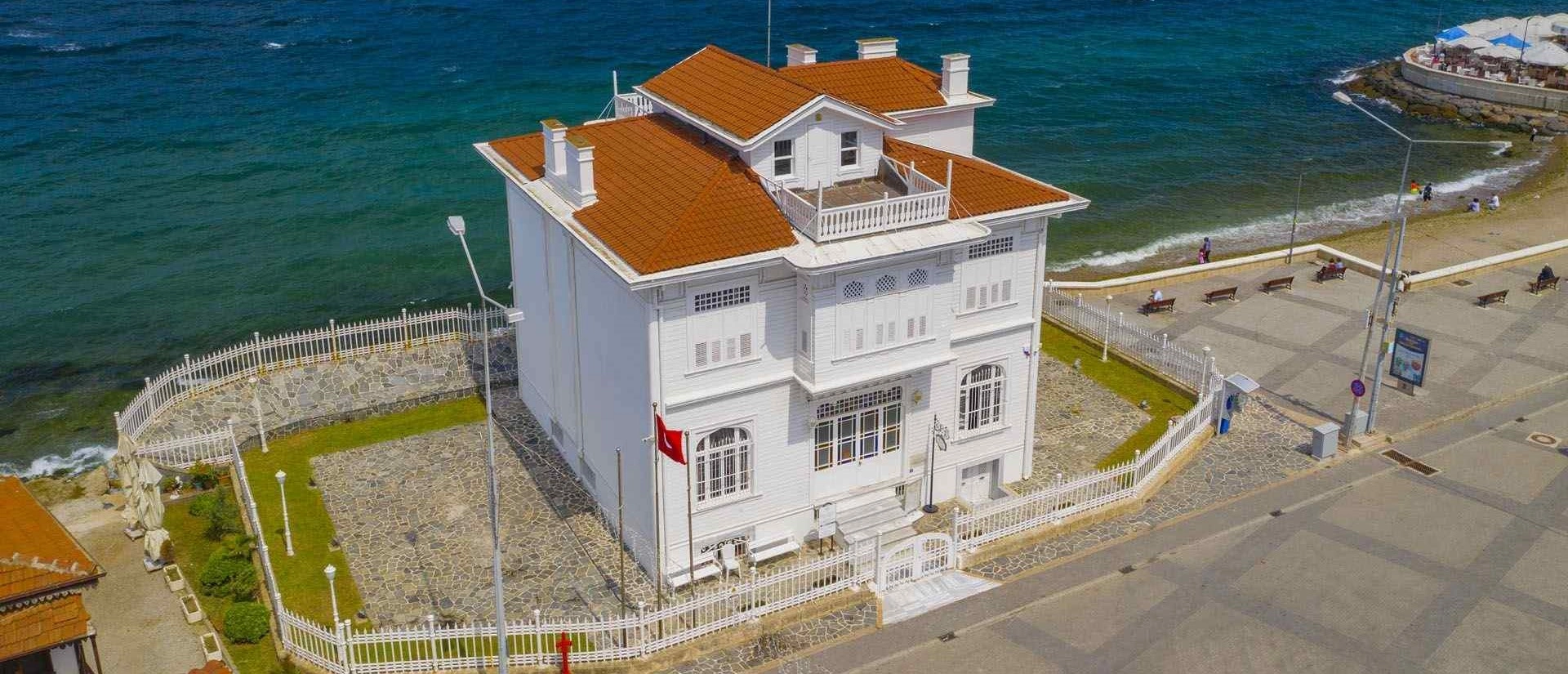
The building itself is equally memorable: a white wooden seaside mansion facing the Sea of Marmara, surrounded by the waterfront streets and squares of historic Mudanya.

11 October 1922

Enter the house where the Mudanya Armistice was signed after days of intense negotiations.

The Historic Signing Hall

See the principal room where İsmet Paşa and the Allied commanders negotiated the terms of the armistice.

İsmet Paşa's Study

Explore the room associated with the Turkish delegation and one of the most dramatic diplomatic episodes of 1922.

Original Documents & Objects

Photographs, period furnishings and historical material bring the days of the conference back to life.

Historic Wooden Yalı

The late nineteenth-century seaside mansion is itself an important example of Mudanya's historic residential architecture.

Road to Lausanne

Understand how the armistice ended active fighting and helped prepare the way for the final peace settlement.


Plan Your Visit

Mudanya Armistice House Museum – Quick Facts

Essential information for visiting the historic house where one of the decisive diplomatic agreements of Türkiye's War of Independence was negotiated and signed.

📍

Location

Mütareke Mahallesi, 12 Eylül Caddesi No:8, Mudanya, Bursa.

Open on Google Maps
📜

Historic Event

The Mudanya Armistice was signed here on 11 October 1922.

🏠

Building

A late nineteenth-century wooden seaside mansion associated with Mudanya's historic waterfront architecture.

🇹🇷

Turkish Delegate

İsmet Paşa, commander of the Western Front and later President İsmet İnönü.

🤝

Conference

Negotiations took place between 3 and 11 October 1922.

🏛️

Museum Since

The restored house was opened as a museum in 1937.

🕗

Regular Schedule

Seasonal hours apply; Monday is currently the regular weekly closing day.

🎟️

Admission

Current official listing: €3; MüzeKart is accepted. Exemptions apply under Ministry rules.

⏱️

Recommended Visit

Allow around 45–75 minutes for the house, exhibits and waterfront surroundings.


A Turning Point Between War & Peace

Why Visit the Mudanya Armistice House Museum?

Few places allow visitors to stand inside a room where military victory, international diplomacy and the political future of a country came together so dramatically.

The Mudanya Armistice House is important because it preserves the actual setting of negotiation.

This is not a museum created around a historical event many years later. The rooms themselves witnessed the discussions, arguments, messages and compromises of October 1922.

Only weeks earlier, the Turkish army's Great Offensive had ended Greek military resistance in western Anatolia. The next question was whether the crisis surrounding the Straits and Eastern Thrace would produce another war or be resolved through diplomacy.

Mudanya became the place where that question was answered.

Walking through the signing hall, İsmet Paşa's study and the upper rooms gives visitors a physical sense of how surprisingly intimate the setting was for negotiations involving Türkiye, Britain, France, Italy and Greece.

The museum also gives modern travellers an opportunity to understand an essential historical distinction: the Mudanya Armistice was not the final peace treaty.

Instead, it ended active hostilities, established arrangements for Eastern Thrace and opened the political road toward the Lausanne Peace Conference and Treaty of Lausanne.

What to See

Top Highlights of Mudanya Armistice House Museum

The relatively compact museum rewards slow observation because individual rooms, objects and documents are closely connected with the events of October 1922.

The Armistice Signing Hall

The principal historic room is where İsmet Paşa and Allied representatives met during the negotiations that concluded on 11 October 1922.

  • Event: Mudanya Conference
  • Dates: 3–11 October 1922
  • Importance: Central room of the museum

İsmet Paşa's Study

The study helps visitors imagine the preparation, communication and tense decision-making that accompanied the formal sessions.

  • Delegate: İsmet Paşa
  • Role: Representative of the TBMM Government
  • Theme: Diplomacy under pressure

The Historic Conference Table

The furniture associated with the negotiations gives the political events a physical scale that photographs alone cannot provide.

  • Focus: Negotiation setting
  • Look For: Seating arrangement & room scale
  • Experience: History in its original location

Wax Figures of the Delegates

Interpretive figures represent the principal Turkish and Allied negotiators and help reconstruct the atmosphere of the conference.

  • Türkiye: İsmet Paşa
  • Britain: General Harington
  • France & Italy: Generals Charpy & Mombelli

Historic Photographs & Documents

Archival material places the house within the wider story of the Great Offensive, the Mudanya talks and the transfer of Eastern Thrace.

  • Material: Documents & photographs
  • Period: Turkish War of Independence
  • Value: Contemporary visual evidence

Upper-Floor Bedrooms

Rooms associated with İsmet Paşa, Asım Gündüz and members of the Turkish delegation reveal that the house served as more than a meeting room.

  • Floor: Upper level
  • Function: Accommodation
  • Atmosphere: Domestic & diplomatic history

Late Ottoman Wooden Architecture

The white timber exterior, projecting windows and waterfront position make the mansion an important part of Mudanya's historic urban landscape.

  • Date: Late 19th century
  • Material: Predominantly timber
  • Setting: Marmara waterfront

Mudanya Waterfront Setting

Step outside and the political museum becomes part of a wider coastal landscape of historic houses, squares and views across the Sea of Marmara.

  • District: Central Mudanya
  • Landscape: Sea of Marmara
  • Best Combination: Museum + historic waterfront walk

What Is the Mudanya Armistice House Museum?

The Mudanya Armistice House Museum is a historic-house museum in the centre of Mudanya, approximately northwest of Bursa's historic city centre on the southern coast of the Sea of Marmara.

Its Turkish name is Mudanya Mütareke Evi Müzesi.

The building is preserved principally because the Mudanya Armistice negotiations were held here and the final agreement was signed here on 11 October 1922.

The museum combines several different forms of history: military history, diplomatic history, political history, social memory and historic domestic architecture.

Rather than presenting the War of Independence through battlefield objects alone, Mudanya allows visitors to see what happened after the battlefield victory, when political representatives had to transform military realities into written agreements.

Historic Site

The museum occupies the actual house in which the conference sessions were held.

Diplomatic Museum

Its central story concerns negotiation, political pressure and the transition from war toward peace.

House Museum

Bedrooms, studies and domestic interiors preserve the scale and character of the original mansion.

War of Independence

The exhibitions interpret one of the final and most important phases of the Turkish National Struggle.

Republican Memory

The house became an important commemorative site long before many modern history museums were established.

Mudanya Heritage

The building also preserves part of the town's late Ottoman coastal architectural character.

The History of the Mudanya Armistice House

The mansion dates from the late nineteenth century and originally belonged to Aleksandr Ganyanof, a merchant of Russian origin.

Its construction belongs to the period when Mudanya was an active Marmara port with commercial connections extending across the sea to Istanbul and beyond.

The house reflects the domestic architecture of a prosperous coastal residence: a timber structure, multiple rooms, large reception spaces and a position facing the water.

After the events of 1922, the building acquired an importance far beyond its original domestic function.

Mudanya businessman Hayri İpar later purchased and restored the property, and it was opened to the public as a museum under Mudanya Municipality in 1937.

In 1959, the museum was transferred to the state museum administration, ensuring its continued preservation as a nationally important historic site.

Late 19th Century The wooden seaside mansion is constructed in Mudanya
Original Owner Aleksandr Ganyanof, a merchant of Russian origin
October 1922 The building becomes the setting for the Mudanya Conference and Armistice
1937 The restored house opens as a museum under Mudanya Municipality
1959 The museum passes to the state museum administration
Today A Ministry of Culture and Tourism museum preserving the diplomatic memory of 1922

Why Did the Mudanya Conference Take Place?

To understand the museum, it helps to begin several weeks before the delegates entered the house.

During August and September 1922, the Turkish National Movement won a decisive military victory during the Great Offensive.

Greek forces withdrew from western Anatolia, and Turkish troops advanced toward areas surrounding Çanakkale, the Straits and Eastern Thrace.

The rapid military change created a new international crisis. British forces remained in the Straits zone, while France and Italy were increasingly unwilling to support another major conflict.

The central question was now whether Eastern Thrace would return to Turkish administration through further fighting or through negotiation.

The Allied powers proposed an armistice conference, and the Ankara Government agreed on the condition that the future of Eastern Thrace be addressed.

Mudanya, then a relatively small coastal town, was selected for the talks.

Great Offensive

Turkish military victories in August and September 1922 transformed the political balance.

Greek Withdrawal

The collapse of the Greek front ended the principal military struggle in western Anatolia.

Straits Crisis

Turkish advances toward Allied-controlled zones created the risk of a wider confrontation.

Eastern Thrace

The return of Edirne and Eastern Thrace became one of the central issues of the negotiations.

Allied Differences

Britain, France and Italy did not approach the post-war crisis with identical political priorities.

Diplomatic Alternative

The Mudanya Conference offered a way to settle immediate military questions without reopening full-scale war.

The Mudanya Conference

Formal negotiations began in Mudanya on 3 October 1922.

The Ankara Government was represented by İsmet Paşa, commander of the Western Front. He had been given responsibility for defending Türkiye's position in negotiations that were essentially military in form but politically enormous in consequence.

The Allied powers were represented by senior commanders: General Sir Charles Harington for Britain, General Charpy for France and General Mombelli for Italy.

Greek representatives also travelled to Mudanya, but they did not participate directly at the principal conference table. Their positions were communicated through the Allied representatives.

The discussions were difficult. The greatest tension centred on Eastern Thrace, the timing of Greek withdrawal, the transfer of civil administration and the military arrangements that would remain in force until a final peace treaty.

At several moments, the negotiations appeared capable of collapsing.

After more than a week of discussions, a final text was agreed and signed on 11 October 1922.

3 October Mudanya Conference formally begins
3–8 October Intense negotiations focus especially on Eastern Thrace and military arrangements
9 October Talks continue after periods of serious tension and uncertainty
10 October İsmet Paşa receives authority to conclude the agreement
11 October Mudanya Armistice is signed
15 October The armistice enters into force

Who Took Part in the Mudanya Armistice Negotiations?

The personalities gathered in Mudanya represented governments with very different political and military priorities.

The Turkish delegation was led by İsmet Paşa, whose military experience and direct connection with the Western Front made him an especially important figure in the talks.

He was supported by officers and advisers, including Asım Gündüz, the Western Front chief of staff. Fevzi Paşa and Refet Paşa were also present in Mudanya during the conference period.

Britain's representative, General Sir Charles Harington, was a central figure because Britain maintained substantial military forces around Istanbul and the Straits.

France was represented by General Charpy, while General Mombelli represented Italy.

Greek delegates reached Mudanya but remained outside the direct negotiating sessions, communicating their position through the Allied side.

İsmet Paşa

Western Front commander and chief representative of the Ankara Government.

Asım Gündüz

Western Front chief of staff and member of the Turkish delegation.

General Harington

Senior British commander and Britain's principal representative at the negotiations.

General Charpy

French representative during the Mudanya Conference.

General Mombelli

Italian military representative at the conference.

Greek Delegation

Greek representatives came to Mudanya but did not participate directly in the main negotiating sessions.

The Mudanya Armistice Signing Hall

The most historically powerful room in the museum is the main conference and signing hall.

Here, inside a domestic wooden mansion rather than a grand government palace, representatives of rival powers confronted questions that could still have returned the region to war.

The relatively modest dimensions of the room make the event feel remarkably immediate.

Visitors can imagine the delegates seated only a short distance from one another, with military maps, written proposals, messages from their governments and the possibility of renewed fighting shaping every discussion.

Interpretive displays, period furnishings and figures representing the negotiators help reconstruct the scene.

Spend time here rather than simply taking a photograph. The room becomes more meaningful when you remember that the status of Eastern Thrace, Edirne and the immediate future of the Straits crisis were being decided around this table.

Original Location

The principal attraction is not only the objects but the fact that negotiations took place in this actual room.

Compact Setting

The relatively intimate room contrasts with the enormous international consequences of the talks.

Negotiating Table

Study the arrangement of the room to understand how physically close the principal delegates were.

Wax Figures

Interpretive figures help visitors visualise the leading representatives during conference sessions.

Historic Atmosphere

Windows, timber surfaces and period furniture preserve the feeling of an early twentieth-century residence.

11 October 1922

The date connects the preserved room directly with one of the key political turning points of modern Turkish history.

İsmet Paşa's Study & the Famous Marble Table

Another important space on the lower level is traditionally identified as İsmet Paşa's working room.

The study reminds visitors that conferences are not conducted only at the formal negotiating table. Between sessions, delegates study proposals, send messages, consult advisers and decide how far they can compromise.

Museum interpretation also preserves the story of a marble table associated with one of the tense episodes of the conference.

According to the museum's historical presentation, İsmet Paşa struck the table during an angry moment as negotiations approached the possibility of breaking down.

Whether looking at the furniture, documents or reconstructed details, the important point is the atmosphere: the Turkish delegation believed that military operations might have to resume if the political settlement failed.

Working Room

A quieter space connected with the preparation and decision-making behind the formal conference.

Marble Table

A memorable museum object associated with the tension surrounding the negotiations.

Messages & Instructions

The Turkish delegation remained in communication with Ankara during the rapidly changing talks.

Military Background

İsmet Paşa approached diplomacy as the commander of an army that had just achieved decisive battlefield success.

Political Restraint

The conference required turning military strength into acceptable diplomatic terms without triggering another war.

Human Scale

The study reminds visitors that major international decisions were made through individual judgement under extraordinary pressure.

Upper-Floor Bedrooms & Delegation Rooms

The upper floor changes the mood of the visit.

Instead of formal diplomacy, visitors encounter rooms connected with the daily life of the Turkish delegation during the conference.

Official museum descriptions identify bedrooms associated with İsmet Paşa, Asım Gündüz and members of the delegation.

These rooms are important because they emphasise that the mansion temporarily became both a diplomatic headquarters and a living space.

Furniture, textiles, personal objects and the domestic proportions of the rooms contrast with the geopolitical importance of what was happening downstairs.

Look through the windows where possible. The relationship between house, street and sea helps explain why Mudanya's waterfront location was strategically practical for representatives arriving from Istanbul aboard naval vessels.

İsmet Paşa's Room

A preserved domestic space associated with the chief Turkish delegate.

Asım Gündüz

Rooms also recall senior members of the Turkish military delegation.

Period Furniture

Domestic furnishings help reconstruct the atmosphere of the early 1920s.

Waterfront Windows

The house's relationship with the Marmara coast remains an important part of its atmosphere.

Domestic Scale

The bedrooms underline how extraordinary it was for negotiations of international significance to unfold inside a private residence.

Slow Down Upstairs

The quieter rooms provide useful contrast after the intensity of the signing hall.

Documents, Photographs & Period Objects

Historic houses become far more meaningful when their rooms are supported by documentary evidence.

The Mudanya Armistice House displays photographs, documents, period furnishings and objects associated with the conference era.

Photographs are especially valuable because they allow visitors to compare the preserved building with the people and events shown in contemporary images.

Written material also reveals the complexity behind a document commonly summarised in only a few sentences in history books.

The negotiations involved military boundaries, withdrawal schedules, civil administration, gendarmerie, Allied supervision and the future relationship between the Ankara Government and the Allied powers.

Historic Photographs

Visual records connect named delegates with the actual spaces preserved inside the museum.

Official Documents

Written material illustrates the legal and diplomatic language behind the political settlement.

Period Furniture

Tables, chairs and domestic furnishings preserve the material atmosphere of the house.

Military Context

Maps and interpretive information help explain why Eastern Thrace and the Straits dominated the discussions.

Portraits

Images of the principal political and military figures give individual faces to the negotiations.

Read the Captions

The museum is compact enough that spending time with documentary labels substantially improves the visit.

Architecture of the Mudanya Armistice House

Even without its political history, the Armistice House would attract attention along the Mudanya waterfront.

The mansion dates from the late Ottoman period and reflects the character of an affluent coastal residence.

Its most immediately recognisable feature is the white-painted timber exterior, with rows of shuttered windows, decorative wooden details and a balanced façade facing the coastal road.

The building contains two principal floors in addition to service and roof spaces, with large halls and a series of individual rooms arranged around them.

Municipal historical descriptions identify two major halls and thirteen rooms within the house.

Rather than separating architecture from history, notice how the design influenced the conference itself. Large reception rooms made formal meetings possible, while smaller studies and bedrooms allowed the property to function as a temporary headquarters.

Timber Construction

Wood gives the mansion a very different atmosphere from the stone monuments of central Bursa.

White Façade

The carefully maintained exterior has become one of the visual symbols of historic Mudanya.

Projecting Windows

Window groups create rhythm while bringing light into the principal rooms.

Large Halls

Reception spaces were sufficiently generous to be adapted for formal international negotiations.

Waterfront Position

The house stands immediately beside the Marmara coast and Mudanya's historic seafront.

House Museum

Preserving domestic scale is essential to the site's distinctive visitor experience.

Key Terms of the Mudanya Armistice

The Mudanya Armistice contained detailed military and administrative provisions, but several points are particularly important for visitors trying to understand why the agreement mattered.

First, fighting between Turkish and Greek forces was to cease.

Greek forces were required to begin withdrawing from Eastern Thrace after the agreement came into force, with evacuation planned to be completed in approximately 15 days.

The transfer of civil administration from Greek authorities, through Allied representatives, to officials of the Ankara Government was to be completed within a maximum period of approximately 30 days.

Until a final peace settlement, the Ankara Government was permitted to send a limited gendarmerie force of up to 8,000 personnel to maintain order in Eastern Thrace.

Allied forces continued to play a temporary supervisory role in specified areas while the transfer was carried out.

Ceasefire Armed conflict between Turkish and Greek forces would stop
Eastern Thrace Greek military forces would evacuate the region
Approx. 15 Days Period foreseen for the Greek military withdrawal
Up to 30 Days Transfer of civil administration to the Ankara Government
8,000 Maximum Turkish gendarmerie strength permitted in Eastern Thrace before final peace
Temporary Allied Role Allied representatives and forces supervised parts of the evacuation and administrative handover

Why Was the Mudanya Armistice So Important?

The importance of Mudanya extends far beyond the immediate suspension of military operations.

The agreement demonstrated that the Ankara Government could negotiate directly with the major Allied powers as the effective political authority representing the victorious Turkish National Movement.

Eastern Thrace, including Edirne, could return to Turkish administration without a new major military campaign.

The result therefore allowed Türkiye to obtain an important strategic objective through diplomacy rather than further battlefield losses.

The agreement also transformed the international situation surrounding Istanbul and the Straits.

Questions that could not be permanently settled by an armistice were transferred to the coming peace negotiations, making Mudanya one of the essential steps toward the Lausanne Conference.

Fighting Ends

The Turkish-Greek military confrontation effectively came to an end under the armistice arrangements.

Eastern Thrace Returns

The agreement created the mechanism by which the region could return to Turkish administration.

Political Recognition

The Ankara Government negotiated directly with the Allied powers from a position strengthened by military victory.

No New Battle

A further campaign for Eastern Thrace was avoided.

Straits Crisis Eases

The agreement reduced the immediate danger of renewed fighting around Çanakkale and the Straits.

Road to Lausanne

Permanent questions were moved from an emergency military conference toward formal peace negotiations.

Eastern Thrace After the Mudanya Armistice

One of the greatest practical consequences of the agreement concerned Eastern Thrace.

Although the Turkish armies had achieved decisive victories in Anatolia, Greek forces and administration still remained in parts of Thrace.

The Mudanya settlement created a staged process: Greek troops would withdraw, Allied authorities would supervise the transition, and Turkish civil administration would enter the region.

The armistice came into force on 15 October 1922, when evacuation procedures began.

The transfer meant that important cities including Edirne could return to Turkish administration without another large-scale military offensive.

This outcome is one reason the events inside the small Mudanya mansion are remembered as a diplomatic continuation of the military victory achieved weeks earlier.

From Mudanya to the Treaty of Lausanne

Visitors sometimes assume that the Mudanya Armistice itself completed the international settlement after the Turkish War of Independence.

It did not.

An armistice is primarily an agreement regulating the suspension of military operations and the immediate situation between opposing forces.

A permanent international peace still had to resolve much larger questions concerning borders, sovereignty, the Straits, financial issues, minorities and the international status of the new Turkish state.

Those negotiations began at Lausanne in November 1922.

After a long and difficult diplomatic process, the Treaty of Lausanne was signed on 24 July 1923.

Mudanya should therefore be understood as a crucial bridge: the battlefield victory came first, the armistice stabilised the military situation, and Lausanne created the final international peace settlement.

Military Victory

The Great Offensive changed the military balance in August–September 1922.

Mudanya

The October armistice ended immediate fighting and arranged the transfer of Eastern Thrace.

Lausanne Conference

Formal peace negotiations opened in November 1922.

24 July 1923

The Treaty of Lausanne established the principal international peace settlement.

Diplomatic Continuity

The same Turkish leadership had to convert battlefield achievements into internationally negotiated results.

Read the Museum This Way

The house becomes easier to understand when seen as the bridge between the Great Offensive and Lausanne.

From Historic Mansion to Mudanya Museum

The importance of the house was recognised relatively early.

After being acquired and restored by Mudanya businessman Hayri İpar, the building opened as a museum in 1937.

This means the site has served as a place of public historical memory for most of the history of the Turkish Republic.

In 1959, responsibility for the museum passed from Mudanya Municipality to the state museum administration.

The building has undergone several conservation campaigns to protect its timber architecture and improve the museum displays.

A major refurbishment beginning in 2013 was followed by reopening in October 2014.

Another restoration and repair programme took place in 2022, and the museum reopened on 11 October 2022, the centenary year of the Armistice.

1937 Museum opens under Mudanya Municipality
1959 Transferred to the state museum administration
2013 Major renovation and exhibition work begins
10 October 2014 Museum reopens following restoration and new display arrangements
2022 Further restoration and repair work is undertaken
11 October 2022 Museum reopens in the centenary year of the Mudanya Armistice

Mudanya Armistice House Museum Opening Hours & Tickets

Summer Period 1 May – 1 October
Summer Hours 08:00–19:00 under the current official Turkish Museums seasonal schedule
Summer Ticket Office Closes at 18:30
Winter Period 1 October – 1 May
Winter Hours 08:00–17:00 under the current official seasonal schedule
Winter Ticket Office Closes at 16:30
Closed Monday
Current Adult Admission €3 according to the current Ministry tariff
MüzeKart Accepted under current Ministry rules
Address Mütareke Mahallesi, 12 Eylül Caddesi No:8, 16940 Mudanya / Bursa
Telephone +90 224 544 10 68

Important: Museum hours, seasonal dates, admission fees and holiday arrangements can change. Official museum pages can also be updated at different times, so verify the current schedule shortly before travelling, especially around public holidays or the 11 October anniversary.

How to Get to Mudanya Armistice House Museum

The museum is located in central Mudanya, directly beside the historic waterfront.

Once you reach the centre of Mudanya, the museum is straightforward to find on foot. Its white wooden façade is one of the most recognisable buildings along the coastal road.

Travellers coming from Bursa city centre can reach Mudanya by private vehicle, taxi or public transport.

Because Bursa's bus routes and frequencies can change, check the current BURULAŞ journey information before departure rather than relying on an old route number.

Mudanya is also connected with the Istanbul side of the Marmara by passenger sea services at various times of year, making the town possible to include in a wider Marmara itinerary. Always verify current ferry terminal, operator and departure details before travelling.

From Bursa

Private vehicle, taxi and public transport provide connections between central Bursa and Mudanya.

Once in Mudanya

The museum is in the central waterfront district and can easily be reached on foot from much of the town centre.

By Taxi

Ask for “Mudanya Mütareke Evi Müzesi” or “Mütareke Meydanı.”

By Sea

Passenger ferry services can connect the Mudanya area with Istanbul; check the current timetable and terminal before travel.

Private Vehicle

Driving gives the greatest flexibility if combining Mudanya with Tirilye or central Bursa.

Private Bursa Tour

A private itinerary can combine Mudanya's Republican history with Bursa's Ottoman monuments in one day.

Parking, Walking & Accessibility Considerations

The museum stands in the busy central waterfront area of Mudanya, where parking availability can vary according to the day, season and local events.

If travelling by private vehicle, allow additional time to find a legal parking space nearby rather than expecting to stop immediately beside the museum.

The surrounding waterfront itself is convenient for walking, and the museum can be combined easily with nearby historic streets, Mütareke Square and the seaside promenade.

The building, however, is a historic multi-storey wooden house. Visitors who require step-free access, wheelchair access or other mobility assistance should contact the museum before travelling to confirm which floors and rooms are currently accessible.

Central Location

Once you are in central Mudanya, most nearby waterfront sights can be explored on foot.

Parking Can Vary

Allow extra time on weekends and during busy summer periods.

Historic Building

The museum was constructed as a nineteenth-century residence rather than as a modern accessible exhibition building.

Upper Floor

Contact the museum in advance if stair-free access to the upper rooms is essential.

Compact Museum

The relatively small scale makes it possible to enjoy the main story without spending several hours indoors.

Waterfront Break

Benches, cafés and the seafront make it easy to rest before or after the museum visit.

Best Time to Visit Mudanya Armistice House Museum

The museum can be visited throughout the year, but the wider Mudanya experience changes substantially with the seasons.

Spring and autumn are particularly pleasant because temperatures are comfortable for walking along the waterfront and through the historic neighbourhoods.

Summer brings a livelier seaside atmosphere, but weekends can be significantly busier. An early visit gives you more time to examine the museum rooms before the waterfront becomes crowded.

Winter can be atmospheric, especially on clear Marmara days, and the museum provides a strong indoor cultural stop when coastal weather is less predictable.

The most historically symbolic date is 11 October, the anniversary of the signing of the Mudanya Armistice. Commemorative events around the anniversary can also mean increased visitor numbers.

Weekday Morning

A good choice for a quieter visit and more time with documents and room details.

Spring

Excellent weather for combining the museum with a long Mudanya waterfront walk.

Summer

The town is lively and attractive, but central Mudanya can be much busier on weekends.

Autumn

Comfortable temperatures and the October anniversary make this an especially meaningful season.

Winter

A good cultural option on days when you want a shorter indoor visit combined with coastal views.

11 October

The anniversary has special historical significance and may include commemorative activity.

What to See Near Mudanya Armistice House Museum

One of the museum's greatest advantages is its location. You step out of the nineteenth-century mansion directly into the historic centre and Marmara waterfront of Mudanya.

The immediate area can easily fill another hour or two, especially if you enjoy architecture, coastal towns and slow walking.

Mütareke Square

The public space immediately associated with the Armistice House and Mudanya's modern historical identity.

Mudanya Waterfront

Walk beside the Sea of Marmara for harbour views, cafés and a broader sense of the town's coastal geography.

Tahir Paşa Mansion

A restored historic mansion that adds another perspective on Mudanya's late Ottoman residential architecture.

Historic Mudanya Houses

Look for surviving timber and masonry residences in the older streets behind the waterfront.

Mudanya Harbour

The harbour recalls the maritime connections that shaped the town's commercial importance for centuries.

Tirilye

If you have additional time and transport, continue west to the historic coastal settlement of Tirilye.


Travellers returning to Bursa can continue their historical journey with the Bursa Archaeology Museum, Bursa Turkish & Islamic Arts Museum, Panorama 1326 Bursa Conquest Museum or other monuments featured in our complete Bursa guide.

Suggested Mudanya Armistice House & Waterfront Route

The museum works perfectly as the historical centrepiece of a short walking route through Mudanya.

Allow roughly 2–3 hours for the complete sequence if you want time for photography, the waterfront and a relaxed café stop.

1 Mudanya Armistice House Museum – Begin with the 1922 conference, signing hall, İsmet Paşa's rooms and historical documents
2 Mütareke Square – Step outside and place the museum within Mudanya's commemorative landscape
3 Tahir Paşa Mansion – Add another important example of the town's historic residential architecture
4 Historic Mudanya Streets – Look for older timber houses, balconies and traces of the town's multicultural coastal past
5 Mudanya Waterfront – Finish with a walk beside the Sea of Marmara and a café or lunch stop

With a private vehicle and more time, continue west toward Tirilye or return to Bursa for the city's Ottoman monuments, museums, bazaars and UNESCO heritage areas.

Mudanya Armistice House Museum Visitor Tips

Know the Sequence First

Remember: Great Offensive → Mudanya Armistice → Lausanne. This makes the museum much easier to understand.

Start with the Date

Keep 11 October 1922 in mind as you move through the conference rooms.

Study the Signing Hall

Do not rush through the most important room; consider the small physical space in which enormous decisions were negotiated.

Look at the Seating

The arrangement helps you visualise how İsmet Paşa and the Allied commanders faced one another.

Read the Documents

The museum becomes much richer when you spend time with photographs, maps and explanatory material.

See İsmet Paşa's Study

The working room adds the behind-the-scenes story of diplomatic preparation and pressure.

Go Upstairs

The bedrooms remind you that the property functioned as a working headquarters as well as a conference venue.

Look at the Architecture

Do not focus only on the exhibits; the timber mansion itself is part of Mudanya's heritage.

Walk the Waterfront

The museum makes greater geographical sense once you see its immediate relationship with the Marmara Sea.

Allow About an Hour

Most visitors can explore carefully without needing half a day inside the museum.

Check Monday Closure

Monday is currently the regular closed day under the official museum schedule.

Verify Current Hours

Seasonal schedules, public-holiday arrangements and ticket prices can change.

Frequently Asked Questions About Mudanya Armistice House Museum

What is the Mudanya Armistice House Museum?

It is the historic Mudanya mansion in which the Mudanya Armistice negotiations were held and the agreement was signed on 11 October 1922. Today it operates as a museum devoted to the conference, the Turkish War of Independence and the diplomatic events of the period.

What is Mudanya Armistice House called in Turkish?

Its Turkish name is Mudanya Mütareke Evi Müzesi.

Where is Mudanya Armistice House Museum?

The museum is located at Mütareke Mahallesi, 12 Eylül Caddesi No:8, Mudanya, Bursa, directly beside Mudanya's Marmara waterfront.

When was the Mudanya Armistice signed?

The agreement was signed on 11 October 1922 after negotiations that began on 3 October.

When did the Mudanya Armistice take effect?

The armistice entered into force on 15 October 1922.

Who represented Türkiye at the Mudanya Conference?

The Ankara Government was represented by İsmet Paşa, commander of the Western Front and later İsmet İnönü.

Who represented the Allied powers?

The principal Allied military representatives included General Sir Charles Harington for Britain, General Charpy for France and General Mombelli for Italy.

Did Greece participate in the Mudanya Conference?

Greek delegates came to Mudanya, but they did not participate directly in the principal negotiating sessions inside the conference house. Their position was communicated through the Allied side.

What did the Mudanya Armistice achieve?

Among its most important consequences, it ended active Turkish-Greek fighting, provided for the Greek evacuation of Eastern Thrace and established a process for transferring civil administration to the Ankara Government.

Did the Mudanya Armistice end the Turkish War of Independence?

It effectively ended the principal military confrontation and brought the Turkish-Greek fighting to a close, but the permanent international peace settlement came with the Treaty of Lausanne in 1923.

Why was Eastern Thrace important in the negotiations?

The future of Eastern Thrace and Edirne was one of the principal unresolved territorial questions after the Turkish military victory in western Anatolia.

How quickly did Greek forces have to leave Eastern Thrace?

The armistice provided for the Greek military evacuation to be completed in approximately 15 days after the agreement entered into force.

How many Turkish gendarmes could enter Eastern Thrace?

Until a final peace settlement, the agreement allowed the Ankara Government to deploy a gendarmerie force of up to 8,000 personnel to maintain security and order.

When was the Armistice House built?

The mansion dates from the late nineteenth century.

Who originally owned the Mudanya Armistice House?

Official museum sources identify the original owner as Aleksandr Ganyanof, a merchant of Russian origin.

When did the house become a museum?

After restoration, the property opened as a museum under Mudanya Municipality in 1937.

What can I see inside Mudanya Armistice House?

Highlights include the conference and signing hall, İsmet Paşa's study, upper-floor bedrooms, period furnishings, historic photographs, documents and interpretive displays.

Are there wax figures inside the museum?

Yes. Interpretive figures help recreate the negotiating scene and represent important Turkish and Allied participants.

What are Mudanya Armistice House opening hours?

The current official seasonal listing gives 08:00–19:00 during the summer period and 08:00–17:00 during the winter period, with Monday closed. Always verify shortly before your visit because official schedules can change.

How much is Mudanya Armistice House Museum?

The current Ministry tariff lists €3 admission for applicable paid categories. MüzeKart is accepted, and Ministry exemptions apply to eligible visitors.

Is MüzeKart valid at Mudanya Armistice House?

Yes. The museum is currently listed by the Ministry as accessible with MüzeKart.

How long do you need at Mudanya Armistice House?

Allow approximately 45–75 minutes for a comfortable visit, or longer if you plan to read the historical documents closely.

Is Mudanya Armistice House worth visiting?

Yes, especially for travellers interested in Atatürk-era history, the Turkish War of Independence, İsmet İnönü, diplomacy, the Treaty of Lausanne, historic architecture and modern Turkish history.

Can I combine the museum with Bursa in one day?

Yes. A private or self-guided itinerary can combine Mudanya in the morning with central Bursa's Ottoman monuments and museums later in the day.

What else should I see in Mudanya?

Combine the museum with Mütareke Square, the waterfront, Tahir Paşa Mansion, historic Mudanya streets and the harbour. With additional time, continue to Tirilye.

Details Not to Miss at Mudanya Armistice House

The Conference Room Scale

Notice how surprisingly intimate the room is compared with the international importance of the decisions made there.

Delegate Positions

Use the displays to understand how the Turkish and Allied representatives were arranged around the table.

İsmet Paşa's Study

This room helps separate the private preparation of diplomacy from the formal conference sessions.

Marble Table

Look for the object associated in museum interpretation with one of the most tense moments of the talks.

Historic Photographs

Compare the people and spaces in archival images with the rooms around you.

Period Documents

Written material reveals how complicated the ceasefire arrangements were in practice.

Upper-Floor Bedrooms

The domestic rooms provide a human counterpoint to the political history downstairs.

Wooden Ceilings & Joinery

Remember that the historic building itself is one of the museum's most important objects.

Window Views

The Sea of Marmara helps explain Mudanya's strategic accessibility during the conference.

White Timber Façade

Step across the street after your visit to appreciate the mansion as part of the waterfront townscape.

Mütareke Square

Look at how the surrounding public space continues the commemorative story beyond the museum doors.

The Date 11 October

Repeated references to the date connect objects, rooms and commemorations to the exact historical event.

Private Mudanya & Bursa Cultural Heritage Tours

Mudanya Armistice House can be incorporated into private Bursa journeys exploring the Turkish War of Independence, Ottoman history, historic neighbourhoods, Marmara coastal culture, museums, architecture, silk heritage and the remarkable transition from the Ottoman world to modern Türkiye.

Private Mudanya & Bursa Experiences

Flexible private journeys with transportation and professionally licensed guiding.

Longer Türkiye Heritage Journeys

Connect Bursa and Mudanya with the great cultural landscapes of Türkiye.