Identity and local meaning
The local name and its relationship with Regional Food & Traditions matter; use documented ingredients and serving context when available.






Omaç – Kırıkkale Home Cooking is part of Kırıkkale Province, in the Regional Food & Traditions area. Its particular interest is a rustic dish made with simple local ingredients.
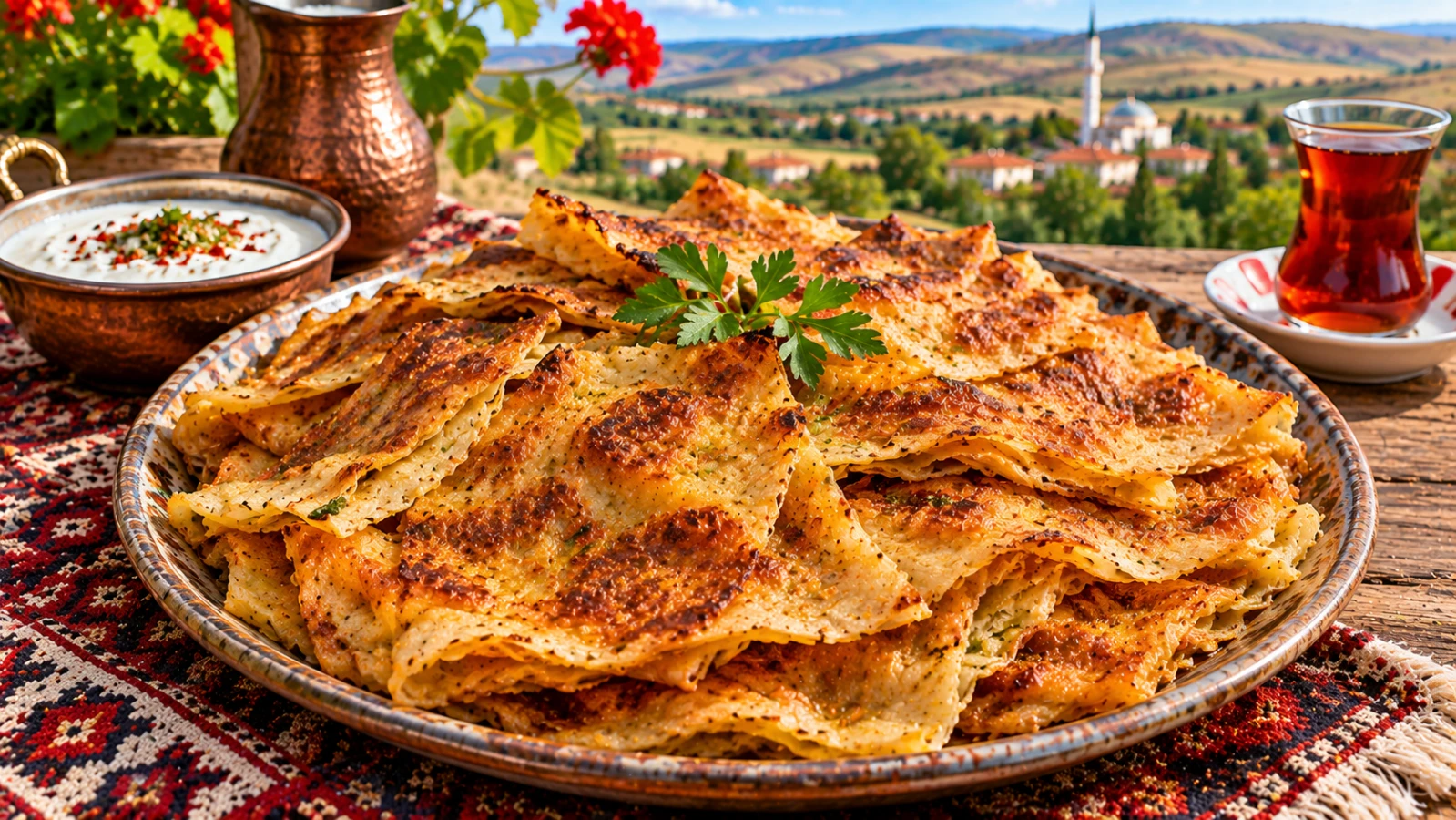
The Culture Portal documents Kırıkkale omaç as a frugal yufka-and-egg preparation rather than an elaborate stuffed pastry.
Regional Food & Traditions — one of Kırıkkale's distinct regional routes.
A rustic dish made with simple local ingredients
The historical or cultural evidence for Omaç – Kırıkkale Home Cooking should be read alongside its known regional setting rather than replacing it with a legend or unverified date.
Serve fresh and warm; if publishing a full recipe, distinguish the portal's version from possible household variations.
Only documented or explicitly qualified visiting information is included.
Regional Food & Traditions, Kırıkkale Province, Türkiye
Food and living traditions
Turkish Culture Portal – Omaç recipe
Serve fresh and warm; if publishing a full recipe, distinguish the portal's version from possible household variations.
The historic record for Omaç – Kırıkkale Home Cooking requires care in separating documented statements from later interpretation.
Its listed method melts butter, adds torn yufka and then an egg, stirs the mixture until cooked, and wraps the cooked filling in another yufka. This simple sequence makes the dish distinctive.
Kırıkkale food traditions draw on wheat, flatbreads, legumes, regional meat, dairy and seasonal produce. A protected geographical indication establishes a specific recipe or production standard, whereas a culinary tourism listing may only confirm that a dish is locally known.
The recipe illustrates how everyday bread, eggs and dairy could be assembled into a quick, sustaining meal without elaborate equipment.
Key local details, historical evidence and practical considerations.
The local name and its relationship with Regional Food & Traditions matter; use documented ingredients and serving context when available.
Its listed method melts butter, adds torn yufka and then an egg, stirs the mixture until cooked, and wraps the cooked filling in another yufka. This simple sequence makes the dish distinctive.
The recipe illustrates how everyday bread, eggs and dairy could be assembled into a quick, sustaining meal without elaborate equipment.
An official listing is not always a complete recipe. Compare the Omaç – Kırıkkale Home Cooking description with actual local preparation before publishing measurements or presenting one method as universal.
Look for local food producers and kitchens around Regional Food & Traditions, and ask about the actual preparation used.
Check the individual source links below, especially legal registration records where they exist. The difference between an application, a registered name and an ordinary dish is essential to accuracy.
The recipe illustrates how everyday bread, eggs and dairy could be assembled into a quick, sustaining meal without elaborate equipment.
This is also an opportunity to place Regional Food & Traditions within a regional travel itinerary without confusing an ancient site, sacred building, contemporary recreation facility or living food tradition with another type of experience.
The most reliable material for Omaç – Kırıkkale Home Cooking comes from the listed documentary sources and the actual features they describe.
Recognise the particular history of Regional Food & Traditions, not an interchangeable Anatolian landmark.
The recipe illustrates how everyday bread, eggs and dairy could be assembled into a quick, sustaining meal without elaborate equipment.
Serve fresh and warm; if publishing a full recipe, distinguish the portal's version from possible household variations.
Serve fresh and warm; if publishing a full recipe, distinguish the portal's version from possible household variations.
Serve fresh and warm; if publishing a full recipe, distinguish the portal's version from possible household variations.
Kırıkkale food traditions draw on wheat, flatbreads, legumes, regional meat, dairy and seasonal produce. A protected geographical indication establishes a specific recipe or production standard, whereas a culinary tourism listing may only confirm that a dish is locally known.
This location may be sacred, a home, active infrastructure, an archaeological area or a working landscape. Check who administers Omaç – Kırıkkale Home Cooking before treating it as an unrestricted visitor attraction.
Serve fresh and warm; if publishing a full recipe, distinguish the portal's version from possible household variations.
Ingredients can vary and allergens matter; seek the actual local preparation rather than assuming a generic national recipe.
Request permission before photographing kitchens, producers or markets.
For legally protected products, compare the menu or producer label with the official registry rather than relying on marketing language.
A food tradition makes most sense as part of everyday life, seasonal produce and local hospitality.
Readers interested in how Omaç – Kırıkkale Home Cooking connects to the larger story of Kırıkkale.
Travellers who want a grounded account of the Regional Food & Traditions region rather than a checklist of generic Turkish attractions.
Visitors interested in the ingredients, method and local serving customs that distinguish Omaç – Kırıkkale Home Cooking.
Serve fresh and warm; if publishing a full recipe, distinguish the portal's version from possible household variations.
The Culture Portal documents Kırıkkale omaç as a frugal yufka-and-egg preparation rather than an elaborate stuffed pastry.
Its listed method melts butter, adds torn yufka and then an egg, stirs the mixture until cooked, and wraps the cooked filling in another yufka. This simple sequence makes the dish distinctive.
The recipe illustrates how everyday bread, eggs and dairy could be assembled into a quick, sustaining meal without elaborate equipment.
Serve fresh and warm; if publishing a full recipe, distinguish the portal's version from possible household variations.
Only a formally registered geographical indication fixes a protected standard. For other foods, local kitchens may legitimately vary ingredients and methods; see the sources and evidence notes on this page.
The recipe illustrates how everyday bread, eggs and dairy could be assembled into a quick, sustaining meal without elaborate equipment.
Serve fresh and warm; if publishing a full recipe, distinguish the portal's version from possible household variations.
Topic-specific official or archival documentation was consulted, although uncertain details remain.
The research record for Omaç – Kırıkkale Home Cooking is anchored in the specific public sources linked here; where a publication gives no exact dates or visiting guarantees, none are added.