2,600 Years of Wheels, Anatolian Carriages, Traditional Workshops, Murat 124, Tofaş Classics, Silk Factory Heritage, Umur Bey Hamamı & Bursa Industrial Culture

Tofaş Museum of Cars & Anatolian Carriages Bursa – Complete Visitor Guide

Travel from an ancient Anatolian wheel to Türkiye's modern automotive era,
inside a restored Bursa silk factory filled with carts, carriages, workshops and landmark Tofaş vehicles.

Discover Tofaş Museum Bursa

Follow 2,600 Years of Anatolian Transport in One Remarkable Bursa Museum

Few museums in Bursa connect archaeology, traditional craftsmanship, industrial heritage and modern automotive history as naturally as the Tofaş Museum of Cars and Anatolian Carriages.

Known in Turkish as Tofaş Bursa Anadolu Arabaları Müzesi, the museum occupies a restored former silk factory in the historic Umurbey neighbourhood of Yıldırım.

Its story begins not with a modern automobile, but with a 2,600-year-old wheel. From that ancient starting point, the exhibition follows the changing ways people in Anatolia moved themselves, their goods and their communities.

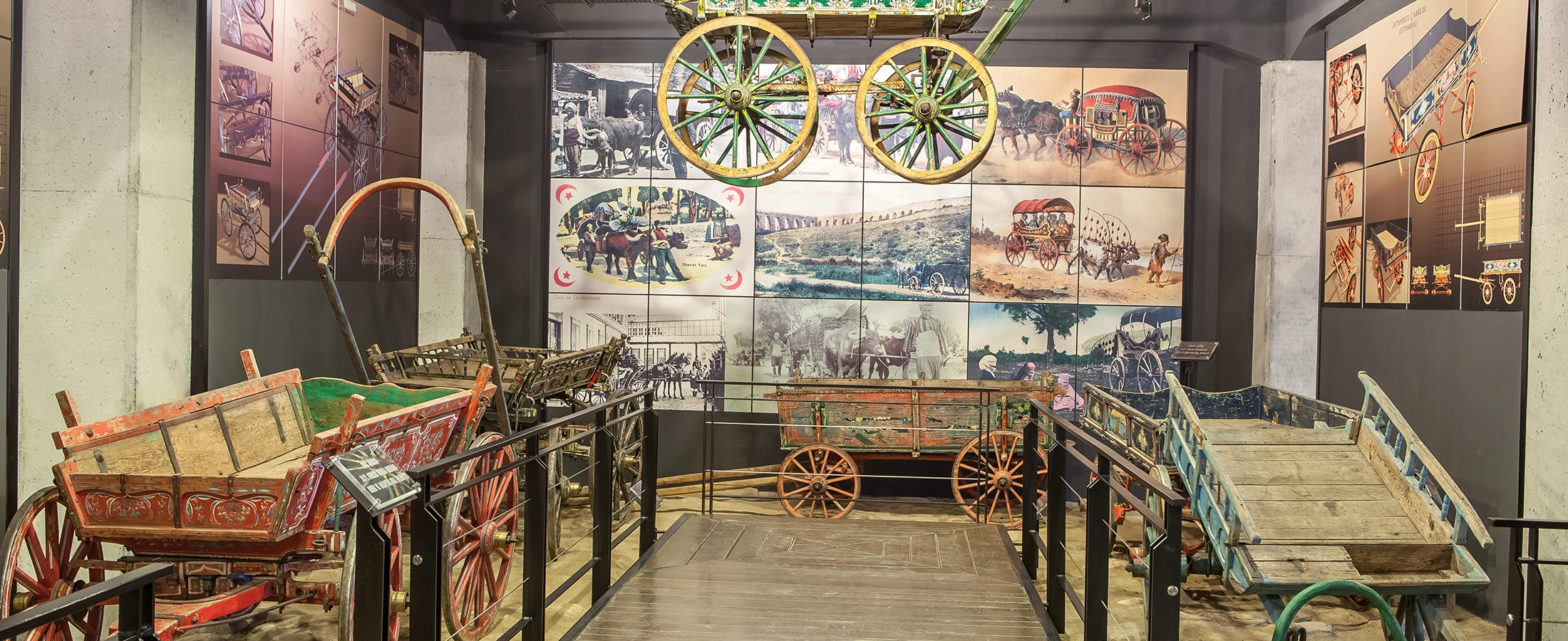
Traditional carts, horse-drawn vehicles, regional carriage types, wheels, craft workshops and original non-motorised vehicles gradually lead visitors toward the age of mechanised transport.

The final chapters bring the journey into modern Türkiye through vehicles produced by Tofaş in Bursa, including the Murat 124, Murat 131, Kartal, Tempra, Uno, Palio Go and competition vehicles connected with rally and Dakar projects.

The surrounding complex makes the experience even richer. The museum grounds include the restored 15th-century Umur Bey Hamamı, which functions as the Tofaş Art Gallery, a historic Turkish house, former silk-production buildings, monumental trees, landscaped gardens and Fayton Kafe.

For families, car enthusiasts, design lovers, travellers interested in Bursa's silk heritage and visitors who want to understand how everyday technology changes a society, this is one of the city's most rewarding museums.

2,600-Year-Old Wheel

Begin with one of the museum's most important symbols and trace the long technological story of wheeled transport in Anatolia.

34 Original Non-Motor Vehicles

See carefully selected carts and carriages once used in different regions and social settings across Anatolia.

Historic Tofaş Cars

Meet landmark vehicles from Bursa's automotive history, including a Murat 124 with chassis number 1 and milestone production cars.

Traditional Workshops

Understand the crafts behind wooden wheels, carts, metalwork and the specialist skills once required to keep Anatolia moving.

Restored Silk Factory

Explore a museum whose industrial building is itself part of Bursa's manufacturing and silk-production heritage.

Free Admission

The museum and Tofaş Art Gallery are currently listed by the museum as free to visit during regular opening hours.


Plan Your Visit

Tofaş Museum Bursa – Quick Facts

Essential information for visiting Bursa's museum of Anatolian wheeled transport, carriage craftsmanship and Turkish automotive history.

📍

Location

Umurbey Mahallesi, Kapıcı Caddesi No:9/1, Yıldırım, Bursa.

Open on Google Maps
🏭

Museum Building

A former Bursa silk factory restored and transformed into the museum complex.

📅

Opened

The museum officially opened to visitors on 8 June 2002.

🛞

Story Begins

With a wheel approximately 2,600 years old before continuing through carts, carriages and motor vehicles.

🚗

Motor Vehicles

The museum's official collection page currently lists 10 motor vehicles on display.

🛺

Non-Motor Vehicles

The museum states that 34 original non-motorised vehicles used in Anatolia are displayed.

🕙

Regular Hours

Tuesday–Sunday, 10:00–18:00; closed Monday under the museum's current regular schedule.

🎟️

Admission

Current museum information states that admission to the museum and art gallery is free.

⏱️

Recommended Visit

Allow around 1.5–2.5 hours for the museum, gardens and art-gallery complex.


Much More Than a Car Museum

Why Visit Tofaş Museum of Cars & Anatolian Carriages?

The museum turns the history of transportation into a story about technology, labour, geography, trade, design and everyday life.

A conventional automobile museum might begin with engines, brands and model years.

The Tofaş Museum begins much earlier: with the simple but revolutionary idea of the wheel.

That choice changes the entire experience. Visitors can see modern automobiles not as isolated machines, but as the latest stage in a very long human effort to move farther, carry more, reduce effort and connect communities.

The museum is also strongly rooted in Anatolia. Its non-motorised vehicles demonstrate how transport adapted to terrain, agriculture, commerce, local materials, animals and regional craftsmanship.

By the time you reach the Tofaş vehicles, the exhibition has already prepared you to notice continuity: wheels, axles, load carrying, suspension, steering, body design and the relationship between maker and user.

The historic setting deepens the story further. A former silk-production site has been given a new life as a museum about another major chapter in Bursa's manufacturing identity: automotive production.

What to See

Top Highlights of Tofaş Museum Bursa

The museum moves from ancient wheels and handmade vehicles to the industrial era and milestone automobiles produced in Bursa.

The 2,600-Year-Old Wheel

The museum's chronological story begins with an ancient wheel that symbolises the earliest stage of its long journey through Anatolian mobility.

  • Age: Approximately 2,600 years
  • Theme: Origins of wheeled transport
  • Importance: Starting point of the exhibition narrative

Original Anatolian Carts & Carriages

The official collection includes 34 original non-motorised vehicles chosen to demonstrate different regional forms and uses.

  • Collection: 34 vehicles
  • Use: Travel, agriculture & carrying goods
  • Variation: Region, user & function

Traditional Carriage Workshops

Recreated workshop environments reveal the specialists and hand skills required to build and maintain carts before industrial vehicle production.

  • Materials: Wood, iron & leather
  • Skills: Wheel making & body construction
  • Focus: Craft before assembly lines

Murat 124 – Chassis No. 1

A Murat 124 produced by Tofaş in 1971 and identified by the museum with chassis number 1 is one of the collection's most significant modern vehicles.

  • Year: 1971
  • Model: Murat 124
  • Detail: Chassis No. 1

One-Millionth Tofaş

A 1994 Tempra represents a major industrial milestone: the one-millionth vehicle produced by Tofaş.

  • Model: Tempra
  • Year: 1994
  • Milestone: 1,000,000th vehicle

Two-Millionth Tofaş

The collection also includes the 2004 Palio Go identified as Tofaş's two-millionth vehicle.

  • Model: Palio Go
  • Year: 2004
  • Milestone: 2,000,000th vehicle

Rally & Dakar Vehicles

Competition vehicles reveal another side of engineering, where weight, power, endurance and performance matter more than ordinary road comfort.

  • Rally: Fiat Palio competition car
  • Dakar: Tofaş-developed 4x4 project
  • Theme: Motorsport engineering

Umur Bey Hamamı & Art Gallery

The restored 15th-century bath within the complex adds Ottoman architecture and changing temporary exhibitions to the museum experience.

  • Date: 1430
  • Restored: 2008
  • Today: Tofaş Art Gallery

What Is the Tofaş Museum of Cars & Anatolian Carriages?

The museum is a private cultural institution created by Tofaş to preserve and interpret the heritage of wheeled transport in Anatolia.

Its Turkish name, Tofaş Bursa Anadolu Arabaları Müzesi, is sometimes translated in different ways because the Turkish word araba can describe more than the modern automobile.

That wider meaning is essential to understanding the collection. The museum is not only about cars; it includes wheels, carts, carriages, traditional workshops, non-motorised transport and motor vehicles.

The museum therefore connects ancient and traditional technologies with the automotive industry that became one of modern Bursa's defining manufacturing sectors.

Transport History

A chronological journey through changing methods of land transportation in Anatolia.

Craft History

Traditional vehicle construction shows the importance of specialised artisans before factory production.

Industrial History

Tofaş vehicles introduce Bursa's twentieth- and twenty-first-century automotive manufacturing story.

Social History

Vehicles reveal how people travelled, traded, farmed and organised everyday life.

Design History

Changing forms demonstrate how function, materials and technology influence vehicle design.

Bursa Heritage

The restored silk-factory setting links older Bursa production culture with modern industry.

The History of Tofaş Museum Bursa

The museum occupies a former silk-production complex in Umurbey, one of Bursa's historic neighbourhoods on the eastern side of the city centre.

Bursa had been famous for silk for centuries, and the industrial buildings associated with cocoon processing and weaving formed an important part of the city's economic landscape.

The disused silk factory was restored between 1998 and 2002 as the central museum building.

The Tofaş Museum of Cars and Anatolian Carriages officially opened to visitors on 8 June 2002.

Rather than erasing the industrial character of the site, the adaptation allows brickwork, large interiors and factory-scale spaces to become part of the exhibition atmosphere.

Additional historic structures in the surrounding complex were later restored, including the Umur Bey Hamamı and a traditional Turkish house, expanding the site from a single museum into a broader cultural campus.

Before Restoration The main building had served as a silk-production facility in Bursa's historic Umurbey area
1998 Restoration and museum-complex development begin
8 June 2002 Tofaş Museum of Cars and Anatolian Carriages opens to visitors
2008 Restoration of Umur Bey Hamamı and the historic Turkish house is completed
Today The complex combines transport history, art exhibitions, gardens, education, events and industrial heritage

The 2,600-Year-Old Wheel

The museum's most powerful curatorial decision is to begin its story approximately 2,600 years before the modern automobile.

The ancient wheel establishes the key idea that every later object in the museum belongs to the same fundamental technological problem: how can humans move people and loads more efficiently across land?

Once that question is in mind, the differences between an ancient wheel, a wooden cart, a horse-drawn carriage and a modern automobile become stages in a continuous history rather than unrelated objects.

The wheel also reminds visitors that transportation technology is never only mechanical. It changes trade, settlement, warfare, agriculture, communication and the scale of everyday movement.

Rotation

The wheel reduces the friction involved in dragging a load and transforms how weight can be moved.

Axle

The relationship between wheel and axle is one of the fundamental mechanical ideas behind land vehicles.

Materials

Early wheels depended on available timber, joining methods and the skills of specialist craftsmen.

Roads

Vehicle design and road conditions evolved together; one continually influenced the other.

Loads

Wheeled transport allowed larger quantities of agricultural produce, goods and materials to travel overland.

Continuity

Every motor vehicle later in the museum still depends on the wheel's basic mechanical principle.

Original Anatolian Carts & Non-Motorised Vehicles

The museum's official collection information states that 34 original non-motorised vehicles used in Anatolia are displayed.

Their forms differ according to region, terrain, load, owner and purpose.

A vehicle intended for agricultural work did not need the same body, comfort or decorative treatment as a carriage associated with urban passenger travel.

Studying these vehicles closely reveals a highly practical design culture. Every element — wheel diameter, body height, axle, wood selection, metal reinforcement and harness arrangement — answered a specific need.

The collection is particularly valuable because original working vehicles preserve evidence of use that drawings and photographs cannot fully communicate.

Agricultural Carts

Built for carrying crops, tools and heavy loads through rural landscapes.

Passenger Carriages

Designed with greater attention to seating, balance, appearance and travel comfort.

Regional Forms

Local terrain and available materials encouraged different vehicle solutions across Anatolia.

Animal Power

Harness systems reveal how horses, oxen and other animals were integrated into transport technology.

Repair Culture

Traditional vehicles were repeatedly repaired, adapted and kept in service by local craftspeople.

Original Surfaces

Wear, paint, wood grain and metalwork help communicate the working lives of the vehicles.

Traditional Carriage-Making Workshops

Before the assembly line, a vehicle was the combined product of several specialised crafts.

The museum's traditional workshop displays help visitors understand that a cart or carriage depended upon people who knew how to work wood, metal, leather, paint and mechanical joints.

The wheel alone required careful knowledge. It had to be strong enough to carry weight, regular enough to rotate smoothly and repairable with the tools available locally.

Metal fittings strengthened high-stress areas, while body makers balanced weight against durability. Harness makers connected animal power to the vehicle, and decorative painters could transform a practical object into a display of local identity.

Seen beside modern Tofaş vehicles, these workshops create one of the museum's best contrasts: individual craft production versus industrial mass manufacturing.

Wheelwright

Specialist knowledge was needed to build strong, balanced wheels that could survive rough roads.

Woodworker

Frames, bodies and structural parts depended on careful timber selection and joinery.

Blacksmith

Iron bands, fittings, fasteners and structural reinforcements increased strength and durability.

Harness Maker

Leather equipment transferred animal power safely and efficiently to the vehicle.

Painter

Colour and ornament could communicate region, ownership and aesthetic tradition.

Repairer

Traditional transport depended on constant maintenance rather than disposable replacement.

Historic Tofaş Motor Vehicles

The motor-vehicle gallery brings the chronological journey into the age of engines, industrial production and modern road transport.

The museum's official collection page currently identifies 10 motor vehicles that represent milestones in Tofaş and Turkish automotive history.

These are not simply examples of old cars. Several were selected because they mark firsts, lasts, production milestones or special engineering projects.

Together they show how the Bursa factory moved from licensed production for the domestic market toward engineering, large-scale export, global vehicle programmes and motorsport projects.

1971 Murat 124 Vehicle identified by the museum as chassis number 1
Murat 131 An early landmark model in the growth of Tofaş production
1983 Kartal Estate-body member of the 131 family that became deeply familiar on Turkish roads
1994 Tempra The one-millionth vehicle produced by Tofaş
1999 Tipo A final-production example preserved as a marker of the model's manufacturing history
2000 Uno A final-production example representing the close of another production chapter
2004 Palio Go The two-millionth vehicle produced by Tofaş

Murat 124 – Chassis Number 1

One of the museum's most important modern exhibits is the Murat 124 produced by Tofaş in 1971 with chassis number 1.

Tofaş's Bursa factory opened in 1971, and the Murat 124 became the company's first production model.

Its presence in the museum creates a direct link between the preserved industrial heritage of the site and the rise of another major Bursa industry.

For many visitors from Türkiye, the Murat 124 is not an abstract design object. Cars of this generation form part of family memory, road-trip stories, city streets and the visual language of the country's twentieth century.

Look beyond the nostalgia and notice the engineering simplicity, proportions, interior scale, materials and controls that distinguish it from today's vehicles.

Production Era

The Murat 124 belongs to the opening chapter of mass automobile production at Tofaş's Bursa factory.

Chassis No. 1

The museum identifies the displayed 1971 vehicle with the first chassis number.

Compact Design

Its dimensions and mechanical layout reflect the practical family-car priorities of its period.

Chrome Details

Trim, bumpers and bright metalwork immediately distinguish its styling from later generations.

Analogue Cabin

Simple instruments and controls demonstrate how dramatically the driver-machine relationship has changed.

Industrial Memory

The car represents both an object and the beginning of a large manufacturing workforce in Bursa.

Murat 131, Kartal & the Tofaş Classic-Car Era

The museum's later vehicles trace the expansion of Tofaş from its early production years into models that became familiar across Türkiye.

The Murat 131 and the related sedan and estate-car families are especially important because they occupied Turkish roads for decades.

The museum's collection includes a 1983 Murat 131 Kartal, allowing visitors to examine the practical estate-body format that made the model useful for families, tradespeople and long-distance travel.

This generation is important culturally as well as mechanically. Automobiles were becoming increasingly integrated into ordinary life, changing weekend travel, holiday patterns, commuting and the relationship between city and countryside.

For international visitors, these cars provide a useful visual introduction to vehicles that were once as familiar in Türkiye as better-known national models were in other countries.

Murat 131

A defining model family in the expansion of Tofaş production during the late twentieth century.

Kartal

The estate format prioritised luggage capacity and practical everyday use.

Family Mobility

Cars increasingly changed how households planned journeys, holidays and intercity travel.

Commercial Use

Durable, practical vehicles also became part of business and working life.

Road Culture

These models became inseparable from the visual memory of Turkish streets and highways.

Design Evolution

Compare body shape, lighting, glazing and interiors with both the Murat 124 and later Tempra-era cars.

The One-Millionth & Two-Millionth Tofaş Vehicles

Industrial milestones can be difficult to visualise. A number such as one million or two million vehicles sounds impressive, but a museum object turns the statistic into something physical.

The collection includes the 1994 Tempra identified as Tofaş's one-millionth vehicle.

A decade later, the 2004 Palio Go marked the company's two-millionth vehicle.

Displayed in the same museum, these milestone cars help visitors understand how rapidly the scale of production expanded.

They also allow comparison between two different automotive generations: changes in styling, interior design, body engineering, safety expectations and manufacturing technology become immediately visible.

1,000,000

The 1994 Tempra represents the first million vehicles produced by Tofaş.

2,000,000

The 2004 Palio Go represents the next major production milestone.

Ten-Year Gap

Seeing the two cars together communicates both industrial growth and fast-changing design expectations.

Factory Scale

Milestone vehicles represent the labour, suppliers, logistics and engineering behind mass production.

Changing Market

The cars belong to very different moments in Türkiye's economic and consumer history.

Preserved Evidence

Keeping the actual milestone vehicles gives industrial history a tangible human scale.

Rally, Dakar & Special Tofaş Vehicles

The museum's motor-vehicle collection is not limited to ordinary passenger cars.

A Fiat Palio rally car used by Fiat Motorsport in national and international competition demonstrates how a production platform can be transformed for speed, control and competition.

The museum also preserves a 4x4 vehicle developed as a Tofaş-specific project for the 2002 Dakar Rally.

According to the museum's collection information, the Dakar vehicle was equipped with approximately 300 hp, a 3-litre engine and a 450-litre fuel tank.

These vehicles are useful because they shift attention from styling toward engineering questions: How do you manage heat? How much fuel is needed? How does suspension change? What must be strengthened? What can be removed to save weight?

Rally Palio

A competition-prepared car associated with Fiat Motorsport's domestic and international rally activities.

Dakar 4x4

A Tofaş-specific off-road project developed for one of the world's toughest endurance rallies.

Power

Competition vehicles prioritise performance and durability far beyond normal road-driving requirements.

Fuel Capacity

Long-distance desert competition demands dramatically different fuel planning from passenger cars.

Suspension

Rough terrain requires greater travel, strength and impact resistance.

Engineering Laboratory

Motorsport can test ideas, materials and systems under extreme conditions.

Tofaş & the Rise of Modern Automotive Manufacturing in Bursa

The museum's modern collection is inseparable from the history of Tofaş Türk Otomobil Fabrikası.

Tofaş was established in 1968, and construction of its Bursa factory began the following year.

The factory opened in 1971 and began producing the Murat 124, marking the beginning of a manufacturing story that would become deeply connected with Bursa's economy, workforce and industrial identity.

Later decades brought models including the Murat 131, Şahin, Kartal, Doğan, Tempra, Uno, Palio, Albea and Doblò, while the company increasingly participated in export markets, engineering and global vehicle programmes.

Inside the museum, that corporate chronology becomes easier to understand because the visitor can stand directly in front of representative cars rather than reading only dates on a timeline.

1968 Tofaş is established
1969 Construction of the Bursa factory begins
1971 The Bursa factory opens and Murat 124 production begins
1970s–1980s Murat 131, Şahin, Kartal and Doğan expand the model range
1990s Tempra, Uno and other models reflect changing markets, technology and export ambitions
2000s Doblò, Palio-era projects and global manufacturing programmes mark a new phase

From Bursa Silk Factory to Transport Museum

Do not treat the museum building as a neutral shell. It is one of the reasons the site works so well.

Bursa's historic economy was closely tied to silk, cocoons, textile production and international trade.

The old factory therefore represents an earlier industrial chapter of the city, while the Tofaş vehicles represent a later one.

In a single visit, the site creates an unusual sequence: traditional transport, silk-era industry and modern automotive production.

The restoration preserves the large-scale spatial character needed for displaying vehicles while allowing the original industrial atmosphere to remain legible.

Industrial Volume

Large interiors originally suited to production now provide generous space for full-size vehicles.

Brick Fabric

Historic masonry adds texture and preserves the visual identity of the former factory.

Silk Heritage

The building recalls the manufacturing culture that made Bursa internationally famous long before automobiles.

Adaptive Reuse

Instead of demolition, a redundant industrial structure gained a new educational and cultural purpose.

Layered History

The museum lets different phases of Bursa's economic history occupy the same physical site.

Atmosphere

Historic industrial architecture makes the vehicle collection feel rooted in place rather than generic.

Umur Bey Hamamı & Tofaş Art Gallery

One of the most surprising parts of the complex is the historic Umur Bey Hamamı.

The museum identifies the bath as a structure built in 1430 by Umur Bey. It remained in use into the early twentieth century.

Tofaş restored the building in 2008, and it now forms part of the museum complex as the Tofaş Art Gallery.

This creates a striking architectural contrast. Within a short walk, visitors move from a modernised former silk factory to the spatial language of an Ottoman bath.

Temporary exhibitions change over time, so the art gallery can offer something different even for repeat visitors.

Built

1430, according to the museum's official site information.

Patron

Umur Bey, whose name remains attached to the historic bath and surrounding neighbourhood.

Original Function

An Ottoman bath serving the local community.

Restored

2008 by Tofaş as part of the wider cultural complex.

Current Use

Art gallery and cultural-event space.

Check Current Exhibition

Temporary displays can change, so verify what is showing before your visit if the gallery is a priority.

Historic Buildings Around the Museum Complex

The wider Tofaş museum grounds preserve several structures connected with different phases of Umurbey's architectural and industrial history.

Alongside the main silk-factory building and Umur Bey Hamamı, the official site identifies a 17th-century-style traditional Turkish house that was restored in 2008 and adapted for museum administration.

The complex also includes former kozaklık spaces associated with silk-cocoon production, including a nineteenth-century French stone structure and an early twentieth-century Ottoman cocoonery.

These buildings are important because they show that the museum did not arrive in an empty landscape. It occupies a layered historical site shaped by Ottoman architecture, Bursa's silk economy and later industrial change.

Main Museum

The restored former silk factory containing the primary transport exhibition.

Umur Bey Hamamı

A 1430 Ottoman bath restored as the Tofaş Art Gallery.

Old Turkish House

A two-storey historic building restored and adapted for administrative use.

French Stone Kozaklık

A nineteenth-century silk-cocoon structure used today for cultural and event functions.

Ottoman Kozaklık

An early twentieth-century building associated with the former silk-production complex.

Adaptive Heritage Campus

Together the structures turn the museum grounds into an architectural history lesson as well as a vehicle museum.

Umurbey Bilgi Parkı & the Museum Gardens

One of the museum's greatest advantages is the amount of green space surrounding the galleries.

Tofaş describes the gardens as containing more than 50 different plant species, and the wider Umurbey Bilgi Parkı has the atmosphere of a small botanical garden.

Official site information also highlights mature trees, including an old black mulberry, a centuries-old Oriental plane and several monumental trees.

The gardens provide a useful contrast with the mechanical objects inside. After studying vehicles, visitors can slow down, walk beneath trees and appreciate the historic buildings from outside.

The landscaped grounds also host cultural activities and events during the year.

50+ Plant Species

The museum describes a varied planted landscape rather than a simple paved courtyard.

Monumental Trees

Mature trees give the site shade, scale and a strong sense of continuity.

Walking Paths

Short routes through the park make it easy to extend the museum visit outdoors.

Historic Views

The gardens help visitors appreciate the relationships among factory, bath, house and cocoonery buildings.

Family Break

Outdoor space is particularly useful for families after a long indoor museum visit.

Cultural Events

The grounds are periodically used for concerts, exhibitions and other arts programming.

Fayton Kafe

The museum complex includes Fayton Kafe, a convenient place to stop before or after exploring the galleries.

Its location inside the landscaped museum grounds makes it more than a practical coffee break. It extends the atmosphere of the site and allows visitors to spend time in Umurbey without immediately returning to the city centre.

The café itself also displays material connected with Bursa and carriage culture, including decorative objects, model vehicles and transport-related imagery.

Opening times for the café can differ from museum hours and can change seasonally, so check the current museum website if the café is an important part of your plan.

Inside the Complex

No additional journey is required; the café is part of the museum and park experience.

Garden Setting

The surrounding greenery makes it a pleasant pause after the galleries.

Transport Theme

Decorative collections continue the museum's carriage and automotive atmosphere.

Good for Families

A café break can make a longer museum visit easier with children.

Seasonal Hours

Check current opening times separately from the museum schedule.

End of Visit

It works especially well after exploring the gardens and Art Gallery.

Tofaş Museum Audio Guide

The museum offers a free audio-guide application that visitors can download to a smartphone.

According to the current museum visitor information, the app includes long and short adult tour options as well as a tour prepared specifically for children.

This is particularly useful for international visitors who want a more structured narrative rather than simply moving from object to object.

Downloading the application before arrival can save time, and bringing headphones is useful if you plan to use it extensively.

Free App

The museum currently promotes its audio guide as a free digital visitor resource.

Short Tour

A faster route suits visitors fitting the museum into a busy Bursa itinerary.

Detailed Tour

A longer option provides more context for visitors interested in transport and industrial history.

Children's Tour

A separate version is designed to make the story more engaging for younger visitors.

Bring Headphones

Personal headphones make listening more comfortable and considerate inside galleries.

Download Early

Installing the app before arrival avoids relying on museum connectivity.

Visiting Tofaş Museum with Children

The museum works unusually well for families because the objects are large, recognisable and easy to compare.

Even young children can understand a simple visual sequence: old wheel → cart → carriage → automobile → racing vehicle.

The museum also runs educational activities. Current official information describes a traffic-training area for children aged 5–6, where young participants can learn basic road rules while using small battery-powered Fiat vehicles.

Other workshops and children's programmes can be offered according to the museum calendar. Advance reservation may be required for organised activities.

The children's version of the museum audio guide adds another useful option for families who want a self-guided visit.

Big Objects

Full-size carts and automobiles are easier for children to engage with than small display-case collections.

Clear Timeline

The progression from ancient wheel to modern car is simple to understand visually.

Traffic Education

A dedicated programme introduces basic rules and road signs to young children.

Children's Audio Tour

The museum app provides a route designed specifically for younger visitors.

Garden Break

Outdoor green space helps families alternate concentrated museum time with movement and rest.

Reserve Activities

Contact the museum in advance if a workshop or traffic-training session is important to your visit.

How to Read the Museum Like a Design Story

The best way to enjoy the museum is to keep comparing objects across time.

Ask the same questions of an ancient wheel, a wooden cart and a modern car: What carries the load? How does it turn? How is it stopped? What absorbs shock? Who made it? What material fails first?

The answers change dramatically, but the underlying transportation problems remain surprisingly consistent.

This approach turns the museum from a collection of old objects into a lesson in engineering evolution.

Compare Wheels

Move mentally from solid or wooden wheel forms toward pneumatic tyres and modern automotive wheels.

Compare Steering

Notice how direction is controlled in animal-drawn vehicles versus motor cars.

Compare Suspension

Comfort and control improve as springs, chassis engineering and modern systems develop.

Compare Materials

Wood and iron gradually give way to pressed steel, glass, plastics and engineered components.

Compare Production

Handmade one-off construction evolves toward repeatable factory processes and large supply chains.

Compare Users

Different vehicles reveal who travelled, what they carried and what society expected from transportation.

Tofaş Museum Bursa Opening Hours & Visitor Information

Current Regular Opening 10:00
Current Regular Closing 18:00
Open Days Tuesday – Sunday
Closed Monday under the current regular schedule
Regular Holiday Policy The museum's visitor page states that it is open during official and religious holidays within regular hours, except Mondays; special announcements can still alter arrangements
Admission Free for the museum and Tofaş Art Gallery according to current official visitor information
Address Umurbey Mahallesi, Kapıcı Caddesi No:9/1, 16360 Yıldırım / Bursa
Museum Telephone +90 224 329 39 41
Group Visits Advance notice and appointment are requested for groups
Parking Free on-site visitor parking; the museum's English visitor page currently describes capacity for 25 vehicles
Audio Guide Free museum application with short, detailed and children's tour options

Important: Opening hours, holiday arrangements, exhibitions, educational activities, café hours and group-visit procedures can change. Check the museum's official website shortly before travelling, especially on public holidays or if a workshop is essential to your visit.

How to Get to Tofaş Museum Bursa

The museum is located in Umurbey Mahallesi in Yıldırım, close to the eastern side of Bursa's historic centre.

For visitors exploring the Yeşil and Setbaşı area, the museum can be reached on foot, but the final approach involves an uphill walk.

The museum's current transport information states that it is approximately five minutes on foot from Setbaşı, with the climb worth remembering in hot weather or for travellers with reduced mobility.

Official visitor information also lists several city-bus routes and Mollaarap minibuses serving the Setbaşı area. Because urban transport routes can change, verify the current BURULAŞ journey shortly before departure.

Taxi

Ask for “Tofaş Anadolu Arabaları Müzesi, Umurbey.” This avoids the uphill walk from Setbaşı.

From Setbaşı

The museum describes the walk as roughly five minutes, but remember that the route climbs uphill.

City Bus

Current museum information lists routes including 3İ, 4A, 38D, 94, 3C, 4B, E12 and 37; verify before travel.

Minibus

Mollaarap minibuses serving Setbaşı are another public-transport option mentioned by the museum.

Private Vehicle

Free visitor parking is available inside the museum complex.

Private Bursa Tour

A private itinerary can combine Umurbey, Yeşil and central Bursa without repeatedly changing transport.

Parking, Walking & Accessibility Considerations

Visitors arriving by car can use the museum complex's free parking area. The museum's current English visitor page describes capacity for approximately 25 vehicles.

Travellers arriving from Setbaşı should be prepared for a short but noticeable uphill walk.

The museum's historic and industrial campus includes several different buildings and outdoor areas, so visitors with mobility requirements should contact the museum directly before travelling if step-free access, accessible toilets or specific assistance is essential.

Because the collection includes large vehicles and broad industrial spaces, much of the museum experience is visually accessible even without reading every label, but personal access needs can differ substantially.

Free Parking

On-site visitor parking makes the museum relatively convenient for private vehicles.

Limited Capacity

Arrive earlier on busy weekends or event days if parking is important.

Uphill Approach

The walk from Setbaşı is short but steep enough to matter for some visitors.

Multiple Buildings

The museum, art gallery, café and historic structures are distributed across a landscaped complex.

Contact Ahead

Ask the museum about the current accessible route if mobility assistance is required.

Taxi Alternative

A taxi to the museum entrance can eliminate the uphill walk from lower Setbaşı.

Best Time to Visit Tofaş Museum Bursa

The museum can be visited throughout the year because its principal vehicle collection is indoors.

Season matters more if you want to enjoy the gardens, historic exterior spaces and Fayton Kafe as part of the experience.

Spring and autumn are particularly pleasant for walking through Umurbey, while hot summer afternoons make the uphill approach from Setbaşı more demanding.

Weekday mornings are a good choice for travellers who want calmer galleries. Weekends can be livelier, especially when family activities or cultural events are scheduled.

Because admission is free, the museum is also an excellent flexible choice for a rainy Bursa day.

Weekday Morning

Best for quieter galleries and slow photography of vehicle details where permitted.

Spring

Excellent for combining indoor galleries with the landscaped museum grounds.

Autumn

Comfortable temperatures make walking through Umurbey and nearby historic districts easier.

Summer

Visit earlier in the day if walking uphill from Setbaşı.

Rainy Day

The large indoor collection makes the museum one of Bursa's strongest weather-proof cultural options.

Event Day

Check the official programme if you want temporary exhibitions or educational activities as part of the visit.

What to See Near Tofaş Museum Bursa

The museum's Umurbey location is extremely useful because it sits close to several important cultural areas on the eastern side of historic Bursa.

The most natural combination is with the Yeşil district, where early Ottoman architecture, museum collections and hillside streets create a very different atmosphere from the industrial heritage of Tofaş Museum.

The Bursa Turkish & Islamic Arts Museum is especially complementary because it introduces Ottoman decorative arts and material culture inside the historic Yeşil Madrasa.

Travellers interested in the transition from the Byzantine city to Ottoman Bursa can also continue toward the Panorama 1326 Bursa Conquest Museum.

Setbaşı

A lively historic approach area connecting the lower city with Umurbey and Yeşil.

Yeşil District

One of Bursa's most important early Ottoman neighbourhoods, known for monumental architecture and hillside views.

Bursa Turkish & Islamic Arts Museum

Ottoman and Islamic art collections displayed inside the historic Yeşil Madrasa.

Irgandı Bridge Area

A distinctive bridge-and-craft landscape near Setbaşı that can fit naturally into a walking route.

Panorama 1326

A modern museum interpreting the Ottoman conquest and transformation of Bursa.

Central Bursa

Continue west for Ulu Cami, Koza Han and the historic bazaar district.

Suggested Tofaş Museum & Yeşil Route

Tofaş Museum works especially well at the beginning of a half-day route through eastern Bursa.

The sequence below moves from industrial and transport heritage into early Ottoman art and urban history without requiring long cross-city transfers.

1 Tofaş Museum of Cars & Anatolian Carriages – Follow 2,600 years of wheels, carts, craftsmanship and automotive history
2 Tofaş Art Gallery & Umur Bey Hamamı – Add a restored 1430 Ottoman bath and current exhibition
3 Setbaşı & Irgandı Area – Walk downhill through one of eastern Bursa's most atmospheric urban connections
4 Bursa Turkish & Islamic Arts Museum – Explore Ottoman art and cultural history inside Yeşil Madrasa
5 Panorama 1326 Bursa Conquest Museum – End with the story of the city's Ottoman conquest and transformation

If you have a full day, continue into central Bursa for Ulu Cami, Koza Han, the covered bazaars and the city's major Ottoman landmarks.

Tofaş Museum Bursa Visitor Tips

Start with the Oldest Object

Do not rush straight to the classic cars; the ancient wheel makes the later exhibition far more meaningful.

Compare, Don't Just Photograph

Look for changes in wheel design, body structure, steering, suspension, materials and passenger comfort.

Use the Audio Guide

The free app can turn a casual visit into a structured historical journey.

Bring Headphones

They are useful if you plan to follow the audio guide in detail.

Do Not Skip the Workshops

The traditional craft displays explain how much specialist knowledge existed before factory production.

Find Chassis No. 1

The 1971 Murat 124 is one of the collection's essential industrial-history objects.

See the Milestone Cars

Compare the one-millionth Tempra with the two-millionth Palio Go.

Add the Art Gallery

Umur Bey Hamamı is part of the complex and adds an entirely different historical layer.

Walk the Gardens

The museum grounds are part of the experience, not merely a route between buildings.

Remember the Hill

If arriving on foot from Setbaşı, expect a short uphill climb.

Group? Reserve Ahead

The museum asks group visitors to provide advance notice and make an appointment.

Check Holiday Notices

Regular information lists holiday opening, but special closure announcements can still override the normal schedule.

Frequently Asked Questions About Tofaş Museum Bursa

What is the Tofaş Museum of Cars and Anatolian Carriages?

It is a private Bursa museum devoted to the history of wheeled transport in Anatolia, traditional carts and carriages, vehicle craftsmanship and the development of Tofaş motor vehicles.

What is the museum called in Turkish?

Its Turkish name is Tofaş Bursa Anadolu Arabaları Müzesi.

Where is Tofaş Museum Bursa?

The museum is at Umurbey Mahallesi, Kapıcı Caddesi No:9/1, Yıldırım, Bursa, a short uphill walk from the Setbaşı area.

When did Tofaş Museum open?

The restored museum officially opened to visitors on 8 June 2002.

What was the museum building originally?

The principal museum building is a former silk factory that was restored between 1998 and 2002.

Is Tofaş Museum only about cars?

No. The museum begins with a 2,600-year-old wheel and includes non-motorised carts, carriages, traditional workshops and the evolution of wheeled transport before reaching modern automobiles.

How many non-motorised vehicles are displayed?

The museum's official collection information currently states that 34 original non-motorised vehicles used in Anatolia are displayed.

How many motor vehicles are displayed?

The museum's official motor-vehicle page currently lists 10 motor vehicles.

Can I see the first Murat 124?

The museum displays a 1971 Murat 124 identified with chassis number 1, one of the collection's most important objects from Tofaş's early production history.

What is the one-millionth Tofaş vehicle?

The museum identifies a 1994 Tempra as the one-millionth vehicle produced by Tofaş.

What is the two-millionth Tofaş vehicle?

The collection includes the 2004 Palio Go identified as the company's two-millionth vehicle.

Does the museum have racing cars?

Yes. The motor-vehicle collection includes a Fiat Palio rally car and a special Tofaş 4x4 project developed for the 2002 Dakar Rally.

What are Tofaş Museum opening hours?

Current official visitor information lists 10:00–18:00, Tuesday through Sunday, with Monday closed under the regular schedule.

Is Tofaş Museum free?

Yes. The museum currently states that both the Museum of Cars and Anatolian Carriages and Tofaş Art Gallery can be visited free of charge.

Is the museum open on public and religious holidays?

The current official visitor page states that the museum is open during official and religious holidays within its regular schedule except Mondays. Special announcements can still alter individual holiday arrangements, so verify shortly before visiting.

How long should I spend at Tofaş Museum?

Allow approximately 1.5–2.5 hours for a comfortable visit including the main museum, Art Gallery, gardens and a short break.

Is Tofaş Museum good for children?

Yes. Large vehicles, a clear historical sequence, a children's audio tour, gardens and educational activities make it one of Bursa's stronger family museums.

Does the museum have an audio guide?

Yes. The museum promotes a free smartphone audio-guide application with short and detailed adult tours and a children's tour.

Is there parking at Tofaş Museum?

Yes. Visitors can use the museum complex's free parking area. Current English visitor information describes capacity for 25 vehicles.

What is Umur Bey Hamamı?

It is a historic Ottoman bath built in 1430, restored by Tofaş in 2008 and now used as the Tofaş Art Gallery.

Is there a café?

Yes. Fayton Kafe is located within the museum and Umurbey Bilgi Park complex. Check current café hours separately because they can differ from museum hours.

Is Tofaş Museum worth visiting?

Yes, especially for travellers interested in cars, industrial history, traditional craftsmanship, Bursa silk heritage, design, family-friendly museums and the social history of transportation.

Details Not to Miss at Tofaş Museum Bursa

Ancient Wheel Construction

Begin by studying material, thickness and the mechanical simplicity of the museum's earliest transport technology.

Wooden Wheel Joints

Traditional wheels reveal how multiple pieces could be assembled into a strong rotating structure.

Iron Reinforcement

Look for metal bands and fittings protecting high-wear parts of historic carts.

Carriage Suspension

Compare passenger-comfort solutions before pneumatic tyres and modern shock absorbers.

Regional Decoration

Paint and ornament can turn a practical vehicle into an expression of local identity.

Workshop Tools

The tools explain the labour hidden behind each traditional cart or carriage.

Murat 124 Chassis No. 1

Do not treat it as simply another classic car; it marks the beginning of a major Bursa production story.

Tempra Milestone

The one-millionth vehicle demonstrates the scale industrial production had reached by 1994.

Palio Go Milestone

Compare the two-millionth car with the earlier Tempra to see a decade of design change.

Rally Engineering

Look for stripped interiors, safety equipment and other differences between competition and road vehicles.

Silk Factory Architecture

Look upward and around the vehicles; the historic industrial building is part of the museum story.

Umur Bey Hamamı

Notice how the character of a fifteenth-century Ottoman bath differs completely from the industrial museum hall.

Private Bursa Tours & Cultural Heritage Journeys

Tofaş Museum can be incorporated into private Bursa journeys exploring Ottoman history, silk heritage, traditional craftsmanship, industrial culture, museums, historic neighbourhoods and the remarkable story of Türkiye's first Ottoman capital.

Private Bursa Cultural Experiences

Flexible private journeys with transportation and professionally licensed guiding.

Longer Türkiye Heritage Journeys

Connect Bursa with the great cultural landscapes of Türkiye.