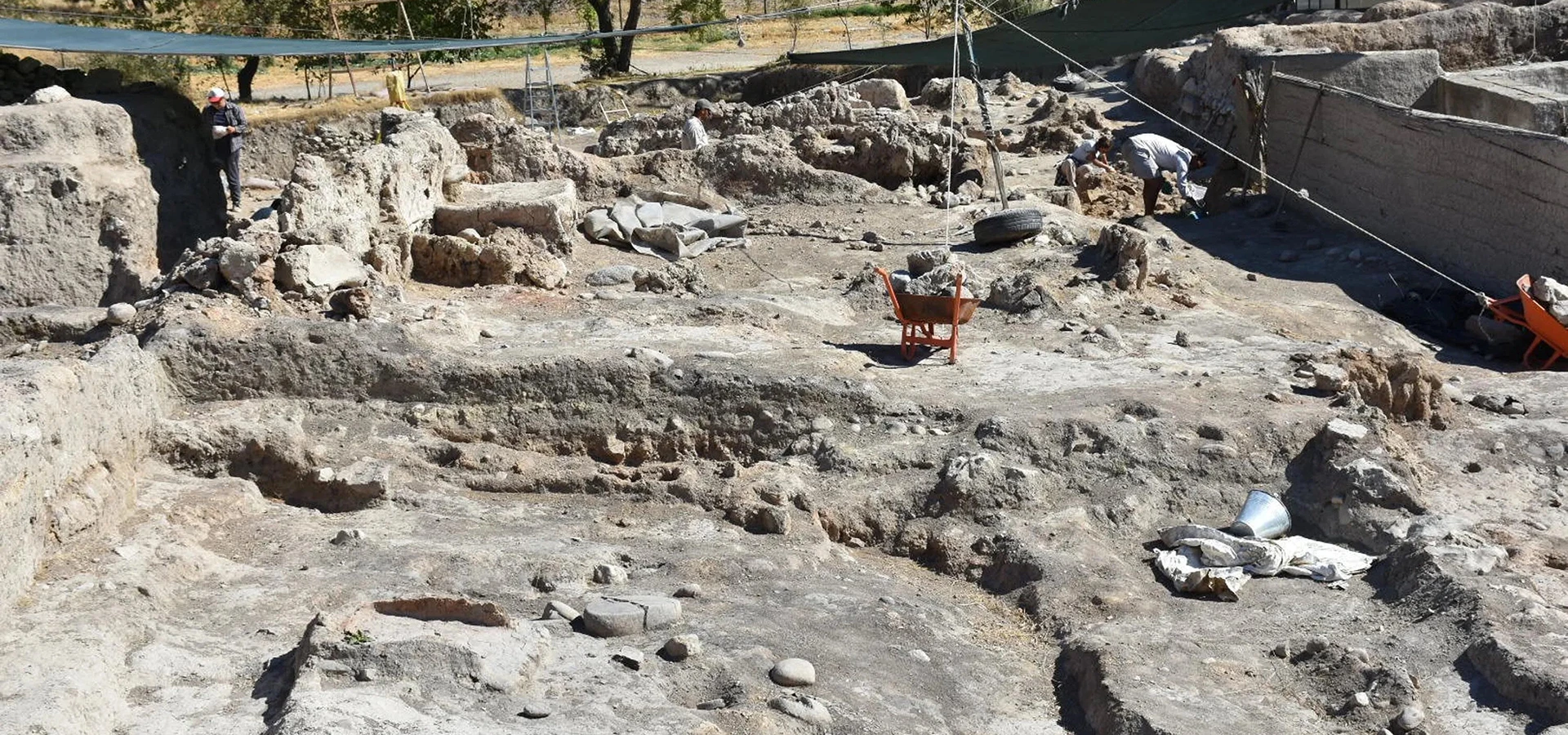
Private Ulucak Höyük Archaeology Experience
Ask us about a specialist private visit focusing on Neolithic village life, prehistoric architecture, pottery, food production and the archaeological story of western Anatolia.
Request a Private Experience





On the fertile plain beneath Nif Mountain, east of İzmir, rises an archaeological mound that preserves the remains of communities who lived here thousands of years before the great classical cities of the Aegean appeared: Ulucak Höyük.
Ulucak is one of the key prehistoric settlements for understanding the emergence and development of Neolithic village life in western Anatolia. Archaeological research has uncovered houses, hearths, ovens, working areas, pottery, stone tools, bone objects and figurines belonging to communities that farmed, raised animals and built permanent settlements here during the seventh and sixth millennia BCE.
Later generations returned to the mound during the Bronze Age and again during the Roman and Byzantine periods, creating a remarkable sequence of occupation extending across many thousands of years.
Unlike monumental archaeological destinations filled with temples, theaters and columns, Ulucak tells a quieter and in many ways more fundamental story: how ordinary people built homes, produced food, made tools, organized communities and transformed the landscape during the beginnings of settled village life.
Explore one of the most important excavated Neolithic settlements in western Türkiye.
Archaeological layers preserve houses, hearths, ovens, workshops and everyday living spaces.
Discover evidence for prehistoric ceramic production, stone working and household craftsmanship.
Ulucak remains an active research site where excavations continue to reshape our understanding of prehistoric İzmir.
Essential information about one of İzmir Province's most significant prehistoric archaeological sites.
Ulucak, approximately 7 km west of central Kemalpaşa and east of metropolitan İzmir.
Open on Google MapsBest known for its Early and Late Neolithic occupation, with later Bronze Age and Roman–Byzantine activity.
The Neolithic sequence reaches back into the seventh millennium BCE.
Systematic archaeological excavations began in 1995 and research continues today.
Neolithic houses, working areas, pottery, stone tools, figurines and evidence of early farming life.
Access may vary because Ulucak is an active archaeological excavation rather than a conventional tourist attraction.
Ulucak takes visitors deep into the prehistoric story of western Anatolia, long before monumental cities dominated the Aegean landscape.
Most visitors to western Türkiye encounter archaeology through famous Greco-Roman cities such as Ephesus, Pergamon, Sardis or Aphrodisias.
Ulucak belongs to a dramatically earlier world.
Its Neolithic communities lived thousands of years before those classical cities flourished. They built permanent houses, cultivated plants, managed animals, produced tools and pottery and created increasingly organized village environments.
For archaeologists, Ulucak provides essential evidence for understanding how farming and settled village life developed across western Anatolia and the Aegean region.
For travelers, it offers something equally valuable: an opportunity to think about human history not through palaces and emperors, but through homes, ovens, food, tools, crafts and the everyday decisions of prehistoric families.
The Turkish word höyük describes an archaeological settlement mound created when communities repeatedly built, occupied, abandoned and rebuilt settlements in approximately the same location.
Over centuries and millennia, collapsed mudbrick walls, floors, hearths, rubbish, rebuilding episodes and natural sediments accumulate one above another.
The result can appear today as an ordinary hill rising above a plain, yet inside it survives a complex sequence of human occupation.
Archaeologists excavate these layers carefully because their order provides a chronological record. Generally, deeper deposits are older while later communities occupy levels closer to the present surface.
Successive settlements gradually created the mound visible in the landscape today.
Collapsed walls and rebuilt houses contributed greatly to the accumulation of settlement deposits.
The relationship between archaeological layers allows researchers to reconstruct the sequence of occupation.
Floors, hearths, tools and discarded objects can reveal activities that took place thousands of years ago.
Ulucak Höyük was identified during archaeological survey work in 1960 by British archaeologist David French.
Its importance became much clearer after systematic excavation began in 1995, opening a new chapter in research into the prehistoric communities of western Anatolia.
Excavations have revealed a long sequence of human activity, with the Neolithic layers providing some of the site's most significant evidence.
Research continues to examine architecture, ceramics, animal remains, plant remains, stone tools, burial practices and many other categories of evidence in order to reconstruct how Ulucak's inhabitants lived and how their society changed through time.
David French identified the mound during archaeological research in western Anatolia.
Systematic archaeological excavation of Ulucak Höyük began.
Decades of excavation have gradually exposed different phases of prehistoric settlement.
Ulucak remains an important active archaeological research site.
Ulucak was not occupied by a single community at one moment in history. Archaeological layers demonstrate repeated activity over an exceptionally long period.
The site's international archaeological importance comes particularly from its Neolithic sequence, but later communities also left important evidence on and around the mound.
The deepest excavated prehistoric levels reveal some of the earliest settled communities known from the region.
Successive villages developed more substantial architecture and increasingly rich material culture.
The wider site preserves evidence for renewed occupation and burial activity during the Bronze Age.
Later prehistoric activity demonstrates the continuing importance of the surrounding fertile landscape.
Evidence from much later antiquity occurs above the prehistoric settlement sequence.
The mound continued to form part of the cultural landscape into the medieval period.
The deepest Neolithic levels at Ulucak take us into the first half of the seventh millennium BCE, when permanently settled farming communities were becoming established across parts of western Anatolia.
These early levels are especially important because they allow archaeologists to investigate a period when pottery had not yet become a dominant part of everyday life.
Architecture, plastered surfaces, hearths and open activity areas nevertheless demonstrate that these were already organized communities with established domestic traditions.
Evidence from plants and animals shows that the people of Ulucak participated in a farming economy while also adapting to the particular resources and ecology of western Anatolia.
The earliest Neolithic occupation reaches deep into the seventh millennium BCE.
Some early levels belong to a time when ceramic vessels were not yet central to everyday life.
Built environments indicate communities living repeatedly and intensively in the same place.
Cultivation and animal management formed important parts of Neolithic subsistence.
One of Ulucak's greatest archaeological strengths is the preservation of prehistoric architecture.
Excavations have exposed houses and other spaces constructed using materials such as earth, mudbrick, timber and stone.
Inside and around these buildings, archaeologists identify hearths, ovens, storage areas, work spaces and surfaces connected with everyday domestic activities.
The organization of buildings also provides clues about relationships between households, movement through the settlement and changing concepts of private and shared space.
Domestic architecture provides direct evidence for the places in which Neolithic families lived.
Fire installations were central to food preparation, warmth and household activities.
Purpose-built installations demonstrate increasingly organized food preparation.
Different spaces preserve evidence for craft production and daily tasks.
The arrangement of buildings reveals increasingly structured village environments.
New structures constructed above older remains gradually contributed to the growth of the mound.
Ulucak's importance lies not in monumental architecture but in the extraordinary amount of information preserved about everyday human life.
Within the settlement, people prepared food, maintained fires, repaired tools, processed plants, worked stone and bone, made objects, cared for animals and raised families.
Each excavated floor can preserve traces of these repeated activities.
When studied together, even apparently modest objects allow archaeologists to reconstruct patterns of production, consumption and social behavior that would otherwise be invisible.
Hearths, ovens, vessels and food remains help reveal prehistoric cooking practices.
Stone and bone were transformed into practical objects used throughout everyday life.
Grinding and cutting tools helped communities prepare cultivated and gathered foods.
Containers and designated spaces helped households manage food and other resources.
Some archaeological areas provide evidence for specialized production activities.
The settlement provides an unusually intimate archaeological record of prehistoric domestic routines.
Some occupation phases at Ulucak were affected by significant fire.
For the inhabitants, such an event would have been destructive. For archaeology, however, rapid abandonment and burning can sometimes preserve an unusually detailed snapshot of life.
Objects that might normally have been removed, reused or scattered can remain inside buildings, while fire may preserve structural relationships between materials and architectural features.
At Ulucak, burned buildings have therefore helped researchers understand how individual spaces were being used shortly before destruction.
Ceramic production became increasingly important during the Neolithic occupation of Ulucak.
Pottery changed how communities could prepare, store and serve food, while variations in clay, surface treatment, vessel shape and firing technology provide archaeologists with valuable chronological and cultural information.
Research at Ulucak has even identified evidence interpreted as a specialized Neolithic pottery production area, making the settlement especially important for understanding the development of ceramic technology.
Thousands of pottery fragments recovered during excavation therefore represent far more than broken containers. Together they help reconstruct technological choices, food practices and connections between prehistoric communities.
Potters selected and prepared suitable clay before vessels could be formed.
Neolithic pottery was shaped without the fast potter's wheel familiar from much later periods.
Finishing techniques affected both the appearance and practical qualities of vessels.
Controlled heat transformed prepared clay into durable ceramic containers.
Vessels could be used for preparing, storing, serving and consuming food.
Changes in pottery styles help archaeologists compare different phases of occupation.
The Neolithic communities of Ulucak relied on an extensive range of carefully manufactured tools.
Flint and other stones could be shaped into cutting, scraping and piercing implements, while heavier ground-stone objects were used for activities including food processing.
Animal bone provided another versatile raw material and could be shaped into points, needles and other specialized objects.
Studying how such tools were produced, used, repaired and discarded helps archaeologists reconstruct both household activities and wider systems of resource acquisition.
Sharp stone edges were essential for cutting, scraping and numerous craft activities.
Heavy stone tools were used to process grains and other plant foods.
Animal bone could be transformed into fine tools suited to specialized tasks.
Microscopic traces can help researchers understand how prehistoric tools were actually used.
Ulucak's location was not accidental.
The settlement developed within a fertile inland plain supplied by water sources and surrounded by mountains, valleys and diverse ecological zones.
Such a setting gave Neolithic communities access to agricultural land, grazing areas, wild resources, water and routes connecting inland western Anatolia with the Aegean region.
Archaeological studies of animal and plant remains provide evidence for how inhabitants balanced farming, livestock management and the use of surrounding natural environments.
Farming became a fundamental element of the community's food-producing economy.
Animal husbandry formed an important part of life from early phases of occupation.
The fertile plain and nearby waterways supported long-term human settlement.
Nearby uplands offered additional grazing, plant and woodland resources.
Early farmers continued to interact with and exploit surrounding natural environments.
The region provided natural connections between İzmir's coastal zone and inland western Anatolia.
Among the objects recovered from Ulucak are small anthropomorphic figures and other artifacts that cannot be understood solely as practical household equipment.
Such objects are often described broadly as figurines, but their exact meaning to Neolithic people is far more difficult to determine.
They may have participated in social, symbolic, ritual or personal practices, yet archaeologists must interpret them carefully and within the specific context in which each object was discovered.
Rather than assuming that every human-shaped object represents a particular deity, modern archaeological research examines their form, manufacture, use and archaeological context.
Ulucak's story did not end when the Neolithic settlement declined.
Archaeological work in the wider site has identified burial activity dating to later prehistoric periods, including the Early and Middle Bronze Age.
Some burials involved placing the deceased within large ceramic containers, providing important information about funerary traditions in western Anatolia.
The relationship between settlement and cemetery evidence makes Ulucak particularly valuable for reconstructing not only how prehistoric communities lived, but also how some later societies treated their dead.
The cemetery preserves evidence belonging to communities living long after the main Neolithic occupation.
Additional burial activity demonstrates continued use of the archaeological landscape.
Large ceramic containers formed part of some prehistoric burial practices.
Burials can reveal information about age, identity, health and social traditions.
Although Ulucak is internationally significant for its Neolithic archaeology, occupation did not occur continuously in exactly the same form.
Different communities returned to or reused the mound and surrounding landscape during later prehistoric and historic periods.
Evidence associated with the Bronze Age is followed much later by remains from the Roman and Early Byzantine periods.
The resulting archaeological sequence illustrates how a prominent place in a fertile landscape could acquire new purposes and meanings again and again across thousands of years.
To understand Ulucak, it is essential to look beyond the mound itself.
The settlement stands within the fertile plain west of Kemalpaşa, close to water and beneath the wider mountain landscape associated with Nif.
Agricultural soils, access to freshwater, grazing areas and natural routes made this environment attractive to communities dependent on farming and livestock.
The same broad geography would continue attracting settlement and movement long after the Neolithic period ended.
The surrounding plain offered valuable agricultural potential.
Nearby water sources helped support both people and animals.
Mountain environments provided contrasting ecological resources close to the settlement.
The plain forms part of wider connections between the Aegean coast and inland Anatolia.
One of the great questions in prehistoric archaeology concerns how farming, animal husbandry and settled village life spread and developed across Anatolia and into southeastern Europe.
Ulucak occupies a strategically important geographical and chronological position within this discussion.
Its long Neolithic sequence allows researchers to compare changes in architecture, pottery, food production, animal management and technology across many generations.
The site therefore helps bridge archaeological discussions extending from central and southwestern Anatolia toward the Aegean coast, the eastern Aegean islands and southeastern Europe.
Successive occupation phases allow archaeologists to study change through many generations.
Ulucak is fundamental to understanding early settled communities close to the Aegean region.
Changes in building traditions reveal transformations in social and domestic organization.
Plant and animal remains reveal how farming strategies developed through time.
Stone tools and pottery document changing production traditions.
Material culture contributes to wider discussions about movement, interaction and cultural transmission.
Excavating a prehistoric mound requires far more than uncovering walls and collecting attractive artifacts.
Every layer, floor, pit, hearth, wall, burial, animal bone, seed and pottery fragment can contain information about chronology and human behavior.
Modern archaeological research therefore combines traditional excavation with specialist scientific analysis.
Researchers document the sequence and relationships between individual archaeological deposits.
Organic materials can help establish absolute dates for prehistoric occupation phases.
Seeds and other plant remains help reconstruct farming, food and environmental conditions.
Animal bones reveal livestock strategies, diet, hunting and interactions with the environment.
Pottery provides evidence for technology, chronology, food practices and cultural interaction.
The position of artifacts allows archaeologists to investigate how rooms and outdoor areas were used.
Visitors should approach Ulucak differently from a monumental archaeological attraction such as Ephesus or Pergamon.
This is first and foremost a working archaeological research site.
The most important remains are often subtle: prehistoric walls, floors, hearths and carefully excavated layers rather than standing marble monuments.
Understanding what you are seeing is therefore much easier with archaeological background information or a knowledgeable guide.
Research and conservation requirements may affect which areas can be approached.
Most architecture survives as low prehistoric walls and archaeological deposits.
The site's significance becomes clearer when its archaeological layers are explained rather than viewed quickly.
Ulucak works well as part of a wider day exploring archaeological and cultural sites east of İzmir.
The surrounding Kemalpaşa landscape changes considerably with the seasons.
Green fields, mild temperatures and spring landscapes make the surrounding plain particularly attractive.
Warm conditions and Kemalpaşa's cherry season can make this an excellent time to combine archaeology with rural exploration.
The open plain can become very hot, making morning visits considerably more comfortable.
Milder temperatures are ideal for archaeological touring and exploring nearby Kemalpaşa.
The archaeological landscape is quieter, but wet or cold conditions may affect outdoor exploration.
Archaeological work itself may influence site access, so current conditions are more important than season alone.
Ulucak can be combined with the broader archaeological and cultural landscapes of Kemalpaşa for an unusual day trip from İzmir.
Ulucak rewards visitors who are prepared to slow down and imagine what the archaeological evidence represents.
A low mudbrick wall was once part of somebody's house.
A blackened hearth once contained a fire around which people cooked. A grinding stone participated in the preparation of countless meals. A broken ceramic vessel may preserve the fingerprints, choices and techniques of someone who lived more than eight thousand years ago.
Seen this way, Ulucak is not simply an archaeological mound. It is the accumulated remains of generations of individual human lives.
Think vertically: every archaeological level represents a different period of occupation.
The fertile plain helps explain why communities repeatedly settled here.
Low walls once supported complete domestic environments filled with people and activity.
At prehistoric sites, ordinary objects often reveal more about human life than monumental architecture.
Ulucak offers a very different photographic experience from Türkiye's monumental classical sites.
The visual story lies in archaeological layers, earth colors, excavated architecture and the relationship between the mound and the fertile Kemalpaşa plain.
Low walls and room plans can be particularly effective when photographed from permitted elevated viewpoints.
Changes in soil color and construction reveal different phases of human occupation.
Include the surrounding plain to communicate why this location attracted early farming communities.
Lower-angle light can make subtle archaeological features easier to see.
Always ask permission before photographing archaeologists or active research areas at close range.
Do not fly drones over archaeological sites without the required official permissions.
Ulucak Höyük lies east of metropolitan İzmir, approximately 7 kilometers west of central Kemalpaşa.
Its position close to the main İzmir–Kemalpaşa corridor makes it relatively easy to include in an inland İzmir itinerary.
Travel east from the metropolitan area toward Kemalpaşa and Ulucak.
The mound lies only a short drive west of central Kemalpaşa.
A car provides the easiest way to combine Ulucak with other archaeological and rural destinations.
A specialist archaeological explanation greatly enhances a visit because prehistoric remains can be difficult to interpret independently.
Open the archaeological site location in Google Maps.
View LocationUlucak lies within one of İzmir's most fascinating but least explored inland archaeological landscapes.
Explore Nif Mountain, Byzantine Nymphaion, cherry orchards, Nazarköy and the Karabel landscape.
Continue south toward fertile plains and the archaeological heritage of ancient Metropolis.
Discover flower-growing traditions, Ottoman heritage, rural landscapes and the Küçük Menderes Valley.
Travel east toward the spectacular ancient capital of Lydia beneath Mount Tmolus.
Return west to the Aegean metropolis for museums, ancient Smyrna, bazaars and waterfront districts.
See a remarkable Late Bronze Age rock-cut monument in the mountains southeast of Kemalpaşa.
Few day trips close to İzmir demonstrate the enormous depth of Anatolian history as clearly as the route through Kemalpaşa.
At Ulucak, the story begins with Neolithic farming communities.
At Karabel, visitors encounter the political landscape of western Anatolia during the Late Bronze Age.
Historic Kemalpaşa adds Byzantine Nymphaion, while Nazarköy introduces a living craft tradition that continues into the present.
Neolithic village life, early farming, prehistoric architecture and craft production.
The historic landscape of Nymphaion beneath Nif Mountain.
Traditional handmade glass nazar beads and village craftsmanship.
A monumental connection with the Late Bronze Age Luwian political landscape.
Never enter excavation trenches, fenced areas or restricted research zones.
Prehistoric mudbrick, plaster and archaeological surfaces can be extremely fragile.
Pottery fragments, stone flakes and other materials must remain in their archaeological context.
Excavation areas are workplaces where researchers need concentration and controlled access.
Archaeological sites are protected cultural areas and drone use may require official authorization.
Protect both the archaeological site and the surrounding agricultural landscape.
Ulucak Höyük is located in the Kemalpaşa district of İzmir Province, approximately 7 kilometers west of central Kemalpaşa.
Ulucak Höyük is a prehistoric archaeological settlement mound best known for its exceptionally important Neolithic occupation layers.
The earliest excavated Neolithic settlement reaches back into the seventh millennium BCE, giving Ulucak a history extending more than eight thousand years into the past.
It provides major evidence for the development of early farming communities, permanent village life, architecture, pottery and animal husbandry in western Anatolia.
The mound was identified by British archaeologist David French during archaeological survey work in 1960.
Systematic archaeological excavations began in 1995.
Yes. Ulucak remains an active archaeological research site, with continuing excavation, conservation and study.
The site contains important Neolithic deposits together with evidence associated with the Bronze Age and much later Roman–Byzantine activity.
Discoveries include houses, hearths, ovens, pottery, stone tools, bone objects, figurines, food remains and evidence associated with prehistoric burials.
Yes. Agriculture and livestock management formed important elements of the Neolithic economy.
Pottery became increasingly important during the site's Neolithic sequence, although some of the earliest occupation belongs to phases when ceramics were absent or extremely limited.
Archaeological research has identified evidence interpreted as a specialized Neolithic pottery production area at the site.
Prehistoric architecture used locally available materials including earth, mudbrick, timber and stone.
Some settlement phases show evidence of significant burning, which helped preserve objects and activities within individual buildings.
Yes. Anthropomorphic and other figurines form part of the site's prehistoric material culture, although their exact symbolic meanings remain uncertain.
Yes. The wider archaeological site includes a cemetery with burial evidence associated particularly with the Early and Middle Bronze Age.
Visitor access can depend on ongoing excavation, conservation and site-management conditions, so current access should be checked before making a special journey.
No. Ulucak is a prehistoric settlement mound dominated by low archaeological remains rather than monumental marble buildings. Its importance lies primarily in the evidence it preserves for everyday Neolithic life.
A guide is very useful because prehistoric walls, floors and archaeological layers can be difficult to interpret without explanation.
The archaeological site itself can form part of a half-day excursion, while combining it with Kemalpaşa, Nazarköy and Karabel can create a full-day itinerary.
Spring and autumn generally offer the most comfortable conditions for exploring the open archaeological landscape.
The mound lies approximately 7 kilometers west of central Kemalpaşa.
Yes. Its location east of metropolitan İzmir makes it suitable for a specialized day trip or as part of a wider Kemalpaşa route.
Good combinations include historic Kemalpaşa, Nazarköy, Nif Mountain and the Late Bronze Age Karabel Rock Relief.
The fertile plain, freshwater resources, agricultural potential and access to surrounding mountains created favorable conditions for permanent settlement.
Photography may be possible in permitted visitor areas, but excavation zones, researchers and conservation work should always be treated respectfully and current site rules followed.
No. Archaeological materials must never be removed, moved or disturbed. Even small fragments can contain important information when preserved in their original context.
For travelers interested in prehistory, archaeology and the origins of settled village life, Ulucak is one of the most significant archaeological landscapes in the İzmir region.
Discover Neolithic archaeology, ancient landscapes and the hidden history of Kemalpaşa with a private itinerary designed around your interests.
Travel beyond İzmir's famous classical sites and explore thousands of years of Anatolian history in the landscape beneath Nif Mountain.
Ask us about a specialist private visit focusing on Neolithic village life, prehistoric architecture, pottery, food production and the archaeological story of western Anatolia.
Request a Private Experience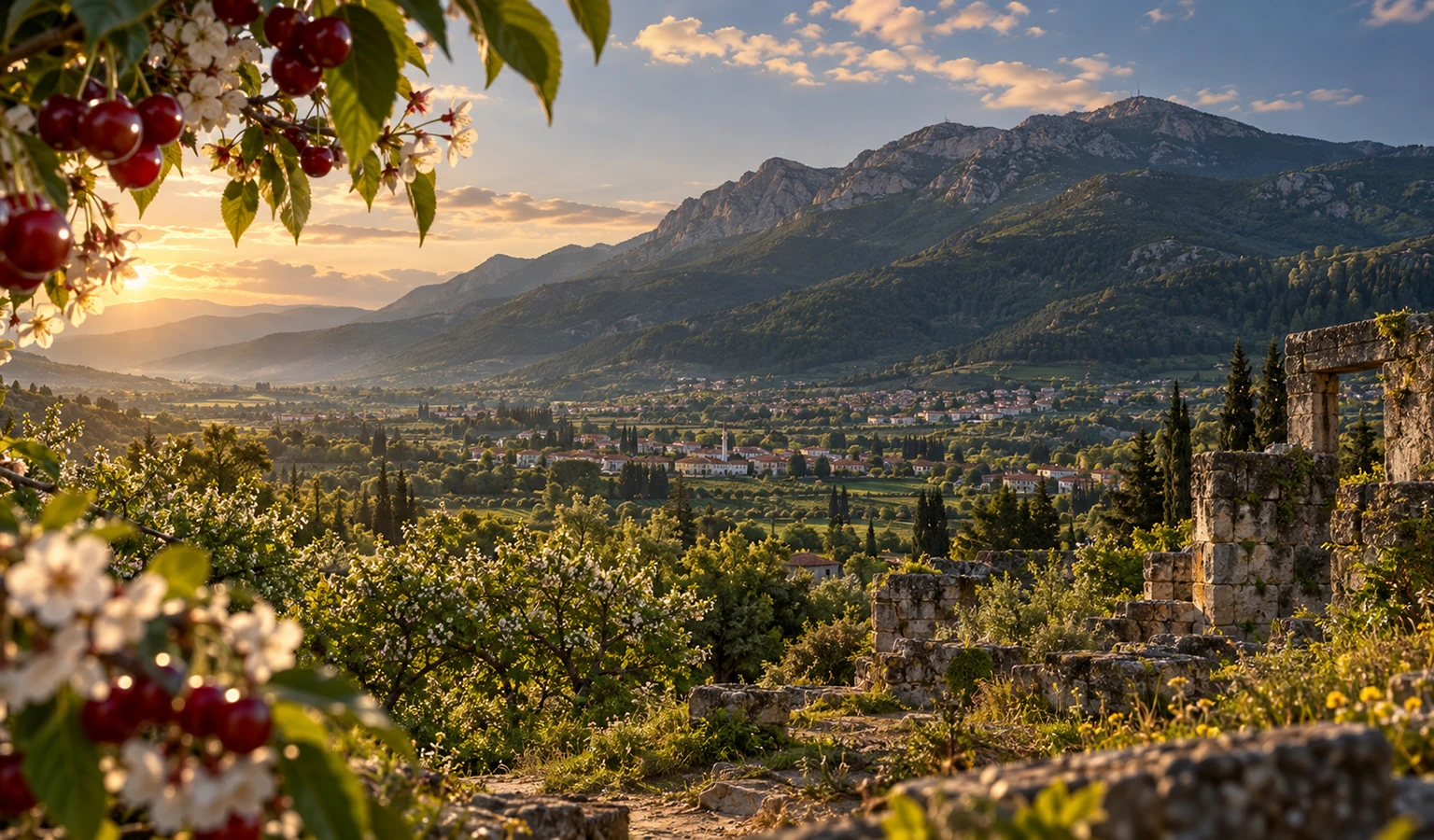
Combine Neolithic Ulucak with Byzantine Kemalpaşa, Nazarköy's traditional glass workshops and the Late Bronze Age monument at Karabel.
Plan Your Archaeology Day