


Yozgat & Central Anatolia

Uşaklı Höyük – Travel Guide

Sorgun, Yozgat, Türkiye · Archaeology & ancient history

Discover the Story

Discover Uşaklı Höyük

A Hittite-period monumental complex and later settlement on a mound and terrace, investigated by an international archaeological mission; possibly ancient Zippalanda.

History & background

Hittite Building II, the 2018 mosaic and the acropolis

Key details

The monumental building and Zippalanda hypothesis · The patterned pavement and acropolis

Explore Yozgat

Related Places & Traditions

Plan Your Visit

Uşaklı Höyük – Quick Facts

📍

Location

Sorgun, Yozgat, Türkiye

🏛️

Category

Archaeology & ancient history

⭐

Main focus

Hittite Building II, the 2018 mosaic and the acropolis

🧭

Related guide

Kerkenes Ancient City


Archaeology & ancient history

Hittite Building II, the 2018 mosaic and the acropolis

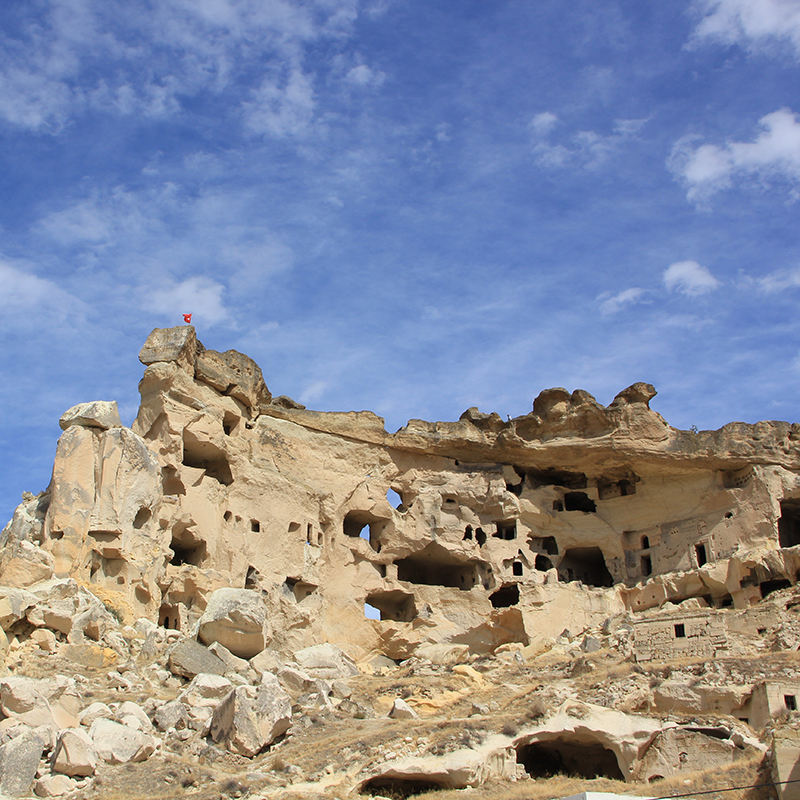
The site consists of a roughly ten-hectare terrace and a smaller mound near the Eğri Öz Dere, dominated by the granite mass of Kerkenes. Archaeological survey and geophysical research identified large buried structures before excavation.

Key details and historical context

The monumental building and Zippalanda hypothesis

Excavations have uncovered substantial Late Bronze Age stone foundations interpreted as a Hittite monumental building, probably a temple. Researchers have proposed that this was Zippalanda, a centre of the storm-god cult, and that Kerkenes may correspond to Mount Daha. The identification remains a research question, not a settled inscriptional fact.
The patterned pavement and acropolis

A patterned stone pavement discovered in 2018 beside a major Late Bronze Age building was published in Antiquity in 2019. The excavators also identified a substantial Hittite building on the south slope of the mound, with its exposed frontage extending around 60 metres, and an Iron Age defensive system above.

Six tablet fragments and a royal spring festival

The Italian archaeological mission reports six fragments of Hittite cuneiform tablets from surface collection and excavation. These are important because the Hittite royal spring festival texts record a journey from Hattuša to Zippalanda, including rites at Mount Daha, before the king continued to Ankuwa. The excavators note the position of Uşaklı between the capital and the proposed location of Ankuwa at Alişar, with the conspicuous Kerkenes massif immediately to the south. This geographical fit, the written finds and the monumental buildings together explain the Zippalanda hypothesis; no recovered inscription is cited by the project as explicitly naming Uşaklı itself.

Visiting Uşaklı Höyük

Planning your visit

This is a working archaeological site, not a reconstructed visitor attraction.

On-site considerations

Contact the excavation or museum before making a special trip; the project website provides plans and research background.

Continue Exploring Yozgat

Yozgat & Central Anatolia