Private Arpaz Castle Heritage Tour
Ask us about a tailor-made cultural route exploring Arpaz Castle from permitted viewpoints, the story of the Arpaz Beys, traditional Ottoman architecture and Nazilli's historical landscape.
Request a Custom Tour





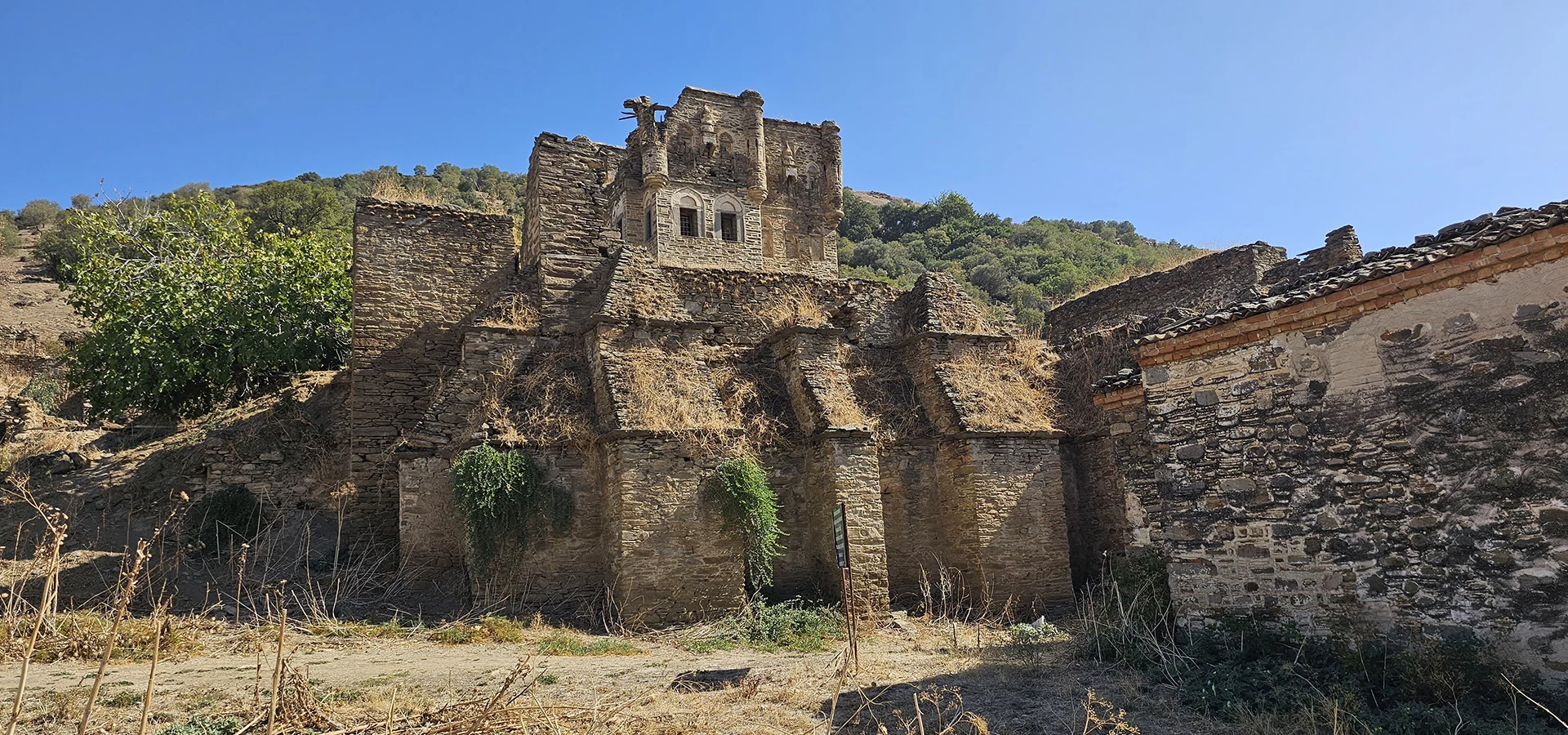
Hidden among the villages and fertile agricultural landscapes south of Nazilli in Aydın Province, Arpaz Castle (Arpaz Kalesi) is one of western Anatolia's most distinctive examples of fortified Ottoman residential architecture. Its imposing stone tower, traditional mansion and surviving estate buildings reveal a fascinating chapter in the social and political history of the Aegean region.
Located in Esenköy, formerly known as Arpaz, the historic complex is also called Arpaz Tower (Arpaz Kulesi) or Arpaz Beyler Mansion (Arpaz Beyler Konağı). Although frequently described as a castle, it is not a conventional medieval fortress. Instead, it represents a remarkable combination of an Ottoman country residence, defensive tower, agricultural estate and associated service buildings.
The principal surviving buildings are associated with the powerful Arpaz Bey family and the early 19th century. Earlier Ottoman architectural remains suggest that parts of the complex may have developed from an older establishment. The tower is especially associated with Hacı Hasan Bey and craftsmen brought from Rhodes during the reign of Sultan Mahmud II.
Arpaz Castle is also connected with the turbulent history of Atçalı Kel Mehmet, the well-known regional rebel leader whose movement challenged Ottoman provincial authorities during the late 1820s and early 1830s. This association transforms the estate from an architectural curiosity into an important witness to the struggles for power, taxation and local authority in Ottoman Anatolia.
Today, Arpaz Castle is particularly rewarding for travelers interested in Ottoman history, vernacular architecture, heritage photography and destinations beyond conventional sightseeing routes. Its fragile condition, however, means that exterior appreciation and responsible visiting are especially important.
Discover the architectural world of powerful provincial families in 19th-century western Anatolia.
Examine an imposing defensive structure associated with craftsmen from Rhodes.
Learn about traditional timber construction, decorative ceilings and Ottoman domestic life.
Explore a lesser-known heritage landscape connected with agriculture, local authority and village history.
Essential information about the historic tower, mansion and fortified estate at Esenköy.
Esenköy, approximately 15 km south of Nazilli, Aydın Province, Türkiye.
Open on Google MapsEarly 19th century, incorporating or replacing earlier Ottoman-period structures.
Fortified estate with a defensive stone tower, Ottoman mansion and service buildings.
The Arpaz Bey family; the tower is especially associated with Hacı Hasan Bey.
Not operated as a conventional museum. Interior access is restricted or unconfirmed.
Allow approximately 30–45 minutes for a short exterior heritage stop.
Arpaz Castle reveals how wealthy landowning families combined domestic comfort, agricultural wealth and personal security in Ottoman Anatolia.
Arpaz Castle is important because it preserves the architectural character of a powerful rural estate in an era when provincial notables exercised considerable political and economic influence. These regional families, often described as ayan or local notables, could control agricultural resources, administer estates and maintain networks of dependents and retainers.
The buildings demonstrate how architecture responded to this position. The mansion provided a prestigious domestic environment, while the fortified tower offered protection, surveillance and a visible statement of authority. Storehouses, stables and other structures supported the agricultural activities on which the estate depended.
The complex is especially unusual because its different functions can still be understood together. Rather than seeing an isolated tower or a detached historic house, visitors encounter the surviving remains of a wider social and economic landscape.
The property's association with Atçalı Kel Mehmet's rebellion provides another layer of historical significance. It connects the estate to tensions surrounding taxation, provincial government and the power of established families in the late Ottoman world.
Arpaz Castle also forms part of the broader heritage of the Büyük Menderes Valley, a region where ancient Carian settlements, Byzantine traditions, Turkish principalities and Ottoman rural society left successive architectural traces.
The village now called Esenköy occupies a historically important position south of the Büyük Menderes Valley, near the fertile lands associated with the Akçay River. This landscape supported agricultural communities and connected inland settlements with the wider economic networks of western Anatolia.
Above the village stood the ancient settlement of Harpasa, associated with the historical region of Caria. The remains of its ancient and later fortified settlement belong to a much older phase of regional history than the surviving Ottoman Arpaz Tower and Beyler Mansion.
During the Byzantine period, Harpasa also appeared within the ecclesiastical geography of the region. Later, the settlement continued through the Turkish principalities and Ottoman administration, reflecting the persistence of communities along this productive agricultural corridor.
The name Arpaz remained associated with the settlement through the Ottoman centuries. Historical administrative records show that Arpaz possessed local significance before its eventual incorporation into the modern district of Nazilli.
The history of the surviving Arpaz complex is closely associated with the Arpaz Beys, a prominent family whose influence was connected with extensive agricultural lands in the Nazilli region. The estate's surviving architecture reflects the wealth and authority of such families during the later Ottoman period.
Official descriptions generally associate the main complex with the early 19th century. However, architectural remains attributed to the 17th and 18th centuries indicate that the site had an earlier Ottoman building history. Some parts may have been reconstructed, enlarged or adapted rather than built entirely from scratch.
The impressive defensive tower is traditionally associated with Arpazlı Hacı Hasan Bey. During the reign of Sultan Mahmud II (1808–1839), craftsmen from Rhodes were reportedly brought to work on the tower. The exact construction sequence is not entirely settled, and the project may have involved significant rebuilding of an earlier structure.
The estate witnessed an especially turbulent period during the movement led by Atçalı Kel Mehmet. His rebellion developed against provincial administrative abuses and received support from sections of the rural population. The movement briefly altered the balance of authority across parts of the Aydın region.
According to the historical account preserved by the Aydın Governorate, Atçalı Kel Mehmet had previously been connected with the Arpaz family. In June 1830, his followers besieged and burned the family estate. This event is central to the site's significance as a witness to the political conflicts of the Ottoman countryside.
Over the following generations, the structures continued to be altered and maintained to varying degrees. Their survival provides valuable evidence of traditional Ottoman residential architecture and the organization of a large provincial estate.
The nearby settlement of Harpasa develops in the historical region of Caria.
Arpaz becomes an established settlement connected with agricultural production and regional administration.
Earlier Ottoman building remains indicate activity before the principal surviving 19th-century architectural phase.
The Arpaz Beys develop the fortified estate associated with the surviving tower and mansion.
Hacı Hasan Bey is associated with craftsmen brought from Rhodes to construct or renew the tower.
The estate is reportedly besieged and burned during Atçalı Kel Mehmet's rebellion.
Arpaz Castle's architectural character comes from the striking relationship between its fortified stone tower and traditional Ottoman mansion. Together with surrounding walls and service buildings, they form a historic estate complex rather than a single independent monument.
The tower has a commanding vertical appearance, with thick masonry, carefully arranged openings and projecting corner features. Its strong silhouette explains why the complex is frequently described as resembling a castle.
The mansion presents a contrasting character. Stone foundations, timber construction, supporting brackets, verandas and elaborately decorated rooms reflect the craftsmanship of regional Ottoman domestic architecture.
The surrounding estate once included practical structures such as storehouses, stables, a bath, oven and ancillary buildings. These demonstrate the scale of the household and its connection with the surrounding agricultural economy.
The most recognizable structure, designed for security, observation and protection of the estate.
A substantial Ottoman residence with timber architectural elements and historically decorated interiors.
Thick stone walls, masonry openings and projecting features give the tower its fortress-like character.
Traditional structural supports, balconies, ceilings and carved woodwork reflect regional building traditions.
Storerooms, stables, agricultural facilities and associated structures supported the larger household.
The estate occupies an advantageous position overlooking cultivated lands near the Akçay basin.
Arpaz Tower is the most visually imposing part of the historic complex. Unlike the open verandas and comfortable living spaces of the mansion, the tower was designed to provide security and protection during periods of instability.
Historical architectural descriptions record an elevated entrance and a former drawbridge connection between the tower and mansion. The arrangement allowed movement between the residence and its protected refuge, while the bridge could be withdrawn in an emergency.
Openings for observation and defense, substantial stone walls and projecting corner structures contributed to the tower's protective function. The upper portions offered broad views toward the surrounding plain.
The building was more than a watchtower. Historical descriptions also identify residential arrangements within its upper floors, demonstrating how defensive requirements and everyday life could exist within the same structure.
The tower's architecture has been compared with certain fortified structures on Rhodes. This comparison is particularly interesting because historical accounts associate its construction or renovation with craftsmen brought from that island.
The historic Arpaz Beyler Mansion provides a remarkable counterpoint to the fortified tower. Its architectural language reflects the domestic traditions of affluent provincial Ottoman households.
The mansion was constructed using a combination of masonry and timber elements. Traditional projecting supports and semi-open living spaces demonstrate the adaptation of residential architecture to the regional climate and household needs.
Historical documentation describes carved wooden details, decorative ceilings and painted ornamentation, including characteristic rotating-wheel motifs. The arrangement of rooms also distinguished between different seasonal uses.
One particularly intriguing detail recorded in historical descriptions is a concealed staircase associated with a cupboard in an upper room. Such features reveal the complex internal organization of the residence, although they should not be understood as attractions currently accessible to visitors.
The mansion reflects more than the personal taste of its owners. Its size, construction and associated buildings provide evidence of how wealthy rural families organized domestic, social and economic activities.
Historic ornamentation includes traditional painted motifs associated with 19th-century interiors.
Carved woodwork and structural supports are important elements of the mansion's character.
Living spaces reflect the traditional organization of summer and winter accommodation.
Semi-open living areas connect the residence with the surrounding climate and landscape.
One of the most compelling historical connections of Arpaz Castle is the rebellion associated with Atçalı Kel Mehmet, a figure whose life occupies an important place in the social history and popular memory of Aydın.
During the late 1820s, tensions between provincial officials, landowners and rural communities created conditions for unrest in western Anatolia. Complaints about taxation, administrative misconduct and the conduct of local authorities helped generate support for movements challenging established power.
Atçalı Kel Mehmet emerged as a prominent leader supported by armed followers, including zeybeks. For a period, his movement exercised authority across several settlements in the Aydın region.
The Arpaz Bey family occupied an important position within this local political world. According to historical accounts, Kel Mehmet had earlier been associated with the household before later turning against its authority.
The confrontation culminated in an attack on the Arpaz estate in June 1830. Historical accounts describe its siege and burning, an episode that underlines the vulnerability of even powerful rural families during periods of political upheaval.
The events surrounding the rebellion remain a fascinating subject for historians because they combine documented administrative conflicts with later popular traditions and interpretations of Kel Mehmet's role.
Arpaz Castle rewards visitors who appreciate architectural details and the relationship between historic buildings and their setting. Because access may be limited, the following highlights should primarily be understood as features to identify from permitted exterior viewpoints.
Observe the monumental stone construction, corner projections and fortress-like architectural proportions.
Appreciate the surviving Ottoman residential structure and its relationship with the tower.
Notice how windows and narrow openings differ from those of an ordinary domestic building.
Compare the heavy defensive masonry with lighter traditional residential construction.
Look for surviving walls and ancillary structures associated with the former agricultural complex.
Experience the relationship between Esenköy, the historic estate and the nearby agricultural plain.
Study how the protective tower and comfortable residence were combined within one household.
Appreciate the nearby hillside associated with ancient Harpasa and the region's much longer settlement history.
Arpaz Castle represents a valuable architectural inheritance, but its surviving buildings have also faced serious conservation challenges. Weather exposure, deterioration of historic materials and inadequate maintenance can place traditional masonry and timber structures at risk.
In 2026, local conservation advocates publicly raised concerns about the condition of Arpaz Tower and Beyler Mansion, calling for stronger protection and restoration. Their concerns particularly emphasized the continuing deterioration of the historic complex.
Conservation is especially demanding at a site like Arpaz because the different architectural materials require specialized approaches. Stone masonry, historic plaster, wooden supports, decorative surfaces and roof structures all need appropriate technical assessment.
The site's importance lies not simply in preserving an attractive tower. A meaningful conservation project must also consider the mansion, service buildings, original spatial relationships and the landscape surrounding the estate.
Visitors can contribute to the protection of Arpaz Castle by respecting restricted areas, avoiding contact with fragile surfaces and supporting responsible heritage awareness.
A visit to Arpaz Castle differs from a conventional museum experience. Facilities, access and maintenance may be limited, so it is best approached as a short heritage stop requiring careful planning.
Natural light makes the historic buildings easier to appreciate and surrounding paths easier to assess.
Rural tracks and uneven surfaces may be dusty, rocky or slippery.
Do not enter enclosed courtyards, agricultural property or buildings without permission.
Do not depend on finding visitor facilities directly beside the monument.
Never climb the tower, damaged staircases, old roofs or unstable retaining walls.
Confirm the current local access situation, particularly if your visit depends on entering the estate.
The tower's proportions and stonework make it an interesting subject for architectural photography.
Include Arpaz in a wider Nazilli heritage itinerary rather than expecting a full-day attraction.
Arpaz Castle is situated in Esenköy, Nazilli, Aydın, approximately 15 kilometers south of Nazilli town center. The village can be reached through the local road network connecting Nazilli with Bozdoğan and nearby rural settlements.
The property is not a conventional ticketed attraction with a reliably published museum timetable. Exterior views may be possible from public approaches, but this does not mean that the historic buildings or estate grounds are freely accessible.
Older educational and tourism listings sometimes describe the location as generally accessible, but access to the mansion interior has historically required prior coordination. More recent conservation concerns make independent entry especially inappropriate without authorization.
Arpaz Castle can be appreciated as part of a rural sightseeing itinerary throughout the year. However, seasonal temperatures, agricultural activity and natural light can strongly influence the experience.
Green landscapes and generally comfortable temperatures make spring especially attractive for rural exploration.
Softer light and more comfortable temperatures create favorable conditions for heritage photography.
Visit earlier in the day to avoid the intense midday heat common in the Aydın region.
The monument can appear atmospheric, but rain and wet ground require additional caution.
Lower-angle sunlight can help reveal the textures of historic stone surfaces.
Warm light can create dramatic architectural compositions, provided you finish before dark.
Because the historic interiors are not normally available as a managed visitor experience, most travelers should plan a relatively short stop. Additional time is worthwhile for studying the building from permitted viewpoints and exploring the wider area.
A brief exterior viewpoint stop for travelers passing through the area.
A comfortable period for appreciating the architecture and taking photographs.
Allow additional time for the village setting and contextual exploration without entering private areas.
Combine Arpaz with nearby heritage landscapes and another historic attraction around Nazilli.
Add selected ancient sites such as Mastaura or Nysa, depending on current access.
Architectural or academic access requires suitable authorization and safety arrangements.
Arpaz Castle is a rewarding photographic subject because its architectural character is unlike that of most traditional Ottoman houses. The imposing tower, weathered masonry and rural setting create interesting compositions.
Frame the vertical silhouette to emphasize the structure's imposing defensive character.
Look for the texture of the historic stonework and carefully formed architectural openings.
If visible from a permitted viewpoint, include both buildings to illustrate their contrasting functions.
Show how the historic complex relates to village buildings and agricultural land.
Focus on windows, projecting stonework, rooflines and surviving timber details.
Remain on public routes and never enter unsafe buildings or climb ruins for a photograph.
Arpaz Castle is a historic rural property rather than a fully adapted visitor facility. Access conditions can be challenging for people with reduced mobility, particularly around uneven ground and old masonry.
Depending on local conditions, portions of the buildings may be visible without entering the property.
Expect possible changes in level, rough surfaces, gravel and rural paths.
Old stairways and internal circulation were not designed for modern accessibility standards.
There is no verified continuous accessible visitor route through the historic complex.
Keep children away from unstable walls, abandoned structures and exposed edges.
A suitable roadside viewpoint may provide an alternative to extensive walking.
Arpaz Castle is located in Esenköy, south of Nazilli in Aydın Province. The settlement lies within the rural road network between Nazilli and Bozdoğan.
The most convenient option for independent sightseeing is generally a private vehicle or arranged transfer. Visitors should navigate to Arpaz Kalesi, Esenköy rather than simply entering the name Harpasa, which can refer to the nearby ancient site.
Travel south toward the Esenköy area via local roads connecting with the Bozdoğan route.
Follow the regional road network toward Nazilli, then continue south to Esenköy.
A flexible option for combining the castle with other rural heritage sites.
Ask locally about village transport connections, as services and schedules may be limited.
A prearranged return transfer from Nazilli may be useful if traveling without a car.
Combine the monument with Ottoman history, local villages and archaeological sites.
Begin your day in Nazilli, a regional town with a long history linked to the Büyük Menderes Valley. From here, travel toward Esenköy to discover the fortified Arpaz estate.
At Arpaz Castle, spend time appreciating the tower's masonry, the contrasting architecture of the mansion and the surrounding agricultural landscape from permitted public viewpoints.
Continue your journey with a selected nearby historical site. The remains of Orthosia and the historical Donduran area provide further opportunities to explore lesser-known aspects of regional heritage, subject to local access.
Alternatively, travel north toward Mastaura Ancient City or continue west to Nysa, where the archaeological heritage of the Büyük Menderes Valley adds another chronological dimension to the day.
The surroundings of Nazilli contain an extraordinary combination of ancient settlements, Ottoman architectural heritage, historic villages and agricultural landscapes. Arpaz Castle makes an interesting addition to a wider journey through inland Aydın.
Discover the historical setting of the ancient Carian settlement above Esenköy. The remains are separate from the Ottoman Arpaz complex.
Another notable example of the region's fortified architectural traditions, located west of Arpaz.
Explore the history of an ancient settlement in the wider Büyük Menderes region.
Discover the town's local history, cultural traditions, food and commercial life.
Learn about an ancient settlement near Nazilli, known particularly for its remarkable Roman amphitheater remains.
Discover one of the region's outstanding archaeological landscapes, with a theater, monumental structures and ancient urban remains.
Arpaz Castle is located in Esenköy, formerly called Arpaz, approximately 15 kilometers south of Nazilli in Aydın Province, western Türkiye.
Arpaz Castle is a fortified Ottoman estate comprising a defensive tower, historic mansion and associated agricultural and service buildings. It is not simply an isolated medieval castle.
The names are frequently used interchangeably. Arpaz Tower describes the prominent defensive building, while Arpaz Castle may refer more broadly to the fortified estate.
Arpaz Beyler Mansion is the historic Ottoman residence associated with the Arpaz Bey family. It forms an important part of the architectural complex beside the tower.
The principal surviving architectural phase is generally associated with the early 19th century. However, earlier Ottoman remains suggest a longer building history.
The estate was developed by the Arpaz Bey family. The prominent tower is particularly associated with Hacı Hasan Bey during the reign of Sultan Mahmud II.
Historical accounts associate craftsmen from Rhodes with the construction or renewal of Arpaz Tower. The building's fortress-like appearance has also invited comparisons with defensive architecture on the island.
The tower provided protection, observation and a secure refuge for the estate. Its construction reflects a period when powerful provincial households could face armed conflicts and regional insecurity.
Yes. Historical accounts record that Atçalı Kel Mehmet's followers besieged and burned the Arpaz family estate in June 1830, during a period of regional rebellion.
No. The surviving Arpaz Tower and Beyler Mansion are principally Ottoman structures. The older ancient settlement of Harpasa occupies a separate site above the village.
Interior access should not be assumed. The complex is not operated as a regular visitor museum, and entry may be restricted for ownership, security or conservation reasons.
There is no confirmed regular museum timetable. Visitors may be able to appreciate portions of the exterior from public areas, but this does not indicate unrestricted access to the grounds or buildings.
A standard current ticketing arrangement has not been verified. Visitors should confirm any entry requirements before arranging an interior visit.
Approximately 30–45 minutes is generally sufficient for a brief exterior visit, architectural appreciation and photography.
Spring and autumn generally provide comfortable conditions. In summer, morning visits are preferable because the Nazilli region can become very hot.
The site has been associated with conservation and restoration discussions. Reports in 2026 raised serious concerns about continuing deterioration. Visitors should not assume that a completed restoration or normal museum access is in place.
Exterior appreciation from lawful, safe viewpoints is the appropriate approach. Damaged buildings, old stairs, unstable masonry and abandoned interiors may present serious hazards.
Exterior photography from public places is generally the most practical option. Respect privacy, property boundaries and any local restrictions.
There is no verified accessible visitor route through the historic structures. Travelers with reduced mobility should plan around suitable exterior viewpoints and confirm local conditions.
Nearby heritage possibilities include ancient Harpasa, Donduran Tower, Orthosia, Mastaura, Nysa and the historic landscapes surrounding Nazilli.
Yes, particularly for travelers interested in Ottoman provincial history, defensive architecture, traditional mansions and little-known cultural heritage. Its current condition makes it best suited to a carefully planned exterior heritage stop.
Arpaz Castle's historic masonry, wooden structures and surviving decorative features are vulnerable to damage. Responsible visits help preserve its architectural and cultural significance.
Never cross fences, gates or property boundaries without express authorization.
Avoid towers, roofs, damaged walls and unstable historic stairs.
Do not touch fragile plaster, remove stones, carve surfaces or disturb architectural remains.
Carry away litter, food packaging and other materials.
Avoid photographing local people closely or disturbing nearby homes and farms.
Respect any closures and support initiatives aimed at protecting the monument's architectural heritage.
Discover the remarkable history of Arpaz Castle, Ottoman provincial architecture and the ancient settlements of the Büyük Menderes Valley with a carefully planned private experience tailored to your interests and without compulsory shopping stops.
Combine a responsible exterior visit to Arpaz Castle with regional history, traditional villages and selected ancient sites.
Ask us about a tailor-made cultural route exploring Arpaz Castle from permitted viewpoints, the story of the Arpaz Beys, traditional Ottoman architecture and Nazilli's historical landscape.
Request a Custom Tour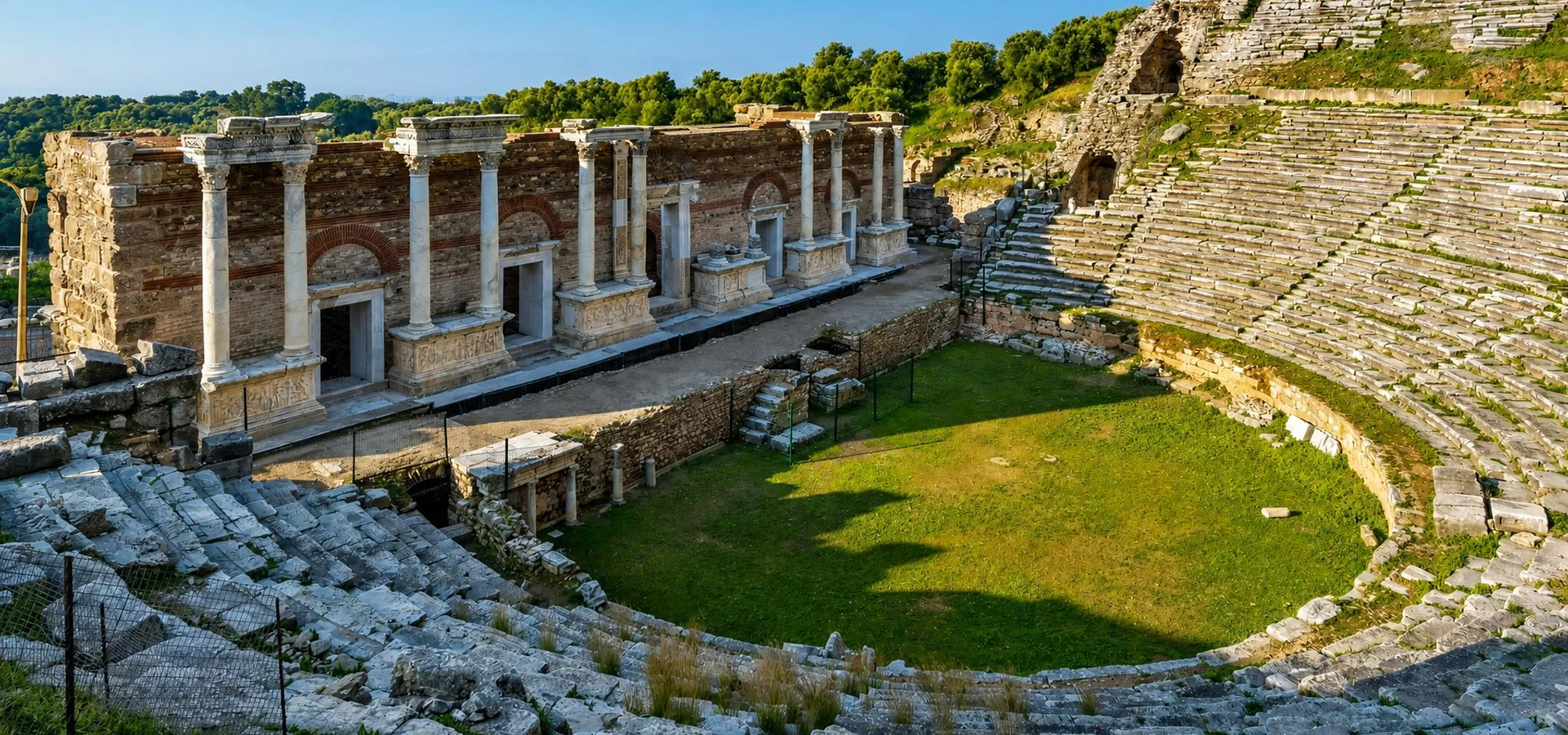
Continue your journey through the Büyük Menderes Valley with one of the region's most fascinating archaeological sites, renowned for its monumental remains and ancient history.
Explore NysaFrom Roman cities to Ottoman country estates, discover the extraordinary depth of western Anatolian heritage.
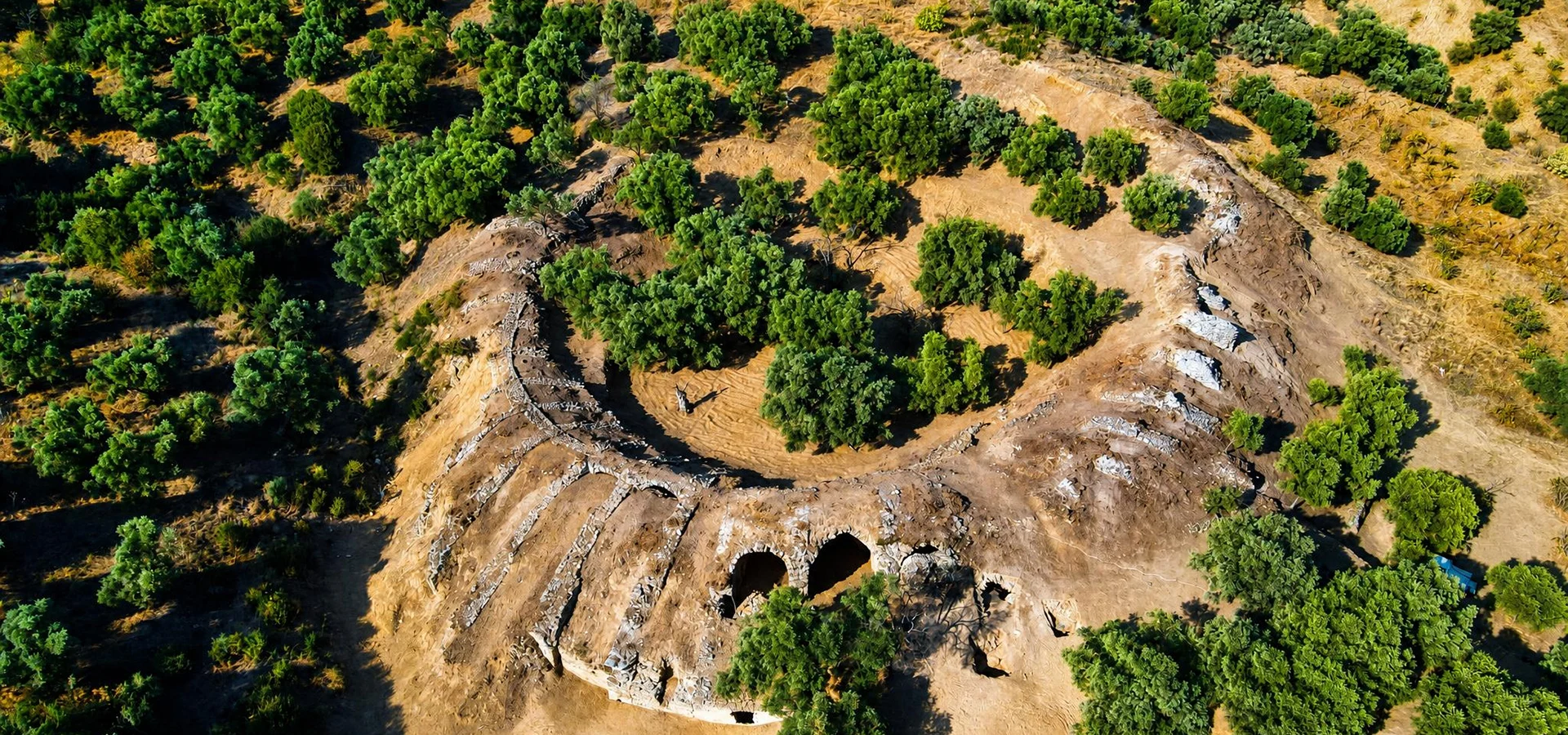
Discover an ancient settlement near Nazilli, particularly notable for its impressive Roman amphitheater.
Explore Mastaura
Explore the monumental architecture and urban heritage of one of the great ancient settlements of the valley.
Discover Nysa
Plan a customized journey through ancient cities, Ottoman architecture, historic villages and the distinctive landscapes of Aydın.
Plan Your Aydın Experience