Culture, evidence & contextHistory, Architecture & Cultural Context of Âşık Paşa Mausoleum
Page-specific research and local distinctions, not generic regional claims.
Âşık Paşa: poet, teacher and historical setting
Âşık Paşa, whose given name is recorded as Ali, was born in 1272 in Arapsun (today Gülşehir) and became associated with the scholarly and spiritual life of Kırşehir. His Garibnâme contains more than ten thousand couplets; its use of Turkish is especially important in a literary environment that also valued Arabic and Persian. The work is didactic and mystical, not a simple collection of songs. The local culture directorate lists his death as 1333, while some academic catalogues give 1332; historians use the inscription and different calendrical conventions when discussing the chronology.
The portal and the burial chamber
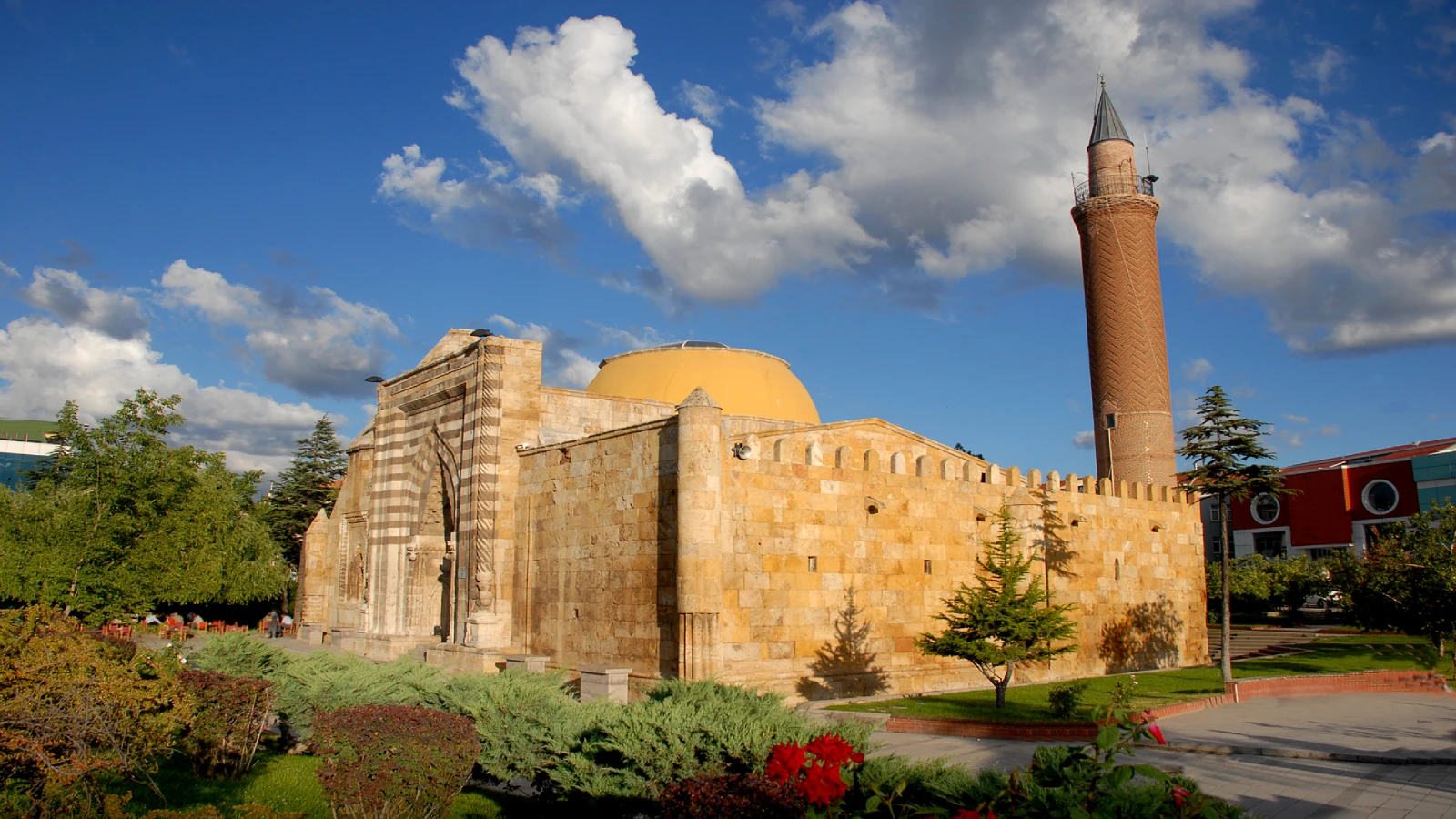
The tomb is situated in a cemetery in Aşık Paşa neighbourhood, on elevated ground near the Ankara–Kayseri route. Its entrance and burial chamber form two distinct spatial parts. The entrance carries a remarkable scalloped, ten-lobed niche and interlaced ornament; the burial chamber is square and domed. The dome has sometimes been interpreted as evoking a Central Asian tent. Treat that association as an art-historical interpretation rather than proof of the builder’s ethnic origin.