Private Gediz Delta Birdwatching Tour
Explore selected observation points, salt-pan landscapes and wetland habitats with a flexible private route focused on birds and nature.
Request a Gediz Delta Tour





Gediz Delta, widely known to visitors as İzmir Bird Paradise, spreads across the northern edge of the Gulf of İzmir around Çiğli, Menemen, Sasalı and the Çamaltı salt pans. It is one of the rare places where a major metropolitan area meets an internationally important wetland almost without transition: apartment districts, fishing harbours and roads give way to lagoons, salt marshes, reed beds, mudflats, salt pans and open water filled with birds.
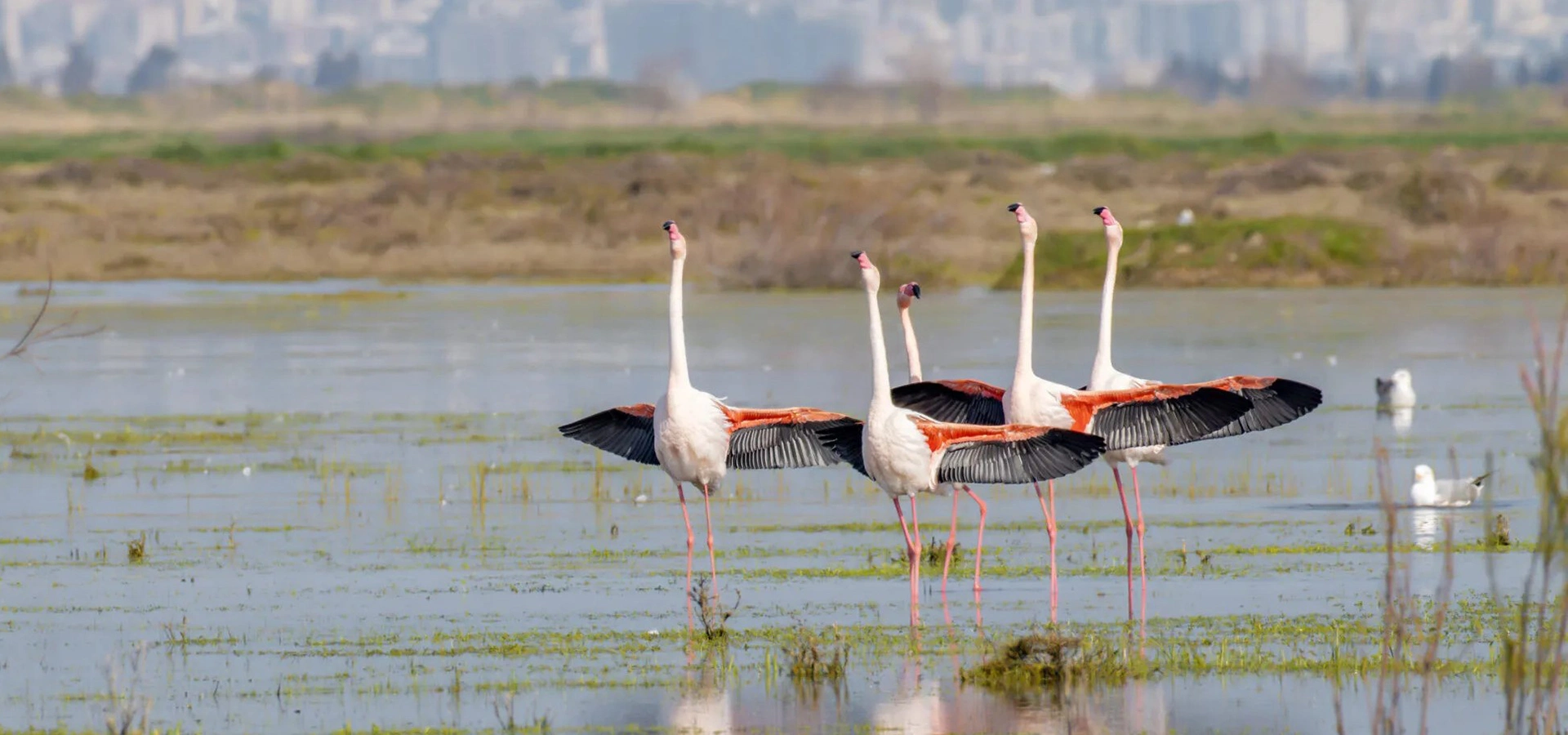
The delta is especially famous for the Greater Flamingo. Large flocks feed in the shallow saline waters, while breeding colonies use protected islands inside the wetland. Gediz is one of the principal flamingo breeding areas in Türkiye and also provides habitat for the Dalmatian Pelican, cormorants, terns, plovers, herons, raptors, ducks and many other resident and migratory species.
Its importance goes far beyond one bird. More than 300 bird species have been recorded across the wider delta, and its mosaic of freshwater and saltwater habitats supports fish, reptiles, mammals, plants, traditional fisheries, grazing and one of the Mediterranean region's major salt-production landscapes. The internationally protected core has been a Ramsar Wetland of International Importance since 1998.
For travellers, the key is to understand that Gediz Delta is not a single fenced attraction. It is a broad living landscape. You can experience it from the İzmir Bird Paradise Visitor Centre, observation towers and walking or cycling routes, from the Mavişehir shoreline, or on scheduled Flamingo Trail boat tours that approach the wetland from the Gulf of İzmir.
Watch one of the Mediterranean's great flamingo gatherings as birds feed, court, rest and breed in the shallow saline waters of the delta.
Look for one of Europe's largest flying birds around Homa Lagoon, salt pans and open-water feeding areas.
Explore an internationally recognised wetland protected for its lagoons, marshes, salt meadows, waterbirds and biodiversity.
See how Çamaltı Salt Pans, Homa Lagoon, mudflats, reed beds and tidal habitats create a remarkable mosaic for wildlife.
Essential information for understanding İzmir's great coastal wetland before you plan a flamingo, birdwatching, photography or nature visit.
North and north-west of central İzmir around Çiğli, Menemen, Sasalı, Mavişehir and the Çamaltı Salt Pans.
A coastal delta with lagoons, salt pans, mudflats, salt marshes, freshwater reeds, wet meadows, islands and agricultural land.
The Gediz Delta Ramsar Site covers 14,900 hectares and was designated on 15 April 1998.
Municipal sources commonly describe the broader Gediz Delta landscape as roughly 40,000 hectares, depending on the boundary used.
The Greater Flamingo, which feeds and breeds in the saline shallows and protected islands of the delta.
More than 300 bird species have been recorded across the delta, making it one of Türkiye's richest bird areas.
The Dalmatian Pelican breeds and winters in the delta and is one of its most important conservation species.
A 6,440-square-metre artificial breeding island was completed in 2012 to strengthen protected nesting habitat.
Çamaltı Salt Pans form both a working salt-production landscape and an important feeding and breeding habitat.
Visitor centre, birdwatching towers and walking routes provide organised ways to experience the wetland.
Scheduled Flamingo Trail boat tours depart from Mavişehir Fishermen's Shelter on operating dates.
Allow 2–4 hours for a focused visit, or a full day for birdwatching, walking routes and nearby Sasalı or İzmir stops.
Gediz Delta is one of the most surprising nature experiences in western Türkiye: a globally important wetland beginning almost at the edge of İzmir's urban coastline.
The first reason to visit is the scale of the birdlife. Flamingos can form enormous pink lines across the shallow water, while pelicans, cormorants, gulls, terns, waders and ducks occupy different parts of the same landscape. During migration and winter, species diversity and total bird numbers can change dramatically from week to week.
The second reason is the variety of habitats. Salt pans, freshwater reeds, salt meadows, lagoons, mudflats, shallow bays, grasslands, islands and agricultural edges lie close together. Each supports different feeding and breeding strategies, so the delta feels less like one wetland than a whole network of connected ecosystems.
The third reason is the contrast with the city. From certain viewpoints you can see wild birds feeding in shallow water while İzmir's skyline rises on the opposite side of the gulf. Few major cities in the Mediterranean have such an important wetland immediately beside their metropolitan area.
Finally, Gediz Delta is an excellent place to understand conservation in practice. Artificial breeding islands, visitor routes, monitoring, ringing studies, habitat restoration and restrictions around sensitive nesting areas show how people are trying to keep a living wetland functioning beside a rapidly growing city.
Gediz Delta lies on the northern side of the Gulf of İzmir, where the Gediz River created a broad low-lying coastal landscape before reaching the Aegean Sea. The wetland extends across parts of the modern districts of Çiğli and Menemen, with the wider delta reaching toward Foça and the northern gulf coast.
The area most visitors associate with İzmir Bird Paradise lies around Sasalı and the Çamaltı Salt Pans, north-west of central İzmir. Mavişehir and Karşıyaka form the urban edge to the south, while Homa Lagoon and other wetland zones extend further into the protected landscape.
Different official and conservation sources use different boundaries for the delta. The internationally designated Ramsar Site covers 14,900 hectares, while the broader ecological and geographical delta is often described as much larger. This is why you may encounter several different area figures when researching Gediz.
The Gediz Delta was created by the long interaction between the Gediz River and the Aegean coast. Over thousands of years, the river carried sediment from inland western Anatolia and deposited it where flowing freshwater slowed on reaching the shallow Gulf of İzmir.
As sediment accumulated, shorelines moved, channels changed and low-lying areas became separated into lagoons, marshes and mudflats. Sea water, river water, seasonal rainfall and evaporation created a constantly changing mixture of fresh, brackish and highly saline environments.
Human activity later added another layer. Salt production reshaped parts of the wetland into controlled evaporation ponds, while agricultural drainage, roads, canals, fishery structures and urban growth altered water movement. Some habitats are therefore natural, some heavily modified and many are a mixture of both.
That complexity is one reason the delta supports so many birds. Different species can exploit shallow salt water, freshwater reeds, open lagoons, wet pasture, dry ground or tidal mud at different times of year.
Shallow evaporation basins support brine organisms and provide important feeding areas for flamingos and other waterbirds.
Homa and other lagoon systems provide fish-rich habitat for pelicans, cormorants, terns and herons.
Freshwater and brackish reed zones shelter secretive birds, nesting species, insects and aquatic life.
Salt-tolerant vegetation forms low colourful carpets around wetland margins and supports specialised wildlife.
Exposed or very shallow mud provides rich feeding grounds for plovers, sandpipers, stilts and other waders.
Seasonally flooded grasslands are important for grazing, insects and birds that feed away from open water.
Low islands create safer nesting sites for colonial birds when disturbance and water levels are carefully managed.
Fields and pasture around the wetland form part of the wider feeding landscape for raptors, larks, storks and other species.
The Ramsar Convention is the international treaty for the conservation and wise use of wetlands. Gediz Delta was added to the List of Wetlands of International Importance on 15 April 1998 as Ramsar Site No. 945.
The designated area covers 14,900 hectares. Ramsar information describes a broad coastal wetland of bays, freshwater and salt marshes, salt pans and highly saline lagoons at the mouth of the Gediz River.
The site's international importance is strongly connected with waterbirds. It supports breeding, feeding, wintering and migration for large numbers of birds, including species of conservation concern such as the Dalmatian Pelican as well as enormous seasonal concentrations of other waterbirds.
Ramsar status does not mean every part of the delta is untouched wilderness. Fishing, grazing, agriculture and salt production are long-standing parts of the landscape. The conservation challenge is to keep these activities compatible with the ecological processes that sustain the wetland.
Bird diversity at Gediz is the result of habitat variety and geographic position. A flamingo feeding in hypersaline water, a pelican fishing in a lagoon and a plover probing a mudflat need very different conditions, yet all can find them within the same delta.
The mild Aegean climate makes the area especially important in winter. Large numbers of waterbirds from colder regions can feed and rest here when northern wetlands become less productive or freeze.
Spring and autumn bring migration waves. Some birds stop only briefly to refuel, others remain for weeks and some continue into the breeding season. This constant movement means a bird list from one month can look surprisingly different from a list made only a few weeks later.
Food is equally important. Shallow water supports algae, brine shrimp, small invertebrates and fish, while reed beds, pasture and fields add insects, seeds and small prey. The delta's productivity is therefore distributed across many ecological niches.
The Greater Flamingo (Phoenicopterus roseus) is the bird most closely associated with Gediz Delta. Flocks can be seen feeding in shallow saline water, sweeping their specialised bills through the water and sediment to filter tiny organisms.
Gediz is one of the most important flamingo areas in the Mediterranean region and one of the principal breeding sites in Türkiye. Local and conservation sources describe the delta as supporting a very large share of the wider regional population, although exact numbers vary by season and year.
The birds are not equally visible everywhere. Water depth, salinity, food availability, wind, disturbance and the stage of the breeding cycle all influence where flocks gather. A viewpoint that is spectacular one day may be quiet the next, which is part of the reality of wildlife watching.
For the best experience, bring binoculars or a spotting scope and resist the temptation to approach birds closely. Long-distance observation gives better natural behaviour and avoids disturbing feeding or nesting flocks.
One of the best-known conservation projects in the delta is the artificial flamingo breeding island. Work completed in 2012 expanded an earlier nesting area into a protected island of approximately 6,440 square metres.
Flamingos need nesting areas that are isolated from terrestrial predators and human disturbance but still close to productive feeding water. Low islands surrounded by shallow saline water provide these conditions when water levels remain suitable.
The breeding island has supported a colony numbering in the many thousands. Exact annual counts vary according to water conditions and breeding success, which is why different official sources may quote different figures for individual years.
Visitors should not expect to walk onto or closely approach the colony. The island's value comes precisely from keeping breeding birds separated from disturbance. Observation is from designated routes, towers, distant viewpoints or authorised tours.
The Dalmatian Pelican (Pelecanus crispus) is one of the most impressive birds in the delta. Its huge wingspan, pale body and heavy bill make it unmistakable when it glides low over lagoons or gathers on islands and banks.
Gediz is one of the regular breeding areas for the species in Türkiye. Homa Lagoon and nearby wetland zones provide feeding and nesting habitat, while winter numbers can increase as birds move through the Aegean region.
Pelicans depend on productive fish populations and secure places to nest. Rising water, erosion, disturbance and habitat loss can reduce safe breeding sites, so conservation organisations have also worked on artificial nesting platforms and habitat restoration.
Look for pelicans from observation towers and open-water viewpoints. Their size makes them easier to identify at long distance than many smaller wetland birds, especially when several birds circle together on rising air or move between feeding zones.
Watch open mud, sandy margins and salt-pan edges for this small pale shorebird.
Often associated with dry open ground and low vegetation around the wider delta.
A broad-winged raptor frequently seen quartering reed beds and wetland margins.
Common around open water, channels and lagoons where they dive for fish.
Several species use the delta seasonally, hovering and diving over shallow water for small fish.
Look along reed edges, channels and shallow water where long-legged birds stalk fish and amphibians.
Winter is especially productive, when large numbers gather on lagoons, salt pans and sheltered water.
Stilts, avocets, sandpipers and plovers exploit mudflats and shallow pools, particularly during migration.
Species change constantly with season, water level and migration. Serious birdwatchers should treat any fixed list as a starting point rather than a promise: the best part of Gediz is that the wetland can produce something unexpected at almost any time of year.
Gediz Delta is important throughout the year, but migration transforms it twice annually. In spring, birds moving toward breeding areas use the wetlands to feed and recover. In autumn, southbound migrants stop again before continuing through the Mediterranean region.
Shorebirds are particularly responsive to changing water levels. A shallow pool or newly exposed mudflat can suddenly attract large feeding groups, while the same location may be almost empty after water depth changes.
Raptors, storks, terns, passerines and many other groups also move through the wider delta landscape. The surrounding fields, scrub and grasslands therefore matter just as much as open water for a complete migration picture.
For birdwatchers who want maximum variety, April–May and September–October are especially rewarding, although exact timing shifts from year to year with weather and regional conditions.
Winter is one of the most important seasons in the delta. Waterbird numbers rise as birds from colder regions arrive to use the mild Aegean coast for feeding and shelter.
Official mid-winter waterbird monitoring in 2025 counted 31,722 flamingos in the Gediz Delta alone. The number is a useful reminder that flamingos are not simply a summer attraction; major flocks can remain through winter as long as feeding conditions are suitable.
Ducks, cormorants, pelicans, waders and gulls can also become more numerous. Cool air and softer winter light make long sessions from observation points much more comfortable than in midsummer.
Rain and wind can still change conditions quickly, and unpaved tracks may become muddy. Waterproof footwear, a windproof layer and a dry place for camera equipment are useful for serious winter visits.
Birds dominate most visitor attention, but Gediz Delta is a much broader ecosystem. Salt marshes support specialised vegetation adapted to extreme salinity, while freshwater zones and wet meadows hold different plant communities.
Conservation surveys have recorded hundreds of plant species across the delta. Salicornia and other salt-tolerant plants are especially characteristic around saline flats, turning some areas green, yellow or reddish according to season and water conditions.
Fish are fundamental to the lagoon food web and support pelicans, cormorants, terns and traditional fisheries. Reptiles, amphibians and small mammals occupy drier or fresher parts of the landscape.
The wider delta also supports mammals such as golden jackal, red fox, wild boar and European hare. These animals are much less predictable than the birds, but tracks or brief sightings are possible on quieter routes.
The Çamaltı Salt Pans are one of the defining landscapes of the Gediz Delta. Broad geometric basins hold seawater at different stages of evaporation, creating a striking contrast between engineered lines and large concentrations of wildlife.
Salt production has a long history here and remains economically important. At the same time, the ponds provide shallow saline habitat used by flamingos, waders and many other birds.
The ecological value of salt pans depends on management. Water depth, salinity, disturbance, pond design and access all influence whether a basin is useful for feeding or nesting birds.
Visitors should remember that these are not simply abandoned ponds. Parts of the salt landscape are operational, and access may be restricted. Use designated roads, observation areas and approved visitor routes rather than entering working or sensitive zones independently.
Homa Lagoon is one of the best-known wetland areas within the wider Gediz system. Shallow water, islands, channels and fish-rich habitat make it especially important for pelicans, cormorants, terns, herons and other waterbirds.
The lagoon is also closely tied to traditional and scientific fisheries. Its productivity demonstrates how coastal wetlands can support both wildlife and human livelihoods when water quality and habitat conditions remain healthy.
An official walking route links the Bird Paradise / Visitor Centre area with Homa Lagoon. The full out-and-back route is approximately 15 kilometres and is generally described as easy, with October to May recommended for comfortable walking.
For birdwatchers, the lagoon rewards patience. Scan distant islands and open water carefully, because pelicans and other large birds may appear as pale shapes long before details become visible to the naked eye.
One of the difficulties of understanding a delta from ground level is that the landscape is extremely flat. Low hills and raised observation points are therefore valuable because they reveal the relationship between lagoons, salt pans, islands and the wider Gulf of İzmir.
The Üçtepeler area provides broad views toward wetland systems including Homa, Kırdeniz and Çilazmak. In winter, elevated viewpoints can be especially useful for scanning duck flocks and other waterbirds across large expanses of water.
The hills and nearby dry habitats also support mammals and land birds that are easy to overlook if you focus only on open water. Spring vegetation adds another dimension, with flowering shrubs and trees bringing colour to the higher ground.
A spotting scope is especially useful here. The best birds may be hundreds of metres away, and the main pleasure is often the scale of the landscape rather than close wildlife encounters.
For a first visit, the İzmir Bird Paradise Visitor and Promotion Centre is the most logical place to begin. Official visitor information describes the centre as operating throughout the week and providing information about the delta and its wildlife.
The visitor area helps travellers understand which parts of the wetland are accessible, where birds are currently concentrating and how to reach observation towers without disturbing sensitive zones.
Official tourism information also notes viewing equipment and bicycles associated with the Bird Paradise visitor experience. Availability can change, so travellers who specifically require a bicycle, binoculars or guided access should confirm locally rather than assuming equipment will always be available.
Starting at the visitor centre is particularly important during breeding periods, conservation works or high water, when routes may be adjusted to protect wildlife or respond to wetland conditions.
Observation towers are among the most useful facilities in Gediz Delta because even a small increase in height can transform visibility across a flat wetland.
From a tower, birdwatchers can scan salt pans, lagoon edges and distant islands while remaining outside the birds' immediate feeding and nesting zones. This is especially valuable for flamingos and pelicans, which may be spectacular in large groups but sensitive to repeated disturbance.
Bring binoculars even if you only plan a casual visit. A telescope is better for identification at long range, especially in winter when duck flocks may contain several similar species.
Wind can be strong on exposed towers. Camera straps, lens hoods and lightweight tripods should be secured carefully, and clothing should be chosen for the open coastal conditions rather than the temperature in central İzmir.
The Flamingo Trail offers a completely different perspective on Gediz Delta by approaching the wetland from the Gulf of İzmir. Current İZDENİZ information describes small-boat tours departing from Mavişehir Fishermen's Shelter and travelling toward the middle gulf and delta bird habitat.
The standard experience is approximately 75 minutes. Flamingos are the headline attraction, but Dalmatian pelicans, cormorants, plovers, marsh harriers and other waterbirds may also be seen depending on season and conditions.
Boat schedules are seasonal and can change with weather, demand and operational planning. Check the official İZDENİZ ticket system shortly before your visit rather than relying on an old timetable or social-media post.
The boat tour is especially useful for travellers with limited time in İzmir because it provides a strong sense of the delta's scale without requiring a long overland route through the protected landscape.
Walking is one of the best ways to experience the delta because the landscape changes gradually. A slow route reveals details that are easy to miss from a vehicle: wader tracks, salt-tolerant plants, distant raptor movement and the changing soundscape of reeds and open water.
Official regional walking information lists a Bird Paradise / Visitor Centre–Homa Lagoon route of about 7.5 kilometres each way, or 15 kilometres return. It is rated easy and typically requires around 3–4 hours on foot.
A second official route links the Visitor Centre with Lodos Tepe, covering approximately 13 kilometres and taking around 5–6 hours. It is described as easy to moderate.
For both routes, the recommended season is broadly October to May, when temperatures are lower. Summer walking can become uncomfortable because the terrain is exposed and shade is limited.
Gediz Delta is not a wilderness without human history. Communities have used the area for fishing, salt production, livestock grazing and agriculture for generations.
The Çamaltı Salt Pans are the most visible example. Their geometric basins are industrial infrastructure, yet they also function as important habitat for flamingos and other waterbirds. This overlap makes the delta a classic example of a cultural working landscape with high ecological value.
Traditional lagoon fisheries are another part of the wetland story. Fish moving between sea, lagoon and channel systems have supported local livelihoods while also feeding pelicans, cormorants and terns.
Understanding these activities helps explain why conservation here is complicated. Protecting Gediz is not only about excluding people; it is about managing water, land use and livelihoods so that the ecological system can continue functioning.
The survival of a delta depends on water, and water management is one of Gediz's greatest challenges. Intensive agricultural demand upstream, changing river flow and drought can reduce the freshwater needed to maintain reeds, wet meadows and the balance between fresh and saline habitats.
Pollution is another long-term pressure. Nutrients, industrial impacts and urban wastewater can alter water quality and food webs far beyond the immediate source of contamination.
The wetland also sits beside a large and expanding metropolitan area. Roads, development, noise, illegal access and disturbance can fragment habitats or make breeding sites less secure.
Climate change adds a further layer through heat, drought, shifting rainfall, hypersalinity and sea-level rise. Low nesting islands used by pelicans and other colonial birds can become more vulnerable to flooding and erosion.
Gediz Delta remains an active conservation and restoration landscape. Government agencies, universities, municipalities and conservation organisations monitor birds, manage water, restore habitat and work with local communities whose livelihoods depend on the wetland.
Flamingos are monitored through counts and ringing projects. During the 2025 mid-winter waterbird census, official monitoring recorded 31,722 flamingos in the delta, demonstrating the continued international importance of the site.
Dalmatian Pelican conservation has included work to create or improve safe nesting areas. Wider restoration programmes also focus on wet meadows, salt-pan management, water movement, sustainable agriculture and reducing disturbance.
Visitors may therefore encounter restricted tracks, research activity, monitoring equipment or habitat works. These should be understood as part of protecting a living wetland rather than as interruptions to the visitor experience.
The Mavişehir coast forms the urban gateway to the southern edge of the delta. İzmir Metropolitan Municipality has been developing the Flamingo Nature Park project here as part of a wider coastal rehabilitation and flood-protection programme.
As of September 2026, municipal updates state that work is continuing on a new approximately 75,000-square-metre public space with bird-observation towers, viewing terraces, recreation areas and facilities designed to connect the city more closely with the natural landscape of the Gediz Delta.
The project should not be confused with the protected core of İzmir Bird Paradise. Mavişehir is an accessible city-edge interpretation and observation zone; the most sensitive breeding and feeding habitats lie farther within the delta and remain subject to conservation controls.
Because construction and access arrangements can change quickly, check current municipal information if Flamingo Nature Park itself is a priority stop during your trip.
Large feeding and resting groups are the delta's signature wildlife spectacle.
Scan lagoons, islands and open water for these enormous pale waterbirds.
Geometric evaporation basins create some of the delta's most distinctive landscapes.
A fish-rich lagoon zone important for pelicans, cormorants and many other waterbirds.
Raised viewpoints help you scan large wetland areas without approaching sensitive birds.
Salicornia and other salt-tolerant plants create low colourful vegetation around saline flats.
Spring and autumn can bring rapidly changing mixtures of waders, terns, raptors and passerines.
Some viewpoints frame wild wetland habitat against the skyline of İzmir across the gulf.
The experience changes with water level, wind, season and bird movement. Gediz is not a wildlife park where animals remain in predictable enclosures; the unpredictability is part of what makes a real wetland so rewarding.
Official İzmir tourism information describes the İzmir Bird Paradise visitor area as accessible during daylight hours until dark, while the visitor centre is described as serving visitors every day of the week.
Gediz Delta is a protected wetland rather than a conventional single-ticket attraction. Access conditions differ between the visitor-centre zone, public roads, walking routes, working salt areas, sensitive breeding habitat and organised tours.
The Flamingo Trail boat tour is a separate ticketed experience operated on scheduled dates from Mavişehir Fishermen's Shelter. Timetables and fares change, so check the live operator information shortly before travelling.
Because conservation work, nesting seasons, weather and water levels can affect access, travellers planning a specialist birdwatching visit should confirm current route conditions locally.
Excellent for winter waterbirds, large flamingo flocks and comfortable long-distance birdwatching in cool weather.
Flamingo courtship, spring migration and fresh wetland vegetation make this one of the most dynamic periods.
Breeding season activity increases. Observe carefully from approved distances and respect all route restrictions.
Flamingos remain important, but heat can be intense. Choose early morning or late afternoon and avoid long exposed walks.
Autumn migration brings new species through the delta while temperatures gradually become more comfortable.
Wintering birds build in number, with excellent lagoon and salt-pan birding on clear days.
For a general nature visit, October to May offers the easiest walking weather. For bird diversity, spring and autumn migration are outstanding. For spectacular flamingo numbers, both the breeding period and winter can be rewarding.
Early morning is the most reliable time for serious birdwatching. Wind is often lighter, temperatures are cooler and many birds are actively feeding after sunrise.
Late afternoon is excellent for photography, especially from the Mavişehir side where warm light can reflect across shallow water and illuminate flamingos against darker backgrounds.
Midday can still be productive in winter, but summer heat and glare are strong. Heat shimmer also reduces image quality and makes distant identification through binoculars or a telescope more difficult.
Boat tours operate according to published schedules rather than birdwatching preference, so choose a departure time that balances light, temperature and availability.
Travel north toward Karşıyaka and Çiğli, then continue toward Sasalı and the Bird Paradise / Çamaltı area.
Mavişehir is the easiest urban gateway for the Flamingo Trail boat experience and southern delta views.
Continue toward Sasalı and İzmir Bird Paradise for the visitor centre, towers and overland wetland routes.
The most flexible option for combining the visitor centre, Sasalı, Mavişehir and other İzmir attractions in one day.
Use İzmir's urban transport network toward Çiğli or Mavişehir, then check the current local connection for your exact visitor point.
Navigate specifically to Mavişehir Fishermen's Shelter and confirm your Flamingo Trail departure details in advance.
Do not use only “Gediz Delta” as a navigation destination. The delta is enormous. Search for your specific target—İzmir Kuş Cenneti Ziyaretçi Merkezi, Mavişehir Balıkçı Barınağı or another confirmed observation point.
The delta is too large to treat as one compact attraction. Choose a visitor zone before you arrive.
Birding improves when you stop frequently, scan carefully and listen rather than covering distance quickly.
Many birds remain far from roads and paths, so optics make a dramatic difference.
Shade is limited across much of the wetland. Sun, wind and reflected glare can be strong.
Closed tracks may protect breeding colonies, research zones or working salt-production areas.
Wildlife stops, photography and route changes can make a short-looking distance take much longer than expected.
Enough for one urban-edge viewpoint or a scheduled Flamingo Trail boat tour.
A focused visitor-centre visit with one or two nearby observation points.
Ideal for first-time birdwatchers who want several towers, slow scanning and photography.
Enough for a more complete wetland visit or a substantial walking route.
Combine Bird Paradise with Mavişehir, Sasalı Wildlife Park or another northern İzmir stop.
Best for serious birders: one early-morning overland session and one late-afternoon or boat-based session.
This itinerary deliberately combines two perspectives: the protected overland wetland in the morning and the urban Gulf of İzmir edge later in the day. Confirm boat schedules before building the day around a specific departure.
A telephoto lens lets you photograph natural behaviour without approaching or disturbing birds.
Look for patterns, reflections and repeated neck shapes rather than only close portraits.
Large pelicans are excellent subjects when they glide low over lagoon water or circle in groups.
Include straight pond edges and shallow colour changes to show the working landscape around the birds.
Low early light reduces glare and often gives cleaner conditions for distant wildlife photography.
Mavişehir and the gulf edge can produce strong silhouettes of flamingos, gulls and other waterbirds.
Long-distance photographs soften quickly in hot midday air, especially across salt pans.
If a flock moves away from you, increase your distance rather than following it for a closer frame.
Gediz Delta can be a memorable family visit because flamingos and pelicans are large, colourful birds that children can recognise easily even without specialist bird knowledge.
For younger children, choose a short observation-based visit rather than a long walking route. Binoculars, a simple bird checklist and frequent breaks can turn the experience into a wildlife treasure hunt without exhausting them.
Accessibility varies by location. Some urban-edge viewpoints and visitor facilities are easier than long wetland tracks, while unpaved surfaces, distance and exposure can make the full overland experience difficult for visitors with reduced mobility.
Boat tours may offer a useful alternative for some travellers, but boarding conditions and vessel accessibility should be confirmed directly with the operator before booking.
If birds stop feeding, become alert or move away because of you, you are already too close.
Shortcuts can cross nesting habitat, fragile salt-marsh vegetation or working salt areas.
Quiet visitors see more wildlife and cause less stress to breeding and resting birds.
Flamingo and pelican breeding areas need strict separation from visitors.
Natural feeding behaviour is essential in a protected wetland ecosystem.
Fishing line, plastic and food packaging are especially dangerous around waterbirds.
Do not launch a drone unless current permissions are clear and wildlife disturbance can be avoided.
Choose responsible guides, official tours and local services that respect protected-area rules.
They are the single most useful item for turning a scenic wetland visit into a wildlife experience.
Long routes are exposed and there may be no shop close to your chosen observation point.
Hat, sunscreen and sunglasses are important even outside midsummer because water and salt reflect light.
Coastal wind can make towers and boat trips much cooler than the city centre.
Mosquitoes and other insects are a natural part of wetland environments, especially in warmer months.
Do not assume Flamingo Trail tours operate every day or at the same times throughout the year.
A protected wetland is not designed for close encounters. The best views often come through optics.
Breeding seasons, habitat works and weather can change routes or close sensitive areas temporarily.
The closest visitor hub for Bird Paradise and a practical place for food or a break between nature stops.
A major family attraction in Sasalı that combines easily with a shorter Gediz Delta visit.
The urban waterfront gateway to the southern delta and departure area for Flamingo Trail boat tours.
Continue with waterfront promenades, cafés and sunset views after a birdwatching session.
Combine nature with archaeology at one of İzmir's key ancient settlement sites.
Explore the northern district connected with the wider delta landscape and traditional local culture.
Continue north-west to the historic coastal town of ancient Phokaia for a full nature-and-Aegean day.
Return to Kordon, Kemeraltı, the Agora or Kadifekale for an evening contrast with the morning wetland.
An excellent family day combining wild wetland observation with the organised Sasalı wildlife park.
Pair morning observation towers with an evening waterfront walk or Flamingo Trail boat tour.
Combine Aegean nature with the archaeology of Bayraklı / Tepekule in one north-İzmir route.
Spend the morning birdwatching and the afternoon in Kemeraltı, the Agora and Kordon.
A longer day joining wetland birdlife with one of the northern Aegean's most atmospheric coastal towns.
Early-morning towers, midday rest, late-afternoon Mavişehir and sunset from the gulf edge.
Begin at the visitor centre before sunrise conditions fade and devote the day to selected lagoon and salt-pan viewpoints.
Choose one walking route, picnic or lunch in Sasalı and finish without trying to cover the entire delta.
It is a large coastal wetland at the northern edge of the Gulf of İzmir, formed by the Gediz River and made up of lagoons, salt pans, marshes, mudflats, reed beds and meadows.
İzmir Bird Paradise is the best-known visitor and conservation area within the wider Gediz Delta landscape. The delta itself is geographically larger.
It is north-west of central İzmir around Sasalı, Çiğli, Menemen and the Çamaltı Salt Pans.
Yes. The 14,900-hectare Ramsar Site was designated on 15 April 1998.
The Ramsar boundary is 14,900 hectares, while broader municipal descriptions of the geographical delta commonly use a figure of roughly 40,000 hectares.
Different sources measure the Ramsar site, protected wetland zones, Bird Paradise visitor area or the wider geographical delta, so the boundary being discussed is not always the same.
More than 300 species have been recorded across the delta, with the exact total changing as new observations are documented.
Yes. Gediz Delta is one of the Mediterranean region's major Greater Flamingo habitats and a principal breeding area in Türkiye.
Flamingos can be present throughout the year, but their numbers and exact feeding locations change with season, water conditions and the breeding cycle.
Both winter and the spring-to-summer breeding period can produce major flamingo concentrations. Early morning and late afternoon usually offer the best light.
Yes. Gediz is one of the principal flamingo breeding areas in Türkiye.
It is a protected breeding island expanded to approximately 6,440 square metres in 2012 to provide safer nesting habitat.
No. Breeding colonies need protection from disturbance and should only be observed from authorised distant viewpoints or tours.
Yes. The Dalmatian Pelican is one of the delta's most important resident and breeding waterbirds.
Possible species include plovers, stilts, avocets, terns, cormorants, herons, egrets, ducks, gulls, marsh harriers and many migratory shorebirds.
It is a major lagoon within the delta, important for fish, fisheries and birds including pelicans, cormorants, terns and herons.
They are working salt-production ponds that also create valuable shallow saline habitat for flamingos and other waterbirds.
Yes. The İzmir Bird Paradise Visitor and Promotion Centre is the best starting point for an overland wetland visit.
Yes. Observation towers and designated routes allow visitors to watch wildlife from raised points without entering sensitive habitat.
Current official tourism information describes the centre as serving visitors every day of the week.
Official tourism information describes general visiting during daylight hours until dark. Specialist facilities and tours can follow separate schedules, so confirm before travelling.
Gediz is not a single conventional ticketed attraction. Charges can differ for organised tours or specific services, so check current local information for the experience you plan to use.
It is a nature route on the southern edge of the delta that can be experienced through organised boat and other guided tour formats from the Mavişehir area.
Current İZDENİZ information lists Mavişehir Fishermen's Shelter as the departure and arrival point.
The current standard boat experience is approximately 75 minutes, although operational details may change.
No fixed daily schedule should be assumed. Departures are seasonal and operational, so check the live ticket system.
Yes. Official routes include walks from the visitor centre toward Homa Lagoon and Lodos Tepe.
The official route is about 7.5 kilometres each way, or approximately 15 kilometres return.
October to May is generally the most comfortable period for the official wetland walking routes.
Cycling has been part of the visitor experience, but current bicycle availability and permitted routes should be confirmed at the visitor centre.
They are strongly recommended. Many birds remain far from public routes, and binoculars dramatically improve the experience.
Not for a casual visit, but a scope is extremely useful for identifying distant ducks, waders and pelicans across wide lagoons and salt pans.
Yes. Flamingo flocks, pelicans, salt-pan geometry, reflections and sunset light make it one of İzmir's best wildlife photography areas.
Do not fly a drone unless you have confirmed current permissions and can operate without disturbing wildlife. Breeding colonies are particularly sensitive.
Yes, especially for short observation-based visits. Long walking routes can be tiring because the landscape is exposed and distances are large.
Accessibility varies by zone. Some urban-edge and visitor facilities are easier than unpaved wetland routes, so confirm current conditions for specific mobility needs.
Yes, mosquitoes can occur in warmer months because this is a wetland ecosystem. Repellent and light protective clothing can help.
Binoculars, water, sun protection, comfortable shoes, a wind layer, insect repellent and a camera with a telephoto lens if you enjoy wildlife photography.
Two to four hours is enough for a first visit, while serious birdwatchers can easily spend a full day.
Yes. Both are in the Sasalı / Çiğli area and make a practical full-day family or nature route.
Yes. With private transport, a morning wetland visit can be followed by an afternoon in Foça.
Yes. The Bayraklı / Tepekule archaeological site lies on the northern side of İzmir and fits well into a nature-and-history day.
No. The delta is internationally protected as a Ramsar wetland, but as of 2026 it is not inscribed on the UNESCO World Heritage List or included on Türkiye's official UNESCO World Heritage Tentative List.
Local and conservation initiatives have advocated World Heritage recognition, but advocacy or nomination work should not be confused with inclusion on UNESCO's official Tentative List.
It is a municipal coastal project designed as an urban gateway to the delta with observation, recreation and interpretation areas.
Municipal updates from September 2026 state that the expanded 75,000-square-metre project is still under development, so current access should be checked.
Expecting a compact attraction with birds close to the path. Gediz is a vast wild wetland, and the best experience comes from patience, optics and realistic wildlife distances.
Think of it as four connected systems: river and sea, natural and managed wetlands, migratory wildlife, and a human landscape of salt production, fishing, grazing and urban İzmir.
A private nature route can connect Gediz Delta with Sasalı, Mavişehir, Old Smyrna, central İzmir or Foça, creating a day focused on birdwatching, wildlife photography, wetlands, coastal landscapes or a relaxed combination of nature and history.
Tell us whether your priority is flamingos, serious birding, photography, a family nature day, walking, coastal scenery or a combined İzmir itinerary, and we can shape the route around your interests.
Explore selected observation points, salt-pan landscapes and wetland habitats with a flexible private route focused on birds and nature.
Request a Gediz Delta Tour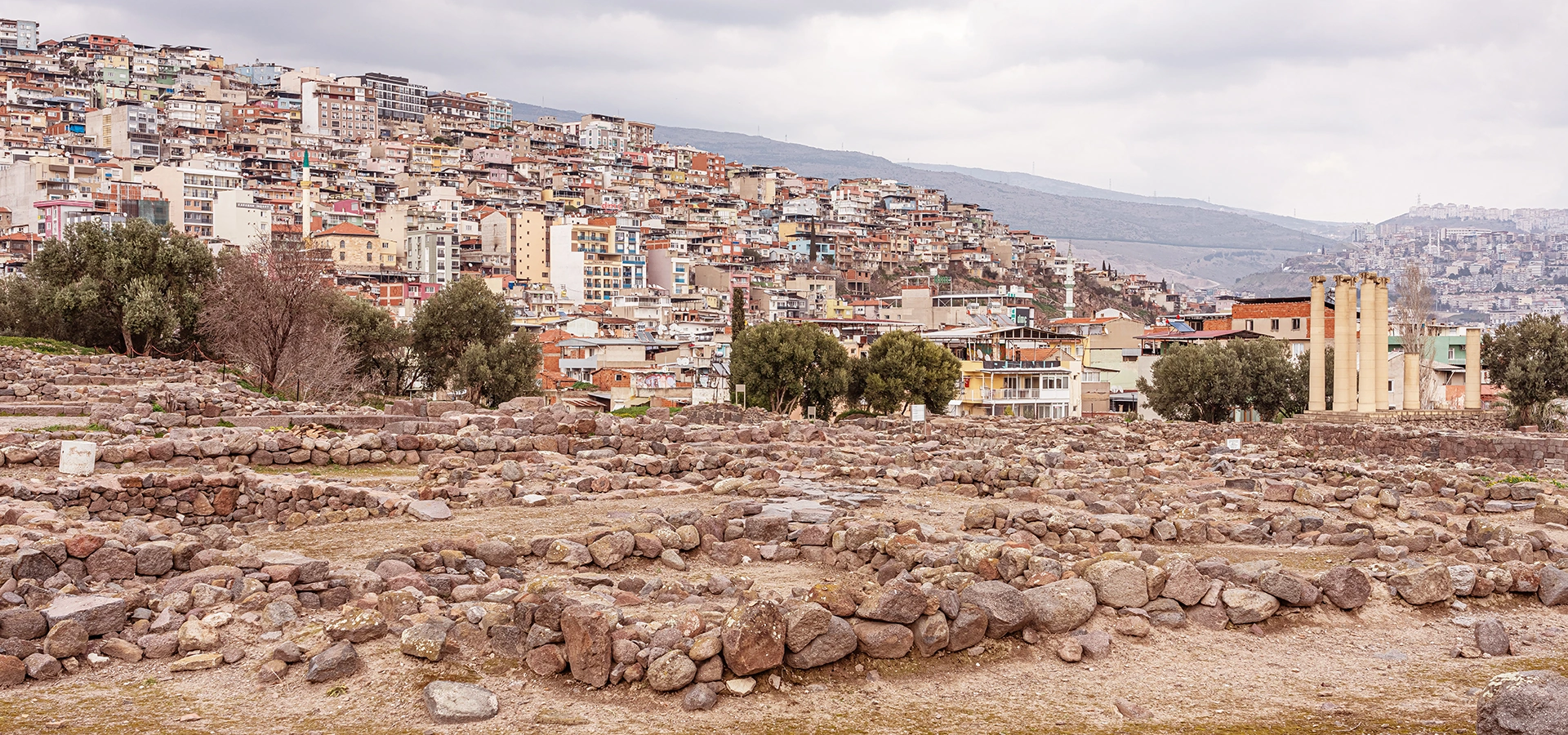
Combine İzmir's great urban wetland with the archaeology of Bayraklı / Tepekule for a distinctive nature-and-history day.
Explore Old Smyrna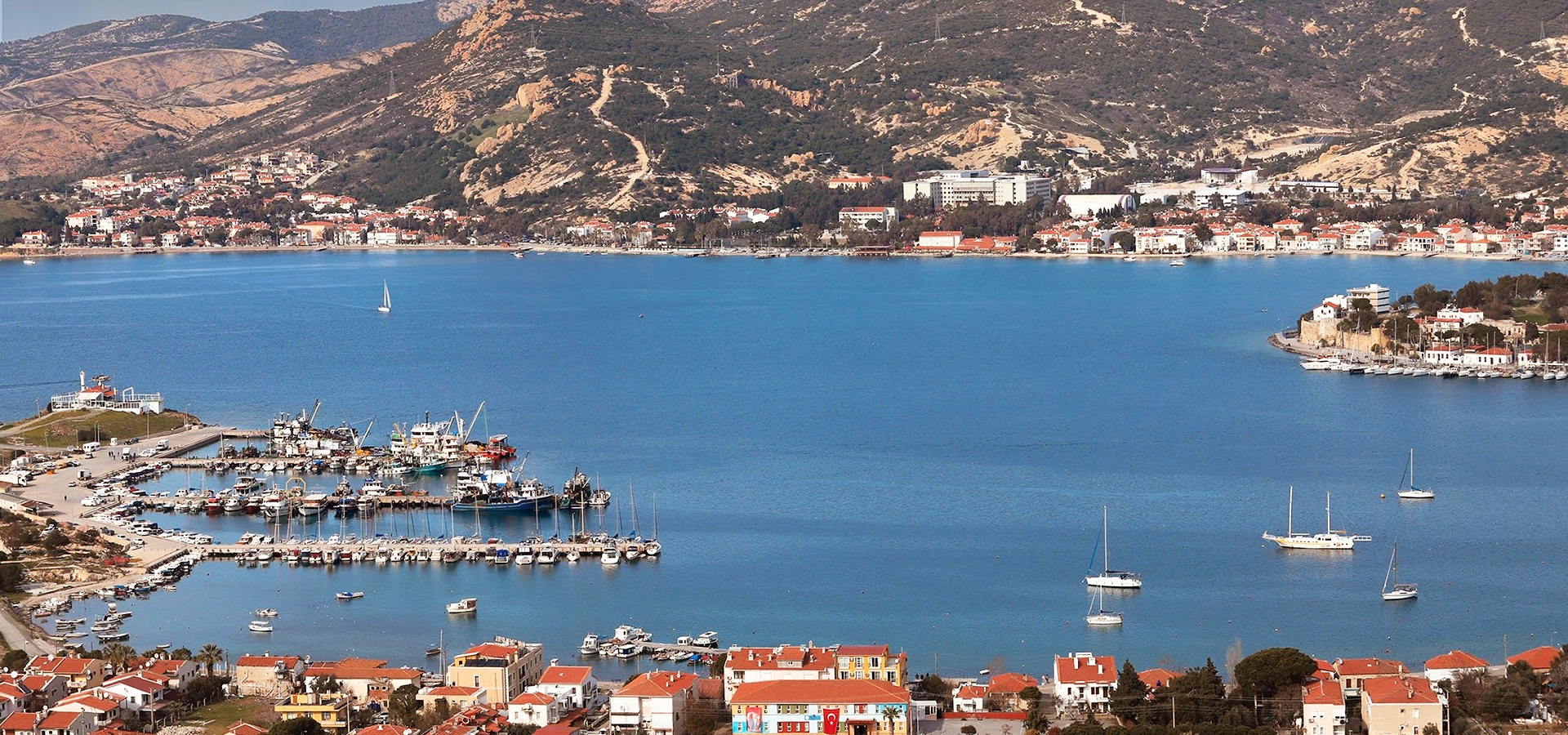
Continue from the wetlands to ancient Phokaia and the Aegean coast for a full day of birdlife, landscape and maritime history.
Explore Foça
Continue with our complete İzmir guide for ancient cities, coastal towns, local food, museums, neighbourhoods and regional day trips.
View İzmir Guide