Ancient Caria, Mysterious Monuments & Sacred Landscapes

Gerga Ancient Site – Complete Aydın Visitor Guide

Discover one of ancient Caria's most mysterious sanctuaries,
where monumental stone figures, enigmatic inscriptions and forgotten rituals survive among the mountains.

Explore Ancient Gerga

Gerga Ancient Site – The Mysterious Sacred Landscape of Caria

Hidden among the rugged hills of the Çine district in Aydın Province, Gerga Ancient Site is one of southwestern Türkiye's most unusual archaeological places. Unlike the monumental Greek and Roman cities of the Aegean coast, Gerga preserves a haunting collection of colossal stone statues, mysterious inscriptions, freestanding monuments and massive stone buildings scattered across a remote mountain landscape.

Commonly called Gerga Ancient City or Gerga Antik Kenti, the site may be more accurately understood as a Carian sanctuary or sacred settlement. Archaeologists continue to debate whether the name Gerga identifies a community, a sacred place, a local deity or a legendary figure. Its surviving monuments suggest religious importance, although their precise functions and dates remain uncertain.

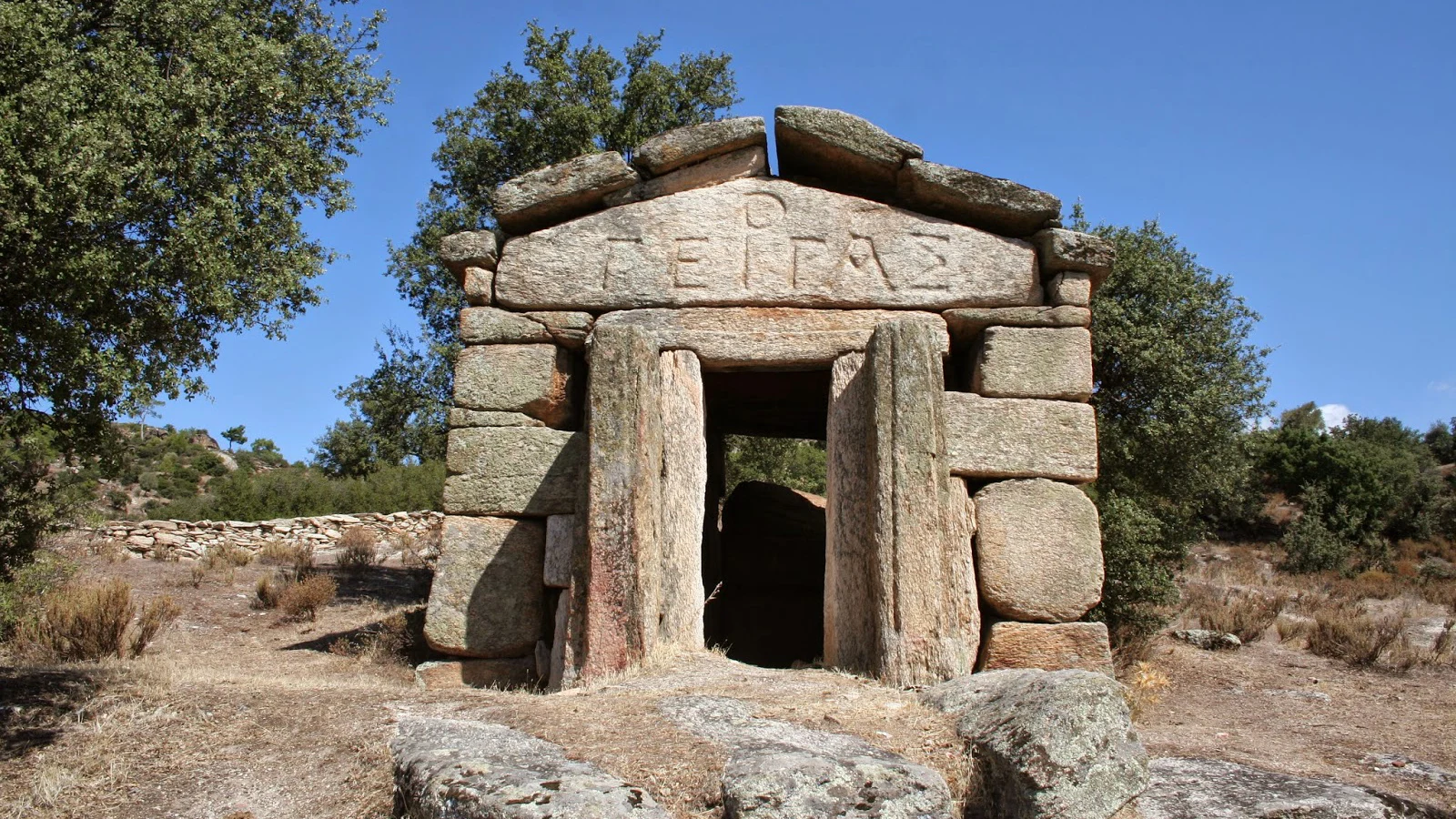
One of the most remarkable features is a small monumental stone building with a triangular pediment inscribed GERGAS. Nearby stand or lie the remains of enormous sculpted figures, tall stone stelae and structures traditionally interpreted as fountains, tombs or places of worship. The distinctive architecture reflects local building traditions that cannot always be explained through familiar Greek and Roman categories.

Gerga is also an extraordinary landscape experience. Reaching the ruins involves travelling through rural Caria and walking across rocky hillsides rather than entering a conventional archaeological park. For visitors interested in ancient religions, archaeology and lesser-known historical places, Gerga offers an especially memorable encounter with the ancient past.

Carian Heritage

Discover monuments associated with the indigenous traditions of ancient Caria.

Enigmatic Inscriptions

Explore the repeated GERGA and GERGAS names carved into stone.

Colossal Statues

See the remains of extraordinary oversized human figures.

Remote Sanctuary

Experience a mountain archaeological landscape far from mass tourism.

Know Before You Go

Gerga Ancient Site – Quick Facts

Essential information for exploring this remote Carian archaeological sanctuary near Çine.

📍

Location

Deliktaş area, near Ovacık and Alabayır, Çine district, Aydın Province, Türkiye.

Open on Google Maps
🏛️

Site Type

Ancient Carian settlement and probable religious sanctuary.

📜

Historical Period

Archaic-period origins have been proposed; surviving monuments have also been associated with the Roman period.

🗿

Famous Features

GERGAS inscriptions, monumental stone building, colossal statues and tall stelae.

🥾

Access

Rural road approach followed by walking over uneven mountain terrain; conditions vary.

⏱️

Suggested Visit

Allow approximately 1–2 hours among the main ruins, plus additional time for access and hiking.


A Rare Survival of Indigenous Carian Culture

Why Is Gerga Ancient Site Important?

Gerga offers an unusual glimpse into local religious traditions and monumental architecture in ancient southwestern Anatolia.

Ancient Caria occupied much of the region corresponding to today's Aydın and Muğla provinces. Although Carian communities interacted extensively with Greeks, Persians, Hellenistic rulers and Romans, they also maintained distinctive local traditions. Gerga is especially valuable because its monumental remains appear to preserve elements of this regional cultural identity.

Unlike major urban centers, where visitors expect theaters, agoras, colonnaded streets and public baths, Gerga is dominated by structures that suggest ritual, commemoration and sacred activity. The relatively unusual character of its architecture has encouraged scholars to interpret it as a religious gathering place serving communities in the surrounding countryside.

The repetition of the names GERGA and GERGAS is particularly intriguing. Inscriptions appear on different monuments, yet they do not provide a straightforward explanation of the sanctuary's history. Some interpretations associate the name with a local god or heroic figure; others understand it as a place name.

Gerga is therefore important not only for what survives, but also for what remains unknown. Its architecture, inscriptions and sculptures raise questions about sacred geography, local identity and the survival of indigenous beliefs under wider Mediterranean cultural influences.

For travelers exploring ancient Caria, Gerga creates a fascinating contrast with the more familiar urban ruins of Alabanda Ancient City and Alinda Ancient City.


Where Is Gerga Ancient Site?

Gerga lies in the mountainous countryside of Çine, Aydın, within the historical territory of Caria. Official Turkish heritage descriptions place the archaeological site in the Deliktaş area, close to rural settlements including Ovacık and Alabayır.

The ruins are approximately 12–13 kilometers from ancient Alabanda in a straight line, although travel by road and on foot is considerably longer. Historical accounts also locate Gerga in the mountains southeast of Eski Çine, overlooking the wider valley of the Çine River, known in antiquity as the Marsyas.

The setting is an important part of the experience. Granite-like rock formations, gneiss outcrops, olive trees, scrub vegetation and irregular hillsides surround the ancient monuments. Rather than occupying a neatly planned archaeological enclosure, Gerga extends across a rugged landscape in which natural rocks and worked stone structures sometimes appear to merge.

This geography may help explain why older Carian building practices remained distinctive here. The surrounding mountains offered relative isolation while maintaining connections with nearby valleys, settlements and possible regional sacred routes.

Location planning: Gerga is a remote archaeological landscape, not a major roadside museum. Do not assume a navigation pin marks a vehicle-accessible entrance. Check the current walking approach and road conditions locally before departure.

History of Gerga Ancient Site

The history of Gerga is unusually difficult to reconstruct because the site is poorly documented in surviving ancient literary sources, and its monuments have not been securely dated as a unified architectural complex.

Its location within ancient Caria links it to a region whose inhabitants developed distinctive languages, religious practices and monumental traditions. The Carian cultural landscape included fortified settlements, rural sanctuaries, sacred springs and places associated with local gods and ancestral figures.

Some official descriptions suggest that traces at Gerga extend back to the Archaic period, while other researchers consider a Roman-period date likely for important surviving structures. These interpretations should not be treated as a definitive construction chronology for every monument.

The site attracted scholarly interest around the turn of the 20th century. The French researcher Gustave Cousin published an early description in 1900. Alfred Laumonier subsequently studied its religious monuments, and British classical scholar George E. Bean carried out a significant investigation in 1968, publishing his findings in 1969.

Bean documented a landscape considerably more extensive than the central group of monuments. His observations included monumental statues, inscribed stelae, stone buildings, possible domestic structures and features distributed across neighboring hills.

Renewed archaeological attention in the 21st century has improved understanding of Gerga. Research and cleaning campaigns took place between 2020 and 2023 under a team associated with Aydın Adnan Menderes University. According to the project's archaeological director in a 2024 interview, these were primarily surface research and cleaning activities rather than systematic excavations.

Ancient Caria

The mountainous region supports distinctive local settlements and religious traditions.

Archaic to Roman Periods

Different chronological interpretations have been proposed for the site and its monuments.

1900

Gustave Cousin publishes an early scholarly account of Gerga.

1930s

Alfred Laumonier investigates Gerga in the context of indigenous Carian cults.

1968–1969

George E. Bean surveys the ruins and publishes his archaeological observations.

2020–2023

Modern research and cleaning activities bring renewed attention to the sanctuary.

A note on dating: Gerga is sometimes described as 2,600 years old, but this broad estimate should not be interpreted as the proven date of its standing temple-like building or individual statues. Their chronology remains debated.

What Does the Name Gerga or Gergas Mean?

One of Gerga's greatest mysteries is the repeated appearance of the names GERGA and GERGAS. Unlike a typical ancient inscription recording a dedication, a ruler or a historical event, many of Gerga's short inscriptions provide little context beyond the name itself.

The same word or related forms appear on architectural blocks, rocks, monumental stelae and sculptures. Earlier scholars recorded more than twenty examples across the archaeological landscape.

Several explanations have been suggested, but none has achieved universal acceptance.

A Local Deity

Gergas may have been the name of an indigenous Carian god associated with the sanctuary.

A Sacred Place

Gerga could identify the sanctuary or settlement rather than a divine individual.

A Founder or Hero

Some interpretations connect the name with a legendary founder or honored ancestral figure.

Regional Identity

The repeated inscriptions may have marked monuments belonging to a shared local religious tradition.

The importance of the name is clear even if its precise meaning is not. Its placement on different monuments suggests that Gerga or Gergas was central to the identity of the site.

Archaeological uncertainty: It is not yet possible to state conclusively that Gergas was a specific god, that the settlement was named after him, or that every inscribed monument served the same ritual function.

The GERGAS Temple-Like Stone Building

The most famous surviving structure at Gerga is a small, remarkably substantial building constructed from large, carefully worked stone blocks. Its monumental doorway, heavy lintels and triangular pediment distinguish it from the surrounding scattered ruins.

Above the entrance is the inscription GERGAS, one of the most recognizable features of the entire archaeological site.

The building's roof arrangement is particularly unusual. Archaeologists have noted that elements of the stone construction appear to imitate forms originally associated with timber architecture. This makes the structure an important example of local building practices and their translation into monumental stonework.

It is frequently called the Gerga Temple, although earlier scholars also considered funerary interpretations. Without more decisive archaeological evidence, its exact original purpose should remain open to discussion.

Monumental Entrance

Large upright stone elements frame a narrow doorway beneath the pediment.

GERGAS Inscription

The prominent name connects the building with the site's central historical mystery.

Massive Stone Blocks

Substantial local stonework gives the building an exceptionally solid appearance.

Uncertain Function

Temple, cult monument and funerary interpretations have all been discussed.

The building should be appreciated not simply as an isolated ancient monument but as part of a larger relationship involving inscriptions, sculptures, tall stelae and possible ritual spaces.

Conservation reminder: Do not climb onto the roof, lean against unstable blocks or enter openings unless access is clearly permitted and safe. The monument is an irreplaceable archaeological structure, not a climbing attraction.

The Colossal Stone Statues of Gerga

The enormous human figures associated with Gerga are among the site's most striking features. Earlier archaeological descriptions recorded several oversized sculptures, some lying on their faces or fallen from their original positions.

One monumental statue near the principal building has traditionally been associated with Cybele, the Anatolian Mother Goddess. This identification appears in official heritage descriptions, but it should be understood as an archaeological proposal rather than a securely demonstrated fact.

Another large fallen statue was described by George E. Bean as approximately four meters long. The figures' monumental scale suggests that they were intended to make a powerful visual impression on anyone approaching the sanctuary.

The interpretation of these sculptures is complicated by damaged surfaces, displacement and the absence of a fully understood original context. They may represent divine beings, heroic individuals, cult images or other locally meaningful figures.

Monumental Scale

Some figures were carved at sizes far greater than ordinary human proportions.

Possible Mother Goddess

A prominent statue has been tentatively connected with Cybele and Anatolian mother-goddess traditions.

Fallen Figures

Several sculptures were documented lying on the ground, separated from their original settings.

Unknown Identities

The names and meanings of the figures remain open to archaeological interpretation.

What visitors should know: The exact positions and preservation of individual sculptures may differ from older photographs and scholarly descriptions. Do not assume every historically recorded statue remains in its original documented location.

The Giant Stone Stelae of Gerga

Another distinctive feature of Gerga is a group of tall stone monuments often described as tapering or pyramidal stelae. Some of these carefully worked stones exceed three meters in height and carry inscriptions associated with the name Gergas.

Earlier archaeological observations place two particularly prominent stelae near the main monumental structure, in association with a fallen colossal statue.

The arrangement suggests a carefully organized monumental setting rather than a random collection of isolated stones. However, the original relationship between the stelae, statues and surrounding buildings is not completely understood.

Distinctive Shape

Tall, tapering stone forms distinguish these monuments from ordinary masonry blocks.

Inscribed Names

Some examples display the repeated name Gergas.

Monumental Arrangement

Their location near large statues suggests an important ceremonial or commemorative setting.

Unresolved Purpose

Religious, funerary and commemorative meanings remain possible interpretations.

These unusual standing stones are an important reason Gerga cannot be understood solely through the standard architectural vocabulary of classical Greek cities.

Architecture and Stoneworking at Gerga

Gerga's monuments are closely connected with the geology of their surroundings. Researchers have identified gneiss as an important building material, reflecting the availability of workable local stone in the mountainous landscape.

Large blocks were shaped into walls, roofs, doorways, sculptures and freestanding monuments. This substantial stoneworking tradition gives many structures a powerful, almost prehistoric appearance, although their visual style alone cannot establish their date.

Some of the site's masonry has been described as characteristic of Carian construction. Rather than presenting a conventional monumental city plan, the remains comprise smaller groups of buildings and monuments spread across terraces and hillsides.

Gneiss Stone

Locally available rock provided material for buildings, monuments and carved surfaces.

Massive Masonry

Large fitted blocks create substantial walls, entrances and architectural supports.

Rock-Cut Features

Worked natural stone appears throughout the surrounding archaeological landscape.

Unusual Roof Construction

The principal building preserves forms that have been compared with timber-derived architecture.

Scattered Structures

Ruins extend beyond the principal monument across neighboring slopes and terraces.

Carian Character

The monuments reflect a regional architectural tradition distinct from more familiar classical urban sites.

One of the most rewarding aspects of visiting Gerga is examining how carefully shaped human-made structures interact with the surrounding rocky terrain. In some places, the distinction between a natural boulder, a quarried block and an ancient architectural element is not immediately obvious.

Ancient Water Features at Gerga

Among the less familiar monuments at Gerga are small stone structures, worked basins and features that researchers have interpreted as possible fountain houses or water-related cult installations.

George E. Bean described several small square buildings, some approximately two meters high, with open fronts and stone roofs. Although earlier interpretations considered them possible tombs, Bean suggested that fountain-house functions might be more likely.

Modern researchers have also discussed the possibility that water, purification or healing traditions played an important role in Gerga's religious landscape. Such an interpretation would fit the wider importance of springs and water sources in many ancient Anatolian sanctuaries.

Nevertheless, the precise functions of individual structures are not yet securely established. Visitors should distinguish between surviving physical evidence and hypotheses about rituals once performed around it.

Small Stone Buildings

Roofed structures with open fronts have attracted different archaeological interpretations.

Worked Basins

Carved stone features may relate to practical activities, water use or ritual practices.

Possible Purification

Water-based religious interpretations have been proposed for parts of the sanctuary.

Further Research Needed

More detailed archaeological investigation is required to establish original functions.

Historical interpretation: Claims that Gerga was definitely a healing center or that individual basins were used for specific ceremonies go beyond the securely established archaeological evidence.

Understanding the Archaeological Layout of Gerga

Gerga's archaeological landscape is broader than its best-known group of stone monuments. In his 1969 study, George E. Bean described remains distributed across two neighboring hills, including structures beyond the principal eastern monumental area.

The main group of remains includes the inscribed building, enormous sculpted figures, standing stelae and other stone features. Farther across the landscape, earlier researchers recorded additional structures, walls and monuments.

Some remains have been interpreted as houses or streets, suggesting that occupation or service activities may have accompanied religious use. This does not necessarily mean that Gerga was a large city in the conventional urban sense.

Main Monumental Area

The most recognizable concentration of inscribed structures and sculptures.

Neighboring Hills

Additional ancient remains are spread across the surrounding uneven landscape.

Wall Remains

Stone constructions suggest boundaries, terraces or settlement-related structures.

Possible Domestic Areas

Earlier surveys recorded ruined buildings that may have supported everyday activities.

Because the ruins are scattered and not always clearly signposted, Gerga rewards visitors who arrive with a good understanding of its principal monuments rather than expecting a fully interpreted walking trail.

Was Gerga an Ancient City or a Sacred Sanctuary?

Modern tourism descriptions generally identify Gerga as an ancient city, but archaeologists have increasingly emphasized its probable function as a shared Carian religious sanctuary.

Professor Murat Çekilmez, who directed recent archaeological research at the site, explained in a 2024 interview that the absence of familiar civic structures, such as a theater, and the presence of monumental religious features support the sanctuary interpretation.

The principal stone building, colossal sculptures, inscribed stelae and possible water installations may have formed part of a sacred area used by people from neighboring communities.

At the same time, evidence of walls and smaller structures suggests that Gerga's landscape may have accommodated settlement or other functions alongside religious activities.

For this reason, the most careful description is an ancient Carian archaeological site with strong evidence of sanctuary use.

Why the distinction matters: A sanctuary does not need a theater, agora or monumental street network to be historically important. Gerga may have served as a religious focal point for communities whose principal settlements lay elsewhere.

Archaeological Research at Gerga

Gerga's remote setting protected some monuments from intensive modern urban development, but the archaeological landscape has also suffered from disturbance, unauthorized digging and damage to ancient remains.

Early scholars were primarily concerned with identifying and recording the most unusual monuments. Their descriptions remain valuable because they preserve observations about sculptures and structures in conditions that may have changed over the following century.

Later archaeological work broadened attention from individual monuments to the entire landscape, including possible relationships between sacred spaces, water features, buildings and surrounding settlements.

Modern surface research between 2020 and 2023 sought to document and protect surviving remains. Although reports published in 2020 announced the beginning of archaeological work, the project's director later clarified that systematic excavation had not taken place and that the activity consisted of survey and cleaning.

Questions of land ownership, difficult terrain, archaeological funding and protection remain important for the site's long-term future.

Historical Documentation

Early photographs and scholarly descriptions help reconstruct changed monument conditions.

Surface Survey

Researchers document visible remains, inscriptions, sculptures and architectural features.

Conservation

Stone monuments require protection from erosion, physical damage and unauthorized intervention.

Unanswered Questions

The sanctuary's chronology, cult identity and wider regional connections need further study.

Gerga demonstrates that archaeology is not simply about finding spectacular objects. Recording context, preserving fragile structures and distinguishing evidence from interpretation are equally important parts of understanding the ancient world.

What to See at Gerga Ancient Site

The principal attractions at Gerga are architectural and sculptural rather than the large public monuments familiar from major Roman cities. The following features provide a useful framework for understanding the archaeological landscape.

GERGAS Monument

Examine the monumental stone building with its distinctive inscribed triangular pediment.

Colossal Stone Figures

Look for surviving oversized sculptures and their relationship to the sanctuary.

Inscribed Stelae

Study tall tapering stones bearing forms of the name Gergas.

Rock Inscriptions

Discover the importance of repeated names engraved on worked stone and natural rock.

Small Stone Structures

Observe buildings variously interpreted as fountains, tombs or ritual installations.

Ancient Stone Walls

Notice the surviving masonry and possible boundaries across the hillsides.

Natural Rock Formations

See how the ancient builders worked with the surrounding Carian geology.

Mountain Panorama

Enjoy the quiet landscape that gives Gerga much of its atmosphere and character.

Visitor expectations: Not every monument described in historical publications will necessarily be easy to locate. The site has rough terrain and limited visitor interpretation, so focus on safely accessible remains.

Suggested Gerga Ancient Site Walking Route

Begin by arranging an appropriate approach from the surrounding rural road network. Some published visitor guidance recommends leaving a vehicle near Alabayır and continuing on foot toward the archaeological area.

Once at the principal monument group, start with the GERGAS-inscribed building. Its distinctive doorway and carefully worked stone construction provide an excellent introduction to Gerga's architecture.

Continue to the nearby monumental stelae and sculptural remains, observing how their scale and arrangement differ from ordinary buildings. Look for inscriptions without touching, rubbing or tracing their surfaces.

If local conditions permit, examine accessible smaller stone structures and worked rock features. Consider how water, movement and topography may have influenced the sanctuary's original organization.

Finish by observing the surrounding hills and remaining walls from safe public paths. Avoid searching for isolated monuments across unstable or privately managed land without appropriate guidance.

Start Confirmed rural access point and walking approach
Main Highlight GERGAS-inscribed monumental building
Continue Colossal sculptures and inscribed stelae
Explore Accessible stone structures and worked rock features
Observe Surrounding walls, terraces and natural landscape
Finish Return by the same confirmed safe approach
Important: This is a suggested interpretive sequence, not an officially marked trail. Monument accessibility and walking routes may differ according to vegetation, weather, land access and conservation work.

Practical Tips for Visiting Gerga Ancient Site

Gerga requires more preparation than a conventional archaeological museum. The terrain is rugged, infrastructure is limited and the visit may involve a substantial walk from the nearest suitable vehicle stopping point.

Wear Hiking Shoes

Choose footwear with reliable grip for rocky paths, slopes and uneven ground.

Carry Drinking Water

Bring enough water for the approach, exploration and return journey.

Start Early

Allow generous daylight for travelling, walking and finding your way back.

Download Offline Maps

Save relevant maps before departure in case mobile reception becomes unreliable.

Check Road Conditions

Rural tracks can become difficult following rain or seasonal deterioration.

Use Local Guidance

Reliable knowledge of the final approach is especially useful for first-time visitors.

Respect Private Land

Follow lawful access routes and avoid entering fenced or cultivated areas without permission.

Leave Ruins Untouched

Never move stones, collect artifacts, create new paths or attempt unauthorized digging.

Safety first: Avoid visiting alone if you are unfamiliar with the route. Inform someone of your plans, carry a charged telephone and return well before darkness. During hot weather, take additional precautions against heat and dehydration.

Gerga Ancient Site Visitor Information

Gerga should not be approached with the same expectations as Ephesus, Aphrodisias or other major archaeological parks. Publicly available official descriptions emphasize its historical importance, but detailed on-site visitor infrastructure and managed entry arrangements are not clearly established.

The Turkish educational heritage platform identifies an approach involving parking near Alabayır and walking to the ruins. Access details can change, and the surrounding land includes areas of difficult topography and private ownership.

No dependable current admission tariff or staffed visitor-center timetable could be established from the principal official heritage descriptions. Visitors should therefore confirm access arrangements directly with the relevant local authorities rather than assume unrestricted entry at any hour.

Site Gerga Ancient Site / Gerga Antik Kenti
Province Aydın, Türkiye
District Çine
Area Deliktaş, near Ovacık and Alabayır
Access Rural road approach and walking; verify locally
Admission Confirm current arrangements with local authorities
Opening Hours No independently confirmed staffed visitor timetable
Suggested Time 1–2 hours at the main ruins, excluding approach and return
Best For Archaeology, Carian history, ancient religions and adventurous walking
Official information: Consult the Aydın Provincial Directorate of Culture and Tourism and Çine District Governorate for site information and local guidance.

How to Get to Gerga Ancient Site

Gerga is located away from the principal Aegean tourism corridors. Reaching it normally requires travelling toward Çine and then following local rural roads toward the mountain settlements near the archaeological area.

A private vehicle can make the journey more practical, but the final approach may still require walking. Ordinary navigation applications may not reliably distinguish a passable road from a rough track or footpath.

From Çine

Travel toward the rural Deliktaş, Ovacık or Alabayır area using current locally confirmed directions.

From Aydın City

Drive south toward Çine, then continue along the appropriate local mountain approach.

From Kuşadası

Plan a longer inland journey through the Aydın region, allowing time for the final walking section.

By Public Transport

Regional transport may reach Çine, but reliable service directly to the ruins should not be assumed.

By Private Vehicle

Suitable for reaching the rural area; confirm road surface and the final safe parking point.

On Foot

The last part of the journey may involve a demanding walk across exposed, uneven terrain.

Transport advice: Do not rely on estimates based only on the straight-line distance between Gerga and nearby towns. Mountain roads, seasonal conditions and walking access can substantially increase journey time.

Best Time to Visit Gerga Ancient Site

Gerga is an exposed outdoor archaeological landscape. Comfortable temperatures, dry ground and adequate daylight can make a significant difference to both safety and enjoyment.

Spring

Generally pleasant temperatures and greener hillsides make this an attractive season for walking.

Autumn

Often offers comfortable weather and softer light for archaeological photography.

Summer Morning

Start early to reduce exposure to midday heat on open rocky slopes.

Winter

Rain, wind and slippery stone surfaces can make access more difficult.

After Heavy Rain

Postpone the visit if mountain tracks are muddy, unstable or difficult to cross.

Daylight Hours

Plan to finish the return walk well before sunset.

For most travelers, a mild, dry day in spring or autumn provides the most comfortable conditions for visiting Gerga.

How Much Time Do You Need at Gerga?

45–60 Minutes on Site

A short examination of the main monument group if access is straightforward.

1–2 Hours on Site

A more rewarding visit for studying the inscriptions, sculptures and architecture.

Longer Exploration

Additional time for surrounding features, photography and careful observation.

Half-Day Excursion

May be suitable from the Çine area depending on road access and the walking approach.

Full-Day Outing

Allows a more relaxed regional journey with another nearby cultural stop.

With Limited Mobility

Access may not be suitable without specific advance planning and assistance.

Time estimates: These are suggested exploration durations, not measured hiking times. The return journey from the nearest practical vehicle access point can be a substantial part of the visit.

Photography at Gerga Ancient Site

Gerga is an especially atmospheric destination for travelers interested in archaeological and landscape photography. The contrast between enormous worked stones, weathered inscriptions and the surrounding natural environment produces images unlike those of most classical Mediterranean cities.

Temple-Like Monument

Frame the GERGAS building to emphasize its massive doorway, pediment and stone construction.

Colossal Figures

Use surrounding rocks and landscape elements to communicate the sculptures' remarkable scale.

Inscription Details

Side lighting can help reveal weathered lettering without touching the stone.

Standing Stelae

Look for compositions that show the shape and arrangement of the tall monuments.

Carian Landscape

Include rocky slopes, vegetation and distant hills to communicate the site's remote setting.

Responsible Photography

Avoid climbing ruins, disturbing stones or crossing restricted areas to obtain a photograph.

Drone photography: Do not assume drones are permitted over an archaeological site. Check applicable Turkish aviation regulations, heritage restrictions and land-access permissions before any flight.

Accessibility at Gerga Ancient Site

Gerga presents significant accessibility challenges. Its mountain location, irregular rock surfaces and possible walking approach make it substantially more demanding than archaeological sites with paved visitor routes.

Rocky Terrain

Loose stones, exposed rock and irregular ground can make walking difficult.

Slopes

The natural hillside setting includes changes in elevation and uneven paths.

Wheelchair Access

A continuous wheelchair-accessible route should not be assumed.

Children

Close supervision is essential near unstable masonry, steep ground and large boulders.

Limited Facilities

Visitors should not rely on finding toilets, drinking water or staffed assistance at the ruins.

Advance Planning

Confirm the latest access conditions before travelling with mobility limitations.

Travelers who cannot comfortably manage rough mountain walking may find Gerga unsuitable without specialized arrangements. In such cases, accessible museums and managed archaeological sites in the Aydın region can provide alternative opportunities to explore Carian history.

Places to Visit Near Gerga Ancient Site

Gerga belongs to the wider archaeological landscape of Aydın and ancient Caria. Nearby Çine and its surroundings offer further opportunities to explore fortified settlements, historic towns and traditional local culture.

Alabanda Ancient City

Discover a major Carian settlement with the remains of civic and monumental architecture.

Alinda Ancient City

Explore dramatic ancient fortifications, a monumental market structure and mountain scenery.

Eski Çine

Discover the historical character of Old Çine and its traditional architectural heritage.

Ahmet Gazi Mosque

Explore an important historic mosque associated with medieval Turkish heritage in Eski Çine.

Çine Valley

Enjoy a rural landscape of agricultural villages, mountain scenery and traditional Anatolian life.

Aydın Archaeology Museum

Discover archaeological collections illustrating the wider history of Aydın and ancient Caria.

Planning a Carian heritage route: Alabanda and Alinda are useful regional companions to Gerga, but their road access, visiting conditions and travel times differ considerably. Plan each stop separately rather than assuming all three can be explored quickly.

Frequently Asked Questions About Gerga Ancient Site

Where is Gerga Ancient Site located?

Gerga is in the Deliktaş area of Çine district, Aydın Province, southwestern Türkiye, in the mountainous countryside near Ovacık and Alabayır.

What is Gerga Ancient Site famous for?

Gerga is famous for its unusual monumental stone building inscribed GERGAS, enormous fallen statues, tall inscribed stelae and enigmatic Carian religious heritage.

Is Gerga an ancient city or a sanctuary?

Although commonly called an ancient city, modern archaeological interpretations increasingly emphasize its probable role as a Carian religious sanctuary. Some settlement-related remains have also been documented.

How old is Gerga?

Official descriptions suggest that traces at Gerga may extend to the Archaic period, while some researchers favor Roman-period dates for significant monuments. The precise chronology has not been conclusively established.

What does GERGAS mean?

The interpretation is uncertain. Gergas may identify a local deity, legendary founder, heroic figure or a name associated with the sanctuary itself.

Who built Gerga?

The surviving monuments are associated with the cultural traditions of ancient Caria, but the identities of their builders and patrons have not been established conclusively.

What is the Gerga Temple?

It is a substantial stone building with a triangular pediment and the inscription GERGAS. It is commonly interpreted as a religious monument, although its exact original function remains debated.

Is the GERGAS building still standing?

Yes. The monumental stone building has long been recognized as one of the site's best-preserved structures, although its current condition and access should be checked before visiting.

Are there giant statues at Gerga?

Yes. Archaeological accounts describe several colossal stone figures, including fallen sculptures much larger than life size.

Is there a statue of Cybele at Gerga?

A monumental figure has been interpreted as possibly representing Cybele, the Anatolian Mother Goddess. This identification remains provisional rather than conclusively proven.

What are the standing stones at Gerga?

They are monumental tapering stelae, some inscribed with forms of the name Gergas. Their precise original religious or commemorative functions remain uncertain.

Were sacred water rituals practiced at Gerga?

Possible fountain structures and water-related monuments have encouraged interpretations involving purification or healing, but specific ancient rituals have not been securely established.

Has Gerga been excavated?

The site has been investigated through archaeological research and surface surveys. In a 2024 interview, the director of the 2020–2023 research project stated that systematic excavations had not taken place during that campaign.

Can tourists visit Gerga?

Gerga is described in official heritage and educational visitor resources, but access is remote and may be affected by land ownership, walking conditions and archaeological protection requirements. Confirm current arrangements before travelling.

Is there an entrance fee at Gerga?

A dependable current official admission tariff is not clearly published in the principal heritage descriptions. Visitors should verify any applicable entry arrangements locally.

What are Gerga's opening hours?

There is no reliably confirmed staffed archaeological-park timetable. Plan any permitted visit in daylight and check current access conditions before departure.

How difficult is the walk to Gerga?

The approach can involve uneven mountain trails, rocky ground and changes in elevation. Difficulty depends on the chosen access point and current conditions.

Can I drive directly to Gerga?

Direct vehicle access to the main monument group should not be assumed. Some visitor guidance recommends parking near Alabayır and continuing on foot.

How long should I spend at Gerga?

Approximately one to two hours is a reasonable planning allowance for the main ruins, excluding hiking and vehicle transfers.

What is the best season to visit Gerga?

Spring and autumn generally offer the most comfortable conditions. During summer, an early start helps avoid intense heat, while winter rain can complicate access.

Is Gerga suitable for children?

Older children comfortable with rough outdoor walking may enjoy the site under close supervision. The terrain and exposed ruins may be unsuitable for young children or strollers.

Is Gerga wheelchair accessible?

A continuous wheelchair-accessible approach has not been established. The irregular mountain terrain presents substantial barriers.

Can I visit Gerga and Alabanda on the same day?

It may be possible with suitable transport and careful planning. However, the remote access to Gerga means the itinerary should be based on actual road and hiking conditions.

Is Gerga Ancient Site worth visiting?

For travelers interested in ancient Carian culture, unusual monuments and less-visited archaeological landscapes, Gerga can be exceptionally rewarding. It is best suited to visitors comfortable with rural travel and uneven terrain.

Responsible Visiting at Gerga Ancient Site

Gerga's importance is inseparable from its vulnerability. Its scattered stone monuments, inscriptions and sculptures have survived for centuries but remain exposed to environmental damage and human disturbance.

Do Not Climb Monuments

Never climb the ancient building, statues, stelae or unstable masonry.

Never Remove Artifacts

Leave pottery, stone fragments and all archaeological material exactly where found.

Protect Inscriptions

Do not rub, trace, paint, chalk or otherwise interfere with ancient lettering.

Stay on Appropriate Routes

Avoid damaging vegetation, cultivated land and vulnerable archaeological surfaces.

Respect Local Communities

Follow property boundaries and avoid entering private land without permission.

Leave No Waste

Take all litter away and keep the mountain landscape clean.

Protect the evidence: Unauthorized digging, metal detecting, moving ancient stones and removing archaeological objects can permanently destroy historical information and may violate Turkish cultural heritage laws.

Historical Sources and Further Reading

Gerga remains a developing subject of archaeological research. The following official and scholarly resources provide useful background on its monuments, inscriptions and historical interpretation.

Türkiye Ministry of Culture and Tourism

Official English-language introduction to Gerga and its Carian monuments.

Read Official Site Description

Aydın Provincial Heritage Directorate

Turkish-language information on the site, inscriptions and monumental remains.

View Heritage Information

George E. Bean – Gerga in Caria

An influential archaeological study published in Anatolian Studies, Volume 19, 1969.

View Scholarly Publication

Aydın Adnan Menderes University

A 2024 interview with archaeologist Murat Çekilmez discussing Gerga's research and interpretation.

Read Archaeological Interview

Private Gerga & Ancient Caria Experiences

Explore the remarkable history of ancient Caria through tailor-made cultural itineraries connecting archaeological sites, mountain landscapes and local heritage. Contact us to discuss a route suited to your interests, with Gerga included only where current access conditions permit.

Custom Gerga Archaeological Experience

A specialist-interest excursion focusing on indigenous Carian culture, ancient religious traditions and unusual monumental stone architecture.