From Prehistoric Anatolia to the Cities of Caria and Ionia

Aydın Archaeology Museum – Ancient Caria & Ionia under One Roof

Discover thousands of years of Aydın's history,
from Çine-Tepecik and the Bronze Age to Tralleis, Magnesia, Nysa, Alabanda, Orthosia and the Roman world.

Explore the Museum

Aydın Archaeology Museum – The Archaeological Memory of the Büyük Menderes Region

Aydın Archaeology Museum, located in the modern city of Aydın, is one of the most important museums for understanding the extraordinary archaeological landscape of the Büyük Menderes Valley and western Anatolia.

Its collections connect visitors with prehistoric settlements, Bronze Age communities, Archaic sanctuaries, Hellenistic cities, Roman sculpture, Byzantine life and later Anatolian history.

Rather than presenting artefacts without geographical context, the museum organises much of its archaeological collection around the ancient sites from which the objects originated.

Dedicated sections introduce discoveries from Tralleis, Magnesia, Nysa, Alabanda, Panionion, Kadıkalesi-Anaia and Çine-Tepecik.

Finds from other important Aydın sites including Alinda, Amyzon, Piginda, Harpasa, Mastaura, Pygale and Orthosia further demonstrate the remarkable density of ancient settlement across the province.

Among the museum's most memorable displays are prehistoric objects from Çine-Tepecik, sculpture from the Classical world, the spectacular Orthosia mosaic, the expressive figure of Pan, ancient city coinage and the extraordinary Kızıldere coin hoard.

For travellers planning to explore the archaeological sites of Aydın, the museum is an excellent introduction because objects discovered in the ruins can be seen within their broader historical and cultural context.

Ancient Cities

Explore finds from Tralleis, Magnesia, Nysa, Alabanda and numerous other ancient settlements across Aydın Province.

Prehistoric Anatolia

Discover objects from Çine-Tepecik that illuminate communities living in the region long before the famous Greek and Roman cities developed.

Orthosia Mosaic

See an impressive Roman-period mosaic whose surviving panels preserve one of the museum's most visually striking archaeological displays.

Ancient Coinage

Follow the development of money from Lydia through the Classical, Hellenistic, Roman, Byzantine, Seljuk and Ottoman periods.


Know Before You Go

Aydın Archaeology Museum – Quick Facts

Essential information about one of western Türkiye's most important regional archaeological museums.

Location

Ilıcabaşı, Efeler, in the city of Aydın in western Türkiye.

Open on Google Maps

Modern Museum

The present purpose-built archaeology museum opened to visitors in 2012.

Museum Origins

Aydın's official museum organisation was originally established in 1959.

Collections

Prehistoric objects, ceramics, glass, bronze, bone artefacts, sculpture, inscriptions, mosaics and coins.

Major Ancient Cities

Tralleis, Magnesia, Nysa, Alabanda, Panionion, Kadıkalesi-Anaia and many other sites.

Major Highlights

Orthosia mosaics, ancient sculpture, the Pan figure and the Kızıldere coin hoard.

Aydın's Archaeological Landscape in One Collection

Why Is Aydın Archaeology Museum Important?

The museum connects artefacts with the ancient cities, settlements and cultural regions that produced them.

Aydın Province contains one of the richest concentrations of archaeological sites in western Anatolia.

Its territory formed a meeting zone between Caria and Ionia, while the Büyük Menderes Valley created a natural corridor connecting the Aegean coast with inland Anatolia.

Cities, sanctuaries and settlements flourished here for thousands of years.

The importance of Aydın Archaeology Museum lies in its ability to bring material from this enormous historical landscape together within a single institution.

Visitors can move from prehistoric Çine-Tepecik to Archaic Panionion, from Hellenistic and Roman Tralleis to Magnesia, Nysa and Alabanda, and finally toward the Byzantine and later periods.

This chronological and geographical approach makes the museum particularly useful before or after visiting Aydın's archaeological sites.

Ancient cities can sometimes appear to visitors as collections of ruined walls and foundations. Inside the museum, the objects once used, dedicated, traded, worn, buried and displayed in those cities restore a more human dimension to their history.

The History of Aydın Archaeology Museum

The institutional history of the museum began in 1959, when museum services in Aydın were established at a relatively modest administrative level.

In 1969, the institution gained museum directorate status while work on a dedicated museum building continued.

A permanent museum building opened to visitors in 1973.

For decades this earlier museum displayed both archaeological and ethnographic collections.

As excavations throughout Aydın Province expanded, however, the growing number and importance of archaeological finds placed increasing pressure on the older building.

The collections required larger exhibition halls, improved storage, conservation facilities and spaces designed according to modern museum standards.

This ultimately led to the development of the present Aydın Archaeology Museum in Ilıcabaşı.

1959

The official museum organisation in Aydın was established.

1969

The institution was elevated to museum directorate status.

1973

A dedicated museum building opened and served the city for almost four decades.

Growing Collections

Scientific excavations, rescue archaeology, acquisitions and donations continually expanded the museum's holdings.

Modernisation

The limitations of the older building eventually made a new purpose-built museum necessary.

2012

The present Aydın Archaeology Museum opened to visitors on 17 August 2012.

The Modern Aydın Archaeology Museum

The present museum was designed to provide far more than exhibition space.

It stands on a large site in the Ilıcabaşı district and incorporates galleries, archaeological storage areas, laboratories, archive facilities, administrative spaces and areas for educational activities.

The main permanent exhibition area covers approximately 1,340 square metres.

The building also includes space for temporary exhibitions, children's activities and multi-purpose cultural events.

These facilities allow the institution to function not only as a visitor attraction but also as an archaeological research, conservation and heritage-management centre.

Permanent Gallery

A large exhibition hall presents archaeology chronologically and through dedicated ancient-city sections.

Temporary Exhibitions

Additional gallery space allows changing exhibitions and cultural presentations.

Conservation

Laboratory and storage facilities support the long-term protection of archaeological material.

Education

Dedicated children's and activity areas help introduce archaeology to younger visitors.

Research

Archive and professional facilities support archaeological documentation and museum management.

Accessibility

The modern building incorporates visitor infrastructure designed to improve access through the museum.

The Archaeological Landscape behind the Museum

Aydın Archaeology Museum cannot be understood without the geography surrounding it.

The province occupies one of western Anatolia's most historically important corridors.

The Büyük Menderes River and its fertile valley connected inland settlements with the Aegean world, while surrounding mountains created natural boundaries, defensive positions and sacred landscapes.

Northern Caria and southern Ionia met within this wider region.

As a result, the archaeology represented inside the museum reflects interactions between indigenous Anatolian traditions, Greek culture, Persian rule, Hellenistic kingdoms, the Roman Empire and the Byzantine world.

Caria

Cities including Alabanda, Alinda and Nysa developed within one of southwestern Anatolia's most distinctive ancient cultural regions.

Ionia

The western part of modern Aydın Province contained major Ionian communities and sacred landscapes connected with the Aegean coast.

Büyük Menderes

The river valley served as an agricultural heartland and major communication route between coast and interior.

Ancient Roads

Trade and military routes linked Tralleis, Magnesia, Nysa and other cities throughout the region.

Mountains

Elevated terrain shaped settlements, sanctuaries, fortifications and regional political boundaries.

Aegean Connections

Ports and coastal settlements connected the region with islands and cities throughout the eastern Mediterranean.

The Collections of Aydın Archaeology Museum

The museum's permanent exhibition is arranged so that visitors can follow both chronology and archaeological geography.

Objects from individual excavations are grouped into dedicated areas, helping visitors understand how material culture developed differently across particular settlements.

The collections include pottery, terracotta figurines, stone tools, bronze objects, glass vessels, bone artefacts, jewellery, sculpture, architectural fragments, inscriptions, funerary monuments, mosaics and coins.

Together these objects cover an immense chronological range.

Prehistory

Stone tools, pottery, idols and other objects illuminate communities before the development of the Classical cities.

Bronze Age

Important discoveries reveal Aydın's connections with the wider political world of Bronze Age Anatolia.

Archaic Period

Sanctuary finds demonstrate the emergence of major religious and cultural centres in western Anatolia.

Hellenistic Period

Urban growth, sculpture, ceramics and coinage reveal increasingly interconnected city cultures.

Roman Period

Sculpture, mosaics, inscriptions, funerary monuments and coins illustrate the prosperity of Roman Asia Minor.

Later Periods

Byzantine, Seljuk and Ottoman material extends the museum's historical narrative beyond Classical antiquity.

The Çine-Tepecik Collection

The Çine-Tepecik section takes visitors deep into the prehistoric history of the region.

Excavations at Tepecik Höyük near Çine have revealed settlement layers extending through important phases of prehistoric and Bronze Age Anatolia.

The museum displays terracotta idols, bone tools, stone axes and objects manufactured from flint and obsidian.

Arrowheads, cutting tools and piercing implements provide evidence for technologies used in everyday life.

Especially significant are clay seal impressions bearing Hittite hieroglyphic signs, demonstrating connections between the region and the political-cultural networks of Late Bronze Age Anatolia.

Terracotta Idols

Small human representations provide insight into prehistoric ritual and symbolic life.

Stone Tools

Axes, cutting implements and other tools demonstrate prehistoric technologies.

Obsidian

Worked obsidian reveals long-distance exchange networks because the volcanic glass had to reach the region from distant sources.

Bone Objects

Carefully shaped bone implements illustrate the range of materials used by prehistoric communities.

Bronze Age

Later settlement phases connect Çine-Tepecik with increasingly complex societies of western Anatolia.

Hieroglyphic Seals

Seal impressions bearing Anatolian hieroglyphic signs are among the section's historically important objects.

The Archaic Panionion Section

Another section introduces the religious world associated with the Panionion and the cultural landscape of ancient Ionia.

The display includes finds dating to the Archaic period together with a reconstruction intended to help visitors visualise ancient sacred architecture.

Terracotta architectural decorations known as antefixes are among the characteristic finds.

Small soldier figurines and bronze arrowheads further reveal aspects of the material culture associated with the sanctuary and its wider landscape.

Archaic Religion

The section introduces the sanctuary traditions that helped create a shared identity among Ionian communities.

Temple Reconstruction

A reconstructed display helps explain the appearance of Archaic sacred architecture.

Antefixes

Decorative terracotta roof elements reveal the visual character of ancient buildings.

Figurines

Small terracotta figures provide evidence for ritual, representation and ancient craftsmanship.

The Kadıkalesi – Anaia Collection

The archaeological mound of Kadıkalesi near Kuşadası preserves a remarkable sequence of settlement extending across thousands of years.

The site controlled an important coastal position overlooking maritime routes through the Aegean.

Its museum section reflects this long history through prehistoric pottery, stone tools and other objects recovered during excavation.

One of its particularly important discoveries is a bronze Hittite figurine, displayed in a dedicated showcase.

The find is especially significant because it demonstrates cultural connections extending far beyond the immediate Aegean coastline.

Prehistoric Settlement

The mound preserves evidence from communities that occupied the site long before the medieval fortress was constructed.

Aegean Position

Its coastal location connected the settlement with maritime networks and nearby Samos.

Hittite Figurine

A bronze figurine is one of the museum's most important objects for understanding Bronze Age connections.

Medieval Anaia

Later archaeological layers reveal the importance of the settlement during the Byzantine and medieval periods.

The Alabanda Collection

The museum dedicates an important section to Alabanda Ancient City, one of the major cities of inland Caria.

Alabanda developed near modern Çine and became known for monumental temples, civic architecture and its participation in the political world of Hellenistic and Roman Anatolia.

Objects recovered from the city help visitors move beyond its surviving architecture.

Pottery, glass, metal objects, small finds and sculpture reveal aspects of domestic life, religion, commerce and civic culture.

Visit the city after the museum: Seeing archaeological objects from Alabanda before walking through its temples, theatre and bouleuterion can make the ruins considerably easier to interpret.

The Tralleis Collection

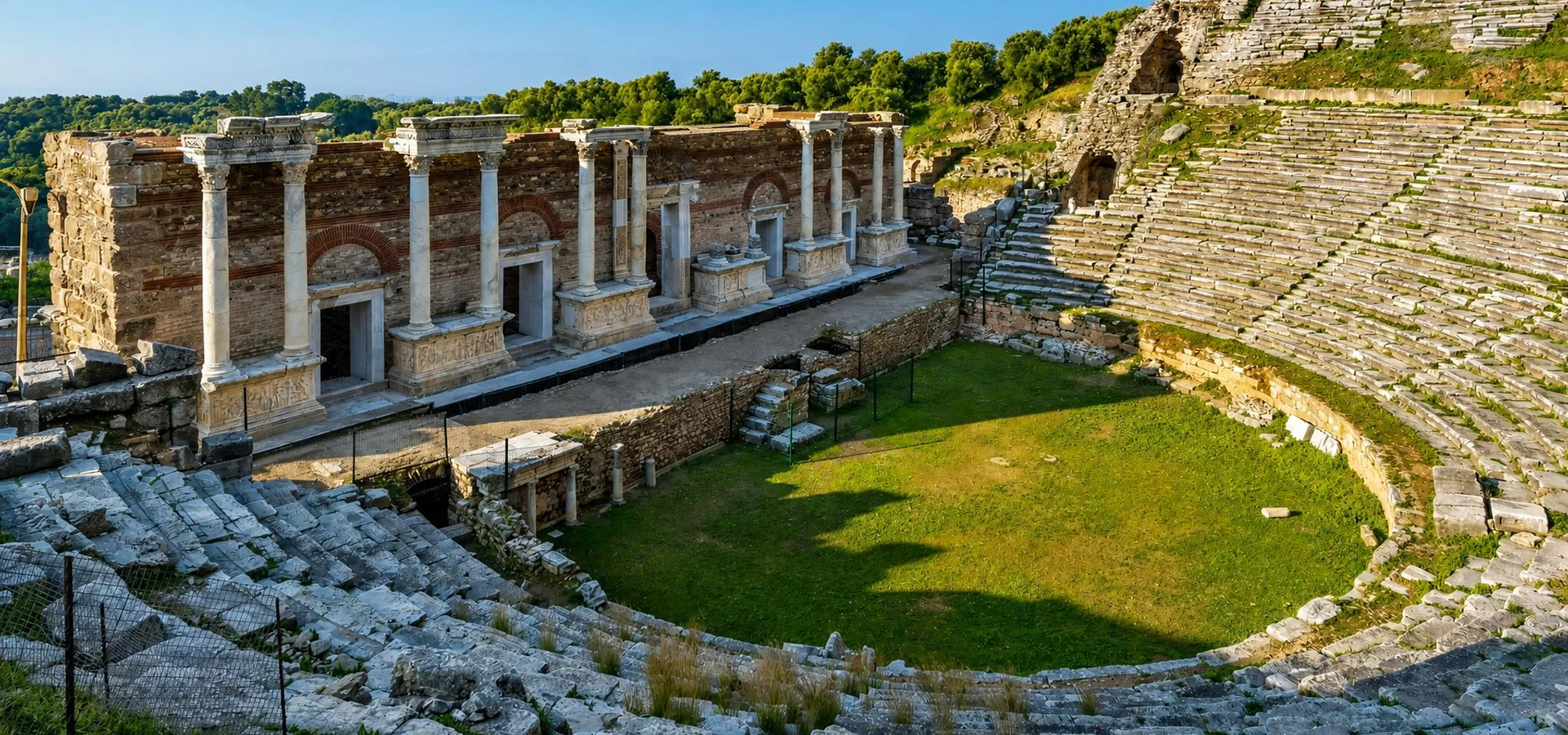
Few museum sections have a stronger geographical connection with modern Aydın than the display devoted to Tralleis Ancient City.

The ruins of Tralleis rise only a short distance from the contemporary city.

The ancient settlement became an important urban centre during the Hellenistic and Roman periods and produced a rich archaeological record.

Finds displayed in the museum include examples of sculpture and smaller objects made from materials such as terracotta, glass, bronze and bone.

Together they help reconstruct the urban culture that once flourished above the Büyük Menderes plain.

Local Connection

Tralleis is the ancient city most directly associated with the modern urban centre of Aydın.

Sculpture

Stone works demonstrate the artistic culture of one of the region's important Classical cities.

Daily Life

Smaller archaeological objects reveal activities that monumental architecture alone cannot preserve.

Museum + Ruins

Combining the museum with Tralleis creates one of the easiest archaeological itineraries from central Aydın.

The Magnesia Collection

Magnesia ad Maeandrum was one of the architectural masterpieces of ancient western Anatolia.

Its sanctuaries and public buildings are particularly associated with the famous architect Hermogenes.

The museum's Magnesia displays contain archaeological objects that help explain the lives of the people who inhabited this monumental city.

The official museum presentation highlights the marble herm and honourary inscription connected with Tiberius Claudius Metrodoros, a successful ancient flute player who participated in important sacred competitions.

Such inscriptions are especially valuable because they preserve individual names, professions and achievements that would otherwise have disappeared completely.

Architecture

Magnesia was famous for monumental planning and the architectural legacy of Hermogenes.

Inscriptions

Epigraphic evidence preserves names and details about civic institutions, professions and public honour.

Roman Culture

Objects reveal the continuing prosperity of Magnesia during Roman rule.

Visit the Site

The museum provides valuable context before exploring Magnesia's sanctuary of Artemis, agora and stadium.

The Nysa Collection

The museum also contains an important section devoted to Nysa Ancient City.

Located near Sultanhisar, Nysa became one of the most impressive Roman urban centres of the Büyük Menderes Valley.

Its monumental theatre, library, gerontikon, stadium and engineering structures reveal a city strongly associated with education and public culture.

Objects from the excavations complement these monumental remains by documenting everyday life, religion, artistic production and civic activity.

Roman City

Most of Nysa's best-preserved architecture belongs to the Roman and Late Roman periods.

Education

The ancient city developed a reputation for intellectual and educational life.

Material Culture

Ceramics, glass, bronze, bone and sculpture help reconstruct life beyond the monumental buildings.

Museum Context

Seeing Nysa's finds adds another layer of understanding before visiting the archaeological site.

The Orthosia Mosaic

One of the most visually impressive displays in Aydın Archaeology Museum comes from Orthosia Ancient City.

The surviving mosaic originally decorated the floor of a Roman-period building.

Its museum presentation brings together four principal panels, connecting sections and decorative borders.

The mosaic is dated to approximately the second century AD.

A fighting scene represented within one of the panels has also inspired an interactive museum presentation that helps visitors interpret the ancient imagery.

Roman Period

The mosaic belongs to the flourishing Roman cultural landscape of the Büyük Menderes region.

Four Main Panels

Separate pictorial compositions form part of a larger decorative floor scheme.

Decorative Borders

Geometric and ornamental framing elements unite the principal scenes.

Interactive Display

Modern interpretation helps visitors understand movement and action represented within the ancient mosaic.

Look beyond the main scene: When viewing Roman mosaics, examine the borders and smaller connecting panels as carefully as the central figures. Their geometry, repetition and craftsmanship were essential parts of the overall design.

The Stone Works Hall

The museum's stone collection demonstrates the extraordinary range of sculptural and funerary traditions that developed across ancient Aydın.

The displays include statues, reliefs, inscribed and relief-decorated stelae, altars, sarcophagi and smaller funerary containers known as ostothecae.

These monuments preserve information about religious beliefs, burial traditions, artistic styles and social identity.

Stone sculpture also reveals how regional workshops participated in the broader artistic culture of Hellenistic and Roman Asia Minor.

Sculpture

Human and divine figures illustrate changing artistic styles across the ancient periods represented in the museum.

Reliefs

Carved scenes preserve religious, commemorative and funerary imagery.

Stelae

Funerary and honorary monuments sometimes combine inscriptions with sculpted representation.

Altars

Sacred stone monuments reveal aspects of ancient ritual practice.

Sarcophagi

Large stone burial containers reflect wealth, artistic taste and beliefs about memory and death.

Ostothecae

Smaller funerary containers form another important part of Roman-period burial culture.

The Figure of Pan at Aydın Archaeology Museum

Among the museum's most distinctive stone works is a representation of Pan.

In Greek and Roman mythology, Pan was closely associated with shepherds, flocks, mountains, wild landscapes and rustic music.

The Aydın museum figure is especially memorable because of its intense facial expression and unusual smile.

Rather than presenting the idealised beauty often associated with Classical sculpture, figures such as Pan allowed ancient artists to explore wildness, humour, exaggeration and the supernatural character of the countryside.

Look closely at the expression: The Pan sculpture is one of those museum objects whose personality becomes more apparent the longer you study the face. It is easy to understand why it has become one of the museum's memorable displays.

The Coin Collection of Aydın Archaeology Museum

Coins are among the most valuable archaeological sources because they combine economics, politics, religion, art and written information within extremely small objects.

The museum's coin section is displayed broadly in chronological order.

The sequence includes examples from the Lydian, Classical, Hellenistic, Roman, Byzantine, Seljuk and Ottoman periods.

Ancient city coinage is particularly important for understanding the identity of communities within the museum's archaeological region.

Deities, rulers, temples and local symbols appearing on coins could communicate civic identity far beyond the walls of the cities that issued them.

Lydia

Early monetary traditions introduce the revolutionary development of coinage in western Anatolia.

Greek Cities

Independent civic issues reveal the identities and religious symbols of individual ancient communities.

Hellenistic Kingdoms

Portraits and royal imagery demonstrate the political transformation that followed Alexander the Great.

Roman Empire

Imperial portraits and local city issues existed side by side across Roman Asia Minor.

Byzantine Period

Coinage continued to reflect changing political and religious identities.

Seljuk & Ottoman

Later coins continue the monetary history of Anatolia beyond the ancient world.

The Kızıldere Coin Hoard

One of the major highlights of the numismatic collection is the Kızıldere hoard.

The group contains Roman silver coins spanning approximately AD 40–270.

The official museum presentation identifies portraits belonging to 29 emperors and 9 empresses within the collection.

Seen together, these coins create an extraordinary visual sequence of Roman imperial history.

They also remind visitors that coins were objects in constant circulation. Political portraits could therefore reach towns, markets and households thousands of kilometres from Rome.

Silver Coinage

The hoard contains a substantial collection of Roman silver issues.

AD 40–270

The chronological span covers more than two centuries of Roman imperial history.

29 Emperors

Changing imperial portraits turn the collection into a compact visual history of Roman political power.

9 Empresses

Imperial women also appear within the portrait sequence represented by the hoard.

Seikilos and the Entrance to Aydın Archaeology Museum

Visitors entering the museum encounter words associated with one of the most famous ancient discoveries connected with the Aydın region.

The Seikilos epitaph came from the territory of ancient Tralleis and preserves an ancient text together with musical notation.

Its short message reflects on enjoying life while time remains.

The original inscribed funerary monument is not displayed in Aydın Archaeology Museum. It is preserved today in the National Museum of Denmark in Copenhagen.

Nevertheless, the museum deliberately evokes Seikilos at its entrance because the monument has become one of the most internationally recognised cultural objects connected with ancient Tralleis.

An important distinction: The Seikilos stele is connected historically with the Aydın region, but visitors should not expect to see the original monument inside the museum.

Rescue Excavations and New Discoveries

Not every archaeological discovery comes from a famous ancient city or long-running university excavation.

Museums also play an essential role when archaeological remains are discovered during construction, infrastructure projects and other modern development.

Aydın Archaeology Museum therefore includes material recovered through museum-led rescue excavations.

These discoveries can reveal cemeteries, houses, workshops and settlement areas that would otherwise remain unknown.

Rescue archaeology is particularly important in a province where modern towns, roads and agricultural landscapes overlap with thousands of years of human settlement.

Alinda, Mastaura, Amyzon and Other Ancient Sites

Aydın Archaeology Museum represents far more than the major excavations with dedicated galleries.

Its archaeological responsibility extends across a landscape containing numerous ancient cities and smaller settlements.

Finds associated with Alinda, Amyzon, Piginda, Harpasa, Mastaura, Pygale, Orthosia and other sites broaden the historical picture presented by the museum.

This is especially valuable because many of these places receive far fewer visitors than famous destinations such as Ephesus or Aphrodisias.

Alinda

Queen Ada's fortified Carian stronghold preserves monumental walls, a theatre and an extraordinary terraced agora.

Explore Alinda →

Mastaura

An ancient city near Nazilli known especially for its remarkable Roman amphitheatre.

Explore Mastaura →

Amyzon

An inland Carian settlement whose remote archaeological landscape preserves important traces of regional history.

Orthosia

The source of the spectacular Roman mosaic that forms one of the museum's principal displays.

Harpasa

Another ancient settlement demonstrating the density of communities along the Büyük Menderes region.

Pygale

A coastal ancient settlement adding another dimension to the museum's representation of Aydın's archaeology.

What Kinds of Archaeological Objects Can You See?

One of the museum's strengths is the variety of materials represented throughout the galleries.

Each material survives differently in the archaeological record and provides different kinds of historical evidence.

Pottery

Ceramic vessels and fragments reveal chronology, food culture, trade and everyday domestic life.

Terracotta

Figurines, idols and architectural elements demonstrate both artistic production and religious practice.

Stone

Sculpture, inscriptions, altars, sarcophagi and architectural fragments preserve some of the museum's most monumental objects.

Bronze

Metal objects range from tools and weapons to figurines and personal belongings.

Glass

Roman-period vessels illustrate ancient craftsmanship, trade and changing domestic habits.

Bone

Worked bone objects reveal everyday technologies rarely visible within monumental archaeological sites.

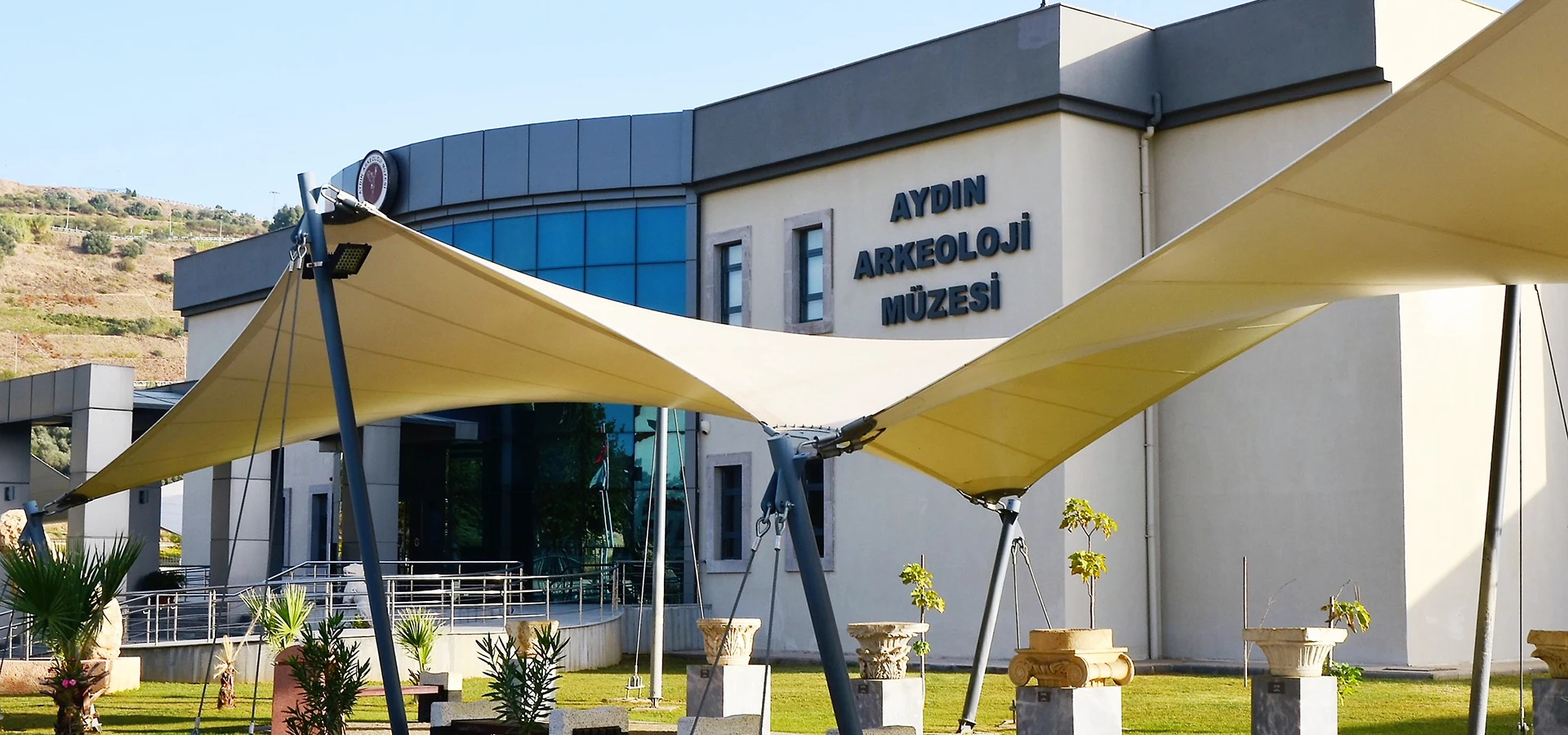
The Museum Garden and Outdoor Stone Displays

The archaeological experience does not end when visitors leave the indoor gallery.

The landscaped exterior of the museum contains examples of stone cultural material associated with archaeological sites under the museum's responsibility.

Architectural pieces and other large stone objects are particularly suitable for outdoor exhibition because of their scale.

The garden also provides useful opportunities to examine ancient stonework under natural daylight.

Before leaving: Allow a few additional minutes for the outdoor displays. Large architectural elements can be easier to understand when viewed from several angles rather than through a museum showcase.

How the Museum Exhibition Is Organised

The museum combines chronological presentation with galleries dedicated to individual archaeological sites.

This prevents the collection from becoming a simple sequence of unrelated objects.

Visitors can understand both when an artefact was produced and where it belonged.

Architectural reconstructions, visual interpretation and interactive elements help place smaller archaeological objects within their original historical environments.

Chronology

The visitor journey moves through major periods from prehistory toward the later historical eras.

Ancient Cities

Dedicated sections preserve the identity of important archaeological sites.

Reconstructions

Recreated architectural elements help visitors visualise ancient environments.

Interactive Interpretation

Selected displays use modern presentation techniques to explain ancient imagery and production.

Visit the Museum before Exploring Aydın's Ancient Cities

Ancient archaeological sites and archaeological museums offer two very different ways of understanding the past.

At a ruined city, visitors experience scale, architecture, landscape and urban planning.

Inside a museum, they encounter the smaller objects that belonged to the people who actually lived within those buildings.

The two experiences are therefore most rewarding when combined.

A visit to Aydın Archaeology Museum before travelling to Tralleis, Magnesia, Nysa or Alabanda can make architectural remains considerably easier to interpret.

At the Museum

Study pottery, coins, inscriptions, sculpture and objects of everyday life.

At the Ancient City

See where those objects belonged within streets, houses, temples, theatres and civic spaces.

Understand Chronology

Museum displays help separate prehistoric, Hellenistic, Roman and Byzantine phases.

Recognise Details

After seeing architectural fragments indoors, decorative elements in the ruins often become easier to recognise.

What Is It Like to Visit Aydın Archaeology Museum?

A visit is considerably different from exploring one of Aydın's outdoor archaeological sites.

The modern indoor environment allows visitors to examine small objects, inscriptions and sculpture closely without the heat and physical demands associated with ancient ruins.

The site-based organisation also makes the museum relatively easy to follow.

Visitors with limited time can concentrate on the principal ancient-city galleries, Orthosia mosaic, stone works and coin collection.

Those with a deeper interest in archaeology can spend considerably longer studying prehistoric material, epigraphy, sculpture and numismatics.

Start with Prehistory

The Çine-Tepecik section establishes how deep human settlement in the region extends.

Follow the Cities

Continue through Panionion, Kadıkalesi, Alabanda, Tralleis, Magnesia and Nysa.

See the Mosaic

Allow time to examine the Orthosia panels and their decorative borders carefully.

Study Sculpture

The stone works area contains some of the museum's most visually memorable ancient objects.

Finish with Coins

The chronological numismatic display provides an excellent final overview of changing political periods.

Explore the Garden

Large stone objects outside extend the archaeological experience beyond the main hall.

How Long Do You Need at Aydın Archaeology Museum?

The amount of time required depends strongly on your interest in archaeology.

45–60 Minutes

Suitable for a quick overview concentrating on the principal galleries, Orthosia mosaic, sculpture and coins.

1.5 Hours

A comfortable general visit allowing time to understand the major ancient-city sections.

2 Hours

Recommended for travellers with a strong interest in the archaeology and ancient history of Aydın.

2.5+ Hours

Ideal for visitors who enjoy studying inscriptions, coins, ceramics and smaller archaeological objects in detail.

Visiting Aydın Archaeology Museum with Children

The museum can be a useful family stop because the indoor galleries provide a controlled and relatively comfortable environment compared with extensive outdoor ruins.

The museum building was designed with children's activity areas as part of its educational facilities.

For younger visitors, the most engaging objects are often the mosaic, figurines, sculpture, ancient coins and reconstructed displays.

Ancient Animals

Encourage children to identify animals and mythological creatures appearing on ancient objects.

Faces on Coins

Imperial portraits provide an easy way to discuss ancient rulers and how people communicated before photography.

Mosaic Patterns

Look for repeated geometric shapes, borders and figures within the Orthosia mosaic.

Then Visit the Ruins

Children can later connect museum objects with real ancient buildings at Tralleis or another archaeological site.

Photography at Aydın Archaeology Museum

The museum offers excellent opportunities for photographing archaeological details, particularly sculpture and larger stone works.

Gallery lighting can create dramatic contrasts across carved marble surfaces.

The Orthosia mosaic is especially suitable for wider compositions as well as close studies of individual panels and geometric borders.

Ancient coins, inscriptions and smaller objects require more careful photography because they are usually displayed behind protective glass.

Sculpture

Use side lighting and changing viewing angles to reveal carved details and facial expressions.

Orthosia Mosaic

Capture both the overall composition and smaller decorative details.

Glass Cases

Photograph at a slight angle when permitted to reduce reflections from display cases.

Outdoor Displays

Natural daylight can make architectural fragments and stone textures particularly photogenic.

Photography rules can change: Always follow current museum instructions regarding flash, tripods, video recording and photography of individual displays.

Accessibility at Aydın Archaeology Museum

Compared with the steep and uneven terrain of many archaeological sites in Aydın, the museum provides a considerably more accessible way to experience the region's ancient heritage.

The modern building incorporates infrastructure intended to assist visitors with reduced mobility, including lift access within the museum.

Modern Building

Purpose-built visitor areas are easier to navigate than ancient archaeological terrain.

Lift Access

The building includes lift infrastructure for visitors requiring step-free movement between levels.

Indoor Galleries

Most major displays can be experienced without exposure to heat, rain or uneven archaeological ground.

Rest Opportunities

Museum environments generally allow visitors to move through the collection at a comfortable pace.

Specific accessibility requirements: Visitors requiring particular assistance should confirm current facilities directly with the museum before travelling.

Aydın Archaeology Museum Visitor Information

The museum is located in Ilıcabaşı, Efeler, within the modern city of Aydın.

Because museum opening hours, ticket arrangements and temporary exhibitions can change, visitors should check the latest official information before travelling.

Museum Aydın Archaeology Museum
Location Ilıcabaşı, Efeler, Aydın
Present Museum Opened 17 August 2012
Main Exhibition Area Approximately 1,340 m²
Collection Focus Archaeology of Aydın Province and the surrounding Carian-Ionian landscape
Major Site Collections Çine-Tepecik, Panionion, Kadıkalesi-Anaia, Alabanda, Tralleis, Magnesia and Nysa
Major Highlights Orthosia mosaic, stone sculpture, Pan, ancient coinage and Kızıldere hoard
Recommended Time Approximately 1.5–2 hours for a comfortable visit
Best Combination Aydın Archaeology Museum + Tralleis Ancient City
Before travelling: Opening hours, admission policies and gallery access may change seasonally or because of museum activities. Check the latest official Turkish Museums information before your visit.

How to Get to Aydın Archaeology Museum

Aydın Archaeology Museum is located in the Efeler district of Aydın, making it considerably easier to reach than many of the province's remote ancient cities.

Its urban location makes the museum suitable as the first stop of an archaeology itinerary through the Büyük Menderes Valley.

From Central Aydın

The museum can be reached by a short urban journey from the principal central districts of Aydın.

From Tralleis

The museum and Tralleis lie within the same wider urban area and combine naturally in one visit.

From Nysa

Travellers arriving from Sultanhisar can continue west through the Büyük Menderes Valley toward central Aydın.

From Kuşadası

Aydın can be reached inland from the Aegean coast, allowing the museum to be included in a specialised archaeological excursion.

Public Transport

As an urban museum, it is more straightforward to reach by local transportation than many archaeological sites.

Private Vehicle

A private car is especially useful if continuing from the museum to Tralleis, Nysa, Magnesia or more distant ancient cities.

Places to Visit near Aydın Archaeology Museum

Tralleis Ancient City

Explore the monumental ruins of ancient Tralleis immediately north of modern Aydın.

Explore Tralleis →

Nysa Ancient City

Discover one of the Büyük Menderes Valley's most remarkable Roman cities, including its theatre, library and stadium.

Explore Nysa →

Magnesia ad Maeandrum

Explore the city of Hermogenes, the sanctuary of Artemis and one of Anatolia's extraordinary ancient stadiums.

Explore Magnesia →

Alabanda Ancient City

Travel into inland Caria to discover monumental temples, a theatre and bouleuterion near Çine.

Explore Alabanda →

Mastaura Ancient City

See one of Aydın Province's most intriguing archaeological sites, celebrated for its Roman amphitheatre.

Explore Mastaura →

Aydın

Continue exploring the provincial capital and the extraordinary archaeological geography of the surrounding Büyük Menderes Valley.

Explore Aydın →

Aydın Archaeology Museum & Tralleis Half-Day Route

One of the easiest and most rewarding archaeological combinations in Aydın is to visit the museum together with Tralleis Ancient City.

Begin inside the museum, where archaeological finds introduce the history and material culture of Tralleis.

Then travel to the ancient city itself to see monumental architecture in its original landscape above the Büyük Menderes plain.

The combination provides both sides of archaeology: the objects preserved in the museum and the urban landscape preserved at the ancient site.

First Stop – Museum

Explore prehistoric Aydın, the Tralleis collection, sculpture, Orthosia mosaic and ancient coins.

Second Stop – Tralleis

Continue to the archaeological site overlooking modern Aydın.

Historical Connection

Objects seen indoors can be connected directly with the city and landscape from which they came.

Comfortable Pace

The route works particularly well for travellers with only half a day available in Aydın.

Aydın Archaeology Museum, Tralleis & Nysa Full-Day Route

Travellers with a full day can use Aydın Archaeology Museum as the introduction to a wider journey through the ancient Büyük Menderes landscape.

Begin with the museum's chronological collection and dedicated ancient-city galleries.

Continue to Tralleis, where the archaeological city overlooks modern Aydın.

The journey can then continue east toward Nysa near Sultanhisar.

This creates an excellent progression from museum objects to two dramatically different ancient urban landscapes.

Morning – Museum

Build a chronological understanding of Aydın from prehistory through the ancient and medieval periods.

Late Morning – Tralleis

Explore the ancient city immediately beside modern Aydın.

Büyük Menderes Valley

Travel through the fertile corridor that connected many of the ancient communities represented in the museum.

Afternoon – Nysa

Discover Roman architecture, education, theatre and urban engineering near Sultanhisar.

Historical Theme

Compare archaeological objects with the architecture and landscapes in which ancient communities lived.

Private Guide

A licensed guide can connect museum artefacts with the archaeology of each site in far greater detail.

Aydın Archaeology Museum and the Ancient History of Aydın

Few provinces in Türkiye contain such a dense concentration of important ancient settlements as Aydın.

The region includes prehistoric mounds, Ionian sanctuaries, Carian mountain cities, Hellenistic foundations, Roman metropolises, Byzantine fortresses and medieval settlements.

The archaeology museum acts as a connecting point between these otherwise widely separated landscapes.

Tralleis

A major ancient city immediately beside modern Aydın.

Explore Tralleis →

Magnesia

A monumental city associated with Hermogenes and one of Anatolia's great sanctuaries of Artemis.

Explore Magnesia →

Nysa

A spectacular Roman city shaped around a deep natural ravine near Sultanhisar.

Explore Nysa →

Alabanda

A major inland Carian city with temples, theatre and monumental civic architecture.

Explore Alabanda →

Alinda

Queen Ada's fortified mountain city and one of Caria's most dramatic archaeological landscapes.

Explore Alinda →

Mastaura

A lesser-known ancient settlement preserving an exceptional Roman amphitheatre.

Explore Mastaura →

Continue exploring the province with our Aydın travel guide, Aphrodisias Ancient City guide, Miletus guide, Priene guide and Didyma guide.

Frequently Asked Questions about Aydın Archaeology Museum

Practical answers about the museum, its collections, major archaeological sites, mosaics, sculpture, coins and visiting Aydın.

Where is Aydın Archaeology Museum?

The museum is located in the Ilıcabaşı area of Efeler, within the modern city of Aydın in western Türkiye.

When did Aydın Archaeology Museum open?

The present purpose-built museum opened to visitors on 17 August 2012.

When was the Aydın museum organisation founded?

Museum services in Aydın were established in 1959, decades before the present museum building opened.

What can I see at Aydın Archaeology Museum?

The museum displays prehistoric tools, pottery, terracotta, glass, bronze and bone objects, sculpture, inscriptions, mosaics, funerary monuments and ancient coins.

Which ancient cities are represented in the museum?

Major sections include finds from Tralleis, Magnesia, Nysa, Alabanda, Panionion, Kadıkalesi-Anaia and Çine-Tepecik, with material from numerous additional sites.

Are there artefacts from Alinda?

Yes. The wider collection includes material from Alinda and other ancient sites within the museum's archaeological responsibility area.

Are there artefacts from Mastaura?

Yes. Finds from Mastaura form part of the wider archaeological material represented by the museum.

What is the Orthosia mosaic?

It is a Roman-period mosaic discovered at Orthosia and displayed as one of the museum's principal archaeological highlights.

How old is the Orthosia mosaic?

The museum dates the mosaic to approximately the second century AD.

Who is Pan?

Pan was an ancient god associated with shepherds, flocks, mountains, wilderness and rustic music. A striking representation of Pan is among the museum's notable stone works.

What is the Kızıldere hoard?

It is an important group of Roman silver coins representing a long sequence of imperial rulers between approximately AD 40 and 270.

Does the museum have ancient coins?

Yes. The coin section includes material from the Lydian, Classical, Hellenistic, Roman, Byzantine, Seljuk and Ottoman periods.

Is the Seikilos stele inside Aydın Archaeology Museum?

No. The famous Seikilos funerary monument associated with ancient Tralleis is preserved in the National Museum of Denmark in Copenhagen.

Why is Seikilos mentioned at the museum?

A verse associated with Seikilos greets visitors at the museum entrance, emphasising the monument's strong historical connection with ancient Tralleis and Aydın.

Are there prehistoric objects in the museum?

Yes. The Çine-Tepecik collection contains objects from prehistoric and Bronze Age settlement phases.

Does the museum have Hittite-period finds?

Yes. Important material includes seal impressions with Anatolian hieroglyphic signs from Çine-Tepecik and a bronze Hittite figurine from Kadıkalesi.

How long should I spend at Aydın Archaeology Museum?

Around 1.5 to 2 hours is suitable for most visitors, although archaeology enthusiasts may wish to spend considerably longer.

Can I combine the museum with Tralleis?

Yes. The museum and Tralleis make an excellent half-day combination because both are located within the wider Aydın urban area.

Can I combine the museum with Nysa?

Yes. Aydın Archaeology Museum, Tralleis and Nysa can form a rewarding full-day archaeology itinerary through the Büyük Menderes Valley.

Is the museum suitable for children?

Yes. The modern museum environment, mosaic, sculpture, coins and reconstructed displays can make archaeology easier for younger visitors to understand.

Is Aydın Archaeology Museum accessible?

The purpose-built museum includes accessibility infrastructure such as lift access, making it considerably easier to navigate than many outdoor archaeological sites.

Can I take photographs inside the museum?

Photography policies may change. Visitors should follow current museum instructions regarding flash, tripods, video and individual displays.

Is Aydın Archaeology Museum worth visiting?

Absolutely. It is one of the best places to understand the enormous archaeological richness of Aydın before visiting the ancient cities scattered throughout the province.

Responsible Visiting at Aydın Archaeology Museum

Do Not Touch

Avoid touching archaeological objects unless a display is specifically designed for interaction.

Respect Barriers

Display barriers protect both visitors and irreplaceable archaeological material.

Follow Photography Rules

Do not use flash, tripods or other equipment where museum regulations prohibit them.

Keep a Safe Distance

Large sculpture and stone objects can be both fragile and extremely heavy.

Respect Other Visitors

Keep conversation and electronic devices at a level appropriate for a museum environment.

Teach Respect for Heritage

Children should be encouraged to enjoy archaeological objects while understanding why ancient material must be protected.

Every object has archaeological context: Museum artefacts are valuable not simply because they are old or beautiful. Their scientific importance comes from where they were found, how they were used and how they relate to the wider archaeological landscape.

Private Archaeology Tours from Aydın

Discover Aydın Archaeology Museum together with the ancient cities of the Büyük Menderes Valley with a licensed guide and comfortable private transportation, with no compulsory shopping stops.

Your Private Journey through Aydın's Ancient Civilisations

Connect museum objects with the cities and landscapes from which they came, from prehistoric Anatolia and ancient Caria to the monumental Roman cities of the Büyük Menderes Valley.