
Discover Tekirdağ
Explore Tekirdağ’s Ottoman heritage, museums, Marmara coastline and regional flavours, from famous meatballs to cheese halva and Hayrabolu Tatlısı.
Explore Tekirdağ





Among the traditional foods of Tekirdağ, few desserts are as closely connected with one particular town as Hayrabolu Tatlısı. Created in the district of Hayrabolu during the early 1970s, this rich syrup dessert combines fresh unsalted cheese with semolina, egg and flour before being baked and soaked in syrup.
The combination may remind visitors of other Turkish cheese-based sweets, but Hayrabolu Dessert has developed a distinctive regional identity of its own. Its soft interior, baked exterior and generous absorption of syrup create a dessert that is simultaneously rich, moist and surprisingly delicate.
The dessert began to be produced in Hayrabolu in 1972. Initially known as Kadı Göbeği Tatlısı, it gradually became so strongly associated with its place of origin that the name Hayrabolu Tatlısı replaced the earlier name.
Its regional importance was formally recognised in 2021, when Hayrabolu Tatlısı received geographical-indication registration. Today, tasting it in Hayrabolu is one of the most enjoyable ways to experience the culinary traditions of inland Tekirdağ.
Fresh unsalted cow’s-milk cheese forms the foundation of authentic Hayrabolu Tatlısı.
The shaped dough is baked before being cooked in sweet syrup until the dessert absorbs it thoroughly.
Hayrabolu Tatlısı has been officially protected as a geographical indication since 2021.
Enjoy it with tahini, hazelnuts, walnuts or kaymak for one of Tekirdağ’s signature dessert experiences.
Essential information about one of the best-known regional desserts of Tekirdağ.
Hayrabolu district in Tekirdağ Province, Turkish Thrace.
Fresh unsalted cheese, semolina, egg, wheat flour and baking soda.
Registered as Hayrabolu Tatlısı, Registration No. 839, on 9 August 2021.
A baked cheese-and-semolina dessert that is soaked and cooked in sugar syrup before serving.
A dessert created in a small Thracian town became one of Tekirdağ’s most recognisable culinary traditions.
Unlike many Turkish desserts whose exact origins have disappeared into centuries of culinary history, Hayrabolu Tatlısı has a relatively recent and documented story.
Production of the dessert began in Hayrabolu in 1972. During its earliest years it was known as Kadı Göbeği Tatlısı, a name that was gradually replaced as the dessert became increasingly associated with the town where it was produced.
Eventually, customers simply began referring to it as Hayrabolu Tatlısı — Hayrabolu Dessert. Because fresh unsalted cheese is one of its defining ingredients, it has also sometimes been described more generally as a peynir tatlısı, or cheese dessert.
The agricultural landscape surrounding Hayrabolu played an important role in its development. The recipe depends heavily on fresh dairy, particularly unsalted cheese produced from cow’s milk, together with semolina, flour and eggs.
Over the decades, the dessert spread beyond Hayrabolu and became increasingly familiar throughout Turkish Thrace and other parts of Türkiye. Local families began serving it during celebrations and gatherings, while visitors often purchased dried versions to prepare later.
Its reputation eventually led to formal protection. Hayrabolu Municipality applied for geographical-indication registration in January 2021.
On 9 August 2021, Hayrabolu Tatlısı was officially registered as a Mahreç İşareti with registration number 839.
Today, Hayrabolu Dessert remains a living local tradition — one that visitors can still experience in the district where its story began.
Hayrabolu Tatlısı is a traditional syrup dessert produced primarily from fresh unsalted cheese and semolina, together with egg, wheat flour and baking soda.
The ingredients are kneaded into a soft dough, shaped into rounded portions and baked. The baked pieces are then placed into hot sugar syrup and cooked until they absorb the syrup throughout their interior.
The result is very different from an ordinary cake or pastry. Hayrabolu Dessert is moist, dense yet tender, slightly elastic from its cheese content and intensely flavoured with syrup.
Traditionally formed into rounded or hemispherical individual portions before baking.
Soft, moist and tender after absorbing syrup, with a substantial body created by cheese and semolina.
Sweet and milky with a delicate baked character and little resemblance to salty matured cheese.
Commonly finished with tahini, hazelnuts, walnuts or kaymak, depending on preference.
The geographical-indication specification defines the principal ingredients used for authentic Hayrabolu Tatlısı. Fresh unsalted cheese is by far the largest component.
The syrup is prepared from sugar and water with a small amount of lemon juice. The acidity from the lemon helps balance the sweetness while the baked dessert absorbs the syrup.
Older household recipes may use somewhat different ratios, but the registered specification establishes the characteristics associated with geographically indicated Hayrabolu Tatlısı.
Authentic Hayrabolu Tatlısı begins not with ready-made commercial cheese, but with the preparation of the fresh unsalted cheese that gives the dessert its distinctive texture and flavour.
Raw cow’s milk is filtered and heated before being cooled to the temperature required for cheese making.
Cheese rennet is added and the milk is allowed to coagulate before the curd is separated from the whey.
The fresh unsalted cheese is drained thoroughly and broken into a fine consistency ready for the dough.
The cheese is kneaded together with egg, semolina, wheat flour and baking soda.
The finished dough is portioned into characteristic rounded or hemispherical pieces and arranged on baking trays.
The portions are baked until their structure sets and the exterior develops its characteristic baked colour.
The baked desserts are placed into hot syrup made from sugar, water and lemon juice and cooked as they absorb the liquid.
Once thoroughly saturated with syrup, the desserts are removed and allowed to cool before serving.
In the registered commercial production method, the shaped dessert is baked at high temperature for a relatively short period. The cooled pieces are then boiled in syrup and turned periodically so that the syrup reaches every surface and penetrates the centre.
The process requires experience: the pieces need sufficient structure to remain intact while still absorbing enough syrup to become tender and moist.
Fresh unsalted cheese is not simply an unusual addition to Hayrabolu Tatlısı. It is the ingredient that defines the dessert.
The cheese is prepared as a fresh curd rather than aged, giving it a mild dairy flavour without strong saltiness.
Its proteins give the dough structure and help create the dessert’s substantial but tender texture.
Fresh cheese contributes moisture before baking and prevents the finished dessert from resembling a dry semolina cake.
The use of locally prepared cow’s-milk cheese connects the dessert directly with the agricultural traditions of Hayrabolu.
Visitors should therefore not expect the flavour of salty white cheese or aged cheese. Once combined with semolina, egg and syrup, the dairy flavour becomes gentle and integrated into the dessert.
Tekirdağ is home to more than one traditional dessert made with fresh cheese, but Hayrabolu Tatlısı and Tekirdağ Peynir Helvası are very different preparations.
Fresh cheese is kneaded with semolina, egg and flour, shaped, baked and then soaked in sugar syrup.
Fresh cheese is cooked directly with wheat flour and sugar to create a soft, glossy dessert with a distinctive fibrous texture.
Hayrabolu Tatlısı has the structure of a syrup-soaked baked dessert, while cheese halva is soft and spoonable.
Hayrabolu Dessert is served as individual portions, often with toppings, while Peynir Helvası is usually served directly by portion.
Both are excellent examples of how the dairy traditions of Turkish Thrace became part of the region’s dessert culture, and trying both offers an interesting comparison.
Hayrabolu Tatlısı is officially protected within Türkiye’s geographical-indication system.
The geographical indication documents the dessert’s ingredients, preparation process and relationship with Hayrabolu. Production of geographically indicated Hayrabolu Tatlısı is required to take place within the defined geographical area.
Businesses using the protected name must also display the official Hayrabolu Tatlısı logo and geographical-indication emblem as required by the registration.
For visitors, this protection provides important context: Hayrabolu Tatlısı is not simply the name of a generic syrup dessert but a recognised regional speciality whose identity is directly connected with the district of Hayrabolu.
The combination of cheese and syrup may sound unusual to travellers unfamiliar with Turkish dairy-based desserts, but the finished flavour is remarkably harmonious.
The syrup gives Hayrabolu Tatlısı its dominant sweetness and keeps every portion moist.
Fresh unsalted cheese contributes richness and a mild dairy character without producing a salty flavour.
After absorbing syrup, the baked centre becomes moist and tender rather than dry or cake-like.
Tahini, hazelnuts, walnuts or kaymak can add additional layers of flavour and texture when used as toppings.
Its richness makes a single portion satisfying, while toppings such as tahini or kaymak can transform the dessert into an especially indulgent finale to a traditional Thracian meal.
Hayrabolu Dessert can be served simply with its syrup, but local presentations often add one or more toppings.
A drizzle of sesame tahini adds a roasted, slightly savoury richness that contrasts beautifully with the sweet syrup.
Crushed nuts provide texture and balance the dessert’s soft syrup-soaked interior.
Thick Turkish clotted cream adds cool dairy richness and is one of the most traditional accompaniments.
Some modern restaurants serve the dessert with ice cream, creating a popular contrast between warm or room-temperature dessert and cold creaminess.
The official geographical-indication specification specifically notes walnuts, hazelnuts, tahini and kaymak as optional accompaniments.
A glass of unsweetened Turkish tea or a cup of Turkish coffee also works particularly well alongside the intense sweetness of the syrup.
The most rewarding place to taste Hayrabolu Tatlısı is naturally Hayrabolu itself, where the dessert has been produced since the early 1970s.
Local confectioneries and dessert producers offer the best opportunity to taste the dessert close to its place of origin.
Restaurants serving local Thracian cuisine may offer Hayrabolu Tatlısı as the final course of a regional meal.
The dessert can also be found in selected sweet shops and regional-food businesses elsewhere in Tekirdağ Province.
Dried unsyruped pieces can be packaged for longer storage and prepared with syrup later.
When possible, try a freshly syruped portion prepared by an experienced producer. This gives the best impression of the dessert’s intended balance between baked structure, soft interior and syrup.
One unusual advantage of Hayrabolu Tatlısı is that it can be sold either already soaked in syrup or as a dried product designed for longer storage.
Dried packaged pieces are generally more practical for travellers because they can be stored considerably longer before syrup is added.
Look for intact food-safe packaging together with production and storage information.
When buying geographically indicated Hayrabolu Tatlısı, look for the protected product name and geographical-indication emblem.
Different forms of the dessert require very different storage conditions, so always follow the producer’s label.
If buying a dried version, ask the producer for recommended syrup quantities and preparation instructions.
International travellers should check the food and dairy import rules of their destination before transporting the dessert abroad.
The geographical-indication specification recognises two principal ways in which Hayrabolu Dessert can be sold.
For long-term packaged sale, baked pieces can be dried further before being placed in suitable food-contact packaging.
The registered specification states that properly dried and packaged products can be stored for up to eight months.
Once the dessert has absorbed its syrup, it becomes a moist product requiring refrigerated storage.
The registered specification states that syruped Hayrabolu Tatlısı should be consumed within ten days when stored at +4°C.
Always follow the instructions on the individual producer’s packaging, particularly when carrying the dessert during a long journey.
Hayrabolu Tatlısı contains several common allergens. Travellers with food allergies or dietary restrictions should always confirm the ingredients with the producer before eating.
Fresh cheese is the principal ingredient, so traditional Hayrabolu Dessert contains dairy.
Egg forms an important part of the registered dough recipe.
Traditional Hayrabolu Tatlısı contains wheat flour and semolina and therefore contains gluten.
Walnuts, hazelnuts and tahini are common toppings, so ask about preparation and cross-contact when allergies are a concern.
Because toppings can vary from one restaurant or producer to another, never assume that a plain-looking portion is free from nuts, sesame or other allergens.
Regional foods often become powerful symbols of the places where they developed. In Hayrabolu, this relatively young dessert has achieved exactly that.
Fresh cow’s-milk cheese links the dessert with the productive agricultural landscape surrounding Hayrabolu.
Its documented beginnings in Hayrabolu in 1972 give the dessert an especially strong connection with the district.
Geographical-indication registration records and protects the defining characteristics of the dessert.
Hayrabolu Tatlısı remains part of everyday food culture, celebrations, family gatherings and local hospitality.
Its story is also a reminder that culinary heritage does not always need to be hundreds of years old. Within only a few decades, Hayrabolu Tatlısı became so closely identified with its birthplace that the town itself became part of the dessert’s name.
Hayrabolu Tatlısı can form part of a wider culinary journey through Tekirdağ and Turkish Thrace.
The town where the dessert originated remains the most meaningful place to experience the tradition.
A freshly syruped portion gives the best impression of the dessert’s soft centre and rich dairy character.
If offered, try a drizzle of tahini. Its roasted sesame flavour creates an excellent contrast with the syrup.
Cool, thick kaymak softens the intensity of the syrup and makes an especially satisfying accompaniment.
The cheese is fresh and unsalted, so the finished dessert tastes sweet and milky rather than savoury.
Hayrabolu Tatlısı is rich and syrupy, so one individual piece is often enough after a full meal.
Presentation varies, so ask whether the dessert comes with tahini, nuts, kaymak or ice cream.
If you want to take some home, dried packaged portions may be much easier to transport than syruped dessert.
Continue exploring the culinary heritage, villages, vineyards and regional traditions of Tekirdağ.
Discover another remarkable local dessert prepared with fresh unsalted cheese, flour and sugar.
Learn about the history, preparation and distinctive flavour of Tekirdağ’s most famous savoury speciality.
Discover the unusual traditional drink prepared from roasted chickpeas in rural Tekirdağ.
Explore the Marmara coast, vineyards and long-established culinary traditions of western Tekirdağ.
Visit one of Türkiye’s historic wine-producing settlements beneath the Ganos Mountains.
Plan a complete journey through Tekirdağ’s museums, Ottoman heritage, coastline, villages and regional food culture.
Hayrabolu Dessert, or Hayrabolu Tatlısı, is a traditional syrup dessert from Hayrabolu in Tekirdağ Province. It is made primarily from fresh unsalted cheese and semolina together with egg, wheat flour and baking soda.
The dessert comes from the district of Hayrabolu in Tekirdağ Province, in the Turkish Thrace region of northwestern Türkiye.
According to its geographical-indication registration, production of Hayrabolu Tatlısı began in 1972.
During its early years the dessert was known as Kadı Göbeği Tatlısı. As it became increasingly associated with Hayrabolu, the name Hayrabolu Tatlısı became established.
Yes. Fresh unsalted cheese is the principal ingredient and represents approximately 57% of the registered dough formulation.
Not like ordinary salty or matured cheese. The fresh unsalted cheese gives the dessert a mild dairy richness and contributes strongly to its texture.
The registered version is produced from fresh unsalted cheese, semolina, eggs, wheat flour and baking soda. Sugar, water and lemon juice are used for the syrup.
The cheese-based dough is formed into rounded portions and baked. The baked pieces are then placed into hot sugar syrup and cooked until they absorb the syrup throughout.
It can be served simply with its syrup or topped with ingredients such as crushed walnuts, hazelnuts, tahini or kaymak. Ice cream is also a popular modern accompaniment.
No. Both contain fresh unsalted cheese, but they are very different desserts. Hayrabolu Tatlısı is baked and soaked in syrup, while Tekirdağ Cheese Halva is cooked with flour and sugar until it develops a soft, fibrous texture.
Hayrabolu Tatlısı was officially registered as a geographical indication on 9 August 2021.
Hayrabolu Tatlısı has geographical-indication Registration No. 839.
The geographical indication is registered by Hayrabolu Municipality.
Mahreç İşareti is a form of Turkish geographical indication used for products whose reputation, characteristics or traditional production are associated with a defined geographical area.
Yes. Traditional Hayrabolu Tatlısı contains both wheat flour and semolina and therefore contains gluten.
Yes. Fresh cow’s-milk cheese is the principal ingredient, so the dessert contains dairy.
Yes. Egg is one of the defining ingredients in the registered recipe.
Walnuts and hazelnuts are commonly used as toppings. Anyone with a nut allergy should confirm ingredients and possible cross-contact with the restaurant or producer.
Yes. The dessert can be dried after baking and packaged without syrup. The syrup is then added during later preparation.
According to the geographical-indication specification, properly dried and packaged Hayrabolu Tatlısı can be stored for up to eight months.
The registered specification states that syruped Hayrabolu Tatlısı should be consumed within 10 days when stored at +4°C.
Hayrabolu itself is the best place to experience the dessert close to its origin, although it can also be found at selected confectioneries and regional-food businesses elsewhere in Tekirdağ.
Unsweetened Turkish tea is an excellent choice because its light bitterness balances the syrup. Turkish coffee also pairs very well with the dessert.
Absolutely. It is one of Tekirdağ Province’s most distinctive regional foods and offers a very different experience from better-known Turkish sweets such as baklava, lokum or tahini helva.
With its rounded shape, glossy syrup and colourful toppings, Hayrabolu Tatlısı can be an especially attractive subject for food photography.
Photograph the dessert shortly after serving so that the glossy syrup remains clearly visible around the plate.
Tahini, chopped hazelnuts, walnuts or a spoonful of kaymak add texture and visual contrast.
A photograph of the dessert cut in half can reveal its soft cheese-and-semolina interior and syrup-soaked texture.
A traditional tulip-shaped tea glass beside the plate creates a recognisable Turkish culinary scene.
Add regional food discoveries such as Hayrabolu Tatlısı to a private journey through Tekirdağ, Hayrabolu, Şarköy, Mürefte, the Ganos Mountains and the Marmara coast.
Custom-designed itineraries can combine historic attractions, traditional towns, coastal scenery, vineyards and the distinctive food culture of Turkish Thrace.
Explore Tekirdağ’s Ottoman heritage, museums, Marmara coastline and regional flavours, from famous meatballs to cheese halva and Hayrabolu Tatlısı.
Explore Tekirdağ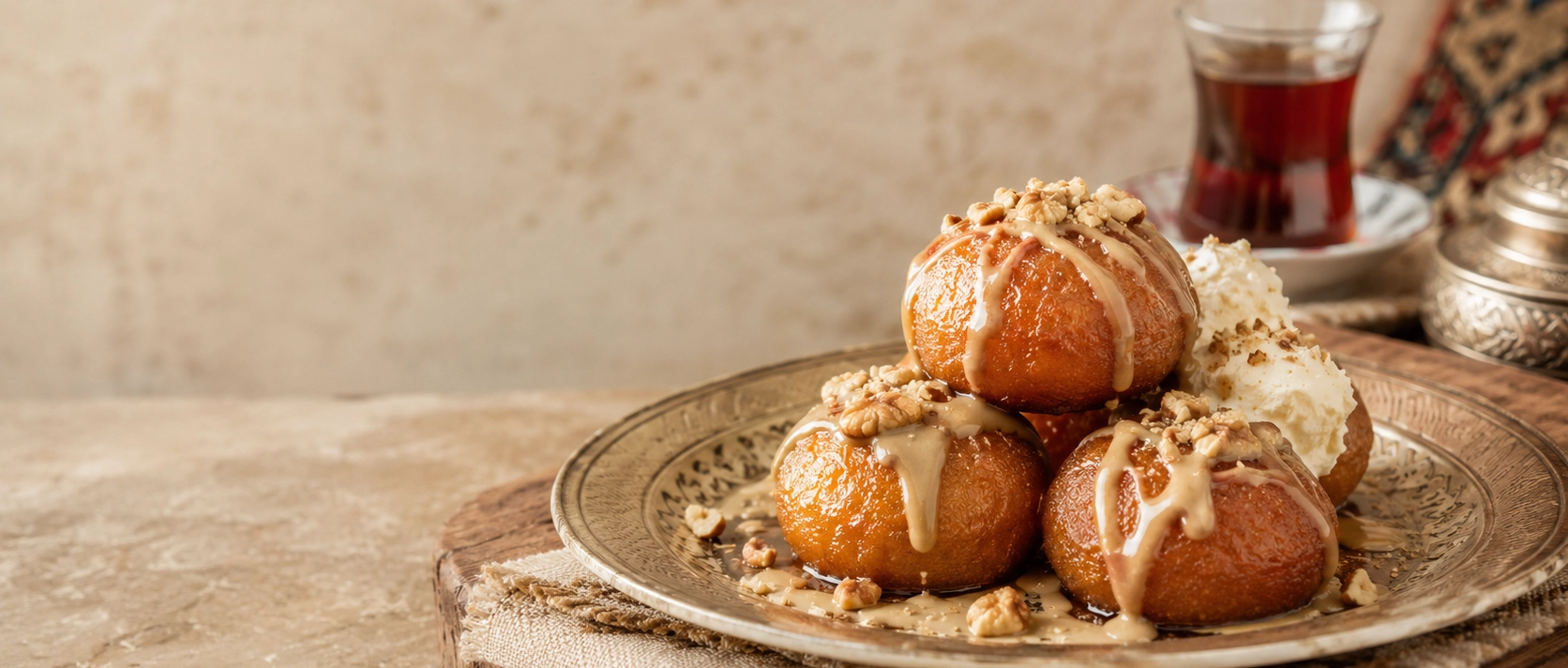
Create a private regional journey combining traditional foods, local culture, vineyards, rural landscapes and the historic attractions of Tekirdağ Province.
Request a Custom Tour