A Taste Identified with the City
The Culinary Tradition of Tekirdağ Meatballs
Discover how a carefully prepared meatball became one of Tekirdağ’s most recognisable culinary symbols.
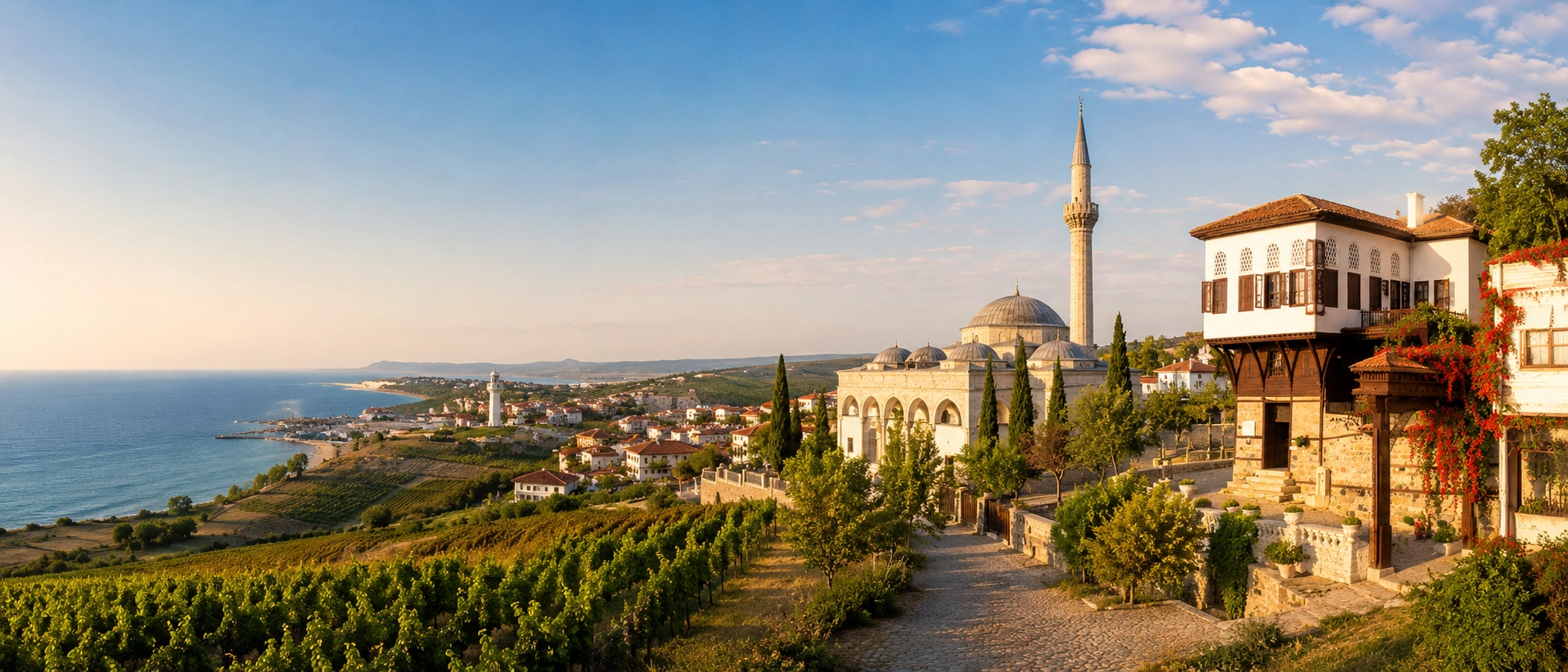
Tekirdağ lies in Thrace, a fertile region connecting Istanbul, the Balkans, and the northern Aegean. The province has long been associated with agriculture, livestock, vineyards, sunflower fields, grain production, and a cuisine shaped by both Anatolian and Balkan traditions.
Within this regional food culture, Tekirdağ Köftesi developed into a speciality strongly identified with the city. Its reputation spread well beyond Tekirdağ, and today the name is recognised throughout Türkiye.
What distinguishes the dish is not a long list of spices but the precision of its production. The type and proportion of meat, the addition of bread and beef fat, the grinding process, the thorough kneading, and especially the refrigerated resting period all contribute to its characteristic structure.
The resting stage is particularly important. Once the mixture is kneaded, it is pressed into trays without being shaped and kept at 0–4°C for 18 to 24 hours. This controlled period helps create the smooth, elastic, homogeneous texture expected from authentic Tekirdağ meatballs.
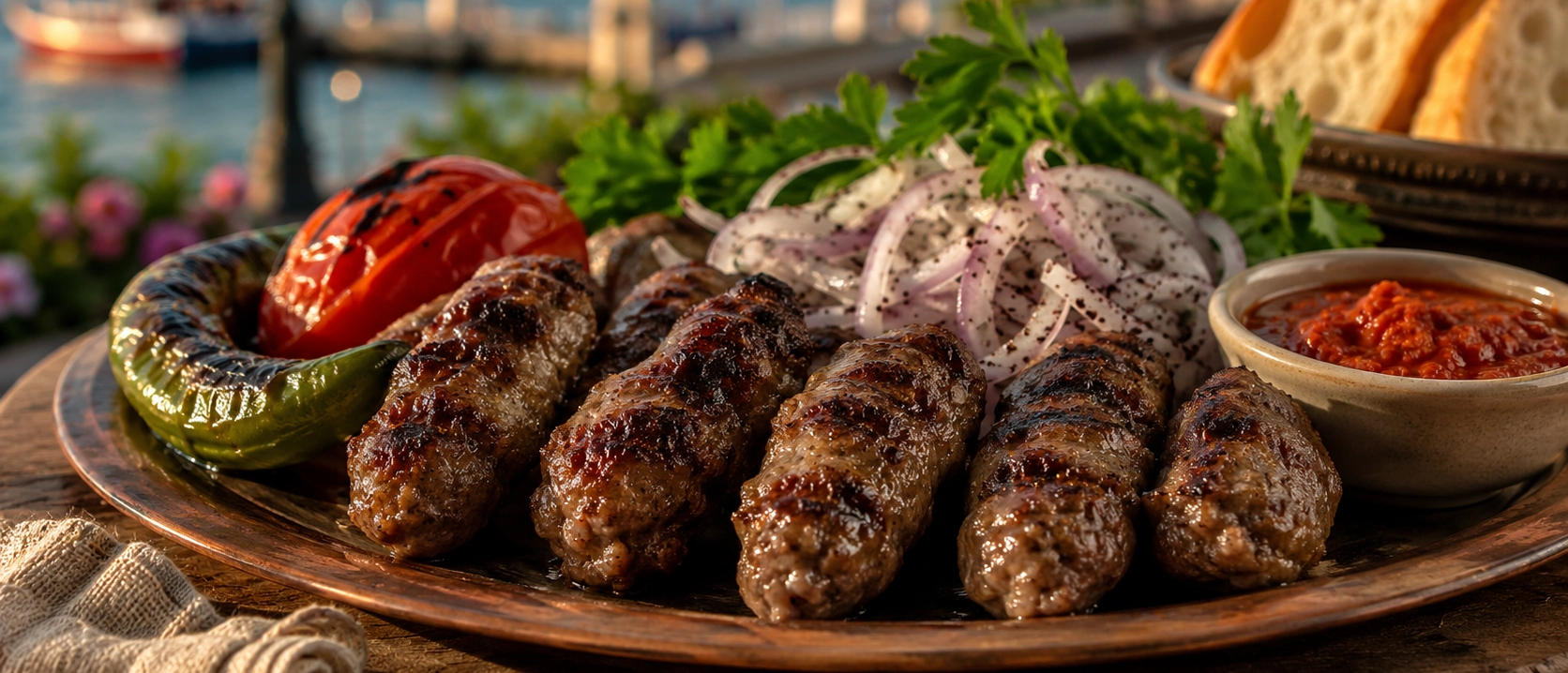
The rested mixture is then formed into small cylinders and traditionally cooked over charcoal. Rather than being served alone, the meatballs are accompanied by hot sauce, grilled peppers and tomatoes, sliced onions, and parsley, creating a plate that is immediately recognisable in local restaurants.
This combination of local production, defined ingredients, specialised technique, and long-standing reputation led to the official registration of Tekirdağ Köftesi as a geographically indicated product.