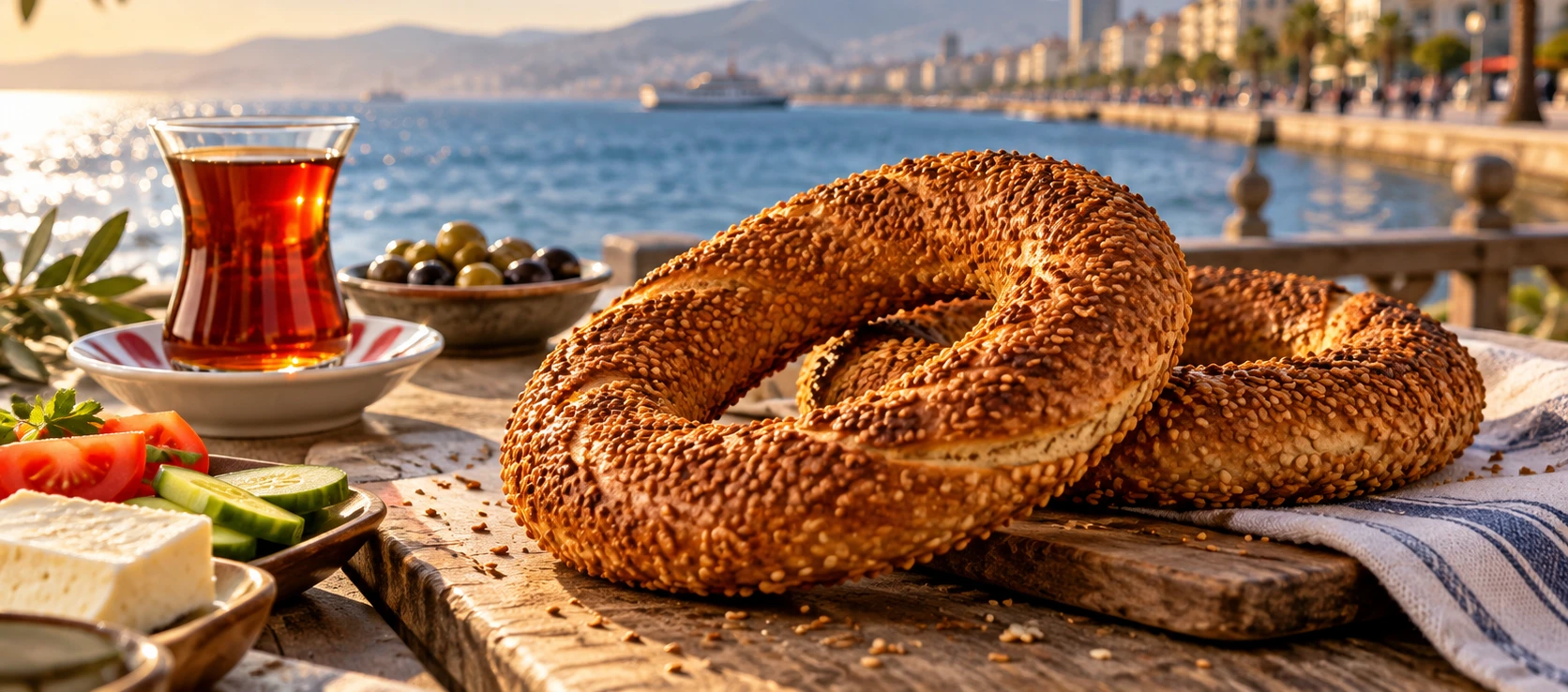
İzmir’s Iconic Sesame-Covered Street Food

İzmir Gevreği – Complete Food Guide

Discover İzmir’s famously crisp sesame ring, its hot-molasses cooking method,
street-food culture, breakfast traditions, history and geographical-indication status.

Discover İzmir Gevreği

Discover the Famous Gevrek of İzmir

İzmir Gevreği is one of the most characteristic foods of İzmir and one of the simplest ways to experience the city’s everyday culinary culture. At first glance it resembles the sesame-covered bread ring known throughout Türkiye as simit, but authentic İzmir gevreği has its own registered preparation technique, texture and local identity.

Its most distinctive feature is the traditional hot-molasses cooking method. After the dough has been formed into rings, it is briefly cooked in a hot grape-molasses solution before being rested, coated generously with roasted sesame seeds and baked at high temperature. This double-cooking process gives İzmir Gevreği the crisp texture that inspired its local name. From neighbourhood bakeries and street carts to breakfast tables beside the Aegean, gevrek remains deeply connected with everyday life in İzmir.

Hot-Molasses Method

The shaped dough is briefly cooked in a hot grape-molasses solution before being sesame-coated and baked.

Exceptionally Crisp

The distinctive two-stage cooking technique creates the crisp texture associated with authentic İzmir Gevreği.

İzmir Street Culture

Gevrek is sold from bakeries, breakfast shops, takeaway counters and traditional street carts throughout the city.

Protected Local Heritage

İzmir Gevreği is officially registered as a geographical indication associated specifically with İzmir Province.

Know Before You Taste

İzmir Gevreği – Quick Facts

Essential information about İzmir’s famous crisp sesame-covered bread ring.

📍

Origin

İzmir on Türkiye’s Aegean coast, where gevrek forms an important part of breakfast and street-food culture.

Open İzmir on Google Maps
🥨

Food Type

A sesame-covered ring of yeast dough distinguished by hot-molasses pre-cooking before baking.

🔥

Signature Method

The dough ring is briefly cooked in hot diluted grape molasses before being covered with sesame and baked.

🏅

Geographical Indication

Registered by TÜRKPATENT as İzmir Gevreği with geographical-indication registration number 905.


A Taste of Everyday İzmir

The History of İzmir Gevreği

Discover how a simple sesame bread ring became one of İzmir’s defining culinary symbols.

Ring-shaped sesame breads have a long history within the food culture of Türkiye and the wider Ottoman world. Different regions developed their own names, production methods, textures and serving traditions.

İzmir developed an especially strong relationship with the food locally known as gevrek. While similar sesame rings are generally called simit elsewhere in Türkiye, İzmir residents traditionally use the word gevrek.

Historical references also show that the word gevrek was not unknown outside İzmir. Accounts connected with the Ottoman travel writer Evliya Çelebi mention the term in parts of the Balkan world. The exact path by which the name became so firmly associated with İzmir is difficult to reconstruct with complete certainty.

What distinguishes the modern registered İzmir product is not simply vocabulary. İzmir Gevreği has a specific production method in which the ring-shaped dough is briefly cooked in hot grape-molasses solution before it is coated with roasted sesame and baked.

This technique produces a characteristically crisp texture and distinguishes İzmir Gevreği from many forms of simit that are coated with a cooler molasses mixture before entering the oven without the same pre-cooking stage.

Over generations, gevrek became inseparable from İzmir’s bakeries, street vendors, ferry journeys, school mornings, workers heading to their jobs, market streets and tea glasses. Today it remains one of the foods most immediately associated with the city.


What Makes It Different

Distinctive Features of İzmir Gevreği

Authentic İzmir Gevreği is characterised by its ring shape, abundant sesame covering, hot-molasses preparation, crisp texture and high-temperature baking.

Classic Ring Shape

Traditional gevrek is formed into a simple circular ring. According to the registered method, the dough is elongated by hand and its ends are connected without creating a twisted rope structure.

  • Form: Circular ring
  • Method: Hand shaped
  • Characteristic: Ends joined without twisting the dough

Hot-Molasses Cooking

The defining production stage is known as hot pekmezleme. The shaped dough is immersed briefly in a heated solution of grape molasses and water.

  • Ingredient: Grape molasses
  • Temperature: Approximately 110–115°C
  • Time: Approximately 0.5–1 minute

Generous Sesame Coating

After the molasses stage and a short resting period, the entire surface is coated with roasted sesame seeds.

  • Sesame: Roasted
  • Coverage: Entire surface
  • Purpose: Flavour, aroma and texture

Characteristically Crisp

The Turkish word “gevrek” itself refers to crispness. The combination of hot-molasses pre-cooking and high-temperature baking creates the product’s defining texture.

  • Exterior: Crisp
  • Texture: Firm and crunchy
  • Best enjoyed: Fresh and warm

Two Cooking Stages

İzmir Gevreği is effectively cooked twice: first during its brief immersion in hot molasses solution and then during high-temperature oven baking.

  • First stage: Hot molasses
  • Second stage: Oven
  • Result: Distinctive crispness

Registered Finished Weight

The geographical-indication specification defines the expected weight of the finished product after baking.

  • Finished weight: Approximately 95–105 g
  • Dough portions: At least 110 g before processing
  • Serving: Usually sold individually

High-Temperature Baking

Sesame-covered gevrek rings are baked rapidly at high temperature, helping create their characteristic colour and crisp surface.

  • Oven: Stone or electric
  • Temperature: Approximately 280–300°C
  • Time: Approximately 12–15 minutes

Baker’s Skill

Producing consistent gevrek requires careful control of fermentation, shaping, molasses temperature, resting, sesame coverage and oven conditions.

  • Key skill: Hot pekmezleme
  • Challenge: Maintaining crispness without burning
  • Goal: Even colour, sesame coverage and texture

İzmir Gevreği Geographical Indication

İzmir Gevreği is officially registered by the Turkish Patent and Trademark Office as a geographical indication associated with İzmir Province.

Registration Name

The official geographical-indication name is İzmir Gevreği.

Registration Number

İzmir Gevreği carries geographical-indication registration number 905.

Registration Date

The geographical indication was registered on 28 September 2021.

Application Date

The geographical-indication application was submitted on 21 January 2021.

Type

İzmir Gevreği is registered as a Mahreç İşareti, a protected geographical indication.

Registrant

The registration is held by the İzmir Pide Gevrek İmalatçıları ve Benzerleri Esnaf Odası.


The registered geographical boundary is İzmir Province. The product’s reputation is closely connected with local production knowledge, particularly the hot-molasses process responsible for its characteristic crispness.

The geographical-indication specification defines the ingredients, preparation of the dough, fermentation period, ring-shaping technique, hot-molasses cooking process, resting stage, sesame coating, oven temperature, cooking time, finished weight and inspection requirements.

Ingredients Used in Traditional İzmir Gevreği

Traditional İzmir Gevreği is made from a remarkably simple collection of ingredients. Its distinctive identity comes less from complicated seasoning than from the way the dough is fermented, shaped, cooked in grape molasses, covered with roasted sesame and baked.

Wheat Flour

Special-purpose wheat flour forms the foundation of the dough and provides sufficient structure for shaping the characteristic ring.

Water

Drinking water is combined with the flour to produce the dough and is also used when preparing the molasses and sesame stages.

Salt

Salt seasons the dough while helping create the balanced flavour expected from traditional gevrek.

Yeast

Baker’s yeast provides fermentation and allows the dough to develop before shaping.

Grape Molasses

Diluted grape molasses forms the hot solution in which the shaped dough receives its distinctive first cooking stage.

Roasted Sesame

The outer surface is generously covered with roasted sesame seeds before the final high-temperature baking stage.


Classic Accompaniments

Turkish Tea The most natural drink companion for warm gevrek
İzmir Tulum Cheese A regional cheese that pairs beautifully with crisp sesame bread
Olives A simple Aegean addition to a traditional breakfast
Tomato and Cucumber Fresh vegetables provide contrast to the toasted sesame flavour
Boyoz Many İzmir bakery counters serve the city’s two famous breakfast pastries side by side

How Traditional İzmir Gevreği Is Made

The official registered method demonstrates why İzmir Gevreği is more than simply another name for simit. Its characteristic structure develops through controlled fermentation, distinctive ring shaping, hot-molasses cooking, sesame coating and very hot oven baking.

1. Prepare the Dough Wheat flour, drinking water, salt and yeast are combined and mixed to create the gevrek dough
2. Knead Thoroughly The dough is kneaded for approximately 15–20 minutes until an even structure develops
3. Ferment the Dough The dough is placed on the work surface, covered to prevent drying and rested for approximately 15–20 minutes
4. Divide into Portions The fermented dough is divided into pieces weighing at least approximately 110 grams
5. Lengthen the Dough Each portion is rolled and elongated beneath the baker’s palms on the work surface
6. Form the Ring The ends are joined to create the characteristic circular form without twisting the dough into a rope
7. Prepare the Molasses Solution Grape molasses is diluted with water and heated for the distinctive hot-molasses cooking stage
8. Hot Pekmezleme The dough rings are immersed in approximately 110–115°C molasses solution for around 0.5–1 minute
9. Short Rest The partially cooked rings rest uncovered at room temperature for approximately 3–5 minutes
10. Prepare the Sesame Roasted sesame is prepared for coating according to the traditional registered process
11. Coat Completely The gevrek is covered thoroughly with sesame so that seeds surround the entire outer surface
12. Final Shaping The sesame-coated ring receives its final form in a traditional stage known as açkı
13. Bake at High Temperature The gevrek is baked in a stone or electric oven at approximately 280–300°C
14. Bake for 12–15 Minutes High-temperature baking creates the toasted sesame aroma, colour and characteristic crispness
15. Rest Briefly Freshly baked gevrek is allowed to rest for a short period after leaving the oven
16. Serve Fresh The finished gevrek should weigh approximately 95–105 grams and is commonly enjoyed warm

What Should Authentic İzmir Gevreği Be Like?

A well-made İzmir Gevreği combines crispness, toasted sesame aroma, light molasses notes and a satisfying bread-like interior. Freshness is particularly important because texture is one of the product’s defining characteristics.

Outside

The exterior should feel dry and crisp rather than soft, pale or bread-like.

Inside

The interior should retain enough structure to remain pleasant to bite while supporting the crisp exterior.

Sesame

The surface should be generously covered with toasted sesame, creating one of the strongest flavours and aromas.

Colour

Hot molasses and high-temperature baking create an appetising baked colour beneath the sesame coating.

Flavour

The flavour combines toasted wheat, roasted sesame and gentle sweetness from the grape-molasses treatment.

Aroma

Fresh gevrek should carry the warm aroma of toasted sesame and recently baked dough without burnt or stale notes.

Gevrek and İzmir Breakfast Culture

Gevrek is deeply associated with the rhythm of an İzmir morning. It can form part of a full breakfast, but just as often it is eaten simply with tea while travelling to work, school or the city centre.

Early-Morning Bakeries

Fresh batches are particularly associated with the morning, when neighbourhood bakeries begin serving commuters and regular customers.

Gevrek and Tea

A hot glass of Turkish black tea is perhaps the most natural companion to the crisp sesame ring.

Gevrek and Cheese

Regional cheeses, especially İzmir Tulum, can turn a simple gevrek into a more substantial Aegean breakfast.

Street Carts

Traditional covered carts and takeaway stands help make gevrek one of İzmir’s most visible everyday street foods.

On the Go

Its portable ring shape makes gevrek easy to eat while walking, commuting or travelling by ferry.

Simple and Everyday

Gevrek is not reserved for special occasions. Its cultural importance comes largely from being part of ordinary daily life.

Why Do People in İzmir Call Simit “Gevrek”?

One of the first linguistic surprises for visitors to İzmir is that the familiar sesame-covered ring called simit across much of Türkiye is normally called gevrek here.

Meaning of the Word

In Turkish, “gevrek” describes something crisp or crunchy — an appropriate name for the texture of the İzmir product.

Part of Local Speech

Using the word gevrek rather than simit has become one of the small linguistic details strongly associated with İzmir identity.

More Than Vocabulary

Registered İzmir Gevreği also differs technically from many simit traditions because of its hot-molasses pre-cooking stage.

A Historic Term

Historical references indicate that the word gevrek was also used for similar baked goods in parts of the Ottoman Balkan world.


For travellers, ordering a gevrek rather than asking for a simit is a small but enjoyable way to participate in everyday İzmir culture.

İzmir Gevreği vs Simit – What Is the Difference?

Gevrek belongs to the broader family of sesame-covered ring breads commonly called simit in Türkiye, but the registered İzmir version has an important technical distinction.

Local Name İzmir traditionally uses the word gevrek, while simit is the more widespread name elsewhere in Türkiye
Molasses Stage İzmir Gevreği receives a distinctive hot-molasses pre-cooking treatment
First Cooking The shaped gevrek ring is briefly cooked in approximately 110–115°C grape-molasses solution
Sesame The partially cooked ring is then covered generously with roasted sesame
Final Baking It is baked at approximately 280–300°C until characteristically crisp
Texture The double-cooking process contributes to the especially crisp character represented by the name gevrek

How İzmir Gevreği Is Traditionally Served

Fresh gevrek needs very little accompaniment. It can be eaten directly from the bakery or street cart, carried away in paper, or combined with a few simple Aegean breakfast foods.

Warm Gevrek Enjoy it freshly baked whenever possible for the strongest contrast of crisp crust and bread-like interior
Turkish Tea A small glass of hot black tea is the classic beverage pairing
İzmir Tulum Cheese A salty regional cheese provides a delicious contrast to toasted sesame and gentle molasses notes
Olives Green or black olives turn gevrek into an unmistakably Aegean breakfast
Tomato and Cucumber Fresh vegetables create a simple breakfast that balances the crisp baked bread
Ayran Later in the day, chilled ayran is another refreshing companion for a simple gevrek snack

One of the most authentic ways to experience gevrek is also the simplest: buy one fresh from a busy neighbourhood bakery or street stand and enjoy it with tea while watching İzmir begin its day.

What Does İzmir Gevreği Taste Like?

Traditional İzmir Gevreği has a savoury wheat flavour dominated by roasted sesame, with subtle sweetness and caramelised notes created by grape molasses.

Toasted Sesame

Roasted sesame provides the strongest aroma and one of the defining flavours of the finished gevrek.

Light Molasses Notes

The hot grape-molasses treatment contributes subtle sweetness and deeper baked flavours rather than turning the bread into a dessert.

Crisp Bite

The first bite should immediately demonstrate why İzmir residents call the product gevrek.

Best While Fresh

The balance between crispness, sesame aroma and bread texture is strongest when the gevrek has been baked recently.


Visitors should not expect an intensely sweet bread. Traditional gevrek remains fundamentally savoury, with the molasses functioning primarily as part of the preparation process and flavour development.

Where to Eat Gevrek in İzmir

Gevrek is found throughout İzmir and does not require a special restaurant. In many ways, its most authentic settings are neighbourhood bakeries, street carts, markets and breakfast counters.

Kemeraltı

Start with fresh gevrek and tea before exploring İzmir’s historic bazaar, caravanserais, workshops and traditional market streets.

Konak

The city centre around Konak Square makes it easy to combine a quick gevrek breakfast with İzmir’s best-known landmarks.

Alsancak

Bakeries and breakfast shops throughout Alsancak offer gevrek before a walk along Kordon or through the district’s lively streets.

Basmane

Historic Basmane provides a traditional urban atmosphere and numerous opportunities to encounter everyday İzmir bakery culture.

Neighbourhood Bakeries

Busy local bakeries outside the main tourist streets often provide some of the most atmospheric and freshest experiences.

Street Carts

Traditional gevrek carts remain part of the visual culture of İzmir and offer a quick breakfast or snack while exploring the city.


Rather than searching only for a famous name, look for a bakery or stand with a steady local clientele and frequent batches of freshly baked gevrek.

What Is the Best Time to Eat İzmir Gevreği?

Gevrek can be enjoyed throughout the day, but early morning provides the strongest connection with its traditional role in İzmir life.

Early Morning

Fresh bakery batches, street carts and morning commuters create the most characteristic gevrek atmosphere.

Breakfast

Combine warm gevrek with Turkish tea, cheese, olives and fresh vegetables for a simple local breakfast.

Mid-Morning

A gevrek is an easy snack while exploring Kemeraltı, Konak, Alsancak or the waterfront.

Later in the Day

Gevrek remains widely available, although a freshly baked morning batch usually offers the best texture and aroma.

Why Freshness Matters

Freshness is particularly important for a product whose identity is so closely connected with crispness. A recently baked gevrek offers stronger sesame aroma, cleaner texture and more noticeable contrast between exterior and interior.

Better Crispness

The characteristic brittle outer texture is strongest while the gevrek is fresh.

Stronger Sesame Aroma

Warm roasted sesame produces an especially inviting fragrance shortly after baking.

Better Interior Texture

Fresh gevrek retains a pleasant bread structure beneath the crisp sesame-covered surface.

Look for Turnover

A busy bakery or stand frequently replenishing its trays usually provides a better chance of receiving a recently baked gevrek.

İzmir Gevreği Visitor Tips

Go Early

Morning is the best time to combine freshness with the genuine rhythm of İzmir breakfast culture.

Order “Gevrek”

Using İzmir’s local name is an easy way to participate in one of the city’s most recognisable linguistic traditions.

Add Turkish Tea

A glass of hot black tea is all you need to turn a warm gevrek into a classic İzmir breakfast.

Try İzmir Tulum

Regional Tulum cheese adds a salty, creamy contrast to toasted sesame and crisp bread.

Choose a Busy Bakery

High customer turnover usually means new batches are leaving the oven frequently.

Eat It Fresh

The texture responsible for the name gevrek is easiest to appreciate soon after baking.

Compare It with Simit

If you have eaten simit elsewhere in Türkiye, notice the texture produced by İzmir’s hot-molasses technique.

Try a Street Cart

Buying gevrek from a traditional street stand offers an experience closely connected with ordinary city life.

Other İzmir Foods to Try with Gevrek

Gevrek is only one part of İzmir’s rich culinary identity. The city combines bakery traditions, Aegean herbs, regional cheeses, sandwiches, seafood, meat dishes and distinctive desserts.

İzmir Boyozu

İzmir’s celebrated layered breakfast pastry, traditionally enjoyed fresh with a hard-boiled egg and Turkish tea.

İzmir Tulum Cheese

A characteristic regional cheese and an excellent breakfast partner for gevrek, bread, olives and tomatoes.

Kumru

A famous İzmir sandwich made with its distinctive bread and available in both traditional and modern versions.

Söğüş

One of İzmir’s most distinctive street foods, traditionally prepared with finely sliced offal and fresh accompaniments.

İzmir Köfte

A much-loved regional dish combining meatballs with potatoes, tomatoes, peppers and a rich cooked sauce.

İzmir Lokması

Small pieces of fried dough covered with syrup and closely connected with İzmir’s tradition of community sharing.

Şambali

A dense semolina dessert associated with İzmir street-food culture and traditionally finished with syrup.

Aegean Herb Dishes

Seasonal wild greens prepared with olive oil and lemon reveal another essential side of western Türkiye’s food culture.

İzmir Gevreği and Street-Food Culture

Few foods fit İzmir’s street life as naturally as gevrek. Its compact shape, affordability and ability to be eaten without cutlery made it perfectly suited to busy urban mornings.

Traditional gevrek sellers have long served commuters, workers, students and shoppers from mobile or semi-permanent street stands. Covered display cases protect rows of sesame-covered rings while keeping them visible to customers passing through squares, transport hubs and commercial streets.

The gevrek cart is therefore more than a convenient place to buy food. It forms part of İzmir’s visual and social landscape, connecting the city’s bakery traditions with its streets.

Today, visitors may encounter gevrek in modern bakeries and cafés as easily as at street stands, yet eating one while walking through central İzmir remains one of the simplest ways to experience its traditional character.

Gevrek and a Morning in Kemeraltı

One of the most enjoyable ways to begin a day in İzmir is with a fresh gevrek and Turkish tea before entering the historic streets of Kemeraltı Bazaar.

The enormous commercial district stretching inland from Konak contains traditional shops, mosques, synagogues, workshops, cafés, restaurants, spice sellers, jewellery stores, markets and historic caravanserais.

A morning can begin with warm gevrek, continue through Kemeraltı toward Kızlarağası Hanı, pause for Turkish coffee and then continue toward the Agora, Konak Square or İzmir’s waterfront.

The combination works particularly well because gevrek belongs to everyday city life rather than formal restaurant dining. Eating it before walking through İzmir’s historic market connects culinary culture directly with the streets in which it developed.

Why Gevrek Matters to İzmir

Certain foods become so closely associated with a destination that their names immediately evoke a place. İzmir Gevreği is one of those foods.

Local Vocabulary

The preference for the word gevrek rather than simit is one of İzmir’s best-known everyday linguistic distinctions.

Registered Technique

Its hot-molasses cooking method gives the product a formally recognised identity extending beyond the local name.

Everyday Tradition

Gevrek remains part of ordinary breakfasts and snacks rather than becoming a heritage food encountered only on special occasions.

Local Pride

Geographical-indication registration formally recognises the relationship between İzmir, its bakers and the distinctive production technique.

Street-Food Culture

Gevrek connects bakeries, vendors, commuters, ferries, marketplaces, students and neighbourhood morning routines.

Travel Experience

For visitors, tasting gevrek offers an inexpensive and accessible introduction to everyday life in İzmir.

Frequently Asked Questions About İzmir Gevreği

What is İzmir Gevreği?

İzmir Gevreği is a traditional sesame-covered ring bread associated with İzmir. Its registered preparation method includes briefly cooking the shaped dough in hot grape-molasses solution before coating it with sesame and baking it.

Is gevrek the same as simit?

Gevrek belongs to the same broad family of sesame-covered ring breads commonly called simit, but registered İzmir Gevreği has a distinctive hot-molasses pre-cooking method that differentiates its production.

Why do people in İzmir say gevrek instead of simit?

The word gevrek, meaning crisp or crunchy, has become the traditional local name for the sesame-covered ring bread in İzmir and is an established part of the city’s food vocabulary.

Is İzmir Gevreği geographically indicated?

Yes. İzmir Gevreği is officially registered as a geographical indication in Türkiye.

What is the geographical-indication registration number?

İzmir Gevreği is registered with TÜRKPATENT under registration number 905.

When was İzmir Gevreği registered?

The geographical indication was registered on 28 September 2021.

When was the geographical-indication application submitted?

The application for İzmir Gevreği was submitted on 21 January 2021.

Who registered İzmir Gevreği?

The registration is held by the İzmir Pide Gevrek İmalatçıları ve Benzerleri Esnaf Odası.

What ingredients are used in İzmir Gevreği?

The registered method is based on wheat flour, drinking water, salt and yeast for the dough, with grape molasses used during the hot-molasses stage and roasted sesame for the outer coating.

What makes İzmir Gevreği different?

Its defining characteristic is the hot pekmezleme method. The shaped dough ring receives a brief first cooking in heated grape-molasses solution before it is covered with sesame and baked.

How hot is the molasses solution?

The registered method specifies a grape-molasses solution at approximately 110–115°C.

How long is gevrek kept in the hot molasses?

The shaped ring is immersed for approximately 0.5–1 minute, forming the first cooking stage.

What happens after the molasses stage?

The partially cooked rings rest uncovered for approximately 3–5 minutes before being coated thoroughly with roasted sesame.

What is “açkı”?

In the registered production method, açkı refers to the sesame-coating and final-shaping stage before the gevrek enters the oven.

At what temperature is İzmir Gevreği baked?

The registered method specifies baking in a stone or electric oven at approximately 280–300°C.

How long is İzmir Gevreği baked?

The sesame-covered rings are baked for approximately 12–15 minutes.

How much does traditional İzmir Gevreği weigh?

After baking, the registered product should weigh approximately 95–105 grams.

Is İzmir Gevreği sweet?

No. It is fundamentally a savoury bakery product. Grape molasses adds colour and subtle flavour during preparation but does not make gevrek a dessert.

Does gevrek contain sesame?

Yes. Traditional İzmir Gevreği is generously covered with roasted sesame seeds before baking.

Does İzmir Gevreği contain gluten?

Yes. Traditional İzmir Gevreği is made with wheat flour and therefore contains gluten.

Is İzmir Gevreği vegan?

The registered core ingredients do not require dairy or eggs, but travellers following a strict vegan diet should still confirm ingredients and production practices directly with the individual bakery.

What do people drink with gevrek?

Freshly brewed Turkish black tea is the most traditional beverage to accompany gevrek.

What can I eat with gevrek?

Gevrek can be enjoyed alone or with İzmir Tulum cheese, olives, tomato, cucumber and Turkish tea as part of a simple Aegean breakfast.

When do people eat gevrek?

It is especially associated with breakfast and morning commuting, but it can be enjoyed throughout the day as a quick snack.

Where can I eat gevrek in İzmir?

Gevrek is sold throughout İzmir at bakeries, pastry shops, breakfast cafés, takeaway counters and street carts. Kemeraltı, Konak, Alsancak and Basmane are convenient areas for visitors.

What is the best time to try gevrek?

Early morning is ideal because bakeries are producing fresh batches and the food can be experienced as part of genuine İzmir breakfast culture.

Should gevrek be eaten warm?

Fresh or slightly warm gevrek generally offers the best aroma and crisp texture, although it can also be eaten at room temperature.

Is gevrek worth trying in İzmir?

For travellers interested in local food traditions, gevrek provides one of the easiest and most accessible ways to experience everyday İzmir culture.

Best Photos of İzmir Gevreği

The simple circular form, golden sesame surface, bakery environment and surrounding İzmir street life make gevrek surprisingly photogenic.

Fresh Bakery Tray

Photograph rows of freshly baked gevrek while their toasted sesame surfaces are still warm from the oven.

Sesame Close-Up

Move closer to reveal the dense roasted-sesame coating and the crisp surface beneath it.

Gevrek and Tea

Combine a fresh gevrek with a traditional tulip-shaped glass of Turkish tea for an unmistakably local breakfast composition.

Traditional Street Cart

Photograph a gevrek cart within the surrounding street scene to connect the food with everyday İzmir life.

Kemeraltı Breakfast

Combine gevrek with traditional shopfronts, market streets and historic architecture in Kemeraltı.

İzmir Waterfront

Pair a takeaway gevrek with views of Kordon, the Gulf or Konak to visually connect the food with its home city.


Always ask permission before photographing bakery workers, street vendors or customers, especially when working close to preparation areas or inside small shops.

İzmir Tours and Culinary Experiences

Discover gevrek as part of a private journey through İzmir’s historic markets, waterfront districts, archaeological heritage, bakeries, Aegean cuisine, Ephesus, villages and coastal landscapes.

Private İzmir Experiences

Custom-designed private touring with professional guiding, comfortable transportation, flexible timing and opportunities to experience local bakeries, markets and regional food traditions.

Explore More of the İzmir Region

Combine İzmir’s culinary traditions with ancient Ephesus, charming Aegean towns, archaeological sites, traditional markets and the landscapes of western Türkiye.

Private Ephesus tours from Izmir

Private Ephesus Tours

Travel from İzmir to Ephesus to explore one of the Mediterranean world’s greatest ancient cities, including monumental streets, temples, theatres and the Library of Celsus.

Explore Tours