Private Ancient Nicaea Tour
Ask us about a tailor-made İznik route focused on Roman archaeology, Byzantine history, the Ecumenical Councils, historic gates, Ottoman monuments and Lake İznik.
Request a Custom Tour





The İznik City Walls surround the historic core of ancient Nicaea, one of the most important cities of Roman, Byzantine, Christian and Ottoman Anatolia. Stretching for approximately 4,970 meters, the surviving fortifications form an almost complete defensive circuit around the old town.
What makes İznik especially fascinating is that its walls are not the product of a single period. Their history reaches from the Hellenistic and Roman city through the defensive crises of Late Antiquity, the Byzantine Empire, the medieval Empire of Nicaea and finally the Ottoman conquest. Different layers of stone, brick, marble architectural fragments and reused ancient material can still be seen throughout the circuit.
Four principal routes once entered Nicaea: İstanbul Gate in the north, Lefke Gate in the east, Yenişehir Gate in the south and Göl Kapı — the Lake Gate in the west. The great Roman gateways began as monumental entrances associated with the prestige of the city before later generations incorporated them into increasingly formidable fortifications.
Today, İstanbul Gate, Lefke Gate and Yenişehir Gate remain among İznik's most impressive ancient monuments. Together with long stretches of surviving walls and towers, they make it possible to understand the scale and organization of Nicaea in a way few other ancient cities allow.
Follow one of Anatolia's most extensive surviving historic urban fortification circuits.
See round and rectangular towers constructed and repeatedly rebuilt across many centuries.
Walk through monumental entrances whose origins reach back to the Roman imperial period.
Discover the defensive framework of the city famous for emperors, councils and Byzantine history.
Essential information for exploring the fortifications of ancient Nicaea.
Surrounding the historic center of İznik in Bursa Province, northwestern Türkiye.
Open on Google MapsNicaea, one of the major cities of ancient Bithynia and the Byzantine world.
Approximately 4,970 meters around the historic city.
Traditionally recorded as 114 round and rectangular defensive towers.
İstanbul Gate, Lefke Gate, Yenişehir Gate and the largely lost Göl Kapı.
The exterior walls and gates are generally explored freely from public streets and open areas.
Allow 2–3 hours for the principal gates or half a day for a broader wall circuit.
Roman history, Byzantine architecture, archaeology, photography and historic walks.
The walls preserve the physical outline of a city that played an extraordinary role in Roman, Byzantine and Christian history.
Many ancient cities survive primarily as archaeological sites, but İznik still occupies the urban space of ancient Nicaea. Its historic street plan, monumental gates and defensive walls allow visitors to experience the ancient city as a recognizable urban landscape rather than as isolated ruins.
The principal gates are particularly important because several began as prestigious Roman monumental entrances or honorific arches. When military pressure increased during the 3rd century AD, these ceremonial structures became incorporated into a much stronger defensive system.
The walls consequently document a major transformation in Roman urban history: a prosperous open imperial city gradually became a heavily fortified Late Antique and Byzantine stronghold. Later repairs reveal how Nicaea continually adapted its defenses in response to earthquakes, invasions, political instability and changing military technology.
Their significance increased again after the Fourth Crusade captured Constantinople in 1204. Nicaea became the capital of the powerful Byzantine successor state commonly known as the Empire of Nicaea, from which Byzantine rulers eventually recovered Constantinople in 1261.
İznik itself is currently included on Türkiye's UNESCO World Heritage Tentative List, recognizing the exceptional concentration of archaeological, Roman, Byzantine, Christian, Seljuk and Ottoman heritage preserved within the historic city.
The history of Nicaea begins long before the surviving fortifications. The Hellenistic city was established during the struggles that followed the death of Alexander the Great. Ancient sources associate its foundation in 316 BC with Antigonus I Monophthalmus. It was initially called Antigoneia before Lysimachus later renamed it Nicaea, traditionally in honor of his wife Nicaea.
The city was laid out according to an organized Hellenistic plan. Two principal streets crossed near the center and extended toward four major approaches, a layout that remains remarkably easy to recognize in modern İznik.
During the Roman imperial period, Nicaea became one of the leading cities of Bithynia. Monumental entrances were constructed on its principal roads, particularly during the Flavian period of the later 1st century AD. These prestigious gateways were originally designed as expressions of civic status rather than simply as defensive structures.
A major earthquake around AD 120 damaged the city. Restoration followed during the reign of Emperor Hadrian, whose name survives in inscriptions associated with the gateways.
Nicaea's strategic situation changed dramatically during the 3rd century, when Gothic attacks threatened cities throughout northwestern Anatolia. Existing monumental gates were incorporated into a fortified wall circuit, turning prestigious Roman entrances into defensible passages.
Byzantine emperors repeatedly strengthened the walls. During the 8th century, building material taken from older monuments — including the Roman theatre — was reused in repairs and additions. This explains the ancient blocks, sculptural fragments and architectural pieces embedded in portions of the surviving masonry.
After Constantinople fell to the Fourth Crusade in 1204, Nicaea became the political center of a Byzantine successor state. The city's defenses were reinforced again, including the development of additional outer defensive works.
The restored Byzantine Empire recovered Constantinople in 1261, but Nicaea remained strategically important until the expansion of the Ottoman state into Bithynia. After a lengthy period of pressure, the city surrendered to Orhan Gazi in 1331.
The Ottoman conquest ended the walls' role as the defenses of a major Byzantine frontier city, but the ancient gateways continued to shape roads, neighborhoods and movement through İznik. They remain fundamental elements of the modern town today.
Antigonus establishes the Hellenistic settlement that becomes Nicaea.
Monumental Roman gateways are constructed along the principal approaches to the city.
Earthquake damage is followed by important restoration associated with Emperor Hadrian.
Increasing military threats lead to the construction and strengthening of major defensive walls.
Byzantine repairs reuse stone and architectural material from older Roman monuments.
Nicaea becomes the capital of the Byzantine successor state known as the Empire of Nicaea.
İznik comes under Ottoman rule during the reign of Orhan Gazi.
The gates and long sections of wall remain defining monuments of historic İznik.
The surviving walls form an approximately five-sided circuit around historic İznik. They extend for roughly 4.97 kilometers, with sections traditionally recorded at approximately 10–13 meters high.
The circuit incorporates approximately 114 towers, including both round and rectangular examples. Their form, masonry and surviving height vary considerably because individual sections were reconstructed at different moments.
One of the most revealing characteristics of the walls is their mixed construction. Visitors can see carefully cut ancient stone beside rubble masonry, horizontal brick courses, marble blocks and architectural fragments removed from earlier buildings.
This mixture is not accidental. Earthquakes and military attacks repeatedly damaged Nicaea, and Byzantine builders often reused whatever strong construction material was available. Pieces from monuments such as the Roman theatre consequently became part of the defensive system.
Nearly five kilometers of fortifications surround the historic center.
Round and rectangular towers provided lookout positions and flanking defense.
Large cut-stone blocks survive around the monumental gateways.
Brick bands and rubble construction reveal repeated medieval rebuilding campaigns.
Columns, carved blocks, inscriptions and fragments from older monuments were reused in the walls.
Later periods added additional walls, gate courtyards and defensive passages around vulnerable entrances.
The historic plan of Nicaea was organized around two principal roads crossing near the center of the city. These roads continued toward four main entrances corresponding roughly to the cardinal directions.
Three of these gateways survive substantially today. The western Göl Kapı has largely disappeared, although its location preserves the logic of the ancient street leading directly toward Lake İznik.
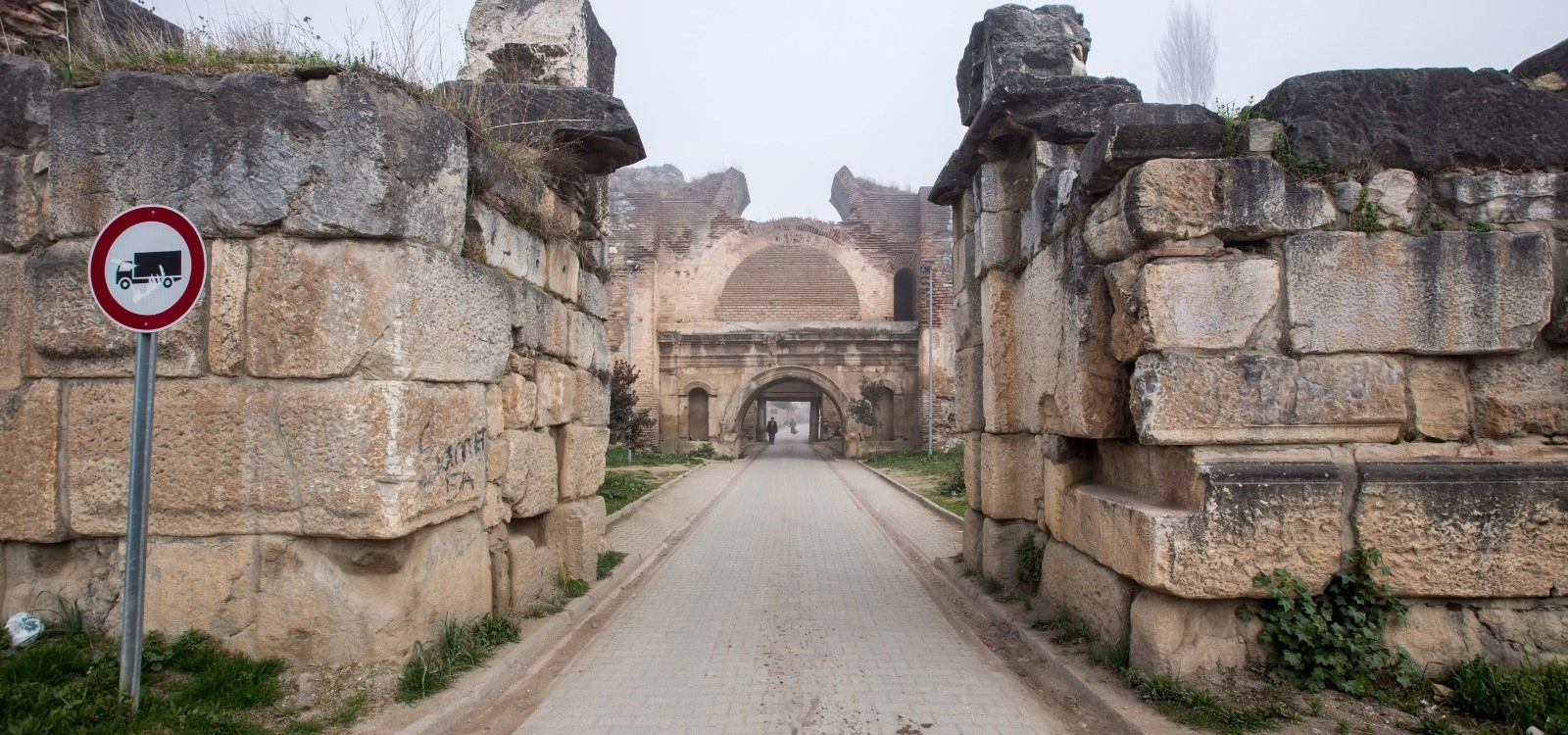
The monumental northern entrance facing the historic road toward Constantinople.
The impressive eastern entrance preserving Roman inscriptions, marble elements and later defensive additions.
The southern gateway on the ancient route toward the Bithynian interior and Bursa region.
The western Lake Gate once opened toward the shore of Lake İznik but is now largely lost.
İstanbul Kapı stands on the northern side of ancient Nicaea. Its modern name reflects the historic route leading toward Constantinople, today's Istanbul.
The earliest monumental phase belongs to the Roman imperial period. The entrance was constructed as an impressive honorific gateway during the Flavian era, associated with the reigns of Vespasian and Titus. Rather than functioning initially as a fortress gate, it proclaimed the wealth and civic importance of Nicaea to travelers entering the city.
Following earthquake damage, the gateway was repaired during the reign of Emperor Hadrian. When the city required stronger defenses in Late Antiquity, the Roman monument was incorporated into the fortified wall system.
The resulting entrance became much more complex. Visitors today can recognize several successive gateways, defensive towers and the space between them. The architecture therefore records the transformation of a Roman ceremonial entrance into a military gateway.
Among its most memorable details are pieces of reused ancient sculpture. Two carved Medusa heads are associated with the inner gateway, while other sculptural pieces reused in the fortifications demonstrate how material from earlier monuments was incorporated into later construction.
North — toward Constantinople and the routes of northwestern Bithynia.
A prestigious Roman monumental entrance rather than a purely military gate.
Integrated into the Late Roman and Byzantine defensive system.
Multiple arches, towers, Roman masonry, reused sculpture and Medusa-head carvings.
Lefke Kapı forms the eastern entrance to ancient Nicaea and is one of the finest surviving monuments in İznik. Its architecture closely resembles İstanbul Gate, suggesting that the two entrances formed part of the same broad program of Roman monumental construction.
The gate preserves especially important inscriptions connected with Roman civic history. References associated with Plancius and Emperor Hadrian help document construction and restoration phases of the monument.
Like İstanbul Gate, Lefke Gate underwent a major transformation when Nicaea became a fortified city. Later walls and towers enclosed the original monumental arch, creating a controlled defensive passage rather than an open ceremonial entrance.
Two rounded towers strengthened the approach. Brick arches, rubble masonry, marble columns and reused carved stones make the gate an excellent place to examine the different building techniques found throughout the walls.
The eastern road beyond Lefke Gate was also important because it connected Nicaea with routes toward the interior of Bithynia. The remains of ancient water infrastructure in this part of İznik further demonstrate how the city connected its defensive, transportation and water systems.
East, opening from ancient Nicaea toward the Bithynian interior.
Preserves important elements of a monumental Roman gateway.
Roman inscriptions preserve evidence for civic construction and Hadrianic restoration.
Later walls and rounded towers transformed the entrance into a fortified passage.
Reused marble and sculptural fragments can be identified within the structure.
One of the strongest places in İznik for studying Roman and Byzantine construction side by side.
Yenişehir Kapı stands on the southern side of the ancient city. The road passing through this entrance connected Nicaea with other important centers of Bithynia and with routes continuing toward the interior of Anatolia.
Its earliest monumental phase also dates to the Roman imperial period. As at İstanbul and Lefke gates, the entrance appears to have begun as an architectural statement announcing the city's prosperity and prestige.
The surviving complex reveals several phases of construction. An outer entrance belonged to the forward defensive line, while the route continued through a protected area toward an inner gateway. Reused ancient architectural blocks are visible in the masonry.
Yenişehir Gate does not survive as completely as İstanbul or Lefke gates, yet it remains essential for understanding the geometry of ancient Nicaea. Standing here, visitors can imagine the main north–south avenue passing directly through the heart of the city toward İstanbul Gate.
South, toward Yenişehir and routes leading deeper into Bithynia and Anatolia.
The monumental entrance developed during the Roman imperial period.
Later construction created multiple defensive stages around the original entrance.
The gate marks one end of Nicaea's principal north–south urban route.
At the western end of Nicaea's principal east–west avenue stood Göl Kapı, literally the Lake Gate. The entrance opened toward Lake İznik, which lies immediately west of the ancient city.
Unlike the other three principal gateways, Göl Kapı has not survived as a monumental standing structure. Much of the gate was destroyed, leaving only fragmentary remains associated with the surrounding fortification.
Its location is nevertheless extremely important for understanding Nicaea's urban plan. A traveler entering through Lefke Gate in the east could follow the principal avenue through the city toward the Lake Gate and the waterfront in the west.
The proximity of the ancient city to the lake also explains why modern archaeological research has increasingly focused on the submerged and shoreline remains of Nicaea, including the remarkable basilica discovered beneath the waters of Lake İznik.
One of the most fascinating things about İznik is how clearly the ancient city plan can still be understood. Nicaea was organized around two major streets intersecting near the center.
The north–south route connected İstanbul Gate with Yenişehir Gate, while the east–west route ran between Lefke Gate and Göl Kapı.
Modern roads continue to follow much of this ancient arrangement. This means visitors can effectively cross the city along axes that have organized movement through Nicaea for roughly two thousand years.
Near the meeting point of these routes stands one of İznik's most important monuments: the former Byzantine church now known as the İznik Hagia Sophia / Orhan Mosque. The relationship between the central monument and the four gates makes the ancient street system particularly easy to appreciate.
İstanbul Gate
Lefke Gate
Yenişehir Gate
Göl Kapı and Lake İznik
Do not treat the walls simply as a backdrop around İznik. Their masonry contains an extraordinary amount of historical information, and several details are easy to miss without knowing what to look for.
Identify the carefully cut stonework of the monumental imperial-period entrances.
Look for reused carved Medusa imagery associated with İstanbul Gate.
Lefke Gate preserves inscriptions connected with the city's Roman building history.
Notice Byzantine brickwork incorporated into later repairs and towers.
Search the masonry for columns, marble blocks, carved fragments and reused architectural pieces.
Compare rounded and rectangular towers along different portions of the circuit.
Observe how later walls turned ceremonial Roman entrances into controlled defensive corridors.
Use the surviving gates to reconstruct the main roads of ancient Nicaea.
The İznik walls should not be imagined as a single Roman fortification surviving unchanged. Their greatest historical value comes precisely from the opposite: they preserve evidence of continuous rebuilding.
Earthquakes repeatedly damaged Nicaea, while invasions and political conflict forced rulers to repair vulnerable sections quickly. Builders reused strong stone from older monuments, filled gaps with rubble, constructed brick arches and rebuilt towers according to changing defensive requirements.
The result is a physical timeline. A single stretch of wall may contain Roman cut stone, Byzantine brickwork, ancient marble reused as building material and later repairs belonging to medieval or Ottoman phases.
The earliest defensive history reaches back toward the formation of the planned ancient city.
Imperial-period gates displayed Nicaea's wealth and urban status.
Military threats transformed the city into a substantially fortified center.
Repeated rebuilding strengthened walls, towers and entrance passages.
The defenses protected a major Byzantine capital during the 13th century.
The old circuit continued to shape the streets and neighborhoods of the conquered city.
The most dramatic medieval chapter in the history of the walls began after the Fourth Crusade captured Constantinople in 1204. Byzantine political authority fragmented, and several successor states emerged.
Nicaea became the center of the most successful of these states. The rulers based here claimed continuity with the Byzantine imperial tradition and gradually expanded their territory across western Anatolia and southeastern Europe.
The city's defenses suddenly protected far more than a provincial town. Nicaea was an imperial residence, political center and one of the principal bases from which the restoration of Byzantine power was organized.
The fortifications were strengthened during this period, including additional defensive works outside parts of the older circuit.
In 1261, forces loyal to Emperor Michael VIII Palaiologos recovered Constantinople. The imperial court returned to the Bosphorus, ending Nicaea's role as the principal Byzantine capital, but the city retained enormous religious and strategic importance.
Nicaea is internationally known because of the First Council of Nicaea in AD 325, convened by Emperor Constantine the Great. The council became one of the defining events in the development of early Christianity.
A second major ecumenical council met at Nicaea in 787, during the Byzantine dispute over religious images. This gathering is traditionally associated with the Church of Hagia Sophia in the center of the city.
The surviving city walls are not themselves monuments of these councils, but they preserve the urban landscape in which Nicaea's extraordinary religious history unfolded. Walking from one monumental gate toward the center therefore provides valuable geographical context for understanding the ancient city.
Unlike a conventional archaeological site, the İznik walls form part of the modern town. Roads pass through the historic gates, houses and gardens stand beside the fortifications, and some stretches are easier to explore than others.
Visit İstanbul, Lefke and Yenişehir gates first before exploring quieter wall sections.
Daylight makes masonry details easier to see and is preferable for less-developed sections.
Some historic gateways remain connected with active streets and vehicle routes.
Expect uneven paving, grass, loose stones and irregular surfaces near some sections.
Historic masonry may be unstable even when a wall or tower appears easily accessible.
Take time to examine reused marble, inscriptions and carved ancient fragments.
The compact town allows you to alternate between the walls and monuments inside the ancient circuit.
The most interesting discoveries often come from stopping to examine individual construction phases.
Begin at İstanbul Gate on the northern side of the city. Spend time examining the successive arches, Roman stonework, later towers and reused sculptural fragments.
From İstanbul Gate, follow the historic north–south axis toward central İznik. Continue to the Hagia Sophia / Orhan Mosque, which stands close to the ancient crossroads at the heart of Nicaea.
From the center, walk east toward Lefke Gate. This is arguably the best place to study the relationship between Roman monumental architecture and later Byzantine fortification. Look carefully for inscriptions and reused carved material.
Return toward the center and continue south to Yenişehir Gate. The route makes the scale of the ancient north–south avenue easier to understand.
Finally, continue west toward Lake İznik and the approximate area of the historic Göl Kapı. Although the monumental gate itself has largely disappeared, the lakeshore provides a beautiful finish to the route and connects naturally with the story of the submerged İznik Basilica.
The İznik walls do not operate as one enclosed archaeological park. They surround the living historic town, and the major gates can be viewed from surrounding public streets and open areas.
There is consequently no single entrance, ticket office or opening schedule for the complete wall circuit. Individual sections may occasionally be affected by conservation, archaeological work, road arrangements or temporary access restrictions.
Because almost the entire experience is outdoors, temperature, daylight and weather have a greater effect than formal opening hours.
Mild temperatures and fresh vegetation make spring excellent for walking the walls.
Comfortable weather and softer light make this another excellent season for exploration.
Start early before the strongest midday heat, especially if planning a long walk.
Combine the gates with sunset beside Lake İznik after temperatures begin to fall.
The monuments are quieter, although rain can make uneven surfaces slippery.
Low-angle sunlight emphasizes the texture of brick, stone and ancient architectural fragments.
Visit one major gate, preferably İstanbul Gate or Lefke Gate.
Combine İstanbul Gate and Lefke Gate with a short walk through central İznik.
Visit İstanbul, Lefke and Yenişehir gates together with important wall sections.
Explore all three surviving gates, central Nicaea and selected stretches of the wall circuit.
Add Hagia Sophia, the Roman Theatre, İznik Museum, lakeshore and other historic monuments.
Allow a full day to examine masonry, inscriptions, street axes and nearby archaeological sites carefully.
The fortifications are among the most photogenic monuments in İznik, especially because Roman stonework, Byzantine brick construction and vegetation often appear within the same composition.
Photograph the entrance straight on to emphasize its successive arches and monumental scale.
Use closer compositions for inscriptions, Roman masonry and reused architectural fragments.
Photograph along the wall rather than directly toward it to emphasize repeating towers and depth.
Morning or late-afternoon side light reveals different masonry phases particularly well.
Include streets and local life to show how the Roman-Byzantine walls remain part of modern İznik.
End a photography walk near Lake İznik for contrasting views of the historic city and waterfront.
Because the walls are integrated into the modern town, accessibility varies from one location to another. The major gates can generally be approached from public streets, but archaeological surfaces and wall-side paths may be uneven.
Many impressive views of the gates and walls require no climbing.
Expect rough paving, grass, loose stones and changes in level beside some wall sections.
Viewing from modern streets is possible in many areas, but not every archaeological section is step-free.
Modern streets are generally straightforward, while rough wall-side paths can be less convenient.
A private vehicle or taxi makes it easy to connect the three principal surviving gates.
Central İznik has cafés, restaurants, parks and shaded areas within easy reach of the main monuments.
The walls surround central İznik, so reaching them is straightforward once you arrive in town. The three major surviving gates lie on different sides of the historic center and can be linked on foot, by taxi or by private vehicle.
İstanbul, Lefke and Yenişehir gates are all within the compact historic town.
İznik can be reached by road and regional public transportation from Bursa.
Road and ferry-road combinations make İznik possible as a long day trip, although an overnight stay allows a deeper visit.
Walking is the best way to understand the relationship between the gates and ancient street plan.
Useful for moving quickly between opposite sides of the wall circuit.
A guide makes the complex Roman and Byzantine construction phases much easier to interpret.
The fortifications surround one of Türkiye's richest small historic towns. Several major Roman, Byzantine, Christian and Ottoman monuments lie within walking distance of the surviving gates.
Visit the Byzantine church associated with the Seventh Ecumenical Council and later converted into the Orhan Mosque.
Discover the extraordinary remains of an early Christian basilica beneath the waters of Lake İznik.
Explore the monumental theatre constructed during the Roman imperial period.
See archaeological material revealing the long history of Nicaea and its surrounding region.
Admire an important early Ottoman building associated with İznik's transformation after the conquest.
See one of İznik's most elegant early Ottoman monuments and its distinctive tiled minaret.
Explore early Ottoman architecture and İznik's historic ceramics tradition.
Finish your archaeological walk beside the lake with sunset views across the water.
The walls surround the historic center of İznik in Bursa Province, on the eastern shore of Lake İznik in northwestern Türkiye.
İznik was known as Nicaea, a major city of ancient Bithynia and later an important Roman and Byzantine center.
The historic fortification circuit is approximately 4,970 meters long.
The circuit is traditionally described as having 114 towers, including both round and rectangular examples.
Surviving sections have traditionally been recorded at approximately 10–13 meters high, although preservation varies considerably around the circuit.
Nicaea had four principal gateways: İstanbul Gate in the north, Lefke Gate in the east, Yenişehir Gate in the south and Göl Kapı in the west.
İstanbul Gate and Lefke Gate survive particularly well, while Yenişehir Gate is also substantially preserved. The historic Göl Kapı has largely disappeared.
İstanbul Gate and Lefke Gate are generally the most impressive. Both preserve important Roman architectural elements combined with later defensive construction.
Important monumental gateways were constructed during the Roman imperial period, with major phases associated with the later 1st century AD. They were subsequently repaired and incorporated into later defensive walls.
Hadrian is closely associated with reconstruction in Nicaea following earthquake damage in the early 2nd century AD, and his name appears in inscriptions connected with the city's monumental gateways.
The earliest monumental gateways functioned largely as prestigious civic entrances. They were later incorporated into stronger defenses when military threats increased.
Later builders reused material from damaged or abandoned Roman monuments. This practice, known as spolia, placed columns, carved stones and architectural fragments into the fortifications.
Yes. Carved Medusa heads are among the reused ancient elements associated with the İstanbul Gate complex.
The western Lake Gate was largely destroyed, and only fragmentary evidence survives around its former location.
Yes. The defenses were repeatedly repaired and strengthened throughout Byzantine history and became especially important when Nicaea served as an imperial capital after 1204.
It was a Byzantine successor state established after Crusaders captured Constantinople in 1204. Its rulers eventually recovered Constantinople in 1261.
Nicaea came under Ottoman rule in 1331 during the reign of Orhan Gazi.
Much of the wall line can be followed through the modern town, but there is no single uninterrupted archaeological walking trail. Roads, buildings, vegetation and restricted sections require detours.
The major exterior walls and gates are generally viewed from public streets and open areas rather than through one ticketed archaeological entrance.
A rewarding route begins at İstanbul Gate, continues through the center to Hagia Sophia, then visits Lefke Gate and Yenişehir Gate before finishing beside Lake İznik.
Allow approximately 2–3 hours for the major gates. A half day is better if you want to explore additional towers and historic monuments inside the circuit.
Yes, especially around the major street-level gateways. Children should remain away from unstable masonry, steep ruins and unprotected wall sections.
Many major gates can be viewed from modern street level, but rough archaeological surfaces and some wall-side paths are not fully accessible.
Combine the fortifications with Hagia Sophia / Orhan Mosque, the Roman Theatre, İznik Museum, Ottoman monuments, Lake İznik and the submerged basilica archaeological area.
Absolutely. They are among the best monuments for understanding the extraordinary continuity of Nicaea, from a prestigious Roman city to a fortified Byzantine capital and later Ottoman İznik.
Ancient masonry can be unstable and repeated climbing damages fragile historic surfaces.
Closed areas may contain unstable structures or active archaeological and conservation work.
Even apparently loose fragments can form part of an archaeological context.
Carry bottles, packaging and other rubbish away from the monument.
The walls pass through residential areas and remain part of everyday modern İznik.
Follow official signs and respect restoration work protecting the monument for future generations.
Explore İznik's Roman gates, Byzantine walls, Christian monuments, Ottoman architecture and lakeside archaeology through a private route designed around your interests and without compulsory shopping stops.
Combine the city walls with the monuments that made Nicaea one of the most historically important cities in Anatolia.
Ask us about a tailor-made İznik route focused on Roman archaeology, Byzantine history, the Ecumenical Councils, historic gates, Ottoman monuments and Lake İznik.
Request a Custom Tour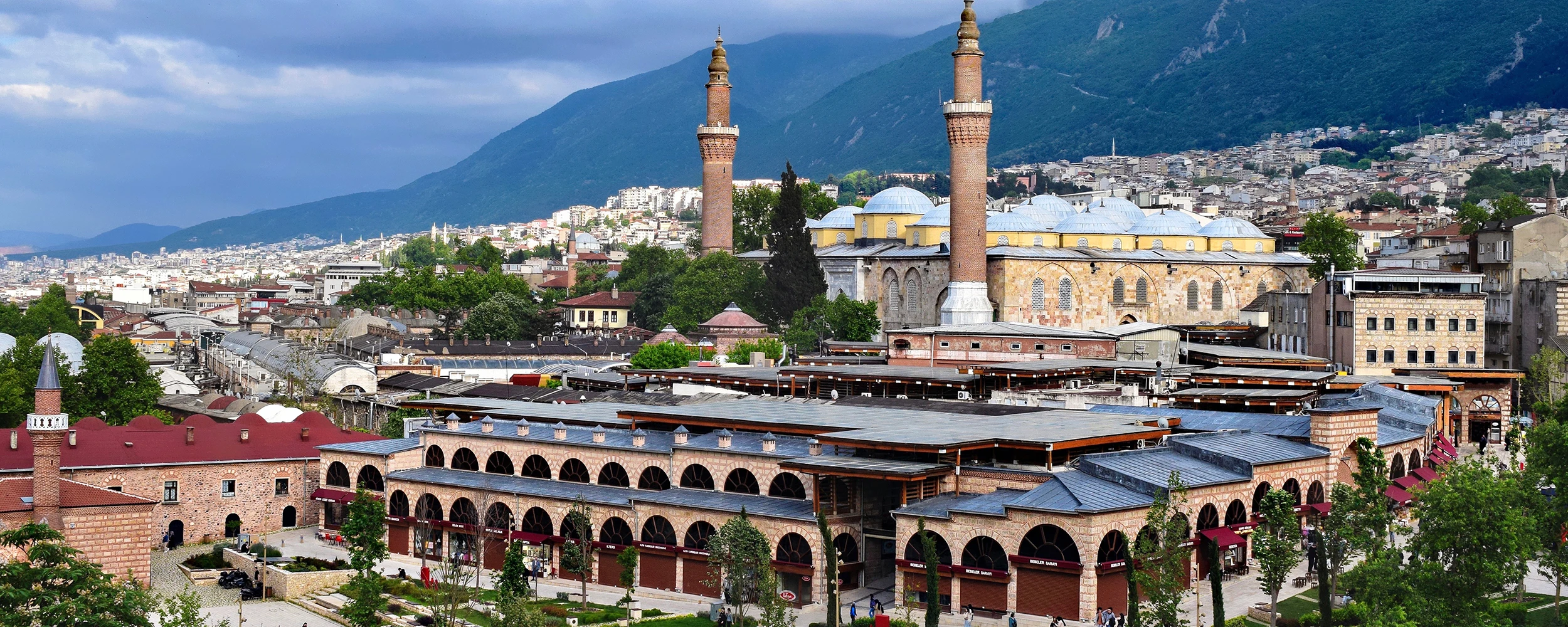
Continue from İznik to Bursa to discover early Ottoman monuments, bazaars, museums, historic neighborhoods and the landscapes around Uludağ.
View Bursa GuideConnect the walls with the Christian, Byzantine and lakeside monuments of ancient Nicaea.
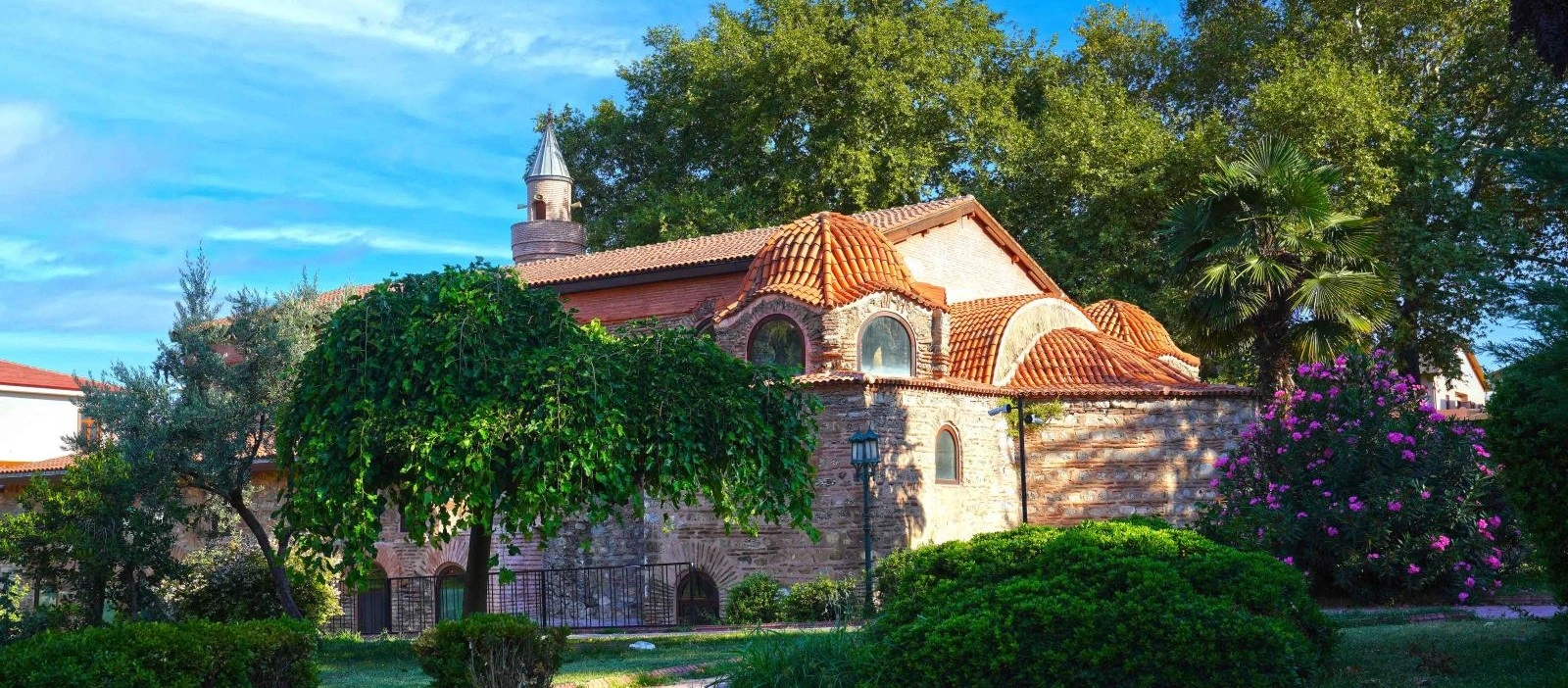
Explore the Byzantine church traditionally associated with the Seventh Ecumenical Council and its later history as the Orhan Mosque.
Explore Hagia Sophia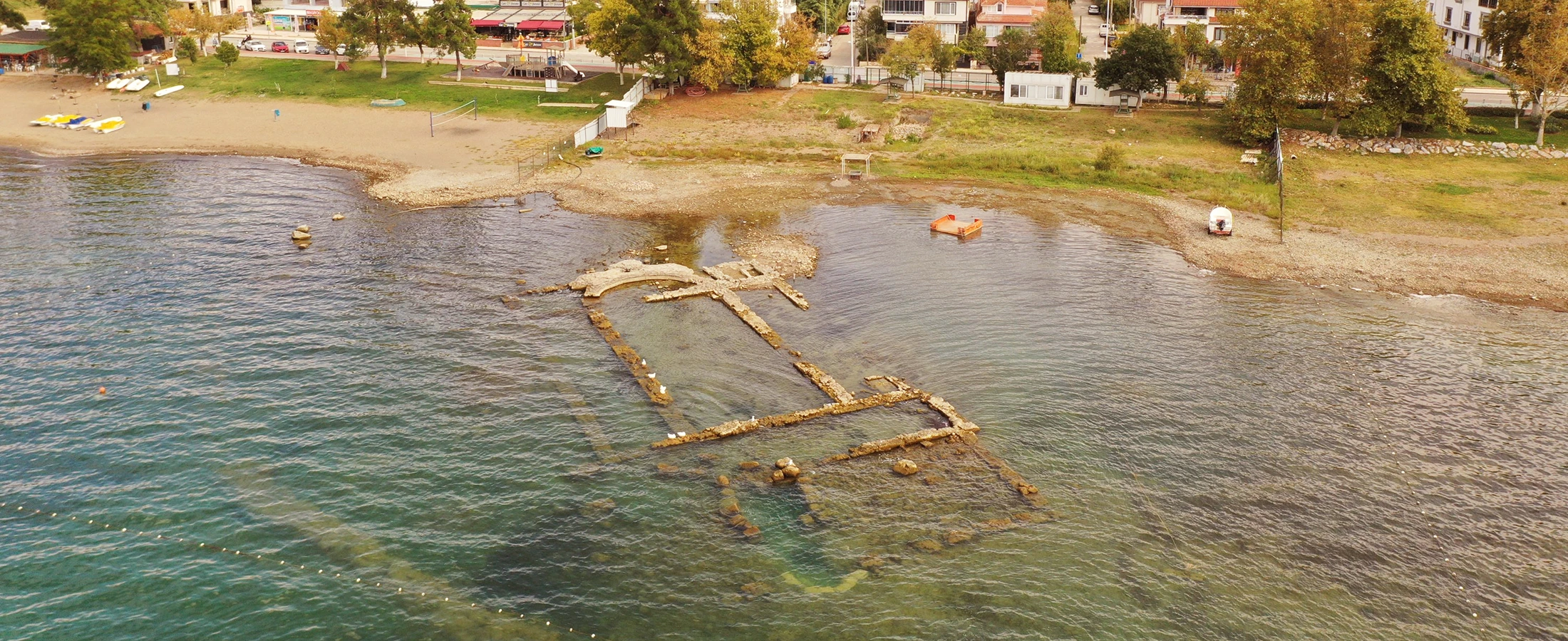
Discover one of Türkiye's most remarkable underwater archaeological sites, an early Christian basilica submerged just offshore in Lake İznik.
Explore the Lake Basilica
Continue through Bursa Province to discover Roman archaeology, early Ottoman capitals, historic villages, museums and natural landscapes.
Continue Exploring Bursa