Private Kırklareli Heritage Experience
Ask us about a tailor-made cultural journey combining Kırklareli Museum, the historic city center, Ottoman monuments and nearby archaeological sites.
Request a Custom Tour





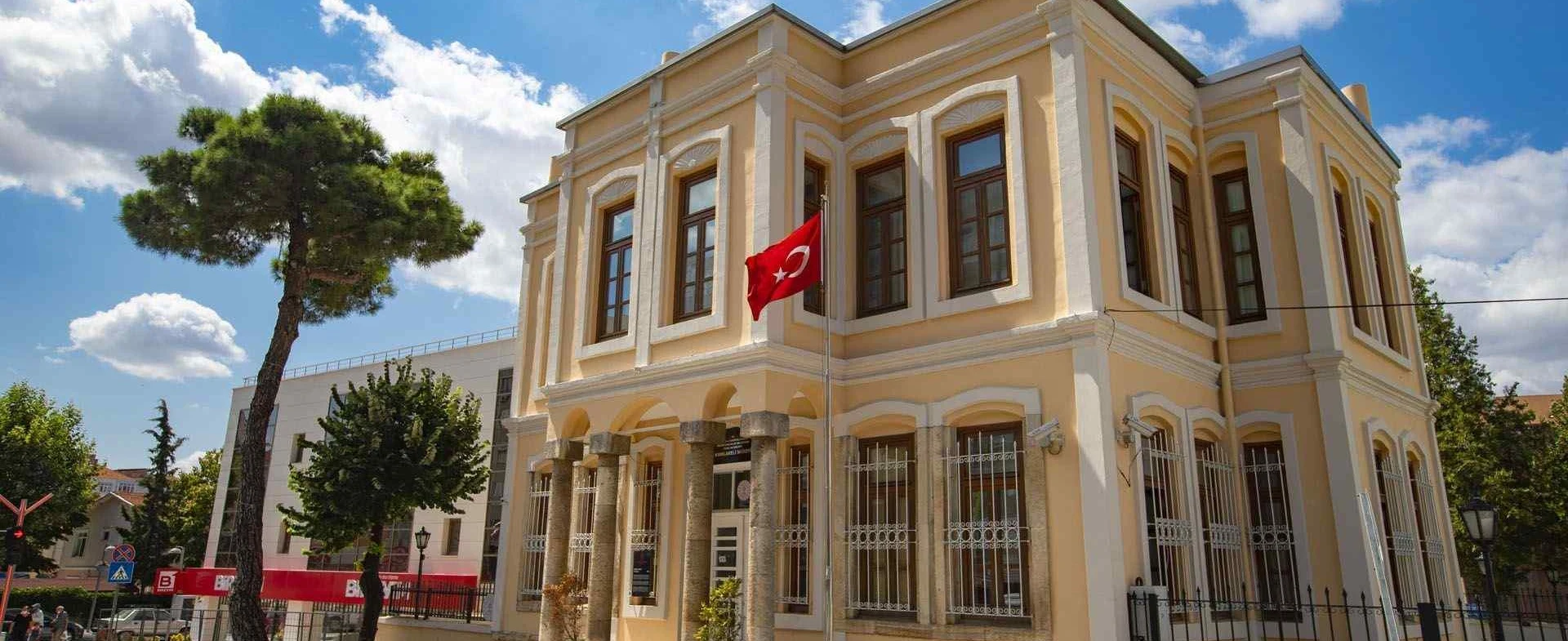
Standing in the center of Kırklareli, Kırklareli Museum – Kırklareli Müzesi brings together the archaeology, traditional culture and natural history of one of the most fascinating regions of Turkish Thrace.
The museum occupies an elegant historic building originally constructed in 1894 as Kırklareli's municipal building. After decades of public use and a lengthy restoration, it reopened as the provincial museum on 14 January 1994.
Its collections tell a much older story. Archaeological finds introduce visitors to prehistoric settlements such as Aşağıpınar and Kanlıgeçit, Thracian burial traditions, Classical and Roman-period sites, the ancient theater of Vize, and Ottoman industrial archaeology from Demirköy Fatih Foundry.
Alongside the archaeology galleries are displays devoted to Kırklareli's traditional village and urban life, historic clothing and household objects, as well as an unusual natural-history gallery featuring animal specimens from the wider region.
Compact, centrally located and easy to visit, Kırklareli Museum is one of the best places to begin exploring the province. It provides the historical context that makes archaeological sites, Ottoman monuments and the landscapes of Thrace far easier to understand.
See finds connected with Aşağıpınar, Kanlıgeçit and other early settlements of the Kırklareli region.
Discover archaeological material from tumuli, ancient settlements and sites including Vize.
Explore costumes, jewelry, household objects and reconstructions illustrating regional life in the 19th and early 20th centuries.
The collections are displayed inside Kırklareli's former 1894 municipal building in the heart of the city.
Essential information for visiting the principal archaeology and ethnography museum of Kırklareli Province.
Mustafa Kemal Boulevard No:26, Karacaibrahim, in central Kırklareli.
Open on Google MapsHistoric former municipal building constructed in 1894 during the late Ottoman period.
Kırklareli Museum officially opened to visitors on 14 January 1994.
Archaeology, ethnography, coins, regional cultural history and natural-history specimens.
Admission is currently free according to the official Turkish Museums listing.
Allow approximately 45–75 minutes for a comfortable visit through all principal sections.
The building has witnessed more than a century of Kırklareli's civic and cultural history.
The present museum building was constructed in 1894 during the administration of Mutasarrıf Neşet Paşa and Mayor Hacı Mestan Efendi. It was originally created as Kırklareli's municipal government building rather than as a museum.
For much of the first half of the 20th century, the building stood at the center of civic life. One particularly important moment came on 20 December 1930, when Mustafa Kemal Atatürk visited the building during his travels through Thrace.
The structure continued to function as the municipal building until 1962. It was later vacated and by the 1970s had fallen out of regular use.
Restoration began in 1983. The project continued in stages for approximately a decade, preserving the historic building while adapting it for a new cultural purpose. Restoration and exhibition arrangements were completed in 1993.
On 14 January 1994, the building officially opened as Kırklareli Museum. Its transformation gave the province a permanent institution in which archaeological finds, ethnographic collections and regional natural history could be preserved and displayed together.
Today the building itself has become part of the museum experience. Visitors are not only encountering objects from Kırklareli's past; they are exploring them inside a historic structure that has played its own role in the modern history of the city.
Kırklareli Museum is organized around three principal themes: archaeology, ethnography and natural history. Together they allow visitors to move from prehistoric settlement and ancient burial customs to traditional village life and the natural environment of Thrace.
The natural-history section occupies the entrance level, while the principal archaeology and ethnography displays are located upstairs.
Discover material from prehistoric settlements, tumuli, Classical and Roman sites and later Ottoman archaeology throughout Kırklareli Province.
Traditional clothing, jewelry, household objects and reconstructed scenes introduce everyday life in Kırklareli's villages and towns.
Taxidermied specimens introduce animal species associated with the forests, wetlands and rural landscapes of the region.
A numismatic display follows coinage from ancient periods through later historical eras, including the Ottoman period.
Many objects come directly from archaeological investigations conducted within Kırklareli Province.
The museum connects objects with the actual archaeological and historic sites travelers can continue exploring across Thrace.
The archaeology galleries are among the most important reasons to visit Kırklareli Museum. Rather than presenting objects gathered from across Türkiye, the displays focus strongly on Kırklareli and its surrounding region.
This local focus makes the museum especially useful for travelers exploring the prehistoric settlements, Thracian tumuli and ancient towns of eastern Thrace. Objects that might otherwise appear isolated inside a display case can be connected directly with archaeological landscapes elsewhere in the province.
The archaeological presentation begins with material connected with the region's deep prehistory and continues chronologically through later ancient periods. Fossils, prehistoric objects, pottery, tools, burial finds, Classical-period material and coins help illustrate the enormous chronological depth of settlement in Kırklareli.
Objects from early farming communities reveal the lives of some of Thrace's first settled populations.
Ceramic vessels and fragments help archaeologists reconstruct chronology, food preparation, storage and cultural connections.
Objects discovered in regional tumuli provide evidence for ancient funerary customs and beliefs.
Later displays introduce cultural developments during the Greek, Hellenistic and Roman periods.
Coinage provides a compact chronological journey through changing political and economic systems.
Finds from Demirköy Fatih Foundry demonstrate that archaeology does not end with the ancient world.
Among the museum's most important archaeological connections are the prehistoric settlements of Aşağıpınar and Kanlıgeçit, located close to modern Kırklareli.
Excavations in this landscape have transformed our understanding of prehistoric Thrace. The region stood between Anatolia and southeastern Europe, making it especially important for studying the movement of early agricultural communities, technologies and cultural traditions.
Objects from the Neolithic and Chalcolithic periods are displayed in dedicated parts of the museum, providing an excellent introduction before visiting the archaeological site itself.
Discover one of the key prehistoric settlements for understanding the development of early farming communities in Thrace.
A nearby prehistoric settlement that contributes to the broader archaeological story of Kırklareli and southeastern Europe.
Ceramics provide evidence for food preparation, storage, technology and changing prehistoric traditions.
Small finds help archaeologists reconstruct farming, craft production and household activities thousands of years ago.
The region occupied a critical geographical position between the Balkans, the Marmara region and Anatolia.
Seeing the museum collections before or after Aşağıpınar makes the archaeological landscape much easier to understand.
Kırklareli Province contains an extraordinary number of tumuli — monumental burial mounds associated with ancient communities of Thrace. These artificial hills remain visible across agricultural fields and rural landscapes throughout the province.
Excavations of burial mounds have recovered pottery, personal ornaments and other funerary objects that help archaeologists understand ancient beliefs, social status and burial customs.
The museum preserves material associated with regional tumulus excavations, including finds from locations around Babaeski, Pınarhisar and Vize. This makes the collection particularly important for understanding the Thracian landscape beyond the modern city.
Large earthen burial mounds once marked the resting places of important individuals and families.
Objects placed with the dead provide clues to identity, wealth, ritual and beliefs about the afterlife.
Many burial mounds still survive in the countryside, creating one of the characteristic archaeological landscapes of Thrace.
Material from excavated burial contexts around Babaeski contributes to the museum's regional archaeological collection.
Finds associated with the Yündolan tumulus form another part of Kırklareli's burial archaeology story.
The ancient landscape around Vize preserves tumuli alongside Roman, Byzantine and Ottoman remains.
The historic town of Vize, known in antiquity as Bizye, is one of Kırklareli Province's most important archaeological centers.
The museum's collections include material recovered from excavations in the Vize region, including finds associated with the town's ancient theater and nearby burial landscapes.
These objects provide useful context for travelers who later visit Vize itself, where archaeological remains survive alongside Byzantine and Ottoman monuments.
Explore the ancient and medieval heritage of one of eastern Thrace's most historically layered towns.
Excavations at Vize's Roman-period theater have contributed finds to the Kırklareli Museum collections.
Archaeological material illustrates how the region became integrated into the wider Roman world.
Vize continued to play an important role through Byzantine and Ottoman centuries long after its ancient period.
Not every archaeological object in Kırklareli Museum comes from antiquity. The galleries also include material from Demirköy Fatih Foundry, one of Türkiye's most remarkable Ottoman industrial archaeology sites.
The foundry operated within a landscape rich in iron, forests and flowing water. Archaeological investigations have uncovered furnaces, workshops, industrial waste and water-powered installations that reveal how metal production was organized during the Ottoman period.
Including material from Demirköy inside the museum creates an unusually broad historical narrative: visitors can move from the first settled communities of prehistoric Thrace to the industrial infrastructure of an early modern empire.
Visit the archaeological remains of the Ottoman iron-production complex hidden within the Istranca forests.
Furnace remains, slag and production material reveal a side of Ottoman history rarely seen in conventional museums.
Demirköy formed part of a regional system that transformed natural resources into strategically important metal products.
The archaeological evidence helps explain the use of furnaces, water power and organized workshop production.
The ethnography galleries shift attention from archaeology to the everyday lives of people who inhabited Kırklareli during the more recent past.
Displays focus especially on 19th-century and early 20th-century life in the villages and towns of the region. Traditional garments, jewelry, domestic objects and handcrafted items illustrate a way of life that changed rapidly during the modern era.
One section reconstructs aspects of village life, while another includes a Kırklareli City Room evoking the domestic culture of the historic town.
These galleries are particularly valuable because Thrace has experienced repeated migrations, population movements and social changes. Objects associated with daily life preserve cultural traditions that cannot always be recovered through monumental architecture alone.
Reconstructed scenes help visitors imagine domestic and rural life in Kırklareli during the late Ottoman and early modern periods.
Regional garments reveal differences in craft, identity, status and everyday customs.
Decorative objects demonstrate local tastes and the craftsmanship associated with personal adornment.
Everyday utensils and furnishings show how families cooked, stored food, worked and organized domestic spaces.
A reconstructed urban interior evokes aspects of domestic life in historic Kırklareli.
Handmade objects preserve evidence of skills that were once essential to household and village economies.
One of the most distinctive parts of Kırklareli Museum is its Tabiat Salonu — Natural History Hall, located on the entrance floor.
The official museum description records 102 specimens representing 76 different species. The animals are preserved through taxidermy and displayed to introduce species associated with the wider Kırklareli region.
Some represent animals that have become rare, threatened or no longer commonly encountered in the local environment. The gallery therefore complements the archaeological and ethnographic collections by adding the natural landscape to the story of the province.
This is especially appropriate in Kırklareli, where the forests of the Istranca Mountains, wetlands around İğneada, agricultural plains and Black Sea environments support remarkable ecological diversity.
The official museum inventory describes 102 preserved animal specimens in the Natural History Hall.
The display represents dozens of species historically or presently associated with the region.
Regional birdlife reflects Kırklareli's combination of forests, wetlands, farmland and migration corridors.
Preserved mammals introduce visitors to wildlife associated with the wooded and rural landscapes of Thrace.
Rare and threatened species remind visitors that natural heritage can disappear just as cultural heritage can.
The natural-history gallery is often one of the most immediately engaging areas for younger visitors.
The museum building is itself an important cultural property. Constructed in 1894, it originally served as the city's municipal headquarters.
The structure consists of a basement and two principal floors. Its façades are articulated by regularly arranged windows, stone surrounds, horizontal moldings and decorative architectural details.
The street-facing entrance is particularly distinctive. A projecting upper section is supported by four stone columns, giving the façade a monumental civic character appropriate to its original public function.
The building's survival is important because Kırklareli experienced considerable urban transformation during the 20th century. Its conversion into a museum preserved both the structure itself and its connection with the city's late Ottoman civic history.
The building dates from the late Ottoman period and was created as Kırklareli's municipal offices.
The principal exhibition areas occupy the entrance and upper levels, with additional basement space.
The projecting section above the main entrance rests on four prominent stone columns.
Rhythmic window openings and decorative surrounds give the building its recognizable late Ottoman civic appearance.
A decade-long restoration process rescued the abandoned building and prepared it for museum use.
The building is recognized as an important historic monument as well as functioning as a museum.
Long before it became a museum, the building witnessed an important moment in the modern history of Kırklareli.
On 20 December 1930, Mustafa Kemal Atatürk visited the building while it was still serving as the municipal headquarters.
At the time, the Republic of Türkiye was only seven years old and Atatürk was making journeys through different parts of the country, meeting local officials and communities and observing regional developments.
The visit adds another historical layer to a structure already connected with late Ottoman administration, Republican civic history and the modern preservation of Kırklareli's archaeological heritage.
Kırklareli Museum is located in the city center and is one of the easiest cultural attractions to include while exploring central Kırklareli. Current official information lists the museum as open every day and free to enter.
Because the principal collections are indoors, Kırklareli Museum can be visited comfortably throughout the year. It is especially useful during very hot, cold or rainy weather when outdoor archaeological sites may be less comfortable.
Combine the museum with Aşağıpınar, central Kırklareli and the green landscapes surrounding the city.
An indoor museum visit provides a comfortable break during a longer day of sightseeing.
Excellent for combining cultural attractions in the city with the autumn landscapes of the Istranca Mountains.
The indoor galleries make the museum one of central Kırklareli's most reliable year-round attractions.
Visit early before continuing toward Aşağıpınar, Vize, Demirköy or other archaeological sites.
A museum visit can also work well after exploring Kırklareli's monuments on foot, but arrive before the ticket-office closing time.
Enough for a quick overview of the archaeology galleries and the principal highlights if your schedule is tight.
The best choice for most visitors, allowing time for archaeology, ethnography and natural history without rushing.
Recommended for travelers with a stronger interest in archaeology, prehistoric Thrace or regional history.
Combine the museum with Hızırbey Mosque and Complex and a walk through the historic center.
Add nearby Aşağıpınar Archaeological Site to connect museum objects with the landscape in which prehistoric communities lived.
Use the museum as an introduction before continuing to Vize, Demirköy, Kıyıköy or other parts of Kırklareli Province.
The historic exterior of Kırklareli Museum is one of the most attractive late Ottoman civic buildings in the city center and provides excellent architectural photography opportunities.
Photography policies inside museums can vary according to the object, temporary exhibitions and conservation requirements. Always follow signs and staff instructions, and avoid flash when it is prohibited.
Photograph the entrance together with its four supporting columns and symmetrical historic façade.
Window surrounds, cornices and stonework provide attractive close-up subjects.
A wider composition helps show how the former municipal building sits within modern central Kırklareli.
If photography is permitted, individual pottery groups and archaeological cases can make useful documentary images.
Flash photography can be restricted because of conservation requirements and the comfort of other visitors.
Allow other guests to view displays comfortably rather than blocking galleries for prolonged photography.
Seeing prehistoric objects first makes the nearby archaeological landscape much easier to understand.
The museum building itself is an important part of Kırklareli's late Ottoman and Republican history.
Moving through the archaeological exhibits in chronological order helps reveal how regional cultures changed through time.
The traditional-life displays provide an important bridge between ancient archaeology and modern Kırklareli.
It offers a completely different perspective on the forests, wildlife and ecological heritage of Thrace.
The museum is compact, but moving too quickly can mean missing many of the regional archaeological connections.
Several historic monuments can be reached easily from the museum during the same city walk.
Special opening arrangements can apply on national or religious holidays even when normal schedules list daily opening.
Kırklareli Museum is located at Mustafa Kemal Bulvarı No:26 in the Karacaibrahim neighborhood of central Kırklareli.
Unlike many archaeological attractions elsewhere in the province, the museum is an urban site and can easily be incorporated into a walking tour of central Kırklareli.
The museum is centrally located and can be reached easily on foot from many parts of the historic and commercial center.
Navigate to Mustafa Kemal Bulvarı No:26; central-city parking conditions vary according to the time of day.
The archaeological area lies close to the city, making the museum and excavation site an excellent combination.
Kırklareli can be reached by road from Istanbul and works well as an overnight destination or part of a longer Thrace itinerary.
Kırklareli can be combined with Edirne on a broader journey through European Türkiye.
From Kırklareli city, continue toward Vize, Demirköy, Dupnisa Cave, Kıyıköy or the Black Sea landscapes of the province.
The museum stands in an excellent position for exploring both central Kırklareli and the archaeological landscapes immediately surrounding the city.
Explore one of Kırklareli's most important Ottoman monuments, with a mosque, bath, arasta and historic fountain.
Continue from the museum's prehistoric galleries to the excavation area where early farming communities lived thousands of years ago.
Discover historic streets, monuments, local food and the wider cultural heritage of the provincial capital.
Explore Roman archaeology, Byzantine monuments, Ottoman heritage and the ancient landscape represented in the museum collections.
Visit the Ottoman industrial archaeology site whose excavations have contributed material to the museum.
Travel into the Istranca Mountains to experience one of the most impressive cave systems in Turkish Thrace.
Combine Byzantine heritage, forested river valleys and dramatic Black Sea scenery.
Continue north toward rare floodplain forests, wetlands, lakes and the Black Sea coast.
The museum is located at Karacaibrahim Mahallesi, Mustafa Kemal Bulvarı No:26 in central Kırklareli, Türkiye.
Current official information lists opening hours as 08:30–17:30, with the ticket office closing at 17:00.
The official Turkish Museums website currently lists Kırklareli Museum as open every day. Special holiday arrangements can still occur.
Admission to Kırklareli Museum is currently listed as free of charge.
The building was constructed in 1894 as Kırklareli's municipal government building. It was not originally designed as a museum.
Following restoration and exhibition work, Kırklareli Museum officially opened on 14 January 1994.
Yes. Mustafa Kemal Atatürk visited the building on 20 December 1930, when it was still functioning as Kırklareli's municipal building.
The museum contains archaeology, ethnography and natural-history sections, together with displays of coins and objects excavated at important archaeological sites throughout Kırklareli Province.
Yes. The museum displays objects from Aşağıpınar and Kanlıgeçit, including material associated with the prehistoric cultures of the Kırklareli region.
Yes. Archaeological material from the Vize region, including finds connected with the ancient theater and regional burial sites, forms part of the museum's collections.
Yes. Material recovered through archaeological investigations at Demirköy Fatih Foundry helps present the Ottoman industrial history of the province.
The ethnography galleries present traditional village and urban life, including historic clothing, jewelry, household objects and reconstructed domestic settings associated primarily with the 19th and early 20th centuries.
The museum's entrance-floor Natural History Hall displays preserved regional wildlife. Official museum information records 102 specimens representing 76 species.
Around 45–75 minutes is comfortable for most visitors. Travelers particularly interested in archaeology may want around 90 minutes.
Yes. The natural-history specimens and archaeological objects can make the museum particularly interesting for families, although younger children should always be supervised around display cases and historic interiors.
An excellent next stop is Hızırbey Mosque and Complex in central Kırklareli. For archaeology, continue to Aşağıpınar Archaeological Site.
Yes. It is particularly valuable for travelers planning to explore the rest of Kırklareli Province, because its collections provide historical context for Aşağıpınar, Vize, the region's Thracian tumuli, Demirköy and many other cultural sites.
Museum objects may appear permanent behind glass, but archaeological material, historic textiles and other cultural objects can be extremely fragile. Visitors can help preserve Kırklareli's heritage by following a few simple principles.
Archaeological and ethnographic materials should never be touched unless an exhibit specifically permits interaction.
Respect restrictions concerning flash, video or photography in individual galleries.
Avoid leaning against display cases or blocking other visitors from seeing exhibits.
Help younger visitors enjoy the collection without touching cases, objects or historic architectural features.
The museum itself is a protected historic structure and should be treated as part of the cultural collection.
Support preservation by exploring nearby heritage responsibly and leaving archaeological material exactly where it is found.
Discover Kırklareli Museum together with prehistoric settlements, Ottoman monuments, historic towns, forest landscapes and the remarkable heritage of Turkish Thrace.
Explore Kırklareli Museum and the city's principal cultural sites with a private itinerary adapted to your interests and available time.
Ask us about a tailor-made cultural journey combining Kırklareli Museum, the historic city center, Ottoman monuments and nearby archaeological sites.
Request a Custom Tour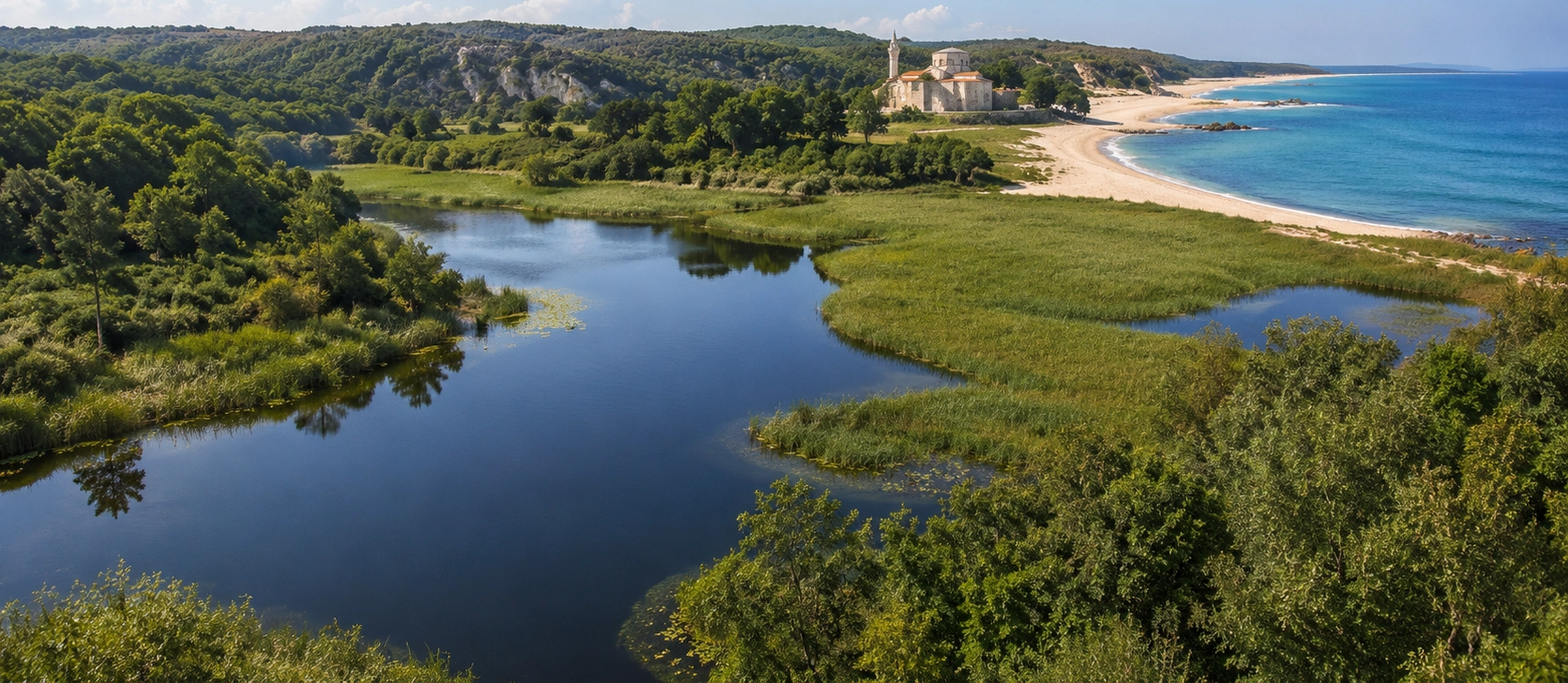
Discover more of Kırklareli, from prehistoric archaeology and Ottoman monuments to caves, forests, traditional towns and regional cuisine.
View Kırklareli GuideConnect the museum's collections with the archaeological sites, monuments and historic landscapes where the region's story actually unfolded.
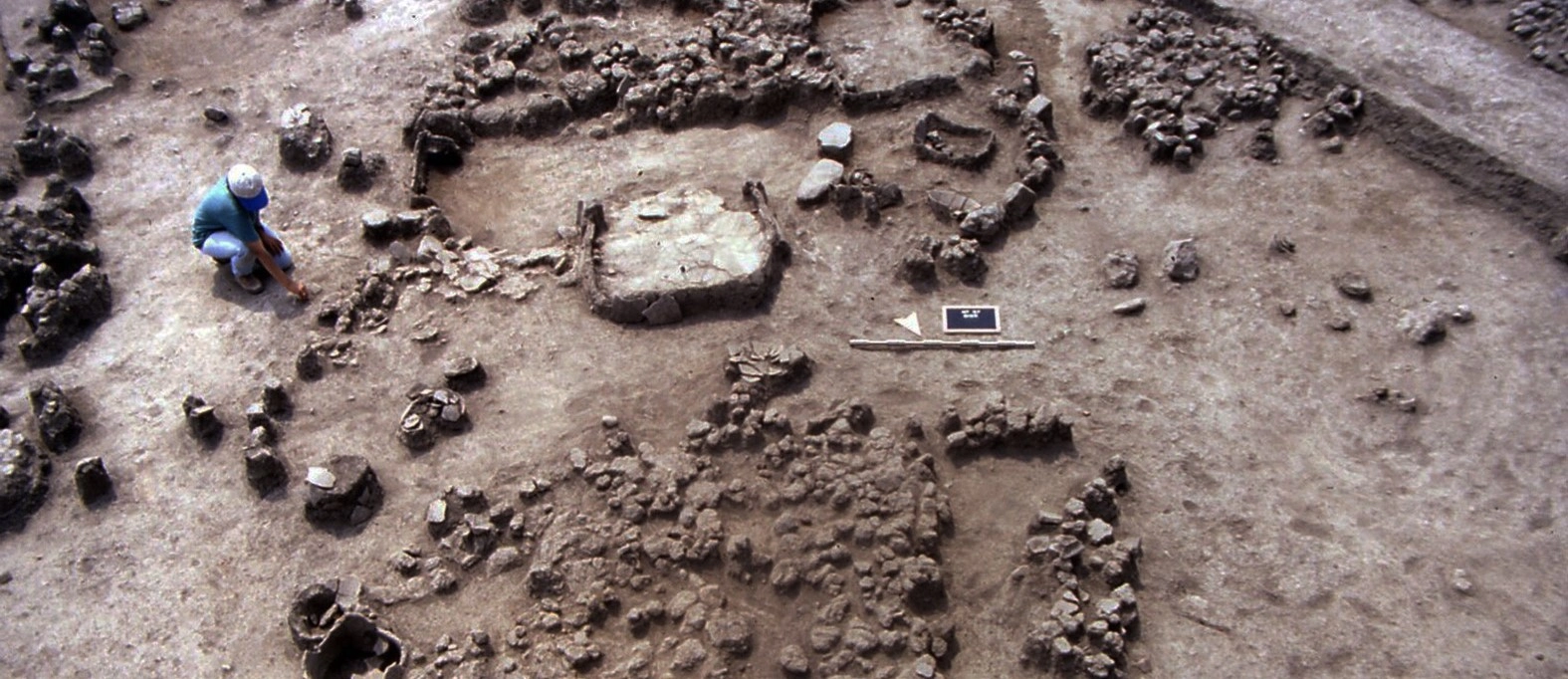
Continue the prehistoric story outside the museum at one of the most important early farming settlements in Turkish Thrace.
Discover Aşağıpınar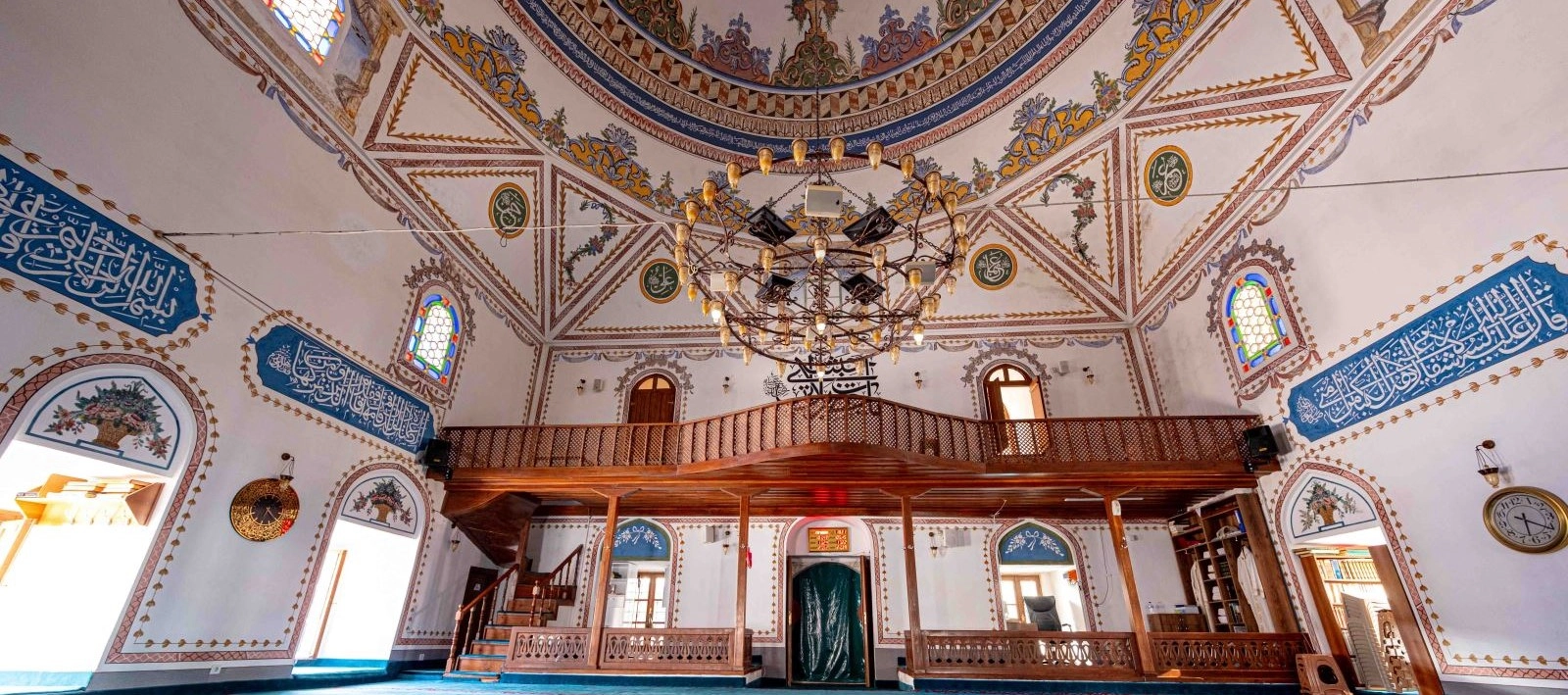
Explore one of central Kırklareli's most important Ottoman monuments and the historic complex surrounding it.
Explore Hızırbey Mosque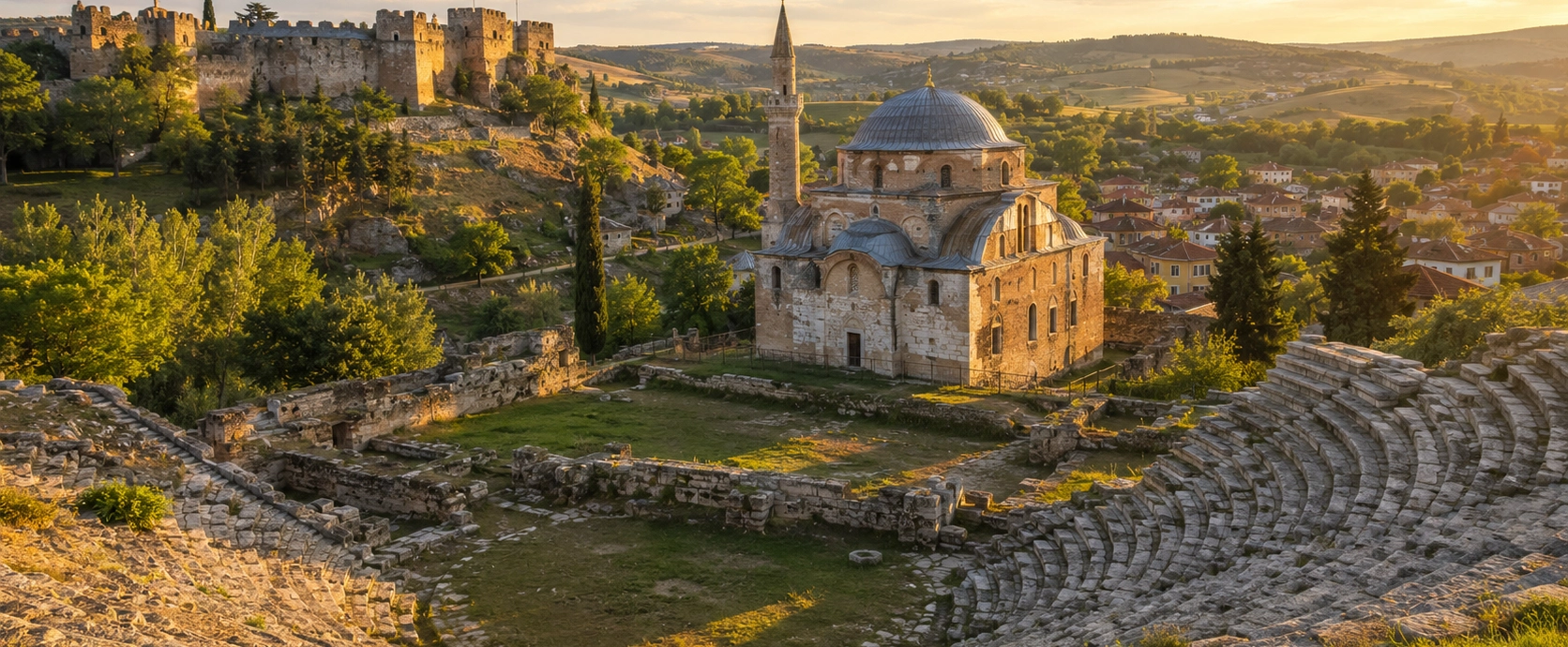
Continue into eastern Thrace to discover the ancient town whose archaeological sites are represented within Kırklareli Museum.
Explore Vize