Private Kolophon, Klaros & Notion Tour
Explore three connected archaeological sites with a route focused on Ionian history, ancient religion, archaeology and the relationship between inland Anatolia and the Aegean Sea.
Request a Custom Tour





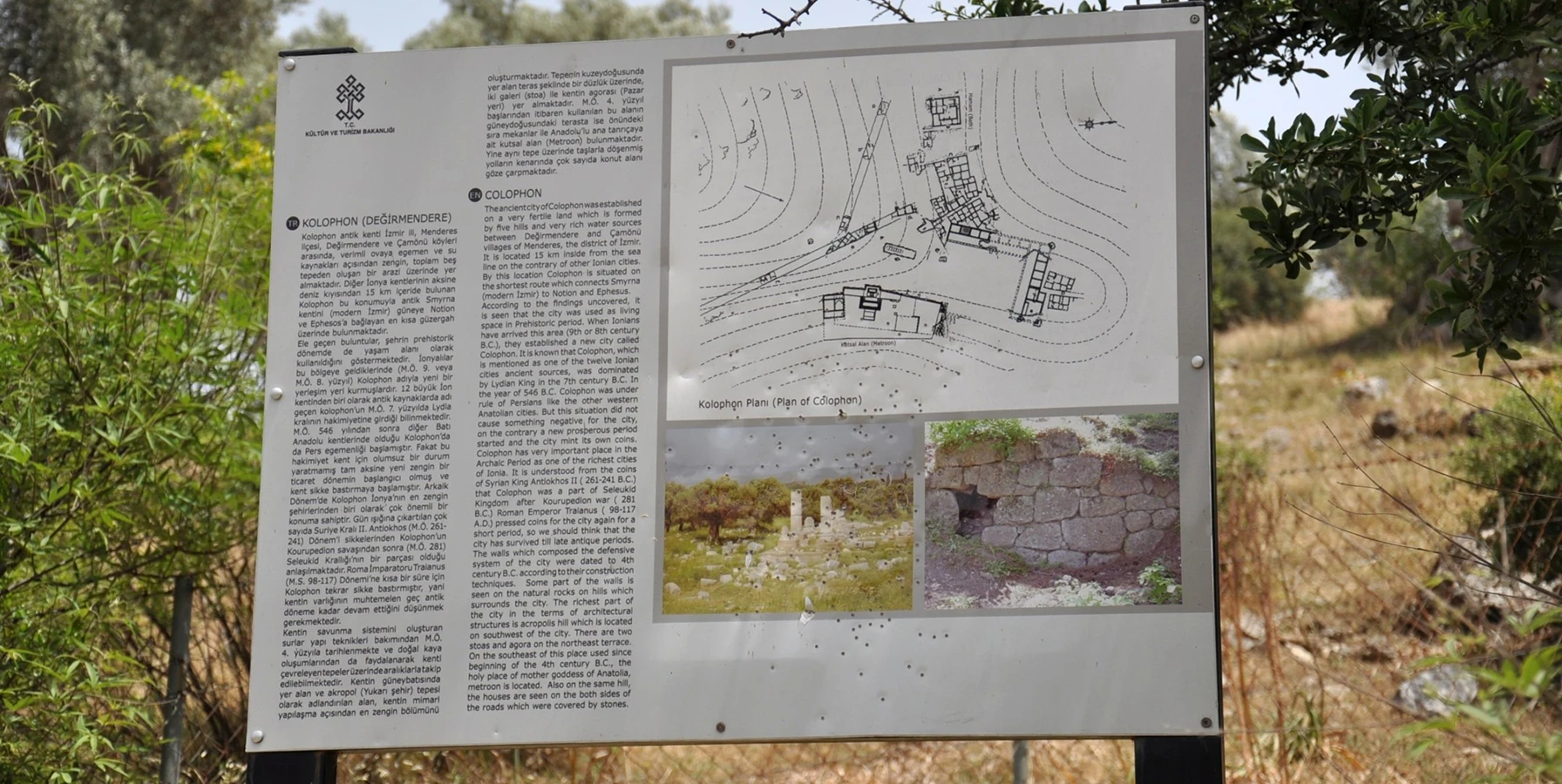
The Ancient City of Kolophon, also written Colophon, was one of the historic cities of Ionia on the western coast of Anatolia. Its remains lie near modern Değirmendere in the Menderes district of İzmir, in a landscape of hills, agricultural land and Mediterranean vegetation.
Unlike most famous Ionian settlements, Kolophon was established inland rather than directly on the coast. Its connection with the Aegean Sea was maintained through Notion, while the celebrated sanctuary and oracle of Apollo at Klaros formed an important religious center associated with the Kolophonian territory.
Ancient writers remembered Kolophon for its wealth, its formidable cavalry and its cultural life. The philosopher and poet Xenophanes was closely associated with the city, as was the elegiac poet Mimnermus. Ancient traditions even included Kolophon among the cities claiming a connection with Homer.
Today Kolophon offers a very different experience from monumental archaeological sites such as Ephesus. Its remains are scattered through a broad archaeological landscape rather than presented as one extensively restored visitor complex. For travelers interested in ancient history, however, combining Kolophon, Klaros and Notion reveals an extraordinary relationship between an inland city, a sanctuary and a port.
Discover one of the historic cities belonging to the Ionian cultural world of western Anatolia.
Learn why Kolophonian horsemen became famous enough to inspire an ancient proverb.
Connect the city with one of the ancient Mediterranean world's renowned sanctuaries of Apollo.
Explore an atmospheric archaeological landscape far removed from heavily visited ancient cities.
Essential information for discovering ancient Colophon near Değirmendere in İzmir.
Near Değirmendere, Menderes district, İzmir Province, western Türkiye.
Open on Google MapsIonia, one of the most influential cultural regions of ancient western Anatolia.
Its cavalry, literary figures and close relationship with Klaros and Notion.
Klaros, the nearby sanctuary and oracle of Apollo Klarios.
Notion provided the Kolophonian region with an important maritime connection.
Allow around 1–2 hours for Kolophon itself and longer when combining it with Klaros and Notion.
Kolophon helps explain how ancient Ionian cities combined agriculture, military power, maritime trade, religion and intellectual life.
Kolophon occupied an unusual position among the major communities of Ionia. While many Ionian cities developed around natural harbors, Kolophon stood inland. Its political and economic world nevertheless remained closely connected with the Aegean through the port settlement of Notion.
The religious landscape was equally important. Approximately 13 kilometers south of Kolophon lies Klaros, the sanctuary of Apollo Klarios. Klaros developed into a famous oracle consulted by communities and individuals from many parts of the ancient Mediterranean.
Kolophon's reputation also extended beyond trade and religion. Ancient literary sources celebrated its cavalry, while writers and intellectuals associated with the city contributed to the cultural history of Archaic Greece and Anatolia.
For modern visitors, Kolophon is particularly valuable when explored as part of the wider archaeological network of Menderes. Our Menderes visitor guide, Klaros Oracle Sanctuary guide and Notion Ancient City guide help place these connected sites within the same historic landscape.
The landscape around Kolophon was inhabited long before the classical flourishing of the Ionian city. Archaeological discoveries, including prehistoric and Mycenaean-period material, show that the area participated in the complex cultural networks of western Anatolia and the Aegean before the historical Ionian period.
Kolophon became one of the important communities of Ionia during the first millennium BC. Its fertile inland territory supported agriculture, while communication with the coast linked the city with maritime networks extending across the Aegean.
During the Archaic period, Kolophon became known for prosperity and military strength. Ancient sources particularly emphasized its mounted forces. The city later experienced the political pressures that transformed western Anatolia, including Lydian expansion and the arrival of Persian imperial power.
Political control changed repeatedly during the Classical and early Hellenistic periods. Around 302 BC, the restructuring of the region under Lysimachus severely weakened the old inland settlement. Population movements toward the reorganized city of Ephesus contributed to Kolophon's decline as a major independent urban center.
The name of Kolophon nevertheless continued to be important. Coastal Notion became increasingly prominent and was sometimes distinguished in ancient sources as a coastal or southern Kolophon, while the sanctuary of Klaros remained active and internationally respected, especially during the Hellenistic and Roman periods.
Archaeological evidence shows activity in the region before the mature historical Ionian city.
Kolophon develops into a prosperous Ionian community known for military and cultural influence.
The expansion of the Lydian kingdom reshapes the political balance of western Anatolia.
Kolophon becomes part of the changing imperial landscape of Achaemenid western Anatolia.
Fortifications and important urban structures belong to major Classical-period building phases.
Lysimachus' regional reorganization contributes to the decline of the old inland city.
Ancient Ionia stretched along the central Aegean coast of western Anatolia and included some of antiquity's most influential cities. Communities such as Ephesus, Teos, Klazomenai, Erythrai, Phokaia, Lebedos and Kolophon shared cultural and religious traditions while maintaining their own political identities.
Kolophon was unusual because its principal settlement was inland. Rather than depending on a city-center harbor, it functioned within a network connecting the interior settlement with Notion on the coast and the sanctuary of Klaros between them.
This geography makes Kolophon particularly interesting. Instead of seeing the ancient polis as an isolated collection of monuments, visitors can understand it as a territory containing farmland, roads, cemeteries, sacred places and access to maritime trade.
The main settlement occupied elevated inland terrain rather than the immediate coastline.
The coastal settlement connected the Kolophonian territory with the Aegean maritime world.
The sanctuary of Apollo created a religious center whose reputation extended far beyond Ionia.
The surrounding valleys and slopes provided agricultural resources supporting urban life.
Kolophon belonged to the network of communities traditionally associated with the Ionian League.
Roads between inland and coastal settlements connected Kolophon to regional trade and communication.
One of the most memorable ancient traditions concerning Kolophon involves its cavalry. The geographer Strabo wrote that the Kolophonians once possessed both ships and a powerful mounted force and that their cavalry enjoyed an exceptional military reputation.
According to Strabo, when Kolophonian horsemen entered a difficult battle as allies, their intervention could decide the outcome. This reputation produced a proverb associated with bringing an affair to its decisive conclusion.
Whether every detail of this literary tradition should be interpreted literally or not, it reveals how strongly military success became connected with Kolophon's identity in ancient memory.
Kolophon's importance was cultural as well as political. Ancient literary traditions associated several influential poets, thinkers and musicians with the city.
The 6th-century BC poet and philosopher Xenophanes was associated with Kolophon. His surviving fragments question traditional representations of the gods and reflect critically on human knowledge and belief.
The celebrated archaic elegiac poet Mimnermus was closely associated with Kolophon and became famous for poetry exploring youth, love, aging and mortality.
Ancient literary sources also remembered Polymnastus of Kolophon for his reputation in music.
Kolophon was one of several ancient cities linked by later traditions with Homer. The poet's true birthplace remains uncertain and was disputed even in antiquity.
The archaeological remains of Kolophon extend across a broad area near Değirmendere. The ancient city included elevated residential areas, defensive walls, public buildings, religious structures and cemeteries.
The site was identified and investigated during the late 19th century. Major archaeological excavations followed in 1922 under Hetty Goldman and Carl W. Blegen, with work associated with the American School of Classical Studies at Athens and the Fogg Art Museum. Further investigations took place in 1925.
Excavations and later research documented residential architecture, terraces, a stoa, a bath building, religious areas and burial remains. Modern archaeological survey has continued to improve understanding of the ancient city's topography without turning Kolophon into a heavily reconstructed archaeological park.
Defensive remains help define the Classical and Hellenistic urban landscape.
Elevated parts of the settlement preserve traces of ancient occupation and terraced construction.
Archaeological investigations identified remains of a substantial colonnaded building.
Excavations exposed domestic buildings with rooms, courtyards, stairways and drainage systems.
A bath complex formed part of the architecture documented during early excavations.
Archaeological records include investigation of a sacred precinct associated with Cybele.
Early excavation records also document remains interpreted in connection with Asklepios.
Tombs and cemeteries provide evidence for communities that occupied the region across different periods.
Scientific interest in Kolophon developed during the late 19th century. Investigations in 1886 helped establish the location and topography of the ancient city and contributed to the later identification of connected archaeological sites toward the coast.
The best-known early excavation campaign took place in 1922. Archaeologist Hetty Goldman led the project together with Carl W. Blegen. Their team recorded houses, terraces, tombs, architectural remains and artifacts while preparing detailed plans of the ancient settlement.
The surviving excavation archive contains notebooks, photographs, architectural drawings, coin records and inventories that remain valuable for modern researchers. Later surveys and archaeological studies have expanded understanding of the city's organization and the relationship between ancient Kolophon and its surrounding landscape.
Kolophon should not be approached expecting rows of reconstructed columns or a monumental marble avenue. The experience is subtler. Much of the fascination comes from understanding the landscape and recognizing traces of an ancient city within modern terrain.
Look for surviving stretches and foundations belonging to the city's defensive system.
Observe how elevated terrain offered both defensive advantages and views across the surrounding countryside.
Architectural traces reveal an important public building documented during archaeological research.
Terraces and foundations indicate where ancient houses once climbed the slopes.
Fragments of the excavated bath structure provide evidence for the city's built environment.
The relationship between hills, valleys and routes toward Klaros and Notion is one of the site's greatest attractions.
No visit to Kolophon is complete without understanding its relationship with Klaros. Located south of the inland city, Klaros was not an independent polis. It functioned as a sanctuary closely connected with the Kolophonian world.
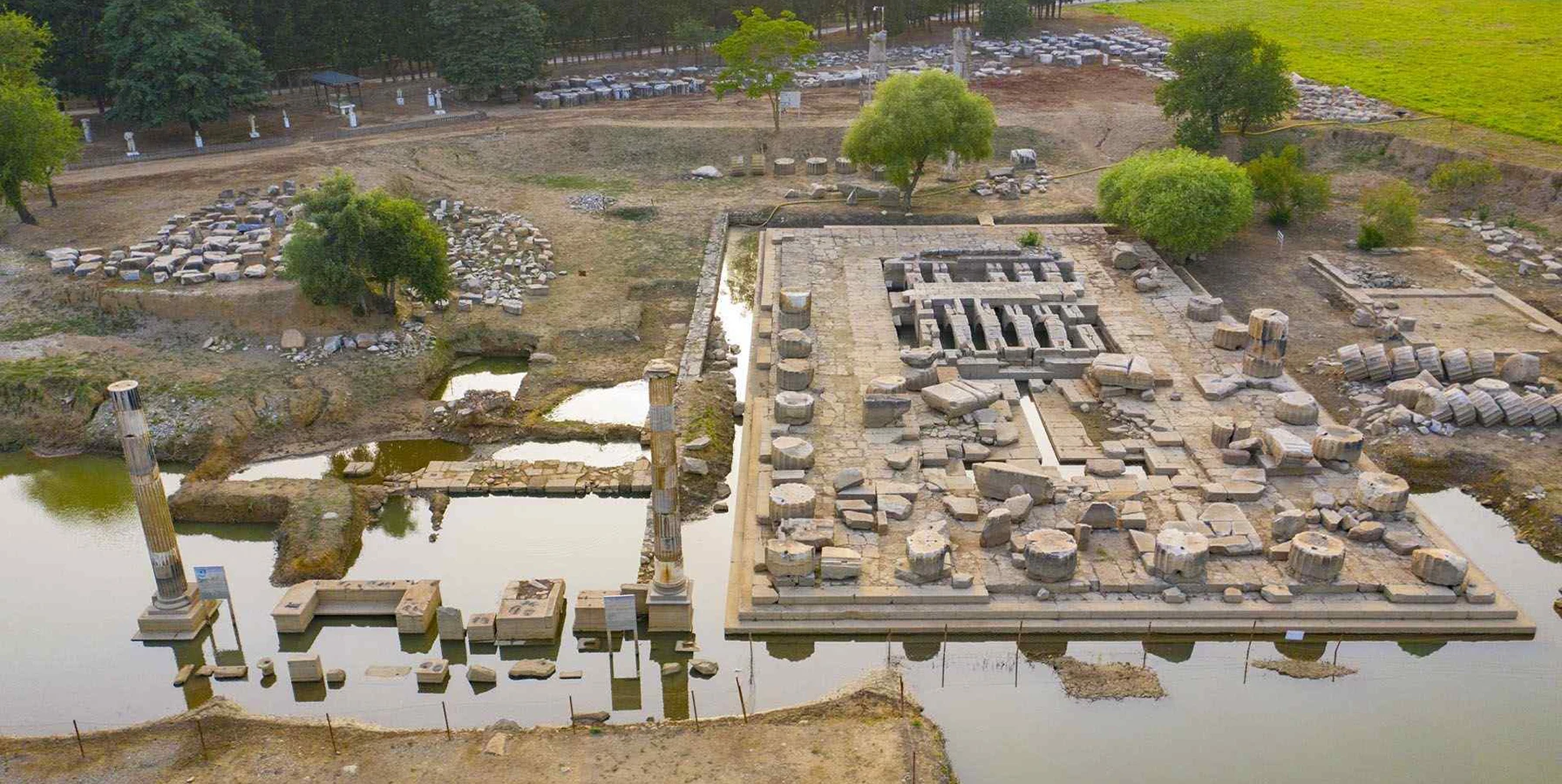
The sanctuary became famous for the oracle of Apollo Klarios. Delegations traveled from cities across the ancient Mediterranean to consult Apollo, leaving behind inscriptions that provide extraordinary evidence for the sanctuary's international reputation.
The monumental sanctuary contained the Temple of Apollo, a great altar, sacred architecture and enormous cult statues associated with Apollo, Artemis and Leto. The remains visible today make Klaros one of the most rewarding archaeological stops in the Menderes region.
While Kolophon occupied the interior, Notion stood above the Aegean coast near modern Ahmetbeyli. The two settlements were historically intertwined and their names became so closely connected that ancient and modern discussions sometimes distinguish between inland Kolophon and a coastal Kolophon.
Notion provided strategic access to maritime routes while commanding spectacular views over the Aegean. Its surviving Hellenistic fortifications, theatre, civic buildings and sanctuary remains create a very different archaeological experience from inland Kolophon.
Visiting both places makes the ancient geography much easier to understand: Kolophon was the inland urban center, Klaros the major sanctuary and Notion the coastal connection.
Continue with our complete Notion Ancient City visitor guide.
Kolophon is more demanding than a conventional archaeological park. Paths, vegetation, weather and land-use conditions can affect what is accessible, while archaeological remains may be difficult to identify without background knowledge.
Explore only during good daylight when paths, stones and changes in terrain are clearly visible.
Choose shoes suitable for rough ground, vegetation, slopes and potentially loose stones.
Do not assume tourist facilities or refreshments will be available immediately beside the ruins.
Save your route in advance because archaeological remains are spread over a broad area.
Never cross fences, agricultural plots or private property without clear permission.
Leave architectural fragments and archaeological material exactly where you find them.
Hot weather and exposed terrain can make archaeological exploration uncomfortable.
Klaros and Notion transform a short Kolophon visit into a rewarding Ionian heritage day.
Begin in Değirmendere with Kolophon. Explore the surviving archaeological landscape and consider how the inland settlement controlled the surrounding agricultural territory while remaining connected with the coast.
Continue south toward Klaros. The sanctuary's monumental archaeology provides a striking contrast with Kolophon's scattered remains. Spend time around the Temple of Apollo, sacred architecture and archaeological displays while learning how ancient prophecy operated.
Finish at Notion Ancient City near Ahmetbeyli. Walk through the Hellenistic fortifications and enjoy the elevated view toward the Aegean. From here, the relationship between inland Kolophon and the maritime world becomes immediately clear.
Kolophon does not currently offer the same type of formal visitor infrastructure found at major ticketed archaeological parks. The ancient remains extend through the landscape around Değirmendere, and conditions may vary according to conservation work, vegetation, agricultural activity and local access.
Because published official visitor hours and ticket arrangements for Kolophon itself are limited, travelers should avoid relying on old third-party information. Visit during daylight and confirm current local access conditions before making a special journey.
Because much of the experience takes place outdoors on natural terrain, seasonal conditions make a significant difference.
Green landscapes, wildflowers and comfortable temperatures create excellent conditions for archaeological exploration.
Milder temperatures and softer light make this another excellent period for walking and photography.
Visit early before temperatures rise and exposed areas become uncomfortable.
Late-afternoon exploration can be pleasant, but leave enough daylight to return safely.
Quiet surroundings can be atmospheric, although rain may make natural paths muddy or slippery.
Use extra caution because soil, stones and slopes can become unstable or difficult to cross.
A brief archaeological stop for travelers already passing through Değirmendere.
A better amount of time for exploring the landscape and understanding the principal remains.
Combine Kolophon with the sanctuary and oracle of Apollo at Klaros.
Explore Kolophon, Klaros and Notion as one connected Ionian archaeological route.
Allow additional time for landscapes, archaeological details and changes in light.
A guided regional route is particularly rewarding because many remains require interpretation.
Kolophon's strongest photographic quality is not monumental architecture but atmosphere. Ancient masonry, hills, vegetation and agricultural landscapes create quieter images than the grand ruins of Türkiye's better-known archaeological sites.
Low light can make shallow walls, stones and changes in terrain easier to photograph.
Use wider compositions to show how the ancient settlement relates to the surrounding hills and valleys.
Look for masonry techniques, foundations and architectural fragments rather than only monumental views.
Wild plants and seasonal greenery create striking contrasts with ancient stone.
Include terrain and surrounding landscape to communicate the character of the site.
Never move archaeological material, climb unstable remains or enter restricted areas for a photograph.
Kolophon is not comparable with a fully landscaped archaeological museum. Natural terrain, uneven surfaces, vegetation and changes in elevation can make exploration challenging for visitors with limited mobility.
Expect natural paths, stones, soil and irregular archaeological terrain.
Parts of the ancient settlement occupy elevated and sloping ground.
The archaeological landscape should not be assumed to provide continuous step-free access.
Standard strollers may be difficult to use away from established roads and firm paths.
Summer temperatures can significantly increase the physical difficulty of a visit.
Klaros may provide an easier archaeological experience for travelers requiring more defined visitor infrastructure.
Kolophon lies near Değirmendere in İzmir's Menderes district. A private vehicle or organized tour is generally the easiest way to combine the site with Klaros, Notion and the nearby Aegean coast.
Travel south toward Menderes and Değirmendere before continuing toward the archaeological area.
Değirmendere is reached by local roads running toward the southern part of the district.
Kolophon lies approximately 13 kilometers north of the Klaros sanctuary.
Travel inland from the Ahmetbeyli coastal area through the Klaros valley toward Değirmendere.
The most flexible option for visiting archaeological sites spread across the Menderes countryside.
A guide is valuable because much of Kolophon's history is not obvious from the surviving remains alone.
Kolophon stands in one of the richest archaeological landscapes south of İzmir. Several ancient sites and Aegean coastal destinations can easily be combined in the same journey.
Explore the celebrated sanctuary of Apollo Klarios and one of antiquity's remarkable centers of prophecy.
Walk along Hellenistic walls and explore the coastal settlement historically connected with Kolophon.
Discover the wider district containing ancient cities, villages, beaches and archaeological landscapes.
Relax beside the Aegean after exploring the ancient settlements of southern İzmir.
Combine archaeology with beaches, citrus-growing landscapes and the relaxed Aegean coast.
Continue west toward another historic Ionian city overlooking the coastline near Ürkmez.
Kolophon is located near Değirmendere in the Menderes district of İzmir Province, western Türkiye.
Yes. Kolophon is the Turkish rendering of the ancient name, while Colophon is commonly used in English-language historical and archaeological literature.
Yes. Kolophon was one of the historic cities of ancient Ionia in western Anatolia.
No. The main ancient settlement stood inland near modern Değirmendere, making its relationship with coastal Notion especially important.
Notion on the Aegean coast was closely connected with Kolophon and provided the region with maritime access.
Klaros was the nearby sanctuary of Apollo Klarios and an important ancient oracle. It developed within the wider territory historically associated with Kolophon.
The sanctuary of Klaros lies approximately 13 kilometers south of ancient Kolophon.
Ancient Kolophon was remembered for its military power, particularly its cavalry, as well as its cultural figures and its relationship with the oracle of Klaros.
Xenophanes was an influential archaic poet and thinker traditionally associated with Kolophon. His surviving fragments discuss religion, knowledge, society and the natural world.
Mimnermus was an archaic Greek elegiac poet associated with Kolophon and especially remembered for poetry concerning youth, love and mortality.
Some ancient traditions associated Homer with Kolophon, but several cities claimed connections with the poet and his actual birthplace remains uncertain.
Ancient writers described Kolophonian horsemen as exceptionally effective in battle, creating a reputation that eventually became associated with decisively settling a conflict.
The site was investigated in the late 19th century, while an important archaeological excavation campaign was conducted in 1922 under Hetty Goldman and Carl W. Blegen. Further work followed in 1925 and later archaeological research continued.
Visitors can encounter remains of fortifications, settlement areas, architectural foundations and the broader ancient landscape, although many features are low, fragmented or difficult to identify without archaeological background.
No. Kolophon is a much less developed visitor site. It is better understood as an archaeological landscape rather than a monumental reconstructed ruin complex.
Around one to two hours is reasonable for Kolophon itself. Allow a half or full day when combining the city with Klaros and Notion.
Spring and autumn generally provide the most comfortable walking conditions. During summer, visit early in the morning or later in the afternoon.
Yes, but families should consider the uneven terrain, limited facilities and lack of a conventional visitor route. Close supervision is necessary around archaeological remains.
Continuous wheelchair access should not be expected because the site includes natural, uneven and sloping terrain.
Yes. They form an excellent archaeological day trip and together explain the relationship between an inland Ionian city, its major sanctuary and the Aegean coast.
For travelers interested in archaeology and Ionian history, yes. Kolophon is particularly rewarding when combined with Klaros and Notion, allowing the ancient regional landscape to be understood as a connected whole.
Never collect pottery, stones or other archaeological material, however small or ordinary it appears.
Avoid standing or climbing on ancient masonry and unstable architectural remains.
Do not enter fenced agricultural land, gardens or private areas without permission.
Use established routes where possible instead of creating new tracks through archaeological areas.
Take bottles, food packaging and every other item you bring into the landscape away with you.
Respect signs, barriers and conservation instructions even when ancient remains appear easily accessible.
Discover the ancient landscape of southern İzmir with a private route connecting Kolophon, the Oracle of Klaros and coastal Notion — designed around archaeology, history and meaningful exploration without compulsory shopping stops.
Follow the historic route from inland Kolophon through the sanctuary of Apollo to the Aegean coast.
Explore three connected archaeological sites with a route focused on Ionian history, ancient religion, archaeology and the relationship between inland Anatolia and the Aegean Sea.
Request a Custom Tour
Discover ancient cities, Apollo's oracle, coastal settlements, Aegean beaches, villages and the historic landscapes south of İzmir.
View Menderes GuideFollow the ancient route from the inland city to its sacred sanctuary and maritime connection.
Enter the sacred world of Apollo Klarios and discover one of antiquity's remarkable centers of prophecy.
Explore Klaros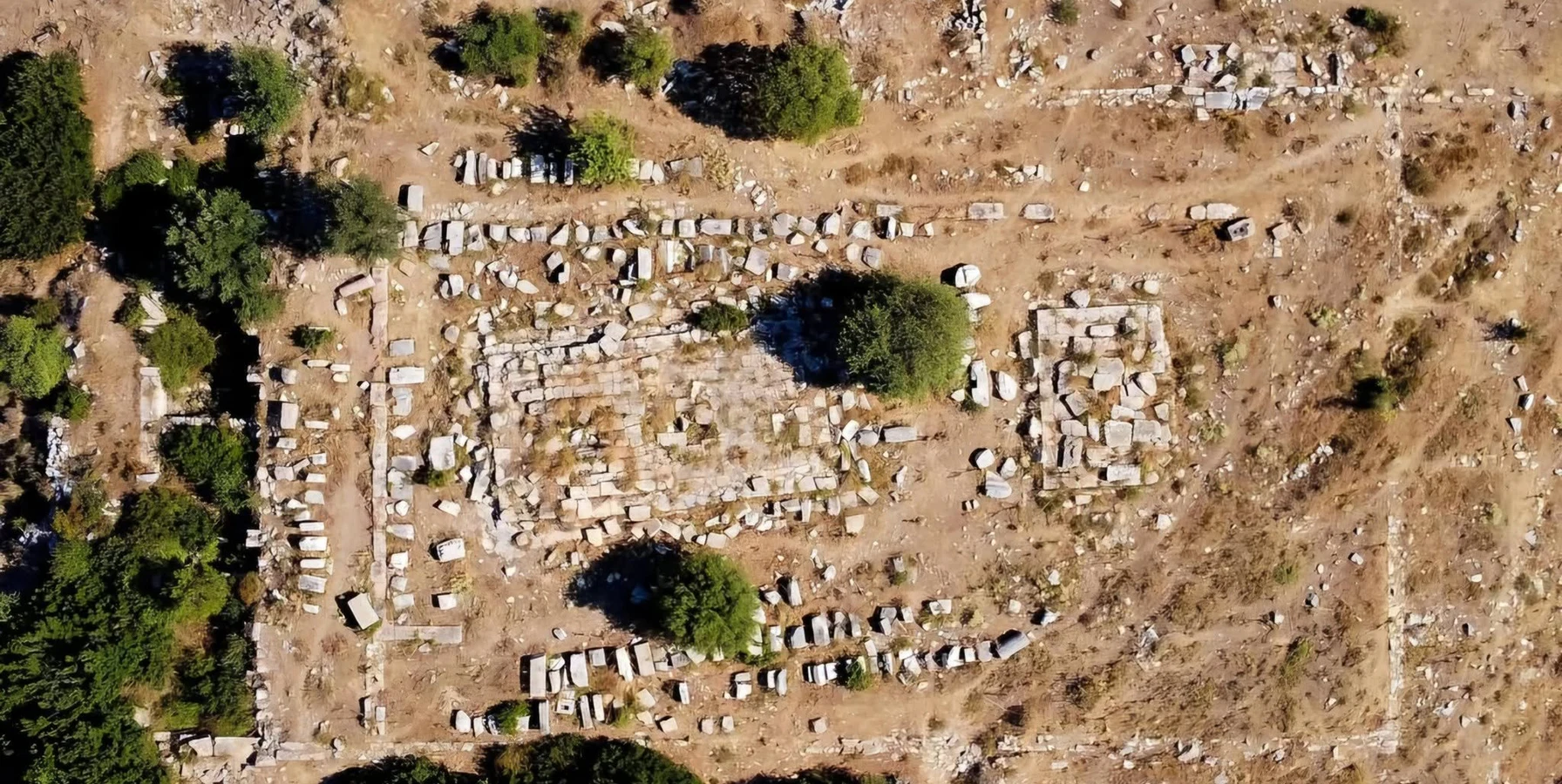
Explore the coastal city historically connected with Kolophon and enjoy extraordinary views across the Aegean.
Explore Notion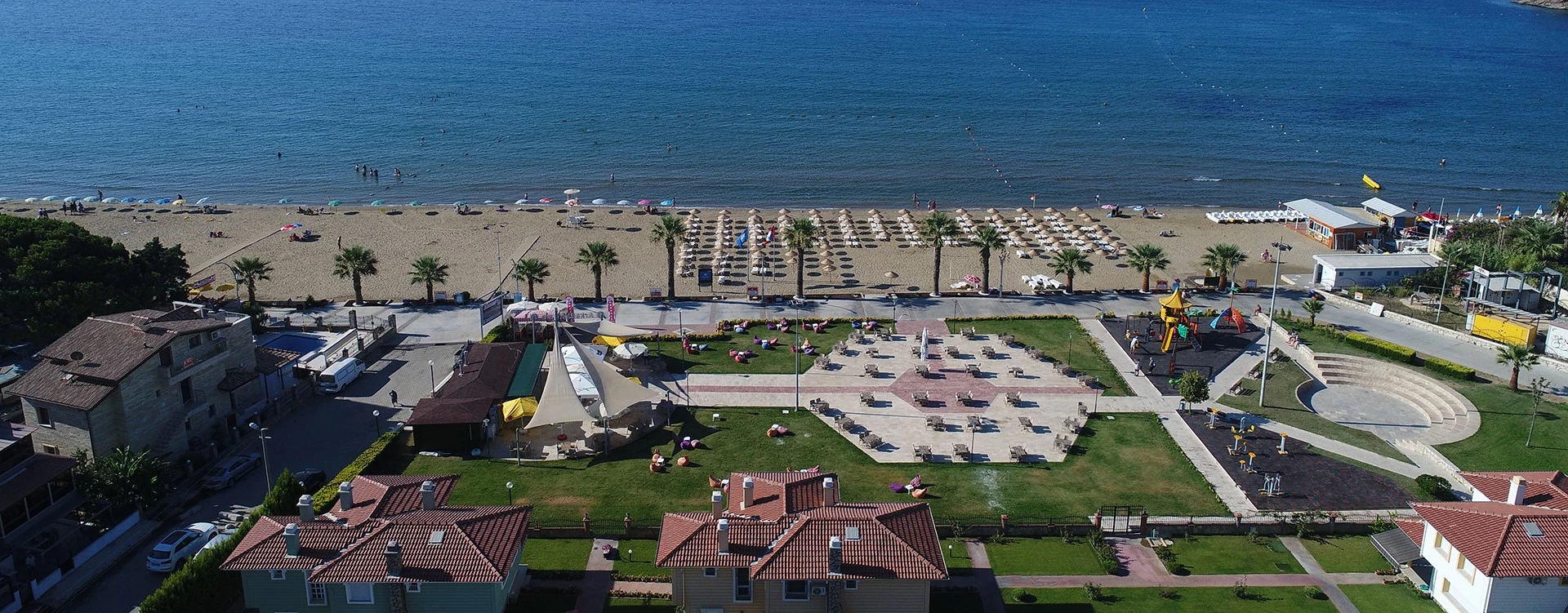
Finish your archaeological journey beside the Aegean with beaches, coastal landscapes and a relaxed atmosphere.
Explore Özdere