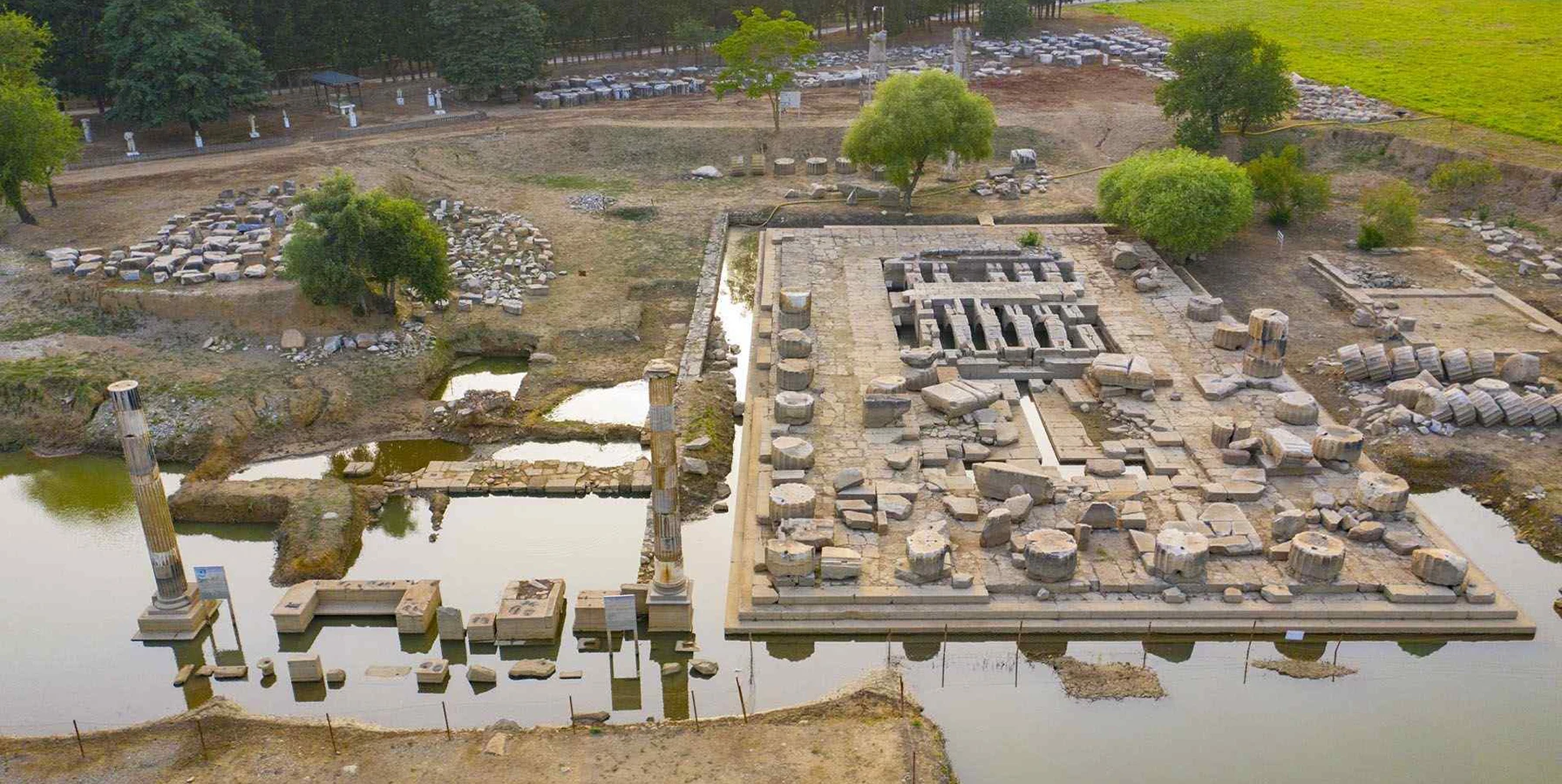
Private Claros Oracle Sanctuary Tour
Discover the Temple of Apollo, oracle chambers, sacred road, altar, hecatomb, cult statues and inscriptions with private historical interpretation.
Request a Private Tour





In a quiet valley near Ahmetbeyli on the southern coast of İzmir lies one of the most fascinating religious sites of ancient Ionia: Claros, known in Turkish as Klaros.
Unlike Ephesus, Pergamon or nearby Notion, Claros was not primarily an ancient city.
It was a sanctuary and oracle of Apollo Clarios, historically connected with the Ionian city of Kolophon.
For centuries, individuals and official delegations travelled here to seek divine guidance.
At the heart of the sanctuary stood the monumental Temple of Apollo. Beneath its cella was an extraordinary underground complex associated with the consultation of the oracle.
Ancient tradition describes a male prophet entering the sacred chamber, drinking from the holy water and delivering Apollo's response.
Around the temple stood altars, honorary monuments, statues, a sacred road and structures associated with Artemis, Leto and the wider cult of Apollo.
Hundreds of inscriptions preserve the memory of delegations that came from ancient communities to consult the god or participate in religious ceremonies.
Today, Claros offers something very different from Türkiye's larger archaeological cities.
It is a place where archaeology, ancient religion, mythology, ritual and the human desire to understand the future come together.
Discover one of antiquity's important centers of prophecy, alongside famous Apollo sanctuaries such as Delphi and Didyma.
Learn about the remarkable subterranean chambers beneath the Temple of Apollo where the oracle ritual was performed.
Claros preserves rare evidence for enormous images of Apollo, Artemis and their mother Leto.
The sanctuary's many inscriptions record pilgrims, delegations, choirs and communities connected with Apollo.
Essential information for discovering one of ancient Ionia's most remarkable religious and prophetic sanctuaries.
Near Ahmetbeyli in Menderes district, İzmir Province, western Türkiye.
Open on Google MapsAncient sanctuary and oracle dedicated principally to Apollo Clarios.
Prophecy, the Temple of Apollo, underground oracle chambers and remarkable inscriptions.
Apollo, worshipped here under the title Apollo Clarios.
Ionia, within the historical territory of ancient Kolophon.
Allow approximately 1–2 hours for a thoughtful visit to the sanctuary.
Claros offers an unusually intimate look at how religion, prophecy, pilgrimage and political life intersected in the ancient Mediterranean world.
Most archaeological sites are remembered for streets, houses, theaters or monumental public buildings.
Claros is different.
The central question here is not simply how people lived, but rather what they believed.
Ancient visitors came seeking Apollo's guidance on questions that could concern communities, religion, disease, politics and the future.
The sanctuary therefore became a meeting point between human uncertainty and divine authority.
Its surviving architecture still reflects this ritual purpose.
The sacred approach, monuments, altars, Temple of Apollo and chambers beneath it formed part of an experience designed around approaching the god.
Claros is also especially important for its inscriptions.
They preserve the names of people and delegations who once travelled here, turning an archaeological ruin into a record of real journeys made almost two thousand years ago.
For travelers interested in ancient religion, mythology and the psychology of the ancient world, Claros is one of western Türkiye's most rewarding lesser-known sites.
Claros belonged to the religious landscape of ancient Kolophon, one of the historic Ionian cities of western Anatolia.
It developed in the valley between inland Kolophon and its coastal connection at Notion.
This geographical position is important.
Travelers arriving from the sea could move inland through the valley toward the sanctuary and Kolophon's territory.
Claros itself did not develop as an ordinary urban center.
Its identity was religious.
The sanctuary was organized around worship, sacrifice, festival, pilgrimage and consultation of Apollo's oracle.
Claros was a sacred complex, not simply another Ionian city.
Visitors came to seek divine guidance through Apollo's prophetic institution.
The sanctuary belonged historically to the territory of ancient Kolophon.
The coastal city to the south connected the region with the Aegean Sea.
The oracle was the defining institution of Claros.
In the ancient world, an oracle was a sacred place where divine guidance could be sought through established religious procedures.
Apollo became particularly associated with prophecy, and several important oracular sanctuaries were dedicated to him.
Among the most famous were Delphi, Didyma and Claros.
But the ritual at Claros was distinctive.
Unlike Delphi, where the prophetic role was associated with the Pythia, ancient descriptions of Claros refer to a male prophet.
The consultation was associated with underground space beneath the Temple of Apollo and with sacred water.
This combination of architecture, darkness, water, ritual and spoken prophecy made the sanctuary a powerful religious environment.
Apollo was worshipped at Claros under a local cult title connected directly with the sanctuary.
People and communities approached the sanctuary seeking guidance from the god.
The Claros tradition differed from the famous female prophetic office at Delphi.
Water within the underground sanctuary formed an important part of the prophetic ritual.
The most extraordinary part of Claros lay beneath the Temple of Apollo.
Below the cella was an underground sacred complex formed by vaulted chambers and narrow passages.
Ancient accounts and archaeological evidence allow us to reconstruct at least part of the ritual environment.
Those involved in the consultation entered an enclosed and controlled sacred space.
One chamber functioned as a waiting or preparatory area.
A deeper chamber contained the sacred water associated with the oracle.
The prophet entered the inner area and drank from the holy water before delivering the divine response.
Ancient writers describe the response as being expressed in poetic form.
The architecture itself would have intensified the experience: darkness, stone, restricted movement, ritual secrecy and sacred water all separated the oracle from ordinary life.
The consultation was connected with chambers beneath the temple itself.
Part of the subterranean complex served those participating in the oracle procedure.
The inner chamber contained the water used during the prophetic ritual.
The prophet delivered Apollo's response after entering the sacred environment.
The great Temple of Apollo dominated the sacred complex.
Construction of the monumental Hellenistic temple began around the early third century BC and continued over a long period.
The building was constructed in the Doric order, an especially interesting choice within an Ionian cultural landscape.
Its large platform, column arrangement and monumental scale were intended to express the importance of Apollo and his oracle.
By the Roman Imperial period, the sanctuary had become one of the important religious destinations of western Anatolia.
The temple was more than an impressive building.
It concealed the sacred underground chambers where the prophetic ritual took place.
The monumental temple was designed in the Doric order within the heart of ancient Ionia.
Construction of the great temple began during the Hellenistic period.
Work and monumental embellishment continued into the Roman Imperial era.
The temple was directly connected with the underground oracular chambers.
The subterranean oracle complex is one of the features that makes Claros so unusual.
Beneath the temple were vaulted underground halls connected by restricted passages.
These spaces formed part of the adyton, the sanctuary's most sacred and inaccessible zone.
One chamber contained stone seating, while another was associated with the sacred well used by the prophet.
A blue-marble omphalos, or sacred stone, was also found within this ritual environment.
For ancient visitors, the hidden spaces beneath the monumental temple must have reinforced the impression that Apollo's voice came from somewhere beyond the ordinary human world.
Stone-vaulted underground rooms formed the core of the prophetic complex.
The innermost ritual area was associated with the sanctuary's holy water.
A sacred stone formed part of the symbolic religious environment beneath the temple.
This was not an ordinary public area, but a carefully controlled sacred interior.
Visitors approaching Claros entered the sanctuary through a monumental propylon.
From here, a sacred route led toward the Temple of Apollo.
This was not simply a practical walkway.
The route formed part of the religious experience.
Honorary monuments, statues and inscriptions lined sections of the approach.
Travelers moved through an environment filled with reminders of previous visitors, important officials, cities and religious delegations.
The closer one moved toward the temple, the closer one moved symbolically toward Apollo.
The monumental entrance marked the transition into sacred space.
The approach guided visitors from the entrance toward Apollo's temple.
Important individuals and communities were commemorated along the sanctuary's processional landscape.
Names and records covered architectural surfaces throughout the sanctuary.
Religious life at Claros included more than prophecy.
Sacrifice formed a central part of ancient worship, particularly during festivals and major ceremonies.
East of the Temple of Apollo stood a monumental Hellenistic altar.
Archaeological evidence also preserves an exceptional arrangement of stone blocks associated with the tethering of sacrificial animals.
The installation is connected with the ancient concept of a hecatomb: a large-scale ritual sacrifice.
This makes Claros especially valuable for understanding not only what ancient texts say about sacrifice, but how such ceremonies were physically organized.
A major altar stood in front of the Temple of Apollo.
Rows of specially arranged stone blocks preserve evidence for large ritual ceremonies.
Sacrifice, music, procession and worship formed part of sanctuary life.
Evidence from the sanctuary also connects Dionysos with aspects of the altar complex.
Among the most remarkable discoveries at Claros are remains of enormous cult statues.
They represented Apollo, Artemis and Leto.
Together, the three deities formed a divine family group: Apollo and Artemis with their mother Leto.
The sculptures were monumental in scale, reaching approximately seven to eight meters in height in their original form.
Their presence would have transformed the interior of the sanctuary into an overwhelming visual expression of divine authority.
The survival of substantial pieces of these statues makes Claros particularly important for understanding large-scale cult sculpture in the ancient Mediterranean.
The principal deity and divine source of the sanctuary's oracle.
Apollo's sister was also an important presence within the sacred complex.
Mother of Apollo and Artemis, completing the sanctuary's monumental divine triad.
The enormous sculptures help communicate the prestige and ambition of the sanctuary.
Although Apollo dominated Claros, he was not the only deity worshipped here.
Archaeology reveals a considerably richer religious landscape.
North of the great Temple of Apollo, archaeologists identified another temple constructed in the Ionic order.
Evidence suggests that this sanctuary was associated with Artemis.
Leto, mother of Apollo and Artemis, was represented within the monumental cult group.
Terracotta figurines and other finds also reveal additional layers of religious activity across the sanctuary.
The result is a sacred landscape that was far more complex than a single temple dedicated to a single god.
One of Claros' greatest archaeological treasures is not a single statue or building.
It is the extraordinary quantity of inscriptions preserved across the sanctuary.
They appear on monuments, architectural blocks, the propylon, the sacred route and even parts of the Temple of Apollo.
Many record official delegations sent by cities to consult the oracle.
Others preserve the names of young singers, religious officials and participants in sanctuary life.
During the Roman period, cities from different regions sent delegations to Claros.
These records demonstrate how far the sanctuary's reputation had spread.
Rather than simply telling us that Claros was famous, the inscriptions allow us to see who actually came here.
Communities sent official representatives to seek Apollo's guidance.
Groups of young singers also participated in the sanctuary's religious life.
Inscriptions preserve names and offices connected with the oracle.
The records show the wide geographical reach of Apollo Clarios.
Like many ancient sanctuaries, Claros possessed a history that blended archaeology, religion and mythology.
Ancient literary traditions connected the oracle with Manto, daughter of the legendary prophet Tiresias.
Her son Mopsus became one of the great mythical seers of Greek tradition.
Stories associated with Mopsus also connect him with the prophet Calchas, known from traditions surrounding the Trojan War.
These stories should be understood as ancient mythology rather than literal historical biography.
But they mattered because they gave the sanctuary a legendary prophetic ancestry.
To ancient worshippers, Claros was therefore not simply a place where an oracle happened to operate.
It belonged to a sacred tradition rooted in the mythical age of heroes, prophets and the aftermath of Troy.
The history of Claros extends across an exceptionally long period.
Archaeological discoveries indicate religious activity reaching back into the Late Bronze Age.
Later ancient literature places Claros firmly within the religious geography of archaic Ionia.
During the Hellenistic period, the sanctuary was transformed through monumental construction, including the great Temple of Apollo.
Its reputation continued to grow, and the oracle became especially prominent during the Roman Imperial period.
Delegations from numerous communities visited the sanctuary, leaving inscriptions that remain one of the richest sources for its history.
The oracle continued functioning into Late Antiquity before the sanctuary was eventually abandoned.
Archaeological finds indicate very early sacred activity at the site.
Claros emerged within the developing religious landscape of ancient Ionia.
Monumental construction reshaped the sanctuary on an ambitious scale.
The oracle achieved wide influence and received numerous delegations.
The ancient religious institution eventually declined and the sanctuary was abandoned.
Excavation and conservation continue revealing new aspects of Claros.
After antiquity, parts of Claros were gradually covered by alluvial deposits carried through the valley.
The sanctuary's modern rediscovery developed through archaeological research during the late nineteenth and early twentieth centuries.
Theodore Macridy identified important evidence for the sanctuary in the early 1900s, and scientific excavation followed.
Research was interrupted by the First World War.
A major new phase began in 1950 with the work of Louis and Jeanne Robert.
Further excavation from the late twentieth century onward revealed additional architecture, sculpture, inscriptions and evidence for the sanctuary's very early history.
Archaeological research, conservation and interpretation remain important to understanding Claros today.
Research by Theodore Macridy helped identify the sanctuary's location.
Early scientific excavation was undertaken before being interrupted by World War I.
Louis and Jeanne Robert began a major new period of investigation.
Recent work continues exploring, documenting and conserving the sanctuary.
Examine the monumental remains of the sanctuary's principal temple.
Understand the underground sacred spaces associated with prophecy.
See the monumental entrance through which ancient visitors approached the sanctuary.
Follow the ceremonial route toward the Temple of Apollo.
Explore the area where major religious sacrifices were performed.
Look for the extraordinary archaeological evidence of large-scale animal sacrifice.
Learn about the monumental images of Apollo, Artemis and Leto.
Notice the numerous names and delegation records carved throughout the sanctuary.
Claros becomes far easier to understand when you imagine the sanctuary as a sequence rather than a collection of ruins.
Begin at the monumental entrance area.
Then follow the sacred approach toward the heart of the sanctuary.
Notice inscriptions and honorary monuments along the route.
Continue to the altar and ritual areas before focusing on the enormous Temple of Apollo.
Finally, consider what lay beneath the temple: the hidden chambers where the oracle was consulted.
Enough for a quick look at the temple, altar and main sanctuary remains.
A reasonable introduction to the site's principal monuments.
Recommended for travelers who want to understand the oracle, ritual and inscriptions.
Combine Claros with nearby Notion and Ahmetbeyli.
Explore Claros, Notion, Kolophon and the surrounding Ionian landscape.
Add a knowledgeable private guide to understand the oracle in much greater depth.
Pleasant temperatures, green landscapes and comfortable archaeological exploration.
Warm, bright and particularly attractive before the strongest summer heat.
Excellent when combined with the beaches of Ahmetbeyli or Özdere.
Visit early in the morning to avoid the strongest midday heat.
A rewarding combination of archaeology and warm Aegean conditions.
A quieter and comfortable period for archaeology, walking and road trips.
Claros has a very different photographic character from hilltop archaeological sites.
The sanctuary occupies the valley floor, surrounded by the hills of the ancient Ales Valley.
Stone, water, column fragments, monumental foundations and vegetation create atmospheric compositions.
Early morning and late afternoon usually produce the most attractive light.
Use surviving column elements to communicate the former scale of Apollo's temple.
Seasonal water around parts of the ruins can create unusual reflections.
Side lighting can help reveal ancient lettering on stone surfaces.
Include the surrounding hills to show the sanctuary's geographical setting.
Column drums, blocks, carvings and stone joints reward close observation.
Warm light can emphasize the textures of ancient marble and limestone.
Understanding the oracle ritual will make the archaeological remains far more meaningful.
Ancient surfaces can be uneven, slippery or dusty.
Carry sufficient drinking water, especially during warmer months.
Morning is generally the most comfortable time for summer visits.
Do not focus only on the largest architectural remains.
Claros rewards slow observation more than a rushed photo stop.
Nearby Notion creates an excellent archaeological pairing.
Opening hours, admission and accessible areas can change.
Claros lies near Ahmetbeyli in Menderes district of İzmir Province.
The sanctuary occupies the valley between ancient Kolophon to the north and Notion near the coast.
Its position also makes it easy to combine with Özdere, Gümüldür, Selçuk and Ephesus.
Claros lies immediately inland from the Ahmetbeyli coastal area.
Travel south along the coast toward Ahmetbeyli and the sanctuary.
Travel south through Menderes district toward the Ahmetbeyli coast.
Travel north from Selçuk toward Ahmetbeyli and Menderes.
A car is the easiest option for combining Claros, Notion and Kolophon.
Ideal for travelers who want historical interpretation and a flexible itinerary.
Claros sits at the center of an unusually rich archaeological landscape where ancient cities, harbors, sanctuaries and modern Aegean coastal destinations can easily be combined.
Explore the ancient coastal city historically connected with Kolophon and Claros.
Discover the Ionian city to whose territory the sanctuary of Claros belonged.
Combine ancient history with beaches, bays, forest landscapes and the Aegean Sea.
Continue north toward beaches, citrus orchards and relaxed Aegean coastal life.
Explore the remarkable historical landscape surrounding Ephesus.
Continue south toward one of the Mediterranean world's great archaeological cities.
Discover the wider district, its coastline, villages, agriculture and ancient heritage.
Continue north-west toward Teos, Sığacık and another important landscape of ancient Ionia.
Claros, or Klaros, was an ancient sanctuary and oracle of Apollo in Ionia.
Claros is located near Ahmetbeyli in Menderes district of İzmir Province, western Türkiye.
Not in the conventional sense. Claros was primarily a religious sanctuary associated with ancient Kolophon.
It is famous for the oracle of Apollo Clarios, the Temple of Apollo, underground prophetic chambers and extensive inscriptions.
Apollo Clarios was Apollo worshipped under the cult title associated with his sanctuary at Claros.
Yes. Claros was one of the important oracular sanctuaries of Apollo in antiquity.
Both were important sanctuaries of Apollo, but their prophetic practices were not identical. Claros was associated with a male prophet and sacred water.
Ancient descriptions associate the ritual with underground chambers beneath the temple, where the prophet drank sacred water before delivering Apollo's response.
The chambers form an important part of the archaeological site, but visitor access to sensitive areas can be restricted. Follow current site regulations.
They were legendary prophetic figures connected by ancient literary traditions with the origins of Claros.
Archaeological remains include an extraordinary arrangement associated with the tethering of large numbers of sacrificial animals.
Yes. Both were important within the sanctuary's religious landscape and were represented with Apollo in monumental cult sculpture.
Many commemorate official delegations, religious participants and groups who came to the sanctuary during antiquity.
Archaeological evidence indicates sacred activity reaching back into the Late Bronze Age, while the sanctuary continued functioning for many centuries afterward.
Construction of the monumental Hellenistic temple began around the early third century BC and continued through later periods.
Allow around one to two hours for a comfortable visit, especially if you are interested in archaeology and ancient religion.
Yes, particularly for travelers interested in ancient religion, prophecy, mythology, ritual and lesser-known archaeological sites.
Yes. Notion is nearby and the two sites make an excellent half-day archaeological combination.
Yes. Visiting Kolophon helps explain the historical relationship between the city and its oracle sanctuary.
Yes. Visit Claros during the morning and continue to Özdere for lunch, coastal scenery and swimming.
Yes. Claros can be combined easily with Selçuk and the northern Ephesus region by road.
Yes, provided children are supervised around archaeological remains and protected from summer heat.
Wear comfortable walking shoes, a hat and light clothing during warm weather.
Some areas may offer limited shade, but visitors should prepare for significant sun exposure during summer.
Spring and autumn are excellent for archaeology, while summer works well when the visit is scheduled for early morning.
No, but a knowledgeable guide can dramatically improve the experience because much of Claros' importance comes from ritual, religion and inscriptions rather than monumental architecture alone.
Explore the sanctuary slowly, understand how the oracle functioned, then continue to Notion and Kolophon to place Claros within its wider Ionian landscape.
Follow marked paths, barriers and instructions from site staff.
Ancient walls, columns and stone blocks are archaeological material, not seating or climbing structures.
Never scratch, trace, rub or apply any substance to ancient writing.
Even small architectural fragments may contain important archaeological information.
Take all rubbish to appropriate collection points.
Active research and conservation zones may be closed for important professional reasons.
Respect current regulations for tripods, drones and professional photo equipment.
Claros is an archaeological and historically sacred site. Explore quietly and respectfully.
Explore Apollo's oracle, ancient coastal cities, Ionian history and the landscapes between Kolophon, Notion and the Aegean Sea with a flexible private itinerary.
Go beyond the visible ruins and discover how prophecy, sacrifice, mythology and pilgrimage shaped the sanctuary of Apollo Clarios.
Discover the Temple of Apollo, oracle chambers, sacred road, altar, hecatomb, cult statues and inscriptions with private historical interpretation.
Request a Private Tour
Follow the ancient landscape from Apollo's oracle sanctuary to coastal Notion and discover how religion, cities and the Aegean were connected.
Request a Custom TourConnect Claros with the cities, coastlines and archaeological landscapes that shaped ancient Ionia.
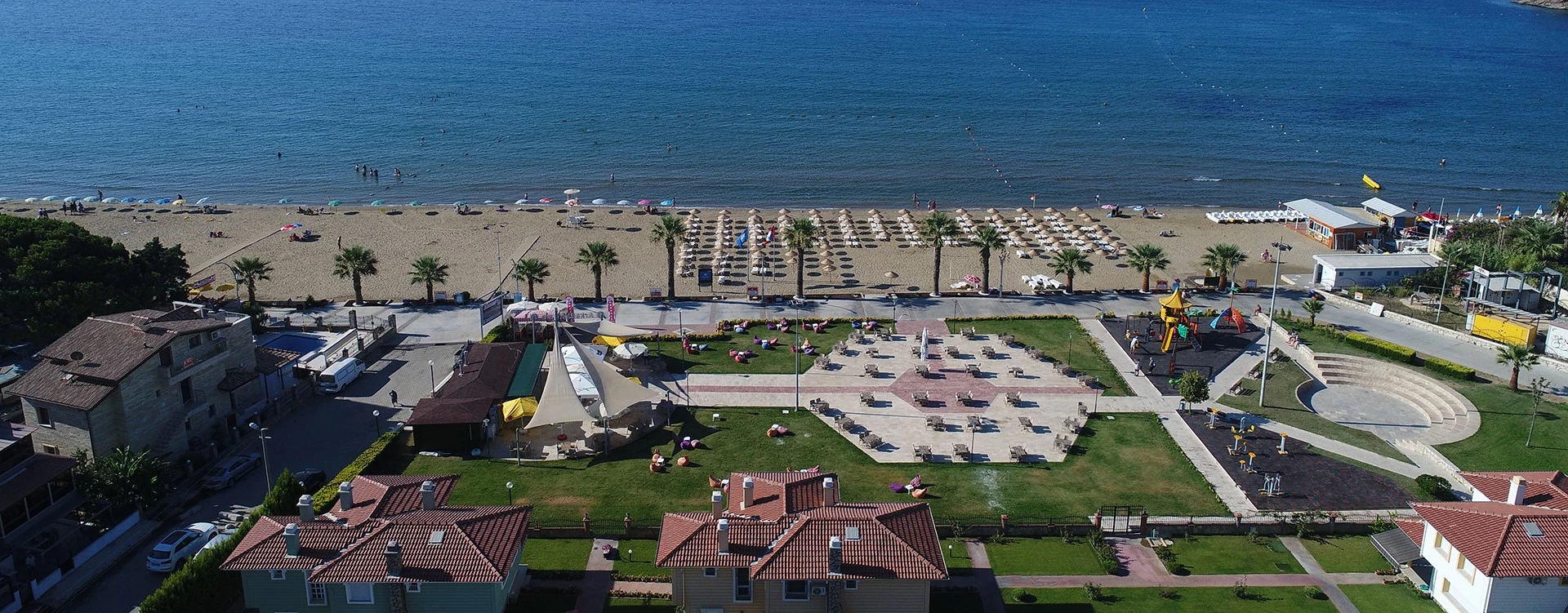
Combine beaches, small bays, Kalemlik, coastal scenery, local food and relaxed Aegean stops in one private experience.
Request a Custom Tour
Discover Klaros, Notion and the ancient Ionian landscape, then finish with a relaxed afternoon on the Özdere coast.
Request a Custom TourDiscover more of the Aegean coast through beaches, ancient sanctuaries, historic landscapes and traditional coastal communities.

Discover Özdere, Gümüldür, ancient Ionia, traditional landscapes and the wider southern İzmir coast.
Explore Menderes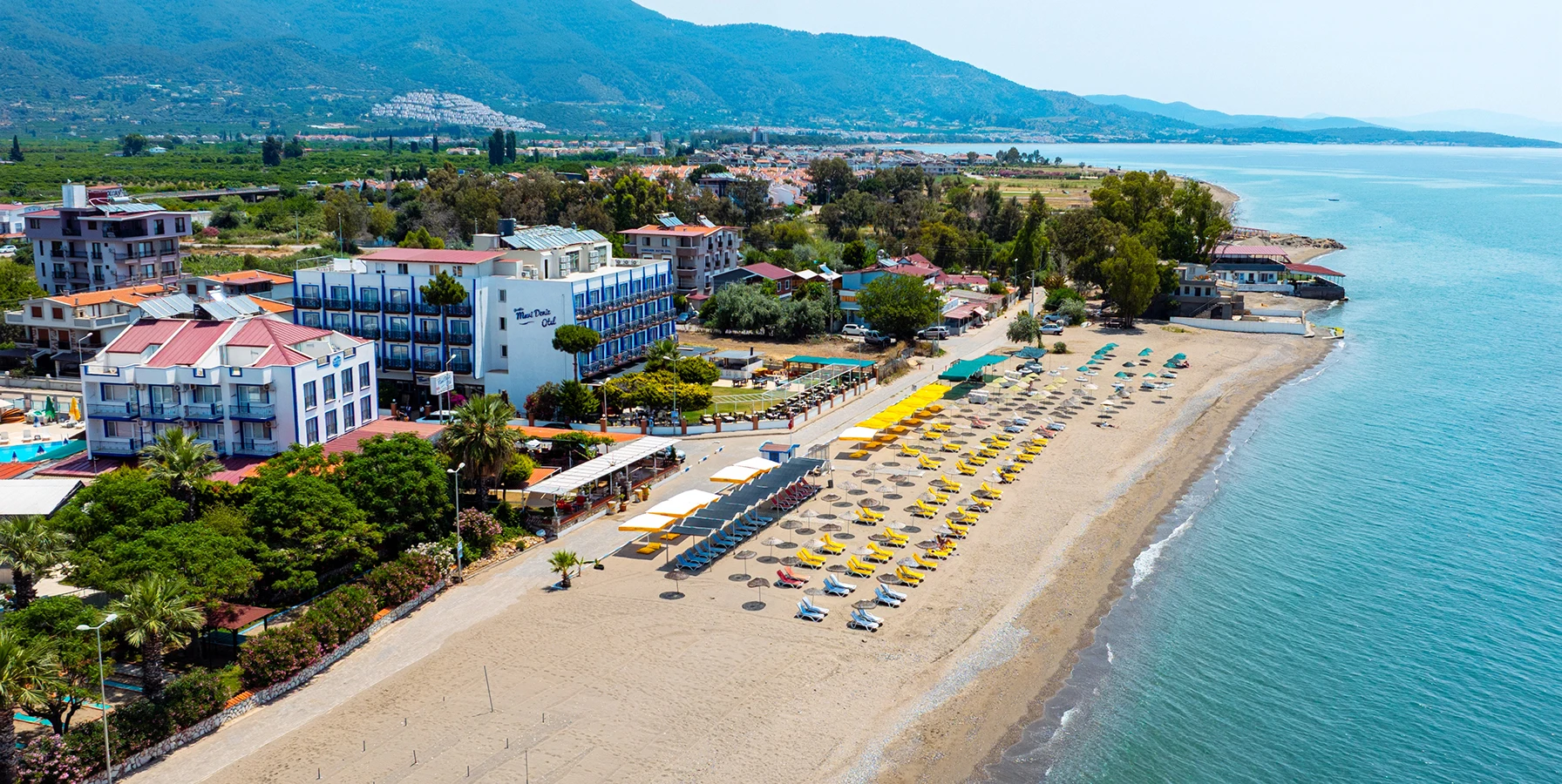
Experience beaches, Satsuma orchards, coastal nature and authentic Aegean life just along the coast.
Explore Gümüldür
Step into one of ancient Ionia's most fascinating religious sanctuaries and discover the oracle of Apollo.
Explore Klaros