Private Notion Ancient City Tour
Explore Notion's city walls, theater, Agora, Bouleuterion, Temple of Athena, Heroon and ancient streets with private historical interpretation.
Request a Private Tour





On the hills above Ahmetbeyli, where the green landscape of southern İzmir meets the blue waters of the Aegean Sea, lie the atmospheric ruins of Notion.
Unlike Ephesus, Pergamon or many of Türkiye's more famous archaeological sites, Notion remains remarkably quiet.
There are no great crowds moving through marble streets.
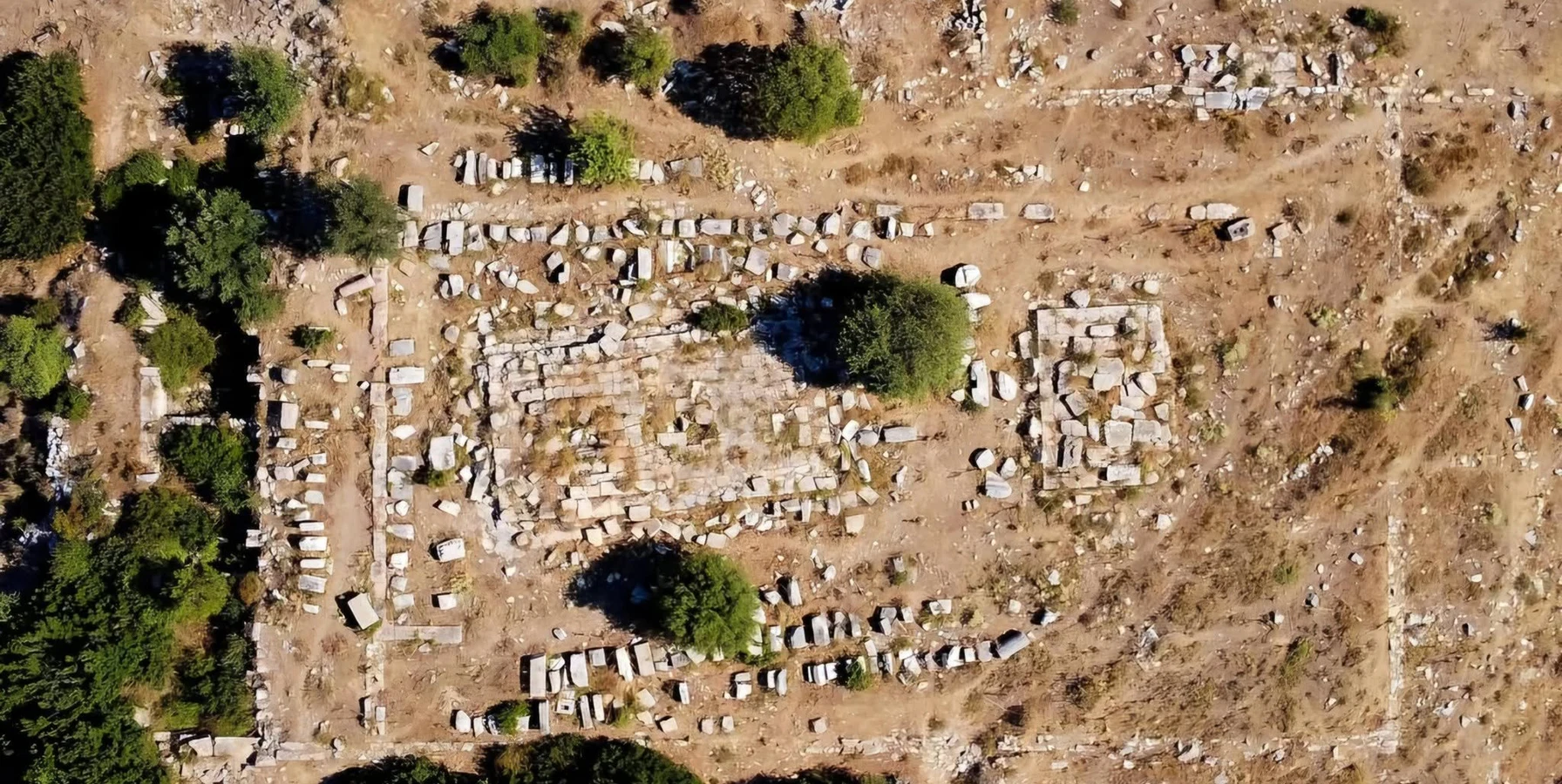
Instead, ancient fortification walls, foundations, temples, a theater, an agora and entire residential districts spread across two coastal promontories high above the sea.
Notion was closely connected with the ancient city of Kolophon and functioned as its important coastal and harbor settlement.
Just inland stood one of the ancient world's great prophetic sanctuaries: Claros, home of the oracle of Apollo Clarios.
Together, Kolophon, Claros and Notion formed one of the most fascinating urban, religious and maritime landscapes of ancient Ionia.
Notion also witnessed dramatic episodes of Classical Greek history, including struggles between Persian and Athenian interests and an important naval battle during the Peloponnesian War.
Today, its exposed urban plan allows visitors to experience something unusual: not simply individual monuments, but the shape of an entire ancient city.
Walk across a fortified ancient city occupying spectacular hills above the Aegean coastline.
Discover the sanctuary of Athena Polias, the protective goddess associated with the city.
Explore streets, public buildings and residential districts laid out across a remarkably visible ancient urban landscape.
Understand Notion as the coastal gateway to nearby Claros, the famous oracle of Apollo.
Essential information for exploring one of the most atmospheric and least crowded ancient cities on the southern İzmir coast.
Ahmetbeyli, Menderes district, İzmir Province, western Türkiye.
Open on Google MapsFortified ancient coastal city with civic, religious and residential remains.
Aegean views, city walls, Hellenistic urban planning, theater, Agora and Temple of Athena.
An important harbor settlement closely associated with ancient Kolophon.
Traditionally connected with Ionia, although ancient sources also preserve complex regional identities.
Allow approximately 1.5–2.5 hours for a thoughtful archaeological walk.
Notion offers a rare opportunity to explore an ancient city as a complete landscape rather than a collection of isolated monuments.
Some archaeological sites are dominated by one spectacular structure.
At Notion, the experience is different.
The attraction is the city itself.
Ancient walls still trace the edges of the settlement.
Roads and building foundations reveal the structure of neighborhoods.
Public monuments occupy carefully chosen positions within the urban plan.
And almost everywhere, the Aegean Sea forms part of the view.
Because modern construction never completely covered the ancient settlement, large portions of its urban organization remain visible at ground level.
This makes Notion particularly rewarding for travelers interested in ancient city planning, architecture, military history and archaeology.
Its connection with Claros adds another dimension.
From the hilltop city to Apollo's oracle in the valley, visitors can reconstruct an ancient landscape of harbors, roads, pilgrims, soldiers, merchants and sacred journeys.
For travelers who prefer quiet ruins, wide landscapes and places where imagination still matters, Notion is one of southern İzmir's most rewarding archaeological discoveries.
Notion was an ancient Greek city on the western coast of Anatolia.
It occupied two elevated promontories above the Aegean near modern Ahmetbeyli.
Its position gave the settlement excellent visual control over the coast and maritime routes.
In antiquity, Notion was closely linked with inland Kolophon.
Ancient writers sometimes treated the two communities almost as parts of a single political landscape.
Notion consequently developed both as a city in its own right and as the important coastal and harbor center associated with Kolophon.
The nearby Sanctuary of Apollo at Claros added enormous religious importance to the region.
Notion occupied strategic heights directly above the Aegean Sea.
The city's identity was deeply connected with the important Ionian city inland.
Notion served as an important maritime and military harbor settlement.
The nearby oracle of Apollo connected the coast with one of Ionia's great religious sanctuaries.
The ancient name Notion is generally understood as meaning the southern place or southern city.
The name probably reflected Notion's geographical position south of Kolophon.
Ancient authors record the settlement under this name from at least the late Archaic or early Classical period.
Older English-language historical works may also use the Latinized form Notium.
The simple name captures something fundamental about the city.
Notion belonged to a wider regional system rather than existing in isolation.
Notion's setting is one of its most memorable features.
The ancient city extends across two prominent hills above the coast.
From many points, visitors can look across the Aegean toward distant mountain ranges and coastal landscapes.
To the north, the terrain opens toward the valley leading to Claros and Kolophon.
This geography helped connect three different worlds: the sea, the city and the sanctuary.
For ancient inhabitants, these were not separate destinations.
They were parts of one connected economic, political and sacred landscape.
One of the most important features of Notion is the visibility of its organized urban plan.
The preserved settlement covers approximately 35 hectares.
Much of the city was laid out according to a regular street grid.
This system divided the settlement into blocks containing houses, public buildings and sacred spaces.
Large-scale redevelopment took place during the Hellenistic period, particularly during the third and second centuries BC.
New fortifications, streets and monumental public architecture helped create the city whose plan can still be recognized today.
Regular streets organized the city into clearly defined urban blocks.
House foundations extend across large parts of the ancient settlement.
The Agora and Bouleuterion formed part of the civic heart of Notion.
Strong defensive walls defined and protected the urban area.
Notion's history reflects many of the political changes that transformed western Anatolia during antiquity.
Ancient sources mention the city from the late sixth or early fifth century BC.
Its earliest history remains less visible archaeologically than its later Hellenistic phases.
During the Classical period, Notion became closely involved in conflicts between Persian power and the Greek cities of the Aegean world.
The city later served as an important Athenian military harbor.
Following the conquests of Alexander the Great, the region entered a new political and urban age.
Notion experienced major redevelopment during the Hellenistic period.
Its fortifications, street plan and monumental public buildings were reshaped on an ambitious scale.
Under Roman influence, the wider regional balance changed again.
Nearby Ephesus grew enormously and increasingly dominated the political and economic geography of western Anatolia.
Notion eventually declined as a major urban center, although activity continued in the region during later periods.
Ancient texts record Notion by the late sixth or early fifth century BC.
Persian, Athenian and local interests competed for control of the region.
The surviving city was extensively planned, fortified and monumentalized.
Regional power increasingly shifted toward rapidly growing Ephesus.
Notion appears in one of the most dramatic periods of Classical Greek history.
During the fifth century BC, western Anatolia stood between Persian imperial power and the competing ambitions of Greek city-states.
According to the ancient historian Thucydides, political conflict divided Notion during the 430s BC.
Some inhabitants supported Persian interests, while others were aligned with Athens.
Ancient accounts even describe a physical wall dividing opposing groups within the settlement.
In 427 BC, the Athenian commander Paches intervened.
The pro-Persian faction was expelled and the city was reorganized under Athenian influence.
The episode shows that Notion was not a quiet provincial settlement.
Its harbor and strategic position placed it directly inside the geopolitical struggles of the eastern Aegean.
The waters off Notion also became the setting for an important naval confrontation during the final phase of the Peloponnesian War.
In 406 BC, Athenian forces were operating from Notion while the Spartan fleet under Lysander was based nearby.
The famous Athenian commander Alcibiades temporarily left his fleet under the authority of his subordinate Antiochus.
Despite instructions to avoid a major engagement, Antiochus attempted to provoke the Spartan fleet.
The resulting encounter ended in an Athenian defeat.
Although relatively limited in scale, the defeat had significant political consequences and contributed to Alcibiades losing his command.
Standing above the coast today, it is possible to imagine why Notion's harbor was strategically valuable.
Notion was surrounded by substantial defensive walls.
These fortifications followed the natural topography of the settlement and protected its exposed coastal position.
Surviving sections allow visitors to understand the original boundaries of the ancient city.
The walls also reveal how carefully Notion's planners used the terrain.
Steep slopes and natural coastal defenses were combined with constructed stone fortifications.
The defensive circuit defined much of the ancient urban perimeter.
The hilltop position provided excellent visibility over the coastline.
Entrances through the fortification system controlled movement into the city.
Notion's defenses reflect the insecurity and competition of ancient western Anatolia.
Like other Greek cities, Notion possessed an Agora, the central public space of civic life.
The Agora was not simply a market.
It formed an important setting for politics, social interaction, public ceremonies and economic activity.
Its location within the organized street system helps visitors understand how public architecture was integrated into the city plan.
Nearby structures, including the Bouleuterion, reinforced this area as one of Notion's principal civic centers.
On the eastern side of the Agora stood the Bouleuterion, or council house.
Buildings of this type were used for meetings of a city's governing council.
The Bouleuterion therefore represents something easily overlooked at archaeological sites: the daily machinery of ancient politics.
Rather than kings or emperors, this building directs attention toward citizens, officials and civic decision-making.
The structure has become an important focus of modern excavation at Notion.
Notion's theater occupies one of the city's natural slopes.
Its seating was arranged to take advantage of the hillside, as was common in ancient Greek theater design.
The structure served public performances and gatherings while also forming part of the monumental Hellenistic cityscape.
Today, surviving seating rows, architectural remains and the surrounding landscape allow visitors to reconstruct the scale of the building.
The combination of ancient architecture and coastal scenery makes the theater one of Notion's most memorable areas.
On the western hill of Notion stood a sanctuary associated with Athena Polias.
The title Polias identified Athena in her role as a protector of the city and its civic community.
The temple's elevated position gave it commanding views over the Aegean.
Although the surviving remains are modest compared with the monumental temples of Ephesus or Didyma, their location communicates something important.
Religion, civic identity and the physical city were closely connected.
Athena was worshipped as a divine guardian of the civic community.
The sanctuary occupied a dramatic location overlooking the sea.
The cult linked religious worship directly with the identity of the city.
The temple area offers one of the finest landscape perspectives at Notion.
Another important monument within the ancient city is the Heroon.
A heroon was a shrine associated with the commemoration or cult of a heroic figure.
Such monuments helped ancient communities connect their present with stories of founders, ancestors or other important individuals.
At Notion, the Heroon adds another layer to the city's religious and civic landscape.
The sea was fundamental to Notion's identity.
The city possessed an important harbor and served as the maritime connection for the inland landscape of Kolophon and Claros.
Military fleets, merchants, travelers and pilgrims could all move through this coastal corridor.
The harbor was also strategically important during periods of warfare.
Modern archaeological research continues investigating the ancient shoreline and harbor environment.
Excavation near the modern beach has also revealed a Late Roman warehouse building, showing that maritime activity in this area continued long after the city's principal Hellenistic phase.
To understand Notion, it helps to understand Claros.
The famous sanctuary of Apollo stood inland from the coast within the same regional landscape.
For centuries, individuals and official delegations travelled to Claros to consult Apollo's oracle.
Many visitors would have approached the region through maritime routes.
Notion therefore occupied an important position between the Aegean world and the sacred interior valley.
The archaeological relationship between Notion and Claros also continues into the Roman period, when the oracle attracted visitors from across a broad geographical area.
Although Notion was known to ancient historians and early travelers, its archaeology remained comparatively understudied for many years.
A major modern research program changed that picture.
Archaeological survey documented the city's fortifications, street system, water infrastructure, public buildings, residential areas and surface finds.
Thousands of architectural and archaeological features were mapped.
The work demonstrated just how clearly the structure of the Hellenistic city survives.
A new phase began in 2022 with systematic excavation.
Current research has focused on residential areas, the Bouleuterion, the ancient harbor and the development of the city's urban landscape.
The project also includes conservation, site management and long-term plans for improving visitor interpretation.
Large areas of the city were mapped without excavation.
A new phase of systematic excavation began under an international research project.
Ancient houses are revealing how people actually lived inside the city.
Research increasingly includes preservation, management and visitor interpretation.
One of the most exciting recent discoveries at Notion came from a Classical-period house.
Archaeologists discovered a small vessel containing a group of ancient Persian gold coins.
The coins are known as darics.
Their design shows the characteristic figure of a Persian archer.
The hoard had been deliberately hidden and never recovered by its ancient owner.
This immediately raises an intriguing question: what happened to the person who buried it?
Researchers have suggested that the treasure may have been associated with the military instability that affected Notion during the fifth century BC.
Persian darics were commonly connected with high-value payments and could be used to pay mercenary soldiers.
The precise story behind the Notion hoard remains unknown.
That uncertainty is exactly what makes the discovery so fascinating.
Follow sections of the defensive circuit that once enclosed the ancient city.
Explore the surviving seating and hillside setting of Notion's theater.
Visit the elevated sanctuary area associated with Athena Polias.
Understand the civic center around which public life was organized.
Discover the council house where civic officials once met.
Look for the sacred monument associated with hero cult and civic memory.
Follow traces of the regular Hellenistic street grid.
Observe the foundations of ancient houses across the city.
Enjoy extraordinary panoramas from the elevated coastal landscape.
Notion makes the most sense when you approach it as a complete city rather than rushing from monument to monument.
Begin with the fortifications and use them to understand the boundaries of the settlement.
Then look for the street grid and residential foundations.
Continue toward the civic center around the Agora and Bouleuterion.
Explore the theater and religious monuments before moving toward the elevated Temple of Athena.
Finally, step back and look at the landscape.
The sea, the valley toward Claros and the mountains are as important to understanding Notion as the stones themselves.
Enough for a short walk and views over the principal archaeological landscape.
A useful introduction to the walls, city plan and major monuments.
Recommended for travelers who want to explore Notion properly.
Combine Notion with nearby Claros and Ahmetbeyli.
Explore Notion, Claros, Kolophon and the wider ancient Ionian landscape.
Add a knowledgeable private guide for deeper historical interpretation.
Green hills, mild weather and excellent conditions for archaeological walking.
One of the most attractive months for combining landscape, history and photography.
Bright Aegean weather and an easy combination with the beaches around Ahmetbeyli.
Visit early in the morning to avoid the strongest heat and sun.
Warm sea conditions with increasingly comfortable archaeological exploration.
Excellent for quieter visits, walking, photography and road trips.
Few archaeological sites in the İzmir region combine ancient architecture and coastal scenery as naturally as Notion.
The elevated ruins create wide panoramic views across the sea and surrounding hills.
Ancient foundations, walls and vegetation provide strong foreground details.
Early morning and late afternoon usually produce the most attractive light.
Use the curve of the seating and surrounding hillside to create layered compositions.
Combine ancient stone with dramatic Aegean panoramas.
Follow the fortifications as they disappear across the hills.
Higher viewpoints help reveal the geometry of the ancient city.
Include the sea to communicate Notion's maritime identity.
Low sunlight emphasizes stone textures and the contours of the landscape.
Expect uneven ground, loose stones, slopes and natural surfaces.
Carry sufficient drinking water, especially during warm months.
Much of Notion is exposed to direct Aegean sunshine.
The site is spread across a large area and rewards slow exploration.
Ancient masonry and vegetation can make some sections challenging.
Explore during good daylight because of uneven terrain and steep coastal areas.
Nearby Claros creates an exceptional archaeological combination.
Active research areas may be restricted or temporarily closed.
Notion lies near Ahmetbeyli in Menderes district of İzmir Province.
The ancient city occupies the hills immediately above the coastal landscape.
Its position makes it convenient to combine with Claros, Özdere, Gümüldür and Selçuk.
Notion lies directly beside the Ahmetbeyli coastal area.
Travel south along the coast toward Ahmetbeyli.
Travel south through Menderes district toward the Ahmetbeyli coast.
Travel north from Selçuk toward Ahmetbeyli.
A car is practical for combining Notion, Claros and surrounding sites.
Ideal for travelers wanting historical interpretation and flexible routing.
Notion lies within one of southern İzmir's richest combinations of archaeology, coastal scenery, ancient religion and traditional Aegean landscapes.
Discover the extraordinary oracle sanctuary of Apollo immediately inland from Notion.
Explore the inland city historically connected with Notion and Claros.
Combine archaeology with beaches, bays, forest scenery and relaxed Aegean coastal life.
Continue north toward beaches, Satsuma orchards and traditional coastal landscapes.
Explore one of Türkiye's richest historical regions around ancient Ephesus.
Continue south toward one of the ancient Mediterranean world's great cities.
Discover the wider district, its coastline, villages, agriculture and archaeological heritage.
Continue north-west toward Teos, Sığacık and another important landscape of ancient Ionia.
Notion was an ancient fortified coastal city in western Anatolia, closely associated with Kolophon and Claros.
Notion is located near Ahmetbeyli in Menderes district of İzmir Province, western Türkiye.
The ancient name is generally interpreted as meaning the southern place or southern city, probably in relation to Kolophon.
Yes. Notium is a Latinized form often encountered in older English-language histories.
It preserves a remarkably visible ancient city plan, important fortifications, public buildings, religious monuments and connections with major events of Classical history.
The two cities were extremely closely related. Ancient writers describe Notion as the coastal or harbor city of the Kolophonians.
Notion was the coastal city near Claros, the famous sanctuary and oracle of Apollo.
Yes. A naval battle between Athenian and Spartan forces was fought off the coast during the Peloponnesian War.
Visitors can explore fortification walls, the theater, Agora, Bouleuterion, Heroon, Temple of Athena, ancient streets and extensive building foundations.
Athena Polias was Athena worshipped specifically as a protector of the city and civic community.
The Bouleuterion was the council house where members of the city's governing council could meet.
A Heroon was a monument associated with the cult or commemoration of a heroic figure.
Among the most remarkable recent discoveries was a hoard of Persian gold daric coins buried inside a small vessel.
Yes. Modern archaeological research and excavation continue to investigate the city's houses, public buildings, harbor and surrounding landscape.
Allow around one and a half to two and a half hours for a comfortable archaeological visit.
Yes. Claros is nearby and the two sites make an exceptional half-day archaeological combination.
Yes. Visiting Kolophon helps explain the ancient political and geographical relationship between the settlements.
Yes. Explore Notion during the morning and continue to Özdere for lunch, beaches and coastal scenery.
Yes. Notion can be combined easily with Selçuk, Ephesus and the southern İzmir coast.
It can be, but children require close supervision because of uneven terrain, open archaeological remains and steep coastal areas.
Wear sturdy walking shoes, comfortable clothing, a hat and sun protection during warm weather.
Shade can be limited. Visitors should prepare for significant sun exposure, particularly during summer.
Spring and autumn are particularly attractive for archaeological walking, while summer is best approached with an early morning visit.
No, but a knowledgeable guide can significantly improve the experience because much of Notion's importance comes from its urban plan, historical context and relationships with Kolophon and Claros.
Walk the city slowly, identify the walls, streets and major monuments, then continue to Claros and Kolophon to understand the wider ancient landscape.
Never enter closed excavation or conservation areas.
Ancient walls and architectural blocks are archaeological remains, not climbing structures.
Even small fragments may contain important archaeological information.
Take particular care around steep slopes and exposed coastal terrain.
Carry all rubbish out of the archaeological area.
Respect the natural Mediterranean landscape surrounding the ruins.
Follow current regulations for drones, tripods and professional photo equipment.
Notion remains an important working archaeological site as well as a visitor destination.
Explore ancient coastal cities, Apollo's oracle, Ionian history and the landscapes between Kolophon, Claros, Notion and the Aegean Sea with a flexible private itinerary.
Go beyond the famous archaeological sites and discover a quieter side of ancient western Anatolia through Notion, Claros and the surrounding Ionian landscape.
Explore Notion's city walls, theater, Agora, Bouleuterion, Temple of Athena, Heroon and ancient streets with private historical interpretation.
Request a Private Tour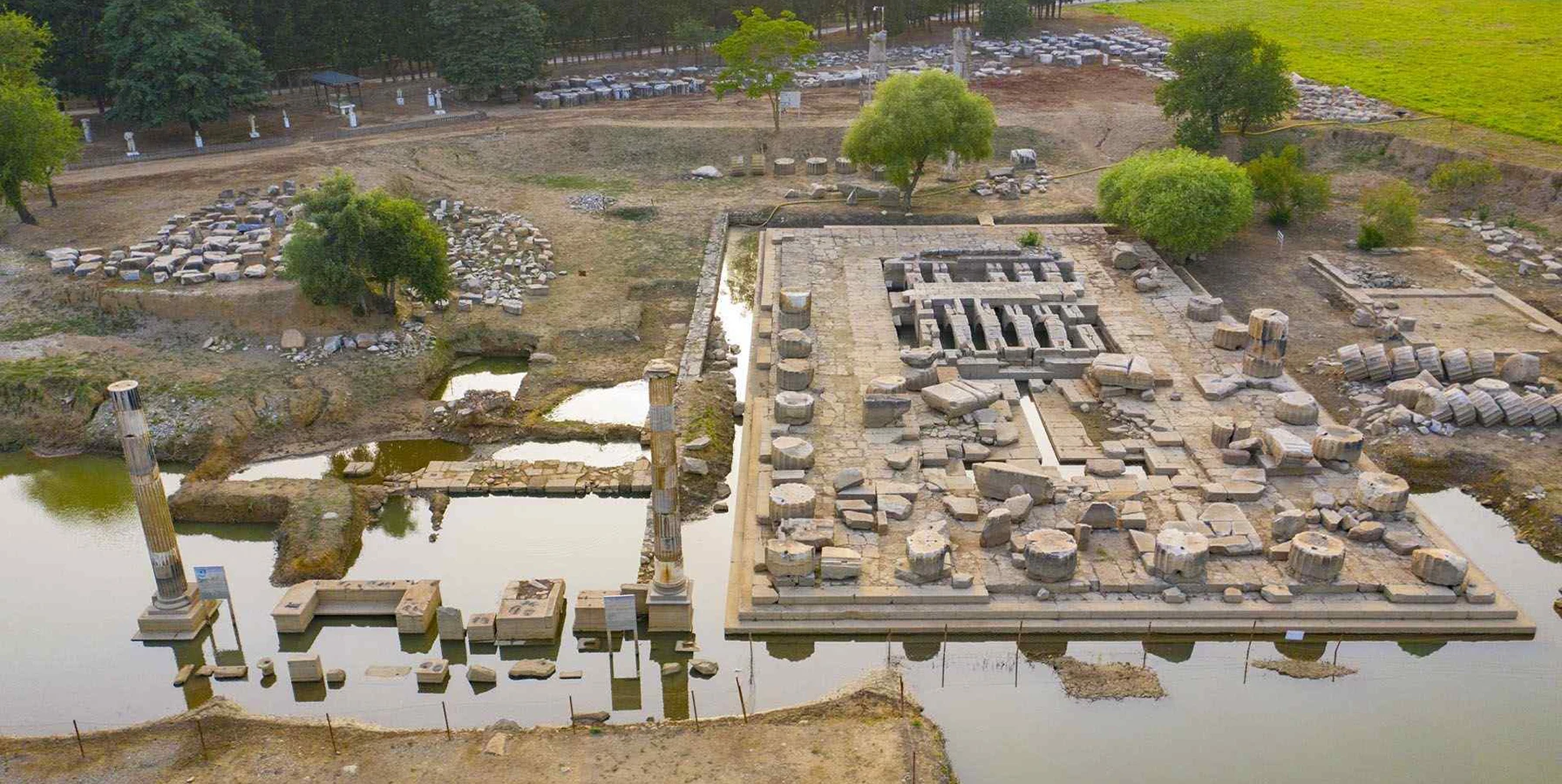
Follow the ancient landscape from the coastal city of Notion to Apollo's oracle at Claros and discover how cities, religion and the Aegean were connected.
Request a Custom TourConnect Notion with the coastlines, ancient sanctuaries and historic landscapes that shaped southern Ionia.
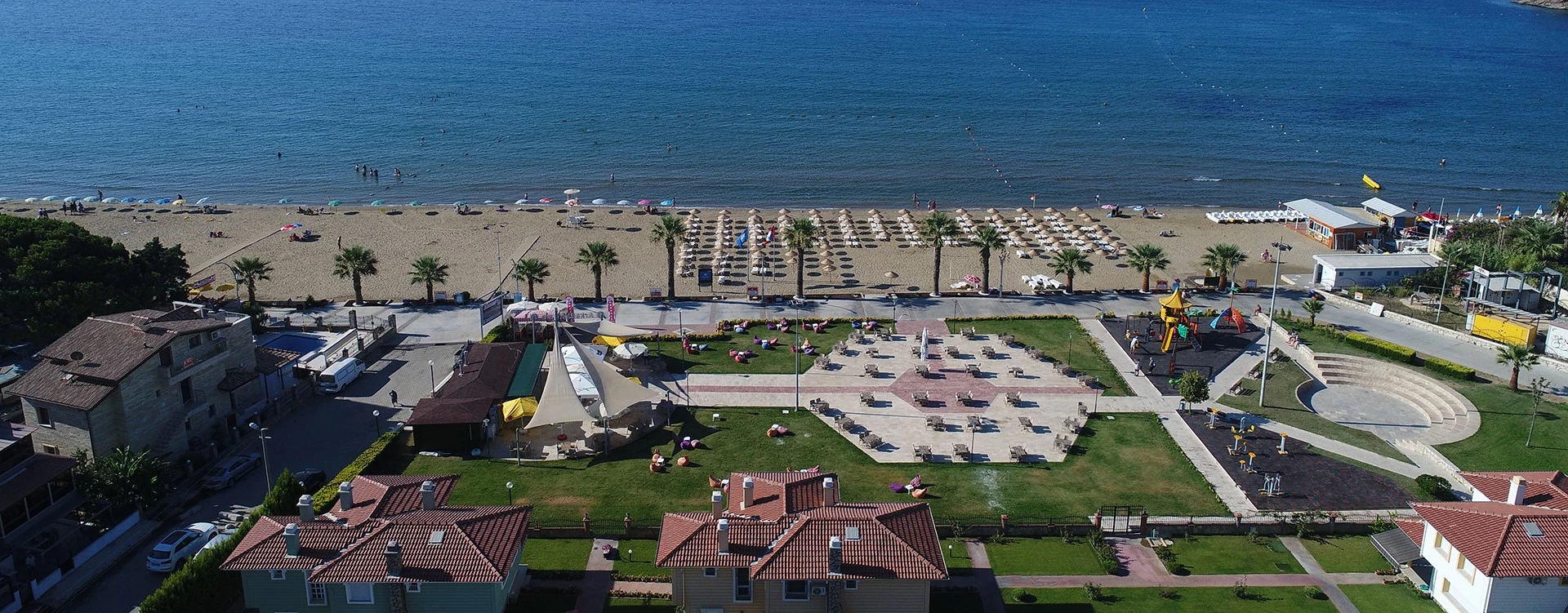
Combine beaches, small bays, local food, coastal scenery and relaxed Aegean stops with the archaeology of southern İzmir.
Request a Custom Tour
Discover Notion and Claros in the morning, then finish with a relaxed afternoon among the beaches and coastal landscapes of the Aegean.
Request a Custom TourDiscover more of the region through ancient sanctuaries, coastal towns, beaches and landscapes shaped by thousands of years of history.
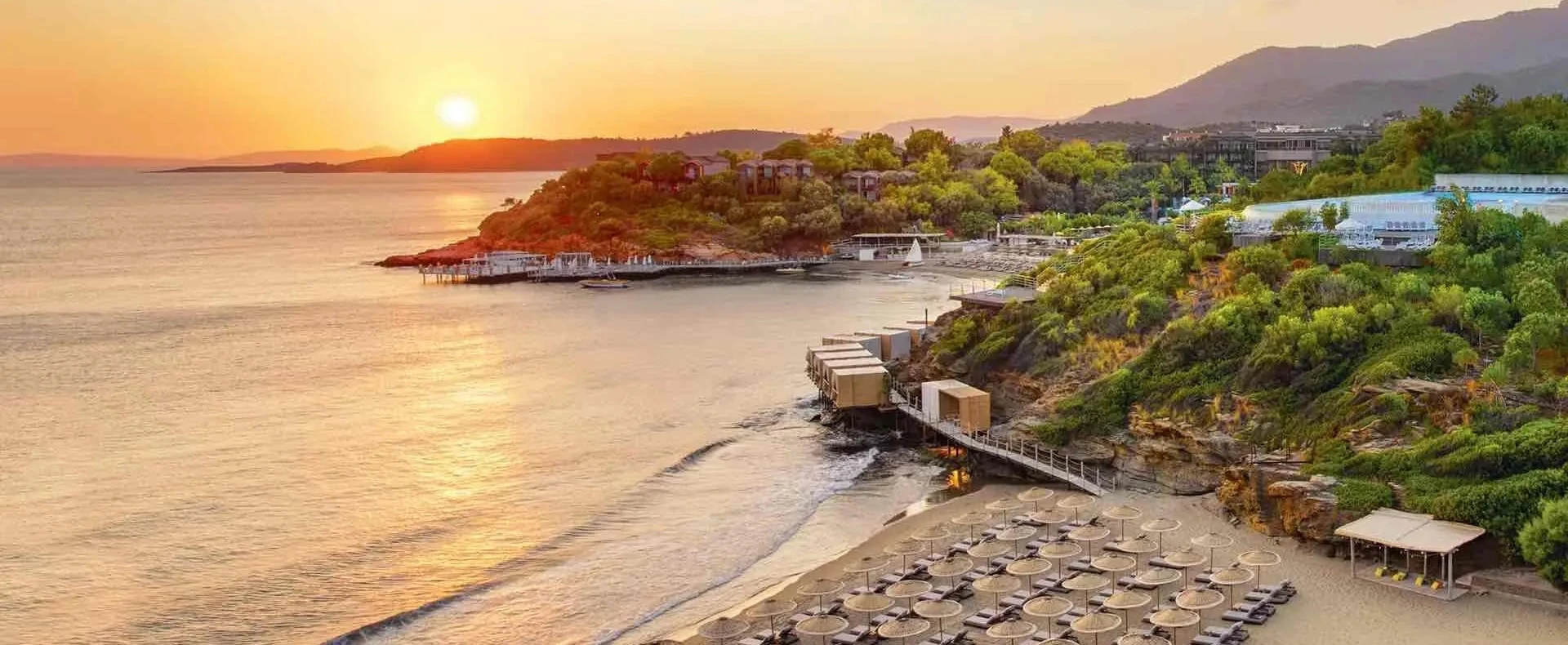
Discover Özdere, Gümüldür, ancient Ionia, traditional landscapes and the wider southern İzmir coast.
Explore Menderes
Step into one of ancient Ionia's most fascinating religious sanctuaries and discover the oracle of Apollo.
Explore Claros
Continue along the coast for beaches, small bays, green hills and relaxed Aegean scenery.
Explore Özdere