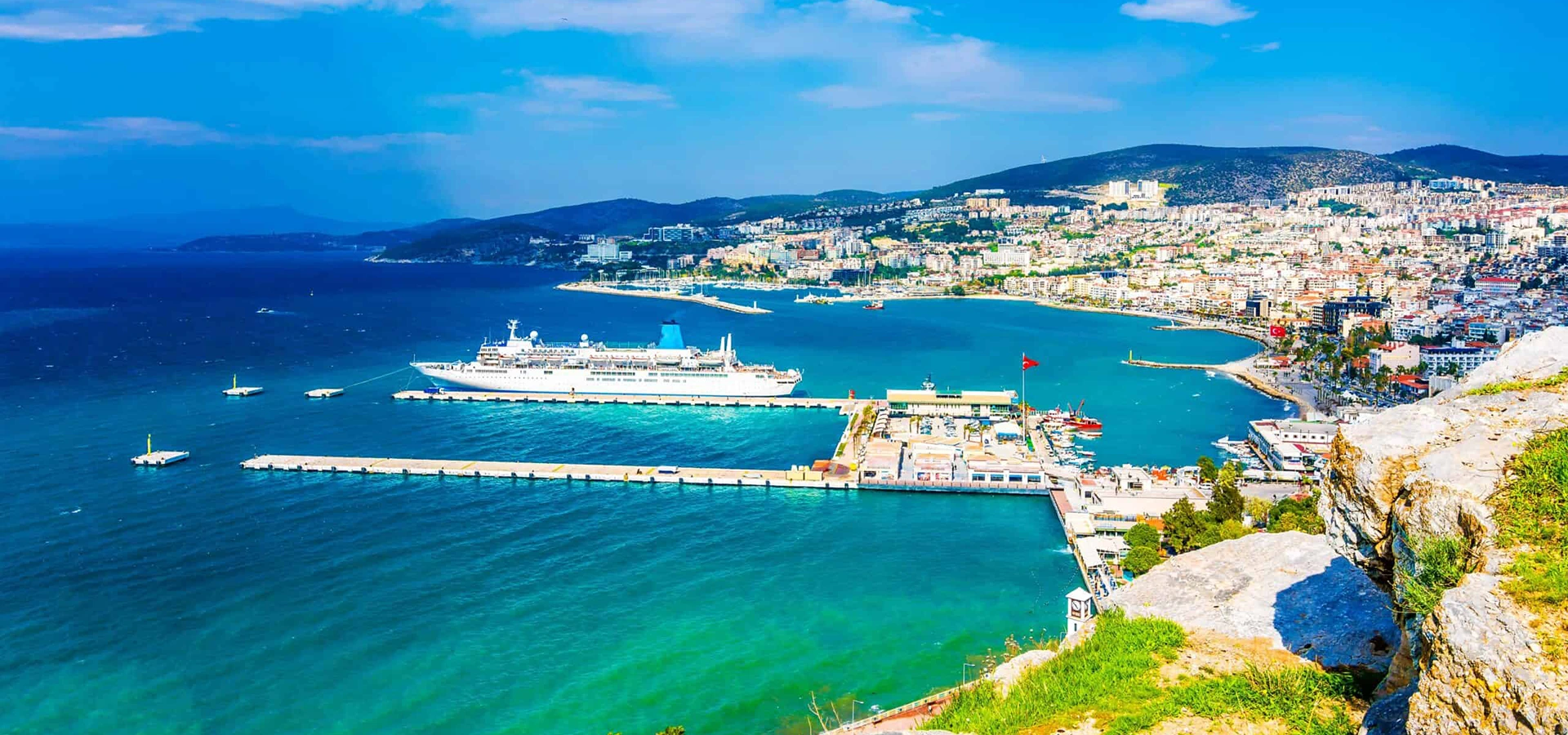
Aegean Coast, Ottoman Heritage & Gateway to Ephesus

Kuşadası Travel Guide – Beaches, History & Things to Do

Discover one of Türkiye's classic Aegean destinations,
where a lively harbour meets Ottoman heritage, beaches and extraordinary ancient cities.

Explore Kuşadası

Kuşadası – Aegean Life beside Ancient Anatolia

Kuşadası is a coastal resort and historic port in Aydın Province on the western shore of Türkiye. Facing the blue waters of the Aegean Sea, the town combines beaches, a marina, a major cruise harbour, Ottoman landmarks and easy access to some of the country's most celebrated archaeological sites.

Its best-known symbol is Güvercinada, or Pigeon Island, where a stone fortress guards the entrance to the bay. A short walk away, the historic Kaleiçi quarter and Öküz Mehmet Paşa Caravanserai preserve traces of the Ottoman port town.

Kuşadası is also one of the principal coastal gateways for visiting Ephesus. Travellers arriving by cruise ship, road or air can combine the seaside atmosphere with the archaeological landscapes of western Anatolia.

South of the town, the Dilek Peninsula introduces a very different side of the region: forested mountains, protected coves, walking landscapes and remarkably clear water.

Güvercinada

Walk to Kuşadası's fortress island and enjoy one of the classic views across the bay.

Gateway to Ephesus

Use Kuşadası as a comfortable base for exploring one of the great ancient cities of the Mediterranean.

Aegean Beaches

Choose between lively urban beaches, long sandy shores and protected national-park coves.

Ottoman Heritage

Discover the caravanserai, surviving city gate, Kaleiçi streets and maritime history.

Know Before You Go

Kuşadası – Quick Facts

A practical introduction to one of the most popular destinations on Türkiye's Aegean coast.

Location

Aegean coast of Aydın Province in western Türkiye.

Open on Google Maps

Known For

Its cruise harbour, marina, beaches, Güvercinada and access to Ephesus.

Historic Landmark

Güvercinada Castle, standing at the entrance to Kuşadası Bay.

Ancient Heritage

Ephesus, Priene, Miletus and Didyma can all be included in regional journeys.

Nature & Beaches

Urban beaches, southern coastal resorts and the Dilek Peninsula.

Best Seasons

Spring and autumn for sightseeing; summer for a beach-focused stay.

Sea, Trade and the Archaeology of Western Anatolia

Why Visit Kuşadası?

Few Aegean destinations combine a working international harbour, resort life, history and major ancient sites so conveniently.

Kuşadası works particularly well for travellers who want to combine archaeology with the sea. You can spend a morning among the marble streets of an ancient city, return to the coast for lunch and finish the day walking beside the Aegean.

Its location is one of its great advantages. Ephesus and Selçuk lie to the north, while the landscapes of Priene, Miletus, Didyma and the Büyük Menderes region can be explored to the south.

The town itself deserves time too. Güvercinada, the caravanserai, Kaleiçi and the harbour tell the story of a coastal settlement shaped by maritime trade and defence.

For a broader regional journey, continue through our Aydın travel guide and discover the archaeological and natural landscapes surrounding Kuşadası.

History of Kuşadası

The Kuşadası coastline has been inhabited since antiquity and stood within the cultural landscape of Ionia. Ancient settlements in the surrounding area included places such as Neopolis, Pygela and Anaia, while nearby Ephesus became one of the great urban centres of the ancient Mediterranean.

The importance of the coastline changed as ports, political powers and trading routes shifted. During the medieval period, maritime connections increasingly shaped the settlements around the bay.

Kuşadası became known in European maritime usage as Scala Nova or Scalanova, meaning approximately “new port” or “new pier”. Its sheltered position made the harbour increasingly useful for regional commerce.

The town entered Ottoman rule in the early 15th century. Important development followed during the Ottoman period, particularly under Grand Vizier Öküz Mehmet Paşa, whose caravanserai remains one of Kuşadası's major historic buildings.

Defensive architecture was also strengthened around the harbour. Güvercinada became an important maritime fortification, while walls and gates protected the settlement on the mainland.

In the modern period, Kuşadası developed into one of Türkiye's best-known coastal tourism centres, supported by its beaches, marina, international cruise harbour and proximity to Ephesus.

Ancient Landscape

The coastline formed part of the wider Ionian and western Anatolian world.

Scala Nova

A historic maritime name associated with the developing port settlement.

Ottoman Period

The town developed around its harbour, defensive walls and commercial buildings.

Öküz Mehmet Paşa

The grand vizier is closely associated with the caravanserai and development of the town.

Maritime Defence

Güvercinada protected the approaches to Kuşadası Bay.

Modern Tourism

The harbour, beaches and nearby archaeological sites shaped its rise as a major resort.

Kuşadası Harbour and Waterfront

The relationship between Kuşadası and the sea is immediately visible along the waterfront. Cruise ships, excursion boats, ferries, fishing vessels and yachts all contribute to the maritime character of the town.

The harbour also provides an easy orientation point for exploring Kuşadası on foot. The historic caravanserai stands close to the port, while Kaleiçi and the route toward Güvercinada can be reached without travelling far from the waterfront.

In the evening, the seafront becomes one of the most pleasant areas for a walk. Watch the changing colours over the Aegean, particularly around sunset.

Best For Harbour views, sunset walks and easy access to the historic centre
Cruise Visitors Many central sights can be reached on foot from the port area
Boat Excursions Seasonal coastal trips operate from Kuşadası; routes vary by operator
International Travel Ferry services may operate between Kuşadası and nearby Greek islands; check current schedules and entry requirements

Güvercinada – Pigeon Island and Castle

Güvercinada, meaning Pigeon Island, sits immediately offshore at the entrance to Kuşadası Bay and is connected to the mainland by a causeway.

The island's defensive structures belong principally to the Ottoman maritime history of Kuşadası. Official cultural sources associate the inner fortress with Barbaros Hayreddin Paşa and the surrounding defensive walls with later strengthening under İlyas Ağa.

Today the island is one of Kuşadası's most recognizable landmarks. The short walk from the waterfront offers views back toward the town, harbour and surrounding Aegean coastline.

Rather than treating the castle only as a photography stop, consider its original position. Any vessel approaching the historic harbour would have passed directly beneath this defensive point.

Local Name

Güvercinada, literally “Pigeon Island”.

Main Feature

A fortified island guarding the entrance to Kuşadası Bay.

Access

The island is connected to the mainland by a causeway.

Best Experience

Walk out in the late afternoon and enjoy views across the harbour and Aegean.

Öküz Mehmet Paşa Caravanserai

Standing close to Kuşadası's harbour, the Öküz Mehmet Paşa Caravanserai is one of the most important surviving monuments in the historic centre.

The building was erected during the Ottoman period by Grand Vizier Öküz Mehmet Paşa. Its substantial stone walls surround an internal courtyard, creating the secure architectural form traditionally associated with caravanserais.

Its location beside the port is especially meaningful. Kuşadası was not simply a seaside settlement: it was part of networks connecting maritime commerce with the roads and markets of western Anatolia.

View the building together with the harbour, Kaleiçi and Güvercinada to understand how commerce and defence shaped the historic town.

Visitor note: The use and access arrangements of historic buildings can change. Check current entry conditions if seeing the interior is important to your visit.

Kuşadası Kaleiçi

Kaleiçi is the historic quarter immediately behind the modern waterfront. Its narrow streets provide an easy contrast with the broad seafront and busy harbour.

One of the old city gates survives as a reminder of the period when the settlement was enclosed by defensive walls. Within the quarter, visitors encounter small shops, cafés, restaurants and traces of older Kuşadası.

Look for the historic gate, sections associated with the former walls and the traditional urban pattern rather than rushing only through the commercial streets.

Kaleiçi is most enjoyable as a relaxed walk. Combine it with the caravanserai and Güvercinada to create a compact introduction to central Kuşadası.

Best Beaches around Kuşadası

Kuşadası has a long relationship with beach tourism, and the coastline offers very different experiences depending on whether you want convenience, atmosphere or a quieter natural setting.

Ladies Beach

Kadınlar Denizi is one of Kuşadası's best-known urban beaches, with cafés, restaurants and accommodation nearby.

Long Beach

The southern coastline includes long stretches of beach backed by hotels, residences and holiday facilities.

Town-Centre Coast

Smaller swimming areas can be convenient when you want to combine a beach break with sightseeing.

Dilek Peninsula

Travel farther south for forest-backed coves and a more natural coastal atmosphere.

Pamucak

North of Kuşadası near Selçuk, the broad coast at Pamucak can be combined with a regional journey.

Boat Day

Seasonal boat trips provide another way to experience bays and swimming stops along the coast.

Swimming conditions: Sea conditions, beach services and lifeguard arrangements can vary by season. Follow local safety notices and avoid entering the water in unsafe weather.

Dilek Peninsula National Park

South of Kuşadası lies the Dilek Peninsula, part of the protected Dilek Peninsula–Büyük Menderes Delta National Park.

The landscape is dramatically different from the resort centre. Forested mountain slopes descend toward clear coves, while walking routes and viewpoints reveal the natural character of the Aegean coastline.

The national park is an excellent choice for travellers who want a break from urban sightseeing. A day can include swimming, short walks, photography and time in the coastal villages around Güzelçamlı.

Access rules, opening times, vehicle arrangements and permitted recreational areas can vary seasonally. Check current park information before setting out.

Beaches & Coves

Protected coastal areas offer clear water backed by forested slopes.

Walking

Choose an authorised trail or short nature walk suited to the weather and your fitness.

Wildlife

The protected peninsula supports a richer natural environment than the developed resort coast.

Güzelçamlı

The coastal settlement provides a useful gateway to the peninsula.

Kuşadası Cruise Port and Ephesus

For many international travellers, Kuşadası is the first point of contact with western Anatolia. Cruise ships call at the harbour because of its excellent position for excursions to Ephesus.

The archaeological site is not inside Kuşadası itself. It lies near Selçuk to the north, so allow sufficient travel time and avoid confusing the port destination with the ancient city.

A private shore excursion gives greater control over timing, route and pace than a large coach programme. It can also be adapted around your ship's arrival and all-aboard time.

Depending on your interests and available time, an Ephesus programme may also include sites around Selçuk such as the Terrace Houses, Basilica of St John, Ephesus Archaeological Museum or other regional highlights.

Cruise planning: Always plan around the ship's published schedule and allow a sensible return margin. Port times and traffic conditions may change on the day.

Best Things to Do in Kuşadası

Walk to Güvercinada

Start with the town's signature view and its historic maritime fortress.

Explore Kaleiçi

Walk through the old quarter, surviving gate and streets behind the harbour.

Visit Ephesus

Dedicate several hours to one of the most important archaeological sites in Türkiye.

Spend a Day at Sea

Choose a beach or seasonal boat excursion along the Aegean coast.

Discover Dilek Peninsula

Exchange the resort atmosphere for protected forests, coves and mountain scenery.

Explore Ancient Ionia

Extend your journey to Priene, Miletus and Didyma for a deeper archaeological route.

Enjoy the Waterfront

Walk beside the harbour and marina, particularly during the cooler evening hours.

Try Aegean Cuisine

Look for seasonal vegetables, olive-oil dishes, seafood and regional meze.

What to Eat in Kuşadası

Kuşadası belongs to the wider culinary landscape of the Aegean coast, where olive oil, vegetables, herbs and seafood play an important role.

Look for zeytinyağlı dishes prepared with seasonal vegetables, plates of local greens and herbs, meze, grilled fish and seafood when available.

A Turkish breakfast can become a leisurely part of the day rather than simply a meal before sightseeing. Local cheeses, olives, tomatoes, peppers, eggs, breads and preserves fit naturally into the agricultural landscape of western Türkiye.

For dinner, restaurants around the waterfront offer convenience and sea views, while exploring streets away from the busiest tourist areas can reveal a wider range of local dining styles.

Aegean Herbs

Wild and cultivated greens appear in salads, meze and olive-oil dishes.

Olive Oil

A defining ingredient of western Turkish cooking and the surrounding agricultural landscape.

Seafood

Ask what is fresh and seasonal rather than choosing only from a fixed menu.

Turkish Breakfast

A relaxed breakfast works especially well before a beach or nature-focused day.

Kuşadası Visitor Information

Kuşadası is a living resort town rather than a single ticketed attraction. Central streets, the waterfront and public areas can be explored independently, while individual monuments, archaeological sites and protected natural areas operate according to their own arrangements.

Destination Kuşadası, Aydın Province, western Türkiye
Ideal Stay 2–4 nights for Kuşadası plus Ephesus; longer for beaches and regional day trips
Walking The harbour, Kaleiçi, caravanserai and Güvercinada can form a compact central route
Currency Turkish lira; card acceptance is widespread but carrying some cash remains useful
Summer Expect strong sun, high temperatures and heavier tourism demand
Ancient Sites Check current tickets, opening hours and seasonal arrangements individually
Before travelling: Opening hours, admission fees, ferry services, national-park access and archaeological-site arrangements can change. Confirm time-sensitive information close to your travel date.

One Day in Kuşadası

Begin near the harbour and visit the Öküz Mehmet Paşa Caravanserai. Continue into Kaleiçi, passing through the historic streets and surviving gate before returning toward the waterfront.

Walk south to Güvercinada and explore the island at a comfortable pace. The views back toward Kuşadası help explain the defensive importance of the position.

After lunch, choose between a beach break or additional time in the town. Finish with a waterfront walk around sunset.

Morning

Harbour, caravanserai and Kaleiçi.

Late Morning

Walk to Güvercinada and explore the castle area.

Afternoon

Beach time, café stop or relaxed exploration of the waterfront.

Evening

Sunset walk followed by dinner in town.

Two Days in Kuşadası

Use the first day to discover central Kuşadası: the harbour, caravanserai, Kaleiçi, Güvercinada and the coast.

Dedicate the second day to Ephesus and Selçuk. Starting earlier helps in warmer months and leaves more flexibility for the archaeological site.

Travellers staying for a third day can choose between the Dilek Peninsula, a beach day or a deeper archaeology route toward Priene, Miletus and Didyma.

Day 1 Kuşadası Old Town + Güvercinada + waterfront
Day 2 Ephesus and Selçuk archaeological programme
Day 3 Option Dilek Peninsula, beaches or Priene–Miletus–Didyma

Best Time to Visit Kuşadası

There is no single best season because Kuşadası works as both a coastal resort and a base for archaeological sightseeing.

Spring

Excellent for archaeological sites, walking and combining nature with the coast.

Early Summer

Increasingly reliable beach weather while sightseeing can still be comfortable with an early start.

High Summer

Best suited to travellers prioritising beaches, swimming and a lively resort atmosphere.

Autumn

A rewarding period for archaeology and coastal travel as peak summer intensity begins to ease.

Winter

Quieter and useful for a cultural itinerary, although some seasonal tourism services may be reduced.

Cruise Days

Central areas and Ephesus can feel busier when several ships are in port.

Photography in Kuşadası

Güvercinada is the natural visual symbol of Kuşadası. Photograph it from the mainland to include the fortress, causeway and sea, then reverse the perspective from the island toward the town.

Late-afternoon light works particularly well around the harbour and waterfront, while the protected landscapes of Dilek Peninsula offer opportunities for wider coastal compositions.

When visiting Ephesus or another archaeological site, earlier light can be useful both for photography and for avoiding the strongest midday heat.

Güvercinada

Use the causeway, castle walls and Aegean horizon in the same composition.

Waterfront

Evening light and reflections create attractive harbour photographs.

Kaleiçi

Look for street details, old doorways and the contrast between heritage and modern town life.

Dilek Peninsula

Photograph the meeting of forested mountains, rocky coves and blue water.

Accessibility and Walking in Kuşadası

Central Kuşadası can be relatively convenient for travellers who prefer shorter distances, but surfaces, gradients and historic buildings vary considerably.

Waterfront

Promenade areas can provide comparatively straightforward walking, although conditions vary by section.

Kaleiçi

Narrow streets and occasional uneven surfaces may require additional care.

Güvercinada

Ask about the current condition of the causeway and castle route if mobility is limited.

Ephesus

The archaeological site involves extensive walking over ancient stone and uneven surfaces.

National Park

Beach and nature access varies by individual cove and recreational area.

Private Vehicle

A private programme can reduce unnecessary walking and adapt stops to your needs.

How to Get to Kuşadası

Kuşadası has no commercial airport of its own. Most international visitors arriving by air use İzmir Adnan Menderes Airport and continue south by road.

From İzmir Airport

A private transfer is one of the simplest options, particularly with luggage or a late arrival.

From Selçuk

Kuşadası and the Ephesus region are close enough to combine easily within the same itinerary.

From Bodrum

Continue north by road as part of a wider Aegean coastal journey.

From Pamukkale

A road transfer can connect Kuşadası with Denizli and Pamukkale in a western Türkiye itinerary.

By Cruise Ship

The passenger harbour places visitors directly beside the central tourist and historic areas.

By Ferry

International ferry services may be available seasonally; confirm schedules and passport requirements before travel.

Transfer planning: Journey times depend on traffic, season and your exact hotel. Allow additional time when connecting with a flight, cruise ship or international ferry.

Places to Visit near Kuşadası

Kuşadası sits between several of western Türkiye's most rewarding archaeological and natural landscapes. Choose your route according to your interests rather than trying to fit every destination into a single day.

Ephesus

The essential archaeological excursion from Kuşadası and one of the great cities of the ancient Mediterranean.

Selçuk

Combine Ephesus with the town's museum, Byzantine heritage and other historic sites.

Şirince

A hillside village near Selçuk that can complement a regional cultural itinerary.

Dilek Peninsula

A protected natural landscape of forested mountains, beaches and Aegean coves.

Priene

An ancient Greek city set dramatically beneath Mount Mycale.

Miletus

Explore a city associated with philosophy, urban planning and the changing geography of the Maeander delta.

Didyma

Visit the monumental Temple of Apollo and its famous ancient oracle.

Tralleis

Discover Roman Aydın and the Three Eyes in our Tralleis Ancient City guide.

Aphrodisias

For a longer archaeology journey, explore our Aphrodisias Ancient City guide.

Frequently Asked Questions About Kuşadası

Where is Kuşadası?

Kuşadası is on the Aegean coast of Aydın Province in western Türkiye, south of Selçuk and Ephesus.

Is Kuşadası worth visiting?

Yes. It is especially useful for travellers who want to combine beaches, a lively waterfront, Ottoman heritage and major archaeological sites.

How many days do I need in Kuşadası?

Two or three days allow time for central Kuşadası and Ephesus. Add more days for beaches, Dilek Peninsula or additional ancient cities.

Is Ephesus in Kuşadası?

No. Ephesus is near Selçuk in İzmir Province, north of Kuşadası, but Kuşadası is one of the most popular bases and cruise gateways for visiting it.

What is Güvercinada?

Güvercinada, or Pigeon Island, is the fortified island at the entrance to Kuşadası Bay and one of the town's best-known landmarks.

Can I walk to Güvercinada?

Yes. The island is connected to the mainland by a causeway, subject to any temporary local access restrictions.

What is the historic centre of Kuşadası?

Kaleiçi is the old-town quarter behind the harbour, with narrow streets and surviving elements of the historic walled settlement.

What are the best beaches in Kuşadası?

Ladies Beach is one of the best-known urban options. Longer beaches extend south of town, while Dilek Peninsula offers a more natural coastal setting.

Can I visit Dilek Peninsula from Kuşadası?

Yes. It makes an excellent nature and beach day trip south of the town. Check current national-park access arrangements before travelling.

Which airport is best for Kuşadası?

İzmir Adnan Menderes Airport is the main airport used by travellers heading to Kuşadası.

Can cruise passengers visit Ephesus from Kuşadası?

Yes. Ephesus is the principal archaeological excursion from Kuşadası's cruise port. Plan the itinerary carefully around the ship's schedule.

Can I visit Priene, Miletus and Didyma from Kuşadası?

Yes. They form an excellent full-day archaeology route south of Kuşadası when arranged with suitable transport.

Is Kuşadası good without a car?

The central harbour, Kaleiçi and Güvercinada can be explored on foot, while private transport is convenient for Ephesus, national-park visits and regional ancient sites.

When is the best time to visit Kuşadası?

Spring and autumn are particularly comfortable for archaeology and sightseeing, while summer is the main season for swimming and beach holidays.

Responsible Visiting in Kuşadası

Protect Archaeological Sites

Stay on permitted routes and never climb ancient walls or remove stones and pottery fragments.

Respect Protected Nature

Follow national-park rules and avoid disturbing wildlife or vegetation.

Reduce Plastic Waste

Carry reusable water bottles where practical and dispose of rubbish responsibly.

Respect the Sea

Do not leave waste on beaches or throw litter from boats.

Support Local Businesses

Independent cafés, restaurants, producers and guides help keep tourism connected to the local economy.

Respect Historic Neighbourhoods

Remember that the old town remains part of a living community rather than an open-air museum.

Private Tours from Kuşadası

Ask us to design a private Kuşadası programme with a licensed guide and comfortable vehicle, tailored to your interests, cruise schedule and preferred pace, without compulsory shopping stops.

Your Private Aegean Journey

Explore Ephesus, Kuşadası and the ancient landscapes of western Türkiye with an itinerary designed around you.