Private Yeni Cami & Historic Eminönü Tour
Ask us about a tailor-made route focused on Yeni Cami, the Spice Bazaar, Rüstem Pasha Mosque, Ottoman architecture, imperial women patrons, Eminönü and the Golden Horn.
Request a Custom Tour





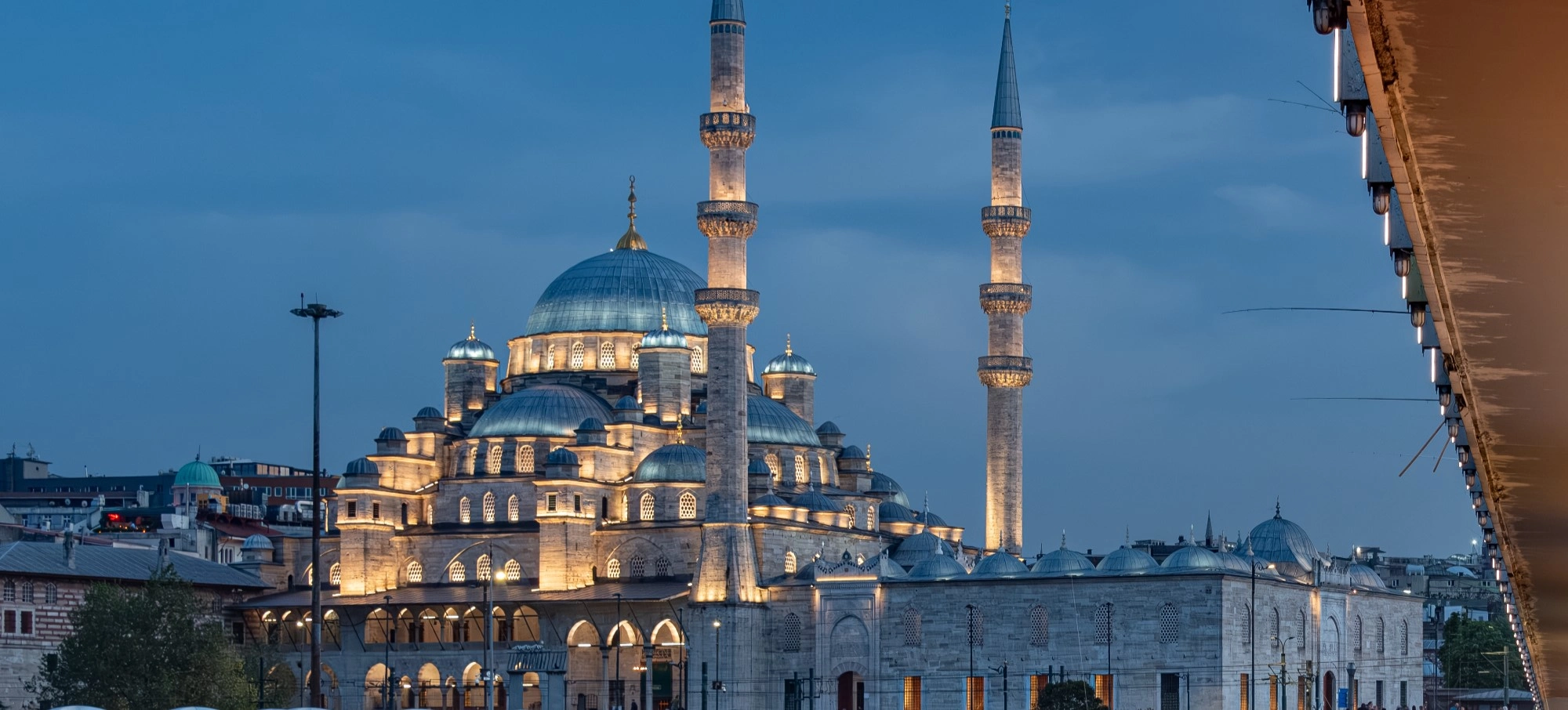
The New Mosque, known in Turkish as Yeni Cami, rises directly beside the Spice Bazaar at the entrance to Istanbul's historic Eminönü district. Facing the Golden Horn and the Galata Bridge, its layered domes and twin minarets form one of the most recognizable silhouettes on the Historic Peninsula.
Despite its name, the mosque is more than three and a half centuries old. Its extraordinary story began under Safiye Sultan, mother of Sultan Mehmed III, at the end of the 16th century. Construction stopped after the political changes of 1603 and remained unfinished for decades before Turhan Hatice Sultan, mother of Sultan Mehmed IV, revived the project after the Great Fire of Istanbul in 1660. The mosque was ceremonially opened in 1665.
Architecturally, Yeni Cami belongs to the late classical Ottoman tradition. Its approximately 17.5-meter-wide central dome rises above a prayer hall expanded by semi-domes, while the exterior develops into the famous cascading composition of domes and half-domes that gives the building its monumental presence beside the Golden Horn. Two minarets, each with three balconies, frame the skyline.
The mosque is also only one part of a much larger imperial foundation. The neighboring Spice Bazaar was created as the commercial arasta of the complex, while the Hünkâr Kasrı, Turhan Sultan's türbe, sebil, fountains and other charitable buildings reveal how religion, royal ceremony, commerce and urban life were deliberately connected in Ottoman Istanbul.
The foundation was laid for Safiye Sultan under the architect Davud Ağa.
The long-delayed mosque was ceremonially opened after completion under Turhan Hatice Sultan.
Stand beneath one of the great domed interiors of 17th-century Ottoman Istanbul.
Explore the historic market that formed the commercial heart of the same imperial complex.
Essential information for visiting the monumental Ottoman mosque beside the Spice Bazaar and Golden Horn in Eminönü.
Eminönü, Fatih, beside the Spice Bazaar and opposite the Galata Bridge.
Open on Google MapsSafiye Sultan began the project; Turhan Hatice Sultan completed it in the 17th century.
Davud Ağa, Dalgıç Ahmed Ağa and later Mimarbaşı Mustafa Ağa.
Begun in the late 1590s, resumed in 1661 and ceremonially opened in 1665.
Normally free; Yeni Cami remains an active mosque and prayer always takes priority.
Allow around 30–45 minutes, or 2–4 hours with the Spice Bazaar and wider Eminönü area.
Yeni Cami is one of Istanbul's great imperial mosques and one of the clearest surviving examples of how Ottoman architecture could unite worship, royal patronage, trade and city planning.
The New Mosque occupies a position of exceptional importance at Eminönü, historically one of Istanbul's busiest commercial and maritime gateways. Its façade faces the Golden Horn, while the Galata Bridge, ferry piers, market streets and the Spice Bazaar surround it with constant urban movement.
Its construction history is equally remarkable. Few major Ottoman monuments tell a story stretching across such a long period. The project began under Safiye Sultan near the end of the 16th century, was abandoned for decades after her loss of political influence, and was finally revived under another powerful valide sultan, Turhan Hatice Sultan.
The building therefore belongs to the political and cultural world often associated with the Sultanate of Women, when mothers and consorts of Ottoman sultans exercised unusually visible influence through court politics, charitable foundations and monumental architecture. Yeni Cami is one of the most important surviving monuments connected with this era.
Architecturally, the mosque continues the great centralized-domed tradition developed in 16th-century Istanbul. Its large central dome, four supporting semi-domes, monumental courtyard, twin minarets, İznik tile decoration and imperial pavilion place it firmly among the major selatin mosques of the capital.
For travelers following our guide to places to visit in Istanbul, Yeni Cami is also one of the easiest monuments to combine with other major sights. The Spice Bazaar is immediately beside it, while the Grand Bazaar, Süleymaniye, Rüstem Pasha Mosque, Sirkeci, the Golden Horn and Galata are all within a highly rewarding historic walking zone.
The origins of Yeni Cami belong to the reign of Sultan Mehmed III. His mother, Safiye Sultan, was Valide Sultan and one of the most influential women at the Ottoman court. She chose the busy waterfront district of Bahçekapı–Eminönü for an ambitious new imperial religious foundation.
The project was entrusted to Davud Ağa, a leading imperial architect who had trained within the architectural tradition of Mimar Sinan. The formal foundation ceremony took place in 1598, although the project is often dated from 1597 in historical summaries. Because the site stood on low, wet ground close to the Golden Horn, the foundations required particularly careful engineering.
Davud Ağa died in 1598 and was succeeded by Dalgıç Ahmed Ağa. Construction continued until the death of Sultan Mehmed III in 1603. Safiye Sultan was then sent to the Old Palace, her political position declined, and the costly building project was abandoned while still incomplete.
For more than half a century, the unfinished walls stood in one of the busiest commercial quarters of Istanbul. The situation changed after the devastating Great Fire of 1660, which destroyed large areas around the district. Turhan Hatice Sultan, mother of Sultan Mehmed IV, decided to revive the abandoned foundation.
Construction resumed under Mimarbaşı Mustafa Ağa in 1661. The project was redesigned and expanded into a major imperial complex including the mosque, commercial market, royal pavilion, türbe, sebil and other buildings. The mosque was completed during the 1660s and ceremonially opened for Friday prayer on 30 October 1665.
The formal foundation of Safiye Sultan's mosque was laid under architect Davud Ağa.
Construction stopped after the death of Mehmed III and Safiye Sultan's removal from political power.
The Great Fire devastated the surrounding district and helped trigger the revival of the abandoned project.
Turhan Hatice Sultan restarted construction under Mimarbaşı Mustafa Ağa.
The New Mosque was ceremonially opened with Friday prayer.
The mosque reopened after a major modern restoration campaign begun in 2016.
Safiye Sultan was the consort of Sultan Murad III and mother of Sultan Mehmed III. When her son became sultan, she assumed the powerful position of Valide Sultan, or queen mother. Her patronage of Yeni Cami was intended to create a monumental religious and charitable foundation in one of the capital's most visible commercial districts.
The site was challenging both physically and politically. Eminönü stood close to the customs zone and harbor, with tightly packed commercial buildings and long-established non-Muslim communities. Large-scale property acquisition was required before the mosque could be constructed.
The ground itself created another difficulty. The shoreline lay much closer to the building than it does today, and the low-lying site required deep foundations. Davud Ağa used timber piles and substantial masonry to create a stable platform capable of supporting the enormous weight of a monumental domed mosque.
Safiye Sultan's project did not reach completion during her period of power. When Sultan Mehmed III died in 1603, she was transferred away from the center of court life, and the unfinished mosque lost the political and financial support necessary to continue.
Safiye Sultan held the influential position of mother of the reigning sultan, Mehmed III.
The chosen location connected the new imperial foundation directly with trade, shipping and the commercial heart of Istanbul.
The first architect belonged to the generation trained in the architectural world shaped by Mimar Sinan.
Timber piles and heavy masonry helped stabilize the difficult low-lying ground beside the Golden Horn.
The death of Mehmed III brought a dramatic change in Safiye Sultan's political position.
The partially completed walls remained abandoned in Eminönü for more than half a century.
Turhan Hatice Sultan, mother of Sultan Mehmed IV, was one of the most important female patrons of 17th-century Ottoman architecture. Her decision to complete the abandoned Yeni Cami project transformed Safiye Sultan's unfinished foundations into one of Istanbul's most important imperial complexes.
The turning point came after the Great Fire of 1660. The disaster devastated large sections of the commercial neighborhoods around Eminönü and Bahçekapı. As reconstruction began, Turhan Sultan adopted the unfinished mosque and ordered work to resume.
Under the direction of Mimarbaşı Mustafa Ağa, the building rose rapidly. The new program extended beyond the prayer hall to create a major külliye that included a royal pavilion, türbe, public fountain and sebil, commercial buildings and the market later known as the Spice Bazaar.
The completed foundation strengthened the relationship between the Ottoman dynasty and one of the capital's most commercially important districts. Religious worship, royal ceremonial space, charitable services and market income were brought together in a single urban ensemble.
Turhan Sultan served as Valide Sultan during the reign of her son Sultan Mehmed IV.
The destruction around Eminönü provided the historical setting in which the abandoned project was revived.
The imperial chief architect supervised the final great phase of construction.
The completed foundation combined worship, royal use, charity and commerce.
The famous market formed the commercial arasta of the foundation and helped support its charitable institutions.
Turhan Sultan's türbe later became one of the most important Ottoman dynastic burial places in Istanbul.
The modern name Yeni Cami literally means “New Mosque.” The name can seem surprising today because the building opened in the 17th century and is now one of Istanbul's great historic monuments.
The first foundation was associated with Safiye Sultan and was known as a Valide Sultan Mosque. After the abandoned project was completed under Turhan Hatice Sultan, the building became known as the Yeni Valide Sultan Camii, or New Valide Sultan Mosque.
Over time, the longer name was shortened in everyday speech to Yeni Cami. The designation survived even as newer mosques appeared throughout Istanbul. Today both “New Mosque” and “Yeni Cami” are widely used by visitors, while the historical name Yeni Valide Sultan Camii preserves the building's connection with its female imperial patrons.
Yeni Cami is built on the monumental scale expected of an Ottoman imperial mosque. The prayer hall is organized around a great central dome supported by four massive piers, with semi-domes and smaller vaulted spaces expanding the interior in several directions.
The arrangement continues the centralized domed tradition developed by earlier imperial mosques in Istanbul. The design is often compared with the spatial ideas of the Şehzade Mosque and Sultan Ahmed Mosque, where a dominant central dome is surrounded by a carefully stepped hierarchy of smaller domes and semi-domes.
The exterior is especially impressive from the Galata Bridge and Eminönü waterfront. The roofline rises in layers toward the main dome, creating a pyramidal composition traditionally described as containing 66 domes and semi-domes. Two tall minarets with three balconies each frame the building.
The monumental courtyard forms an important western threshold before the prayer hall. Arcaded porticoes, small domes, a central şadırvan, stone paving and the repeated rhythm of columns create a calmer architectural world immediately beside one of Istanbul's busiest transport and market districts.
The principal dome measures approximately 17.5 meters in diameter and rises about 36 meters.
Massive structural supports carry the dominant central dome above the prayer hall.
Large half-domes and smaller vaulted spaces expand the central volume into a unified interior.
Two slender minarets, each with three balconies, rise beside the monumental roofline.
Dozens of domes and semi-domes create the famous stepped silhouette seen from the Golden Horn.
A large arcaded courtyard provides a ceremonial transition from Eminönü Square into the mosque.
The main dome is the dominant feature of the interior. Measuring approximately 17.5 meters in diameter and rising to around 36 meters, it creates a lofty central volume above the prayer space.
Four great piers carry the principal arches supporting the dome. The transition between the square structural system below and the circular dome above is resolved through pendentive-like transitional elements, while windows around the upper levels bring light into the center of the building.
The space does not end beneath the main dome. Four semi-domes expand the composition, and smaller domed units continue outward around the prayer hall. This creates the layered, centrally focused spatial effect characteristic of monumental Ottoman mosque architecture.
From outside, the same structural hierarchy becomes an architectural landscape. Small domes rise toward larger semi-domes and finally the central cupola, producing one of the classic skyline compositions of historic Istanbul.
The interior of Yeni Cami combines monumental architecture with a dense decorative program. Blue, turquoise, green and white tiles cover important lower wall surfaces, while painted ornament, calligraphy, marble carving and colored stonework continue upward through the arches and domes.
The mosque's 17th-century İznik tiles are particularly important. Their floral patterns, stylized leaves, geometric designs and calligraphic panels create large fields of color around the prayer hall and imperial areas. The tile decoration belongs to a later phase of İznik production than the famous 16th-century masterpieces seen in some earlier Ottoman mosques.
The mihrab marks the direction of Mecca and forms the visual focus of the qibla wall. The marble minbar, used for the Friday sermon, rises beside it with finely worked stone decoration. Gilded details and muqarnas ornament enrich the most important ceremonial elements.
Visitors should also notice the calligraphy, wooden doors, window shutters, marble balustrades, colored stone inlays and the hünkâr mahfili reserved historically for the sultan. Together these details show how Yeni Cami combines monumental scale with the refined craft traditions of the Ottoman court.
Blue, turquoise, green and white tile panels form one of the most memorable decorative features of the interior.
The prayer niche creates the spiritual and architectural focus of the qibla wall.
Fine carved stonework reflects the ceremonial importance of the Friday sermon.
Large inscriptions and calligraphic panels form an essential part of the mosque's visual program.
Floral motifs, rûmî designs, medallions and geometric patterns cover upper walls, arches and domes.
The sultan's elevated prayer area connects directly with the adjoining Hünkâr Kasrı.
One of the finest experiences at Yeni Cami is the transition from the crowded streets of Eminönü into the mosque courtyard. Outside are ferries, trams, street vendors, market shoppers and the constant movement of the Golden Horn. Inside the courtyard, the architecture suddenly becomes symmetrical, ordered and calm.
The courtyard is surrounded by a colonnaded arcade covered by a sequence of small domes. Alternating stone colors, marble columns, pointed arches and carefully framed entrances create the ceremonial atmosphere expected of an imperial mosque.
At the center stands an elegant domed şadırvan. Its presence is visually important even though the practical ablution facilities used by worshippers are located elsewhere around the mosque. The fountain creates a strong central focus when looking across the courtyard toward the main prayer hall.
The courtyard is also one of the best places to appreciate the extraordinary vertical composition of Yeni Cami. From close range, the main dome, semi-domes, small corner domes and twin minarets rise in successive layers above the arcades.
Domed porticoes surround the monumental open courtyard on the western side of the mosque.
The elegant domed fountain creates the visual center of the courtyard.
Columns and pointed arches produce a carefully ordered rhythm around the enclosure.
The courtyard offers one of the best close views of the mosque's cascading roofline.
Attached to the mosque is the extraordinary Hünkâr Kasrı, or imperial pavilion. This private architectural suite allowed the sultan and members of the imperial household to arrive, rest and prepare before entering the mosque's royal prayer area.
A long elevated and ramped passage links the pavilion with the hünkâr mahfili inside the mosque. The arrangement allowed the ruler to move between the private pavilion and the prayer hall with ceremonial privacy.
The interior is especially valuable for its surviving 17th-century decorative arts. Visitors can encounter İznik tile panels, woodwork with mother-of-pearl inlay, colored glass, painted ornament, tiled fireplaces and other examples of highly refined Ottoman court craftsmanship.
The Hünkâr Kasrı has been restored and is used for exhibitions and cultural activities. Its access arrangements can differ from those of the mosque itself, so travelers who particularly want to enter the pavilion should check locally on the day of their visit.
A private suite created for the sultan and members of the Ottoman court.
A long corridor connects the pavilion directly with the royal prayer area inside the mosque.
Exceptional tile panels preserve one of the richest decorative programs associated with the complex.
Fine inlaid woodwork reflects the sophistication of Ottoman palace craftsmanship.
Windows and interior details contribute to the intimate atmosphere of the royal rooms.
The restored pavilion is used as an exhibition and traditional arts space, with access depending on current programming.
Yeni Cami was conceived not as an isolated building but as the center of an Ottoman külliye, a foundation combining religious, charitable, ceremonial and economic functions.
Under Turhan Hatice Sultan, the final complex included the mosque, Hünkâr Kasrı, darülkurra, türbe, commercial arasta, sıbyan mektebi, sebil and fountain. Later additions included structures such as a library and muvakkithane. Not every element survives in its original form today.
The commercial component was especially important. The arasta became the market now known as the Spice Bazaar or Mısır Çarşısı. Its shops generated revenue for the charitable foundation, showing how commerce could directly support religious and social institutions in the Ottoman city.
This relationship explains why Yeni Cami and the Spice Bazaar should be understood together. The mosque provided the monumental religious focus, while the market created the economic engine that helped sustain the foundation. Their close physical relationship remains visible today.
The central religious monument and visual landmark of the entire foundation.
The commercial arasta generated income for the imperial charitable foundation.
A richly decorated imperial pavilion connected directly with the sultan's prayer area.
A major dynastic mausoleum containing the burials of Turhan Sultan and five Ottoman sultans.
Public water architecture expressed the charitable role of the foundation within the city.
Elements such as the darülkurra and sıbyan mektebi formed part of the wider religious and educational program.
The Spice Bazaar is not merely a nearby attraction. It was created as an integral commercial component of the Yeni Cami foundation and is one of the clearest surviving examples of the economic structure behind a major Ottoman külliye.
Known historically as an arasta, the market provided rental income that helped finance the mosque and its charitable services. The surviving bazaar has an L-shaped plan with long vaulted commercial passages and rows of shops.
The market later became widely known as the Mısır Çarşısı, or Egyptian Bazaar. Its modern reputation for spices, Turkish delight, herbs, nuts, teas and food products continues the long commercial character of Eminönü, even though today's shop mix reflects modern tourism as well as local trade.
For visitors, the historical relationship between the two monuments makes them an ideal pair. Spend time first in the controlled geometry and quiet interior of the mosque, then step directly into the dense sensory world of the bazaar to experience two complementary sides of Ottoman urban life.
Explore the market originally designed to generate income for the Yeni Cami charitable foundation.
Two principal vaulted market wings create the bazaar's recognizable historic layout.
Shop rents helped support religious, charitable and maintenance expenses associated with the külliye.
The bazaar continues a commercial tradition rooted in one of Istanbul's oldest and busiest trading districts.
South of the mosque stands the large Turhan Hatice Sultan Türbe, one of the most important dynastic mausoleums in Istanbul. Built as part of the Yeni Cami foundation, it later became the burial place of several generations of the Ottoman ruling family.
Turhan Sultan herself is buried here together with Sultan Mehmed IV, Sultan Mustafa II, Sultan Ahmed III, Sultan Mahmud I and Sultan Osman III. The mausoleum and associated burial spaces contain numerous other princes, princesses and members of the dynasty.
The türbe is architecturally impressive in its own right. Its marble-clad exterior, large dome, portico, İznik tile decoration, painted ornament and richly treated interior make it one of the major 17th-century royal mausoleums of the capital.
For visitors interested in Ottoman dynastic history, the türbe transforms Yeni Cami from a single mosque visit into a journey through several generations of the imperial family. Access may vary according to current restoration, religious or museum arrangements.
The principal patron who completed Yeni Cami and whose mausoleum anchors the dynastic burial complex.
The son of Turhan Sultan and the reigning sultan during the completion of the mosque.
One of five Ottoman sultans buried within the principal türbe.
The ruler associated with the Tulip Era is also buried in the Yeni Cami dynastic complex.
The 18th-century Ottoman sultan rests within the same imperial mausoleum.
The fifth Ottoman sultan buried in the main Turhan Sultan türbe.
Like many of Istanbul's historic monuments, Yeni Cami has undergone repeated repairs after centuries of earthquakes, weather, fire, urban change and constant use. One of the most important modern restoration campaigns began in 2016 under the General Directorate of Foundations.
The work addressed structural and architectural problems across the mosque, including the roofs, domes, lead coverings, stonework, decorative surfaces and historic tile panels. Large quantities of deteriorated lead covering were renewed, while damaged decorative elements were stabilized and conserved.
The restored mosque was formally reopened for worship on 6 January 2023. The project returned the monument's interior and exterior to a much clearer architectural state after years of scaffolding and conservation work.
Visitors today should still remember that conservation of a living 17th-century mosque is an ongoing process. Localized maintenance, religious events or future restoration work may occasionally affect access to individual areas of the complex.
A major restoration campaign began under the General Directorate of Foundations.
Historic roof coverings and large areas of lead were renewed as part of the conservation work.
Historic tile surfaces were cleaned, stabilized and conserved where necessary.
Kalem işi decoration and architectural surfaces were included in the restoration program.
The restored mosque was formally reopened for worship.
Ongoing maintenance remains essential because Yeni Cami continues to function as an active mosque.
Yeni Cami rewards more than a quick photograph from Eminönü Square. Walk through the courtyard, enter the prayer hall, look carefully at the tilework, then circle the exterior toward the Hünkâr Kasrı, türbe and Spice Bazaar to understand the full imperial foundation.
Stand near the center of the prayer hall and look up toward the approximately 17.5-meter-wide principal dome.
Study how the central dome expands through multiple half-domes and smaller domed spaces.
Look across the lower walls and imperial sections for blue, turquoise, green and white 17th-century tile panels.
Examine the marble craftsmanship and gilded decorative details at the qibla end of the prayer hall.
Walk around the arcades and use the central şadırvan as a foreground for views of the domes and minarets.
Notice the two tall minarets with three balconies each framing the monumental composition.
See the imperial pavilion and elevated connection leading toward the sultan's prayer area.
Explore the dynastic burial complex containing five Ottoman sultans and many members of the imperial family.
Continue directly into the historic market created as the commercial arm of the Yeni Cami foundation.
Shoulders and knees should be covered. Women should cover their hair inside the prayer hall.
Shoes must be removed before entering the carpeted worship area.
Architectural sightseeing is easiest outside congregational prayer periods.
The mosque becomes especially busy around the principal Friday congregational prayer.
Morning usually offers a calmer experience in the courtyard and nearby Spice Bazaar streets.
Eminönü is extremely busy, so keep normal city awareness in crowded tram, ferry and market areas.
Allow time for the Spice Bazaar, Hünkâr Kasrı exterior and Turhan Sultan türbe rather than seeing only the prayer hall.
The T1 tram and Eminönü ferry connections are usually far easier than reaching the area by private car.
Begin at Yeni Cami before the surrounding market district becomes too crowded. Spend around 30–45 minutes exploring the courtyard, main dome, İznik tiles, mihrab, minbar and the relationship between the prayer hall and Hünkâr Kasrı.
Next, walk around the southern side of the complex toward the Turhan Sultan Türbe, sebil and surviving elements of the imperial foundation. This is the best place to understand Yeni Cami as a dynastic and charitable complex rather than simply a standalone mosque.
Continue directly into the Spice Bazaar. Allow time to walk both principal market wings and then exit toward the surrounding food streets of Eminönü.
From here, continue uphill through the historic market lanes toward Rüstem Pasha Mosque, one of Istanbul's greatest tile-covered mosques, or extend the route toward Süleymaniye Mosque for a dramatic comparison between 16th- and 17th-century Ottoman imperial architecture.
Alternatively, finish by returning to the waterfront, walking across the Galata Bridge and continuing toward Galata Tower and Karaköy.
Yeni Cami remains an active place of worship rather than a ticketed museum. It is used for the five daily prayers, Friday prayer, religious gatherings and major Islamic holy days.
There is normally no general entrance fee for the mosque. Visitors of all backgrounds can generally enter respectfully when congregational prayer is not taking place, although temporary restrictions may occur during services, maintenance or special events.
Because the building functions as a living mosque, visitor access is better planned around prayer times than around a rigid museum timetable. Prayer times change throughout the year, so the most convenient sightseeing windows also change seasonally.
The location is exceptionally convenient. Yeni Cami stands beside Eminönü Square, close to the T1 tram, Eminönü ferry terminals, Galata Bridge and the Spice Bazaar.
Usually the best choice for seeing the courtyard and interior before Eminönü reaches peak daytime crowds.
A useful period for combining the mosque with the Spice Bazaar between prayer periods.
Avoid the main congregational prayer period if your purpose is sightseeing rather than worship.
Mild temperatures are ideal for continuing on foot through Eminönü, Süleymaniye and the Golden Horn.
Comfortable weather makes the surrounding market streets and waterfront especially pleasant.
Warm light can produce beautiful exterior views from the Golden Horn and Galata Bridge.
Enough for a quick look at the courtyard and prayer hall if you are passing through Eminönü.
The ideal range for appreciating the dome, İznik tiles, courtyard, mihrab, minbar and exterior architecture.
Add the Hünkâr Kasrı exterior, Turhan Sultan türbe, sebil and immediate külliye surroundings.
Continue through the Spice Bazaar, Rüstem Pasha Mosque, Eminönü markets, Süleymaniye or Galata.
Yeni Cami is one of Istanbul's most photogenic historic mosques because it can be seen from multiple levels and distances. Close views reveal the arcades, şadırvan, stonework and tile decoration, while distant views show the mosque as part of the Golden Horn skyline.
Inside, a wide-angle view from the central prayer space can capture the relationship between the main dome, semi-domes, arches and great structural piers. The İznik tile panels and marble details also reward careful close photography.
Outside, the courtyard provides symmetrical compositions with the şadırvan in the foreground. For the famous cityscape view, walk toward the waterfront or onto the Galata Bridge, where the twin minarets and cascading domes rise above Eminönü.
Remember that Yeni Cami remains an active mosque. Never treat people at prayer as scenery, avoid blocking entrances or prayer rows, and keep photography discreet and quiet.
Photograph upward from the center of the prayer hall to emphasize the dome and supporting arches.
Use the şadırvan and repeating arcades to create balanced symmetrical compositions.
Close details reveal floral motifs, calligraphy and the distinctive 17th-century palette.
Step toward the ferry piers for wide views of the mosque rising above Eminönü Square.
The bridge provides one of the classic angles for the mosque's full silhouette and twin minarets.
Late-day light can add depth to the stone façade and layered domes.
Yeni Cami occupies one of the most accessible public-transport locations in historic Istanbul, but the building itself is a 17th-century religious monument with historic thresholds, stone paving and traditional circulation patterns.
Eminönü is served by the T1 tram, multiple ferry routes and numerous bus connections.
The surrounding area can be extremely crowded, particularly near tram stops, ferry piers and market entrances.
Courtyard paving and thresholds may be uneven or include changes in level.
Shoe removal is required before entering the carpeted worship area.
Much of the main exterior space can be explored at a gentle pace, subject to crowd conditions.
If step-free access is essential, ask mosque staff for the most suitable currently available entrance.
Yeni Cami stands directly in Eminönü, one of Istanbul's largest transport and pedestrian hubs. The mosque is immediately beside the Spice Bazaar, close to the southern end of the Galata Bridge and only a short walk from the ferry terminals.
Use the Kabataş–Bağcılar T1 line and get off at Eminönü. The mosque is only a few steps from the stop.
Take the T1 tram toward Kabataş and leave at Eminönü, or walk downhill through Sirkeci.
Walk across the Galata Bridge directly toward the twin minarets of Yeni Cami.
Reach Karaköy by historic tram, metro and funicular combinations, then walk across Galata Bridge or continue by T1.
Ferries from Kadıköy and Üsküdar provide one of the most enjoyable ways to arrive at Eminönü.
Walk downhill through the historic commercial streets or take the T1 tram from Beyazıt toward Eminönü.
Yeni Cami stands in one of the richest sightseeing areas in Istanbul. Within a short walk you can combine Ottoman mosques, historic markets, waterfront views, Byzantine monuments and some of the city's most atmospheric commercial streets. Use our complete Istanbul visitor guide to build a wider route.
Step directly into the historic arasta created as part of the Yeni Cami charitable foundation.
Walk into the market streets for one of Istanbul's most extraordinary interiors covered with 16th-century İznik tiles.
Cross the Golden Horn for classic views of Yeni Cami, fishing activity and the historic skyline.
Continue across the bridge and uphill through Galata to the famous medieval tower.
Walk uphill to Mimar Sinan's monumental 16th-century imperial mosque overlooking the Golden Horn.
Continue through the Historic Peninsula toward one of the world's great historic covered markets.
Explore historic streets, restaurants and transport heritage between Eminönü and the palace district.
Continue through the Historic Peninsula to one of the most important monuments in world architectural history.
Continue through Istanbul's mosques, palaces, churches, cisterns, markets and archaeological monuments.
Yeni Cami is in Eminönü in Istanbul's Fatih district, beside the Spice Bazaar and close to the southern end of the Galata Bridge.
The mosque is called Yeni Cami or Yeni Camii in Turkish. Its historical formal name is Yeni Valide Sultan Camii.
The name developed from Yeni Valide Sultan Camii, meaning the New Valide Sultan Mosque. Over time the popular name was shortened to Yeni Cami, and the centuries-old name remained.
The project was begun for Safiye Sultan and later completed under Turhan Hatice Sultan. Architects associated with its long construction include Davud Ağa, Dalgıç Ahmed Ağa and Mimarbaşı Mustafa Ağa.
The project began in the late 1590s, stopped in 1603, resumed in 1661 and was ceremonially opened in 1665.
Work stopped after the death of Sultan Mehmed III and Safiye Sultan's loss of political influence. The unfinished mosque remained abandoned for decades until Turhan Hatice Sultan revived the project after the Great Fire of 1660.
Safiye Sultan was the consort of Sultan Murad III, mother of Sultan Mehmed III and the Valide Sultan who initiated the original mosque project.
Turhan Hatice Sultan was the mother of Sultan Mehmed IV and the Valide Sultan who completed Yeni Cami and expanded it into a major imperial charitable complex.
The principal dome is approximately 17.5 meters in diameter and rises about 36 meters above the prayer hall.
The mosque has two minarets, each traditionally arranged with three balconies.
Yes. Extensive 17th-century tile decoration survives across important interior surfaces and in the imperial pavilion.
The Hünkâr Kasrı is the imperial pavilion attached to the mosque. It provided private rooms for the sultan and connects with the royal prayer area through an elevated passage.
Yes. The Spice Bazaar developed from the commercial arasta of the Yeni Cami foundation and generated income to support the charitable complex.
Turhan Hatice Sultan and five Ottoman sultans — Mehmed IV, Mustafa II, Ahmed III, Mahmud I and Osman III — are buried in the principal dynastic mausoleum, together with many other members of the imperial family.
There is normally no general admission fee because Yeni Cami remains an active mosque rather than a ticketed museum.
Visitors of all backgrounds can normally enter respectfully outside congregational prayer periods, subject to current mosque arrangements.
Women should cover their hair inside the prayer hall, while all visitors should wear modest clothing that covers shoulders and knees.
Yes. Shoes must be removed before entering the carpeted prayer area.
Sightseeing may be restricted during congregational prayer, so visiting between prayer periods is more convenient and respectful.
Because it is an active mosque, visitor access follows the religious schedule rather than a rigid museum timetable. Plan your sightseeing between prayers and allow for temporary changes.
A weekday morning is usually an excellent choice because both the mosque courtyard and the surrounding Eminönü streets are generally calmer.
Allow around 30–45 minutes for the mosque itself and two to four hours if you combine it with the Spice Bazaar and surrounding Eminönü monuments.
Discreet architectural photography is generally possible, but visitors should avoid flash, noise and intrusive photographs of people praying.
A major modern restoration campaign began in 2016, and the restored mosque was formally reopened for worship on 6 January 2023.
The easiest option for many visitors is the T1 tram to Eminönü. The mosque is only a few steps from the stop and also very close to the Eminönü ferry terminals.
Yes. Simply cross the Galata Bridge toward the Historic Peninsula. Yeni Cami is clearly visible at the Eminönü end of the bridge.
The Spice Bazaar, Rüstem Pasha Mosque, Galata Bridge, Süleymaniye Mosque, Sirkeci, Grand Bazaar and Galata are all natural additions to a visit.
Absolutely. Yeni Cami combines imperial Ottoman architecture, a remarkable construction story, İznik tiles, dynastic history and one of Istanbul's best locations beside the Golden Horn and Spice Bazaar.
Never stand directly in front of people praying or block prayer rows, doors and circulation routes.
Modest clothing respects the religious function of the mosque and its congregation.
Avoid loud conversation, speakerphone use and disruptive behavior inside the prayer hall.
Architecture can be photographed discreetly, but private prayer should never become an intrusive photo opportunity.
Do not unnecessarily touch historic tiles, carved stone, wooden elements or decorative surfaces.
Prayer services, funerals, religious events, restoration or maintenance may temporarily change visitor access.
Connect Yeni Cami with the Spice Bazaar, Rüstem Pasha Mosque, Süleymaniye, Sirkeci, Galata Bridge and the wider Historic Peninsula through a private route designed around your interests and without compulsory shopping stops.
Choose a focused half-day walk around Yeni Cami and Eminönü, or create a deeper private journey connecting imperial mosques, Ottoman market foundations, Byzantine monuments and the architectural history of Istanbul.
Ask us about a tailor-made route focused on Yeni Cami, the Spice Bazaar, Rüstem Pasha Mosque, Ottoman architecture, imperial women patrons, Eminönü and the Golden Horn.
Request a Custom Tour
Discover imperial mosques, Byzantine churches, palaces, cisterns, archaeological monuments, bazaars, historic neighborhoods and waterfront districts across Istanbul.
View Istanbul GuideConnect Eminönü with Istanbul's great markets, Byzantine monuments, Ottoman masterpieces and the historic neighborhoods surrounding the Golden Horn.
Step directly into the historic market created as the commercial arasta of the Yeni Cami imperial foundation.
Explore the Spice Bazaar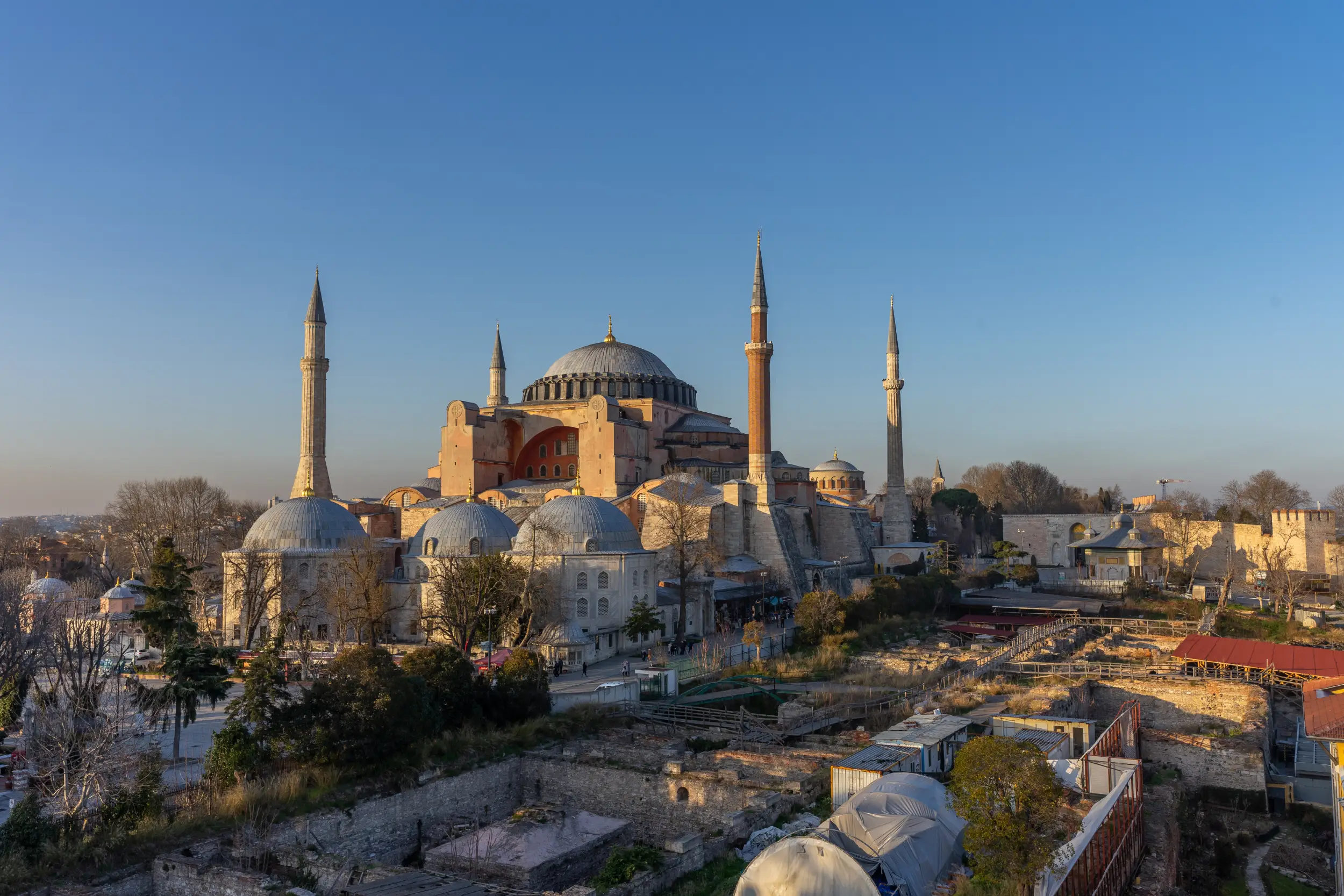
Continue through the Historic Peninsula to the great Byzantine monument that transformed the architectural history of Istanbul.
Explore Hagia Sophia
Continue across Istanbul with mosques, churches, palaces, cisterns, bazaars, archaeological sites and historic neighborhoods on both continents.
Explore Istanbul